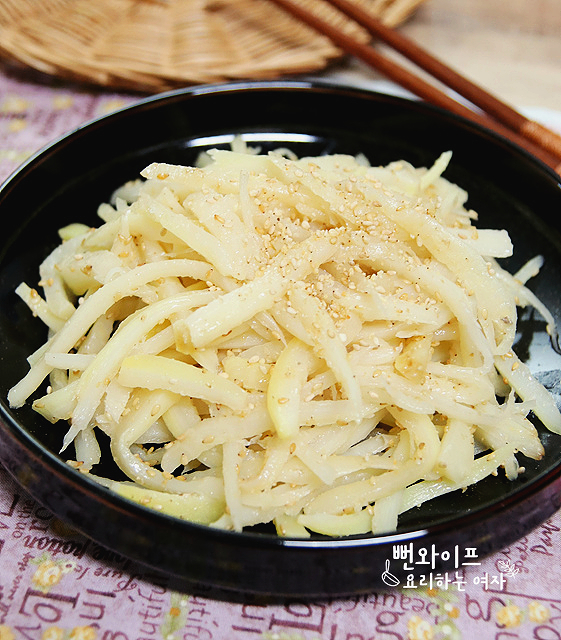
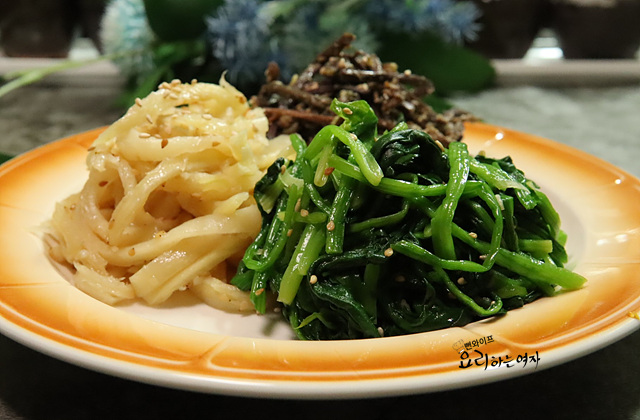
Tender Doraji Namul Bokkeum (Stir-Fried Bellflower Root)
A side dish of bellflower root stir-fried until tender by removing its bitterness with salt and steaming it with broth.
Translated from Korean by AI and not yet checked by a native speaker. Amounts and numbers are taken directly from the original recipe. Read the Korean original →
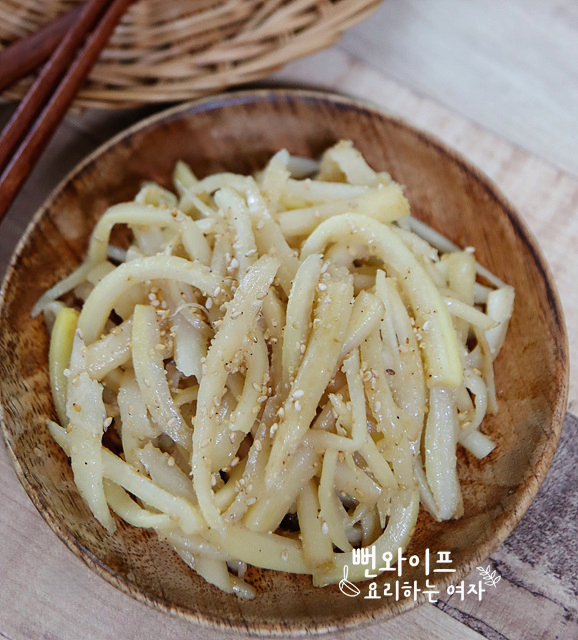
This stir-fried bellflower root has an aromatic flavor and pleasantly crisp texture, making it perfect for Korean holidays or ancestral memorial tables. Kneading it with salt draws out the bitter, harsh taste, while a touch of sugar and mirin boosts savory flavor. Pouring in broth and covering with a lid to let it steam while stir-frying keeps it tender rather than tough.
- Servings
- about 3–4 servingsOriginal: one plate
- Difficulty
- Easy
- Spiciness
- Not spicy
Ingredients
Ingredients
- Bellflower root (doraji)350 g (after cleaning)
- Coarse sea salt1 tbsp
Seasoning
- Tuna extract sauce (chamchi-aek)1 tbsp
- Soup soy sauce (guk-ganjang)1 tbsp
- Mirin (cooking rice wine)2 tbsp
- Sugar1/2 tsp
- Anchovy broth (or beef broth)4 tbsp
- Toasted sesame oil1 tbsp
- Ground toasted sesame seeds1 tbsp
- If the bellflower roots are too thick, split them lengthwise, and cut them to a manageable length.
- Add coarse sea salt and a little water to the bellflower roots, then scrub vigorously by hand to draw out bitterness and make them tender.
- When making this for everyday family meals without ceremonial rituals, you can add a little green onion and minced garlic to the seasoning when stir-frying.
Steps
Prepare the ingredients
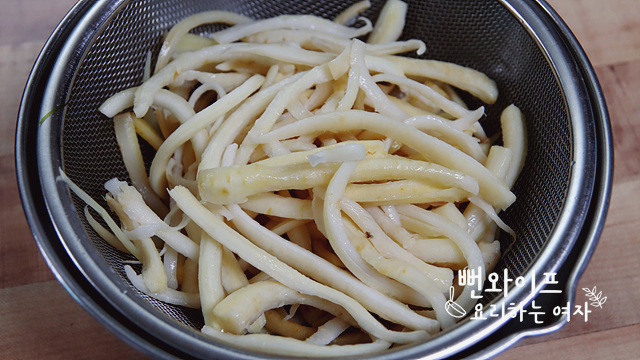
Here is 350g of peeled bellflower root.
If the bellflower roots are too thick, split them lengthwise, and cut them to a manageable length.
How to remove bitterness from bellflower root
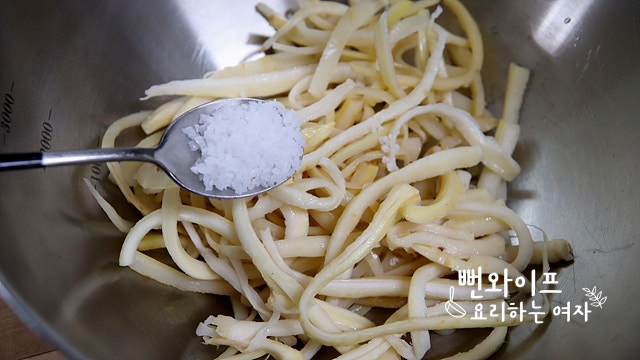
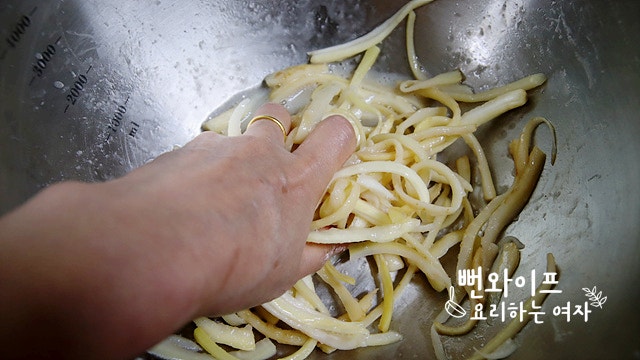
Add 1 tbsp of coarse sea salt to the bellflower root, add a little water, and knead vigorously with your hands.
The saponin in bellflower root gives it a sharp, bitter taste, and scrubbing it with salt creates foam that draws much of the bitterness out.
It also softens the stiff bellflower root, so it is best to prep it this way.
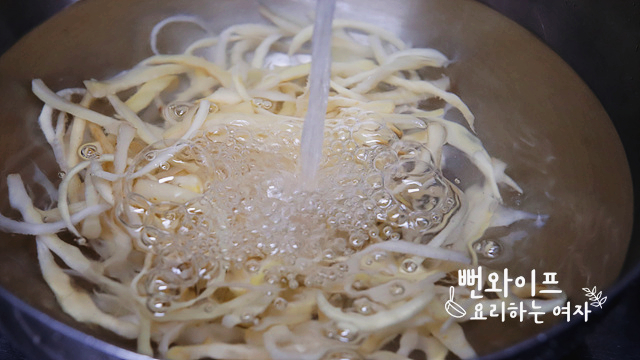
Rinse in water to remove the salt and foam, then drain lightly.
Stir-fry
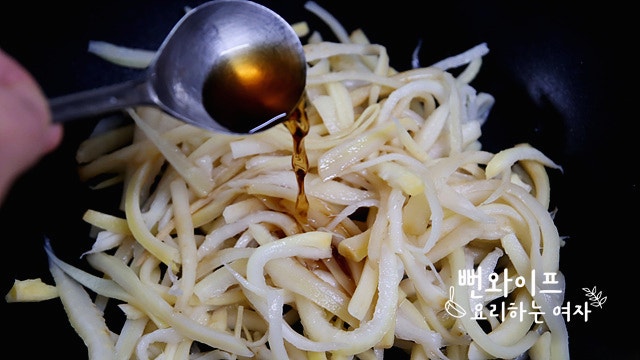
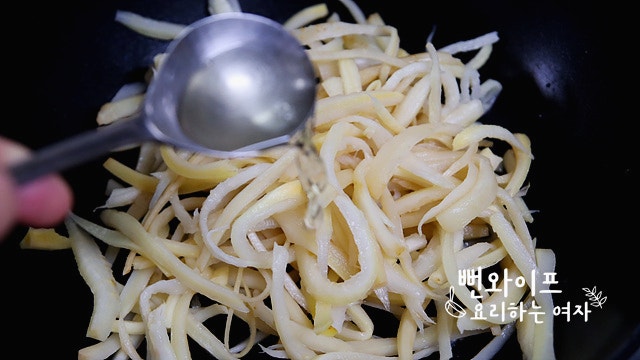
Drizzle an appropriate amount of cooking oil in a pan, add the bellflower root, and add the seasoning together.
1 tbsp tuna extract sauce, 1 tbsp soup soy sauce, 2 tbsp mirin...
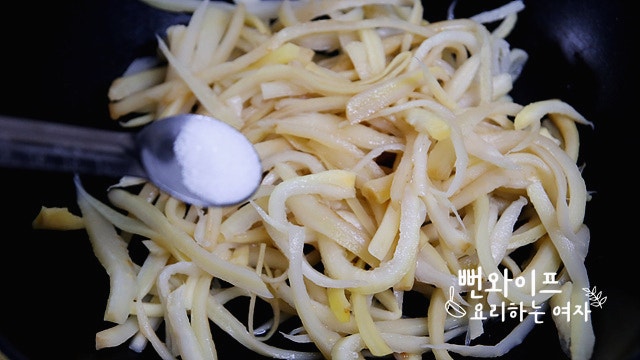
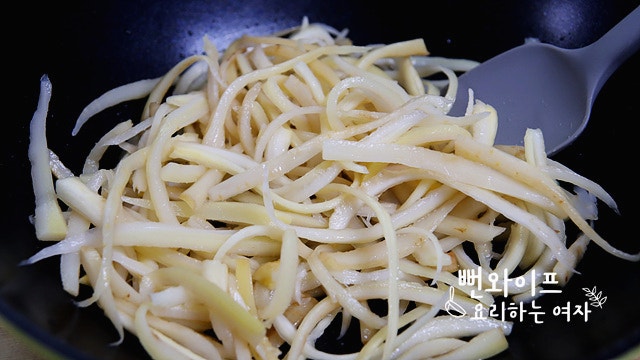
Add 1/2 tsp of sugar as well and stir-fry, mixing evenly.
The mirin and sugar help eliminate any remaining bitterness and sharpness in the bellflower root.
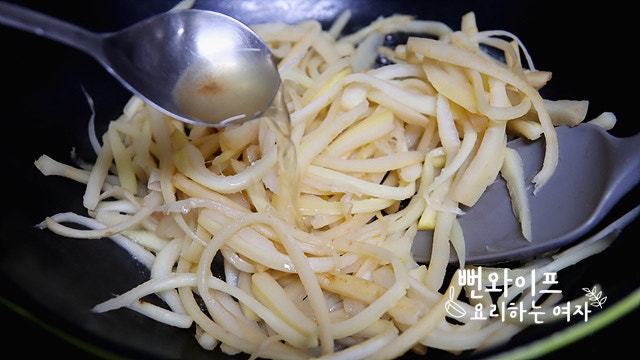
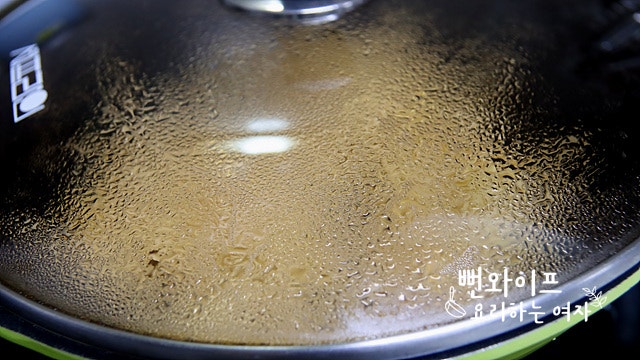
Pour in about 4 tbsp of anchovy broth (= beef broth), cover with a lid, and let it steam-cook so the seasoning permeates deeply and the root becomes tender.
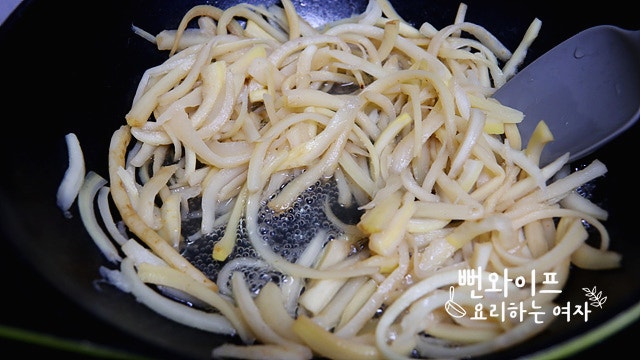
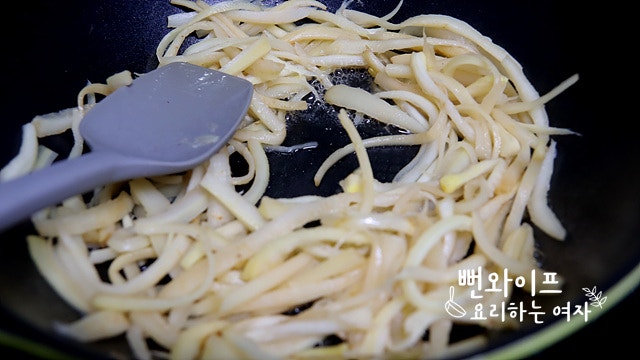
Once it has softened and the seasoning has soaked in, remove the lid and stir-fry while cooking off the excess moisture.
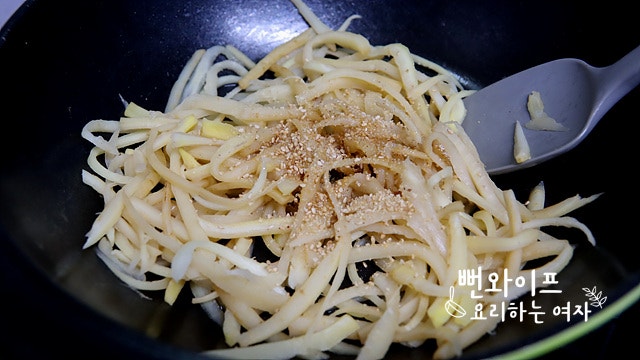
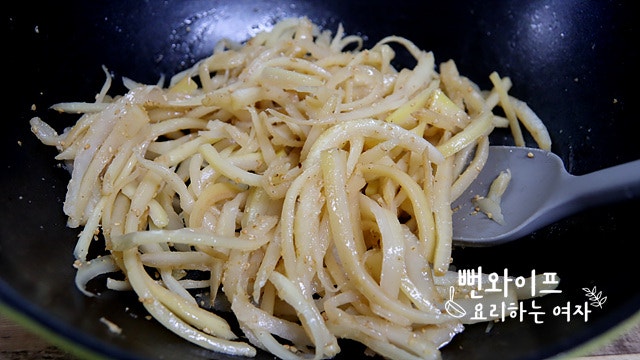
Finish by stirring in 1 tbsp of toasted sesame oil and 1 tbsp of ground toasted sesame seeds.
Finish
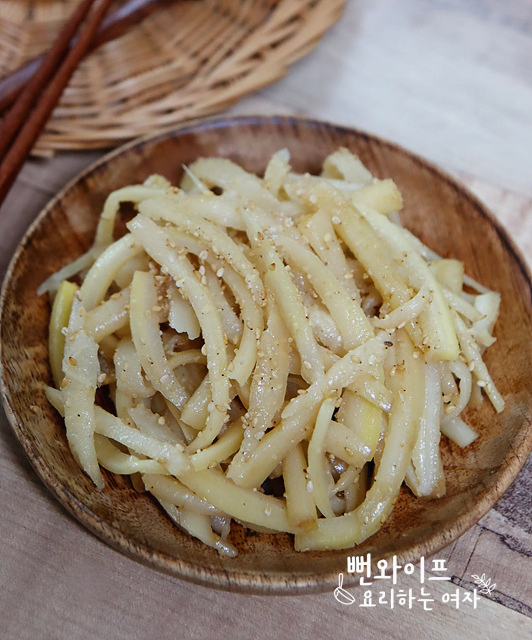
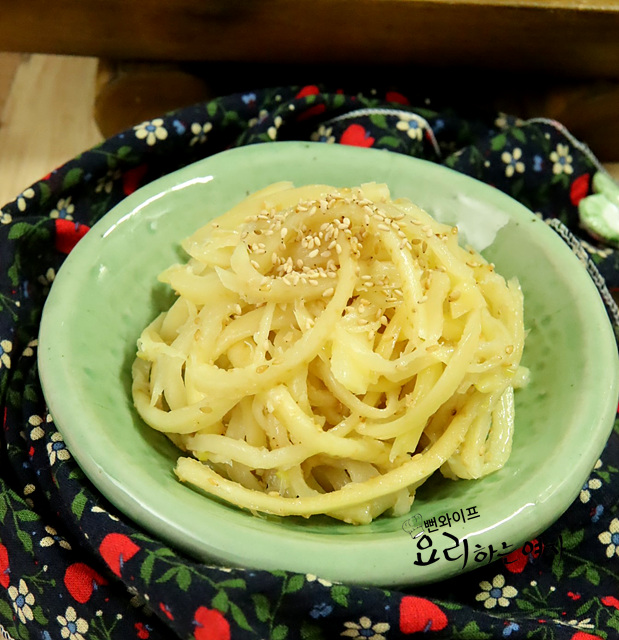
Doraji namul bokkeum is complete.
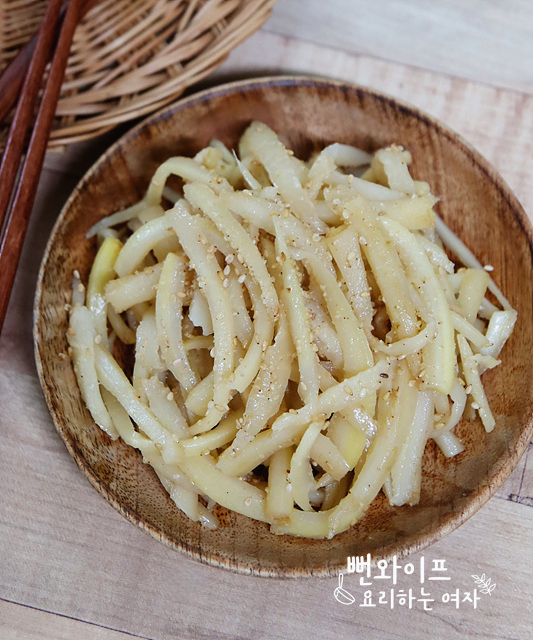
Bellflower root with its charming aroma and crisp texture...
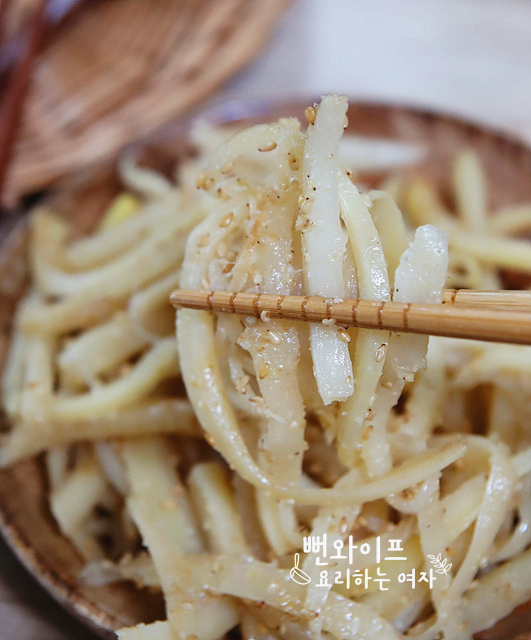
I organized this simple method so you can remove the bitterness and enjoy the special charm of bellflower root.
I stir-fried it without green onion or garlic for ancestral rites, but if you are enjoying it casually with family, feel free to add a bit of green onion and garlic to the seasoning and stir-fry.
 Ppunwife's tips
- A small amount of sugar during stir-frying also completely tames any remaining bitterness.
- Adding broth during stir-frying and covering with a lid to steam-cook it keeps it tender rather than tough.
- The mirin and sugar help eliminate any remaining bitterness and sharpness in the bellflower root.
FAQ
How do I effectively remove the harsh, bitter taste from bellflower root?
If you add coarse sea salt and a little water to the bellflower root and scrub it vigorously by hand, foam will appear along with the bitter components. Adding a small amount of sugar and mirin to the seasoning while cooking also helps round out the bitterness.
What is the secret to making bellflower root tender rather than tough?
After stir-frying in the pan with seasoning, pour in anchovy broth or beef broth and cover with a lid to steam-cook it, which softens the texture. Once the seasoning has soaked in thoroughly, remove the lid and finish by cooking off the excess moisture.
Can I use another broth instead of anchovy broth?
You can also use beef broth without any issue.
Can I add green onions or garlic if making this as an everyday side dish rather than for memorial rites?
If it is not for ancestral rites, you can certainly add a little green onion and minced garlic to the seasoning stage and stir-fry together according to your preference.