Doraji Namul Bokkeum (Stir-Fried Bellflower Root)
A holiday side dish of bellflower root rubbed with salt to draw out its bitterness, then stir-fried with tuna extract sauce for deep savory flavor.
Translated from Korean by AI and not yet checked by a native speaker. Amounts and numbers are taken directly from the original recipe. Read the Korean original →
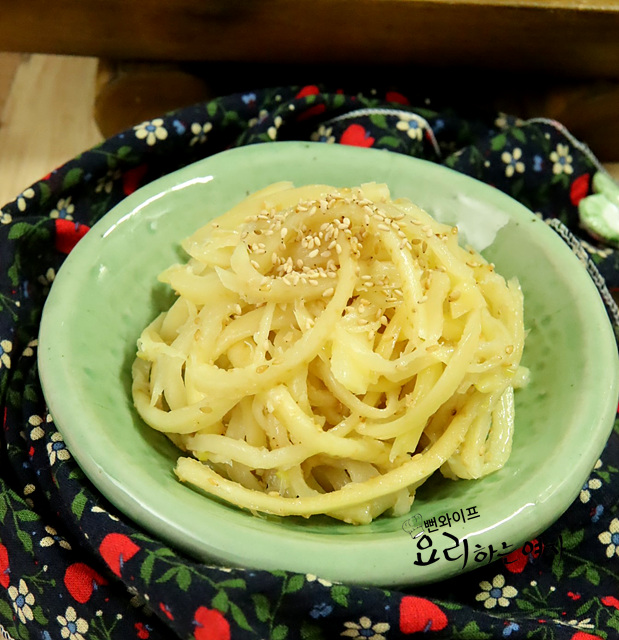
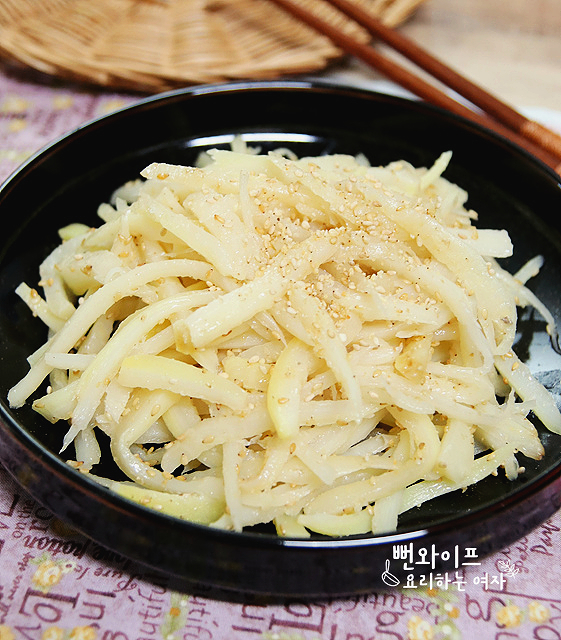
Doraji namul bokkeum made by rubbing bellflower root with coarse sea salt to draw out bitterness, then stir-frying it gently with tuna extract sauce and water until tender. Covering with a lid to steam lets the flavors soak in evenly without requiring a separate broth, keeping it clean and neat. It is wonderful for Chuseok holiday tables or as a bibimbap topping.
- Servings
- about 3–4 servingsOriginal: 2 plates
- Difficulty
- Easy
- Spiciness
- Not spicy
Ingredients
Ingredients
- Bellflower root (doraji)300 g
- Coarse sea salt2 tbsp
- Water1/3 cup
Seasoning
- Tuna extract sauce (chamchi-aek)1 tbsp
- Minced green onion2 tbsp
- Minced garlic1/2 tbsp
- Mirin (cooking rice wine)1 tbsp
- Sugar (or for removing bitterness)1/2 tsp
- Salta little (if needed)
- Water4 tbsp
- Toasted sesame oil1 tbsp
- Toasted sesame seeds (and ground toasted sesame seeds)1 tbsp
- From 300g of peeled bellflower root, split any very thick pieces lengthwise once more and trim them to similar lengths to finish prepping.
- Pour in 2 tbsp coarse sea salt and 1/3 cup water, then rub vigorously; foam will form, the bellflower root will soften, and the 1st round of bitterness will be drawn out.
- For ancestral rite food, omit the garlic and green onion when stir-frying, and grind half the toasted sesame seeds to bring out maximum nutty flavor.
Steps
Prepare the ingredients
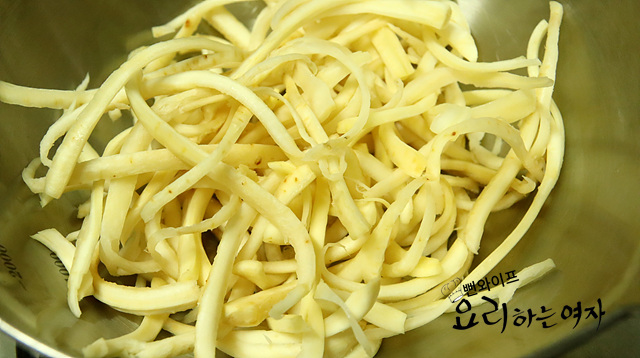
This is 300g of peeled bellflower root.
Split any very thick pieces lengthwise once more and cut them to similar lengths to finish prepping.
Remove the bitterness from the bellflower root
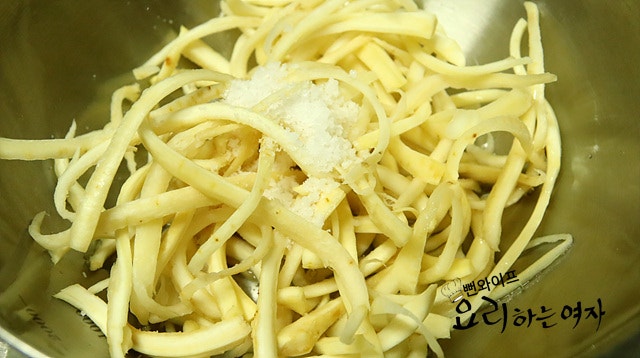
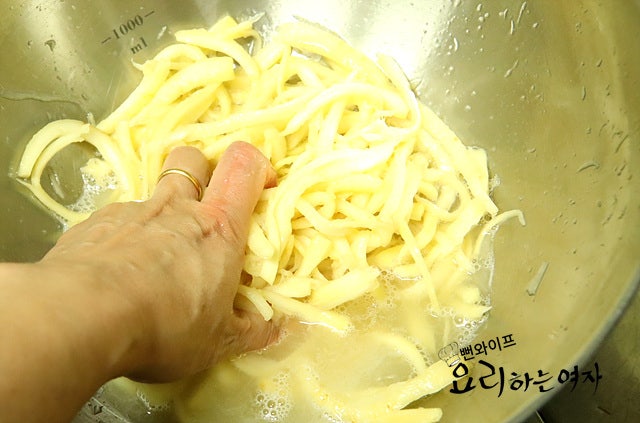
Bellflower root contains saponin, which gives it a bitter taste.
It is good for you, but because the bitterness is unpalatable in a vegetable side dish, you need to draw it out.
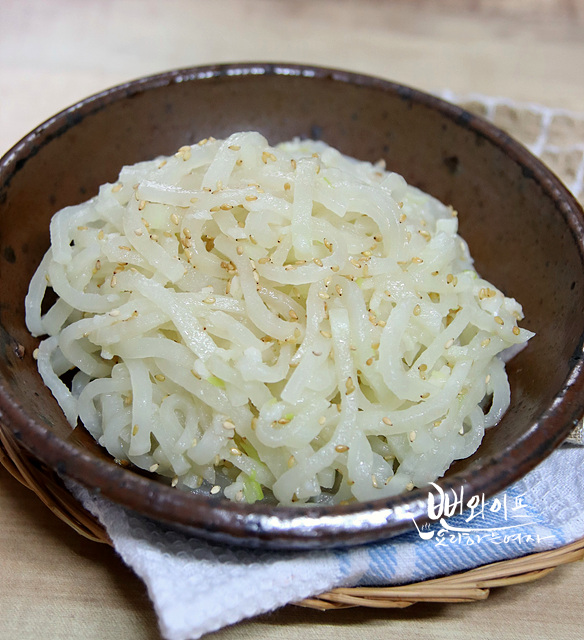
Pour in 2 tbsp coarse sea salt and 1/3 cup water, then rub vigorously; foam will form and the bellflower root will soften.
This first prep draws out a good amount of the bitterness, and any bitterness left can be eliminated as you stir-fry.
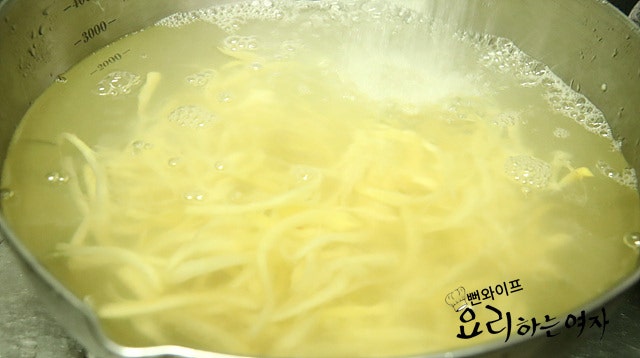
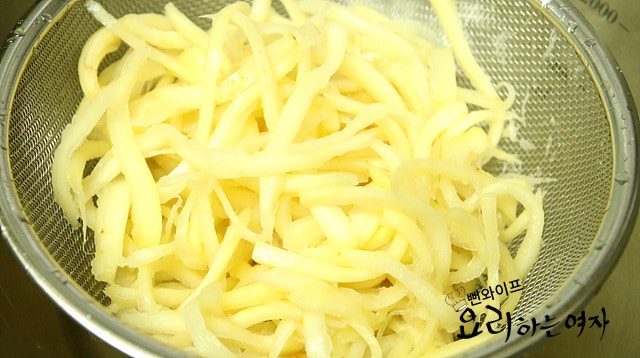
Rinse under running water to wash away the salt.
You do not need to remove the salt completely, since the seasoning needs salt anyway.
Drain roughly in a colander.
Season and stir-fry
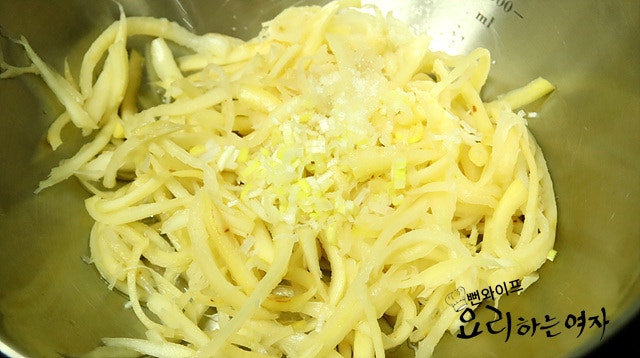
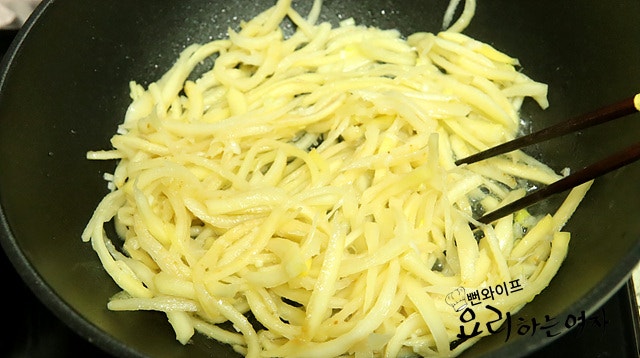
To the drained bellflower root, add 1 tbsp tuna extract sauce, 2 tbsp minced green onion, 1/2 tbsp minced garlic, and 1 tbsp mirin, then mix evenly.
Lightly coat a pan with cooking oil and stir-fry briskly for a short moment.
If you want to use 1/2 tbsp soup soy sauce instead of tuna extract sauce, add 4 tbsp anchovy broth instead of water when steaming to bring out the savory depth.
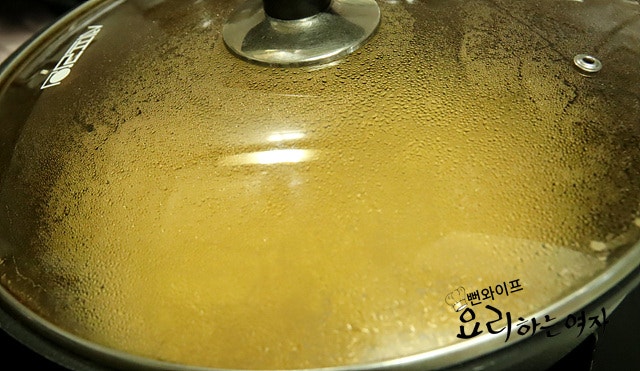
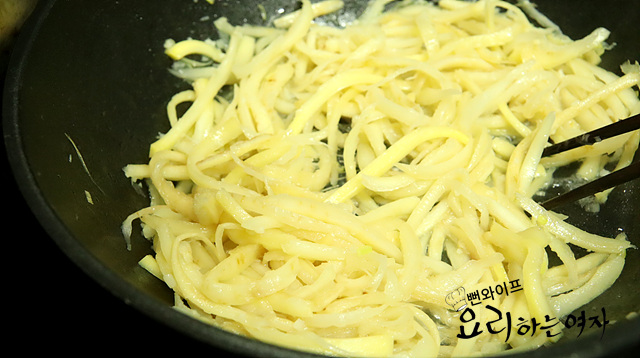
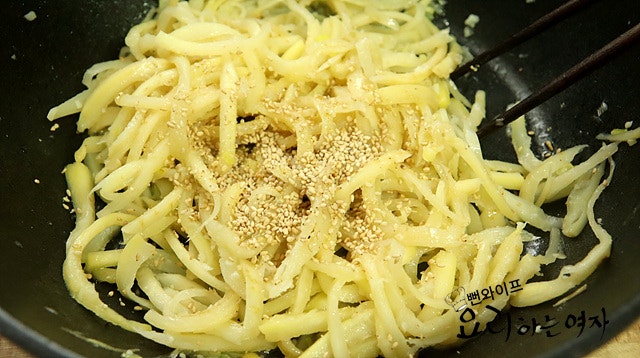
Once the bellflower root is coated in oil, reduce the heat to low, add 4 tbsp water, cover with a lid, and let it steam for about 2 minutes so the bellflower root absorbs the seasoning and turns tender.
Open the lid, taste, and add salt if it tastes flat; if any bitterness remains, stir in 1/2 tsp sugar to remove it.
Stir-fry away any remaining moisture, and finish by adding 1 tbsp toasted sesame oil and 1 tbsp toasted sesame seeds.
4 Complete
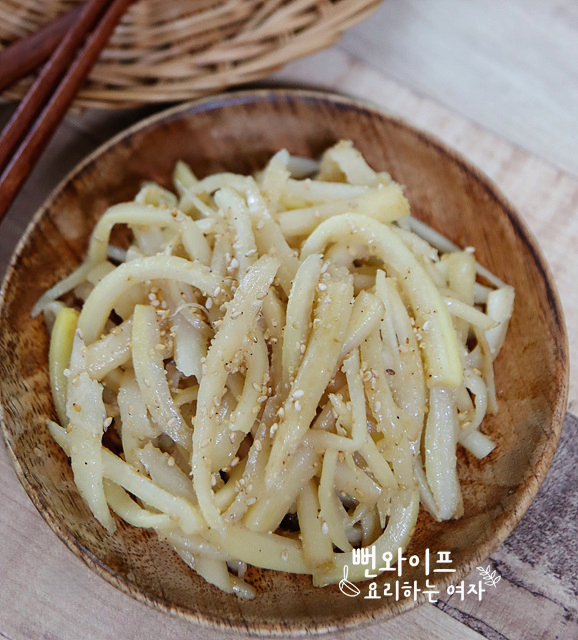
Complete
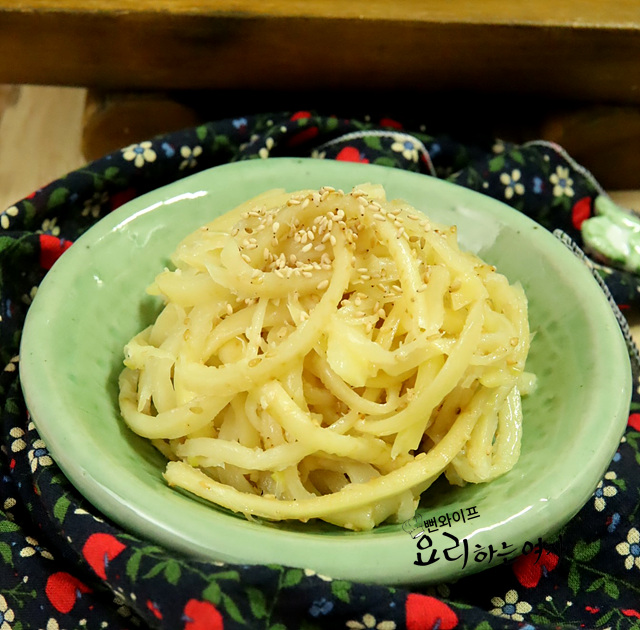
To keep bellflower root looking neat and clean when stir-fried, it is best to season it with an appropriate blend of salt.
If you season it only with dark soy sauce, the color turns dull.
You can use anchovy broth or beef broth, and if you have tuna extract sauce or fish sauce, it makes seasoning easy and simple.
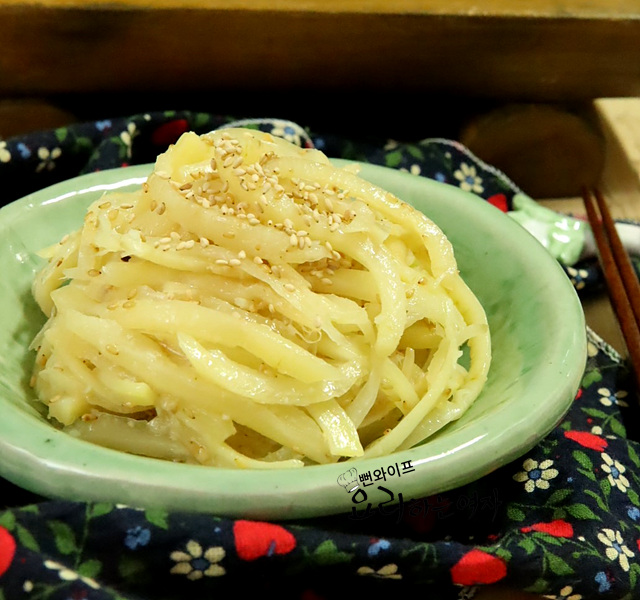
For ancestral rite food, omit the garlic and green onion when stir-frying, and grind half the toasted sesame seeds to bring out maximum nutty flavor.
Adding bellflower root to bibimbap gives it a really upscale taste.
Today I shared doraji namul bokkeum, and I will be posting more holiday vegetable dishes step by step.
Thanks to this, I am already enjoying delicious bibimbap ahead of time.
 Ppunwife's tips
- If you want to use 1/2 tbsp soup soy sauce instead of tuna extract sauce, add 4 tbsp anchovy broth instead of water when steaming to bring out the savory depth.
- To keep bellflower root looking neat and clean when stir-fried, it is best to season it with an appropriate blend of salt. If you season it only with dark soy sauce, the color turns dull.
FAQ
How do you remove the bitterness from bellflower root?
Add 2 tbsp coarse sea salt and 1/3 cup water to the bellflower root and rub vigorously until foamy, rinse it off, and then add half a tsp of sugar while stir-frying to take care of any remaining bitterness.
Can I use soup soy sauce instead of tuna extract sauce?
You can substitute 1/2 tbsp soup soy sauce, but in that case you should steam it with 4 tbsp anchovy broth instead of water to build savory flavor.
How do you make this for an ancestral memorial service or Chuseok table?
When preparing it for an ancestral rite, omit the green onion and garlic from the seasoning, and grind toasted sesame seeds to mix in for richer nutty flavor.