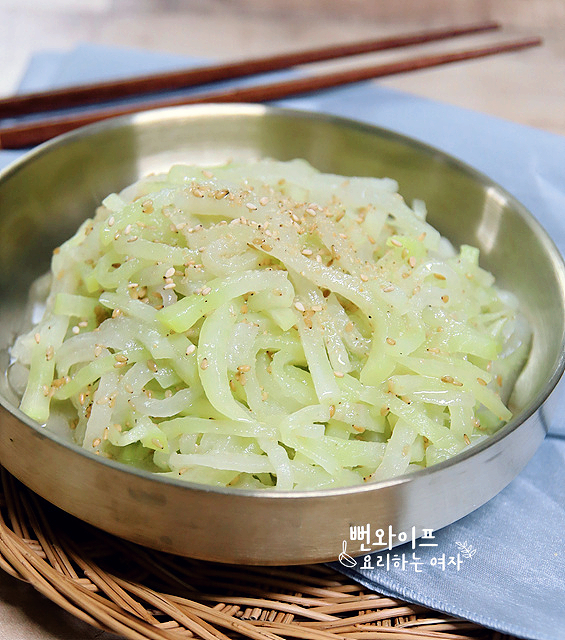
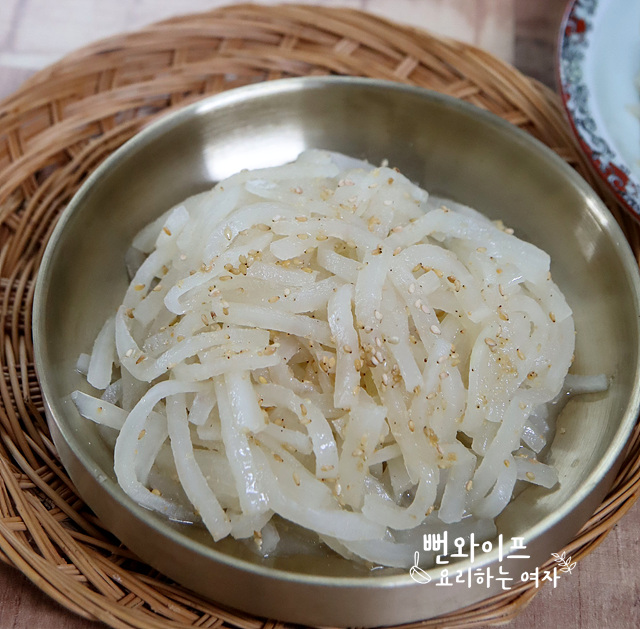
Doraji Namul Bokkeum (Stir-Fried Bellflower Root)
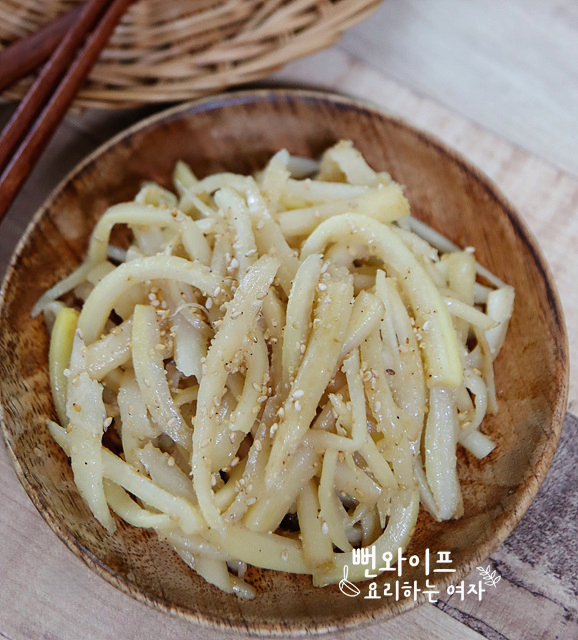
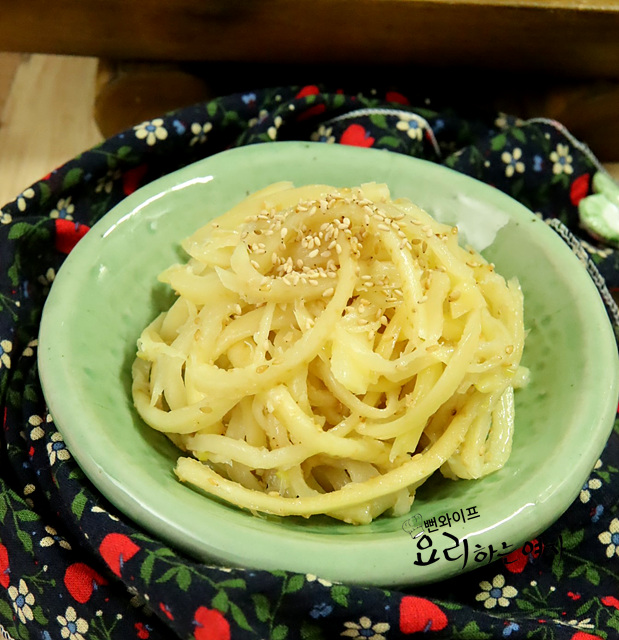
A ceremonial doraji namul bokkeum (stir-fried bellflower root) with bitterness removed using coarse sea salt and cooked tender in broth.
Translated from Korean by AI and not yet checked by a native speaker. Amounts and numbers are taken directly from the original recipe. Read the Korean original →
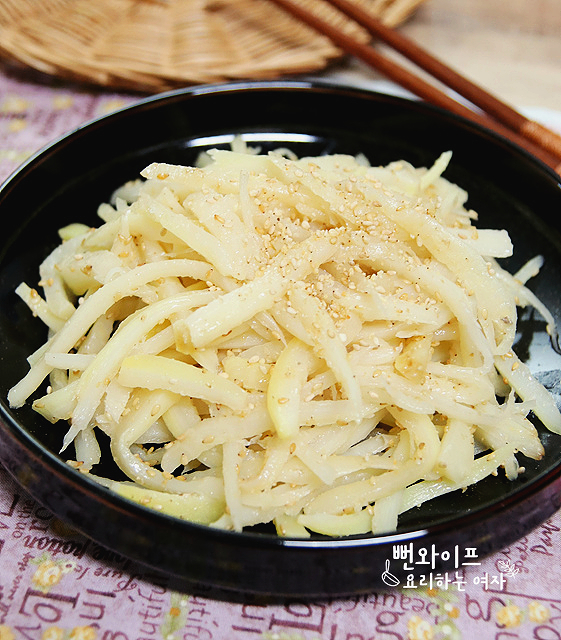
A seasoned vegetable side dish made by rubbing bellflower roots with coarse sea salt to draw out bitterness, then simmering them tender with broth. Prepared cleanly without green onions or garlic, it is perfect for traditional holiday and memorial tables.
- Servings
- about 3–4 servings
- Difficulty
- Easy
- Spiciness
- Not spicy
Ingredients
Ingredients
- Peeled bellflower root (doraji)300 g
- Coarse sea salt2 tbsp
Seasoning
- Tuna extract sauce (chamchi-aek) (or soup soy sauce (guk-ganjang))1 tbsp
- Mirin (cooking rice wine)1 tbsp
- Sugar1/2 tsp
- Anchovy broth4 tbsp
- Salta little
- Toasted sesame oil1 tbsp
- Ground toasted sesame seeds1 tbsp
- Split the thicker parts once more into bite-sized thicknesses and trim them neatly to an even length.
- The first method to remove bitterness from bellflower root is to rub it vigorously with 2 tbsp of coarse sea salt and a little water. The stiff roots soften, and saponins—the source of bitterness—come out as foam.
- If this is not for ancestral rites, you can add a bit of minced garlic and minced green onion when stir-frying.
Steps
Prepare the ingredients
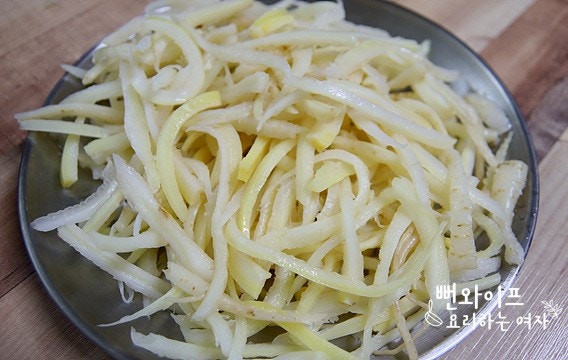
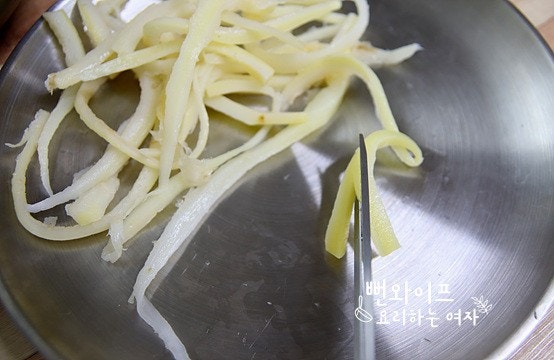
I bought peeled bellflower root.
Split the thicker parts once more into bite-sized thicknesses and trim them neatly to an even length.
Prepare the bellflower root
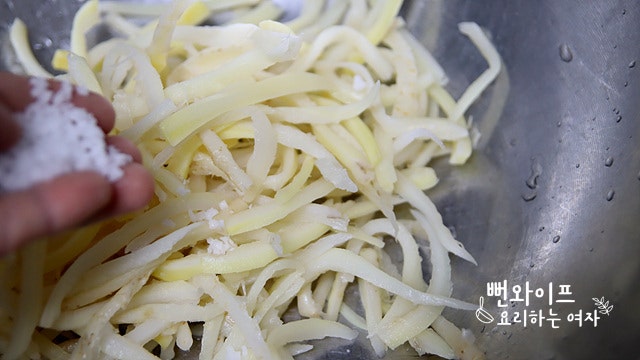
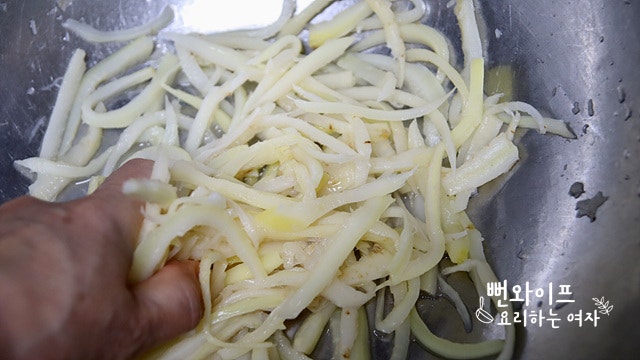
The first method to remove bitterness from bellflower root is to rub it vigorously with 2 tbsp of coarse sea salt and a little water.
The stiff roots soften, and saponins—the source of bitterness—come out as foam.
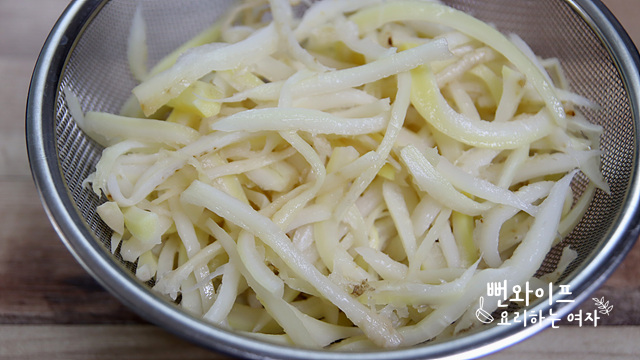
Rinse several times in water to wash out the salt, then drain in a colander.
Season and stir-fry
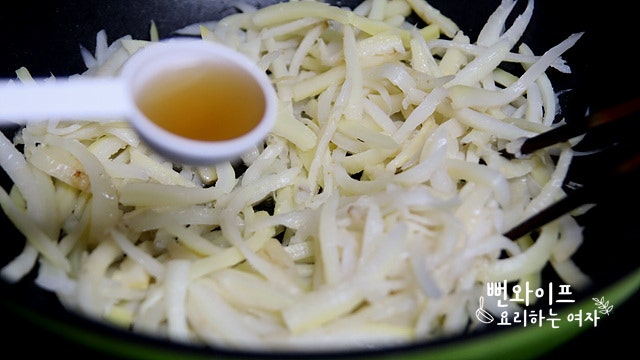
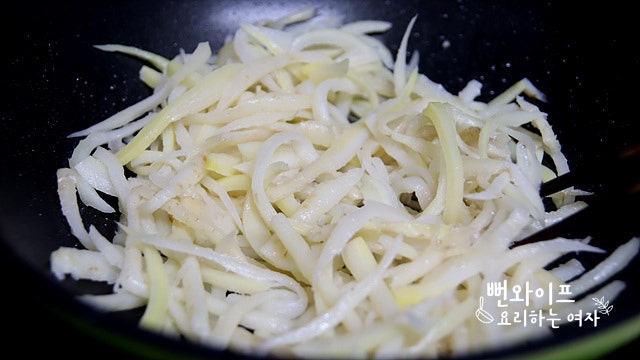
Grease a pan with oil, add 1 tbsp of tuna extract sauce (chamchi-aek), 1 tbsp of mirin (cooking rice wine), and 1/2 tsp of sugar, and stir-fry briskly.
The mirin and sugar remove any lingering bitterness from the bellflower root and add savory umami.
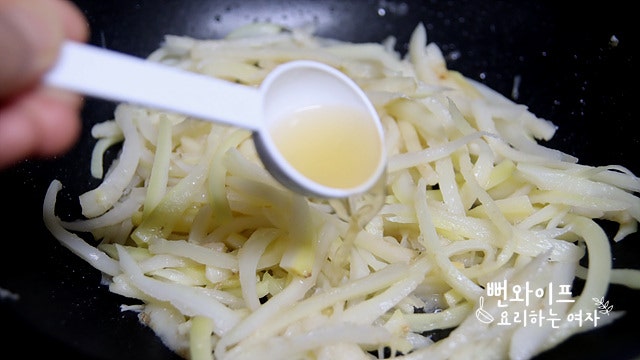
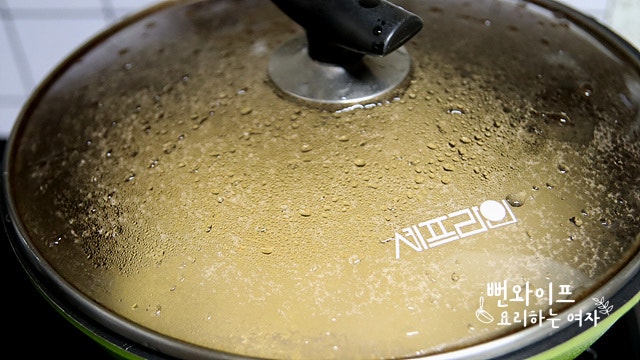
Add 4 tbsp of anchovy broth, stir to combine, then cover with a lid and let steam for about 2 minutes.
Stir-fry so the seasonings soak in and the bellflower root turns tender...
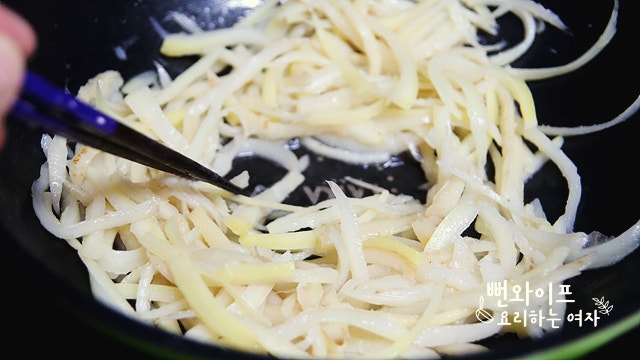
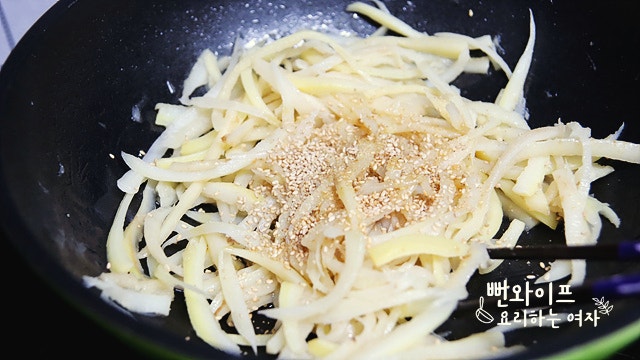
Remove the lid and stir-fry to evaporate excess moisture.
Taste and season with a pinch of salt if needed, then finish with 1 tbsp of toasted sesame oil and 1 tbsp of ground toasted sesame seeds.
Complete the dish
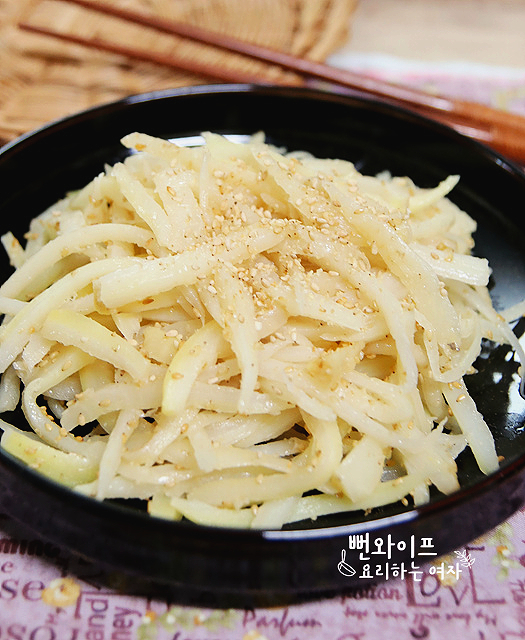
Doraji namul bokkeum is finished, with its bitterness removed while keeping just the right pleasant texture.
Although it is just one ingredient in bibimbap, holiday namul platters feel incomplete without this bellflower root dish.
 Ppunwife's tips
- Mirin and sugar help remove any remaining bitterness from the bellflower root while adding savory umami.
FAQ
How do you remove the sharp, bitter taste of bellflower root?
Rub it vigorously with 2 tbsp of coarse sea salt and a little water until it foams, then rinse thoroughly in clean water several times.
How do you cook this as an everyday side dish rather than for memorial rites?
When it is not for ancestral ceremonies, you can add minced green onions and minced garlic while stir-frying.
What can I substitute for tuna extract sauce?
You can use an equal amount, 1 tbsp, of soup soy sauce (guk-ganjang) instead of tuna extract sauce.
What is the secret to cooking bellflower root tender?
After stir-frying with the seasonings, pour in 4 tbsp of anchovy broth, cover with a lid, and let it steam for about 2 minutes to soften.