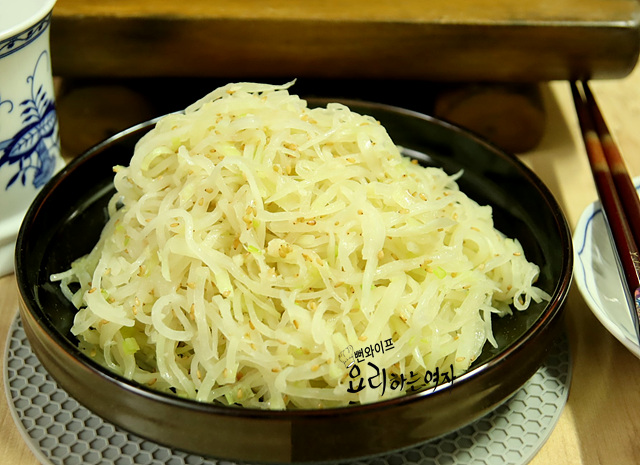
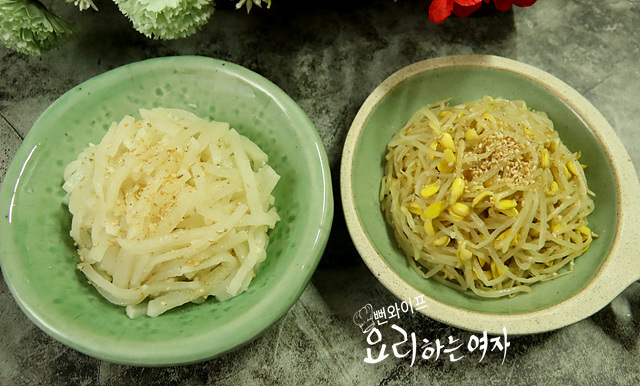
Clean Munazul Bokkeum (Stir-Fried Radish Side Dish)
A holiday radish side dish salted to prevent breaking apart and stir-fried clean without green onion or garlic.
Translated from Korean by AI and not yet checked by a native speaker. Amounts and numbers are taken directly from the original recipe. Read the Korean original →
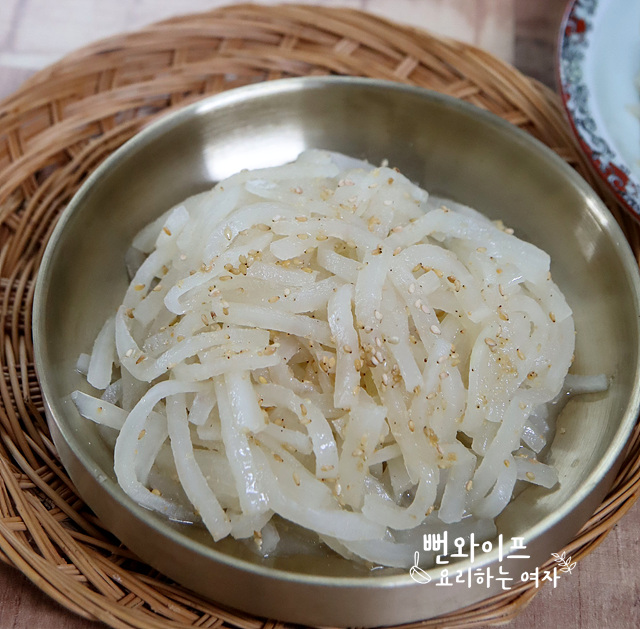
This munazul bokkeum is salted first so it won't break apart easily, with mirin added to tame the bitter edge of summer radish. Cooked covered without green onion or garlic so it steams lightly, it has a clean flavor that works wonderfully for ancestral ritual tables or as a bibimbap topping.
- Servings
- about 4–5 servingsOriginal: 2 plates
- Difficulty
- Easy
- Spiciness
- Not spicy
Ingredients
Ingredients
- Korean radish (mu)600 g
- Salt1/2 tbsp
Seasoning
- Anchovy broth (or water)1/2 cup
- Tuna extract sauce (chamchi-aek) (or soup soy sauce (guk-ganjang), yondu (vegetable seasoning essence), fish soy sauce)1 1/2 tbsp
- Mirin (cooking rice wine)2 tbsp
- Toasted sesame oil1–2 tbsp
- Toasted sesame seeds1–2 tbsp (ground)
- Add 1/2 tbsp of salt to the radish, toss well, and let it salt for about 20 to 30 minutes, stirring occasionally.
- For sweet, delicious fall and winter radish, you can stir-fry it with the salted liquid without discarding it; for summer radish that still holds spicy and bitter notes, scoop out only the radish and discard the liquid.
Steps
Prepare the ingredients
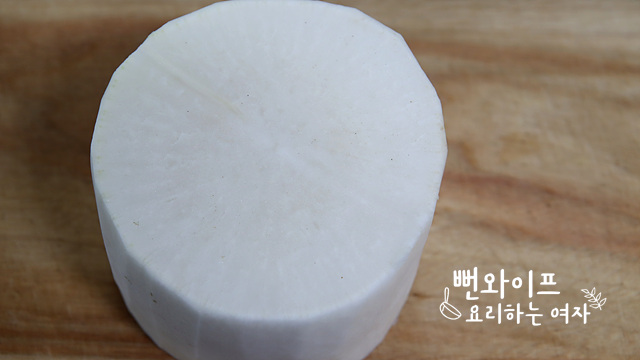
This is about 1/3 of a medium-sized radish.
Julienne the radish
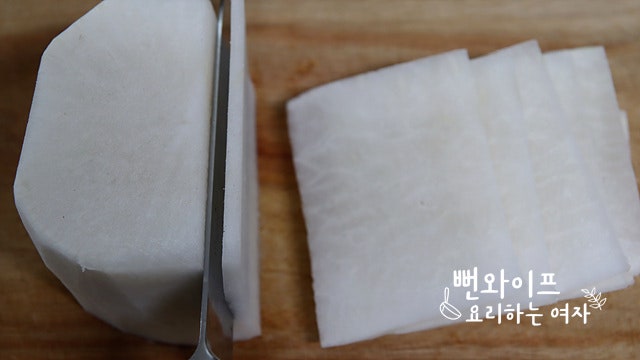
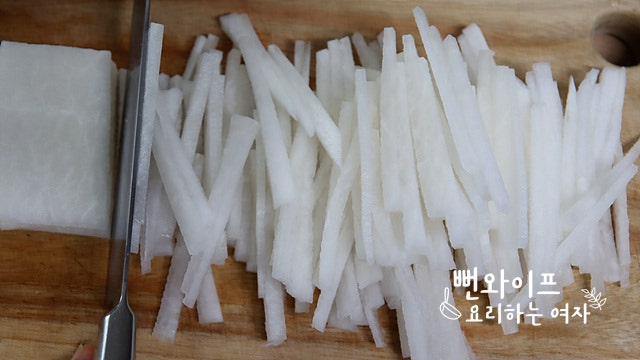
Julienne the radish into strips about 0.5 cm thick.
Salt the radish
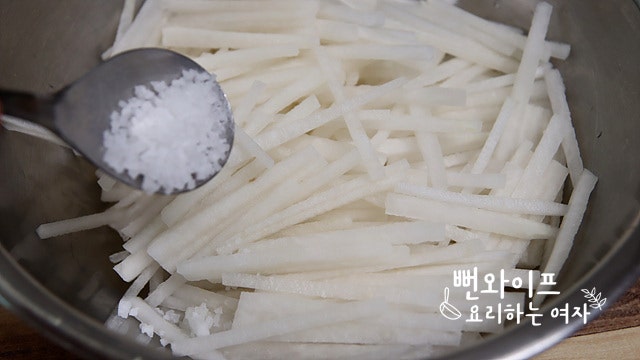
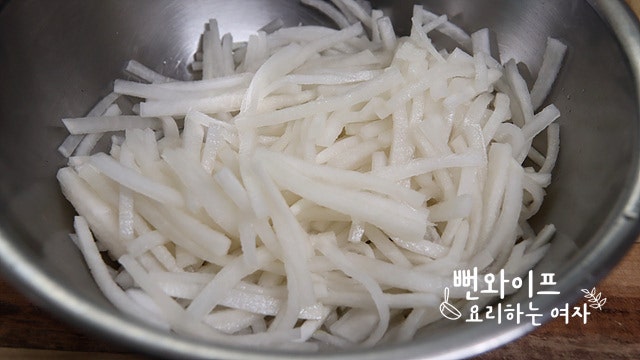
Add 1/2 tbsp of salt to the radish, toss well, and let it salt for about 20 to 30 minutes, stirring occasionally.
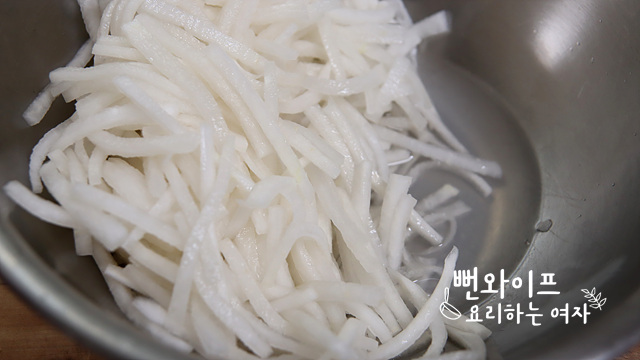
A lot of moisture has drawn out as the radish salted.
For sweet, delicious fall and winter radish, you do not need to discard this liquid and can stir-fry it right away.
Today, since this is summer radish that still holds spicy and bitter notes, scoop out only the radish and discard the liquid.
Stir-fry the radish
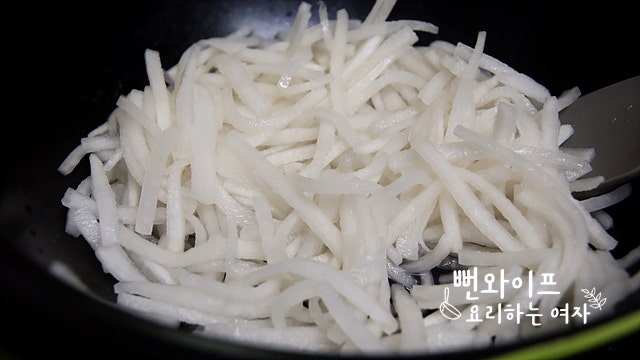
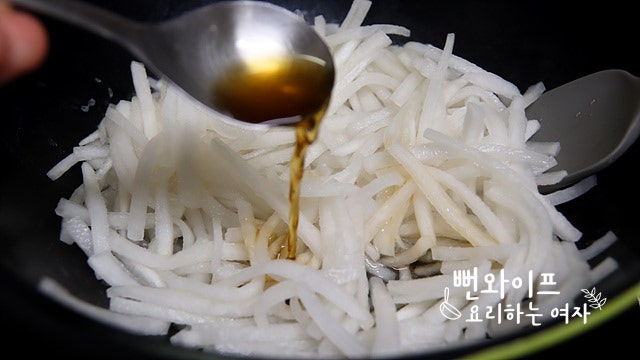
Add the salted radish to a pan along with 1 1/2 tbsp of tuna extract sauce, 2 tbsp of mirin, and all 1/2 cup of anchovy broth or water.
The bitter taste of radish can be resolved to some degree with mirin or sugar.
When stir-frying bellflower root (doraji), sugar or mirin also helps remove the bitterness.
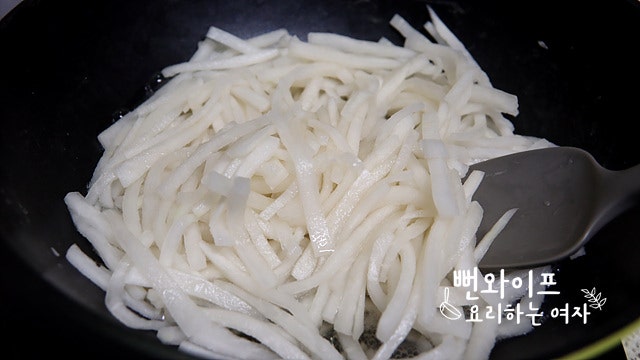
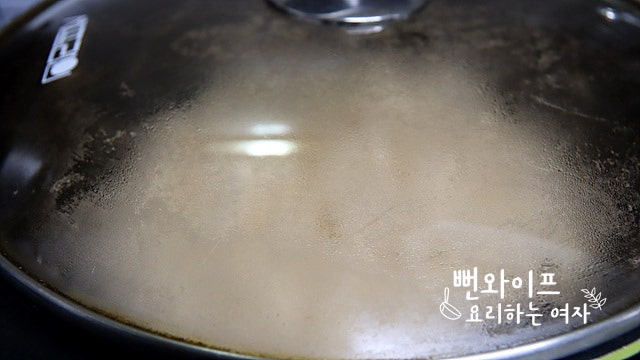
Mix so the seasoning coats the radish evenly, cover with a lid, and cook as if steaming it.
Open the lid occasionally and give it a stir so the top and bottom switch places.
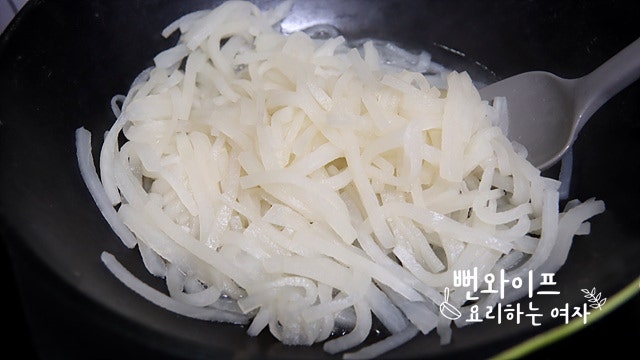
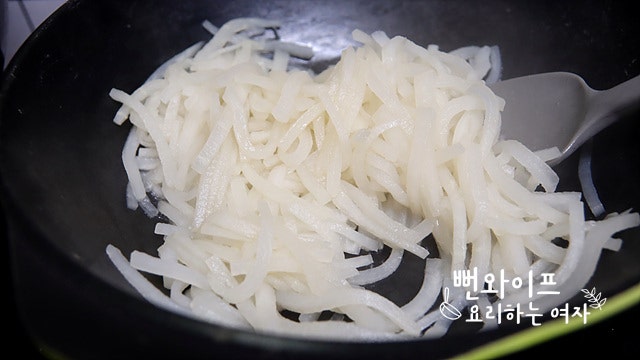
Once the radish has cooked until translucent throughout, open the lid and stir-fry to evaporate any remaining moisture.
Taste the radish, and if it is bland, adjust with salt.
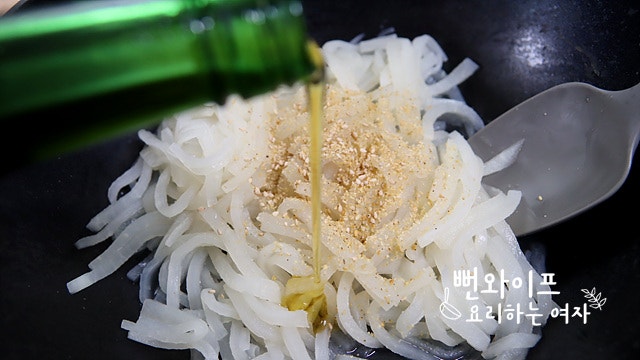
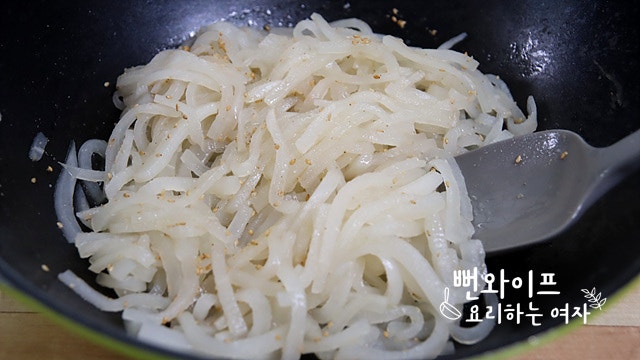
Turn off the heat, add 1 to 2 tbsp of toasted sesame oil and 1 to 2 tbsp of ground toasted sesame seeds, and mix to finish.
Finish
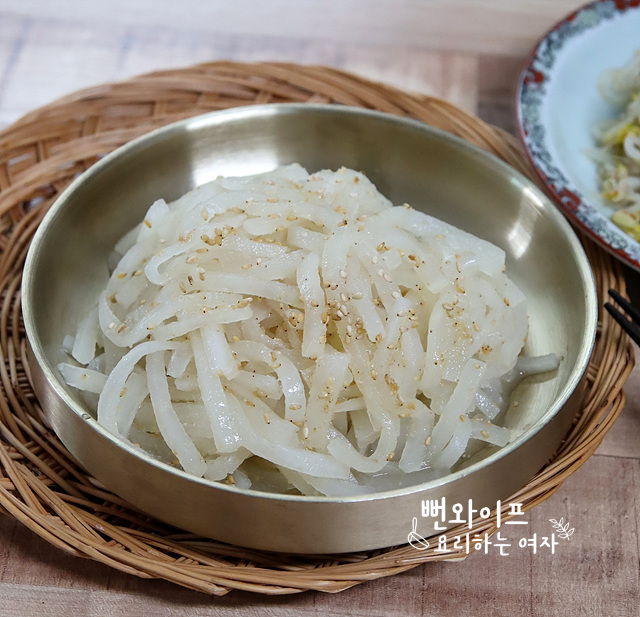
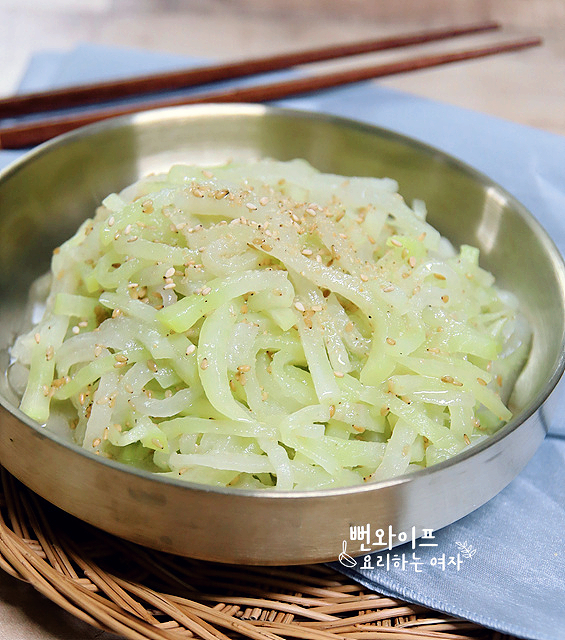
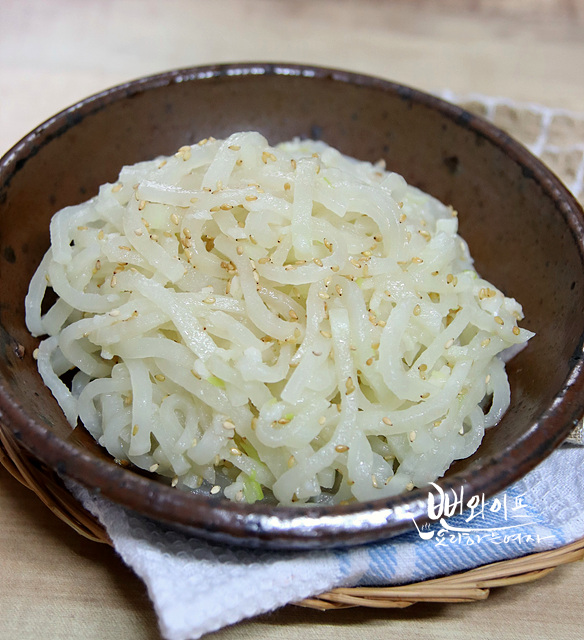
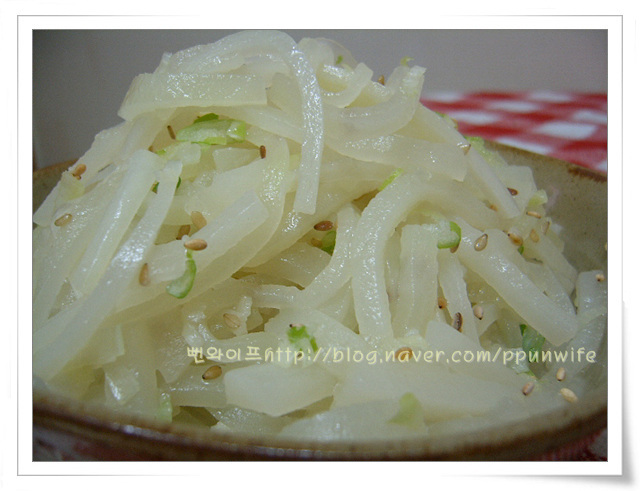
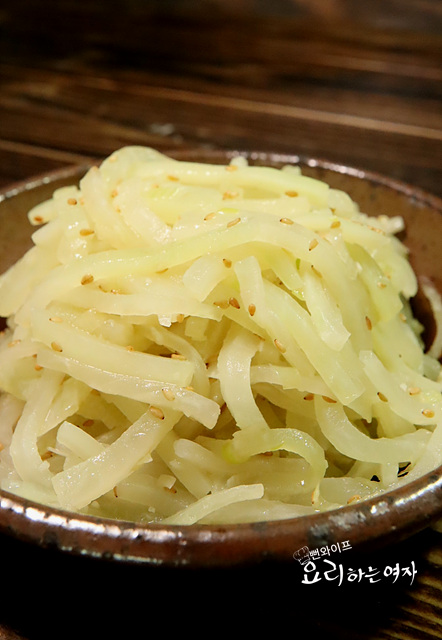
The munazul bokkeum is finished.
Here is how I stir-fry radish namul, the classic partner to soybean sprout namul.
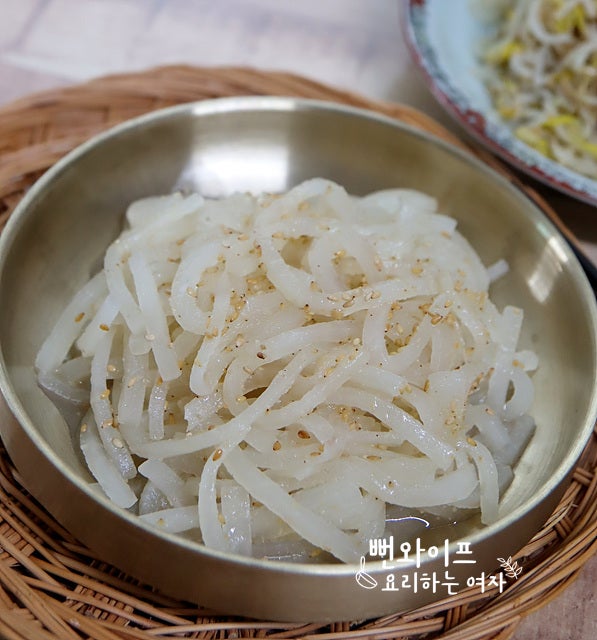
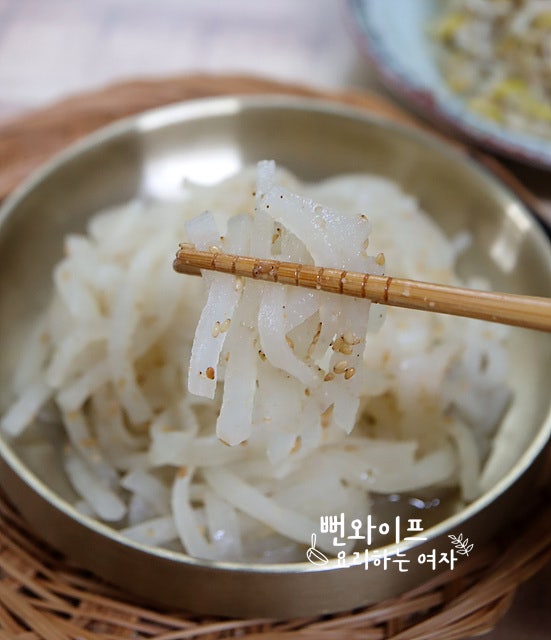
Among all namul, it is tender and aids digestion, so I add it most often when mixing bibimbap.
Stir-fried without green onion or garlic as an ancestral ritual table version, it tastes exceptionally clean and light.
 Ppunwife's tips
- The bitter taste of radish can be resolved to some degree with mirin or sugar. When stir-frying bellflower root (doraji), sugar or mirin also helps remove the bitterness.
- Taste the radish, and if it is bland, adjust with salt.
FAQ
Should I discard the liquid released after salting the radish?
For summer radish that has spicy and bitter notes, discard the salted liquid and scoop out only the radish; for sweet fall and winter radish, you can stir-fry it together without discarding the moisture.
How do you reduce the characteristic bitterness of radish?
Adding mirin when cooking helps catch the pungent bitterness of radish.
Is there another seasoning I can use instead of tuna extract sauce?
The ingredients note that you can substitute soup soy sauce (guk-ganjang), Yondu, or fish sauce.