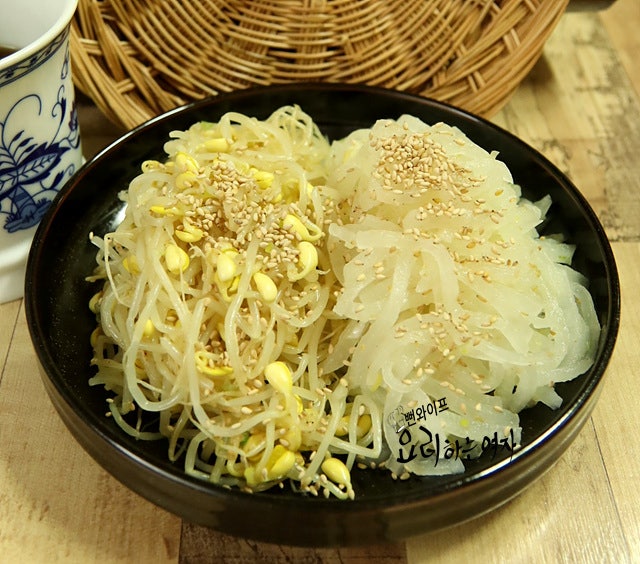
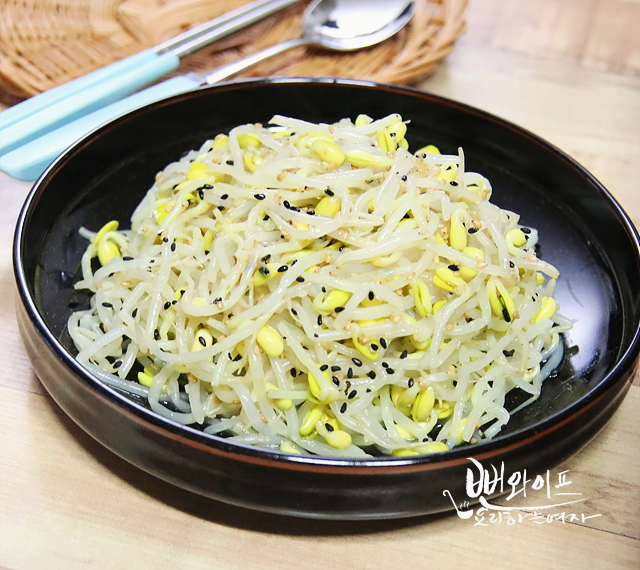
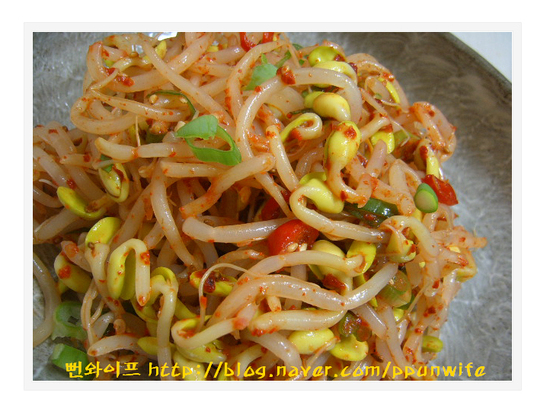
Crisp Soybean Sprout and Radish Namul (Seasoned Vegetables)
A holiday side dish featuring Korean radish (mu) stir-fried in fragrant perilla oil alongside crisply seasoned soybean sprouts.
Translated from Korean by AI and not yet checked by a native speaker. Amounts and numbers are taken directly from the original recipe. Read the Korean original →
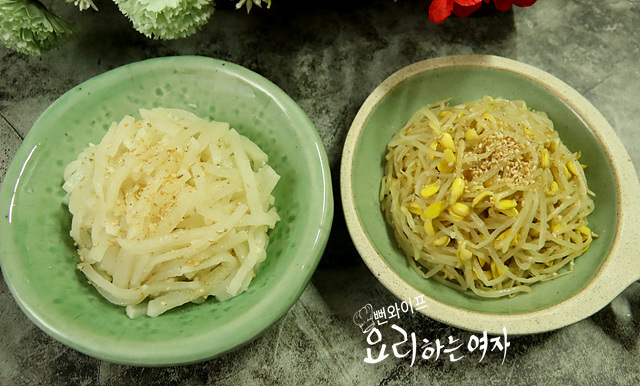
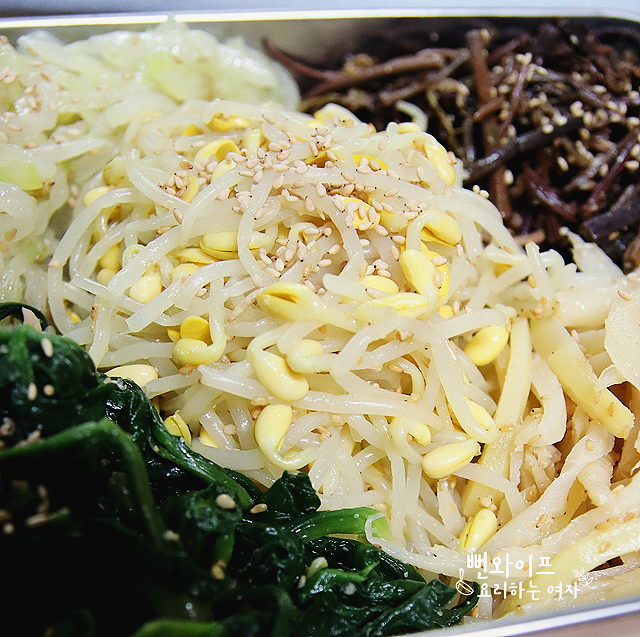
These two mild, clean namul dishes are perfect for ancestral memorial rites (jesa) and traditional holiday spreads. The Korean radish is sliced thickly along the grain and lightly salted before cooking with fragrant perilla oil, while the soybean sprouts are steamed with the lid closed to preserve their crunchy texture.
- Servings
- about 4–6 servings
- Difficulty
- Medium
- Spiciness
- Not spicy
Ingredients
Soybean Sprout Namul Ingredients
- Soybean sprouts300 g
- Salt1/2 tbsp
- Water3 cups
- Soup soy sauce (guk-ganjang)1 tsp
- Salt1/2 tsp
- Minced garlic1/2 tbsp
- Minced green onion2 tbsp
- Toasted sesame oil1 tbsp
- Ground toasted sesame seeds1 tbsp
Stir-Fried Radish Namul Ingredients
- Korean radish (mu)500 g
- Salt1/2 tbsp
- Minced garlic1 tbsp
- Minced green onion2 tbsp
- Broth1/2 cup
- Perilla oil (or toasted sesame oil)1 tbsp
- Ground toasted sesame seeds1 tbsp
- Add 1/2 tbsp salt and salt for approx. 20 to 30 minutes.
- If using sweet, refreshing autumn radish, pour the extracted juices right into the pan without discarding; if using bitter, pungent summer radish, discard the salted juices.
Steps
Prepare the ingredients
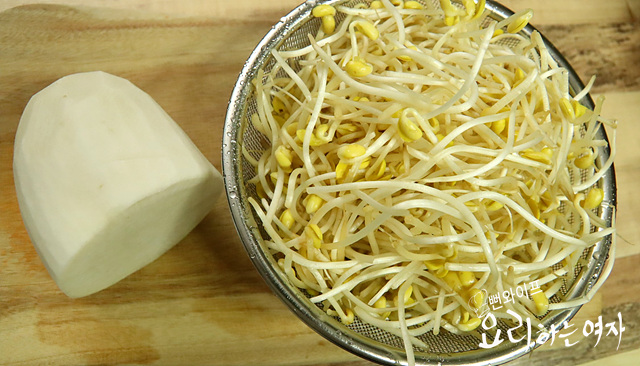
Peel the Korean radish (mu) and rinse the soybean sprouts to prepare.
Salt the radish
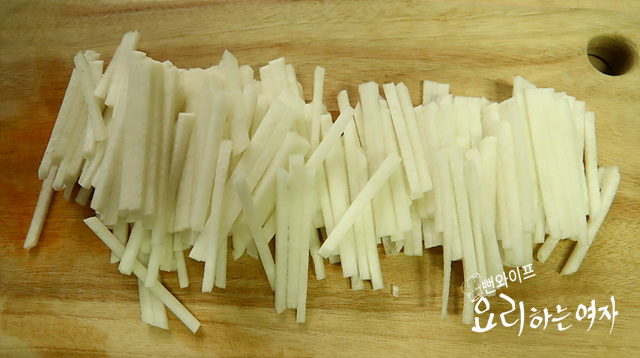
Julienne the radish to a thickness of 0.5 cm, keeping it not too thin so it retains a good bite.
Slicing along the grain prevents the pieces from breaking.
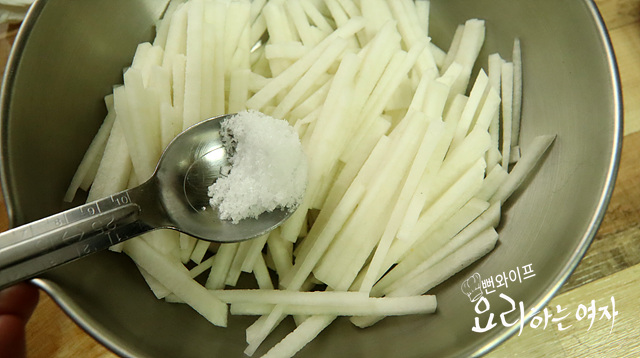
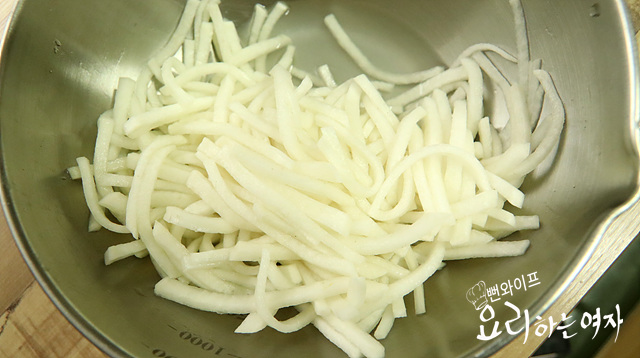
Add 1/2 tbsp salt and salt for approx. 20 to 30 minutes.
Toss it once or twice in the middle of salting.
With sweet and refreshing autumn radish, I usually don't discard the drawn-out liquid and add it directly into the stir-fry.
Radishes in season right now in summer are bitter and spicy, making the liquid taste unpleasant, so discard it.
Stir-fry the radish
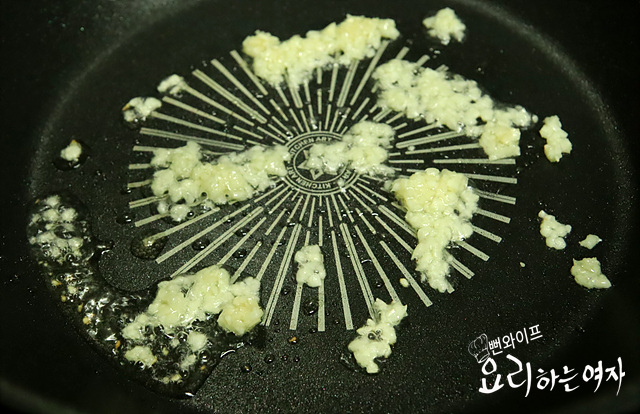
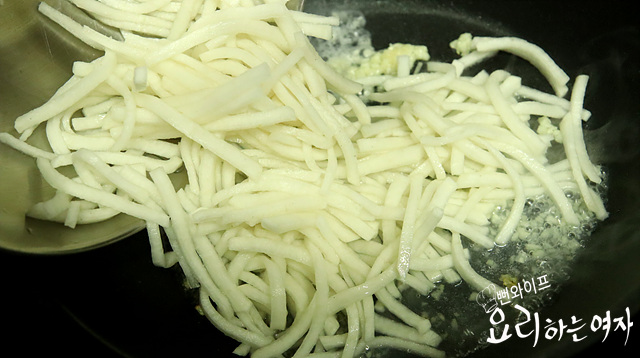
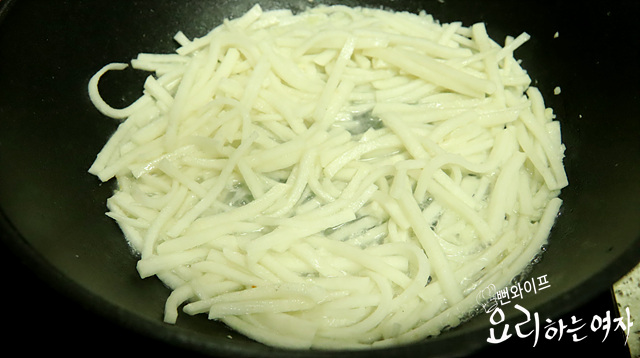
Heat oil in a preheated pan, add 1 tbsp minced garlic, and stir-fry until fragrant. Then add the radish and stir-fry.
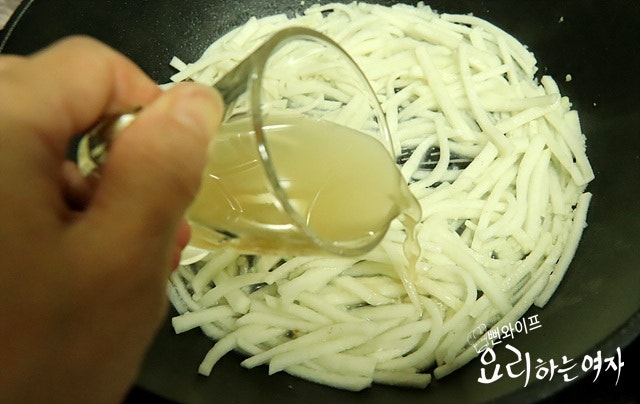
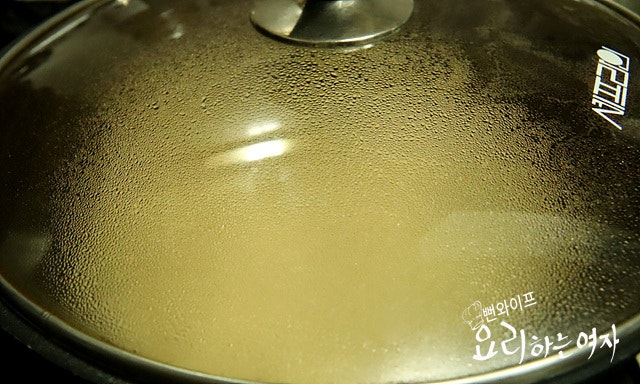
Pour in 1/2 cup anchovy broth.
If the radish still has a bitter and spicy taste despite being salted, add approx. 1/2 tsp sugar like I do, cover with a lid, and let it steam.
When stir-frying bellflower root (doraji), adding a little bit of sugar like this also helps if the bitterness is strong.
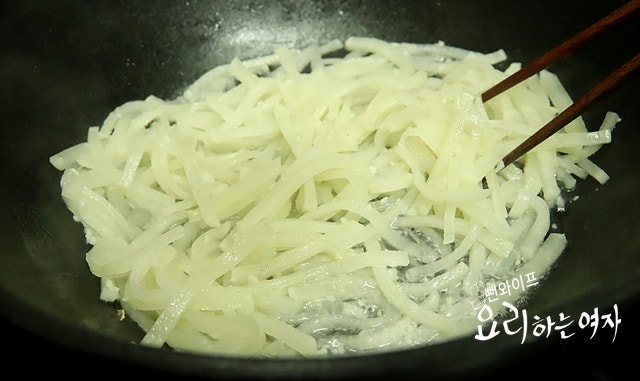
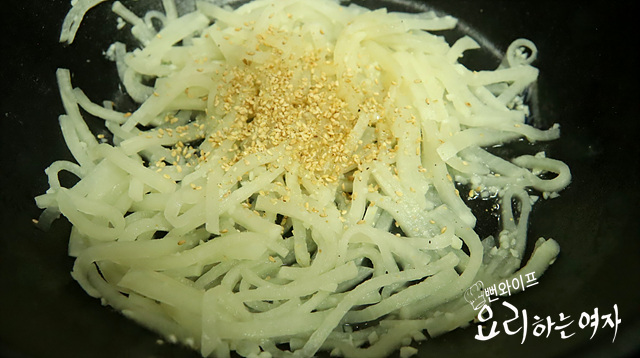
Remove the lid, and once the radish has cooked soft, add 2 tbsp minced green onion and stir-fry until the liquid has boiled down.
Taste and season with salt if it is bland, then finish by adding 1 tbsp perilla oil (or toasted sesame oil) and 1 tbsp ground toasted sesame seeds.
Boil the soybean sprouts
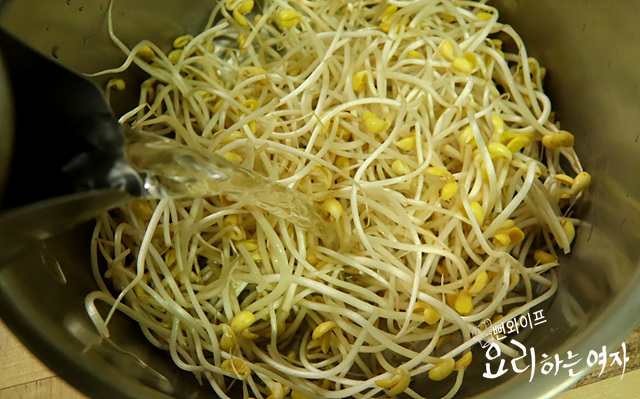
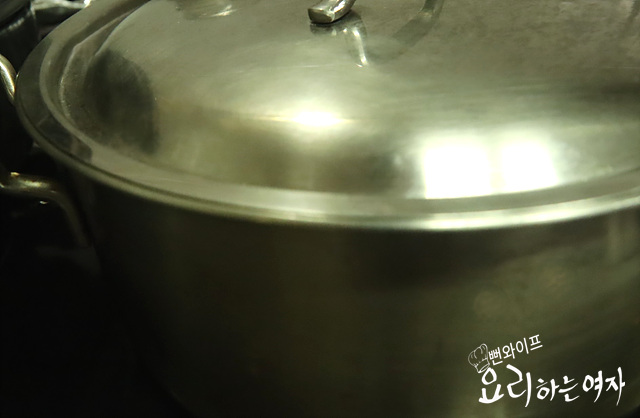
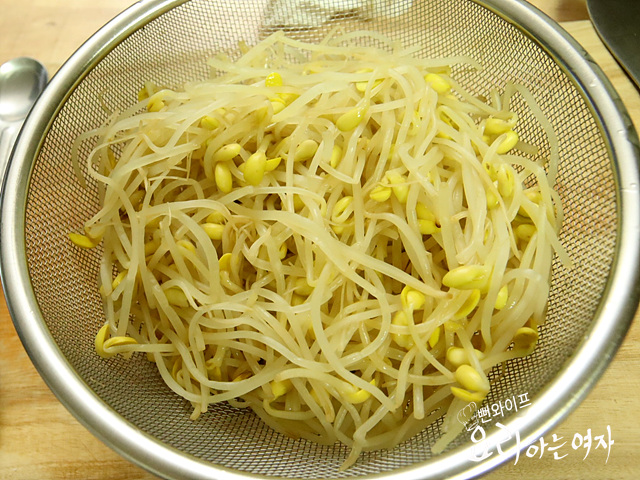
Place the soybean sprouts and 1/2 tbsp salt in a pot, and pour in enough water to submerge them about halfway.
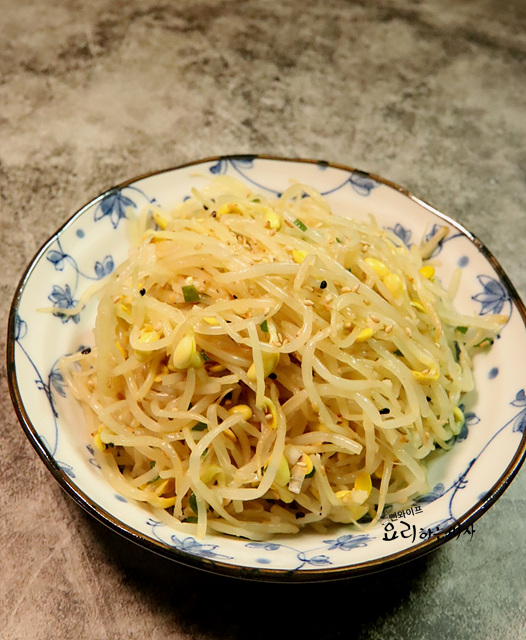
Cover with a lid and heat over high heat until it starts boiling and steaming. After 2 minutes, the raw beany smell will turn into a nutty, savory aroma.
At that point, turn off the heat and let it steam in the residual heat for approx. 3 minutes, and the soybean sprouts will be fully cooked.
To highlight a crisp texture, rinse in cold water and drain before seasoning; to preserve as much of their nutty, savory flavor as possible, season them after simply letting the heat dissipate.
Season the soybean sprouts
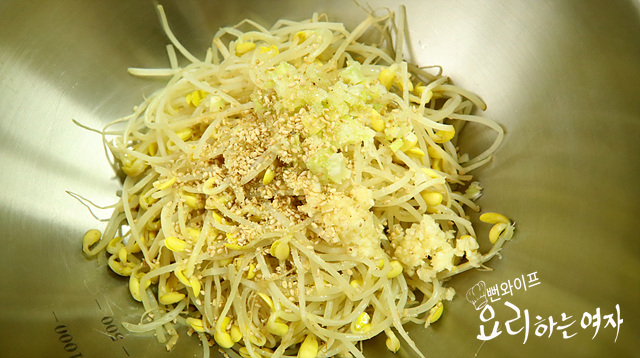
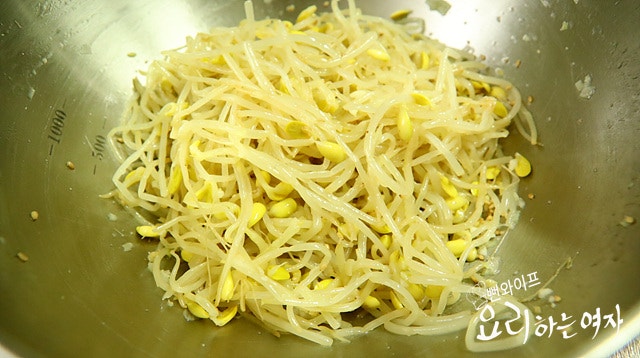
In a bowl, combine the soybean sprouts, 1 tsp soup soy sauce (guk-ganjang), 1/2 tsp salt, 1/2 tbsp minced garlic, 2 tbsp minced green onion, 1 tbsp toasted sesame oil, and 1 tbsp ground toasted sesame seeds, then gently mix by hand.
Serve
I made the stir-fried radish and the soybean sprouts separately this time.
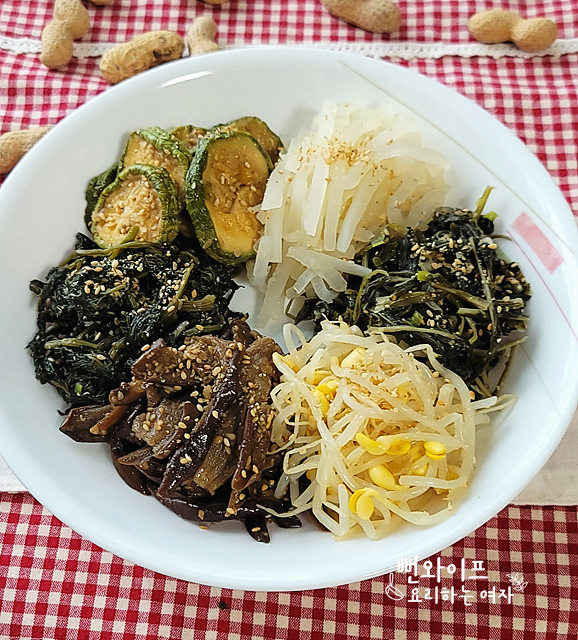
When I was young, the soybean sprouts and julienned radish for ancestral rite namul were boiled all together in one pot and served with a shallow pool of broth.
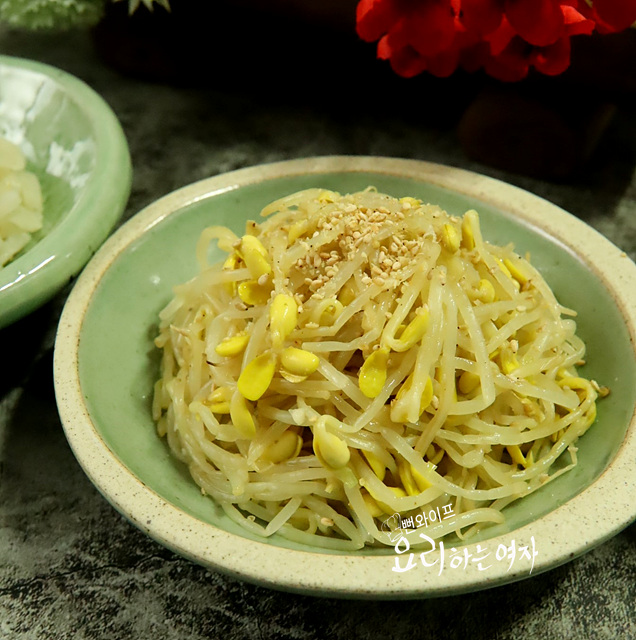
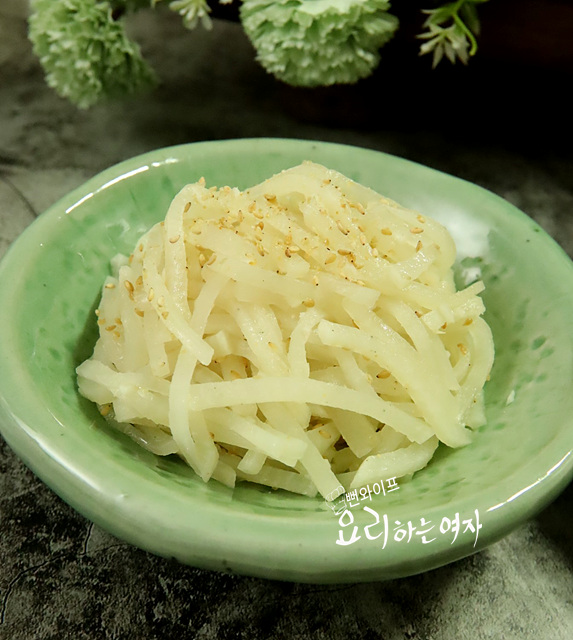
Stir-frying and seasoning them separately like this makes them even more delicious.
With the holidays approaching, you might be buying namul today or have already bought some.
Right before the holidays, namul prices shoot through the roof.
Prepare well and make something delicious.
Tomorrow I will bring tangguk (memorial beef and radish soup).
 Ppunwife's tips
- Slicing the radish along the grain prevents the pieces from breaking.
- If the radish still tastes bitter and spicy after salting, adding approx. 1/2 tsp sugar, covering with a lid, and letting it steam will help.
- To highlight a crisp texture, rinse the boiled sprouts in cold water and drain before seasoning; to preserve maximum savory flavor, season them after simply letting the heat cool down.
FAQ
How should I cut the radish so it doesn't break while stir-frying?
Julienne the radish to a thickness of 0.5 cm along the grain, and the pieces will not break easily when stir-fried.
Is there a trick to reduce the bitterness and pungency of summer radish?
Discard the liquid extracted after salting, and when simmering with broth, add a little sugar, cover with a lid, and let it steam to help tame the bitterness.
How long should I boil the soybean sprouts to keep them crisp without any beany smell?
Cover with a lid over high heat, wait 2 minutes after steam starts rising, then turn off the heat and let it steam for approx. 3 minutes. The beany smell will be gone, and the sprouts will be cooked through.
How can I choose between a crisp texture or a richer savory flavor for the soybean sprouts?
For a crisper texture, rinse in cold water and drain after boiling; to retain their rich, savory flavor, do not rinse them and simply let the heat dissipate before seasoning.