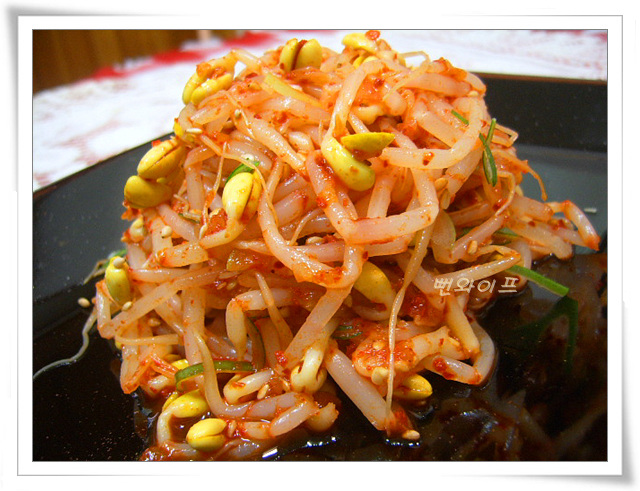
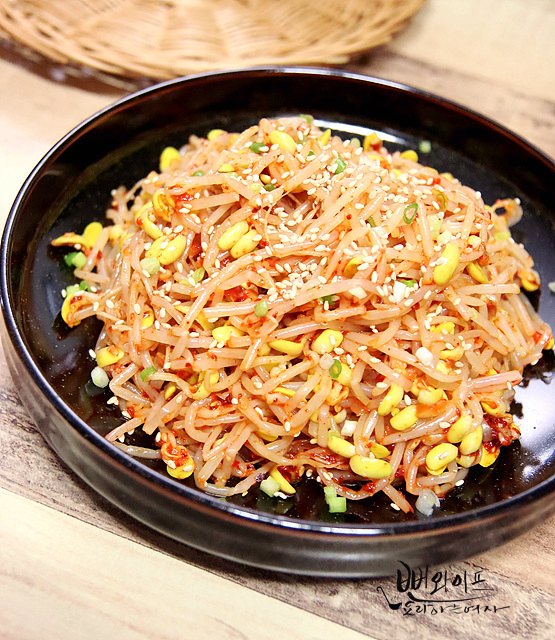
Kongnamul Muchim, Mu Namul Muchim (Seasoned Soybean Sprouts and Radish)
A vegetable side dish made by cooking soybean sprouts and julienned radish together in one pot, then seasoning each separately with basic seasonings.
Translated from Korean by AI and not yet checked by a native speaker. Amounts and numbers are taken directly from the original recipe. Read the Korean original →
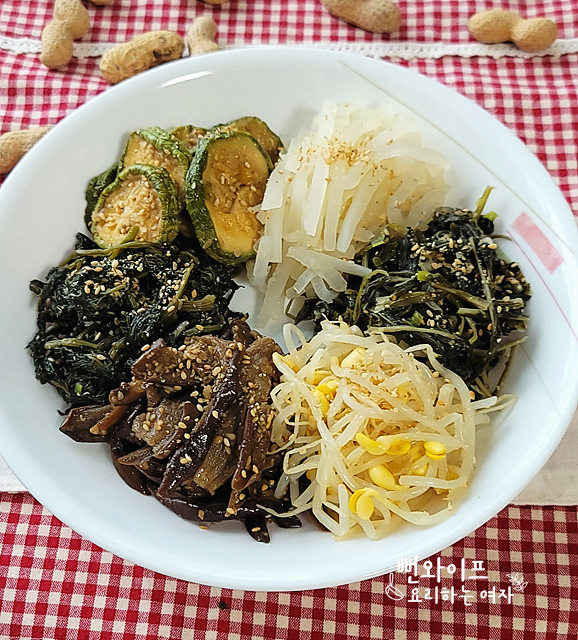
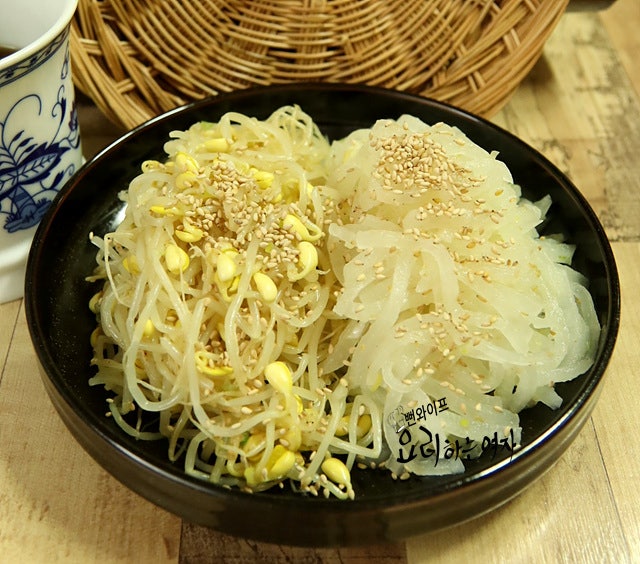
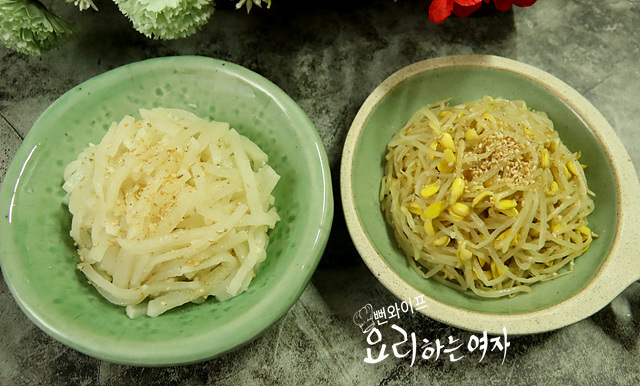
This is a simple namul side dish made by boiling soybean sprouts and radish together in a single pot and then seasoning them separately. Seasoned cleanly with tuna extract sauce and toasted sesame oil, it is wonderful to enjoy as food for Jeongwol Daeboreum (First Full Moon festival) or as bibimbap toppings.
- Servings
- about 6–8 servings
- Difficulty
- Easy
- Spiciness
- Not spicy
Ingredients
Soybean sprout seasoning ingredients
- Soybean sprouts300 g
- Tuna extract sauce (chamchi-aek)1 tbsp
- Salta little
- Toasted sesame oil1 tbsp
- Ground toasted sesame seeds1 tbsp
Radish namul seasoning ingredients
- Korean radish (mu)500 g
- Tuna extract sauce (chamchi-aek)1 tbsp
- Salta little
- Toasted sesame oil1 tbsp
- Ground toasted sesame seeds1 tbsp
- Because the radish will be cooked together with the soybean sprouts and seasoned, cut it into matchsticks about 0.4 to 0.5 cm thick so it does not break apart and look messy.
Steps
Prepare the ingredients
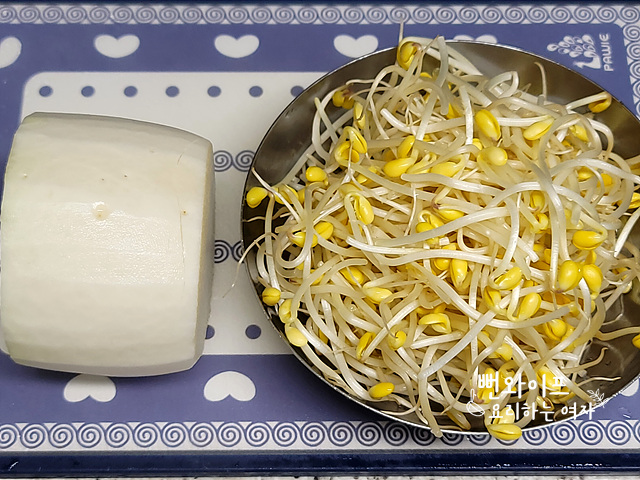
Prepare the Korean radish and soybean sprouts.
Slice the radish
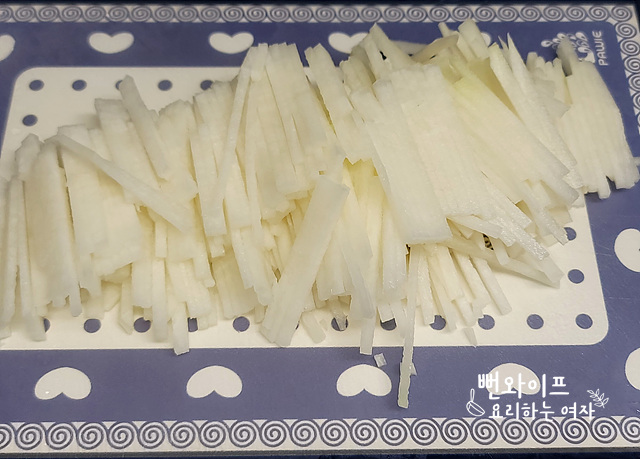
Because the radish will be cooked together with the soybean sprouts and seasoned, cut it into matchsticks about 0.4 to 0.5 cm thick so it does not break apart and look messy.
Boil the soybean sprouts and radish
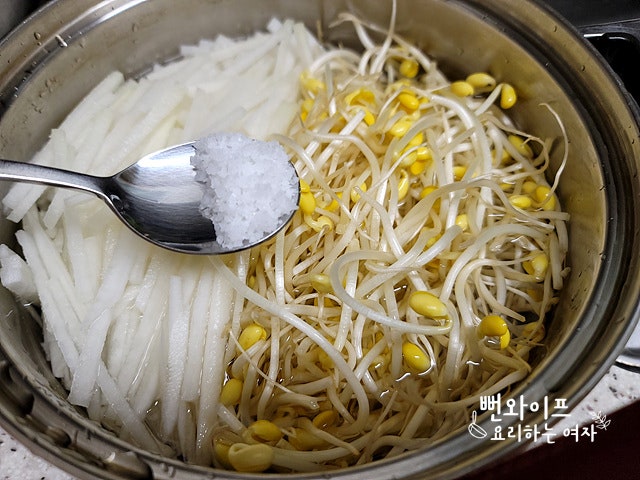
Place the radish and soybean sprouts side by side in the pot, each filling half, and pour in water only up to about 2/3 of the ingredients so they are not completely submerged.
Add 1/2 tbsp of salt, cover with a lid, and bring to a boil over high heat; once it starts boiling and steaming, reduce the heat to medium-low and boil for 2 to 3 minutes.
Around this time, the raw bean smell should be gone. Turn off the heat, leave it as is, and let it rest and steam for 3 minutes.
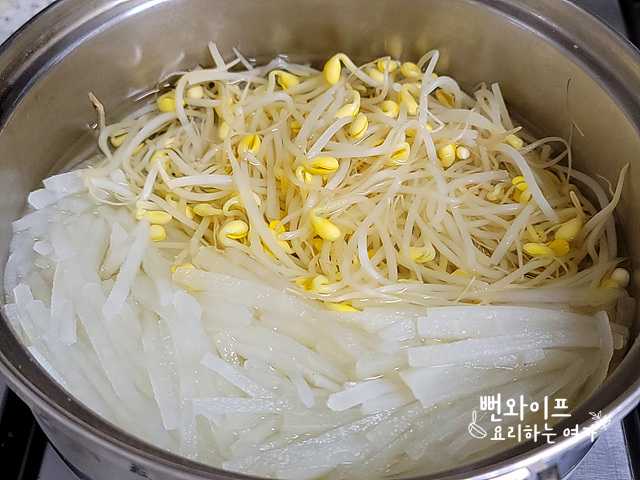
When you open the lid, the soybean sprouts and radish will be cooked nicely, and enough liquid will have drawn out to submerge them.
The broth made by boiling radish and soybean sprouts together is truly refreshing and delicious.
Remove enough soybean sprouts and radish to season, and then simply adjust the seasoning of the broth to taste and enjoy it.
Season the vegetables
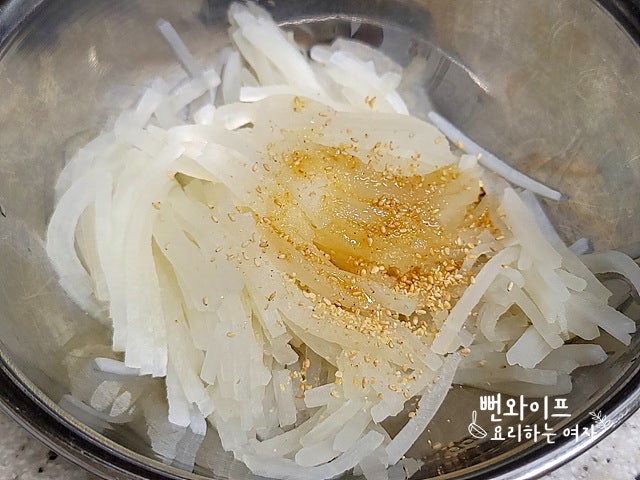
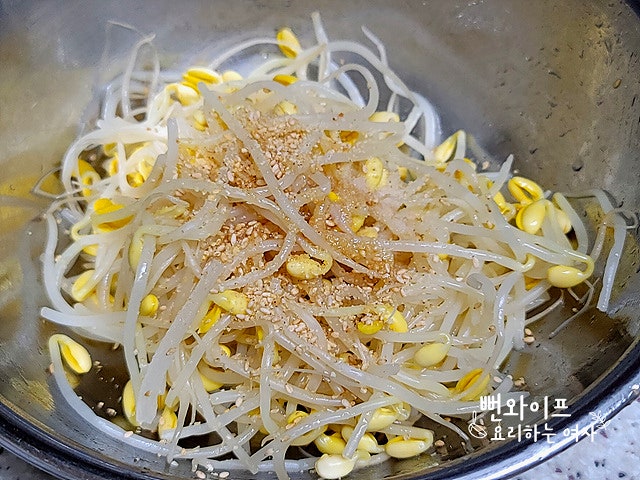
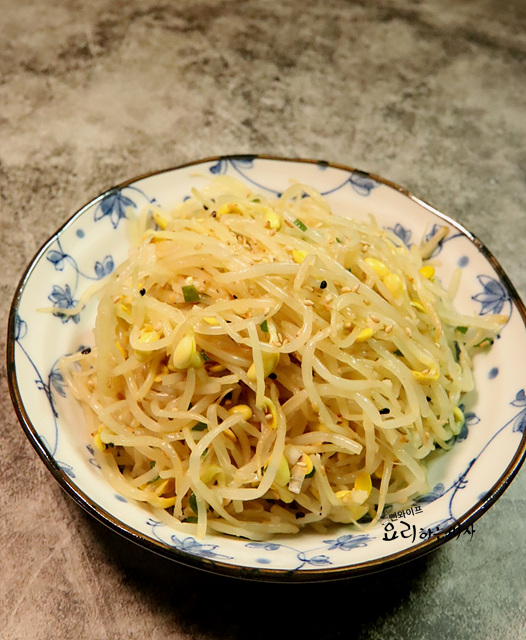
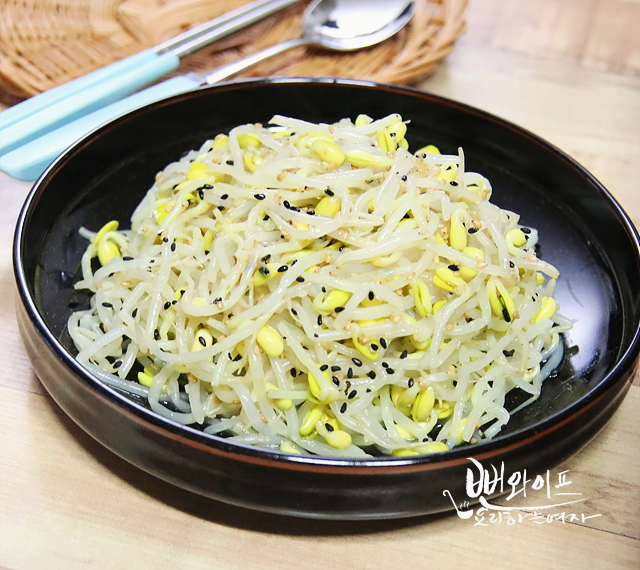
Drain the liquid from the scooped-out soybean sprouts and radish namul, and season them cleanly with tuna extract sauce, a little salt, toasted sesame oil, and ground toasted sesame seeds.
Because they are not stir-fried, minced green onion and minced garlic are omitted.
Complete the dish
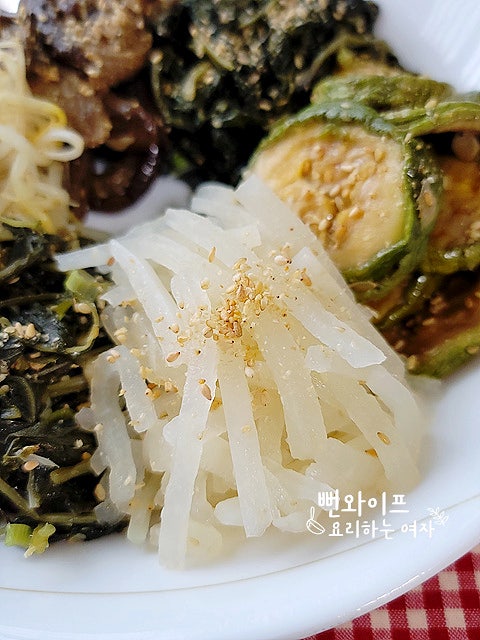
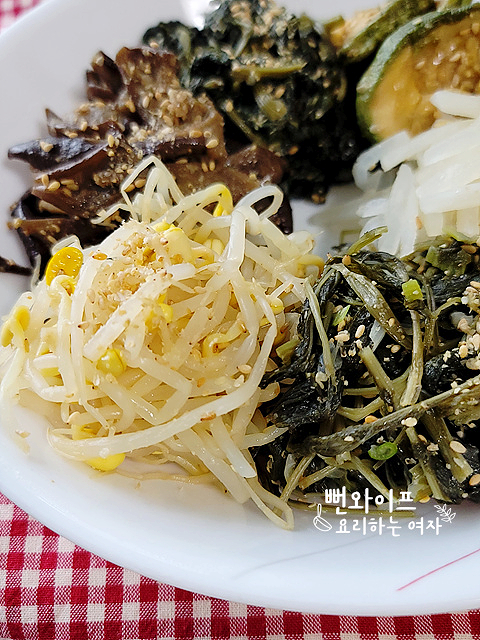
Bibimbap is delicious with just radish namul and soybean sprouts, but adding a few types of dried namul creates a truly luxurious flavor.
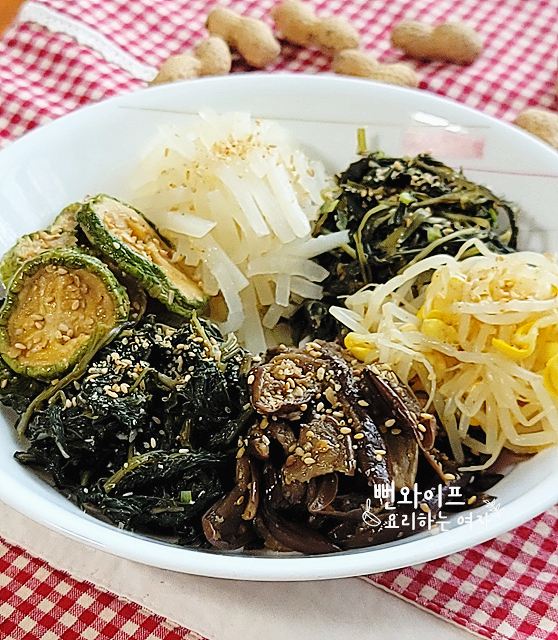
The taste, texture, and aroma coming from each ingredient...
Even if making them is tiring on the body, eating them is the moment when the mouth is truly pampered.
 Ppunwife's tips
- Because the radish will be cooked together with the soybean sprouts and seasoned, cut it into matchsticks about 0.4 to 0.5 cm thick so it does not break apart and look messy.
- Because they are not stir-fried, minced green onion and minced garlic are omitted.
FAQ
What is the appropriate thickness when slicing the radish?
It is best to julienne it to about 0.4 to 0.5 cm thick so that it does not break apart when cooked together with the soybean sprouts.
Is there a reason green onions and garlic are not added when seasoning the namul?
Minced green onion and minced garlic were omitted because this method seasons the vegetables cleanly rather than stir-frying them in oil.
How can I use the broth left over from boiling the ingredients?
Adjust the seasoning of the broth left after removing the radish and soybean sprouts to your taste, and you can enjoy it as a refreshing soup.
Can I use other fish sauces instead of tuna extract sauce? AI-generated
Generally, you can use a small amount of anchovy fish sauce, sand lance fish sauce, or soup soy sauce (guk-ganjang) to add umami and balance the saltiness.