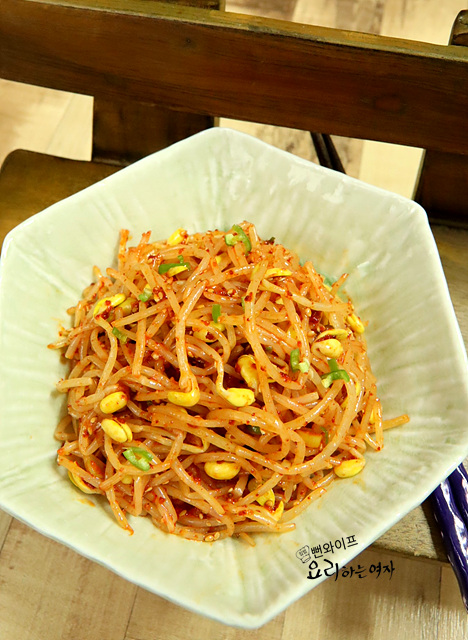
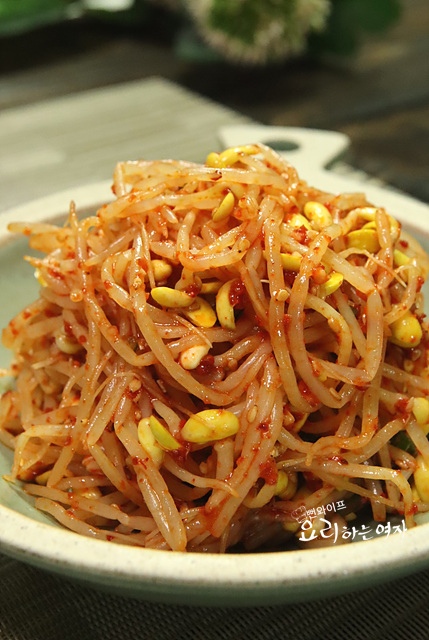
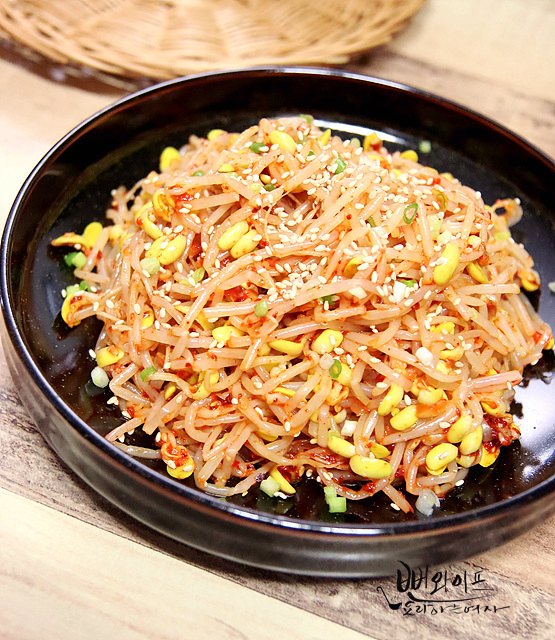
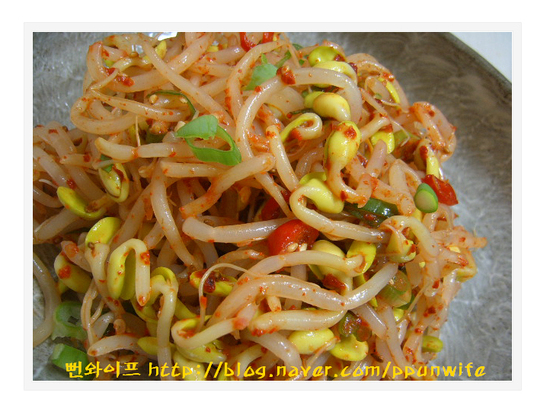
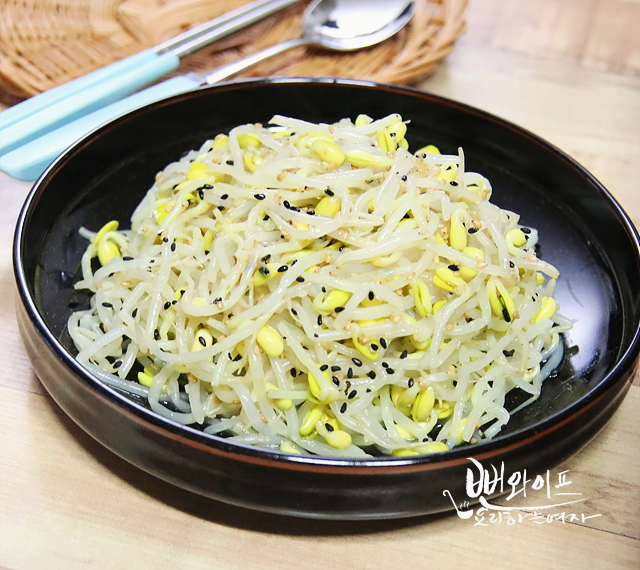
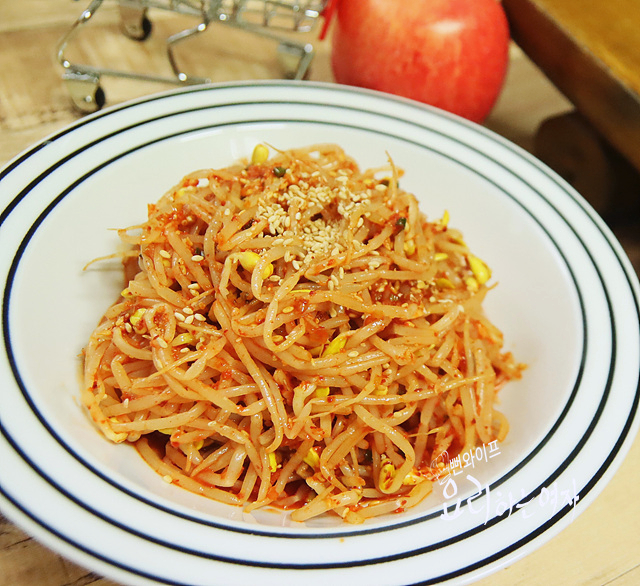
Savory and Spicy Kongnamul Muchim (Seasoned Soybean Sprouts)
A 20-minute side dish of Kongnamul muchim (seasoned soybean sprouts) with a spicy kick from gochugaru and Cheongyang chili pepper.
Translated from Korean by AI and not yet checked by a native speaker. Amounts and numbers are taken directly from the original recipe. Read the Korean original →
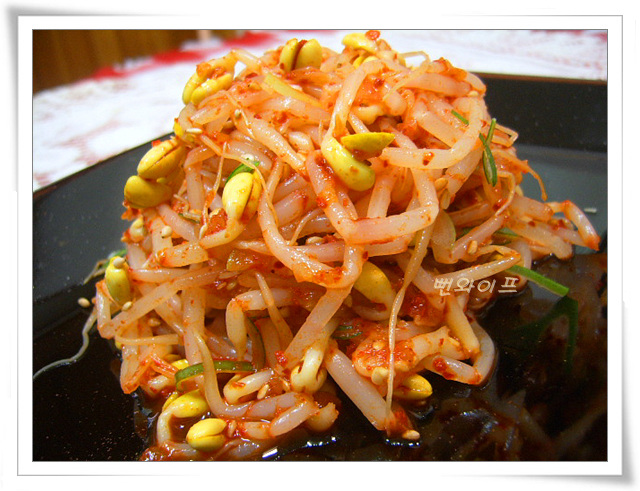
A 20-minute side dish made by boiling soybean sprouts without any fishy smell and tossing them with gochugaru and various seasonings. Cheongyang chili pepper adds a spicy kick while highlighting the savory flavor of toasted sesame oil. Anyone can easily make it once they get the hang of boiling soybean sprouts.
- Servings
- 3–4 servings
- Cook time
- 20 minprep not included
- Difficulty
- Easy
- Spiciness
- Spicy
Ingredients
Ingredients
- Soybean sprouts3 handfuls, 300 g
- Coarse sea salt1 tsp
- Water1.5 cups (1 1/2 cups)
Seasoning
- Minced green onion2 tbsp
- Minced garlic1 tbsp
- Minced Cheongyang chili pepper (hot green chili)1 tbsp
- Gochugaru (Korean chili flakes)1 tbsp
- Salt0.5 tbsp
- Ground toasted sesame seeds0.5 tbsp
- Toasted sesame oil0.5 tbsp
- For children or adults who do not like spicy food, leave out the gochugaru and chili pepper when mixing.
- Depending on your preference, you can also season it with saeujeot (salted fermented shrimp) or soup soy sauce (guk-ganjang).
Steps
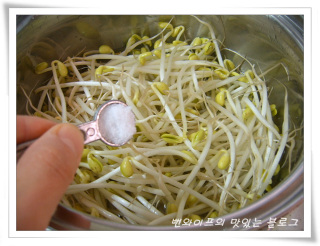
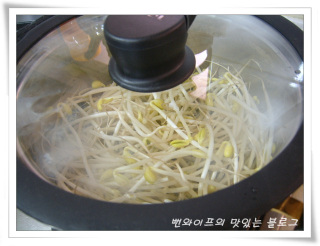
1. Pour 1.5 cups (1+1/2 cups) of water into a pot, then add 1 tsp of salt and the soybean sprouts.
2. Cover with a lid and boil over high heat for about 5 to 6 minutes.
Be careful, as opening the lid halfway through while the soybean sprouts are still uncooked to check on them will cause a raw, fishy smell.
For beginners, another method is to boil them with the lid off from the very beginning until they are cooked.
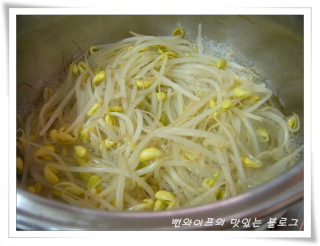
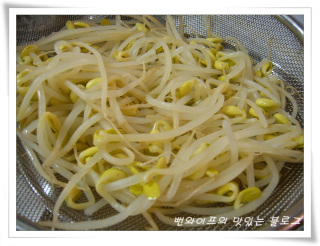
3. When the stems turn translucent and the savory aroma of soybean sprouts emerges, they are properly boiled.
4. Drain through a sieve, and...
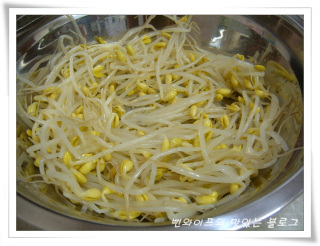
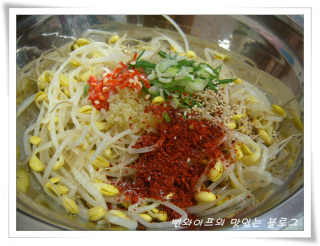
5. Spread them out in a bowl to cool.
If you want an even crispier texture, you can quickly cool them down in the refrigerator or rinse them in cold water.
6. Add the soybean sprouts and all seasoning ingredients together, then gently toss by hand.
I also added 1 Cheongyang chili pepper for spiciness, but feel free to omit it if you prefer.
Depending on your preference, you can also season it with saeujeot (salted fermented shrimp) or soup soy sauce (guk-ganjang).
 Ppunwife's tips
- Be careful, as opening the lid halfway through while the soybean sprouts are still uncooked to check on them will cause a raw, fishy smell.
- For beginners, another method is to boil them with the lid off from the very beginning until they are cooked.
- When the stems turn translucent and the savory aroma of soybean sprouts emerges, they are properly boiled.
- If you want an even crispier texture, you can quickly cool them down in the refrigerator or rinse them in cold water.
FAQ
How do I prevent a fishy smell when boiling soybean sprouts?
Opening the lid midway while boiling covered can cause a fishy smell, so keep it closed until they are fully cooked. If that feels tricky, you can also boil them with the lid off from the start.
Is there a way to make the soybean sprouts crunchier?
After boiling, spreading them out in a wide bowl to cool quickly in the refrigerator or rinsing them in cold water will make them crunchier.
How can I make this for children or people who cannot eat spicy food?
Simply omit the gochugaru and Cheongyang chili pepper from the seasoning to enjoy a mild version.
Can I season it with other condiments instead of salt?
Depending on your preference, you can season with saeujeot (salted fermented shrimp) or soup soy sauce (guk-ganjang) instead of salt.