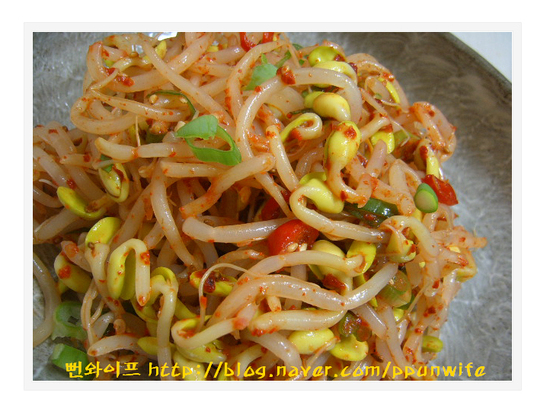
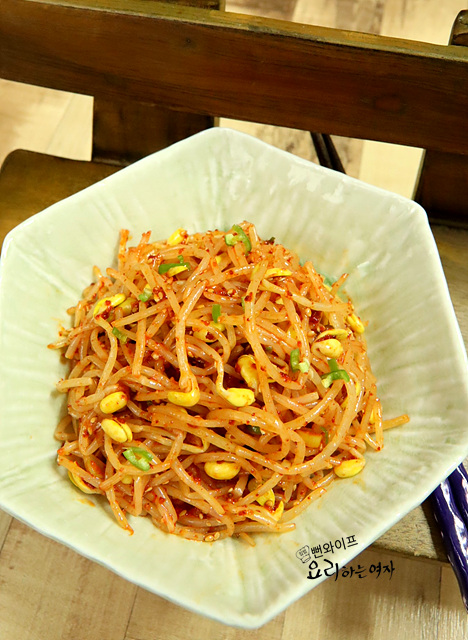
Spicy Kongnamul Muchim (Seasoned Soybean Sprouts) in 8 Minutes
Crunchy soybean sprouts tossed in a spicy, savory seasoning of gochugaru and tuna extract sauce.
Translated from Korean by AI and not yet checked by a native speaker. Amounts and numbers are taken directly from the original recipe. Read the Korean original →
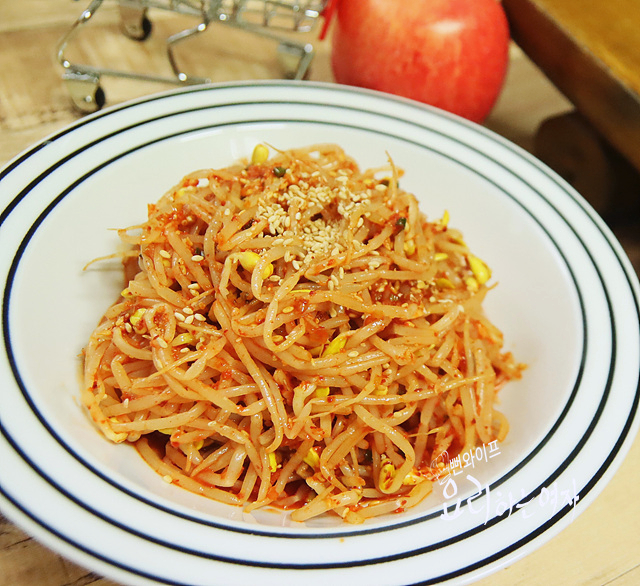
A spicy seasoned side dish featuring soybean sprouts boiled just right so they stay crisp without any raw bean odor. Tuna extract sauce provides the foundational savory umami, while a pinch of salt rounds out the seasoning without making it too salty. Made easily with simple everyday ingredients, it is a wonderful side dish for any rice bowl.
- Servings
- 2–3 servings
- Cook time
- 8 minprep not included
- Difficulty
- Easy
- Spiciness
- Mildly spicy
Ingredients
Ingredients
- Soybean sprouts300 g
- Salt1 tsp
Seasoning
- Gochugaru (Korean chili flakes)1 tbsp
- Tuna extract sauce (chamchi-aek) (or soup soy sauce (guk-ganjang))1 tbsp
- Minced garlic1/2 tbsp
- Minced green onion3 tbsp
- Salt1/3 tsp
- Toasted sesame seeds1 tbsp (ground)
- Toasted sesame oil1 tbsp
- Rinse the soybean sprouts while swishing them in water so loose skins sink to the bottom.
- Grinding toasted sesame seeds coarsely enhances their nutty aroma, so grind them rather roughly rather than too fine.
Steps
Prepare the ingredients
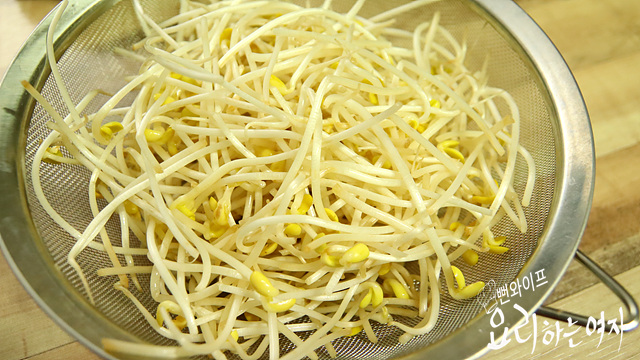
Here is 300g of soybean sprouts.
I washed them by swishing them in water so any loose skins sank to the bottom.
Boil the soybean sprouts
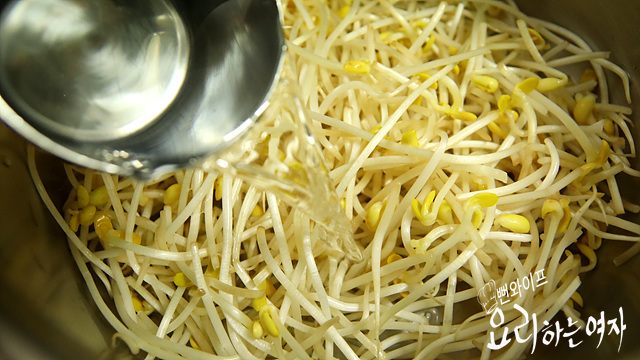
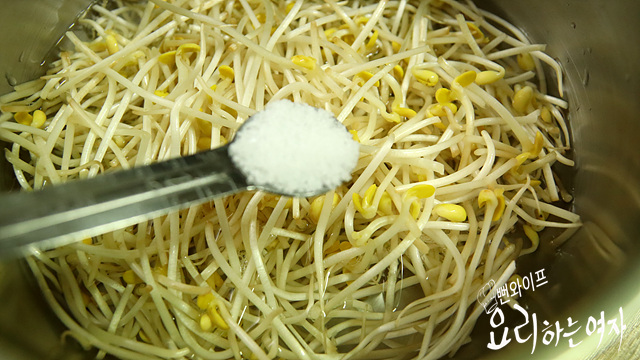
Place the soybean sprouts in a pot. They do not need to be completely submerged; pour in enough water to come about halfway up, and add 1 tsp of salt.
Cover with the lid and bring to a boil over high heat.
After about 3 to 4 minutes, it will come to a boil and steam will begin to escape.
From this point, after around 2 minutes pass, the raw bean smell will disappear and a savory aroma will begin to rise.
Turn off the heat now and let it steam undisturbed for 2 minutes.
If you prefer to boil them with the lid off, add the soybean sprouts to rolling boiling water and boil for 4 to 5 minutes until a savory aroma rises.
The most important rule for boiling soybean sprouts without any raw smell is to keep the lid either on or off from start to finish until fully cooked.
If you open the lid while they are still undercooked, the raw bean smell will linger even after you season them.
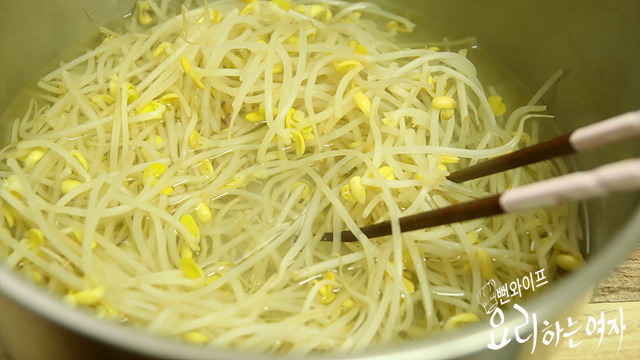
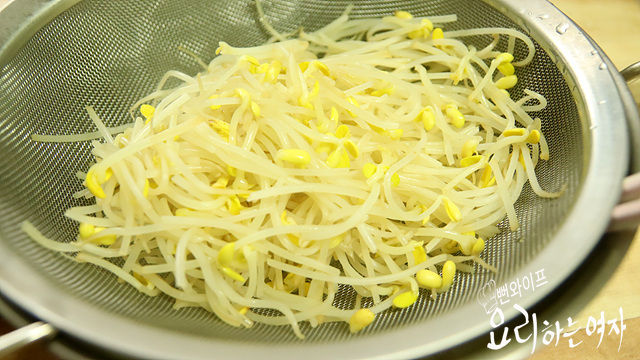
When you open the lid, they will be evenly cooked yet still crisp without having gone limp.
That means they are boiled properly.
Drain in a colander to remove excess water and let the heat dissipate.
If you want to enjoy them cold and extra crisp like a chilled salad, you may rinse them in cold water.
Prepare the remaining ingredients
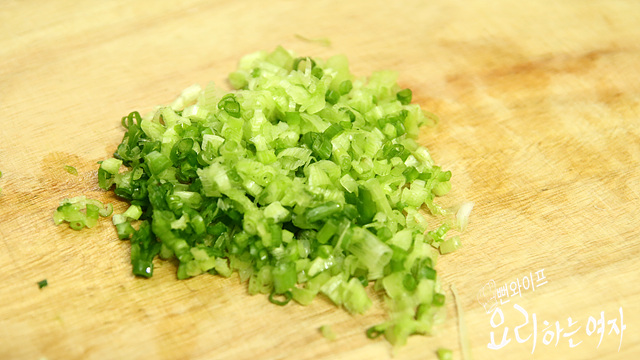
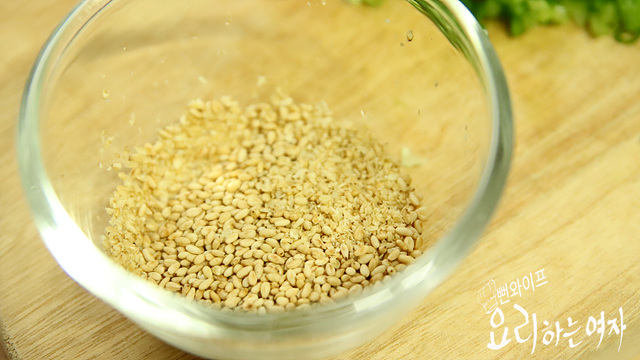
Minced green onion is essential for a delicious kongnamul muchim, so finely chop enough to make about 3 tbsp.
Coarsely grinding the toasted sesame seeds brings out far more nuttiness in seasoned vegetables, so grind them lightly rather than into a fine powder.
Toss and season
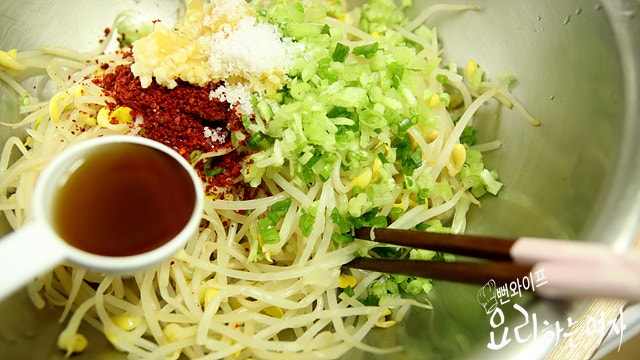
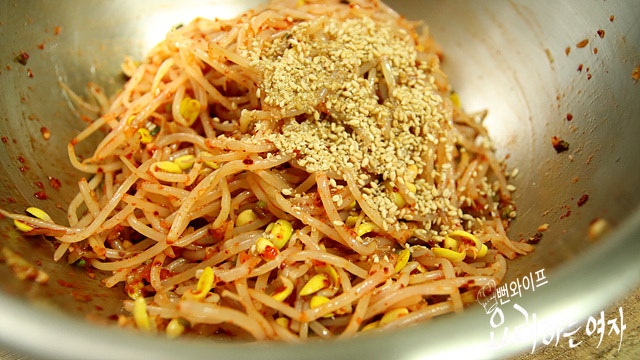
In a mixing bowl, combine the soybean sprouts, 1 tbsp gochugaru, 1 tbsp tuna extract sauce (or soup soy sauce), 1/2 tbsp minced garlic, 3 tbsp minced green onion, 1 tbsp ground toasted sesame seeds, and 1 tbsp toasted sesame oil, then toss gently with your hands.
It was slightly under-salted, so I finished it off by adding 1/3 tsp of salt.
Setting the base seasoning with soup soy sauce or tuna extract sauce first and adjusting with salt at the very end ensures it does not turn out overly salty.
Finish
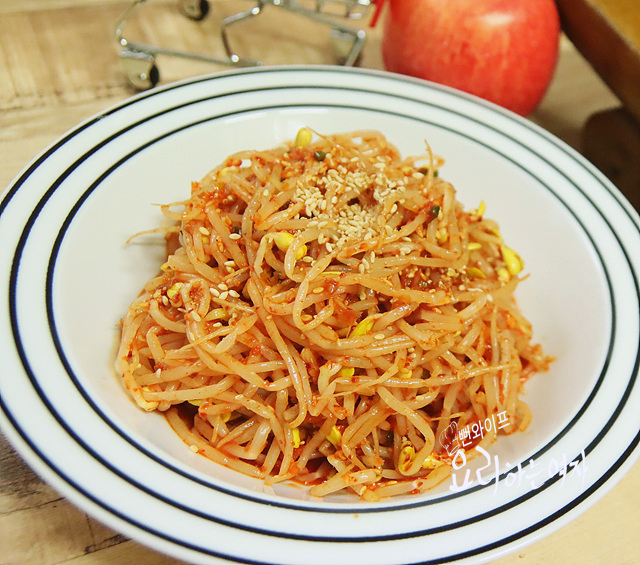
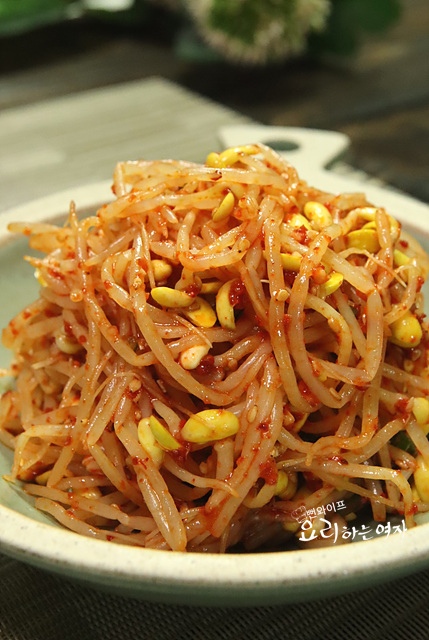
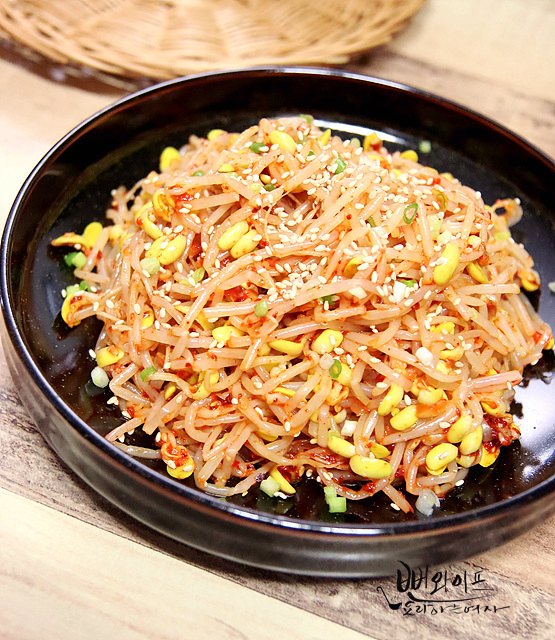
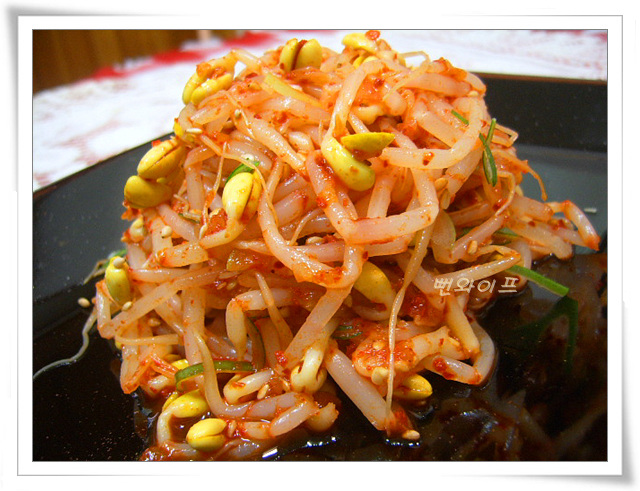
The stems of the soybean sprouts are plump and delightfully crisp.
When boiling soybean sprouts to keep them crunchy, you might worry they are undercooked, but overcooking them to avoid the raw smell can leave them tough and deflated.
It can feel daunting to do it purely by intuition, so follow the exact timing provided here to make them successfully.
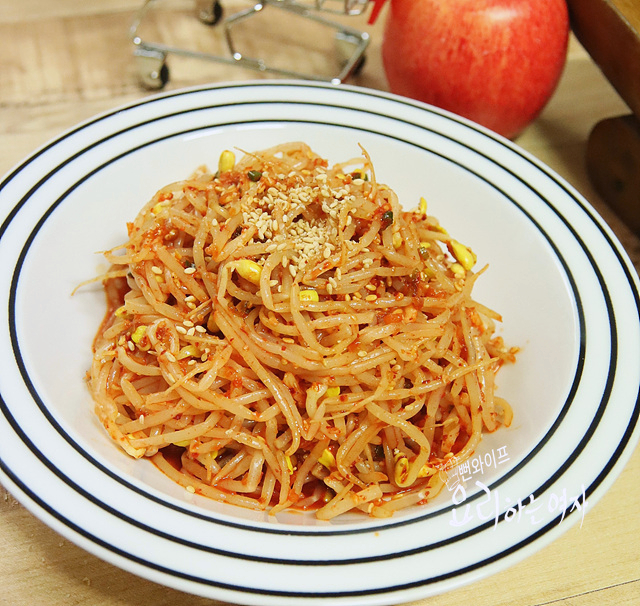
Healthy, delicious, and budget-friendly, try tossing these soybean sprouts often for your everyday table.
 Ppunwife's tips
- The most important rule for boiling soybean sprouts without any raw smell is to keep the lid either on or off from start to finish until fully cooked. If you open the lid while they are still undercooked, the raw bean smell will linger even after you season them.
- If you want to enjoy them cold and extra crisp like a chilled salad, you may rinse them in cold water.
- Setting the base seasoning with soup soy sauce or tuna extract sauce first and adjusting with salt at the very end ensures it does not turn out overly salty.
FAQ
How do I prevent the raw bean smell when boiling soybean sprouts?
You must either keep the lid covered from start to finish or leave it off the entire time. Opening the lid while they are still undercooked leaves a raw bean smell that remains even after seasoning.
What is the exact cooking time when boiling with the lid covered?
Place over high heat; once it steams after 3 to 4 minutes, boil for about 2 more minutes until a savory aroma rises, then turn off the heat and let it steam covered for 2 minutes.
Can I use soup soy sauce instead of tuna extract sauce?
Yes, you can substitute an equal amount of soup soy sauce for tuna extract sauce to build the base savory flavor.
How can I make the texture colder and even crisper?
Instead of letting the boiled soybean sprouts cool naturally in a colander, giving them a quick rinse in cold water makes them much colder and crisper.