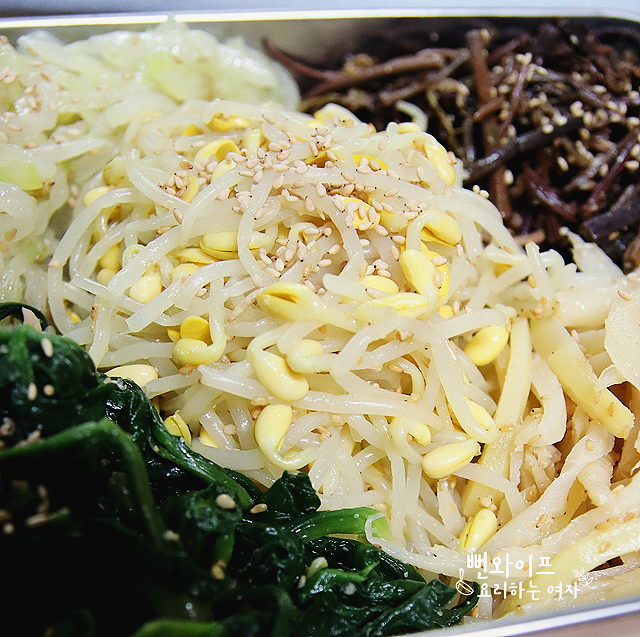
Kongnamul Muchim (Seasoned Soybean Sprouts) for Kids
A clean-tasting namul side dish made by boiling soybean sprouts and radish together in one pot, then tossing each in its own seasoning.
Translated from Korean by AI and not yet checked by a native speaker. Amounts and numbers are taken directly from the original recipe. Read the Korean original →
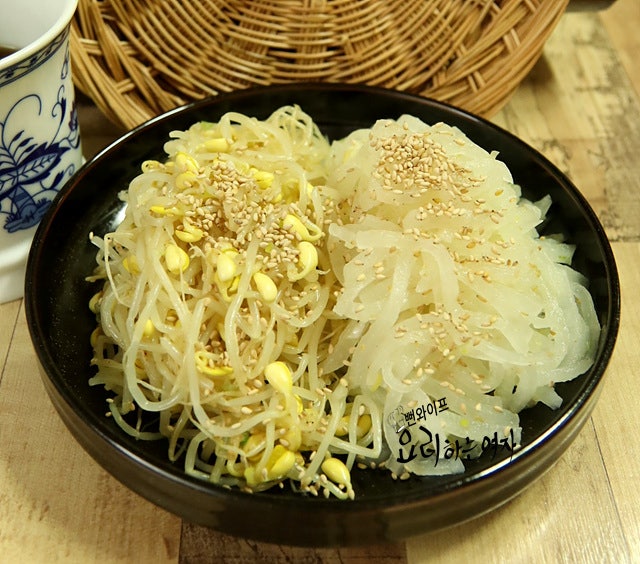
This side dish cooks soybean sprouts and julienned radish together in one pot before seasoning each separately for a clean, gentle flavor. Boiling with the lid on and letting it rest off the heat clears away any raw smell and leaves a refreshing broth that can be enjoyed as soup. Mild and non-spicy, it is great for kid-friendly meals as well as holiday tables.
- Servings
- about 5–6 servings
- Difficulty
- Medium
- Spiciness
- Not spicy
Ingredients
Kongnamul Muchim Recipe
- Soybean sprouts300 g
- Minced green onion2 tbsp
- Minced garlic1 tsp
- Salt1/2 tsp
- Tuna extract sauce (chamchi-aek)1/2 tbsp
- Toasted sesame oil1 tbsp
- Toasted sesame seeds1 tbsp (ground)
Munamu Recipe
- Korean radish (mu)500 g
- Minced green onion2 tbsp
- Minced garlic1/2 tbsp
- Salt1 tsp
- Tuna extract sauce (chamchi-aek)1/2 tbsp
- Toasted sesame oil1 tbsp
- Toasted sesame seeds1 tbsp (ground)
- Julienne the radish so it is not too thin, around 0.4–0.5 cm. Any thicker than that and it breaks easily, so this thickness is just right.
Steps
Prepare the ingredients
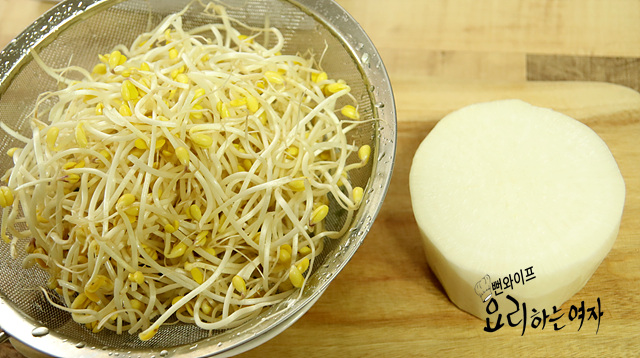
Use 300 g of soybean sprouts, about three large handfuls.
I prepared 500 g of radish, about 1/3 of a small radish.
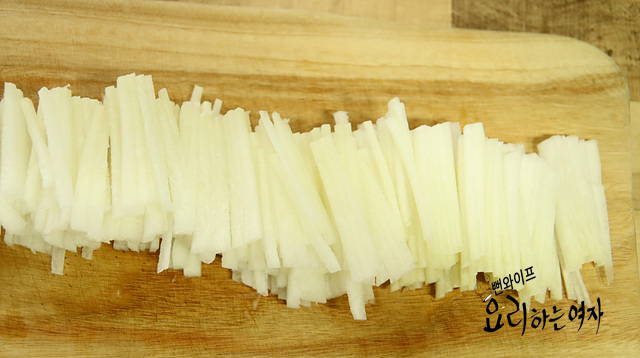
Julienne the radish so it is not too thin, around 0.4–0.5 cm.
Any thicker than that and it breaks easily, so I think this thickness is just right.
Boil the soybean sprouts and radish
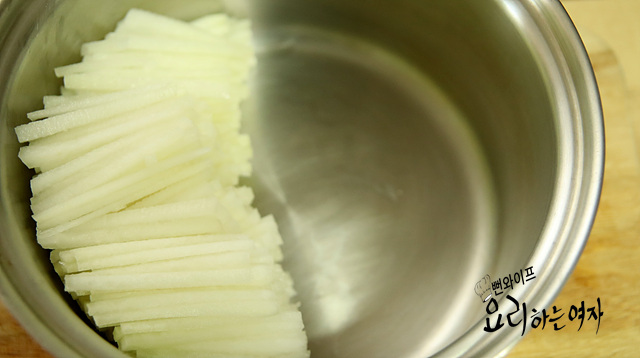
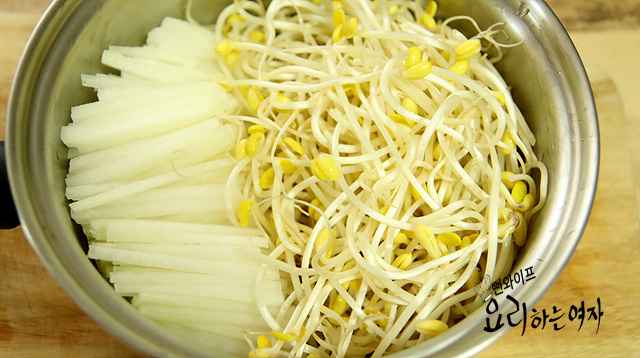
Place the julienned radish and soybean sprouts side by side in the pot, half and half.
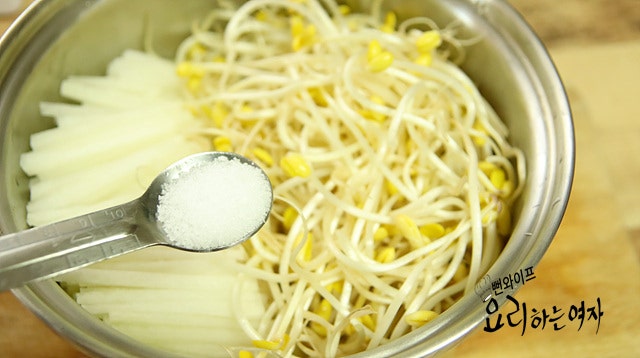
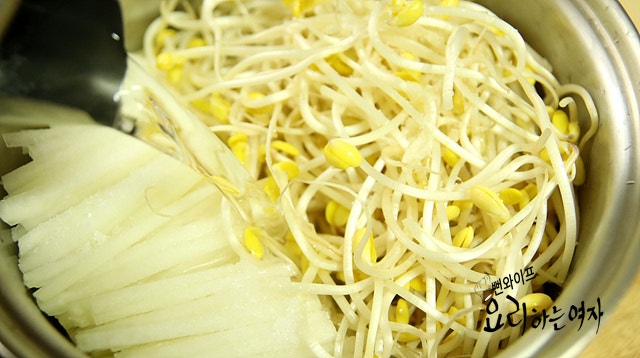
Add 1 tbsp of salt and pour in 5 cups of water.
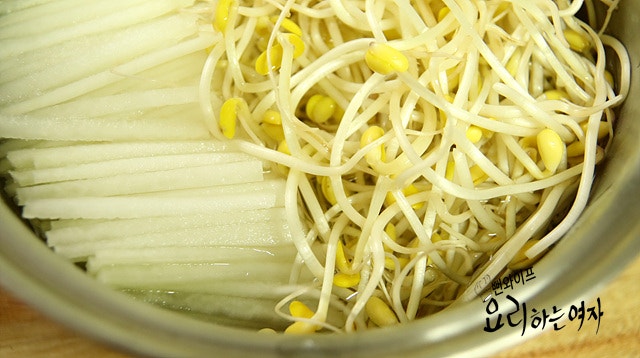
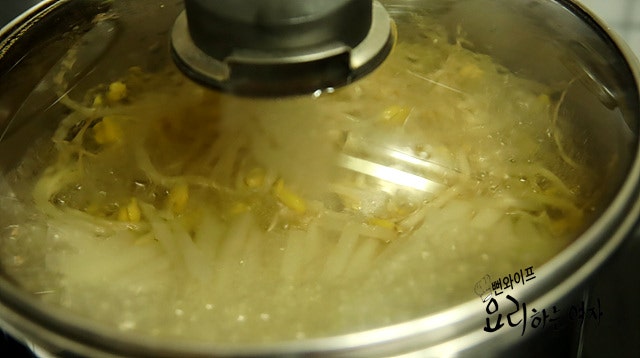
Pouring in just enough water so the ingredients are barely submerged, rather than completely covered, is plenty for them to cook through as it boils.
I did not add much water because I planned to scoop out what I needed for the seasoned dishes and drink the broth as well.
Cover with the lid, and once it comes to a rolling boil, wait about 2 minutes; the raw sprout smell will turn into a savory, nutty aroma.
Just turn off the heat and let it rest in the residual heat for about 3 minutes.
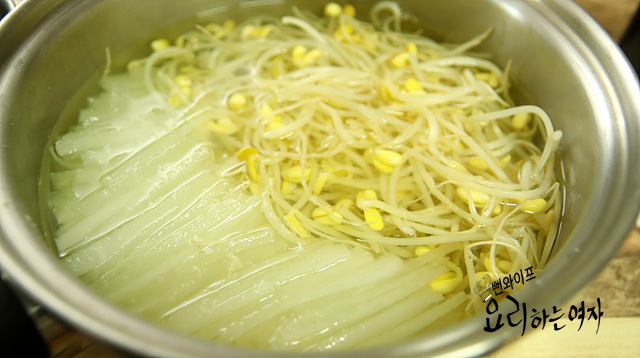
As the soybean sprouts and radish cooked, a rich, flavorful broth developed.
Season the soybean sprouts
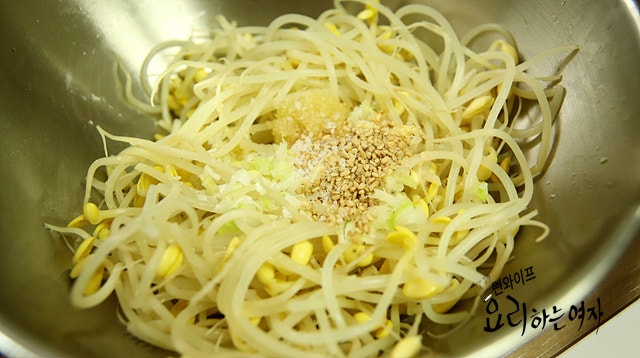
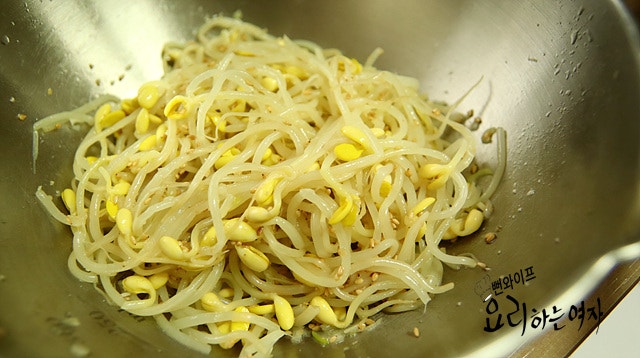
Take out the soybean sprouts, drain them in a strainer, let them cool, and then toss them with all the seasonings.
Taste and adjust with salt or tuna extract sauce (chamchi-aek) if it seems bland.
Season the radish
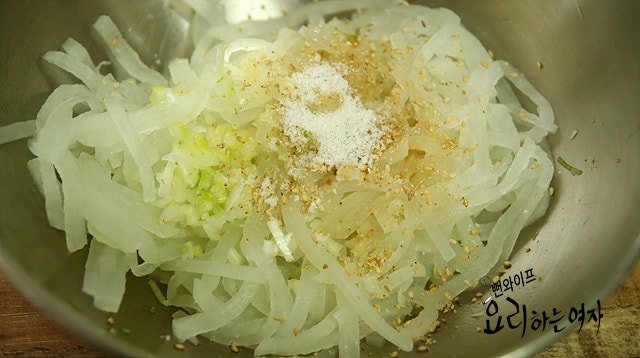
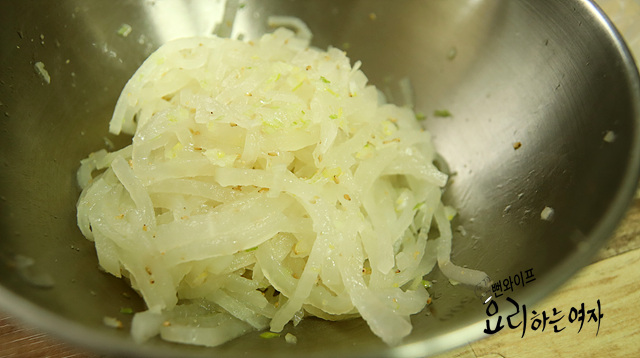
Take out the cooked radish, drain and cool it, then add all the seasoning ingredients and toss gently so the radish does not break.
Complete
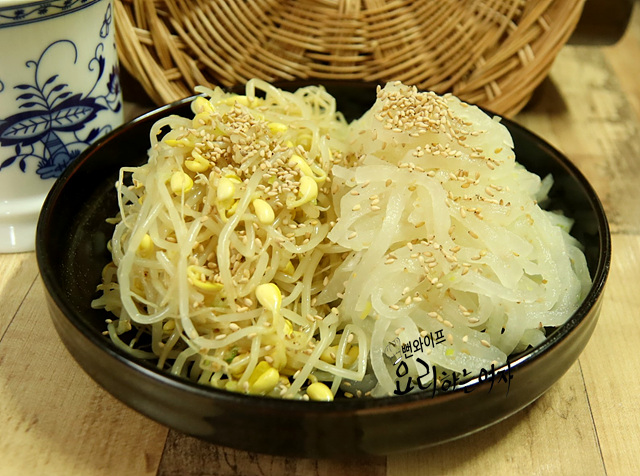
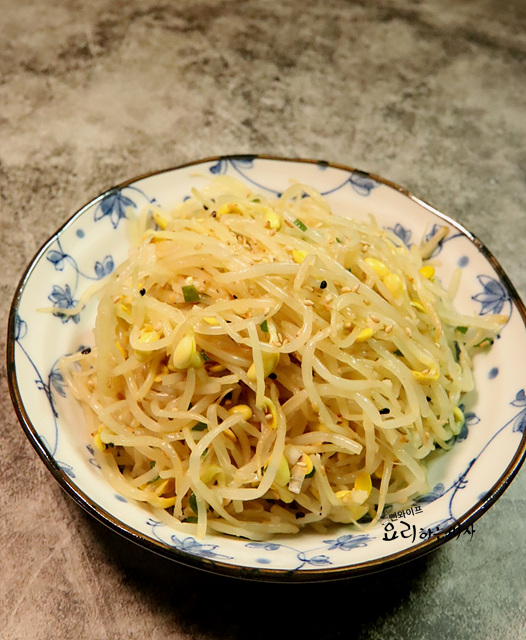
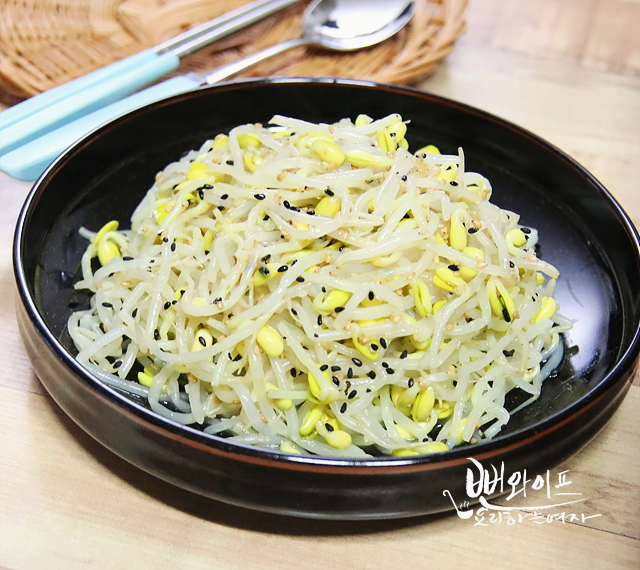
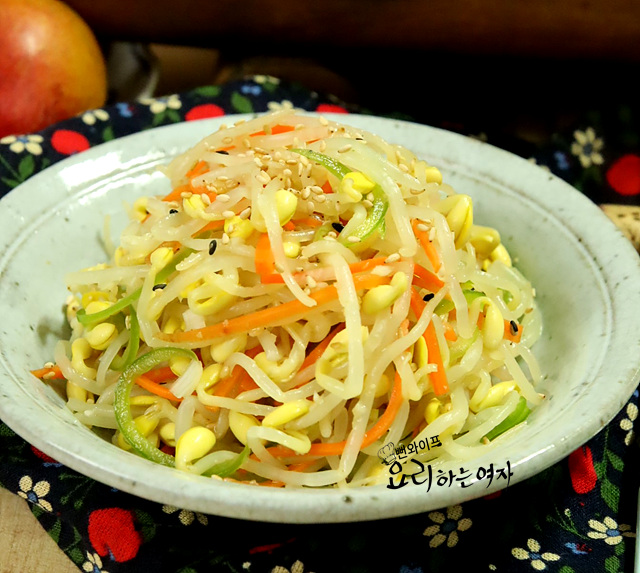
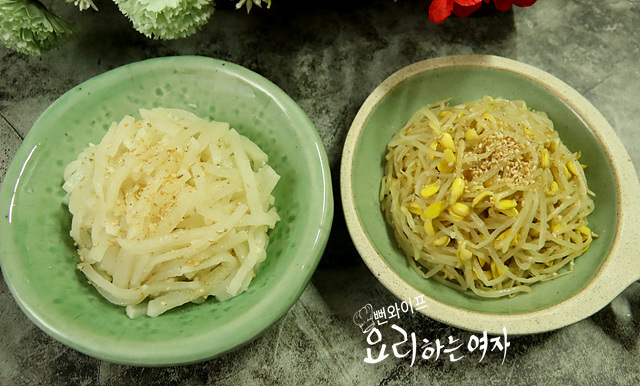
The clean, mild kongnamul muchim and munamul muchim are complete.
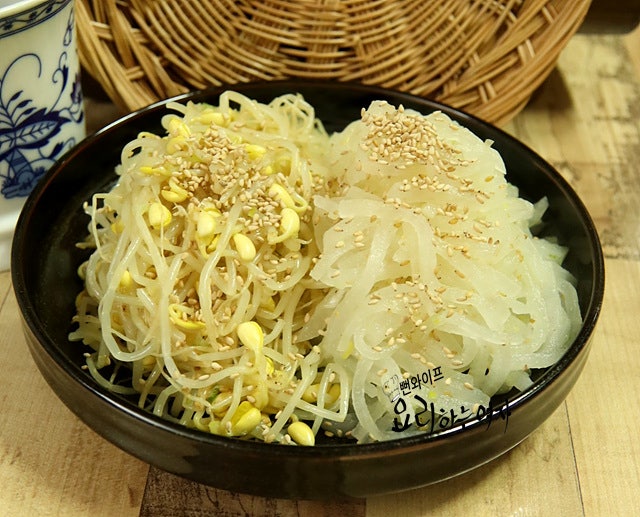
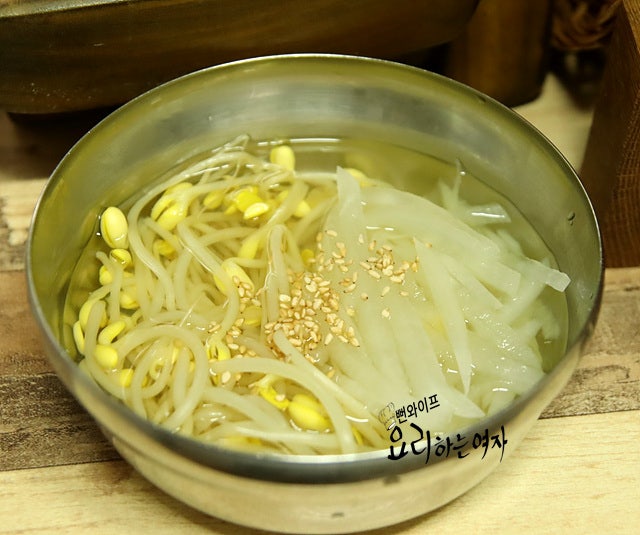
By cooking them together in one pot and seasoning them separately, you can whip up both soybean sprout and radish side dishes with ease.
You can also leave some sprouts and radish behind, season the broth with a little salt, and enjoy it as a soup.
Made with refreshing soybean sprouts and radish with minimal water, the broth turns out deep, rich, and wonderfully crisp.
Related post on the blog (Korean)blog.naver.com/ppunwife/223726246404
 Ppunwife's tips
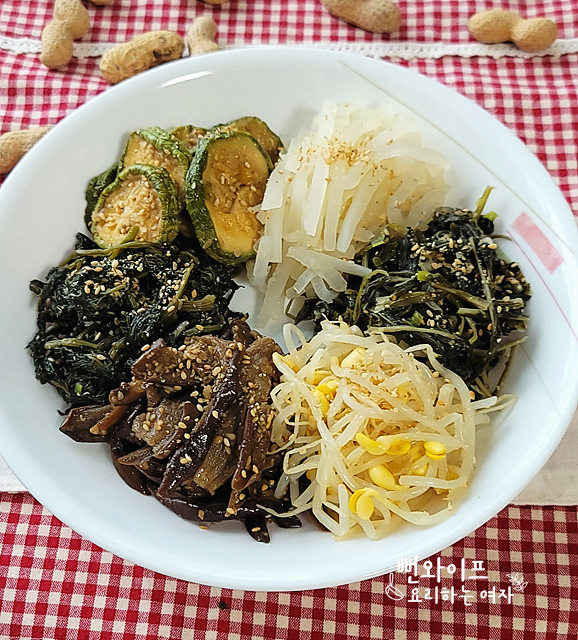
- If you omit the aromatic seasonings like green onion and garlic and toss them plain white, these work wonderfully as jesa namul for traditional holiday tables.
- Pouring in just enough water so the ingredients are barely submerged, rather than completely covered, is plenty for them to cook through as it boils.
- Cover with the lid, and once it comes to a rolling boil, wait about 2 minutes until the raw smell turns savory, then turn off the heat and let it rest in the residual heat for 3 minutes.
FAQ
How much water should I pour when boiling the soybean sprouts and radish?
Pouring just enough water so the ingredients are barely submerged, rather than completely submerged, is plenty for them to cook through. I boiled them with 5 cups of water along with 1 tbsp of salt.
Is there a trick to boiling soybean sprouts without any raw smell?
Cover with the lid and bring to a rolling boil; after about 2 minutes, the raw smell of the sprouts turns into a savory aroma. Turn off the heat at that point and let it rest in the residual heat for 3 minutes.
How do I adjust the seasonings to use this for ancestral rites or holiday tables?
If you leave out aromatic seasonings such as green onion and garlic and keep the vegetables white, they work well as jesa namul for ceremonial tables.
What is the best thickness when julienning the radish?
It is best to cut it not too thin, around 0.4–0.5 cm; if it is thicker than that, it breaks easily.