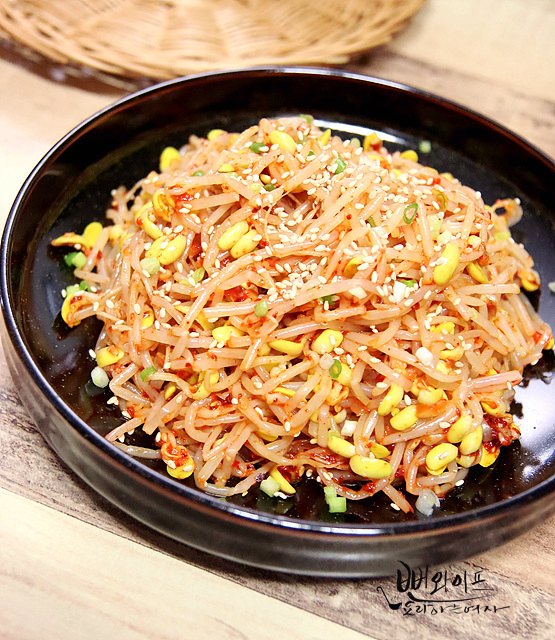
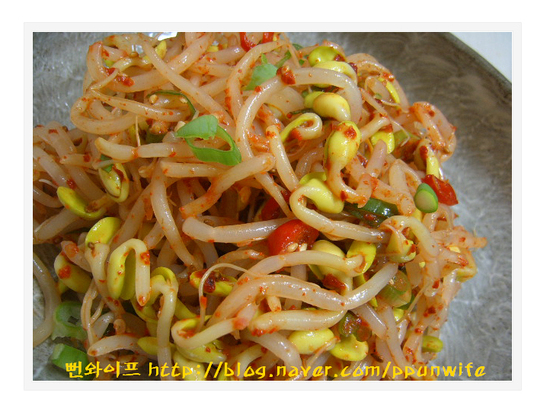
Mild Kongnamul Muchim (Seasoned Soybean Sprouts)
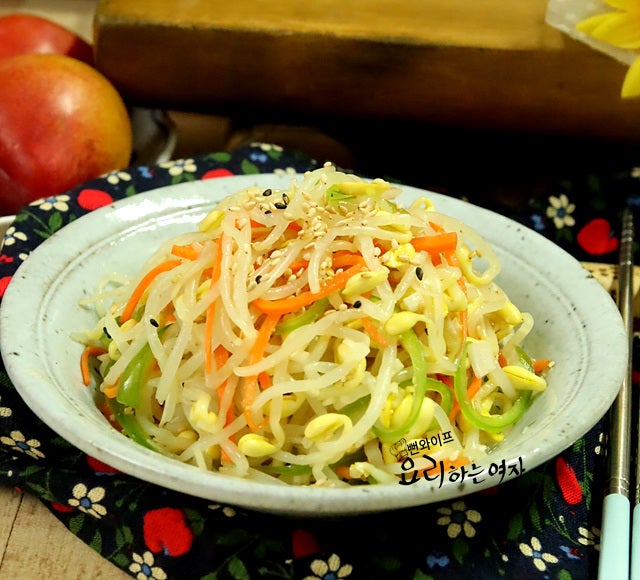
A mild, non-spicy kongnamul muchim side dish seasoned without gochugaru so the whole family can enjoy its clean flavor.
Translated from Korean by AI and not yet checked by a native speaker. Amounts and numbers are taken directly from the original recipe. Read the Korean original →
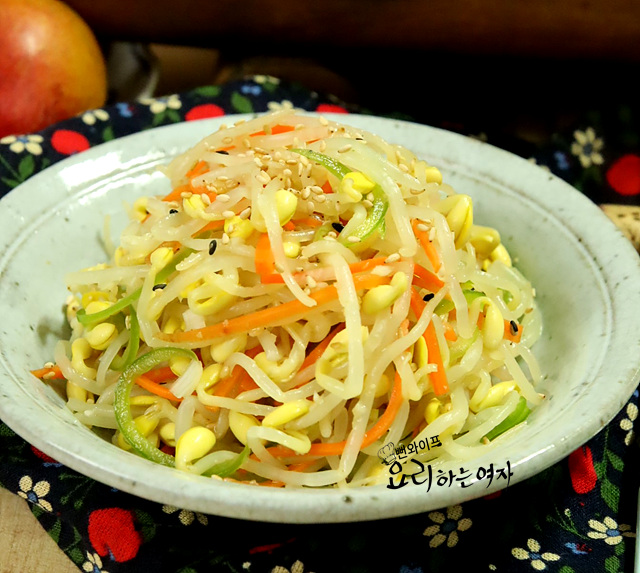
This kongnamul muchim is seasoned plainly without gochugaru, making it comfortable for children and seniors to eat. Blanching with the lid on and letting it rest for a set time completely removes the raw beany smell. Ground toasted sesame seeds and toasted sesame oil are added to bring out a rich, savory aroma.
- Servings
- 3–4 servings
- Cook time
- 9 minprep not included
- Difficulty
- Easy
- Spiciness
- Not spicy
Ingredients
Ingredients
- Soybean sprouts300 g
- Carrot1/4
- Bell pepper1/3
- Large green onion (daepa)a little
- Coarse sea salt1 tbsp
- Water3 cups
Seasoning
- Soup soy sauce (guk-ganjang)1 tbsp
- Minced garlic1/2 tbsp
- Salt1/2 tsp
- Toasted sesame oil1 tbsp
- Ground toasted sesame seeds1 tbsp
Steps
Prepare the ingredients
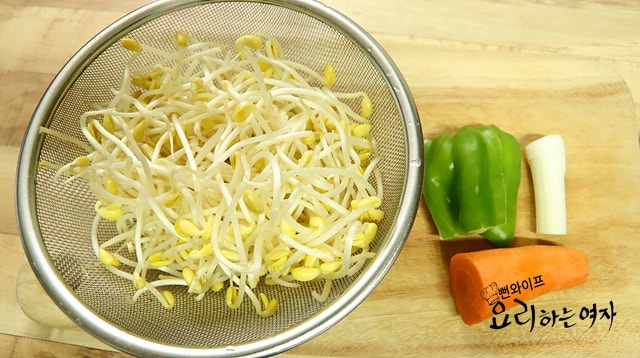
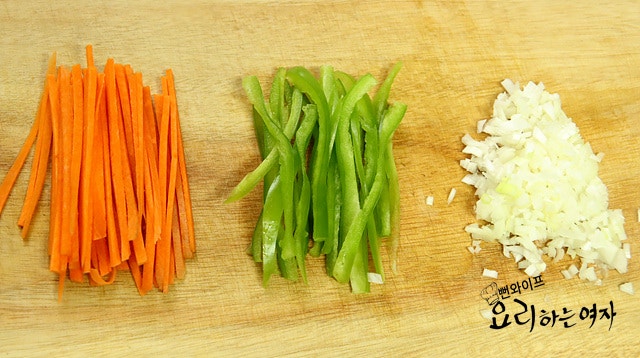
Along with the soybean sprouts, I also prepared carrot and bell pepper for color.
This is the white part of the large green onion (daepa) to use in the seasoning.
Thinly julienne the carrot and bell pepper, and finely mince the large green onion.
Blanch the soybean sprouts
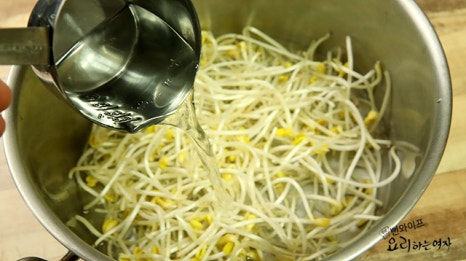
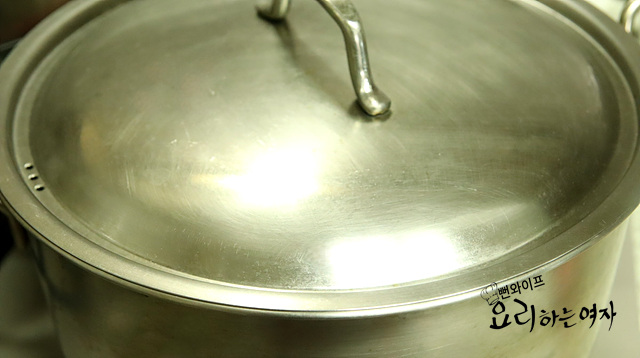
Place the soybean sprouts in a pot and pour in 1 tbsp of coarse sea salt and 3 cups of water.
Pour the water so the soybean sprouts are only half submerged, rather than completely covered.
Cover with the lid and cook over high heat; after about 4 minutes, steam will rise and it will start to boil, and 2 minutes later the raw beany smell will turn into a nutty aroma.
At this point, turn off the heat and let it rest covered in the residual heat for 2 to 3 minutes.
To blanch soybean sprouts without any beany smell, you must either cook with the lid off from the start, or keep the lid on until they are fully cooked if you started with it covered.
If you open and close the lid midway while they are still undercooked, you will get a raw beany smell.
Just keep this in mind, and you can blanch soybean sprouts so they turn out nutty and crisp.
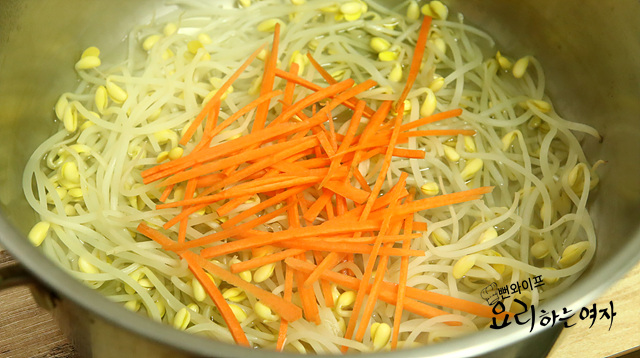
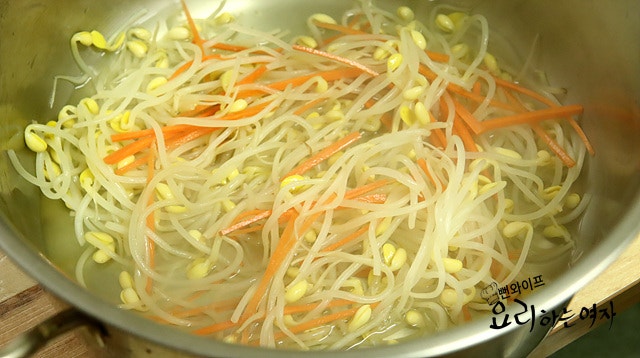
Open the lid and add the carrot while the residual heat remains, mixing it to soften slightly, then drain through a strainer to remove excess moisture.
You can blanch the carrot together with the soybean sprouts, but I added it at the end to keep its crisp texture.
Season and toss
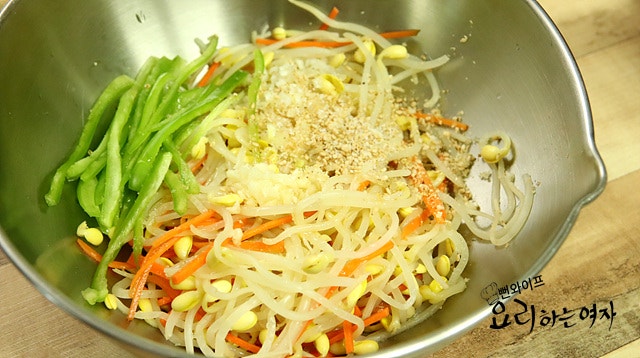
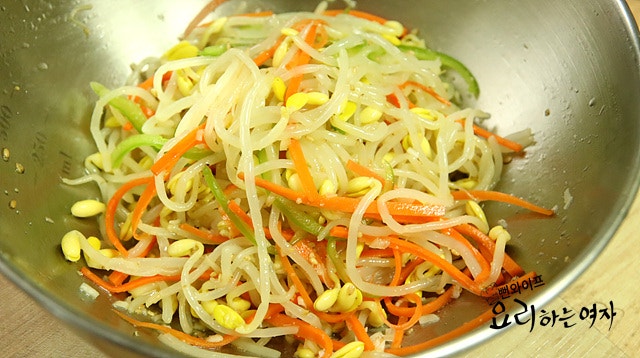
Once the hot steam has subsided a bit and a gentle warmth remains, add the bell pepper and seasoning ingredients (1 tsp soup soy sauce (guk-ganjang), 1/2 tsp salt, 1/2 tbsp minced garlic, 1 tbsp toasted sesame oil, and 1 tbsp ground toasted sesame seeds), then gently toss by hand.
If it tastes bland, add more salt as you mix.
Complete
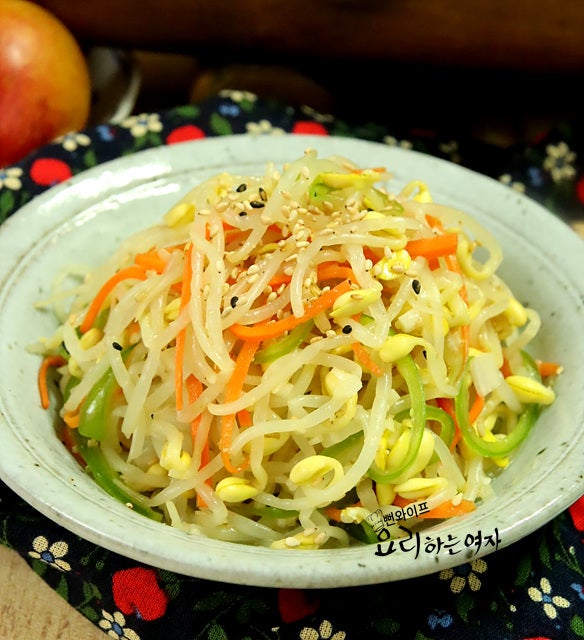
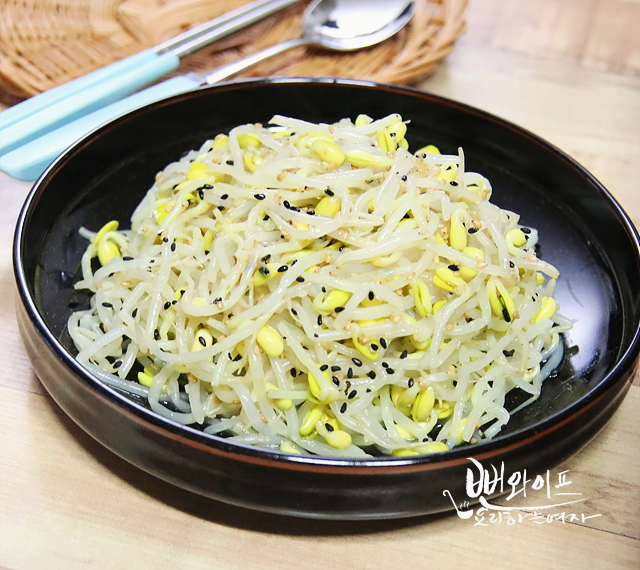
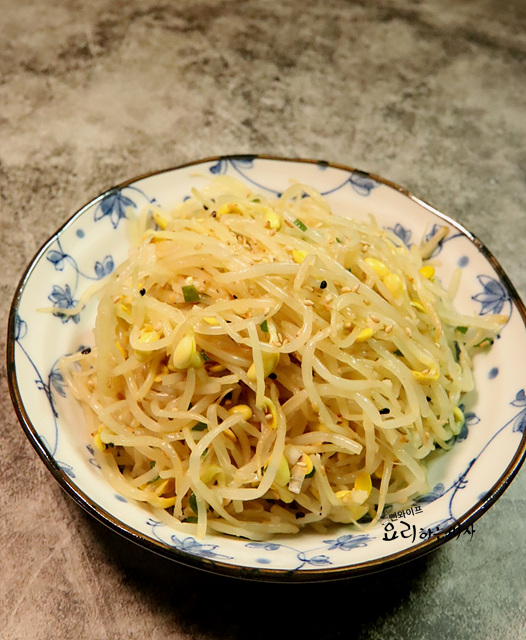
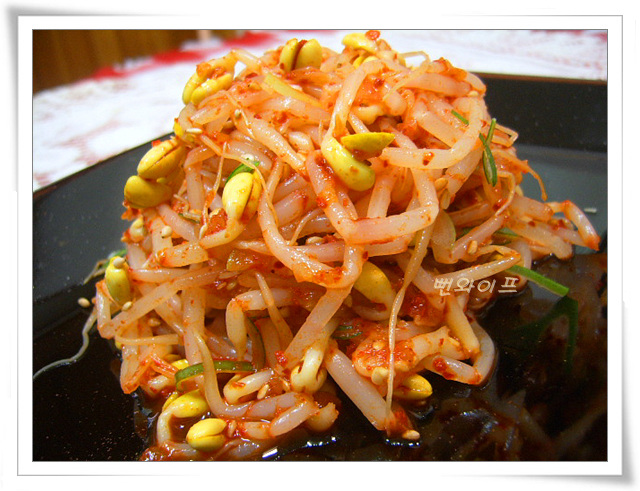
I also like soybean sprouts made with gochugaru, but this mildly seasoned kongnamul muchim is delicious too.
Adding ground toasted sesame seeds to namul dishes really elevates the savory, nutty flavor, making them even tastier.
 Ppunwife's tips
- To blanch soybean sprouts without any beany smell, you must either cook with the lid off from the start, or keep the lid on until they are fully cooked if you started with it covered.
- If you open and close the lid midway while they are still undercooked, you will get a raw beany smell.
- You can blanch the carrot together with the soybean sprouts, but I added it at the end to keep its crisp texture.
- Adding ground toasted sesame seeds to namul dishes really elevates the savory, nutty flavor, making them even tastier.
FAQ
How can I prevent a raw beany smell when blanching soybean sprouts?
Either blanch with the lid off from the beginning, or keep the lid on until they are completely cooked if you started covered. Opening and closing it midway can cause a raw beany smell.
Why isn't the carrot cooked together with the soybean sprouts from the start?
To preserve its crisp texture, it is tossed lightly in the residual heat after turning off the heat just to soften it.
Can I use other vegetables instead of bell pepper? AI-generated
A small amount of water dropwort (minari), garlic chives (buchu), or scallions (jjokpa) also pairs well for color and aroma.