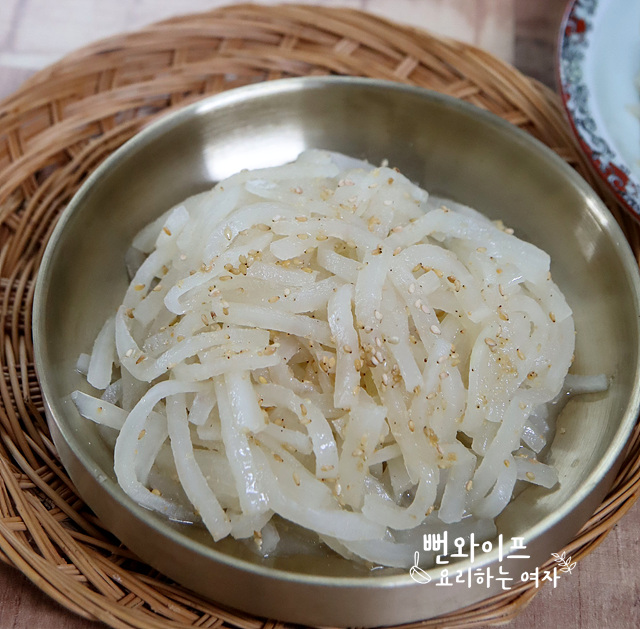
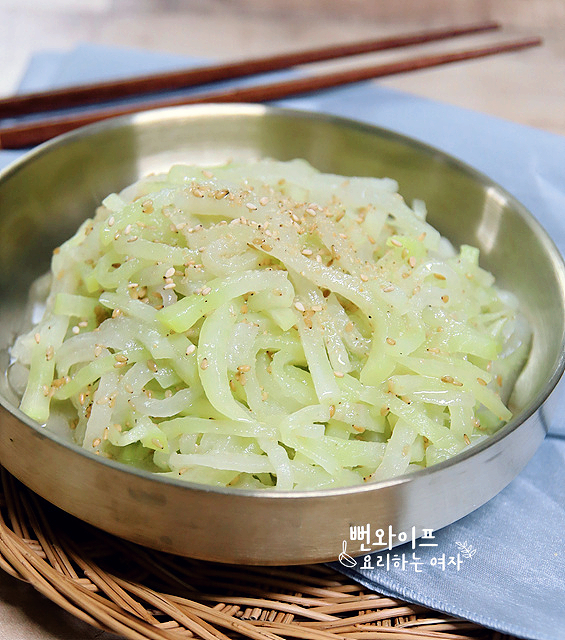
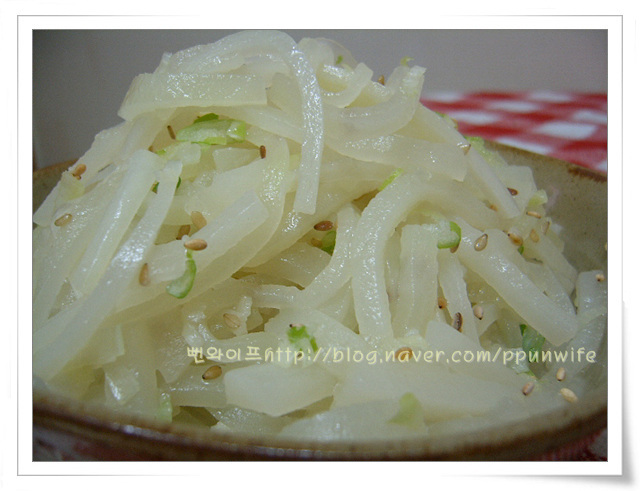
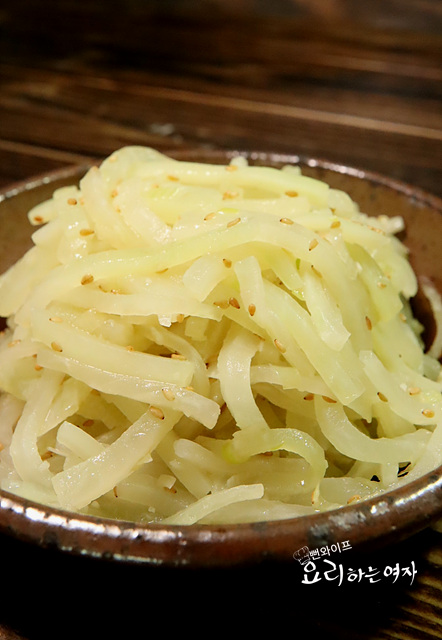
Munazul Bokkeum (Stir-Fried Radish Side Dish)
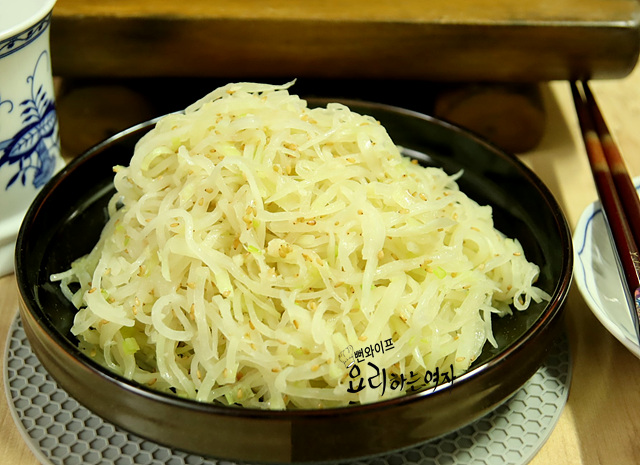
A tender stir-fried radish dish without any bitterness, made by salting Korean radish and stir-frying it with tuna extract sauce and broth.
Translated from Korean by AI and not yet checked by a native speaker. Amounts and numbers are taken directly from the original recipe. Read the Korean original →
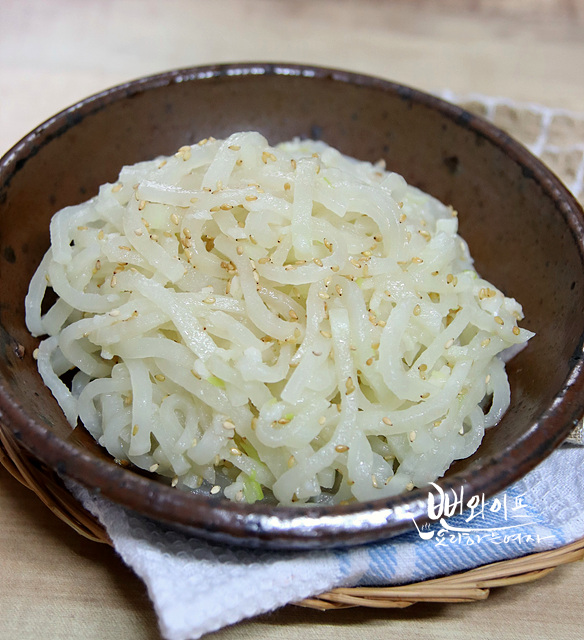
This side dish uses salted Korean radish to remove its characteristic harshness, enhanced with savory depth from tuna extract sauce and mirin. The key is to pour in broth, cover with a lid, and let it steam gently to bring out a tender, tender-crisp texture. Made neatly with simple ingredients, it works wonderfully as an everyday side dish or for holiday table settings.
- Servings
- about 4–5 servings
- Difficulty
- Easy
- Spiciness
- Not spicy
Ingredients
Ingredients
- Korean radish (mu)500 g
- Salt1 tsp
Seasoning
- Minced garlic1 tbsp
- Minced green onion3 tbsp
- Tuna extract sauce (chamchi-aek)1 tbsp
- Mirin (cooking rice wine)2 tbsp
- Anchovy broth (or water)4 tbsp
- Perilla oil (or toasted sesame oil)2 tbsp
- Toasted sesame seeds1 tbsp (ground)
- Add 1 tsp of salt to the julienned radish, mix well, and let it salt for about 20 minutes.
- Peel the radish to prepare it. That is about 1/2 of a small one, or about 1/3 of a medium one.
- If the radish is bitter and pungent, discard the salted water; if it is sweet and refreshing autumn radish, you can use the salted water without discarding it when stir-frying.
Steps
Prepare the ingredients
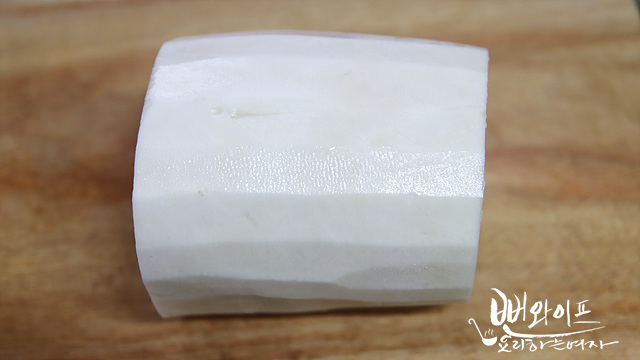
Peel the radish to prepare it.
That is about 1/2 of a small one, or about 1/3 of a medium one.
Julienne the radish
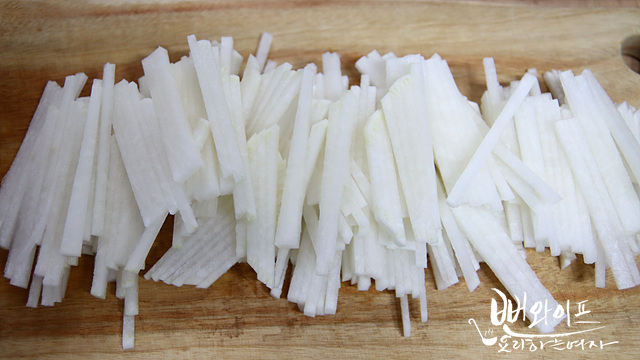
To preserve good texture, do not julienne the radish too finely.
Slicing it to around 0.4 cm thick will be just right.
Salt the radish
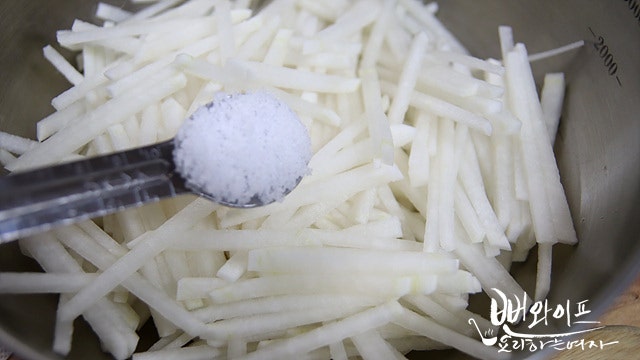
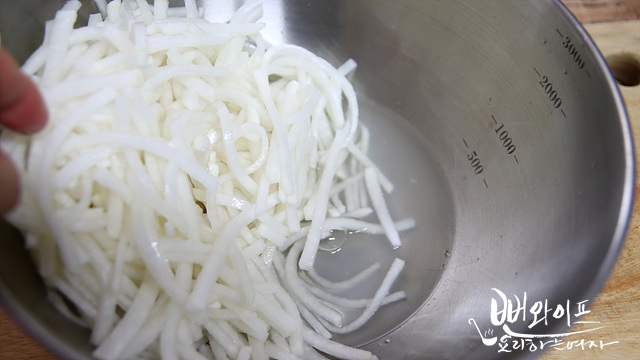
Add 1 tsp of salt to the julienned radish, mix well, and let it salt for about 20 minutes. Toss it once or twice in between.
If the radish is bitter and pungent, discard the salted water; if it is sweet and refreshing autumn radish, you can use the salted water without discarding it when stir-frying.
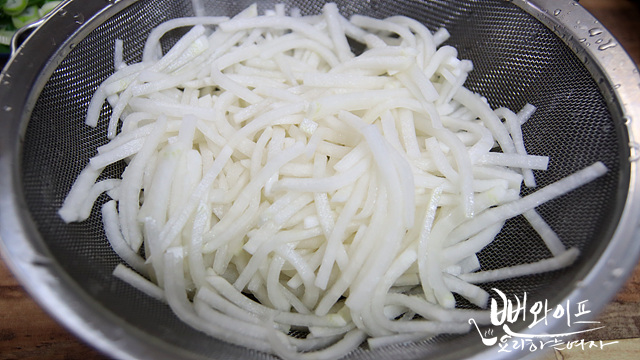
Since mine was not autumn radish, I discarded the liquid and drained it roughly in a strainer.
Stir-fry the radish
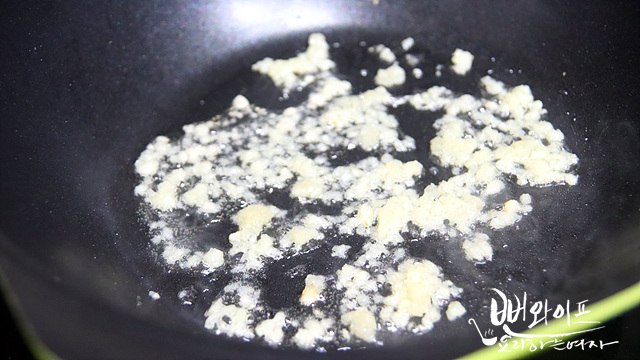
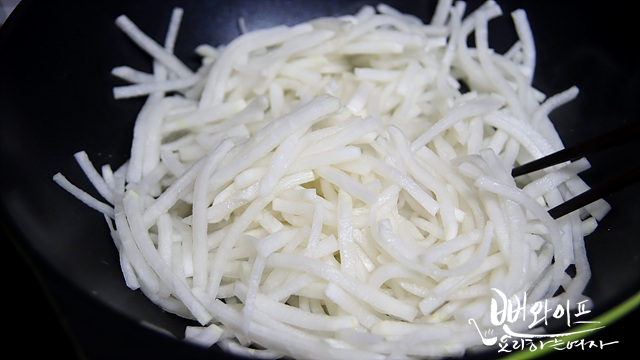
Heat a pan with cooking oil, add 1 tbsp of minced garlic, and stir-fry briskly to bring out the aroma.
Add the radish and toss so that it is thoroughly coated in the garlic oil.
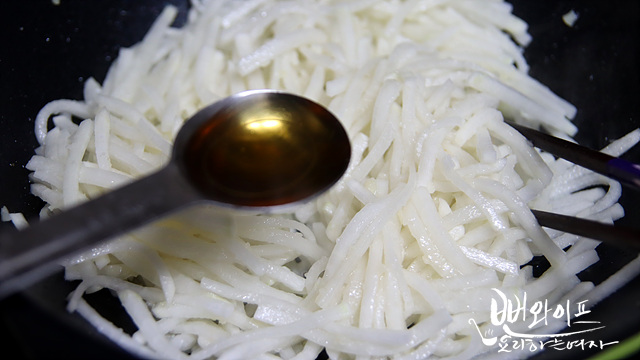
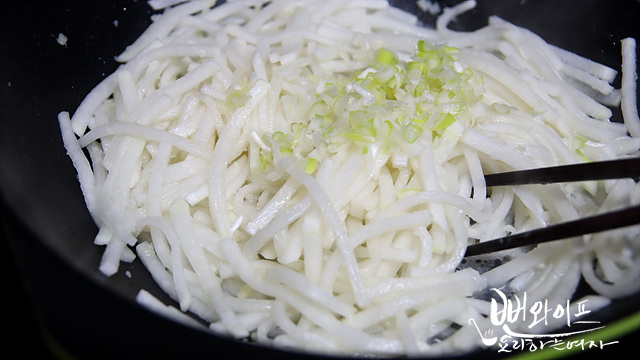
To give it rich savory flavor, season the radish with 1 tbsp of tuna extract sauce, add 2 tbsp of mirin to remove any bitterness, and stir-fry while tossing well with 3 tbsp of fragrant minced green onion.
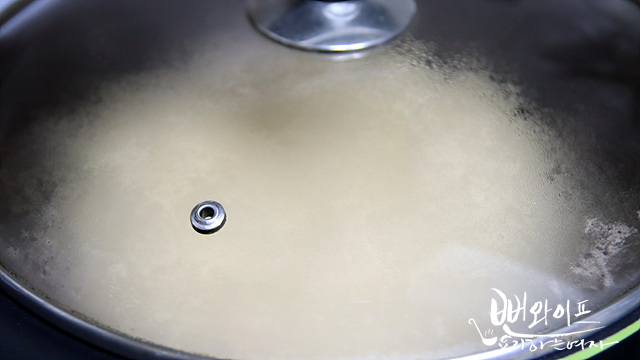
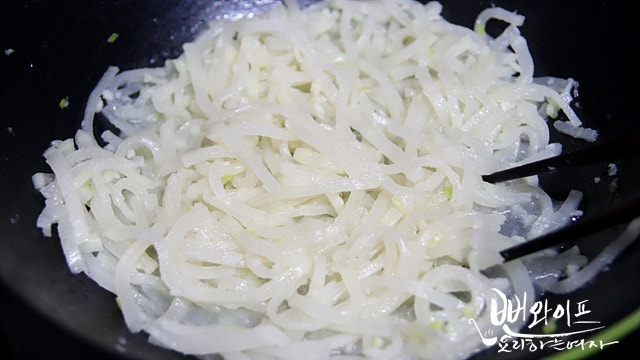
Pour in 4 tbsp of anchovy broth or water, cover with the lid, lower the heat, and let it steam gently.
Toss so the seasoning absorbs well into the radish and it cooks evenly through to the center, and once the radish seems somewhat tender, open the lid and stir-fry while cooking off the moisture.
Taste it, adjust with salt if it is bland, and if it still tastes bitter, you can stir-fry it with a small amount of sugar.
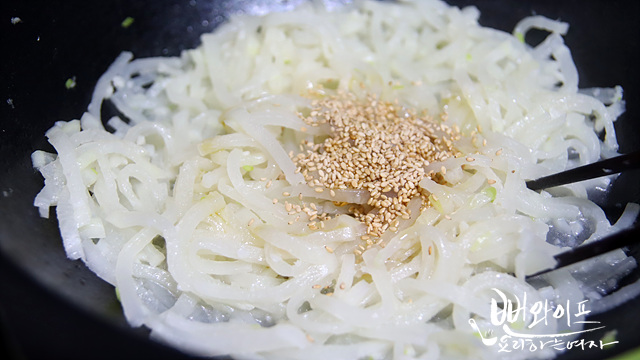
Turn off the heat and finish by adding 2 tbsp of toasted sesame oil or perilla oil and 1 tbsp of toasted sesame seeds.
It is much more fragrant and nutty if you coarsely grind half of the sesame seeds before adding them.
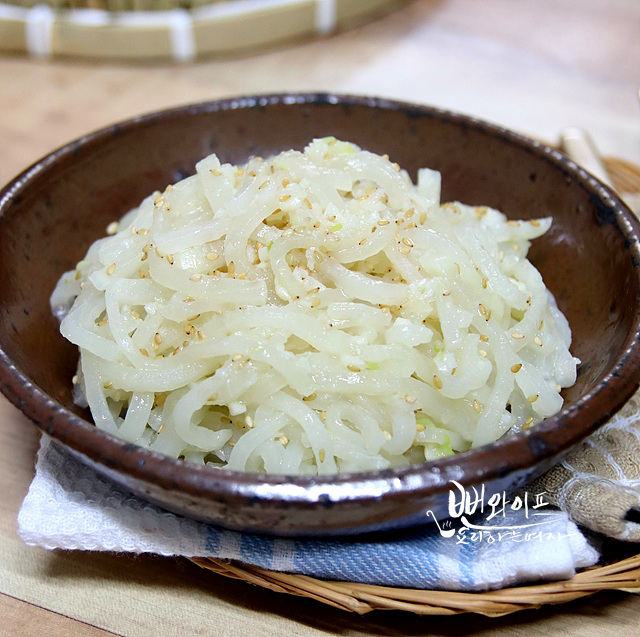
Finished
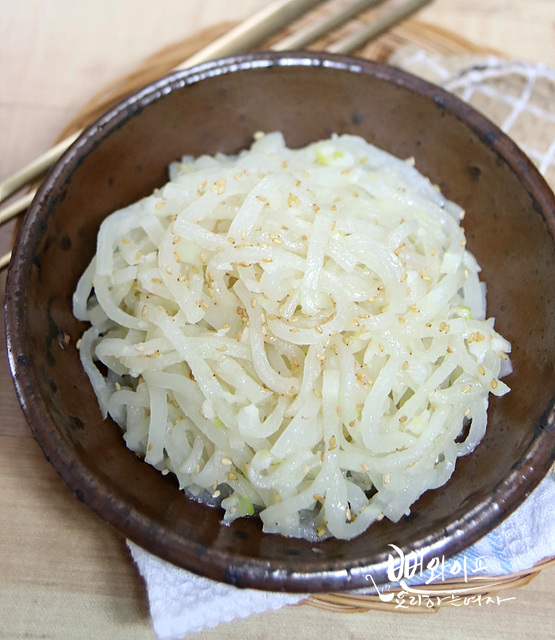
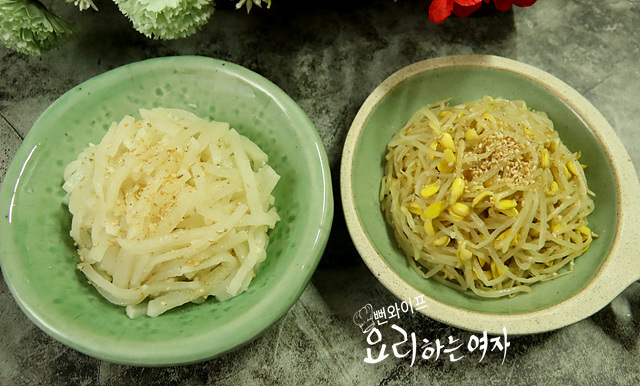
You can boil soybean sprouts and radish together, but stir-frying the radish separately as a seasoned side dish like this is truly delicious.
Even though the only ingredient is plain radish, it turns into an upscale radish dish.
 Ppunwife's tips
- Taste it, adjust with salt if it is bland, and if it still tastes bitter, you can stir-fry it with a small amount of sugar.
- It is much more fragrant and nutty if you coarsely grind half of the sesame seeds before adding them.
- If you are preparing this for ancestral rite tables during traditional memorial services, you can make it by omitting the minced garlic and minced green onion when stir-frying.
FAQ
What should I do with the salted liquid when the radish is bitter and spicy?
If the radish tastes bitter or spicy, discard the liquid released after salting and drain it in a strainer before cooking. Conversely, if it is sweet and refreshing autumn radish, you can use the liquid as is when stir-frying instead of pouring it out.
How do I adjust the seasonings when preparing this for an ancestral rite table?
If you are making it to serve on an ancestral memorial table, simply stir-fry without minced garlic and minced green onion during the cooking process.
What should I do if bitterness remains even after stir-frying?
If you taste it and still notice bitterness, you can tame it by adding a small amount of sugar and stir-frying together.
Can I use another liquid instead of anchovy broth?
Instead of anchovy broth, it is perfectly fine to add the same amount of 4 tbsp of plain water to steam the radish.