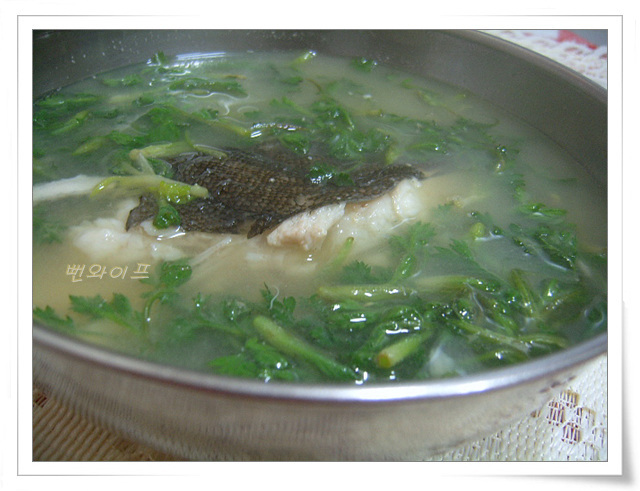
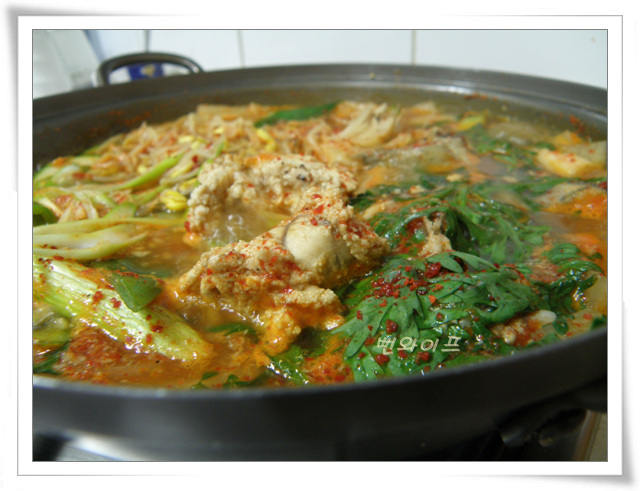
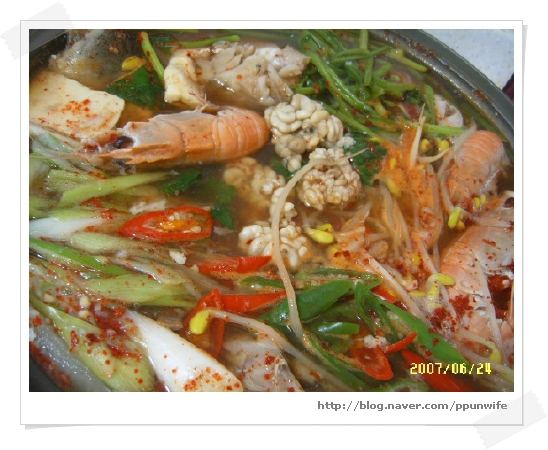
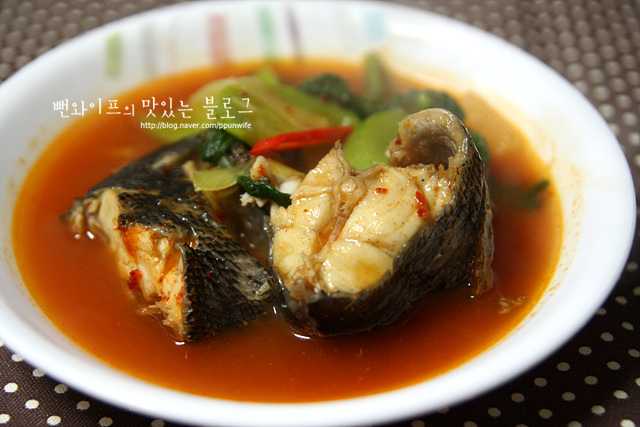
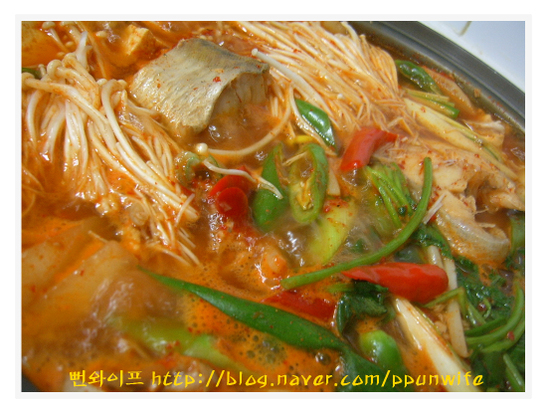
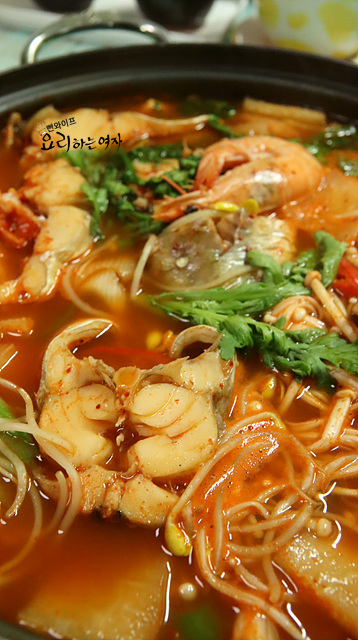
Spicy and Refreshing Spring Dodari Maeuntang (Spicy Flounder Stew)
A spicy stew made by simmering plump flounder and vegetables in anchovy broth.
Translated from Korean by AI and not yet checked by a native speaker. Amounts and numbers are taken directly from the original recipe. Read the Korean original →
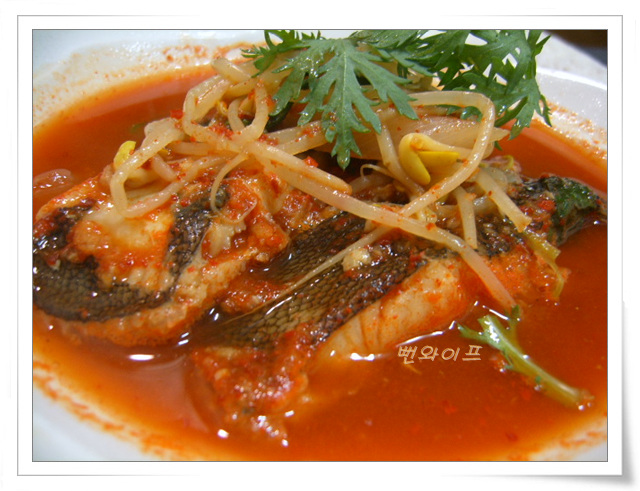
Made with plump, in-season flounder, this dish is hardly fishy and has a spicy, refreshing broth. The secret to a clean-tasting broth is simmering the fish over low heat first and skimming off the foam before dissolving in the seasoning paste. You can also add ramen or glass noodles if you like.
- Servings
- 2 servings
- Cook time
- 10 minprep not included
- Difficulty
- Medium
- Spiciness
- Spicy
Ingredients
Ingredients
- Flounder1 whole
- Korean radish (mu)100 g
- Squash1/4
- Onion1/4
- Soybean sprouts1 handful
- Ssukgat (crown daisy)1 handful
- Large green onion (daepa)1/3 stalks
- Perilla leaves10 leaves
- Cheongyang chili pepper (hot green chili)1
- Red chili pepper1
- Anchovy broth4 cups
Seasoning sauce
- Gochugaru (Korean chili flakes)3 tbsp
- Gochujang (Korean red chili paste)1 tbsp
- Soup soy sauce (guk-ganjang)2 tbsp
- Mirin (cooking rice wine)1 tbsp
- Minced garlic1 tbsp
- Ginger juice0.5 tbsp
- Ground black peppera little
- Instead of flounder, rockfish, croaker, or leftover fish carcasses from making sashimi work wonderfully.
- It is also great to add water dropwort or mushrooms if you have them.
Steps
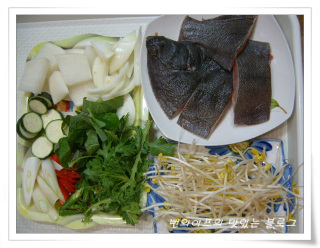
1. Scrape the scales off the back and belly of the flounder using a knife.
Remove the innards, snip off the fins with kitchen shears, rinse thoroughly under running water, and cut into large chunks.
Cut the Korean radish into thick 3×4 cm pieces, and roughly chop the squash, onion, and large green onion.
Prepare the perilla leaves, ssukgat, and soybean sprouts.
Instead of flounder, rockfish, croaker, or leftover fish carcasses from making sashimi work wonderfully.
It is also great to add water dropwort or mushrooms if you have them.
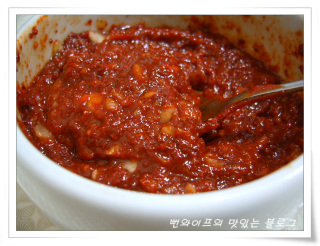
2. Mix all the seasoning ingredients together.
If it feels too thick, add 2 tbsp of water and stir until smooth.
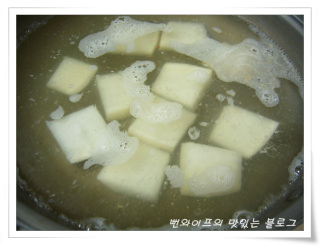
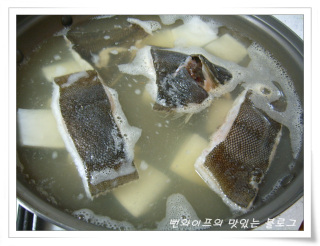
3. Add the Korean radish to the anchovy broth and bring to a boil.
4. Add the flounder and simmer over low heat for at least 10 minutes so the flavors infuse fully into the broth.
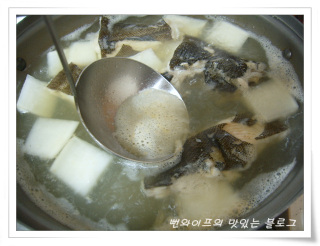
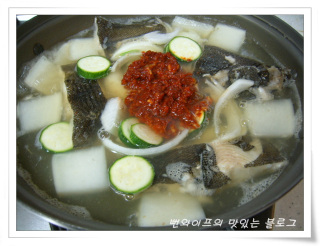
5. Skim off the foam occasionally.
If you dissolve the seasoning paste right from the start, the seasoning gets scooped away when skimming off the foam.
That is why I simmer the fish, skim the foam, and only then add the seasoning paste.
6. Add the onion and squash, then dissolve in the seasoning paste.
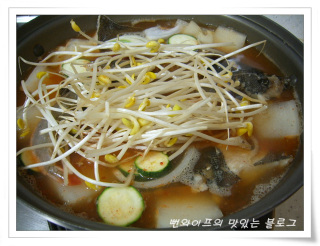
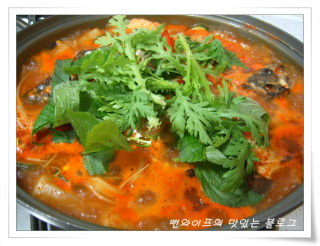
7. Add the soybean sprouts on top and simmer until cooked through.
8. At the end, add the ssukgat, perilla leaves, and chili peppers, and bring to a brief boil.
 Ppunwife's tips
- If you dissolve the seasoning paste right from the start, the seasoning gets scooped away when skimming off the foam. That is why I simmer the fish, skim the foam, and only then add the seasoning paste.
- Adding ramen noodles to maeuntang makes it so fun to eat. Pour in extra broth and enjoy it with sweet potato glass noodles or ramen.
FAQ
Can I use a different fish instead of flounder?
Instead of flounder, you can use rockfish, croaker, or leftover fish carcasses from making sashimi.
When is the best time to add the seasoning paste?
If you dissolve the seasoning from the start, it gets skimmed away with the foam. It is best to simmer the fish first, skim off the foam, and then stir in the seasoning paste.
How do I mix the seasoning paste if it is too thick?
If the seasoning paste is too stiff, just add about 2 tbsp of water to loosen it until smooth.
Are there other ingredients that go well besides the basic vegetables?
You can add water dropwort or mushrooms to your taste, or add plenty of broth and enjoy it with ramen or sweet potato glass noodles.