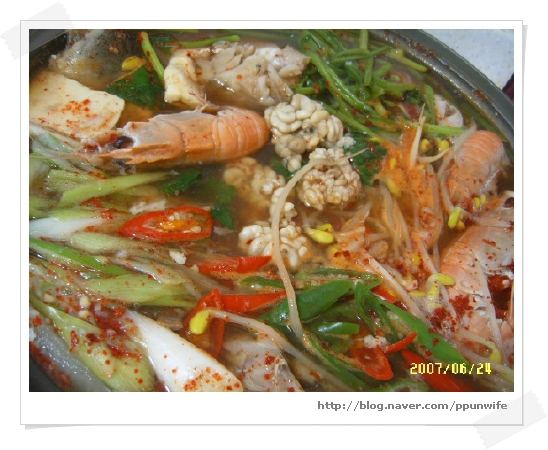
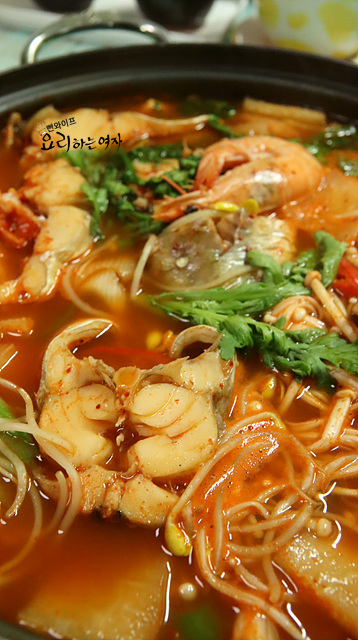
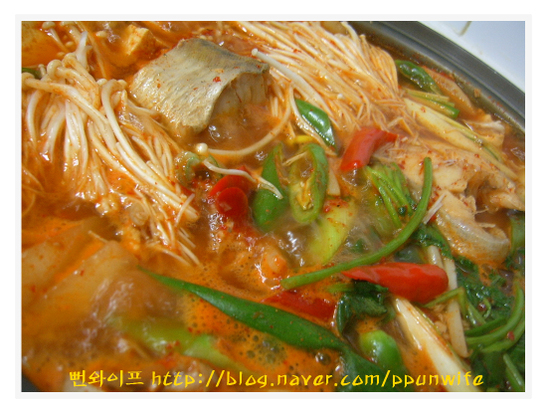
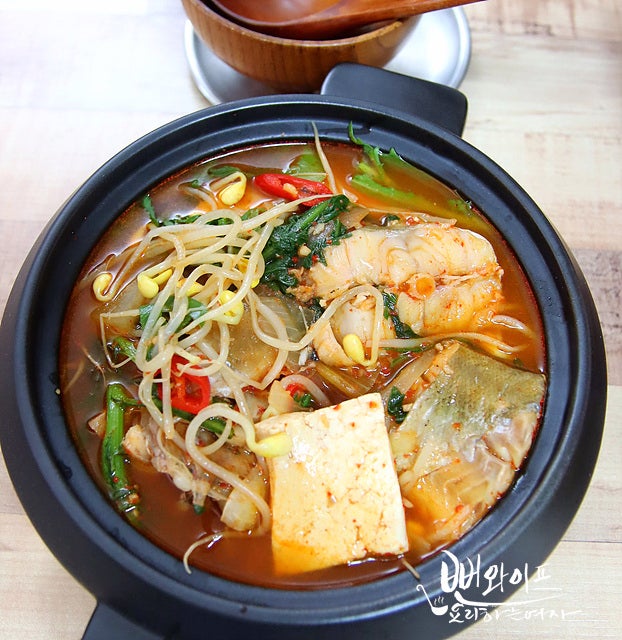
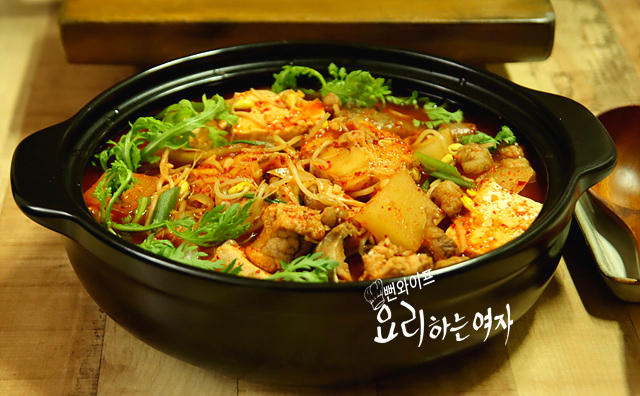
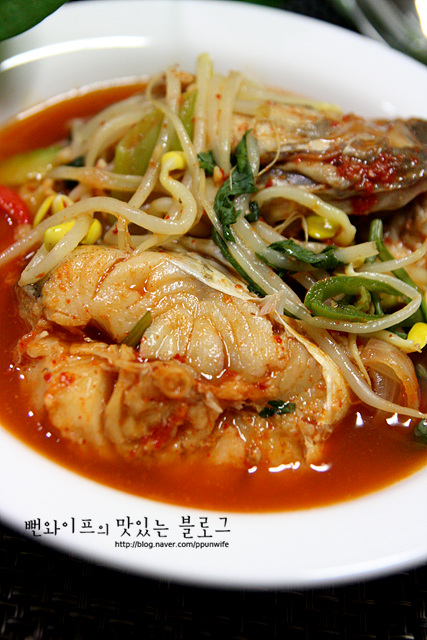
Spicy Dongtae Jjigae (Pollock Stew) with Anchovy Broth and Radish
A spicy stew for 3-4 servings made by simmering frozen pollack and Korean radish in anchovy broth.
Translated from Korean by AI and not yet checked by a native speaker. Amounts and numbers are taken directly from the original recipe. Read the Korean original →
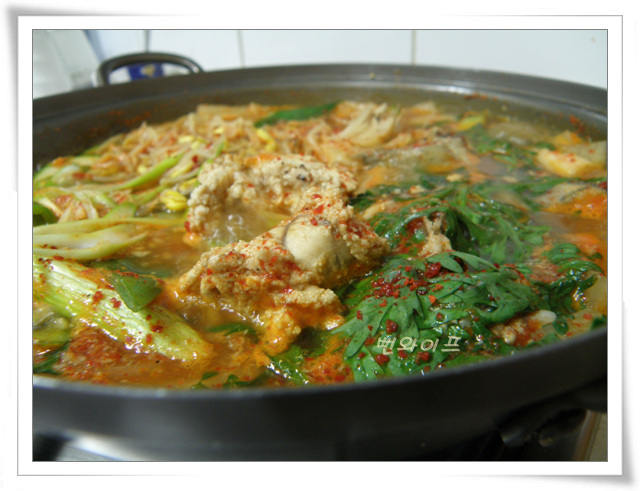
Frozen pollack is thoroughly cleaned of scales and blood clots, then simmered with Korean radish and soybean sprouts. Skimming off the foam before dissolving the seasoning paste makes the broth clear, refreshing, and spicy without any muddiness. It is wonderful as a drinking snack or as a hangover cure.
- Servings
- 3–4 servings
- Difficulty
- Medium
- Spiciness
- Spicy
Ingredients
Ingredients
- Frozen pollack1 whole (large)
- Korean radish (mu)1/4, 150 g
- Squash1/3
- Soybean sprouts1 handful
- Ssukgat (crown daisy)1 handful
- Large green onion (daepa)1 stalk
- Cheongyang chili pepper (hot green chili)2
- Anchovy broth6 cups
Seasoning
- Gochugaru (Korean chili flakes)2 tbsp
- Gochujang (Korean red chili paste)1 tbsp
- Soup soy sauce (guk-ganjang) (or soup soy sauce (guk-ganjang), soup soy sauce (guk-ganjang))1 tbsp
- Mirin (cooking rice wine)1 tbsp
- Minced garlic1 tbsp
- Ginger juice1/2 tbsp
- Ground black pepper1/2 tsp
- Salta little
- You can also prepare tofu, mushrooms, or water dropwort (minari) to add.
- Adding the heads of dried pollack (hwangtae or bukeo) when making this kind of broth also gives it a wonderfully deep, savory flavor.
Steps
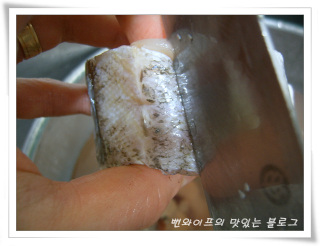
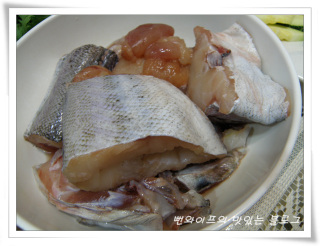
1. There are many scales on the pollack skin, so scrape them off thoroughly with a knife.
You must also remove all the dark red blood clots clinging to the spine so the broth does not taste muddy.
2. Clean one whole pollack neatly like this and...
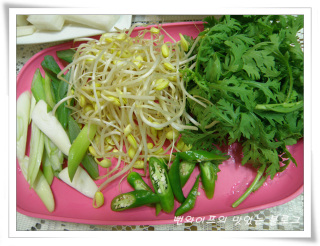
3. For the vegetables, prepare soybean sprouts, ssukgat (crown daisy), large green onion (daepa), and spicy Cheongyang chili peppers.
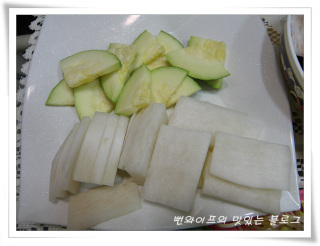
4. Thinly slice the Korean radish (mu), which gives the broth a refreshing flavor, and slice the squash as well.
You can also prepare tofu, mushrooms, or water dropwort (minari) to add.
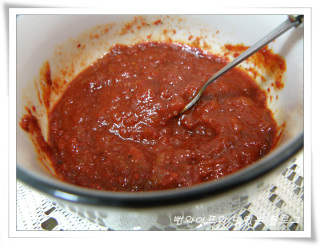
5. Combine all the seasoning ingredients except the salt and mix well.
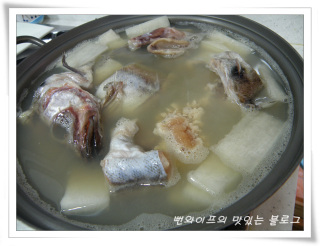
6. Pour the anchovy broth into a shallow pot, add the Korean radish and pollack, and bring to a rolling boil.
The broth was made by steeping dried kelp (dasima) for about 30 minutes, adding dried anchovies, and simmering.
Adding the heads of dried pollack (hwangtae or bukeo) when making this kind of broth also gives it a wonderfully deep, savory flavor.
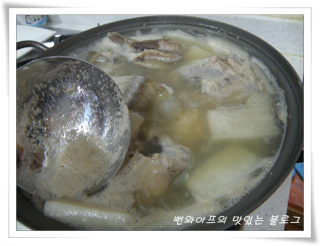
7. As the broth boils, messy foam will form, so skim it off neatly.
Rather than stirring the seasoning into the broth from the start, bringing it to a boil first, skimming off the foam, and then adding the seasoning makes the broth much cleaner and more refreshing.
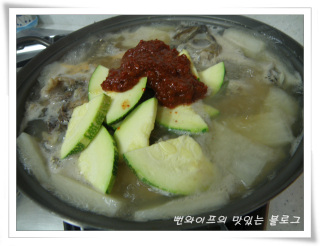
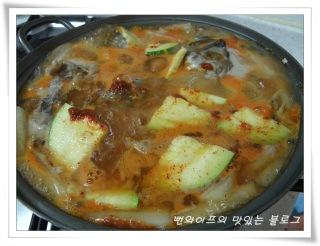
8. Once the pollack and Korean radish are somewhat cooked, add the squash and seasoning paste and boil briefly..
10
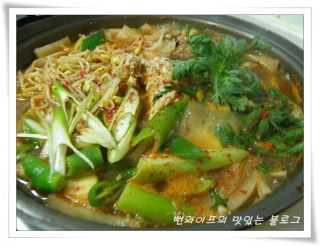
9. Simmer until the seasoning is evenly infused into the broth, then season to taste with salt.
10. Add all the remaining vegetables—soybean sprouts, ssukgat (crown daisy), large green onion, and chili peppers—and bring to a boil just once more.
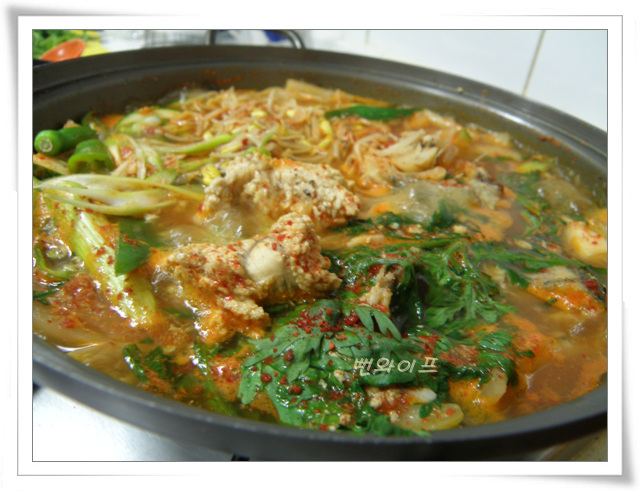
Once the vegetables added at the end are cooked through, it is done.
 Ppunwife's tips
- You must remove all the dark red blood clots clinging to the spine so the broth does not taste muddy.
- Rather than stirring the seasoning into the broth from the start, bringing it to a boil first, skimming off the foam, and then adding the seasoning makes the broth much cleaner and more refreshing.
FAQ
How should I clean the frozen pollack so the broth does not turn out muddy?
Scrape off the scales with a knife and thoroughly remove the dark red blood clots along the bones and spine to keep the broth clear and clean-tasting.
Why is the seasoning paste added later instead of at the beginning?
Skimming off the foam that rises when the broth first boils before adding the seasoning paste keeps the broth flavor much cleaner and more refreshing.
Are there other ingredients that go well with the basic vegetables?
Depending on your preference, adding tofu, mushrooms, or water dropwort (minari) pairs very well.
Is there a way to make the anchovy broth even more savory?
Adding dried pollack heads (hwangtae or bukeo) along with the dried kelp and anchovies when brewing makes the broth much deeper and more savory.