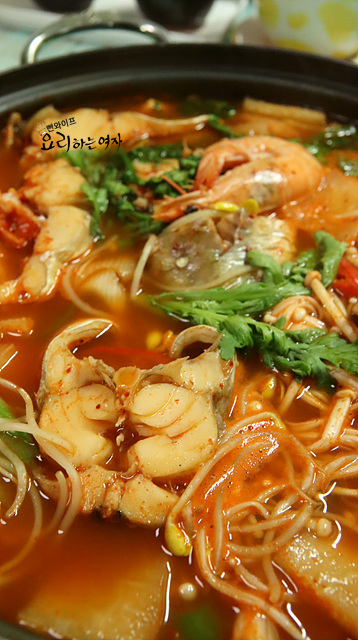
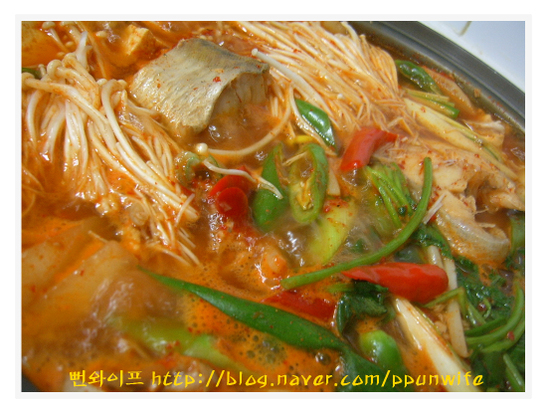
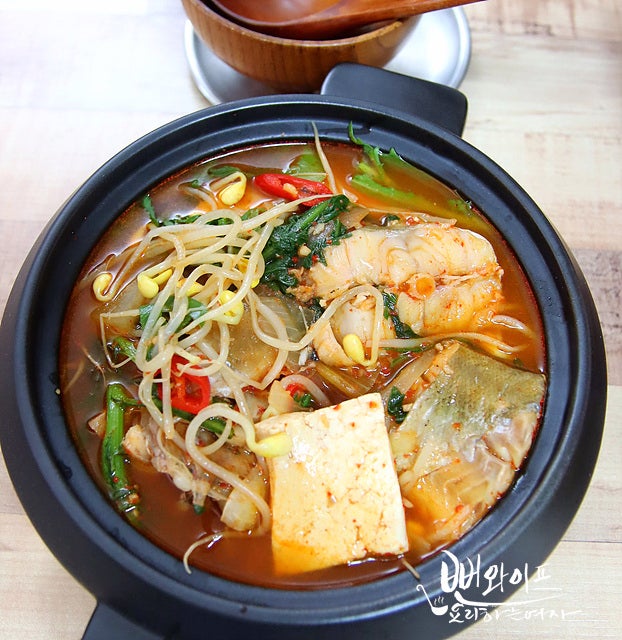
Dongtae Jjigae (Pollock Stew) with Mideodeok
A spicy Dongtae jjigae (pollock stew) simmered with doenjang seasoning and mideodeok for a deep umami flavor.
Translated from Korean by AI and not yet checked by a native speaker. Amounts and numbers are taken directly from the original recipe. Read the Korean original →
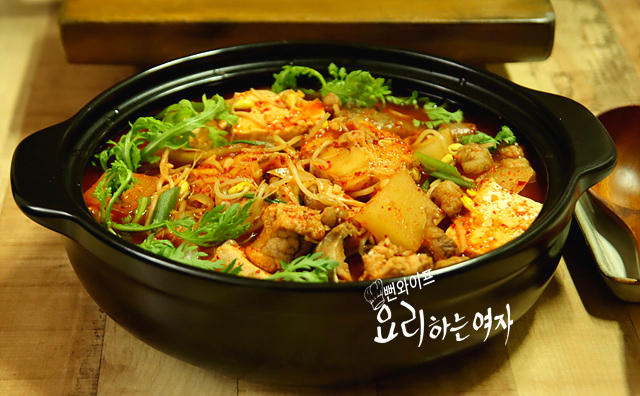
This stew brings out a deep, refreshing broth by simmering frozen pollack, Korean radish, and mideodeok together in anchovy broth. Adding a small amount of doenjang to the seasoning removes any fishy odor while creating a rich flavor that is wonderfully spicy to enjoy. It is the perfect satisfying soup dish for chilly winter days.
- Servings
- 3–4 servings
- Difficulty
- Medium
- Spiciness
- Spicy
Ingredients
Ingredients
- Frozen pollack1 whole (large)
- Mideodeok (sea squirt) (or wrinkled sea squirt (omandungi))1 cup
- Soybean sprouts100 g
- Korean radish (mu)200 g
- Tofu1/2 block
- Onion1/3
- Ssukgat (crown daisy)a little
- Large green onion (daepa)1/2 stalk
- Cheongyang chili pepper (hot green chili)2
- Anchovy broth7 cups
Seasoning
- Gochugaru (Korean chili flakes)3 tbsp
- Gochujang (Korean red chili paste)1 1/2 tbsp
- Doenjang (Korean soybean paste)1/2 tbsp
- Soup soy sauce (guk-ganjang) (or fish sauce, tuna extract sauce (chamchi-aek))2 tbsp
- Minced garlic2 tbsp
- Minced ginger1 tsp
- Mirin (cooking rice wine)2 tbsp
- Ground black peppera little
- Pollack tastes better the larger it is, so always pick a big one.
- For deeper umami, it is great to add shellfish like mussels or clams.
- You can also add secondary ingredients like water dropwort, mushrooms, or perilla leaves.
- Cut off the fins with kitchen shears, scrape off surface scales with a knife, cut into chunks, and run your fingers along the backbone to remove the red blood clots.
Steps
Prepare the ingredients
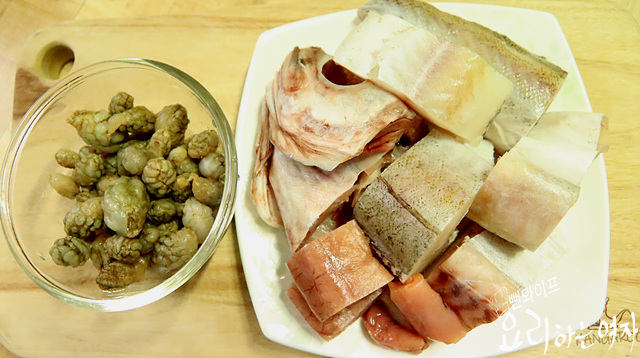
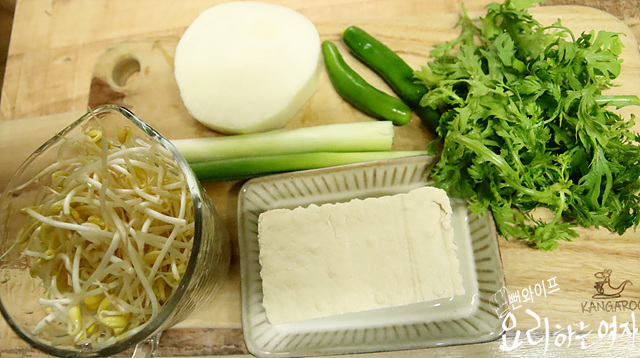
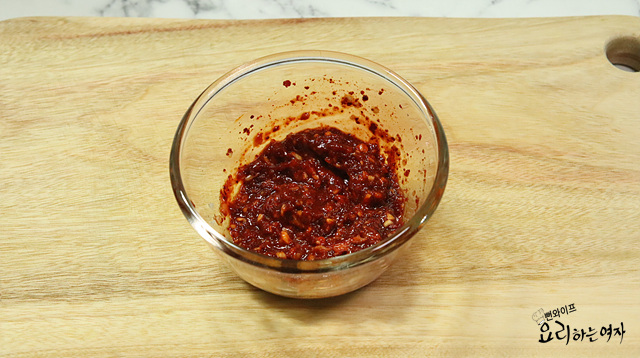
I thoroughly cleaned 1 large frozen pollack.
To give the pollock stew a refreshing flavor, I also prepared omandungi (mideodeok).
For deeper umami, it is great to add shellfish like mussels or clams.
The secondary ingredients going into the pollock stew are Korean radish, soybean sprouts, tofu, large green onion, Cheongyang chili pepper, and crown daisy.
Water dropwort, mushrooms, and perilla leaves are also fine.
Combine all seasoning ingredients except salt and ground black pepper, then set aside so the color blooms and the flavors meld together nicely.
Clean the pollack
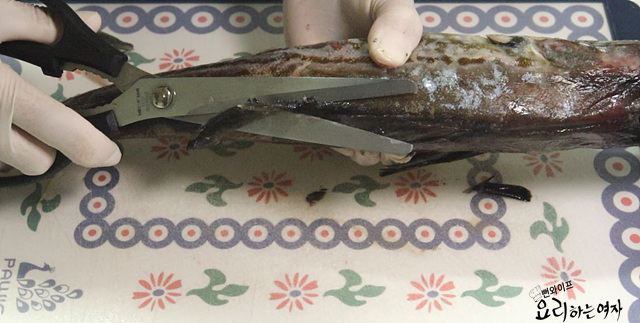
If you bought it uncleaned, cut off all the pollack fins with kitchen shears.
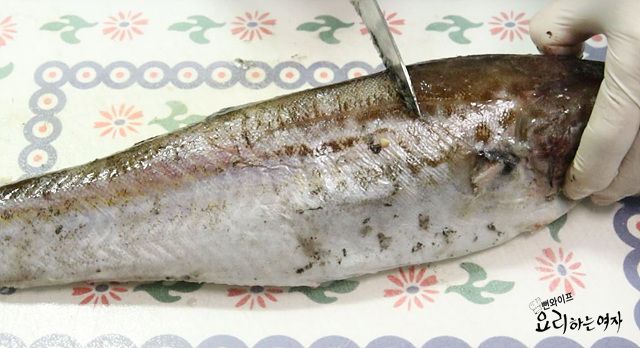
There are lots of messy scales on the surface of the pollack, so scrape them thoroughly with a knife to keep the broth clean.
Cut it into chunks, remove the innards, and run your fingers along the backbone to remove any clotted red blood.
Even if you bought pre-cut pollack, be sure to remove the scales and blood clots to get a delicious broth free of any fishy taste.
Cut the vegetables
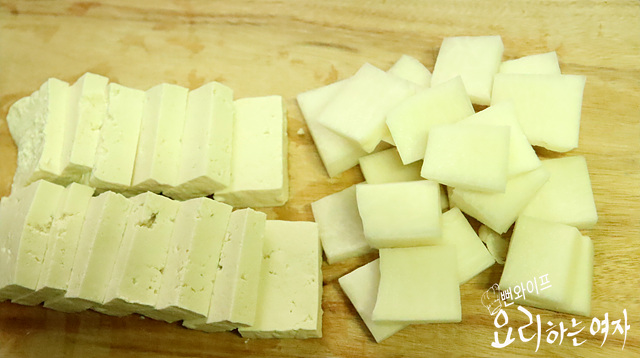
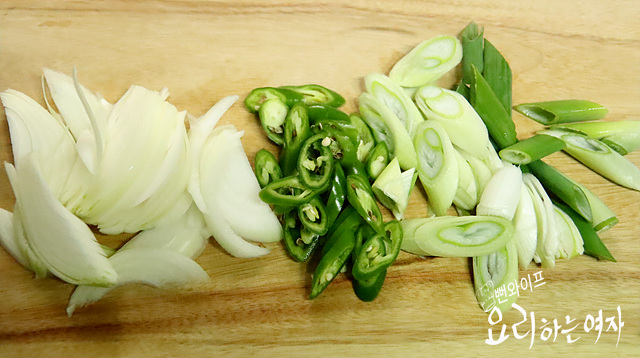
Cut the tofu and Korean radish into thick, flat squares, and slice the onion, large green onion, and Cheongyang chili pepper diagonally.
Boil the stew
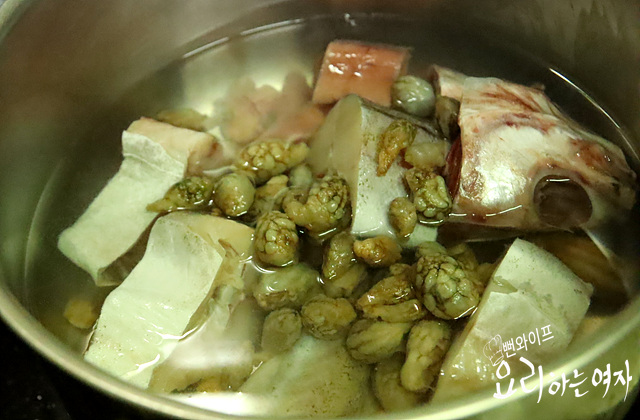
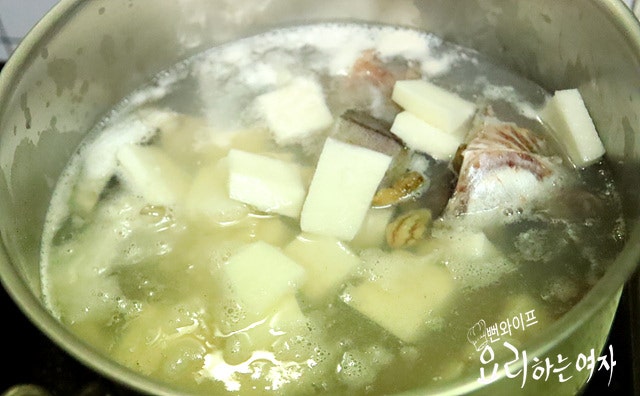
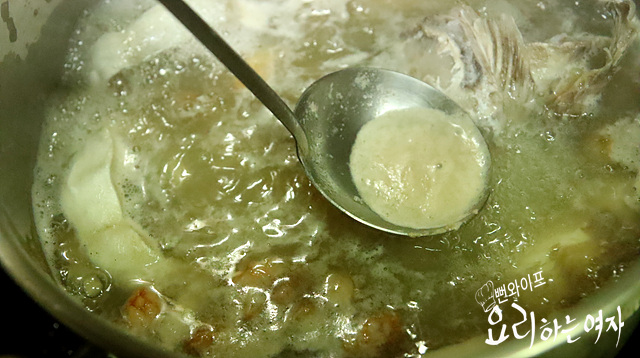
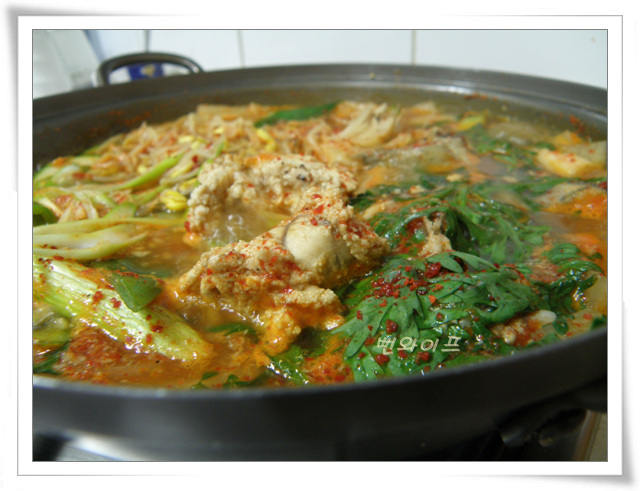
Add 7 cups of anchovy broth, the pollack, and Korean radish to a pot, bring it to a rolling boil, and skim off all the foam that rises to the surface.
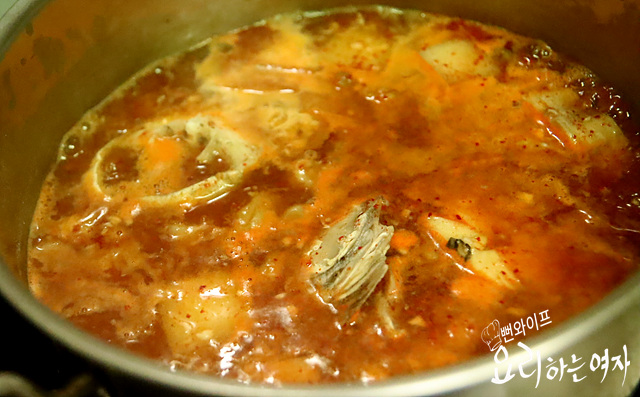
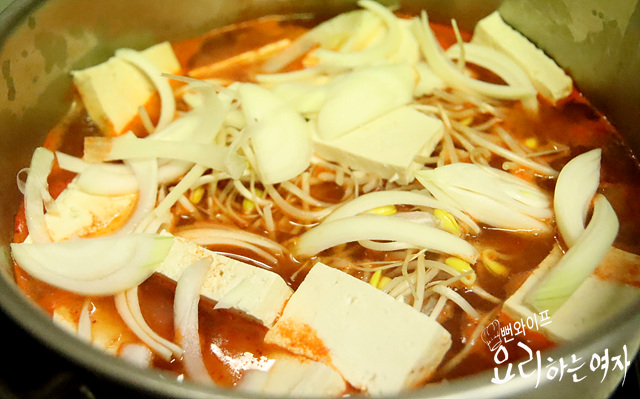
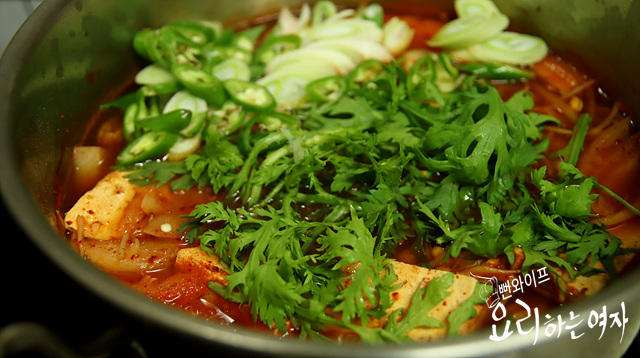
Add all of the prepared seasoning, and once the radish and pollack are cooked through, taste and adjust the seasoning with salt.
Add the soybean sprouts, tofu, and onion, and cook them through.
Finally, finish by adding the large green onion, Cheongyang chili pepper, crown daisy, and a little ground black pepper.
Finish
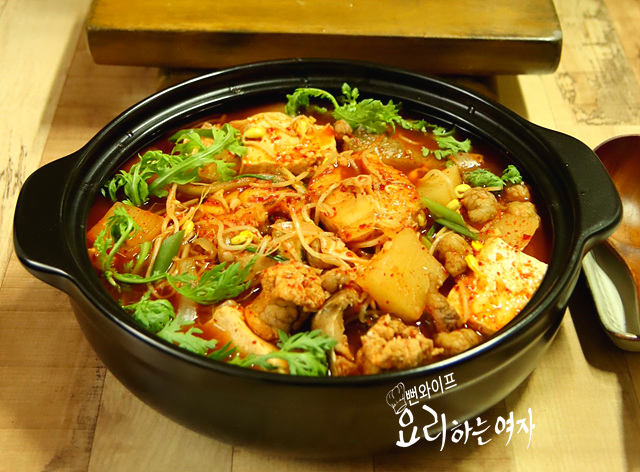
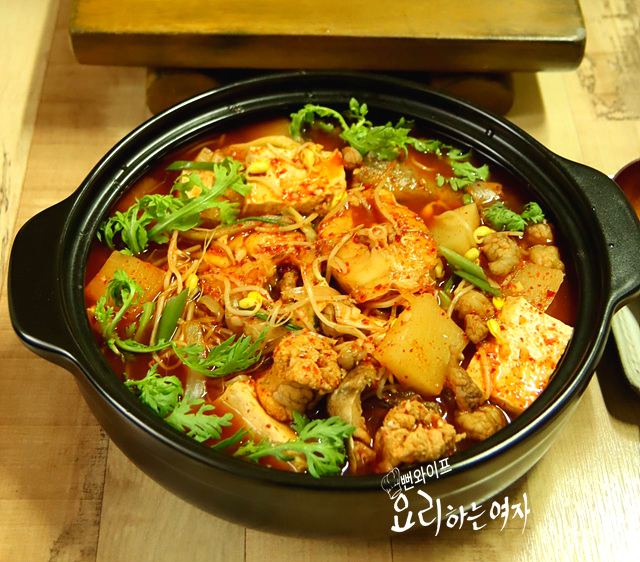
To keep it warm, I transferred it to an earthenware pot (ttukbaegi) and boiled it once more.
Before eating, stir in the reserved crown daisy to enjoy its deep herbal aroma.
 Ppunwife's tips
- There are lots of messy scales on the surface of the pollack, so scrape them thoroughly with a knife to keep the broth clean.
- Even if you bought pre-cut pollack, be sure to remove the scales and blood clots to get a delicious broth free of any fishy taste.
FAQ
What should I pay attention to when prepping pollack to reduce the fishy smell?
Thoroughly scraping the scales off the skin with a knife and cleanly removing the red blood clots along the backbone with your fingers will give you a clear broth with no fishy odor.
Is there an ingredient I can add instead of mideodeok to enhance the broth flavor?
If you want a deeper umami flavor, you can cook it with shellfish such as mussels or clams instead.
Is there another seasoning I can use instead of soup soy sauce?
Instead of soup soy sauce, you can substitute tuna extract sauce or fish sauce to adjust the seasoning.