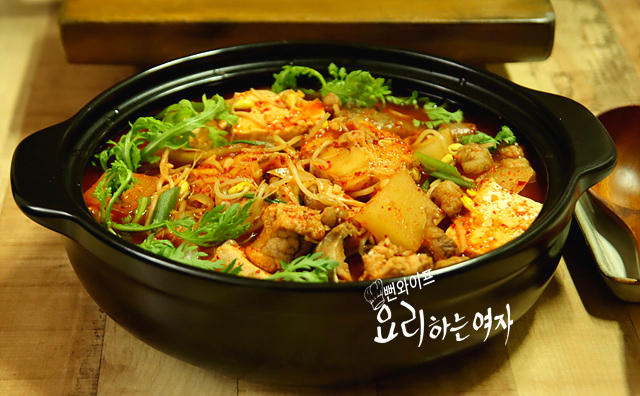
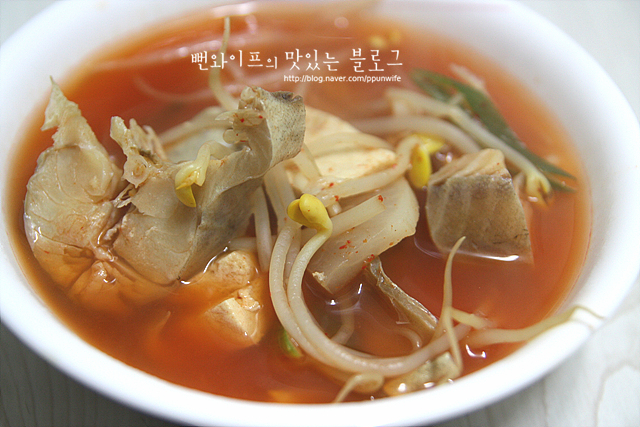
Refreshing Dongtae Tang (Pollock Stew)
A winter stew dish pairing chewy, salt-brined frozen pollock flesh with a refreshing and spicy broth.
Translated from Korean by AI and not yet checked by a native speaker. Amounts and numbers are taken directly from the original recipe. Read the Korean original →
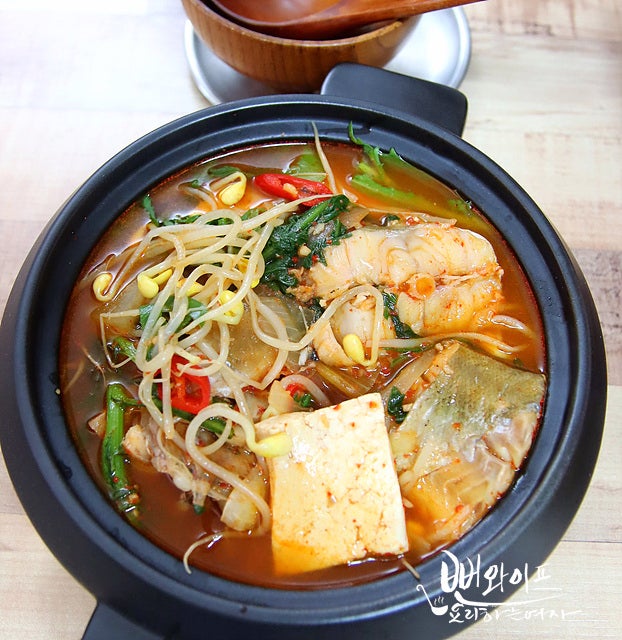
Thoroughly scraping off scales, gutting, and rinsing away clotted blood, then soaking in salt water keeps the fish flesh from breaking apart and gives it a chewy texture. Adding Korean radish and soybean sprouts creates a rich, refreshing broth that is also great as a cold-weather hangover soup.
- Servings
- 4 servings
- Difficulty
- Medium
- Spiciness
- Spicy
Ingredients
Ingredients
- Frozen pollack1 whole, 1100 g (large)
- Korean radish (mu)200 g
- Tofu200 g
- Soybean sprouts150 g
- Onion1/2
- Large green onion (daepa)1/2 stalk
- Cheongyang chili pepper (hot green chili)1
- Red chili pepper1
- Ssukgat (crown daisy)1 handful
- Anchovy broth7 cups
- Salt water10 cups (3 tbsp)
Seasoning
- Gochugaru (Korean chili flakes)3 tbsp
- Gochujang (Korean red chili paste)1 tbsp
- Doenjang (Korean soybean paste)1/2 tbsp
- Soup soy sauce (guk-ganjang)1 tbsp
- Sand lance fish sauce (or dried anchovies)1 tbsp
- Minced garlic2 tbsp
- Minced ginger1 tsp
- Salta little
- Ground black peppera little
- Water dropwort or perilla leaves are also great substitutes for crown daisy.
- If you soak the cleaned frozen pollock in salt water at seawater concentration for at least 20 minutes, it gets seasoned while the flesh firms up, so you can enjoy chewy fish that won't break apart even after boiling.
- If you have rice water, you can also boil 7 cups with 2 broth tablets.
Steps
Prepare the ingredients
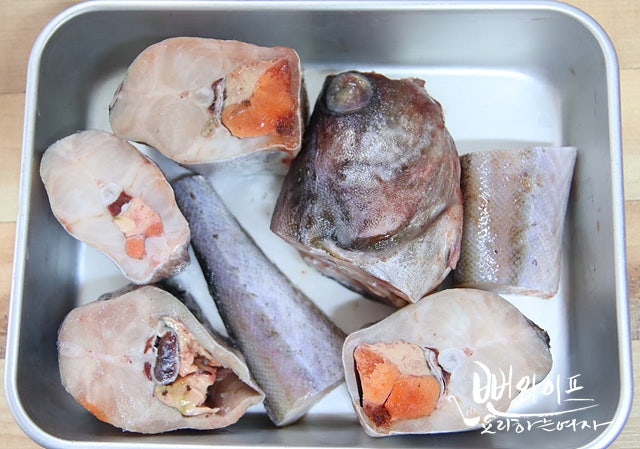
This is 1 large frozen pollack. I asked to have it chopped into pieces when purchasing.
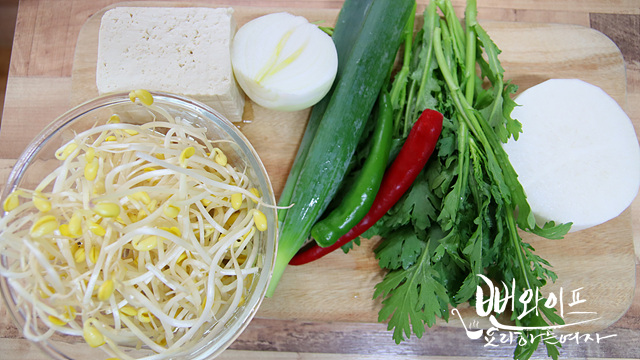
For secondary ingredients, besides the refreshing Korean radish and soybean sprouts, I prepared tofu, onion, large green onion, crown daisy, and chili peppers.
Water dropwort or perilla leaves are also great substitutes for crown daisy.
Clean the frozen pollock
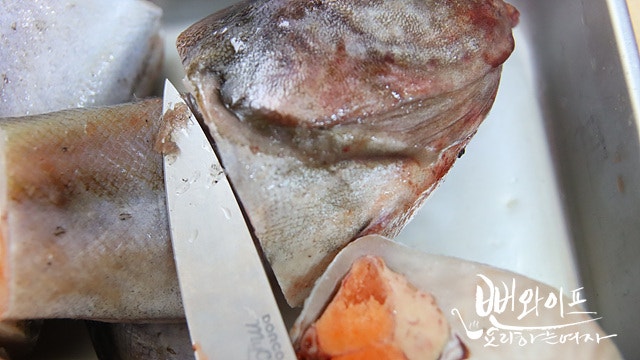
It is easier to clean the frozen pollock while it is still firm before thawing completely.
First, cut off all the fins, and scales and black residue will come off the surface of the pollock. Scrape them off well with a knife so the broth stays clean and clear.
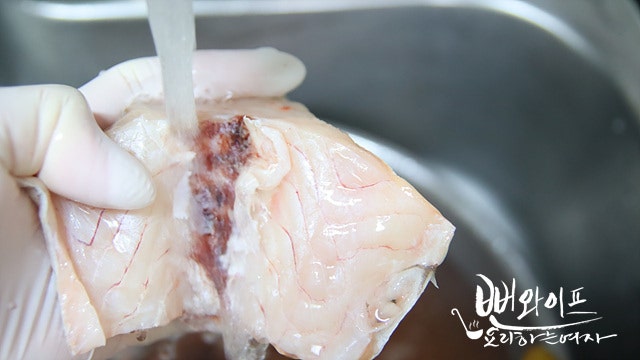
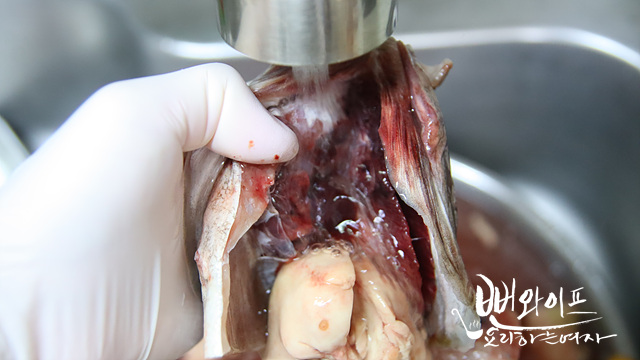
Peel back the black film in the belly area, and you will see lots of dark red clotted blood clinging to the bones, so scrape it away with your fingers to remove it.
In the head, the gills act as a filter and trap mud or impurities, so you need to pull them out.
There is a lot of debris and dark red clotted blood here as well, so wash it thoroughly.
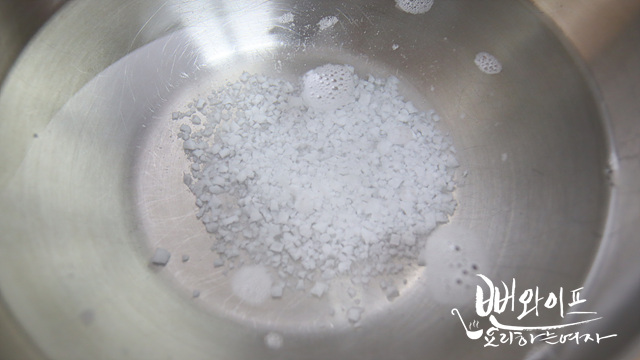
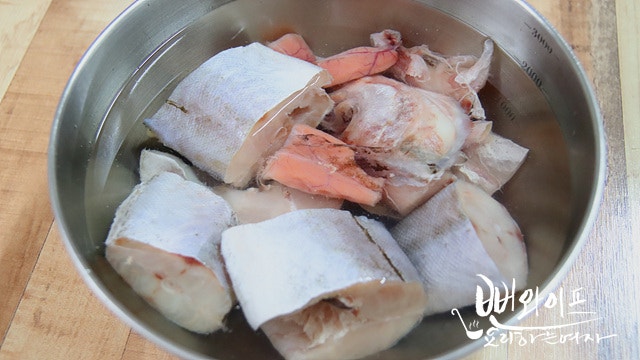
If you soak the cleaned frozen pollock in salt water at seawater concentration for at least 20 minutes, it gets seasoned while the flesh firms up, so you can enjoy chewy fish that won't break apart even after boiling. Dissolve 3 tbsp coarse sea salt in 10 cups of water, soak the pollock, and then lift it out to cook without rinsing separately.
Slice the vegetables and tofu
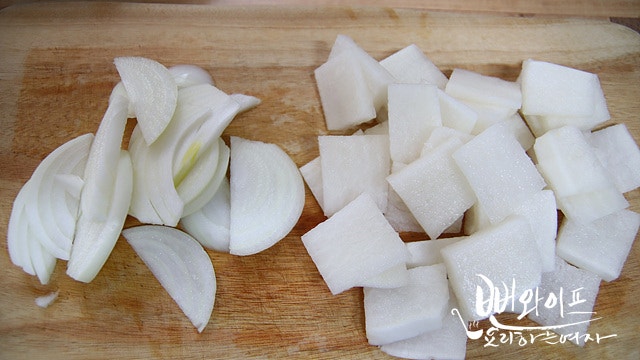
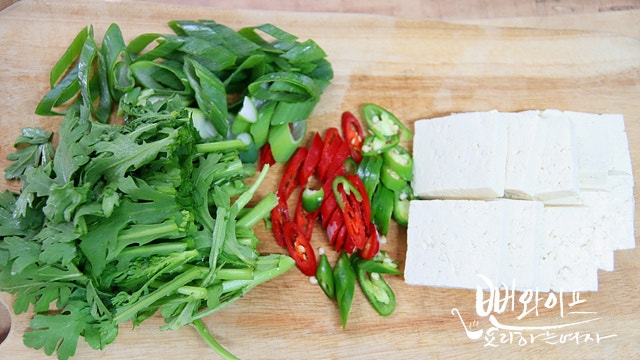
Cut the Korean radish into bite-sized flat squares, slice the onion, cut the tofu thickly, and chop the crown daisy, large green onion, and chili peppers into bite-sized lengths.
Mix the seasoning
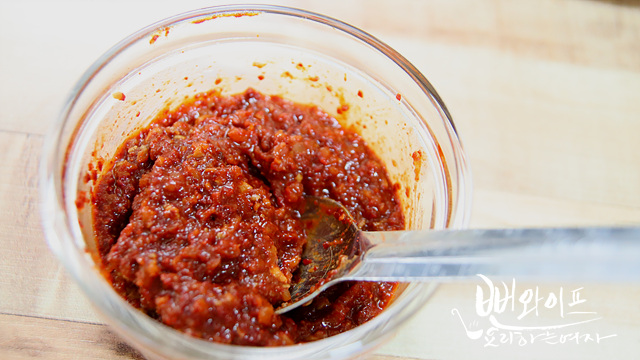
Combine all the seasoning ingredients except the salt ahead of time; this prevents any raw gochugaru smell and matures the flavors, which improves the broth.
Simmer the stew
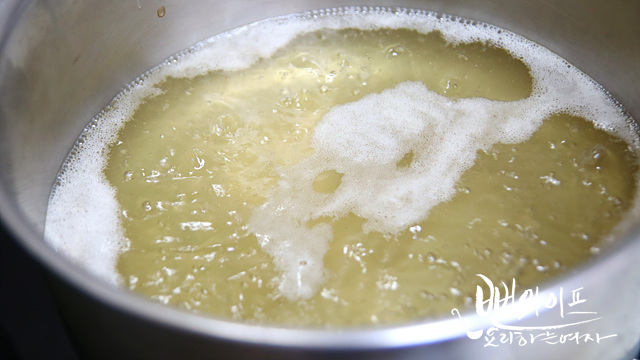
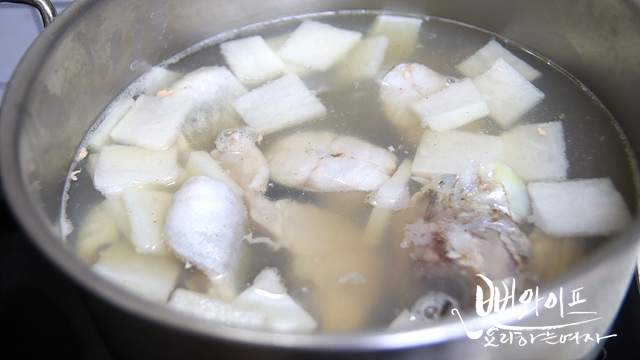
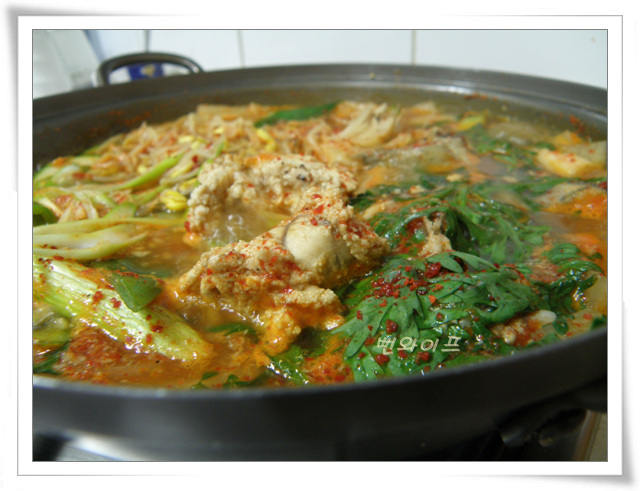
When 7 cups of anchovy broth come to a rolling boil, add the Korean radish and frozen pollock.
If you have rice water, you can also boil 7 cups with 2 broth tablets.
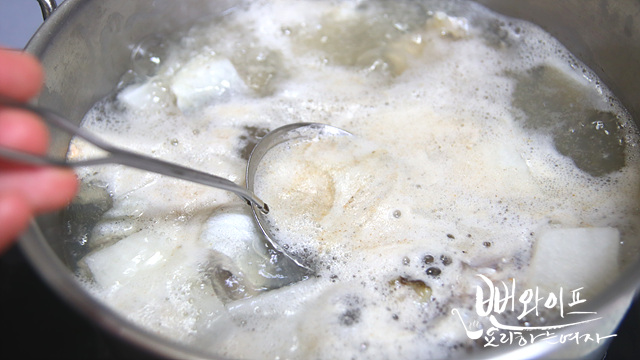
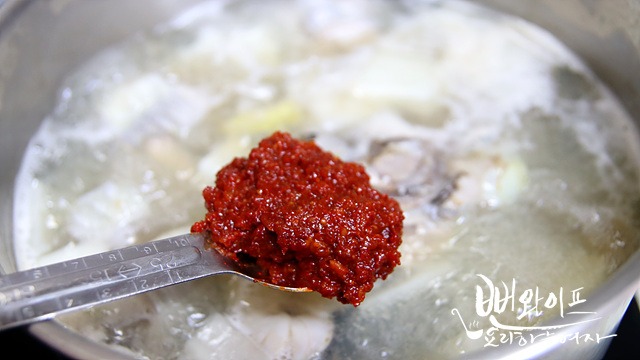
Skim off the foam neatly as it rises to a boil, then add the seasoning paste and simmer until the Korean radish and pollock are tenderly cooked.
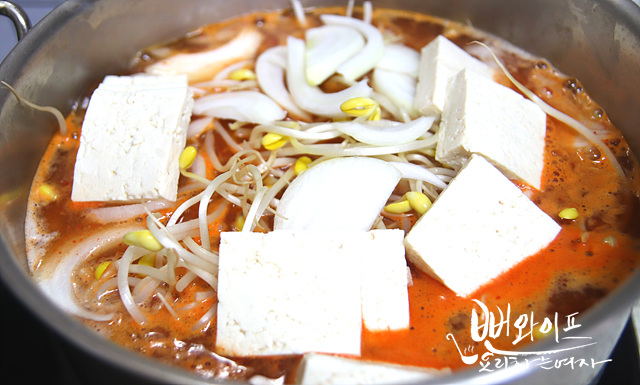
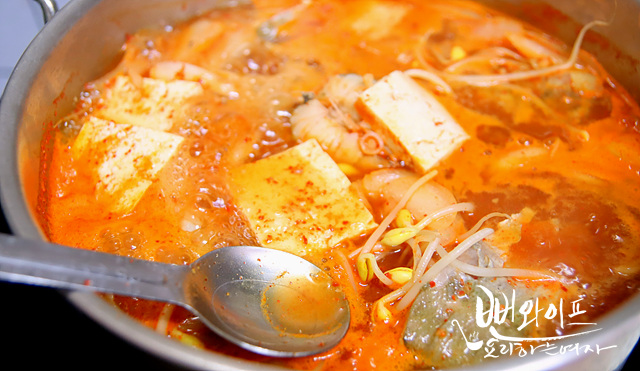
Add the soybean sprouts, tofu, and onion, and cook until done, then taste the broth. If it tastes bland, adjust the seasoning with salt.
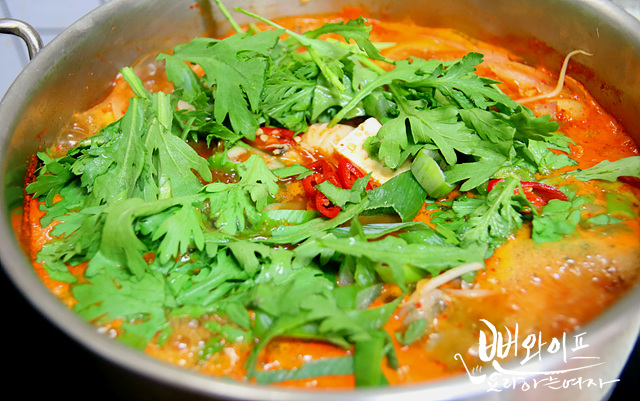
Finally, add the large green onion, chili peppers, and crown daisy, simmering just briefly to let their aromas infuse, then finish.
Finish
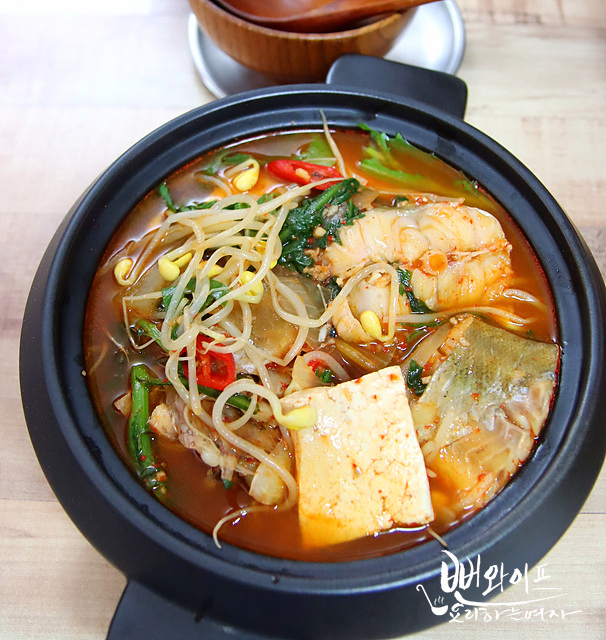
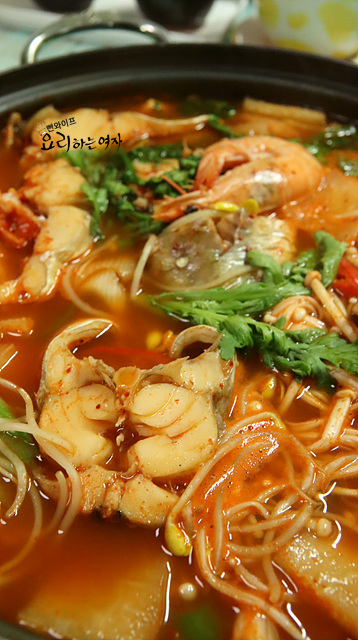
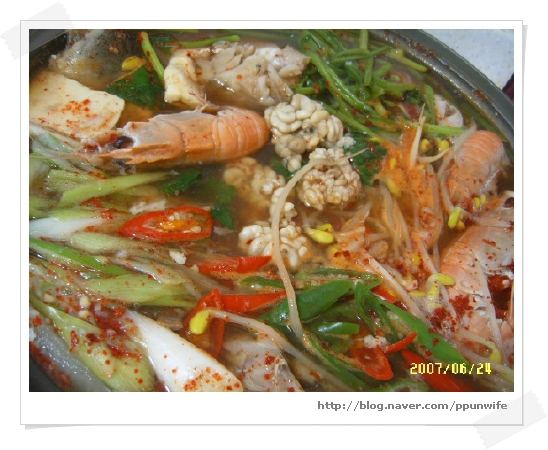
Dongtae tang is truly at its best when eaten in cold winter.
The refreshing yet deep broth is just perfect as an evening dinner to wrap up the day.
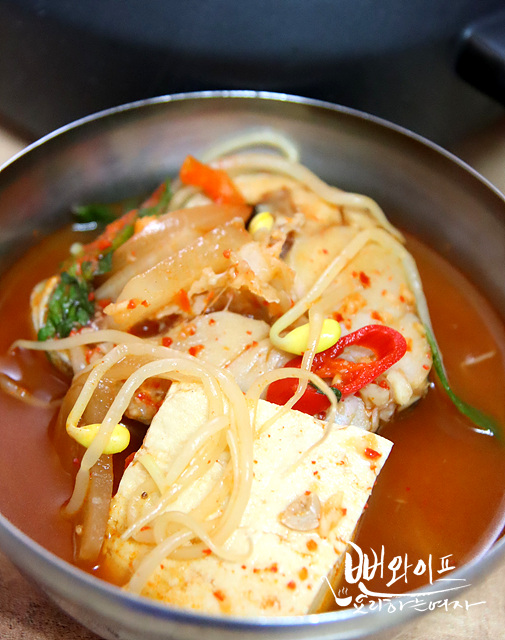
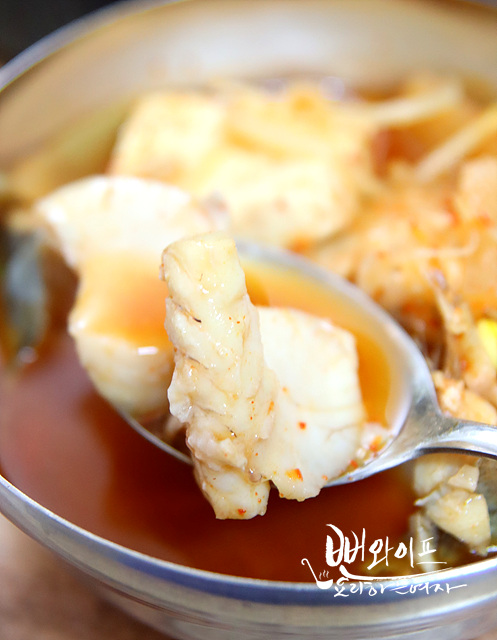
Soaking the cleaned frozen pollock in salt water kept the flesh plump, chewy, and pleasant to bite without breaking apart easily when stirred.
Adding assorted vegetables and soybean sprouts makes this pollock stew broth the ultimate in refreshing flavor.
 Ppunwife's tips
- It is easier to clean the frozen pollock while it is still firm before thawing completely.
- If you soak the cleaned frozen pollock in salt water at seawater concentration for at least 20 minutes, it gets seasoned while the flesh firms up, so you can enjoy chewy fish that won't break apart even after boiling.
- Combine all the seasoning ingredients except the salt ahead of time; this prevents any raw gochugaru smell and matures the flavors, which improves the broth.
FAQ
Is there a way to cook frozen pollock without the flesh falling apart?
If you soak the cleaned frozen pollock for at least 20 minutes in a salt water solution of 3 tbsp coarse sea salt dissolved in 10 cups of water, it absorbs seasoning and firms up so it will not fall apart easily.
Can I use a different broth instead of anchovy broth?
You can also boil 7 cups of rice water with 2 broth tablets and use it as your soup base.
Is there a vegetable I can substitute if I do not have crown daisy?
Water dropwort or perilla leaves also go wonderfully to add fresh herbal aroma instead of crown daisy.
How should I clean the fish so the broth does not smell fishy?
Scrape off surface scales and impurities with a knife, and thoroughly wash away the clotted blood clinging to the bones behind the belly's black film as well as any residue inside the gills.