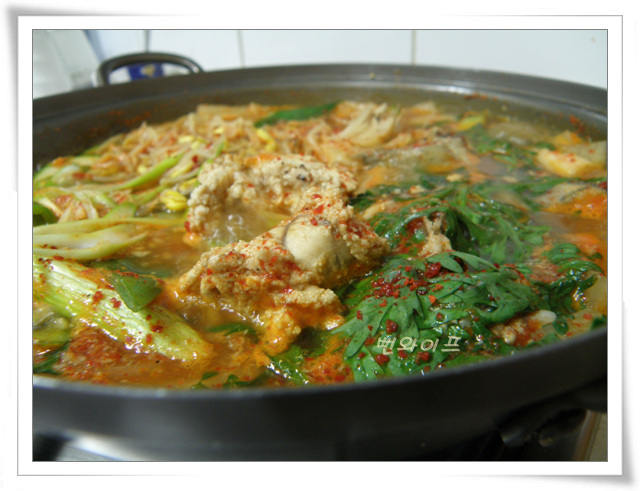
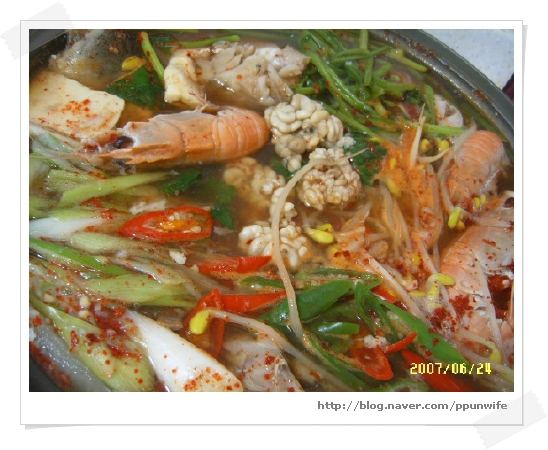
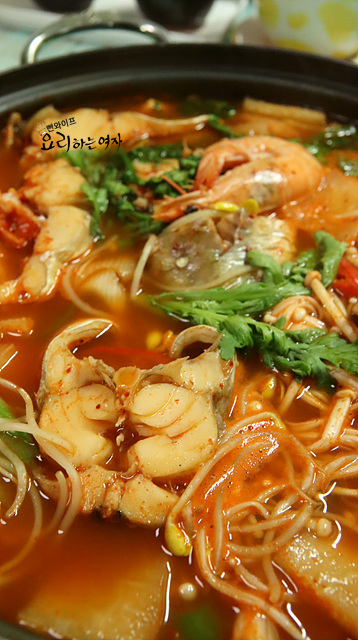
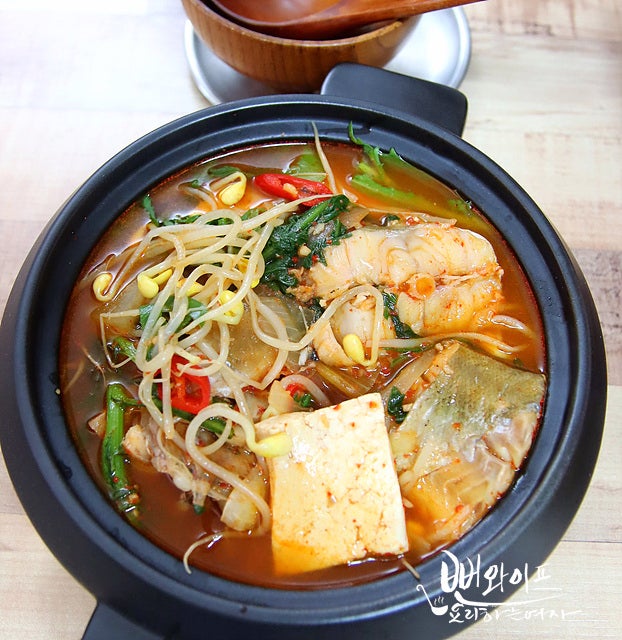
Spicy, Refreshing Daegu Tang (Codfish Soup) with Radish
A spicy and refreshing soup made by simmering cleaned fresh cod and Korean radish in anchovy broth.
Translated from Korean by AI and not yet checked by a native speaker. Amounts and numbers are taken directly from the original recipe. Read the Korean original →
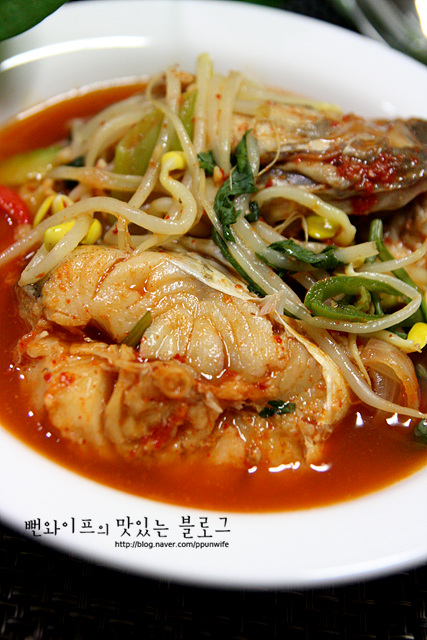
This refreshing soup is made by simmering fresh cod and Korean radish in an anchovy and dasima broth. The key is to skim off any foam before adding the seasonings, then cook just until tender so the delicate fish flesh does not break apart. With its spicy yet deep broth, it makes an excellent accompaniment for drinks or a restorative hangover soup.
- Servings
- 3–4 servings
- Difficulty
- Hard
- Spiciness
- Spicy
Ingredients
Ingredients
- Cod1 whole, 900 g (medium)
- Korean radish (mu)150 g
- Korean zucchini (aehobak)1/3
- Onion1/2
- Soybean sprouts1 handful
- Ssukgat (crown daisy)1 handful
- Large green onion (daepa)1/2 stalk
- Cheongyang chili pepper (hot green chili)1
- Red chili pepper1
- Anchovy broth6 cups
Seasoning
- Gochugaru (Korean chili flakes)2 tbsp
- Gochujang (Korean red chili paste)1 tbsp
- Soup soy sauce (guk-ganjang) (or soup soy sauce (guk-ganjang), soup soy sauce (guk-ganjang))2 tbsp
- Mirin (cooking rice wine)1 tbsp
- Minced garlic1 tbsp
- Ginger juice1/2 tbsp
- Ground black pepper1/2 tsp
- Salta little (to taste if needed)
Broth ingredients
- Dried soup anchovies20
- Dried kelp (dasima)2 sheets (10 cm square)
- Water10 cups
- You can use other fish that make refreshing broth, such as frozen pollack (dongtae), Korean rockfish (ureok), half-dried pollack (kodari), or fish carcass trimmings (seodeori), and prepare it the same way.
- Adding tofu, mushrooms, or water dropwort (minari) is also great.
- If you want to add warty sea squirts (mideodeok), shrimp, or clam meat along with the cod, simply reduce the amount of cod and boil.
Steps
Make the broth
1. Make the broth before preparing the ingredients.
Make the basic anchovy and dasima broth essential for soup dishes.
Broth ingredients: 20 dried soup anchovies, 2 sheets dried kelp (dasima, 10 cm square), 10 cups water.
Once the water starts boiling, reduce the heat to a gentle simmer and boil for about 10 more minutes.
Here is a broth tip: instead of adding the kelp pieces at the given size, cut them into small pieces and use them in the broth to extract the flavor even better.
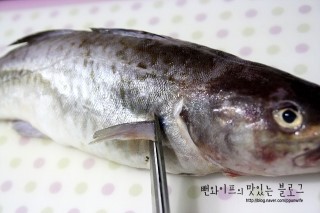
2. Now clean the cod. First, trim away all the fins attached to the body neatly with kitchen shears.
Trim the cod fins
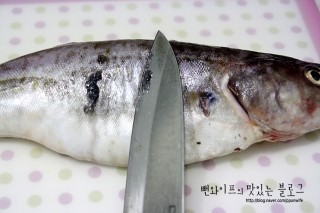
Scale the fish
3. There are many scales on the skin, so make sure to scrape them thoroughly with a knife.
Not only on the darker parts, but also on the white belly, there are many invisible scales that will scrape off in large amounts when you check.
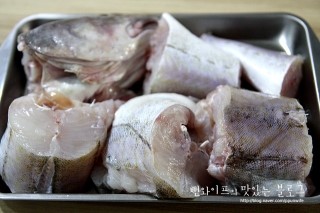
4. Cut the fish into bite-sized chunks, remove all the innards, and wash it.
There is often debris in the gills around the head, so rinse thoroughly under running water, sweeping through with your fingers.
To firm up soft flesh like cod or other tender fish, you can sprinkle a little salt on it and let it sit briefly. (I skipped this step.)
Be sure to also remove all the dark red blood clots clinging to the backbone.
If they do not come off easily with your fingers, gently scrape them off with the tip of a knife.
You can clean frozen pollack or other fish in the exact same way.
Proper cleaning alone eliminates almost all fishy and unpleasant odors, giving you a clean and refreshing broth.
Chop and clean innards and blood clots

Mix the seasoning
5. Add all the seasoning ingredients and mix well.
If it feels too thick and hard to mix, add 2 to 3 tbsp of water or anchovy broth and stir.
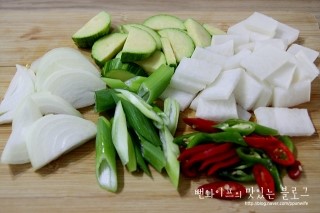
6. Cut enough Korean radish into thin bite-sized squares to make about two handfuls, slice 1/2 medium onion, and slice 1/3 Korean zucchini into half-moons. Diagonally slice the green onion and chili peppers.
Slice the vegetables
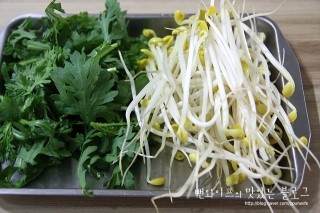
Prepare additional ingredients
7. Prepare a large handful of soybean sprouts and a little ssukgat (crown daisy).
Tofu, mushrooms, or water dropwort are also great.
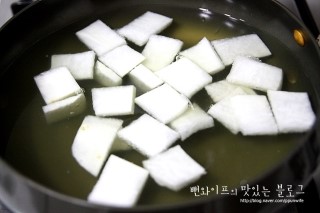
8. Pour the anchovy broth into a pot and add the radish...
Add radish to the broth
10
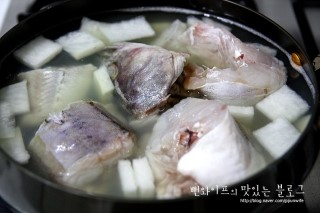
Add cod and boil
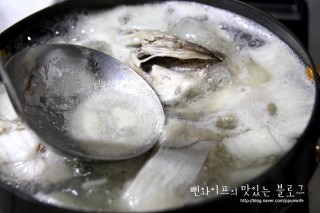
9. Add the cod and bring to a rolling boil.
If you are adding warty sea squirts, shrimp, or clam meat along with the cod, reduce the amount of cod before boiling.
10. Once the broth comes to a boil, skim off the foam cleanly.
Instead of dissolving the seasoning into the broth from the start, boil it once like this and skim the foam first so the seasoning is not carried away with the foam.
11
Skim off the foam
12
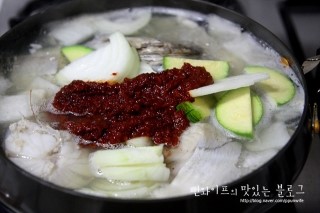
Add vegetables, seasoning, and adjust taste

11. When the outside of the cod flesh turns white and cooked, add the zucchini, onion, and seasoning, then boil briefly...
Boil until the seasoning is evenly distributed in the broth, taste it, and adjust with salt if it is bland.
12. Add the remaining vegetables—soybean sprouts, large green onion, and chili peppers—and boil briefly until the soybean sprouts are cooked, then finally add the crown daisy...
Add remaining vegetables and finish cooking

Simmer for just a moment longer to let the fragrance spread, and it is done.
If you boil fresh raw fish for too long, the fish loses flavor and the flesh easily breaks apart, so boiling it briskly just until fully cooked is the secret to enjoying it at its best.
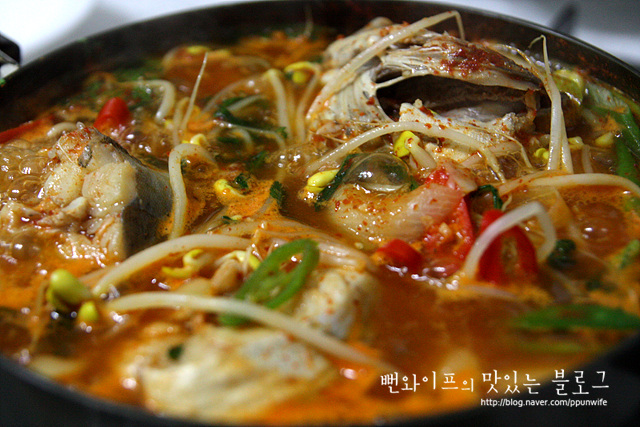
Just looking at it makes you feel refreshed and clear-headed.
This codfish soup works wonderfully as a meal, as an accompaniment for drinks, or as a hangover cure.
 Ppunwife's tips
- Instead of adding the kelp pieces whole as indicated, cut them into small pieces and use them in the broth to extract the flavor even better.
- To firm up soft flesh like cod or other tender fish, sprinkle a little salt on it and let it sit briefly.
- Instead of dissolving the seasoning into the broth from the start, boil it once and skim the foam first so the seasoning is not carried away with the skimmed broth.
- If you boil fresh raw fish for too long, the fish loses flavor and the flesh easily breaks apart, so boiling it briskly just until fully cooked is the secret to delicious results.
FAQ
Are there tips for cleaning cod to reduce its characteristic fishy smell?
Thoroughly scraping the scales from the skin with a knife and carefully washing away debris in the gills and dark red blood clots along the bone will effectively eliminate fishy odors.
Can I use other kinds of fish instead of cod?
Yes, you can cook frozen pollack, Korean rockfish, half-dried pollack, or fish carcass trimmings (seodeori) in the exact same way.
How do I cook fresh raw fish without it breaking apart?
Fresh raw cod easily breaks apart and loses flavor if boiled for too long, so it is best to cook it briskly just until the fish is fully cooked through.