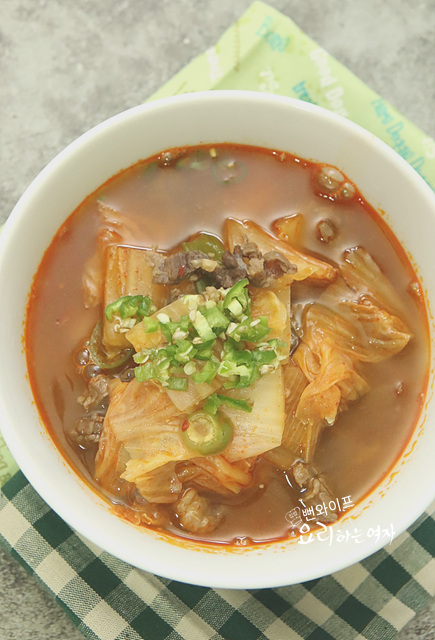
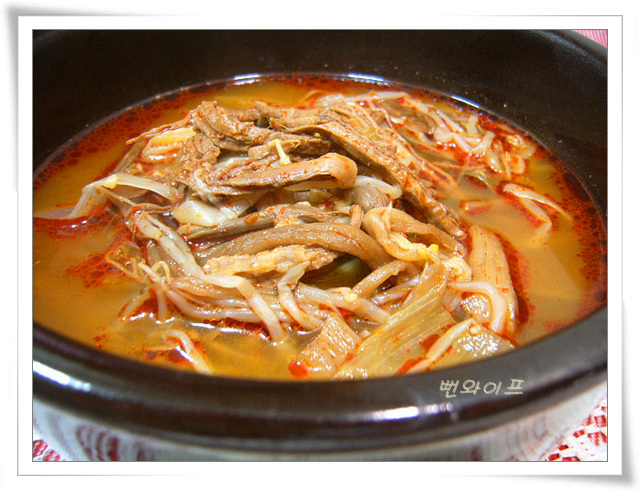
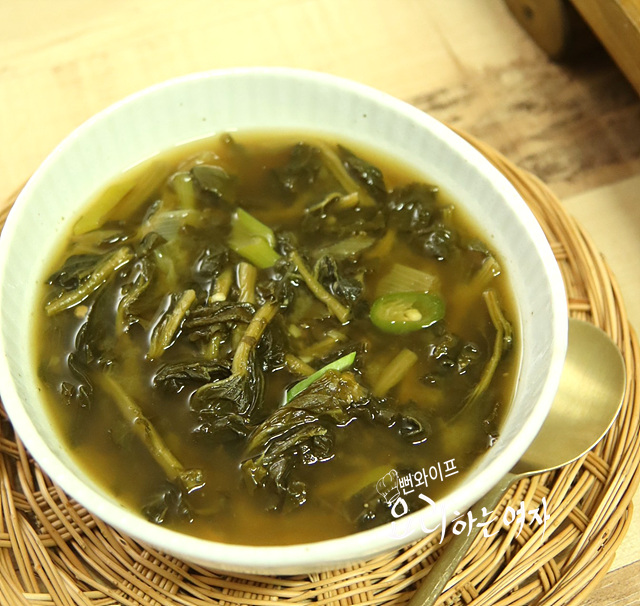
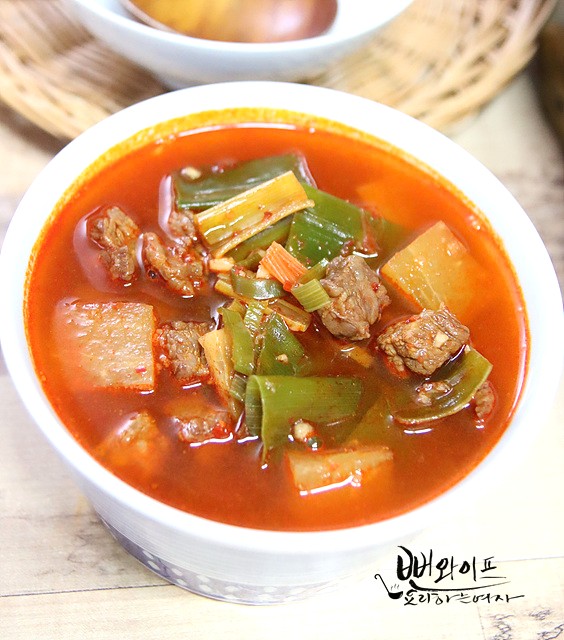
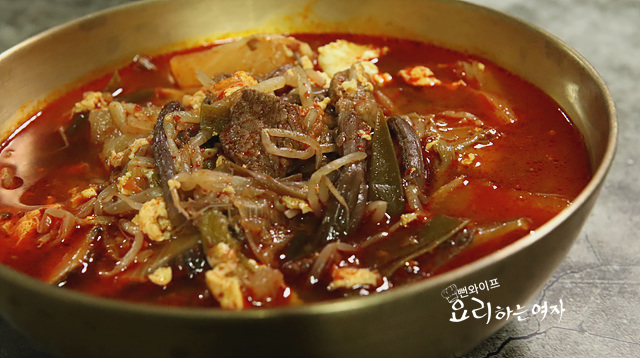
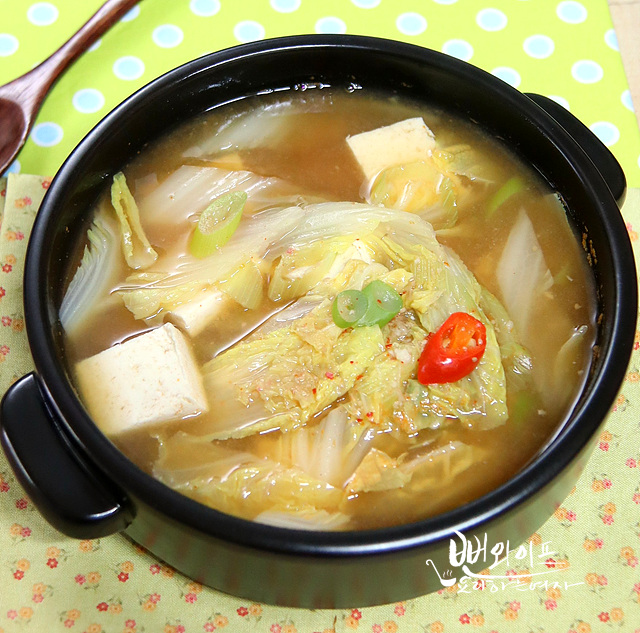
Hearty and Deep Ugeoji Guk (Dried Cabbage Leaf Soup)
A hearty traditional soup made by seasoning blanched outer cabbage leaves and beef with doenjang, stir-frying them, and simmering with broth.
Translated from Korean by AI and not yet checked by a native speaker. Amounts and numbers are taken directly from the original recipe. Read the Korean original →
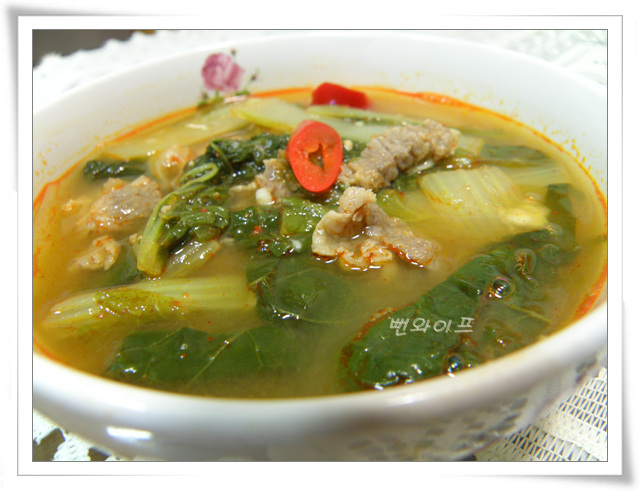
This ugeoji guk is made by seasoning blanched outer eolgari leaves and beef with doenjang, then stir-frying before simmering. Simmering it over low heat with anchovy broth or rice water yields a deep, savory, and hearty flavor. Adding gochugaru and large green onion gives it a slightly spicy kick while remaining easy on the stomach.
- Servings
- 3–4 servings
- Cook time
- 10 minprep not included
- Difficulty
- Hard
- Spiciness
- Mildly spicy
Ingredients
Ugeoji Guk Ingredients
- Dried cabbage leaves (ugeoji)2 handfuls, 200 g
- Beef100 g (stew cut)
- Large green onion (daepa)1/2 stalk
- Red chili pepper1
- Anchovy broth (or water from washing rice)5 cups
Ugeoji Guk Seasoning
- Doenjang (Korean soybean paste)2 tbsp
- Minced garlic1 tbsp
- Mirin (cooking rice wine)1 tbsp
- Gochugaru (Korean chili flakes)1 tbsp
- Salt1/2 tsp
Ugeoji Muchim Ingredients
- Eolgari (early winter napa cabbage)2 handfuls, 200 g
Ugeoji Muchim Seasoning
- Doenjang (Korean soybean paste)1 tbsp
- Minced green onion2 tbsp
- Minced garlic1/2 tbsp
- Toasted sesame oil1/2 tbsp
- Toasted sesame seedsa little
- Try making ugeoji guk with outer leaves of regular napa cabbage or young summer radish as well.
- Place the eolgari, beef, and seasoning in a bowl, mix thoroughly with your hands, and let sit for at least 10 minutes to absorb the flavors.
Steps
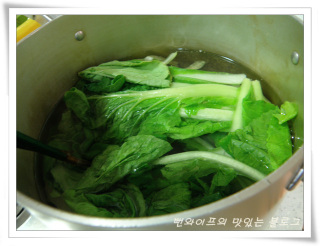
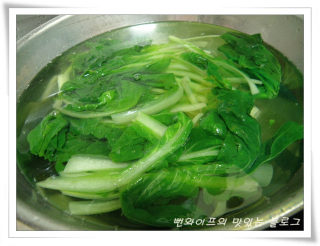
1. These are the outer leaves removed when making eolgari water kimchi. Blanch them in rolling boiling water until tender.
Try making ugeoji guk with outer leaves of regular napa cabbage or young summer radish as well.
2. Soak in cold water and drain the moisture.
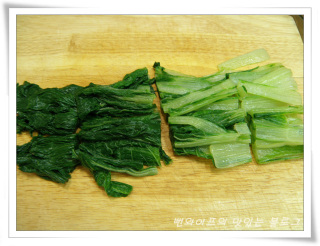
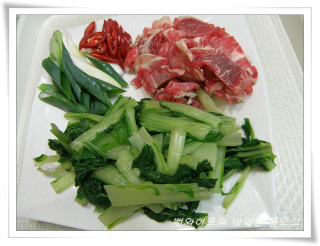
3. Cut into bite-sized lengths.
4. I also prepared the blanched eolgari along with the beef, large green onion, and red chili pepper.
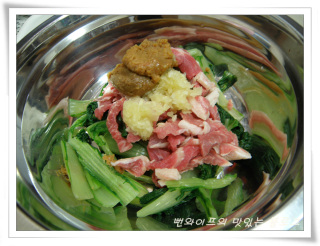
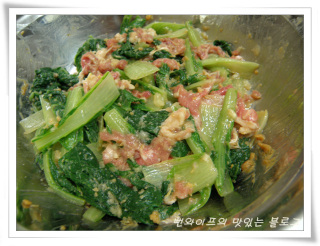
5. Place the eolgari and beef in a bowl, add 2 tbsp doenjang, 1 tbsp minced garlic, and 1 tbsp mirin, and mix well by hand.
6. Let sit for at least 10 minutes so the flavors absorb.
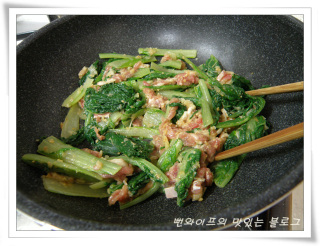
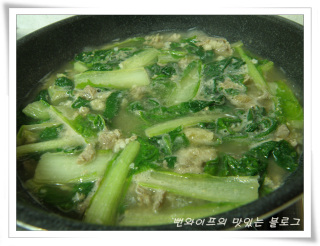
7. Put in a pan and stir-fry until the meat turns white...
8. Pour in the anchovy broth (or rice water), bring to a rolling boil, then cover with a lid and simmer over low heat for about 10 minutes.
10
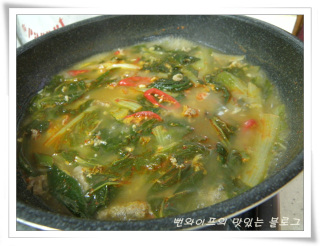
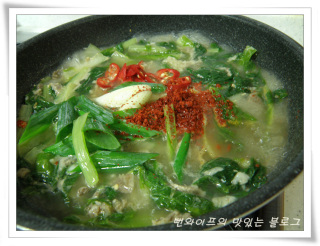
9. Season with salt, add gochugaru, large green onion, and red chili pepper...
10. Simmer for just a little longer so the ingredients meld together nicely.
Ugeoji muchim
Ingredients: 200 g eolgari (two handfuls)
Seasoning: 1 tbsp doenjang, 2 tbsp minced green onion, 1/2 tbsp minced garlic, 1/2 tbsp toasted sesame oil, a little toasted sesame seeds
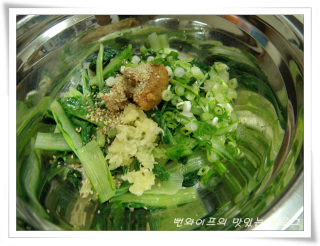
1. Cut the blanched eolgari into suitable lengths...
2. Add all the seasoning ingredients and eolgari, and toss gently with your hands.
 Ppunwife's tips
- Even without beef, it is delicious to make a doenjang soup by just pouring rich anchovy broth over the ugeoji.
FAQ
Can I use other ingredients instead of outer eolgari cabbage leaves?
You can make a delicious soup by blanching and using the outer leaves of regular napa cabbage or young summer radish.
Can I use a different broth instead of anchovy broth?
You can use the same amount of rice water instead of anchovy broth.
Does the broth still taste good without beef?
Even without adding beef, simmering with just a richly brewed anchovy broth will bring out plenty of hearty, savory flavor.