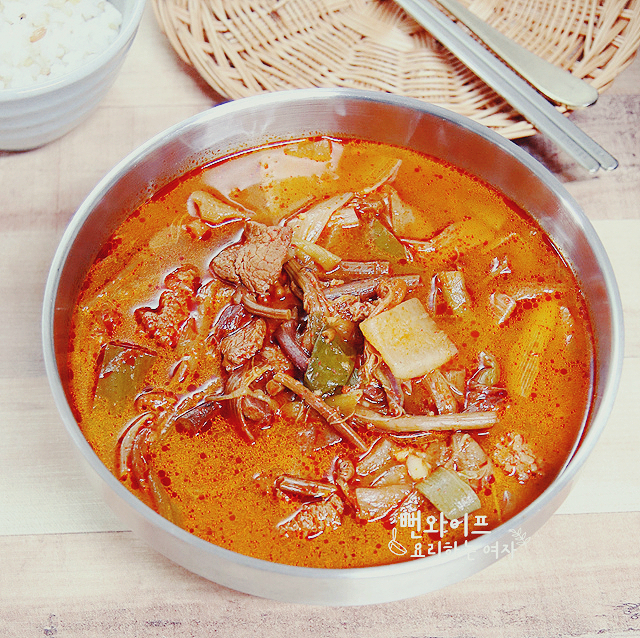
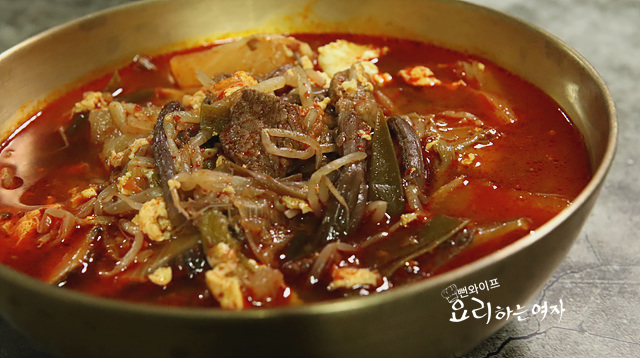
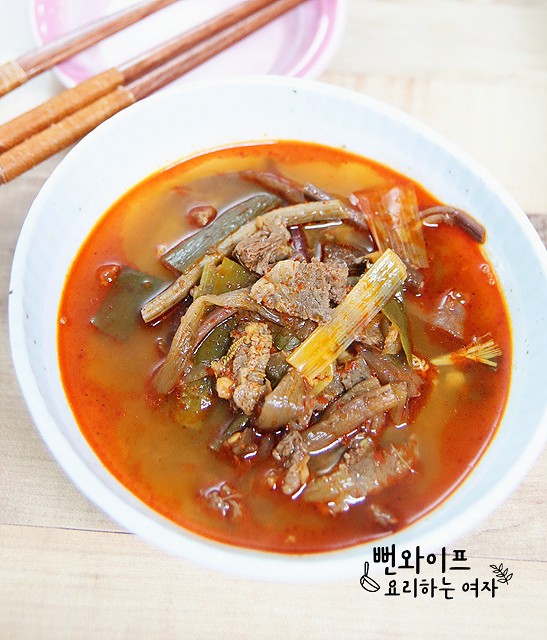
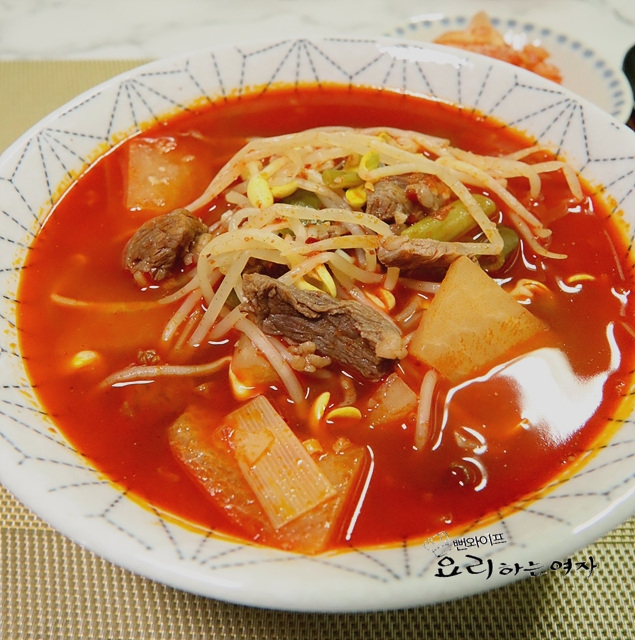
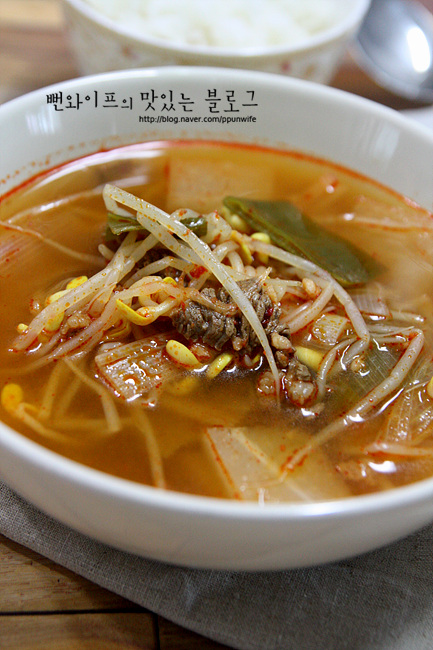
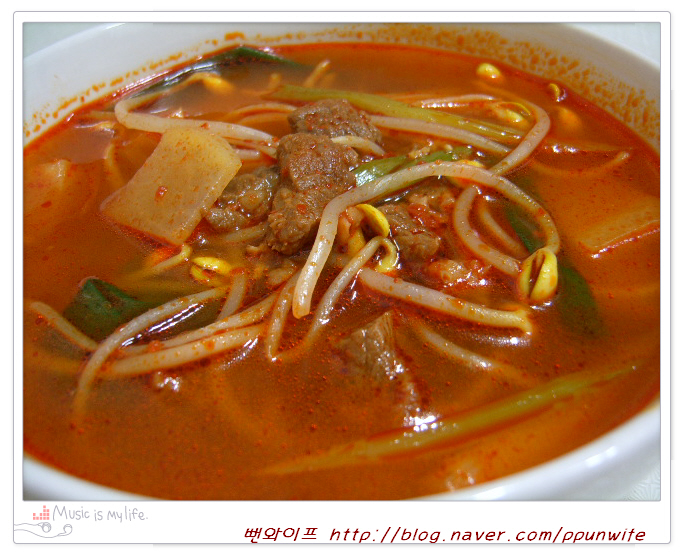
Spicy and Rich Yukgaejang (Spicy Beef and Scallion Soup)
A spicy and rich soup made by boiling beef until tender and simmering it with various vegetables seasoned in chili oil.
Translated from Korean by AI and not yet checked by a native speaker. Amounts and numbers are taken directly from the original recipe. Read the Korean original →
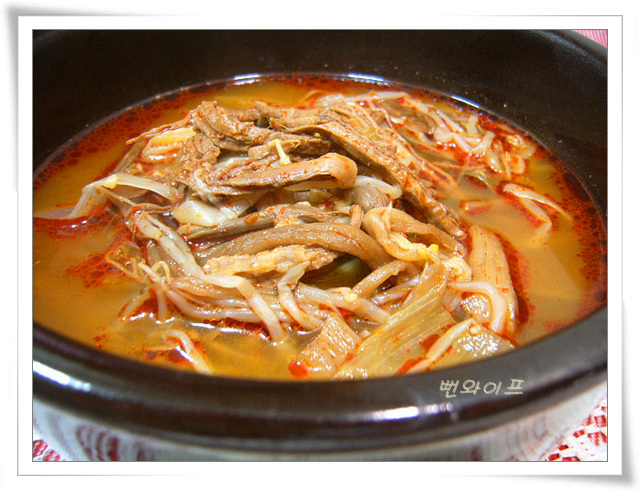
Tender beef brisket is simmered slowly to create a rich broth, then combined with blanched bracken fern, mung bean sprouts, and taro stems before simmering thoroughly. The long, patient simmering melds the ingredients together tenderly, yielding a deep, spicy broth that is perfect as a nourishing meal or restorative soup.
- Servings
- 10 servings
- Cook time
- 130 minprep not included
- Difficulty
- Hard
- Spiciness
- Spicy
Ingredients
Ingredients
- Beef430 g (brisket)
- Korean radish (mu)300 g
- Bracken fern (gosari)200 g
- Mung bean sprouts200 g
- Taro stems (torandae)150 g
- Large green onion (daepa)4 stalks
- Water20 cups
- Chili oil4 tbsp
- Fine salt1 tbsp
Seasoning
- Gochugaru (Korean chili flakes)5 tbsp
- Minced garlic3 tbsp
- Soup soy sauce (guk-ganjang)5 tbsp
- Cheongju (Korean rice wine) (or mirin (cooking rice wine))3 tbsp
- Ginger juice2 tsp
- Ground black pepper0.5 tsp
- Soak the beef in cold water for 2 hours to draw out the blood, changing the water once or twice along the way.
- Besides brisket, beef shank or flank steak also works well.
- The vegetables are weighed after blanching and squeezing out excess moisture. 200 g is roughly two handfuls.
- You can also add mushrooms, or increase any of your favorite ingredients.
- Blanching large, broadly cut green onions briefly in boiling water and rinsing them in cold water before adding them prevents sticky sap from seeping out and turning the broth sour.
- If you substitute chicken for the beef in the ingredients above, it becomes dakgaejang (spicy chicken soup).
Steps
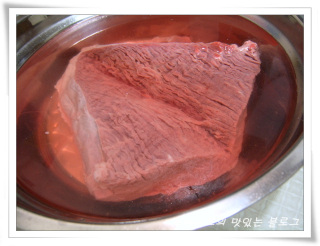
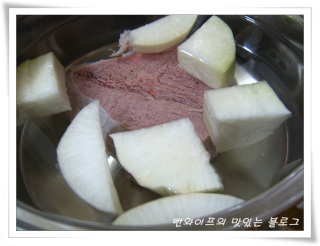
1. I used beef brisket. Beef shank or flank steak also works well.
Soak it in cold water for 2 hours to draw out the blood, changing the water once or twice along the way.
2. In a large pot, add the radish, beef, and 20 cups (4 L) of water, then once it comes to a boil...
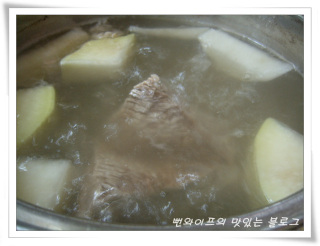
3. Lower the heat and simmer gently for about 1 hour until the beef becomes tender.
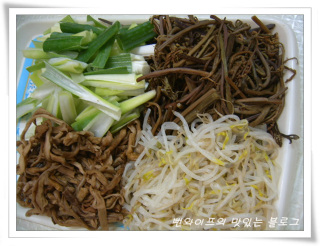
4. While the beef is cooking, prepare the vegetables.
Blanch the taro stems, mung bean sprouts, and bracken fern.
Using pre-blanched bracken fern or taro stems from the market makes this very convenient.
You can also add mushrooms, or increase any of your favorite ingredients.
Blanching large, broadly cut green onions briefly in boiling water and rinsing them in cold water before adding them prevents sticky sap from seeping out and turning the broth sour.
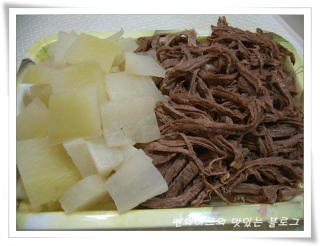
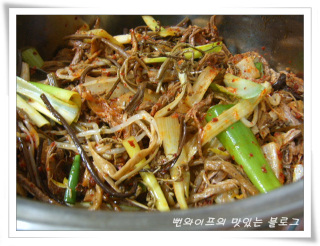
5. Shred the boiled beef along the grain into bite-size pieces, and cut the radish into thin bite-size squares.
6. Add all the ingredients—beef, radish, bracken fern, taro stems, mung bean sprouts, and large green onions—along with the seasoning, and toss well to coat.
Let it sit for 30 minutes so the flavors soak in.
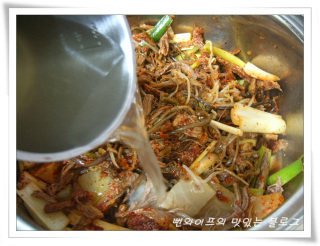
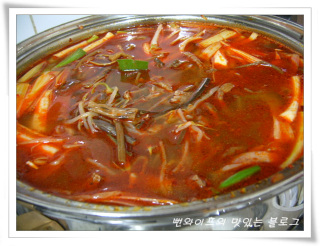
7. Drizzle with chili oil and stir-fry the seasoned vegetables briskly, then pour in the broth from boiling the beef and bring to a boil.
It is best to have the broth brought to a boil beforehand.
8. Boil vigorously over high heat for about 10 minutes so the ingredients blend together nicely, then taste the broth.
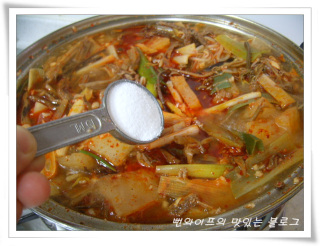
10
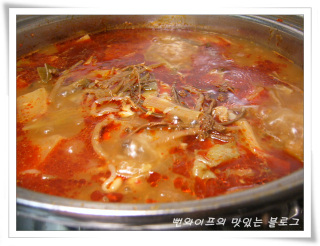
9. Season with salt to taste...
10. Simmer gently over low heat for about 1 hour before serving.
You may also stir in beaten eggs if you like.
 Ppunwife's tips
- Blanching large green onions briefly in boiling water and rinsing them in cold water before adding them prevents sticky sap from seeping out and turning the soup sour.
- It is best to have the broth brought to a boil beforehand.
- You may also stir in beaten eggs if you like.
- Yukgaejang and dakgaejang become more delicious the more you make and the longer you simmer them.
FAQ
Can I use other cuts of beef besides brisket?
You can certainly use beef shank or flank steak instead.
Why do you blanch the large green onions briefly in boiling water first?
It prevents the sticky sap peculiar to green onions from oozing out and making the soup taste sour.
Can I use chicken instead of beef?
Yes, if you use chicken instead of beef, you can enjoy it as dakgaejang (spicy chicken soup).