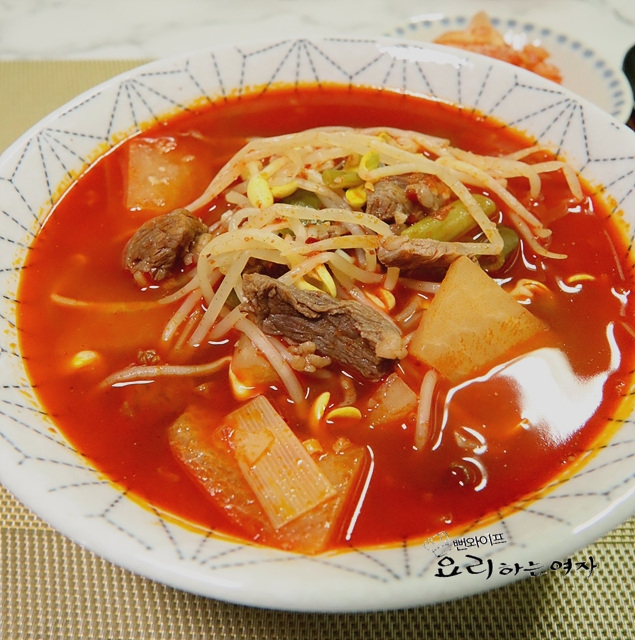
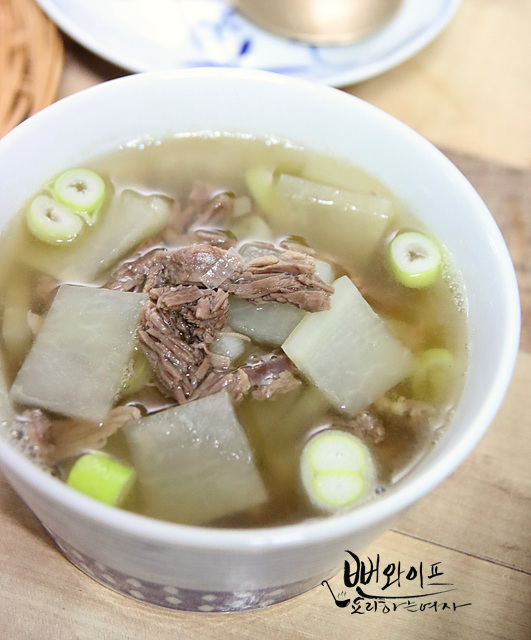
Beef Yukgaejang (Spicy Beef and Leek Soup)
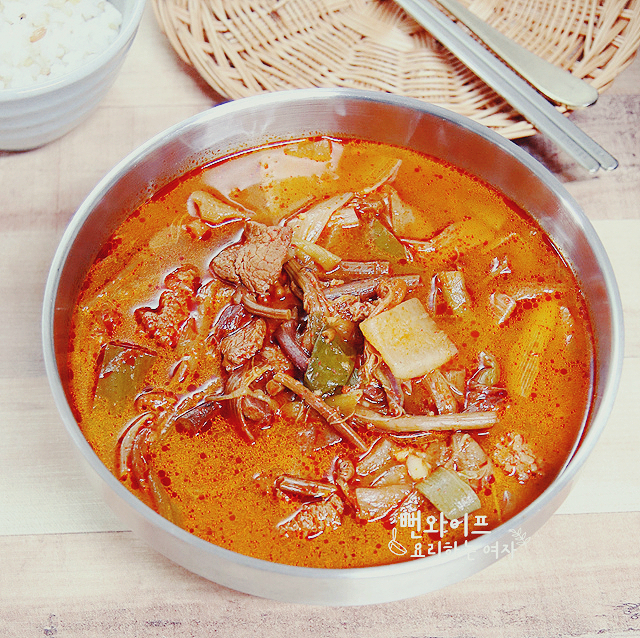
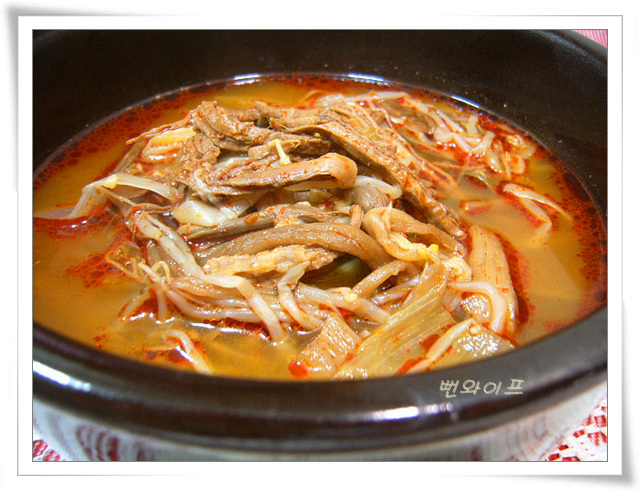
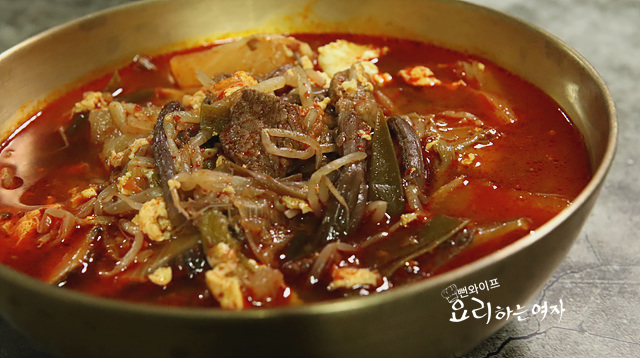
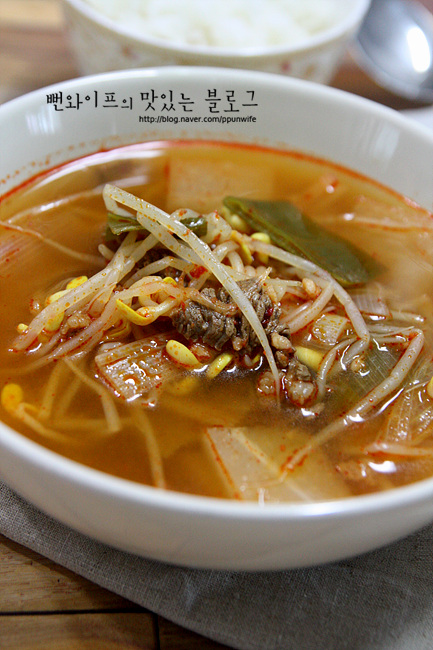
A rich beef yukgaejang simmered thoroughly with plenty of taro stems and bracken fern in a beef brisket broth.
Translated from Korean by AI and not yet checked by a native speaker. Amounts and numbers are taken directly from the original recipe. Read the Korean original →
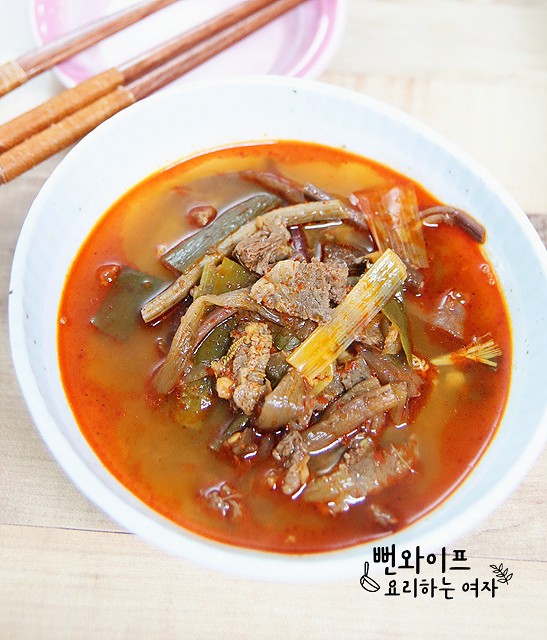
Beef brisket is simmered thoroughly to make a broth, then boiled taro stems and bracken fern are added generously, stir-fried in chili oil, and simmered together. Simmering slowly over low heat produces tender vegetables and a deep, spicy broth. It makes a hearty, nourishing dish that is great to enjoy as a stamina meal during the summer dog days.
- Servings
- 8 servings
- Cook time
- 65 minprep not included
- Difficulty
- Medium
- Spiciness
- Spicy
Ingredients
Ingredients
- Beef brisket800 g
- Boiled bracken fern (gosari)400 g
- Boiled taro stems600 g
- Korean radish (mu)400 g
- Large green onion (daepa)2 stalks
- Chili oil3 tbsp (3 tbsp)
- Water20 cups (approx.)
Seasoning
- Gochugaru (Korean chili flakes)4 tbsp
- Soup soy sauce (guk-ganjang)3 tbsp
- Tuna extract sauce (chamchi-aek) (or fish soy sauce, sand lance fish sauce)3 tbsp
- Minced garlic3 tbsp
- Mirin (cooking rice wine)3 tbsp
- Ground black pepper1/2 tsp
- Saltfinal seasoning
- You can also add mushrooms, mung bean sprouts, or soybean sprouts according to your taste.
- Soaking the beef brisket in cold water to draw out the blood helps remove any gamey meat odor. Soak for about 1 hour, changing the water as needed.
Steps
Prepare the ingredients
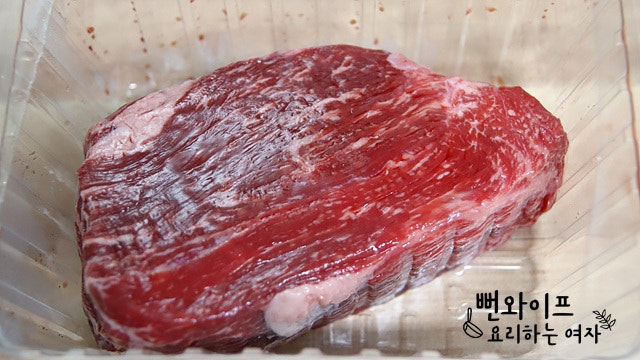
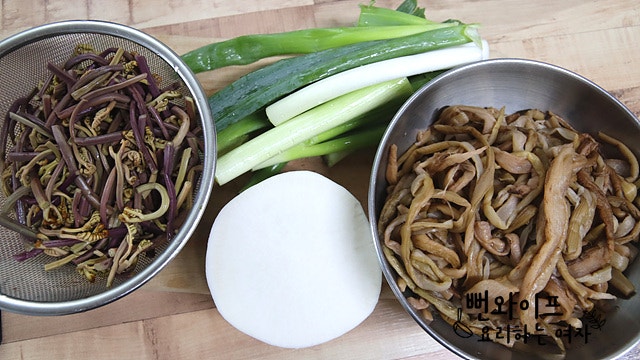
I have 800g of beef brisket in whole pieces.
I gathered whatever vegetables I had at home.
I love boiled taro stems, so I prepared more of them than bracken fern. Then there are Korean radish and large green onions.
You can also prepare mushrooms, mung bean sprouts, or soybean sprouts according to your taste.
Draw out the blood from the beef
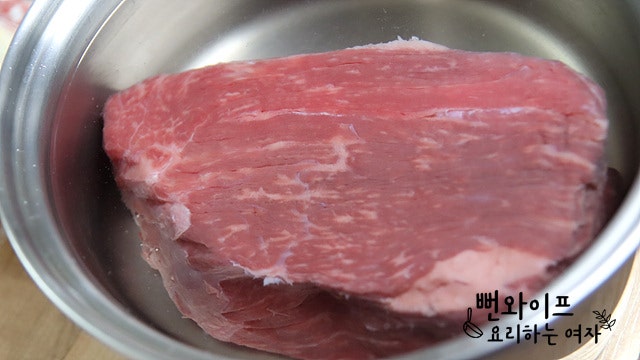
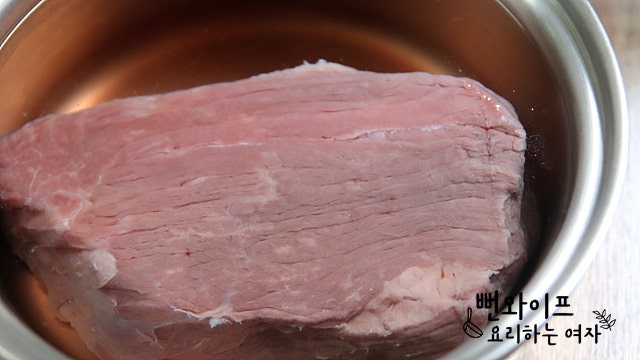
Soaking the beef brisket in cold water to draw out the blood helps remove any gamey meat odor.
Soak for about 1 hour, changing the water as needed.
Simmer the meat
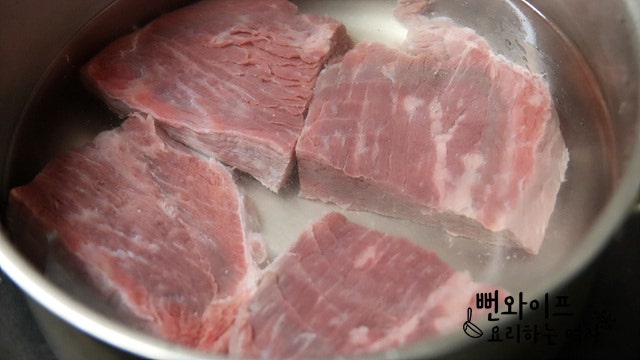
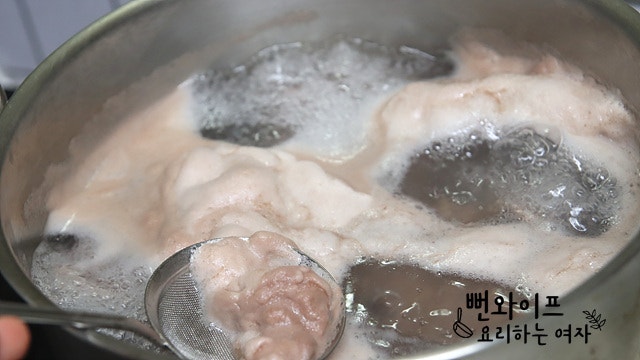
To help the meat cook faster, cut it into 4 pieces, pour in 10 cups or more of water, and bring to a boil over high heat.
Once it comes to a rolling boil, neatly skim off the foam that rises to the top.
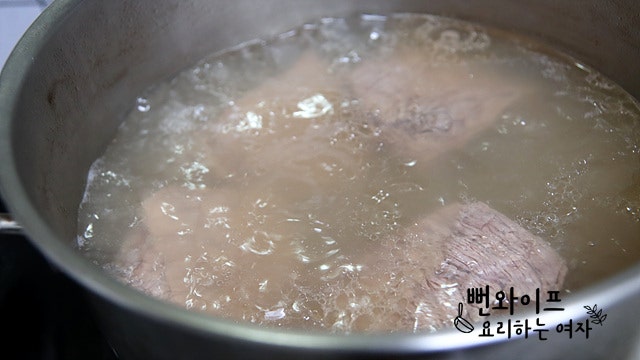
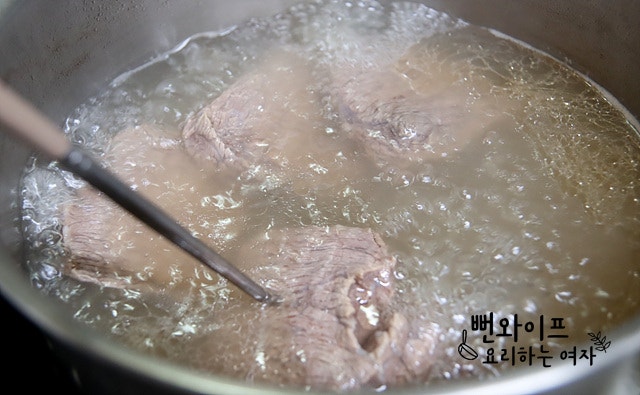
Lower the heat to a gentle simmer and cook the meat for 30 minutes or longer.
Pierce it with a chopstick; if no blood comes out and the juices run clear, it is fully cooked.
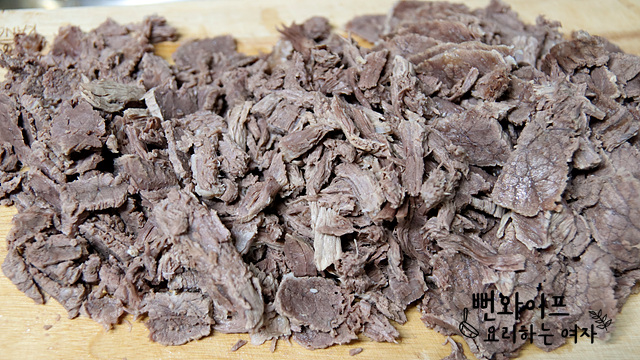
You can shred the boiled meat along the grain or slice it across the grain with a knife.
I originally prepared whole chunks planning to shred it, but my fingers hurt too much, so I ended up slicing it halfway through.
Cut the vegetables
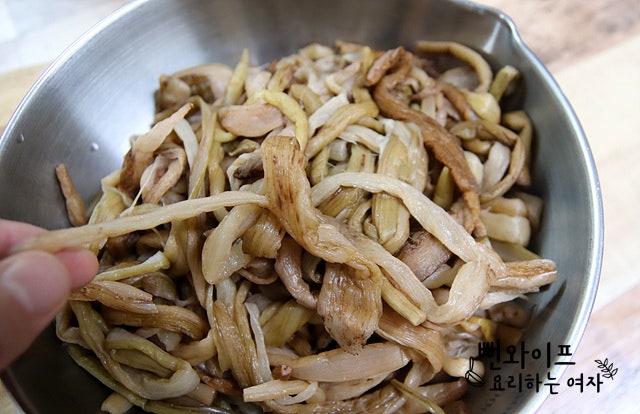
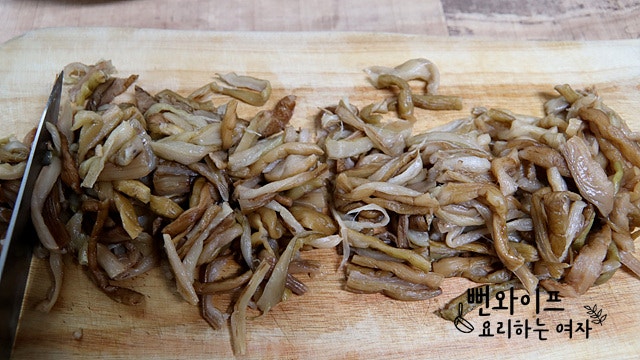
Tear any thick pieces of boiled taro stems once so they are easy to eat, then cut them into bite-sized lengths.
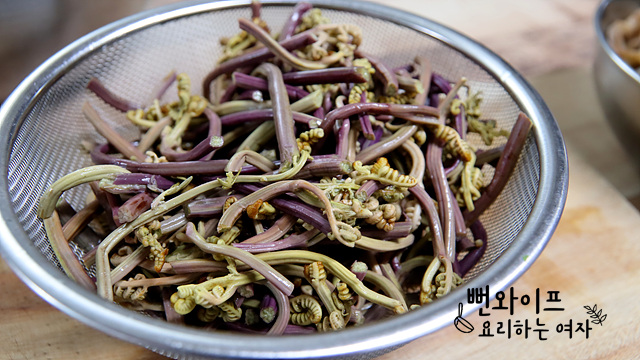
For the boiled bracken fern, trim away any hard or tough stems and cut them to a similar length as the taro stems.
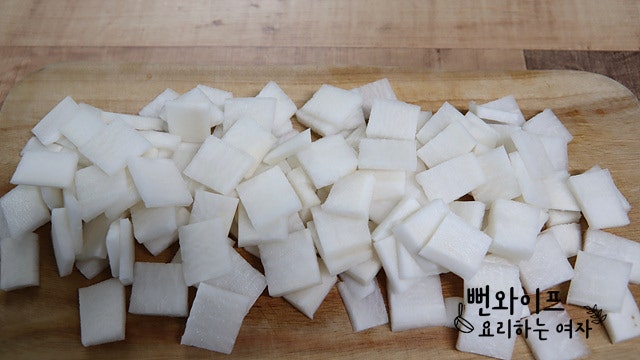
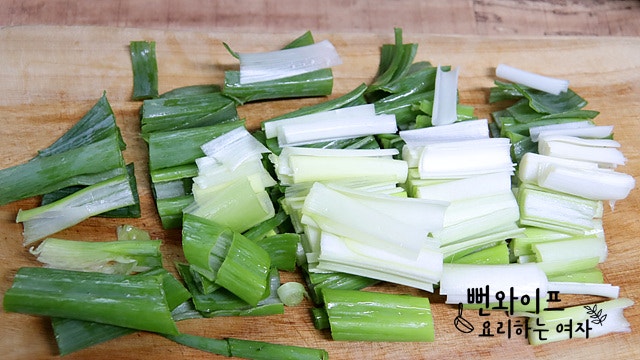
Cut the Korean radish into flat bite-sized squares, and halve the large green onions lengthwise before cutting.
Season the ingredients
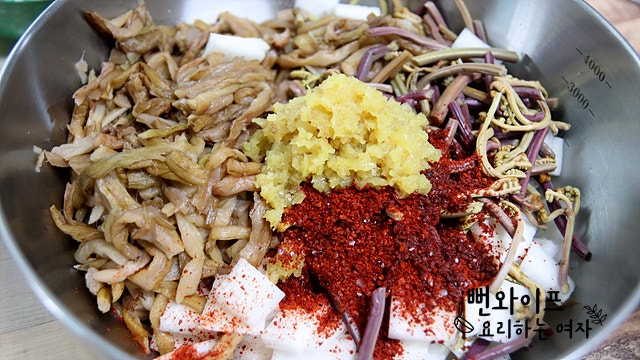
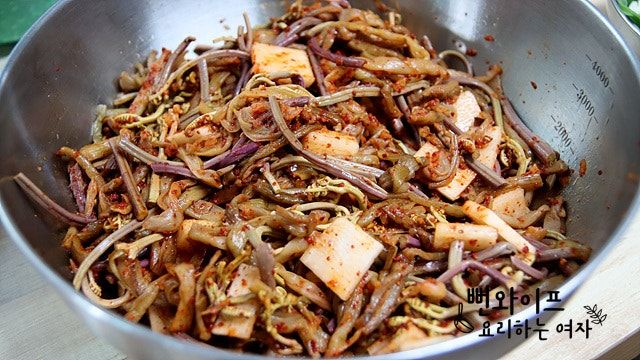
Place all the cut vegetables and meat into one bowl, then add the seasoning ingredients: 4 tbsp gochugaru, 3 tbsp soup soy sauce, 3 tbsp tuna extract sauce, 3 tbsp minced garlic, 3 tbsp mirin, and 1/2 tsp ground black pepper. Mix thoroughly. (You can add the large green onions now and season them together, or add them at the very end to simmer.)
Stir-fry the ingredients in chili oil
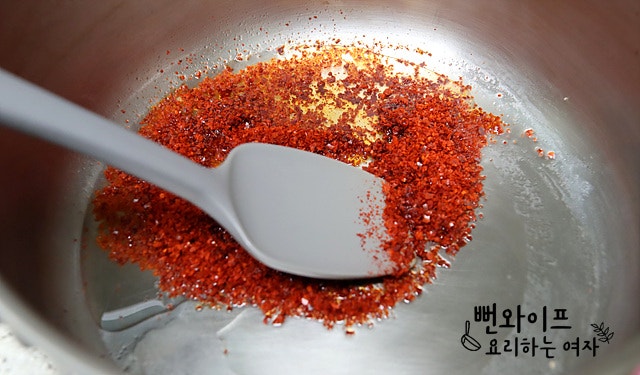
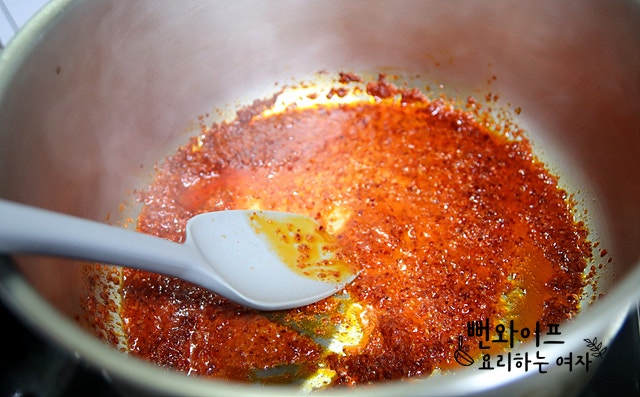
In the pot you will use for simmering, add 3 tbsp gochugaru and 3 tbsp cooking oil, then stir-fry gently without burning to make chili oil.
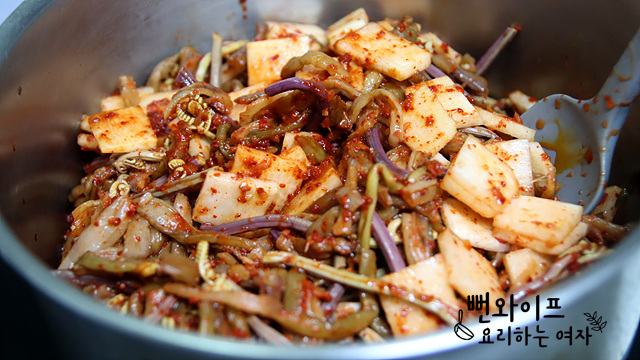
Add the seasoned ingredients and stir-fry briskly so they are evenly coated with the chili oil, then...
Simmer
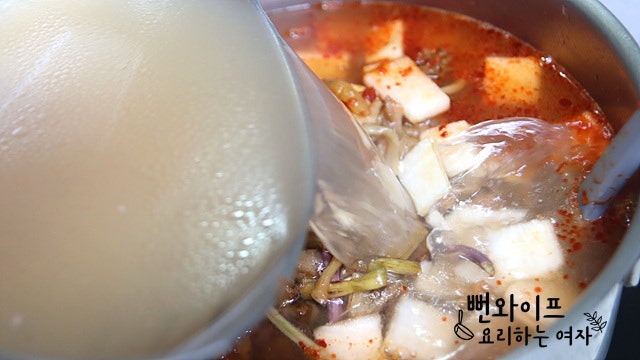
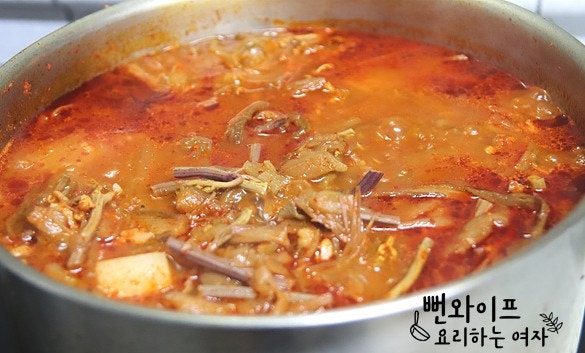
Pour in the broth from boiling the meat and add more water to make about 15 cups in total. Once it comes to a boil, simmer gently for 30 minutes or longer.
To replenish the broth that cooked down, I poured in about 5 cups of water in between while simmering.
If you want plenty of solid ingredients to enjoy, reduce the amount of water; if you prefer more broth, add more water generously.
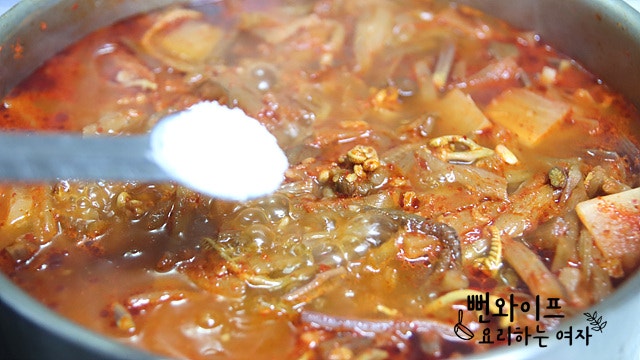
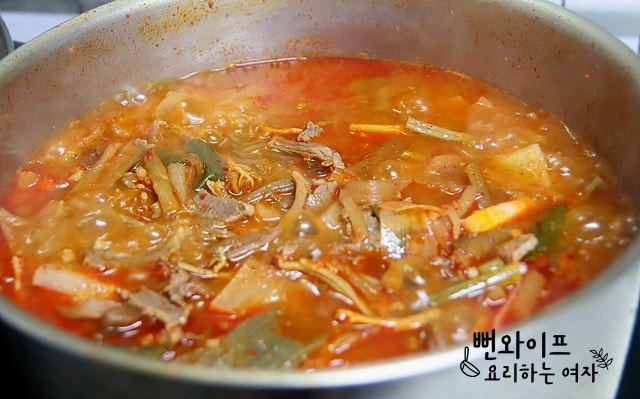
Once all the ingredients are tender and well cooked and the broth has developed rich flavor, adjust the final seasoning with salt.
I missed taking a photo of adding the large green onions.
I added the large green onions and simmered for 5 more minutes to finish.
Finish
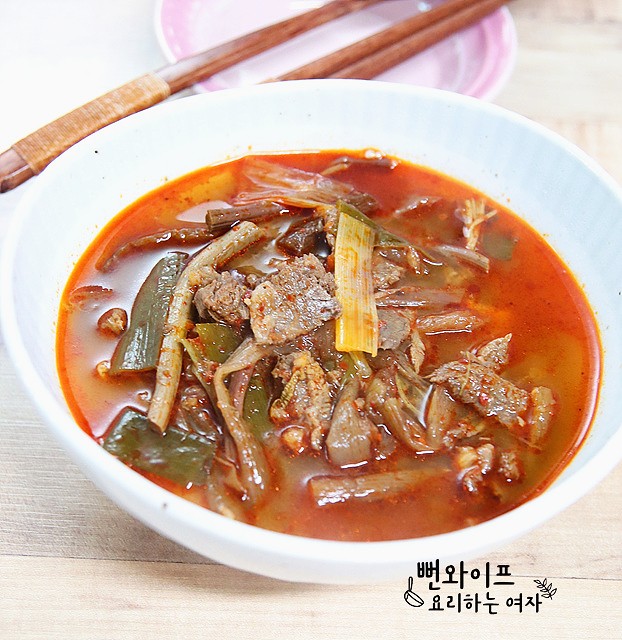
Tada, the yukgaejang is finished.
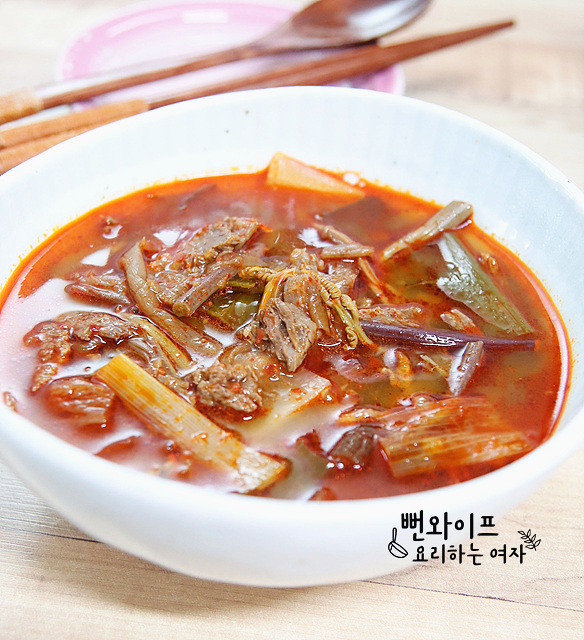
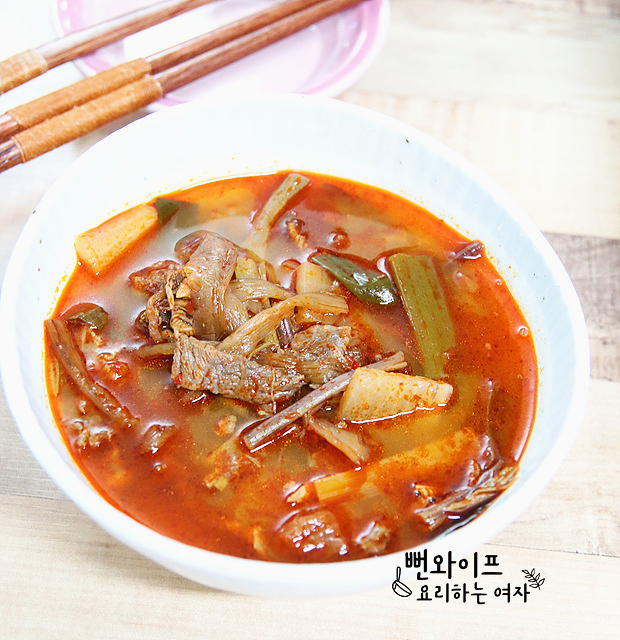
And that is how I made this spicy, deep, and rich beef yukgaejang.
Rather than special seasonings, this dish takes time, so pack it with generous ingredients, let it simmer long, and enjoy a hearty, delicious yukgaejang with the whole family.
 Ppunwife's tips
- To help the meat cook faster, cut it into 4 pieces, pour in 10 cups or more of water, and bring to a boil over high heat.
- Once it comes to a rolling boil, neatly skim off the foam that rises to the top.
- Pierce it with a chopstick; if no blood comes out and the juices run clear, it is fully cooked.
- You can add the large green onions now and season them together, or add them at the very end to simmer.
- If you want plenty of solid ingredients to enjoy, reduce the amount of water; if you prefer more broth, add more water generously.
FAQ
How do I prep the beef to reduce its gamey odor?
Soaking the beef brisket in cold water for about 1 hour while changing the water helps remove unwanted odors.
Can I use another fish sauce instead of the tuna extract sauce in the seasoning?
You can substitute an equal amount of Korean fish sauce (eogan-jang) or sand lance fish sauce (kkanari-aekjeot) instead of tuna extract sauce.
Can I add other vegetables besides taro stems and bracken fern?
Depending on your preference, mushrooms, mung bean sprouts, or soybean sprouts also pair very well when simmered together.
How do I adjust the ratio of broth to solids with the amount of water?
If you want a hearty stew packed with solids, reduce the amount of water; if you prefer plenty of broth to sip, simply replenish with more water during the simmering process.