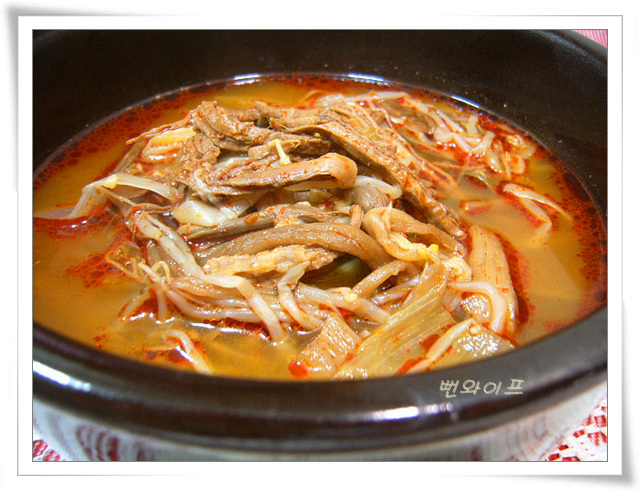
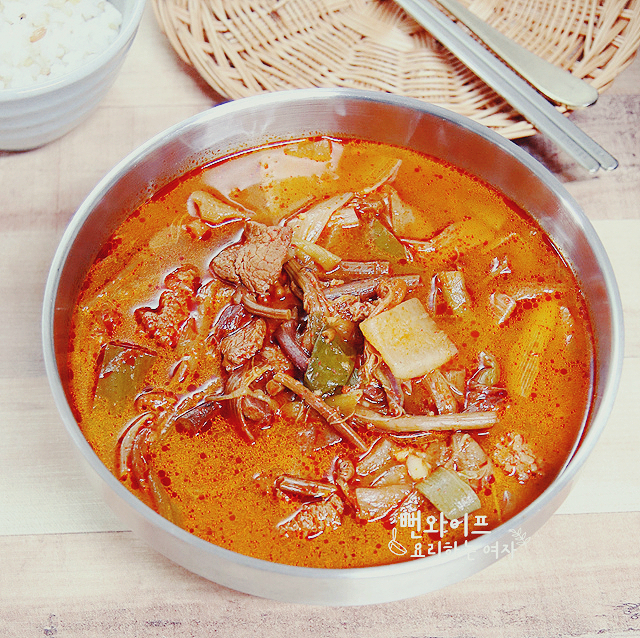
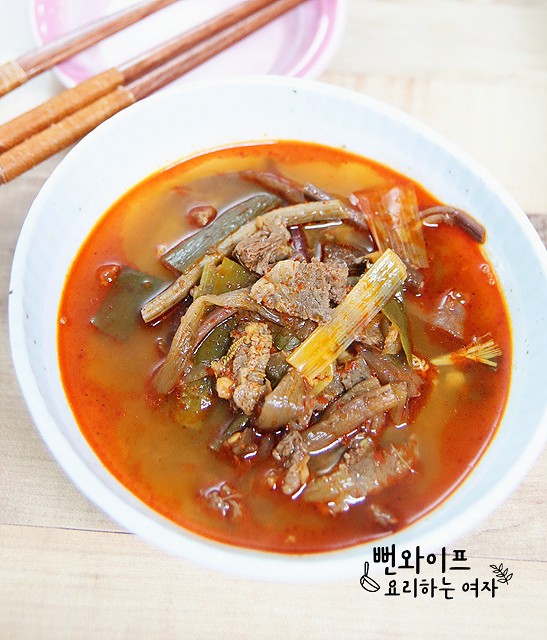
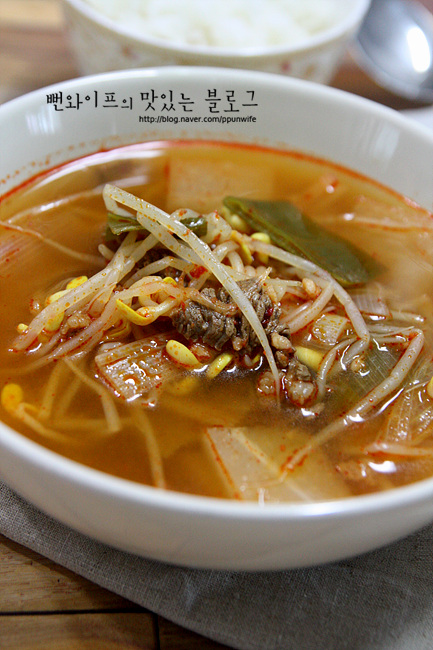
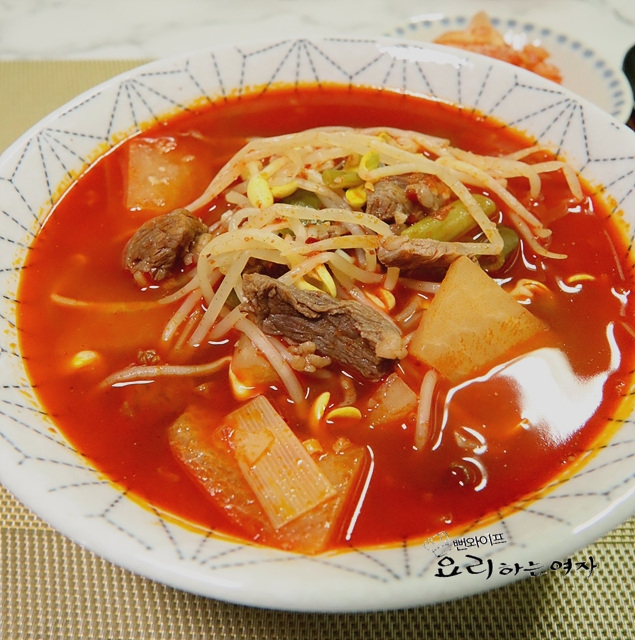
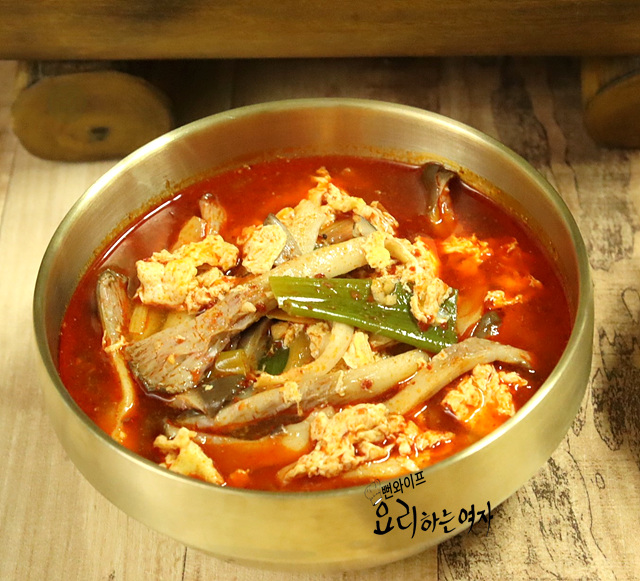
Rich and Hearty Yukgaejang (Spicy Beef and Scallion Soup)
A hearty yukgaejang made by simmering beef and assorted vegetables for a deep, rich broth.
Translated from Korean by AI and not yet checked by a native speaker. Amounts and numbers are taken directly from the original recipe. Read the Korean original →
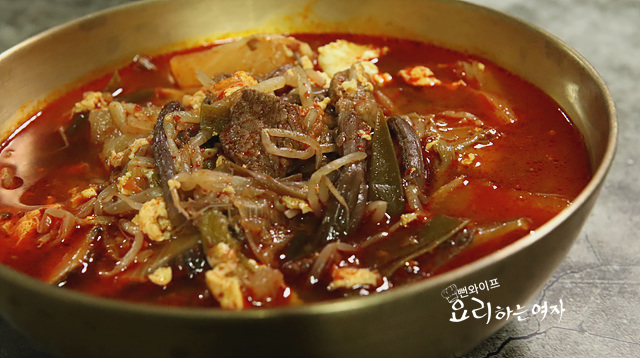
This soup features beef, seasoned bracken fern, and green onions simmered thoroughly in a rich broth made with Korean radish, dried kelp, and dried shiitake mushrooms. Stir-frying with freshly made chili oil gives it a spicy yet deeply savory flavor. Made in a generous 7 to 8-serving batch, it is perfect for sharing a hearty meal.
- Servings
- 7–8 servings
- Cook time
- 60 minprep not included
- Difficulty
- Medium
- Spiciness
- Spicy
Ingredients
Ingredients
- Beef300 g
- Korean radish (mu)300 g
- Mung bean sprouts300 g
- Bracken fern (gosari)200 g
- Large green onion (daepa)2 stalks
- Water20 cups
- Dried shiitake mushrooms5
- Dried kelp (dasima)3 pieces (10 cm square)
- Gochugaru (Korean chili flakes)2 tbsp
- Cooking oil3 tbsp
- Salt1 tbsp
Seasoning
- Gochugaru (Korean chili flakes)3 tbsp
- Soup soy sauce (guk-ganjang)3 tbsp
- Minced garlic3 tbsp
- Mirin (cooking rice wine)3 tbsp
- Minced ginger1/2 tsp
- Ground black pepper1/2 tsp
- If you have boiled taro stems, you can add them too.
Steps
I prepared soup beef, boiled bracken fern, mung bean sprouts, Korean radish, and large green onions as ingredients for yukgaejang.
If you have boiled taro stems, you can add them too.
First, cut the radish into large, thick pieces as much as possible,
and place it in a pot along with the dried kelp and dried shiitake mushrooms...
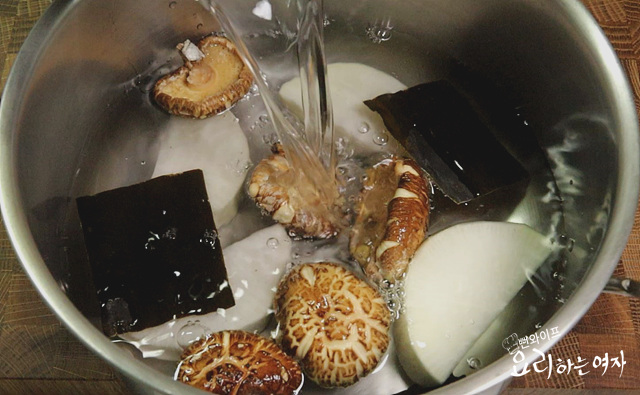
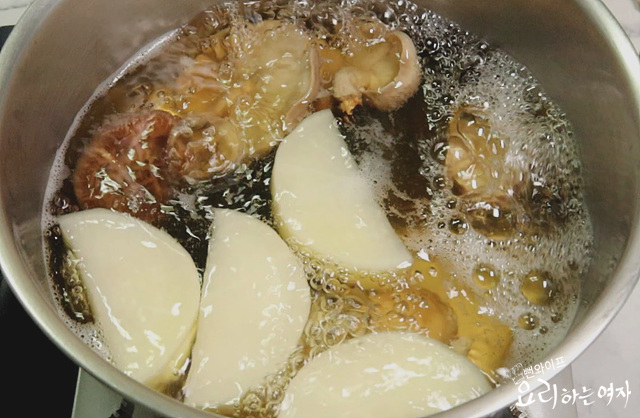
Pour in 20 cups of water to make the broth.
Let it simmer gently for over 30 minutes so the flavors extract thoroughly.
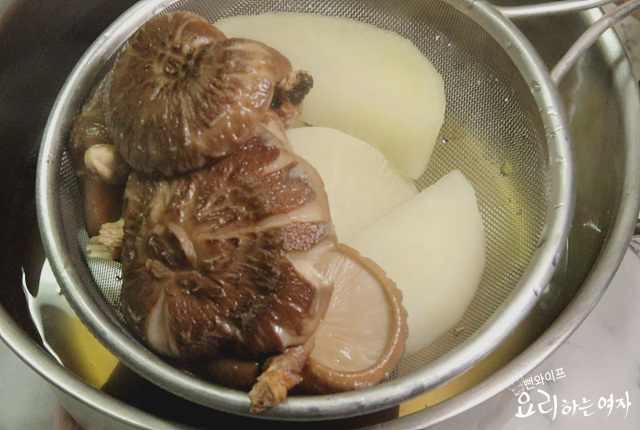
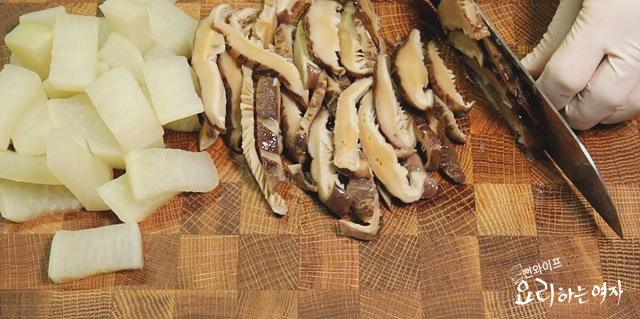
After the broth has brewed, take out the shiitake mushrooms and radish,
and cut them into bite-sized pieces.
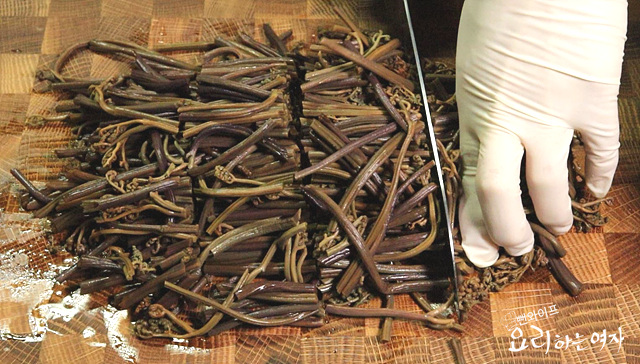
While the broth is simmering, you can prepare the other ingredients.
Cut the boiled bracken fern into bite-sized lengths.
For dried bracken fern, refer to the link below for how to soak and boil it:
https://blog.naver.com/ppunwife/222645752008
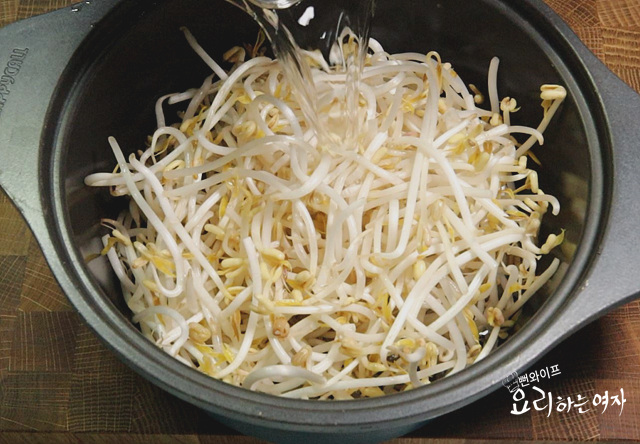
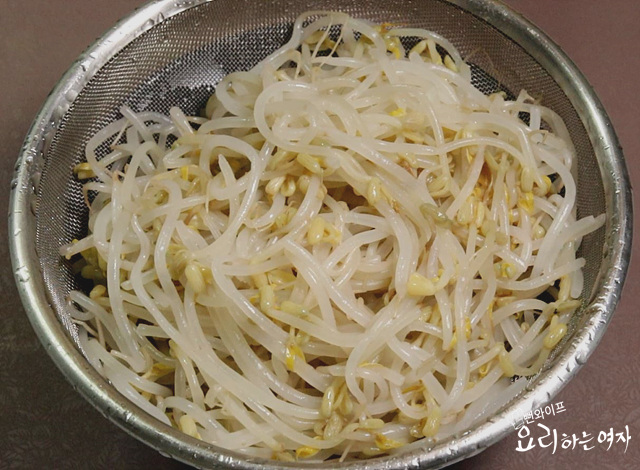
Boil the mung bean sprouts until tender-crisp and drain them in a sieve.
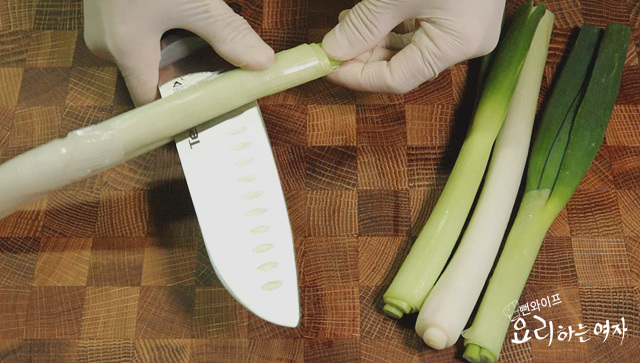
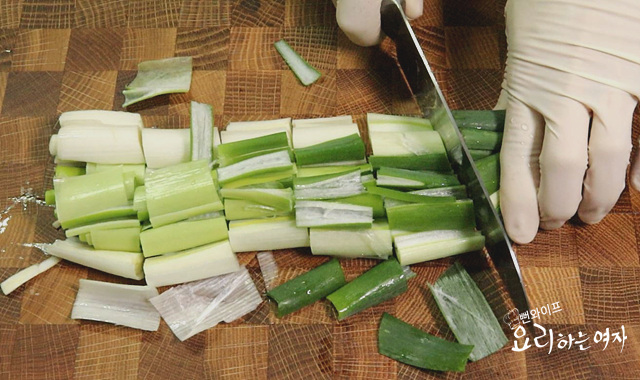
Cut the large green onions in half lengthwise,
then cut them into lengths of 3 to 4 cm.
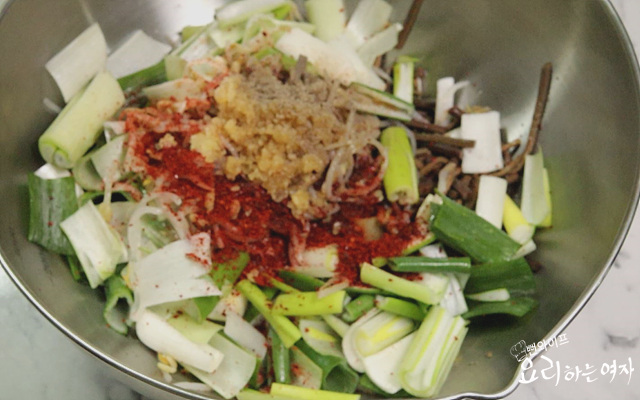
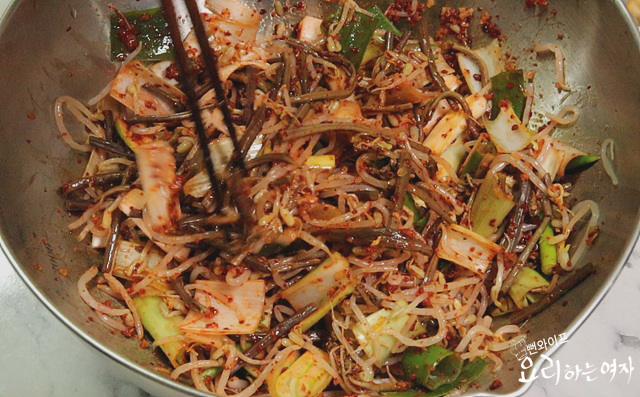
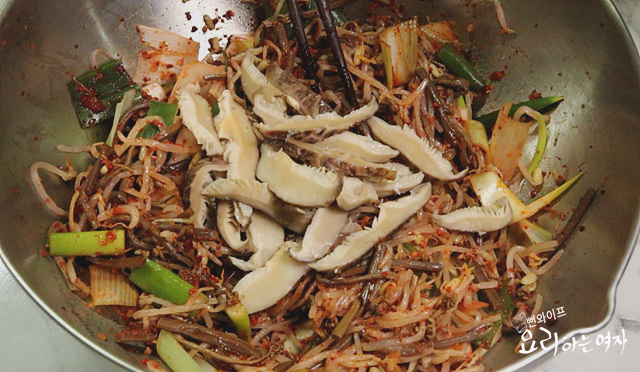
In a large bowl, add the mung bean sprouts, bracken fern, large green onions, and shiitake mushrooms together.
Add all the seasonings: 3 tbsp gochugaru, 3 tbsp soup soy sauce, 3 tbsp minced garlic, 3 tbsp mirin, 1/2 tsp minced ginger, and 1/2 tsp ground black pepper.
Toss everything together so the flavors absorb.
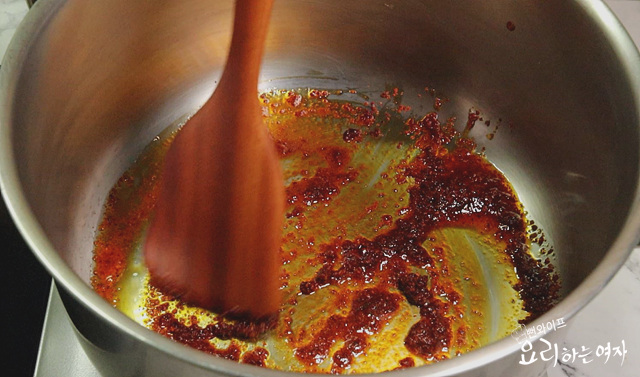
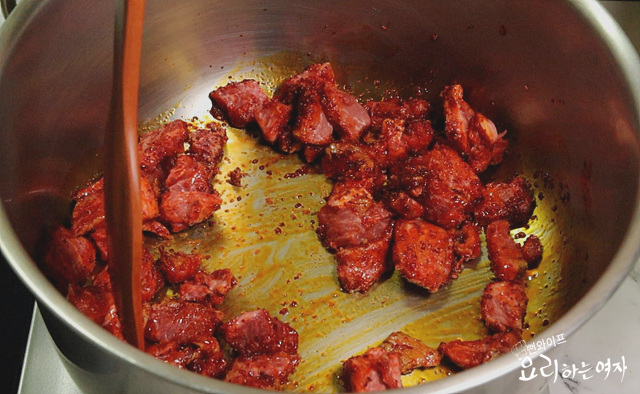
Add cooking oil and gochugaru and stir-fry over low heat without burning to make chili oil.
Add the beef and stir-fry thoroughly until the surface is cooked.
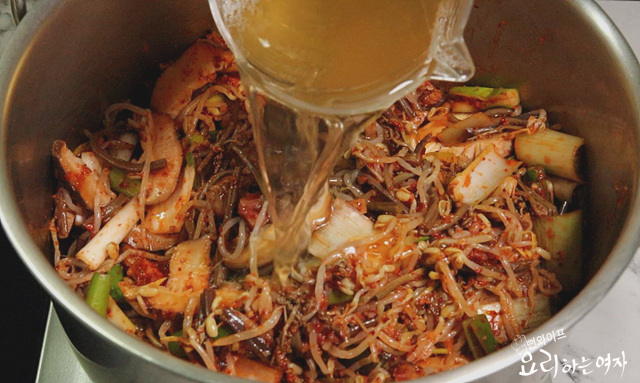
Then pour in the seasoned vegetables and the broth, and bring to a boil.
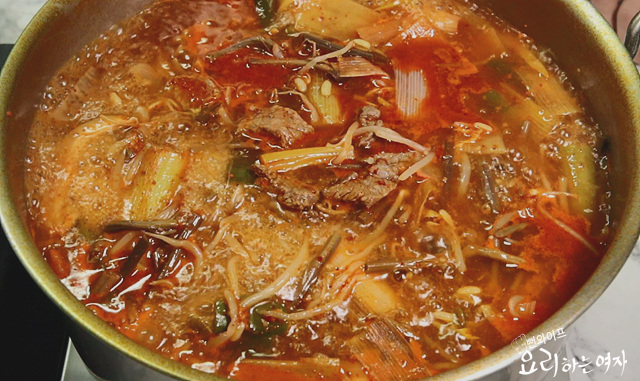
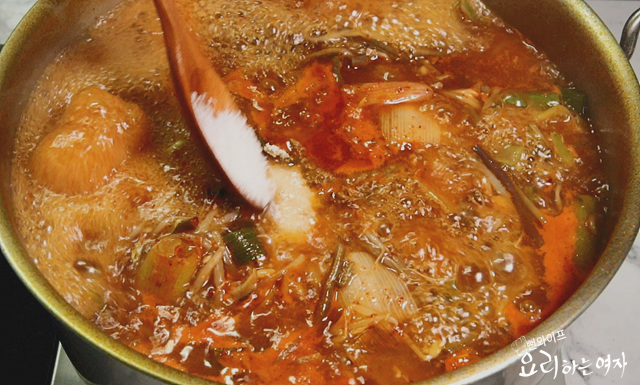
Once it starts boiling, simmer gently for over 30 minutes until all ingredients are cooked through and tender,
then season with salt to taste.
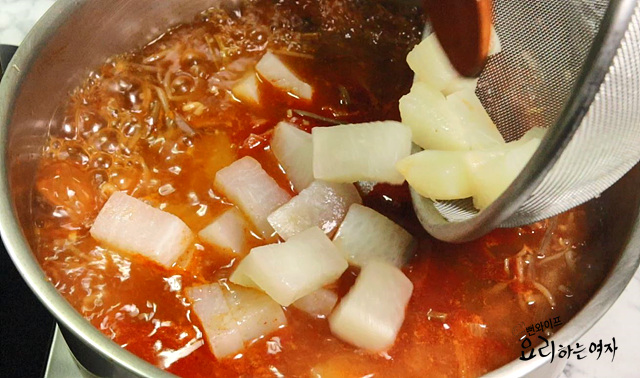
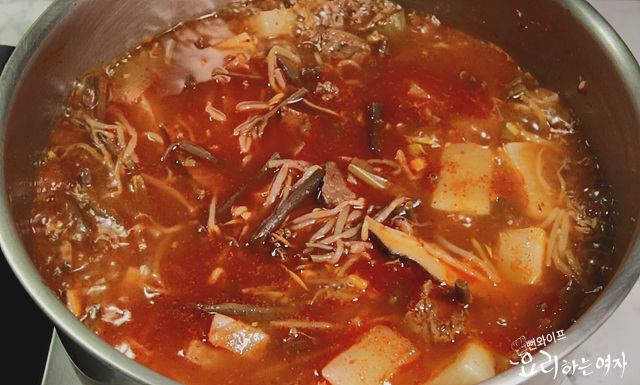
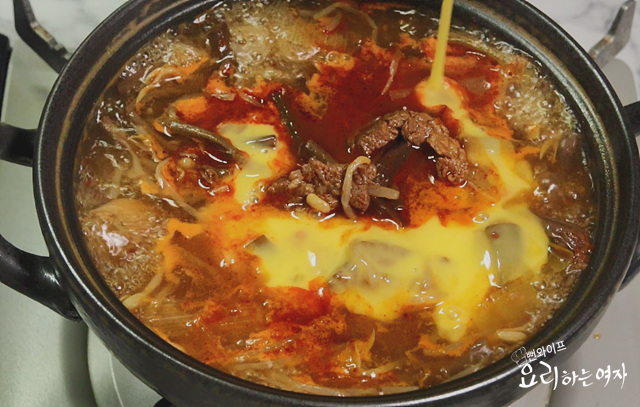
Add all the radish used for making the broth and boil together to meld the flavors, and it is complete.
Ladle the desired portion of soup and solids into a smaller pot, beat an egg into it,
and cook just until the egg is set, though you can omit the egg if you do not like it.
About one egg per 2 servings seems just right.
 Ppunwife's tips
- It is best to make a large batch all at once, divide it into portions to freeze, and reheat whenever you crave it.
FAQ
Can I add other wild greens besides bracken fern?
If you have boiled taro stems prepared, adding them goes very well with the soup.
When and how should I add the egg?
Ladle out the portion of finished soup you plan to eat, beat an egg into it, and simmer briefly just until cooked; you can freely omit it to suit your preference.
How should I store leftover yukgaejang?
When you have a large amount, it is convenient to divide it into individual portions, keep them frozen, and thaw and reheat as needed.
What should I be careful about when making chili oil?
You must stir-fry the cooking oil and gochugaru over low heat so the chili flakes do not burn, producing a clean chili oil.