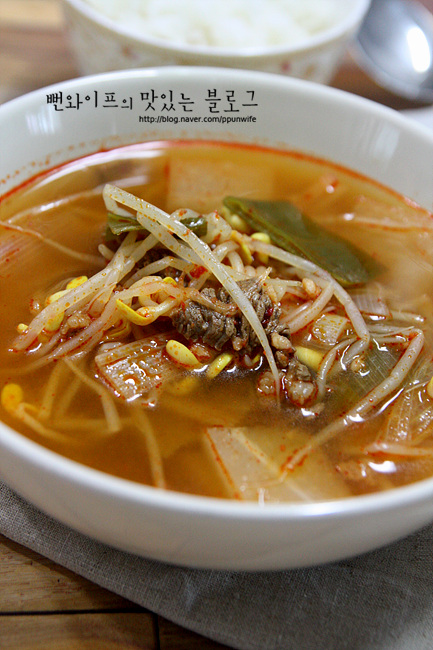
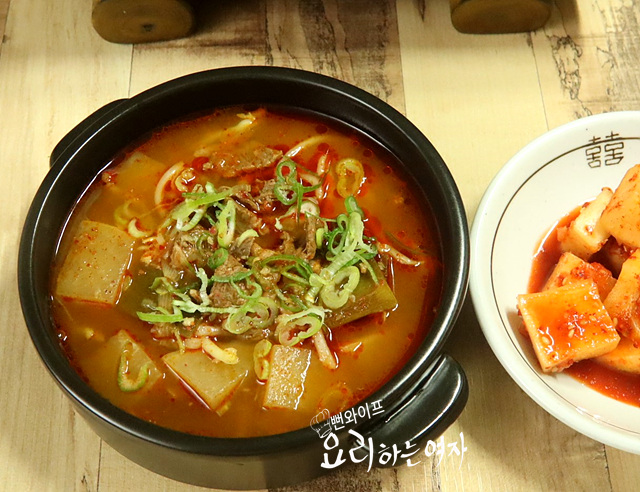
Spicy Yukgaejang (Spicy Beef and Scallion Soup)
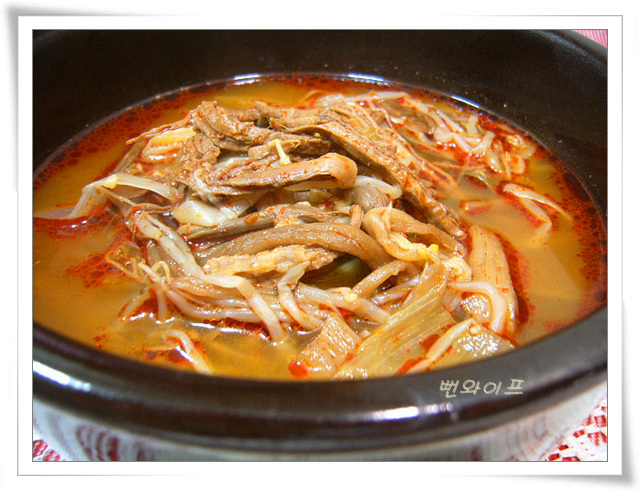
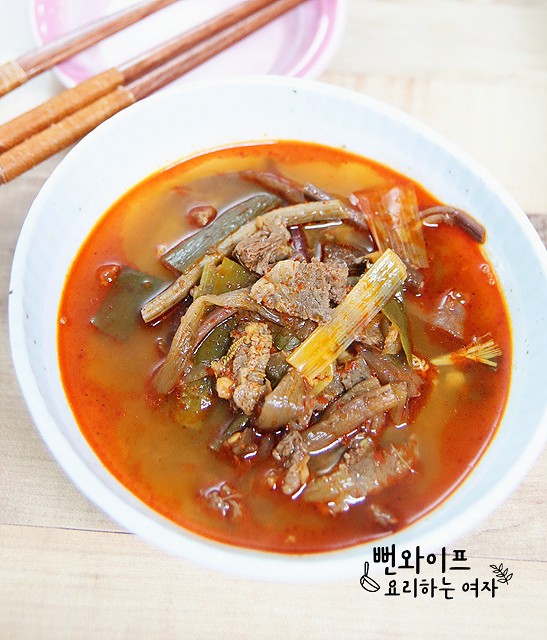
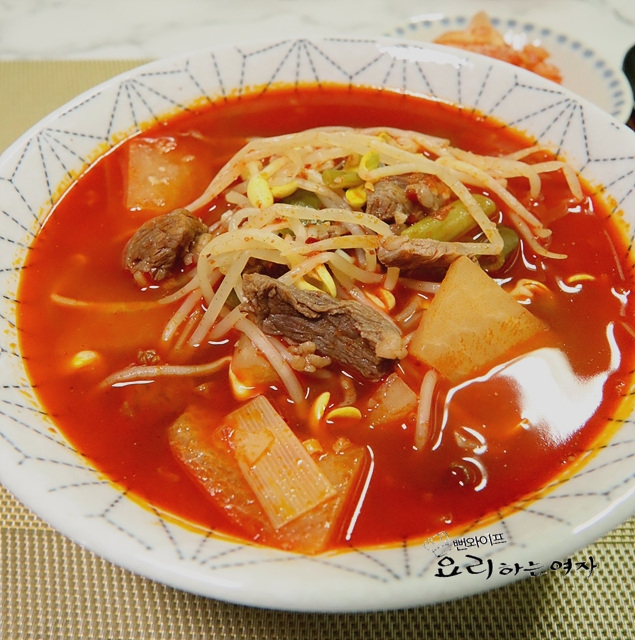
A spicy Yukgaejang (spicy beef and scallion soup) gently simmered with generous amounts of beef, bracken fern, and taro stems.
Translated from Korean by AI and not yet checked by a native speaker. Amounts and numbers are taken directly from the original recipe. Read the Korean original →
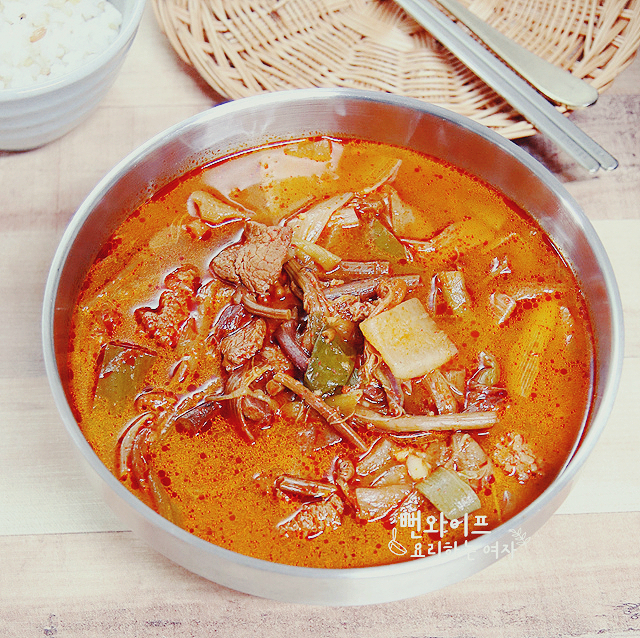
This is an authentic-style soup dish gently simmered with chili oil and generous amounts of vegetables such as bracken fern and taro stems. With its rich and spicy flavor, it is great for hangover relief, and the broth deepens in flavor as time passes. Simmer thoroughly for over 30 minutes to make 7 to 8 servings for a hearty meal.
- Servings
- 7–8 servings
- Cook time
- 30 minprep not included
- Difficulty
- Medium
- Spiciness
- Spicy
Ingredients
Ingredients
- Beef550 g
- Mirin (cooking rice wine)2 tbsp
- Ground black peppera little
- Boiled bracken fern (gosari)600 g
- Boiled taro stems600 g
- Korean radish (mu)300 g
- Large green onion (daepa)2 stalks
- Water15 cups
- Gochugaru (Korean chili flakes)2 tbsp
- Cooking oil3 tbsp
Seasoning
- Gochugaru (Korean chili flakes)4 tbsp
- Soup soy sauce (guk-ganjang)3 tbsp
- Tuna extract sauce (chamchi-aek) (or sand lance fish sauce)3 tbsp
- Minced garlic3 tbsp
- Ground black pepper1/2 tsp
- Salt
- For soup meat, use cuts like beef brisket or round, and press with paper towels to remove the blood.
- Besides these, mung bean sprouts or mushrooms are also good.
Steps
Prepare the ingredients
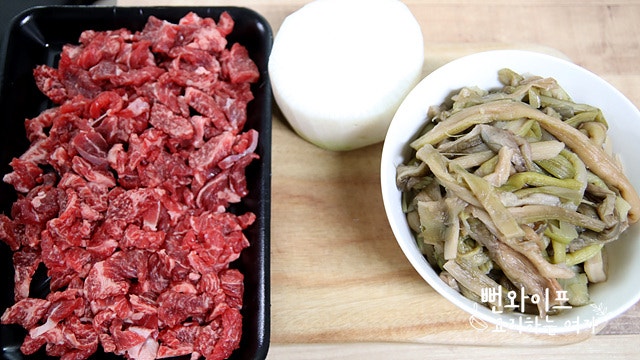
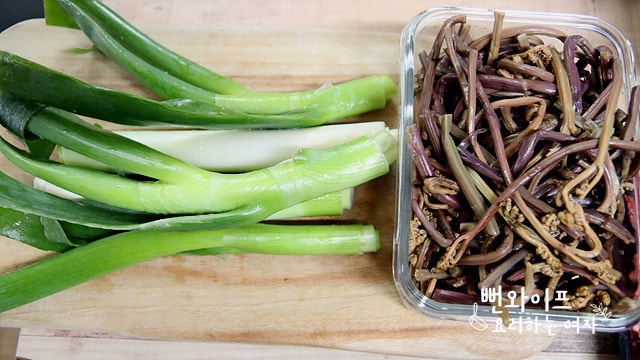
For soup meat, use cuts like beef brisket or round, and press with paper towels to remove the blood.
Prepare Korean radish (mu) to give the broth a refreshing taste, along with boiled taro stems, boiled bracken fern (gosari), and large green onion (daepa).
Besides these, mung bean sprouts or mushrooms are also good.
Cut the ingredients
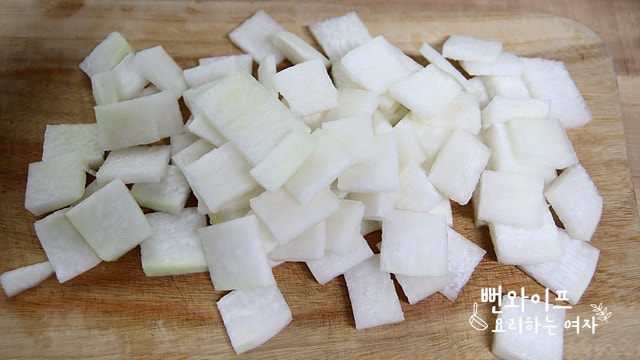
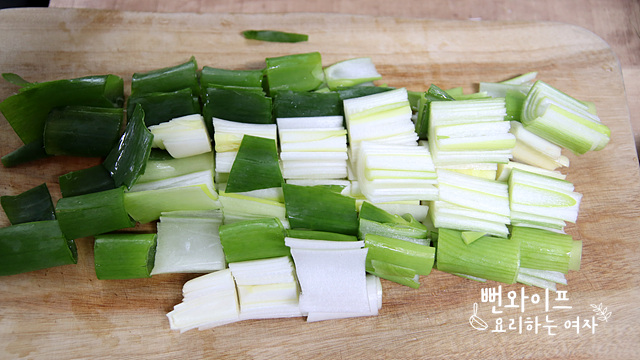
Cut the Korean radish into bite-sized squares, slice the large green onion in half lengthwise, and cut into lengths of around 3 cm.
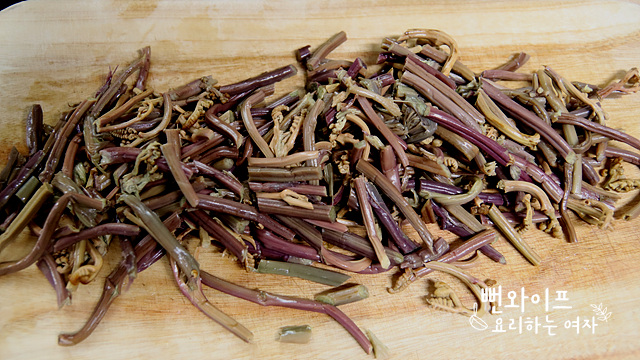
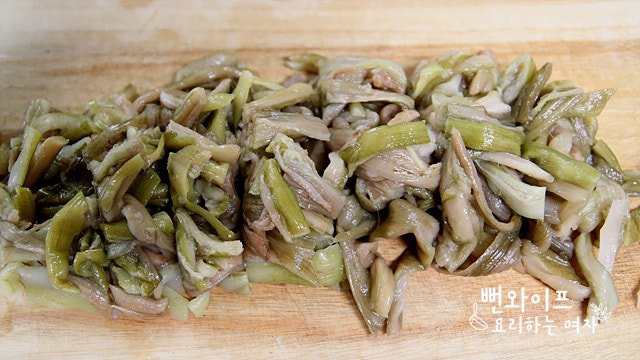
Also cut the bracken fern and taro stems into bite-sized lengths.
Season the vegetables
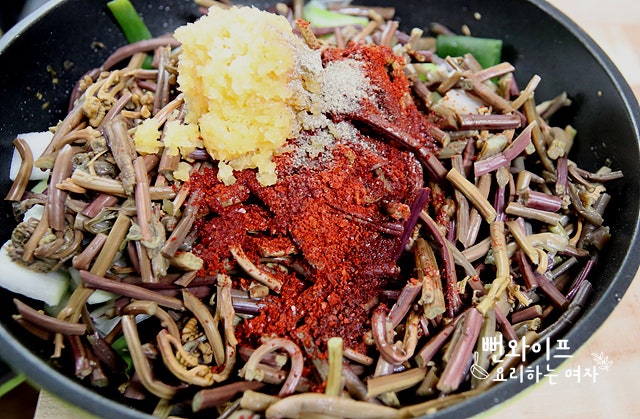
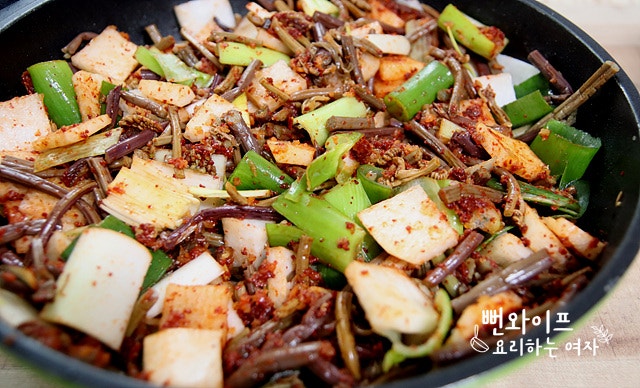
Put in all the sliced vegetables, add all the seasonings except salt (4 tbsp gochugaru (Korean chili flakes), 3 tbsp soup soy sauce (guk-ganjang), 3 tbsp tuna extract sauce (chamchi-aek) or sand lance fish sauce, 3 tbsp minced garlic, 1/2 tsp ground black pepper), and toss lightly together.
Stir-fry the ingredients
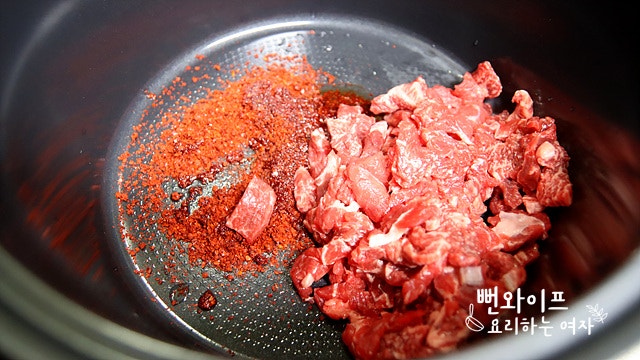
In a pot, add the beef, 3 tbsp cooking oil, 2 tbsp gochugaru, 2 tbsp mirin (cooking rice wine), and a little ground black pepper...
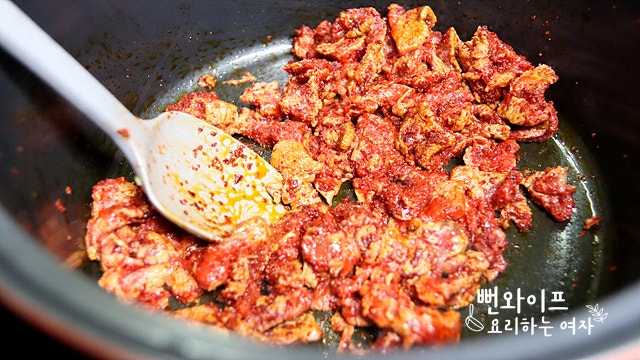
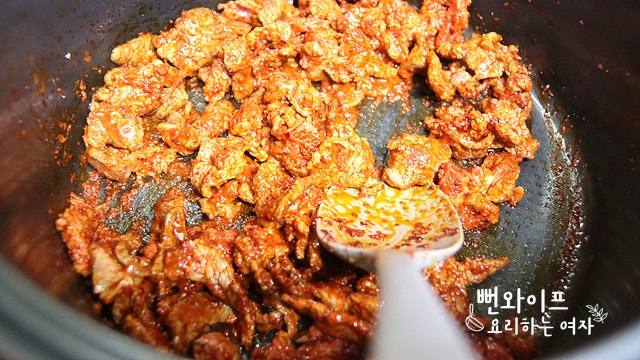
Mix well so the chili flakes become moist.
Turn the heat to low and stir-fry carefully without burning to release the chili oil.
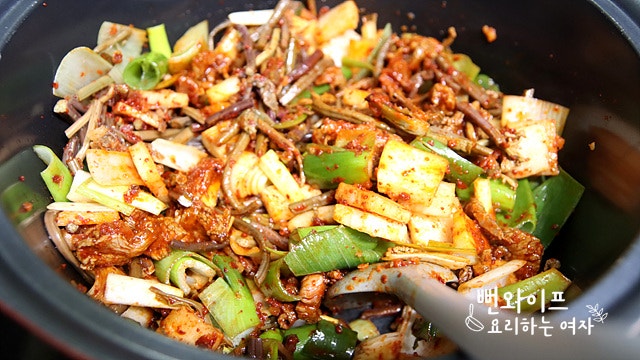
Add all the seasoned vegetables and stir-fry briskly so the surface cooks slightly.
Simmer
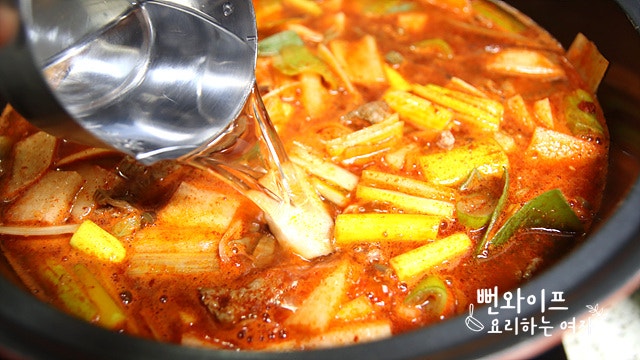
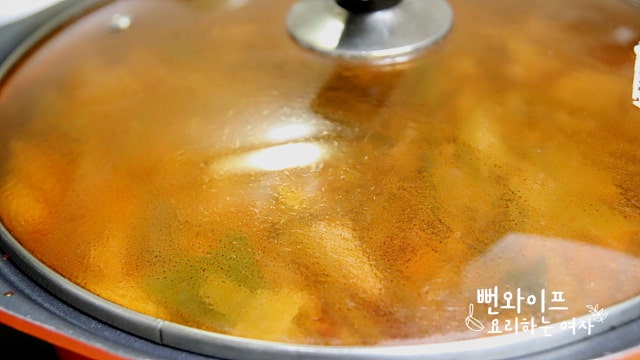
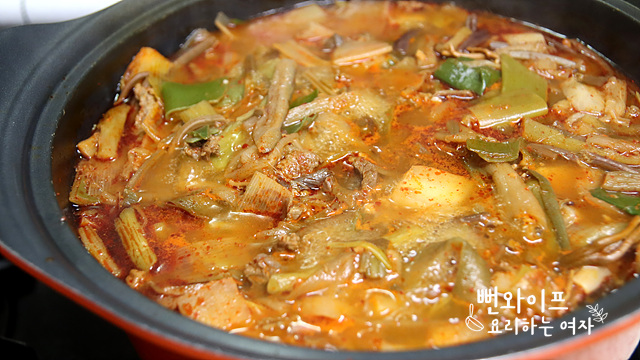
Pour in 15 cups of water, raise the heat to high, and once it comes to a rolling boil all over, cover with a lid and simmer gently over low heat for at least 30 minutes.
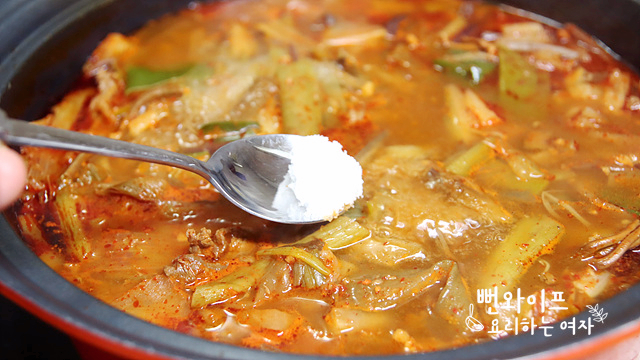
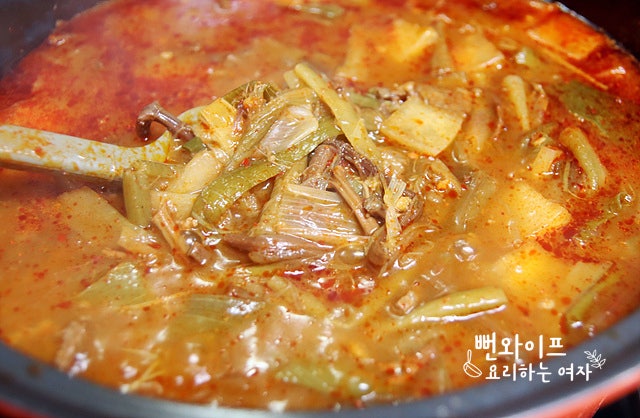
Once all the ingredients are thoroughly cooked and the flavors have deeply infused into the broth, add salt little by little to adjust the seasoning.
Serve
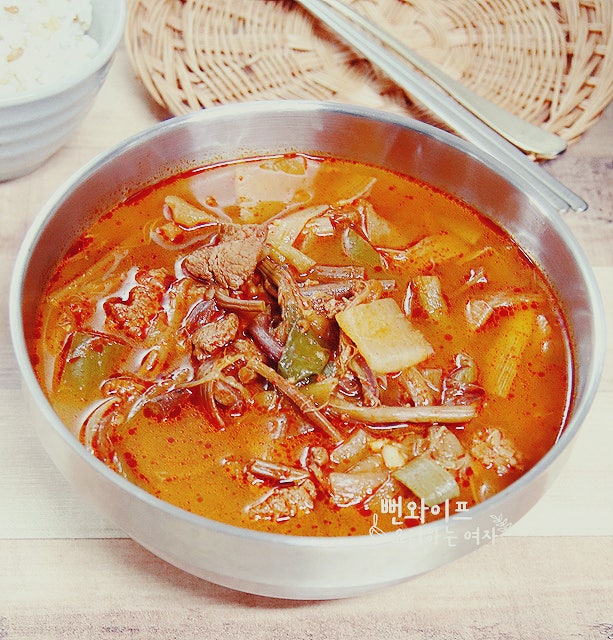
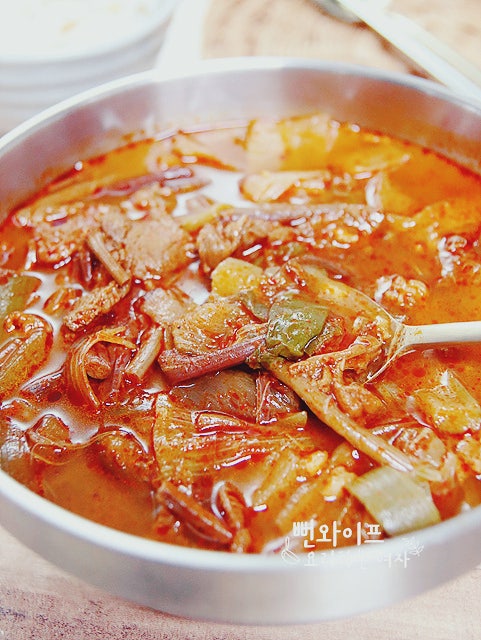
Simmering it with lots of bracken fern and taro stems gives it a great texture, and the yukgaejang is so hearty that picking out the solid ingredients is half the fun.
I made it with a clean broth without beating in eggs.
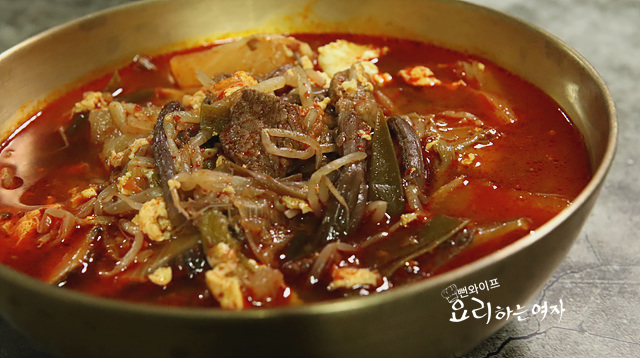
Depending on your preference, you can beat in eggs at the very end and let them cook briefly.
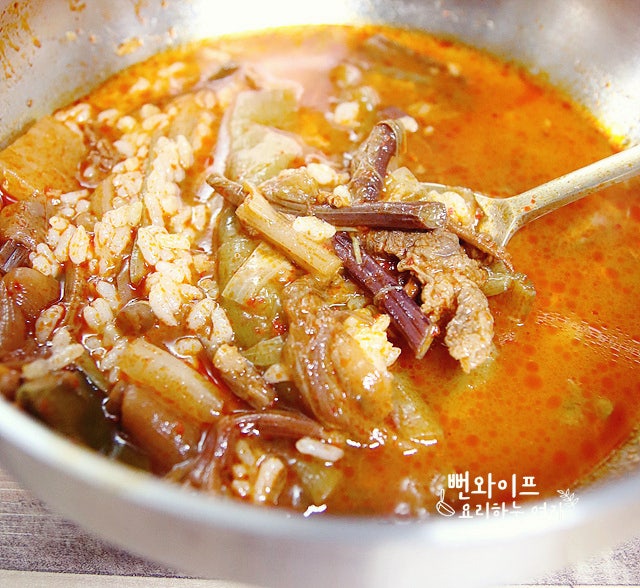
At first you keep taking spoonfuls to enjoy the spicy broth, and eventually end up mixing your rice right in.
You know yukgaejang gets even richer and more delicious the next day, right?
 Ppunwife's tips
- Turn the heat to low and stir-fry carefully without burning to release the chili oil.
- Depending on your preference, you can beat in eggs at the very end and let them cook briefly.
- You know yukgaejang gets even richer and more delicious the next day, right?
FAQ
Can I add beaten eggs to yukgaejang?
Depending on your preference, you can beat in an egg at the final stage of cooking and let it cook briefly before serving.
Can I use another fish sauce instead of tuna extract sauce?
The ingredients list notes that you can use an equal amount of sand lance fish sauce.
What cut of beef is best to use?
Using cuts suited for soup meat, such as brisket or round, is recommended.
Are there other recommended vegetables besides bracken fern and taro stems?
You can also add mung bean sprouts or mushrooms as additional ingredients.