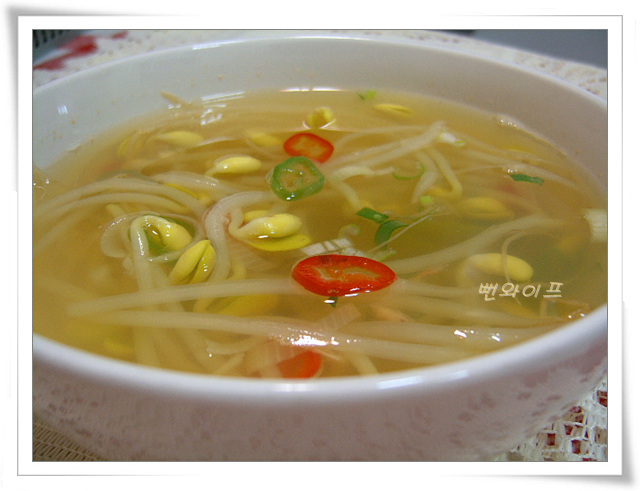
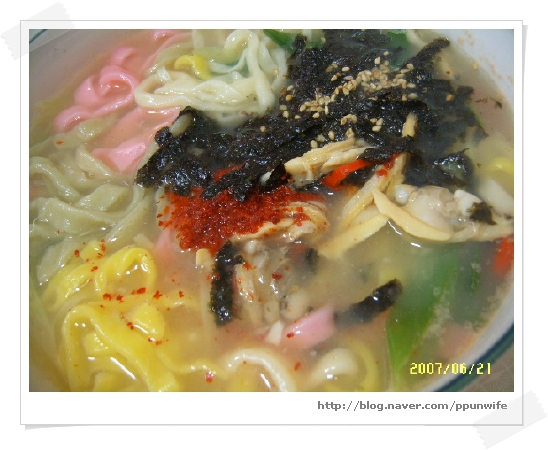
Myeolchi Yuksu (Anchovy Broth) with Rich Flavor and No Fishiness
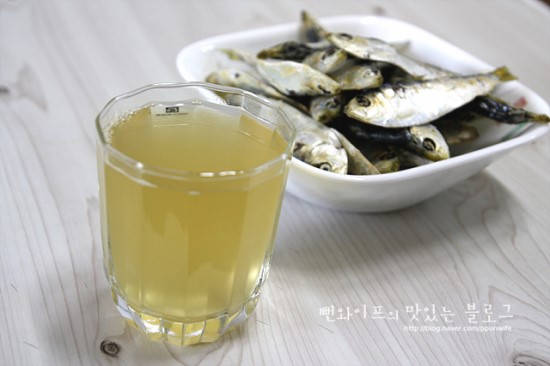
A clear, rich basic broth brewed with toasted dried anchovies, kelp, and vegetables without any fishy smell.
Translated from Korean by AI and not yet checked by a native speaker. Amounts and numbers are taken directly from the original recipe. Read the Korean original →
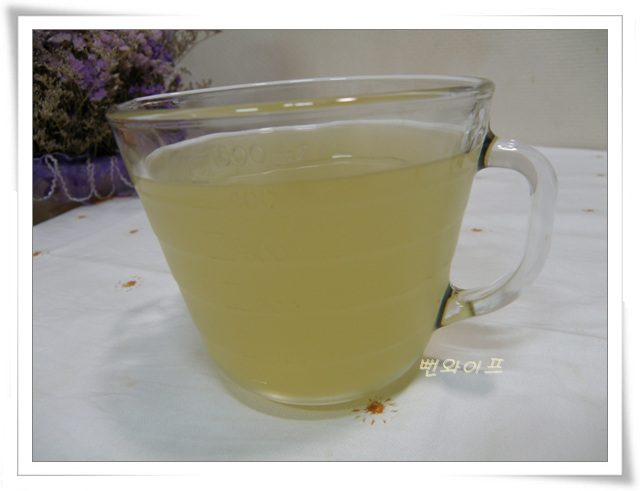
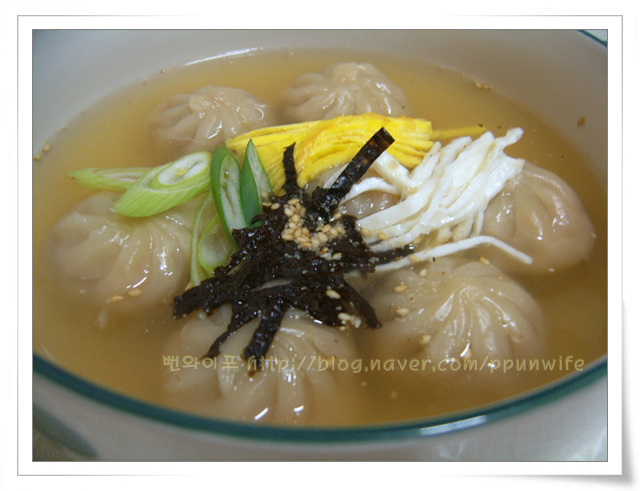
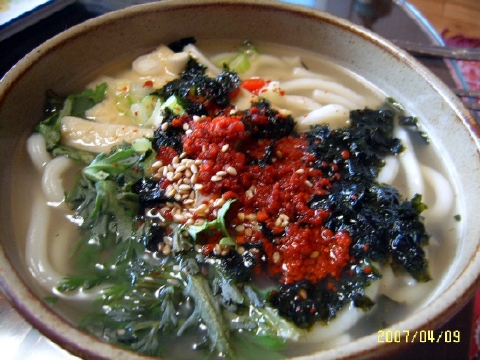
Gutting the dried soup anchovies and toasting them crisp in a dry pan completely eliminates any fishiness. Soaking dried kelp (dasima) in cold water first, then simmering it with Korean radish, onion, and large green onion creates a deep, savory flavor. Strained through a fine sieve, it makes a clean base for noodle dishes and all kinds of soups.
- Servings
- about 4–5 servings
- Cook time
- 20 minprep not included
- Difficulty
- Medium
- Spiciness
- Not spicy
Ingredients
- Dried soup anchovies20
- Dried kelp (dasima)2 sheets (10 cm square)
- Korean radish (mu)1/5, 200 g
- Onion1/2 (medium)
- Large green onion (daepa)1/2 stalk
- Water10 cups
- Soak the dried kelp (dasima) in cold water for at least 30 minutes.
- Remove the innards from the dried soup anchovies, and wipe off any white powder on the surface of the dried kelp (dasima) with a damp cloth.
- You can also wash and use the onion skins, green onion roots, and green onion skins left over from trimming.
- If you chop the radish or onion finely, the broth becomes cloudy instead of clear, so just cut them into one or two large pieces.
- You can also make delicious broth by using half anchovies and half dried shrimp or dipori (large-eyed herring), and heads, skins, and bones from dried pollack (hwangtae or bukeo) also come in very handy as broth ingredients.
- If you have any vegetables wilting in the fridge, it is great to toss them all in when making broth.
Steps
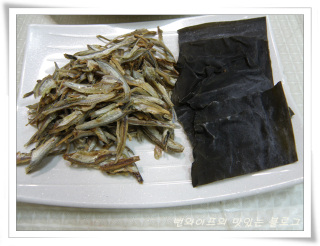
1. Remove the innards from the dried soup anchovies, and wipe off any white powder on the surface of the dried kelp (dasima) with a damp cloth.
I used medium anchovies here, so the count is higher. When gutting them, keep the anchovy heads aside to use in the broth.
You can also make delicious broth by using half anchovies and half dried shrimp or dipori (large-eyed herring),
and heads, skins, and bones from dried pollack (hwangtae or bukeo) also come in very handy as broth ingredients.
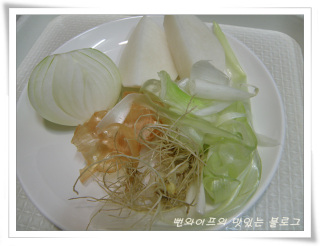
2. Adding Korean radish, onion, and large green onion (daepa) makes the anchovy broth much deeper and more savory.
You can also wash and use the onion skins, green onion roots, and green onion skins left over from trimming.
If you have a lot of them, store them in the freezer and drop them straight into the boiling broth when needed, without thawing.
Dried shiitake mushrooms and dried red chili peppers for a spicy kick are also great broth ingredients.
If you chop the radish or onion finely, the broth becomes cloudy instead of clear, so just cut them into one or two large pieces.
If you have any vegetables wilting in the fridge, it is great to toss them all in when making broth.
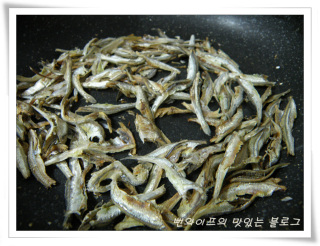
3. Toast the dried anchovies crisp in a dry pan.
The reason anchovy broth can smell fishy is due to the moisture left in the anchovies.
If the anchovies are thoroughly dried, you can use them as is without toasting, but for anchovies that have softened in storage,
toasting them like this yields a clean-tasting broth.
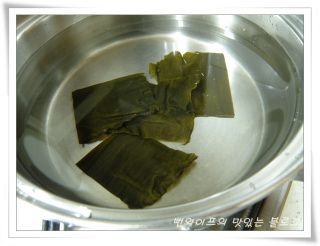
4. Soak the dried kelp (dasima) in cold water for at least 30 minutes.
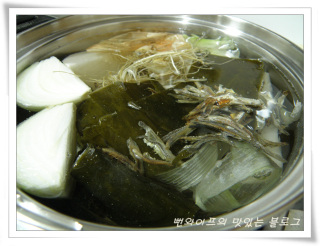
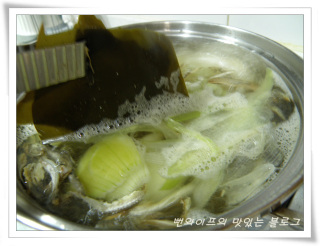
5. Add all broth ingredients besides the kelp into the kelp-soaked water and bring to a boil.
6. Once the water starts boiling vigorously, take out the dried kelp...
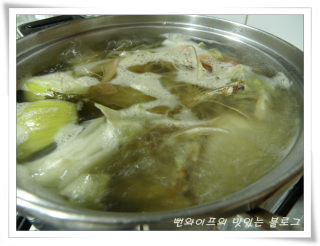
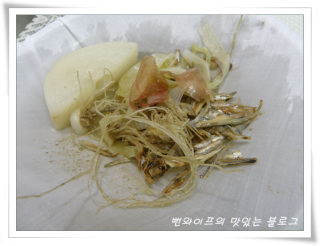
7. Simmer over medium to low heat for about 20 minutes.
8. After cooling the broth, strain it through a cotton cloth or a fine sieve to get a clear broth.
 Ppunwife's tips
- The reason anchovy broth can smell fishy is due to the moisture left in the anchovies. If the anchovies are thoroughly dried, you can use them as is without toasting, but for anchovies that have softened in storage, toasting them like this yields a clean-tasting broth.
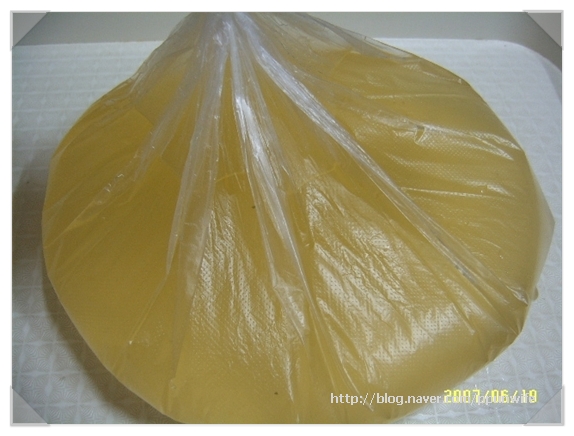
- Keep it in the refrigerator and use as needed; if you have a large amount, portion it out for 1 use each and store it in the freezer.
FAQ
Is there a secret to boiling anchovy broth without any fishiness?
Fishiness comes from the moisture remaining in the anchovies, so removing the innards before cooking and toasting them crisp in a dry pan gives you a clean-tasting broth.
How should I cut the vegetables so the broth stays clear and doesn't get cloudy?
Finely chopping radish or onion makes the broth cloudy, so it is best to cut them into large pieces, just one or two chunks.
How should I store the finished broth?
Cool it down and store it in the refrigerator. When you have a lot, it is convenient to divide it into 1-serving portions and store them in the freezer.