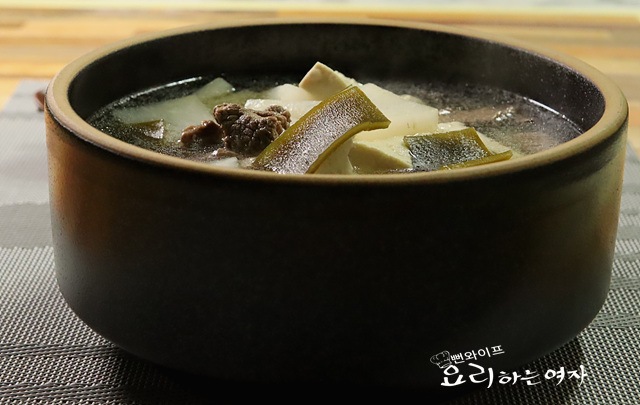
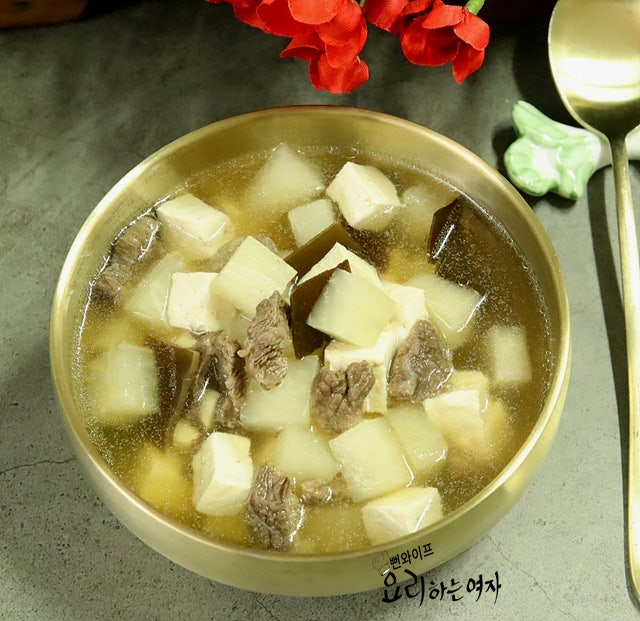
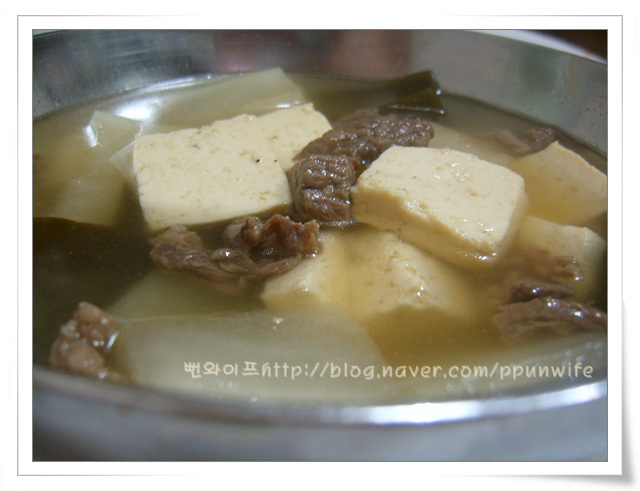
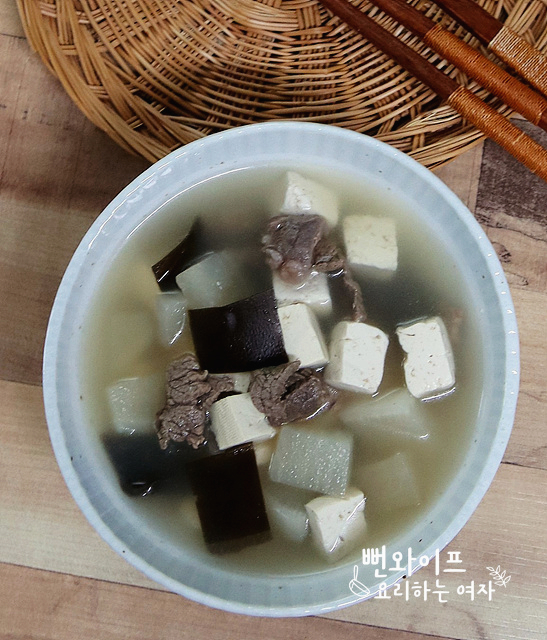
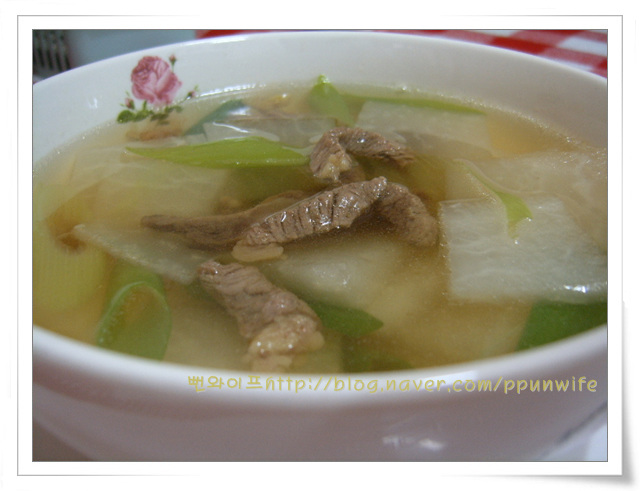
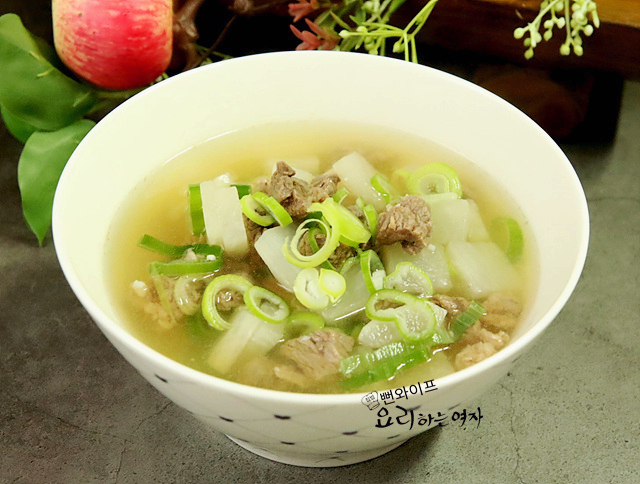
Clean Sogogi Tangguk (Beef and Radish Soup) with Kelp Broth
A clear soup made by simmering seasoned beef, Korean radish, and tofu in kelp-infused broth.
Translated from Korean by AI and not yet checked by a native speaker. Amounts and numbers are taken directly from the original recipe. Read the Korean original →
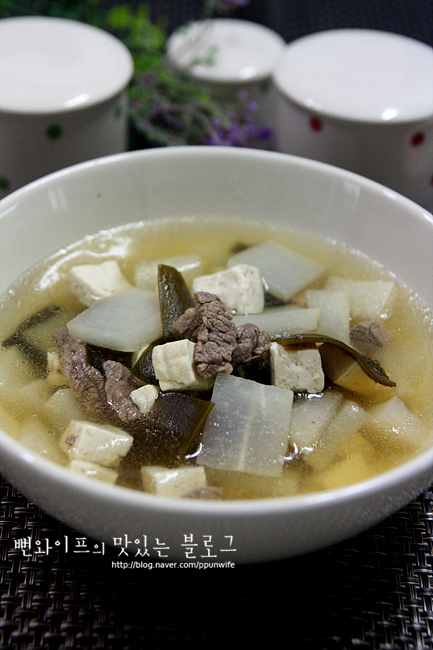
This recipe makes 4 to 5 servings of beef and radish soup using kelp broth to bring out the natural umami of the beef. Beef brisket is blotted to remove blood, lightly seasoned, stir-fried, and then gently simmered with Korean radish for a deep, comforting broth. Without any harsh or spicy seasonings, it is perfect for ancestral rites and holiday tables, as well as an everyday winter soup.
- Servings
- 4–5 servings
- Difficulty
- Medium
- Spiciness
- Not spicy
Ingredients
Ingredients
- Beef200 g
- Korean radish (mu)200 g
- Tofu150 g
- Kelp broth7 cups
Meat marinade
- Soup soy sauce (guk-ganjang)1/2 tbsp
- Mirin (cooking rice wine)1 tbsp
- Ground black peppera little
Final Seasoning
- Soup soy sauce (guk-ganjang)1 tbsp
- Salt1/2 tbsp
- Steep 2 sheets of dried kelp (10 cm square) in 7 cups of water for at least 30 minutes in advance. I cut them into bite-sized pieces before soaking. When making beef soup, soak the dried kelp in water first.
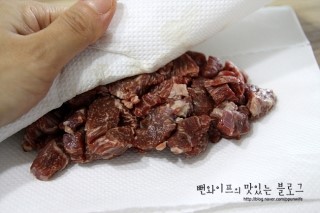
- For the beef, I used brisket cut into bite-sized pieces. Firmly press with paper towels to remove the blood.
Steps
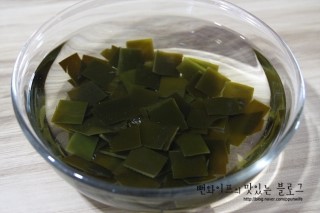
1. For the beef soup broth, I use dried kelp.
It preserves the characteristic flavor of the beef without clashing with other tastes, while adding savory richness.
Steep 2 sheets of dried kelp (10 cm square) in 7 cups of water for at least 30 minutes in advance.
I cut them into bite-sized pieces before soaking.
When making beef soup, soak the dried kelp in water first.
2. For the beef, I used brisket cut into bite-sized pieces.
Press firmly with paper towels to remove the blood.
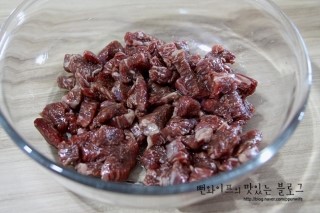
3. Season the beef with 1/2 tbsp soup soy sauce, 1 tbsp mirin, and a little ground black pepper.
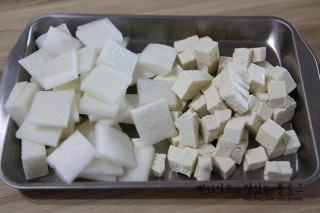
4. Cut the Korean radish into squares that are not too thin, and cut the tofu into similar-sized pieces.
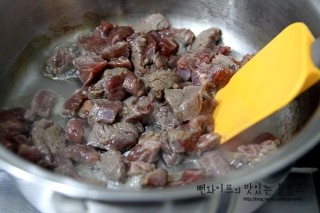
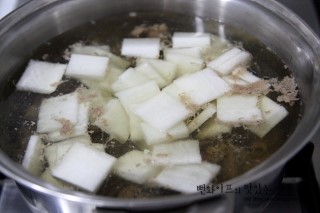
5. First, add the beef and stir-fry until it turns white...
6. Pour in the broth, add the radish as well, and bring to a boil.
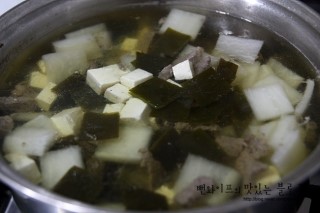
The soaked kelp pieces will be added at the very end along with the tofu.
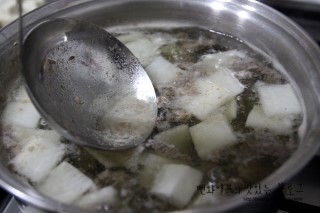
7. Skim off all the foam that rises to the top as it boils.
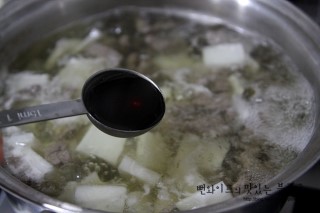
8. Add the soup soy sauce and simmer over low heat until the radish is cooked through...
10
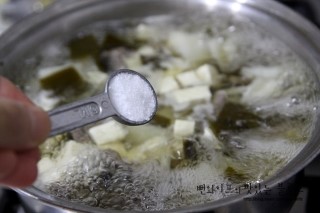
9. Add the tofu and kelp...
10. Season with salt, bring everything to a quick boil once more, and it is done.
 Ppunwife's tips
- Skim off all the foam that rises to the top as it boils.
- I find that tangguk tastes even better when reheated later rather than eaten right after cooking.
FAQ
Why isn't the kelp boiled together right from the start?
The kelp is steeped in water for at least 30 minutes ahead of time to make the broth, and the reserved kelp pieces are added at the very end with the tofu to boil briefly once the radish is fully cooked.
Are there any tips for keeping the broth clean and clear?
You can achieve a clear broth by blotting the beef with paper towels before cooking to remove blood, and diligently skimming off the foam that rises to the surface while boiling.
Which cut of beef is best to use for sogogi tangguk?
Beef brisket cut into bite-sized pieces was used to give the broth a deep, rich flavor.
Can I use another cut of meat instead of brisket? AI-generated
You can generally substitute beef shank or any standard stewing beef cut and gently simmer it.