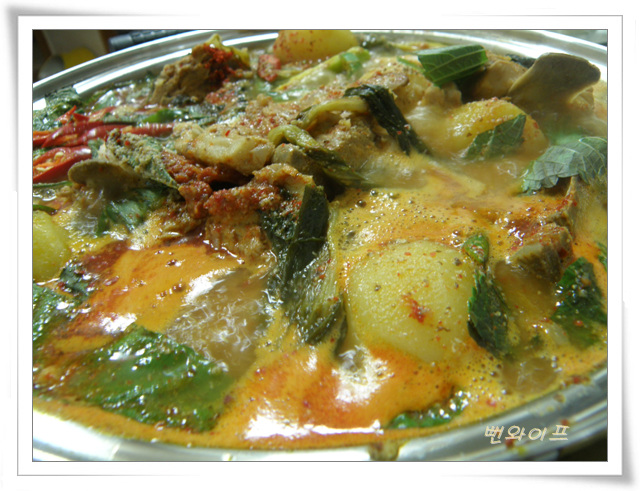
Hearty Kimchi Ppyedagwi Tang (Pork Bone Soup with Kimchi)
A soup dish made by gently simmering aged kimchi and pork backbones in rich, long-simmered backbone broth.
Translated from Korean by AI and not yet checked by a native speaker. Amounts and numbers are taken directly from the original recipe. Read the Korean original →
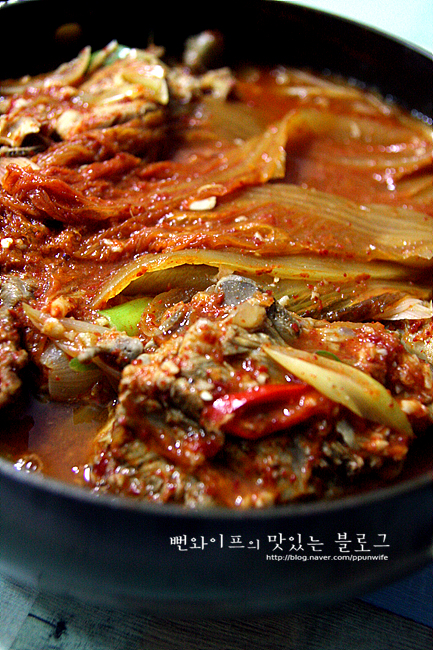
This soup dish brings together deeply simmered pork backbone broth and fully fermented, aged kimchi for a rich, tangy flavor. A bed of onion at the bottom of the pot lends natural sweetness and softens the kimchi's acidity. Simmered thoroughly for over 30 minutes, it makes a generous meal of tender meat and kimchi.
- Servings
- 3–4 servings
- Cook time
- 30 minprep not included
- Difficulty
- Medium
- Spiciness
- Spicy
Ingredients
Ingredients
- Boiled pork backbones5 cloves
- Kimchi1/4 clove
- Onion1
- Cheongyang chili pepper (hot green chili)1
- Large green onion (daepa)1/2 stalks
- Red chili pepper1
- Pork backbone broth4–5 cups
Seasoning
- Kimchi brine1/2 cup
- Minced garlic2 tbsp
- Mirin (cooking rice wine)2 tbsp
- Sugar1 tbsp
- Gochugaru (Korean chili flakes)2 tbsp
- Ground black peppera little
- Salta little
- When making braised kimchi dishes or dishes where kimchi is cooked through, using deliciously well-aged, fermented kimchi yields the best results.
- If you find yourself short on pork backbone broth, mixing it half-and-half with anchovy broth works well too.
Steps
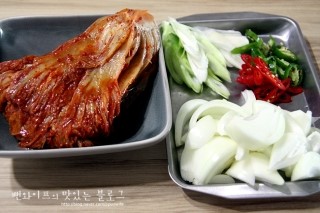
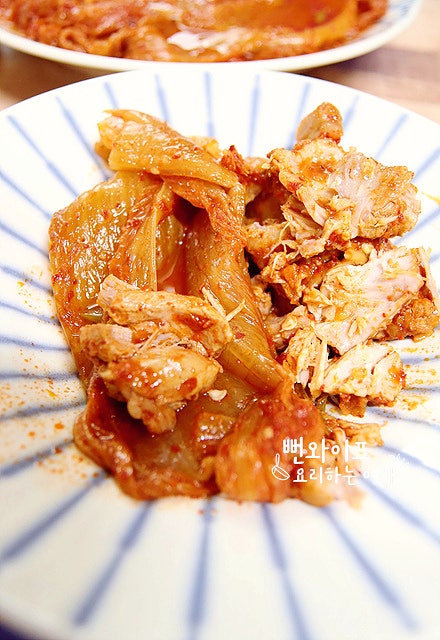
1. Prepare 1/4 head of well-fermented kimchi and brush off the stuffing.
Prepare 1 onion, 1 Cheongyang chili pepper, 1/2 stalk of large green onion, and 1 red chili pepper, then cut them into bite-sized pieces.
Three years ago, when I lived briefly in Changnyeong, I made 30 heads of gimjang kimchi using napa cabbages I grew and harvested myself, and I still have some of that kimchi left.
I gave some away to anyone who needed it, and I have been saving the rest to enjoy in kimchi jjigae or stir-fries.
When making braised kimchi dishes or dishes where kimchi is cooked through, using deliciously well-aged, fermented kimchi yields the best results.
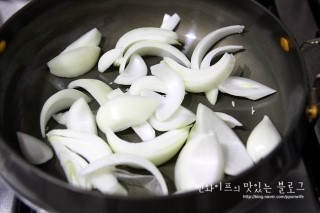
2. Spread the onion evenly across the bottom of a shallow pot.
The sweetness from the onion neutralizes the acidity of the kimchi, allowing you to reduce the sugar, and it also helps eliminate any gamey odor.
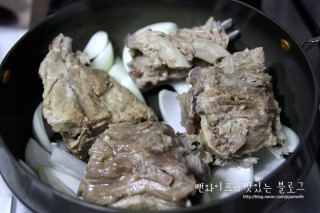
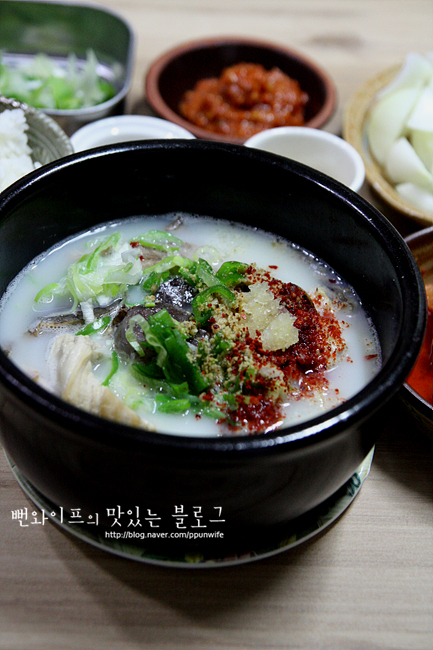
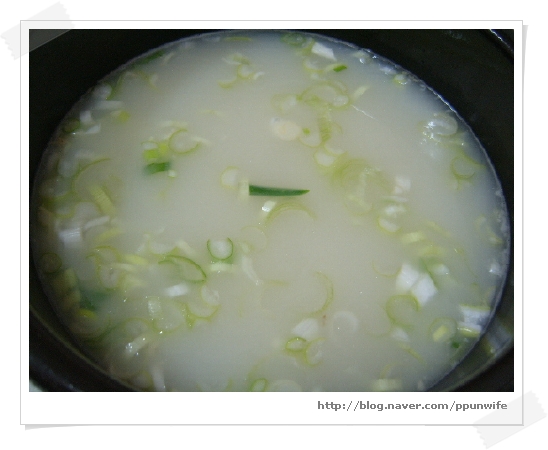
3. I previously posted a recipe for gomtang made with pork backbones; prepare the pieces of backbone from the stage where the meat is tender and cooked just right as the broth simmers.
Each backbone piece is quite large, so one piece per person seems to be plenty. Place the boiled pork backbones on top of the onions.
Process for making gomtang with pork backbones ⇒ http://blog.naver.com/ppunwife/140199300109
This is the meat from step 9 of the linked post.
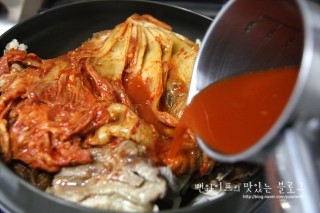
4. Spread the kimchi out over the meat, then pour 1/2 cup of kimchi brine evenly over it.
Along with the 1/2 cup of kimchi brine, I also added the seasoning ingredients: 2 tbsp minced garlic, 2 tbsp mirin, and 1 tbsp sugar.
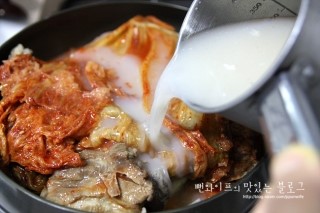
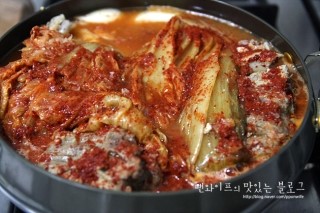
5. Pour in 4 to 5 cups of well-extracted pork backbone broth, enough to submerge the ingredients.
If you feel you are short on pork backbone broth, mixing it half-and-half with anchovy broth works well too.
6. Sprinkle gochugaru lightly over the very top.
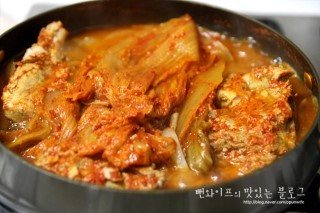
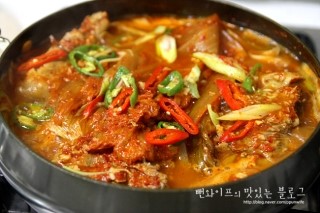
7. Once it begins to boil, reduce the heat to low, cover with a lid, and simmer gently for at least 30 minutes.
Ladle some broth to taste; if it is bland, adjust with salt.
If the acidity is strong, you can add a little bit of sugar.
8. Finally, add ground black pepper, the chili peppers, and large green onion, then simmer briefly just until their aroma releases to finish.
 Ppunwife's tips
- The sweetness of the onion neutralizes the tartness of the kimchi, allowing you to reduce the amount of sugar, and it also helps eliminate unwanted odors.
FAQ
What can I do if I don't have enough pork backbone broth?
If you run short on pork backbone broth, you can mix it half-and-half with anchovy broth.
Why do you lay onions on the bottom of the pot first?
The natural sweetness released from the onions softens the strong acidity of the kimchi and helps eliminate any gamey smell.
How can I balance the broth if it tastes too sour once cooked?
You can balance out the tartness by adding a small amount of sugar.
What kind of kimchi works best for this recipe?
Using well-aged, deeply fermented gimjang kimchi or aged sour kimchi with the inner seasoning brushed off produces the richest, most satisfying flavor.