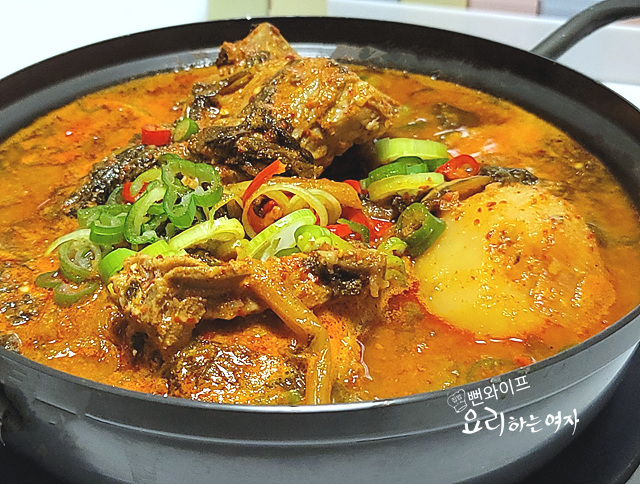
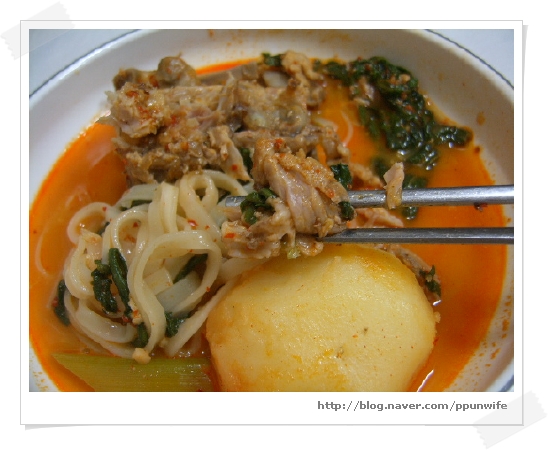
Rich Pork Backbone Gomtang (Pork Backbone Soup)
A nourishing soup made by simmering pork backbones thoroughly until milky, rich, and clean-tasting.
Translated from Korean by AI and not yet checked by a native speaker. Amounts and numbers are taken directly from the original recipe. Read the Korean original →
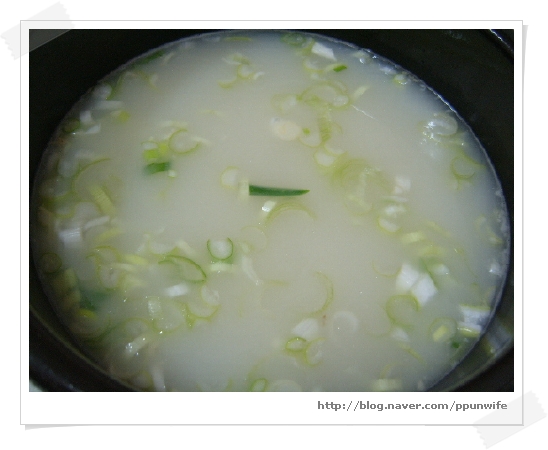
Simmering pork backbone patiently over a long time produces a broth every bit as rich, nutty, and clean-tasting as beef bone soup. Parboiling first removes unwanted odors, and separating the meat before simmering just the bones yields a clear, milky, concentrated broth. It is an affordable and satisfying soup to enjoy at home.
- Servings
- about 4–5 servings
- Difficulty
- Medium
- Spiciness
- Not spicy
Ingredients
- Pork backbone1.5 kg
- Large green onion (daepa)2 stalks (approx.)
- Onion1/2
- Whole black peppercorns15
- Garlic10
- Soak in water for about 3 hours to draw out the blood, changing the water until it runs clear.
- Let the broth cool, divide into ziplock bags in meal-sized portions, and freeze for whenever you need broth in a pinch.
Steps
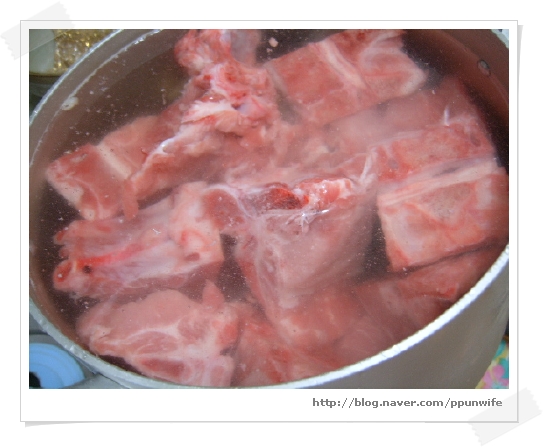
First, drain the blood from the pork backbone. Soak in water, changing the water until it runs clear.
I soaked it for about 3 hours to draw out the blood.
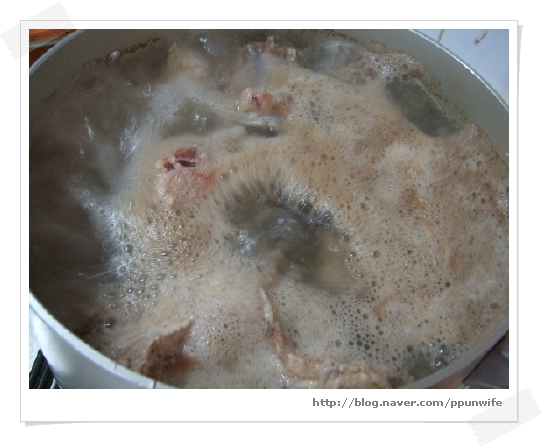
Drain the soaked pork backbone, transfer to a large pot, pour in enough water to submerge the bones, and bring to a rolling boil.
As you can see, grease and dark scum will rise. Boil for about 5 minutes,
then discard all the water. Wash away any residue stuck to the pot thoroughly as well.
Be sure to do this, otherwise the broth will develop unpleasant odors, turn greasy, and look cloudy.
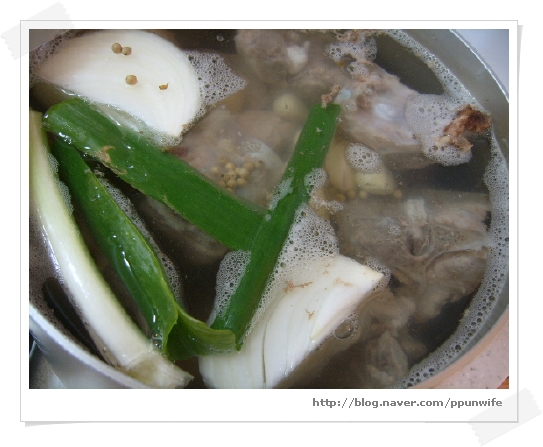
Now for the second boil. Pour in enough water to submerge the bones, and add about 2 stalks of large green onion (daepa), half an onion, 15 whole black peppercorns, and 10 cloves of garlic,
then bring to a boil. Skim off the foam and grease that rise as the water boils continuously.
Once the garlic and onion (garlic, peppercorns) soften, scoop them all out and discard.
From the moment it starts boiling, simmer gently over low heat to draw out the broth.
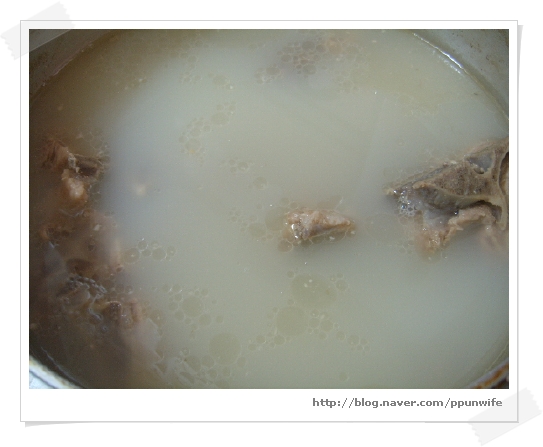
After simmering for about 2 hours, the broth will turn milky and the meat on the pork backbone will be almost completely tender.
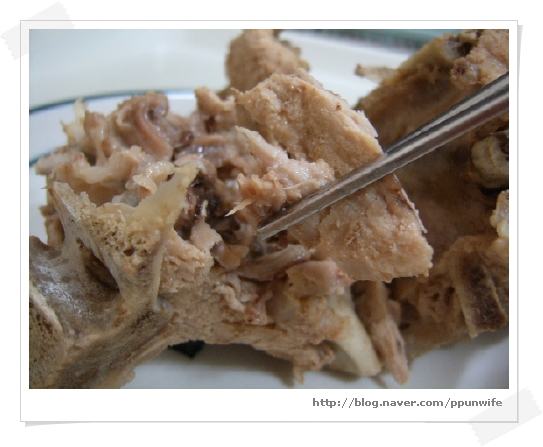
Once the meat separates easily from the bones like this, take out all the pork backbone.
If you keep simmering the broth with the meat still attached, the meat loses its flavor and the broth will not stay clean.
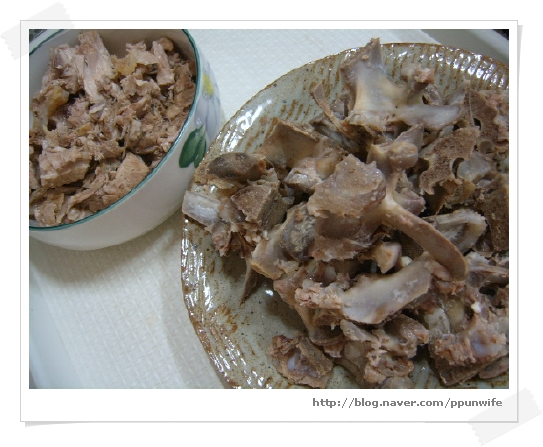
Here, the meat has been separated from the bones. You can serve the meat with ssam wraps at mealtime.
Return the bones to the pot with the broth and bring back to a boil. Add another 3 to 4 soup bowls of water
and simmer gently.
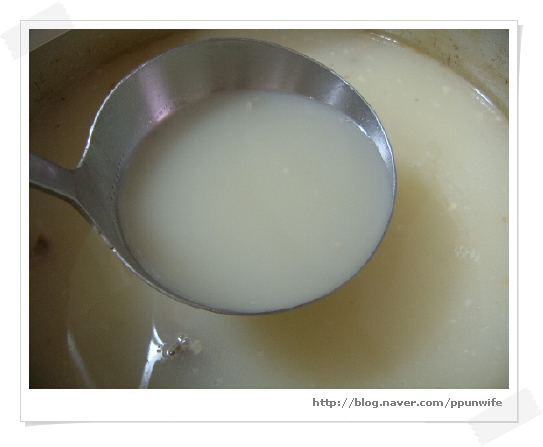
This is the broth simmered gently for about 1 hour with just the bones.
It has less grease than the first broth, tastes clean, and is very rich.
Let the broth cool, divide into ziplock bags in meal-sized portions, and freeze for whenever you need broth in a pinch.
By adding fresh water and simmering the bones again until milky, I boil them three or four times.
Near the very end, the backbones become soft enough to crumble under the pressure of your hands.
I feel a little embarrassed saying I boil them so many times.
Still, I find that final batch of broth tastes even better.
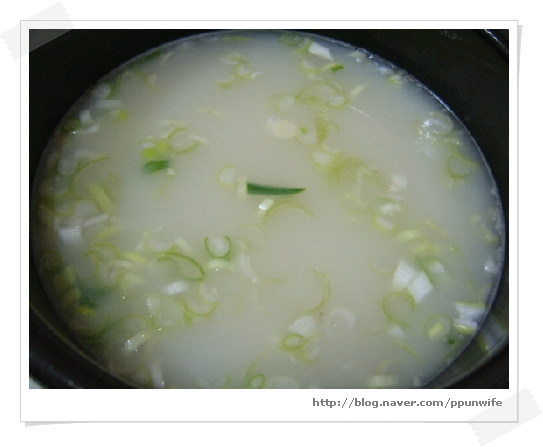
This is the broth brewed this way.
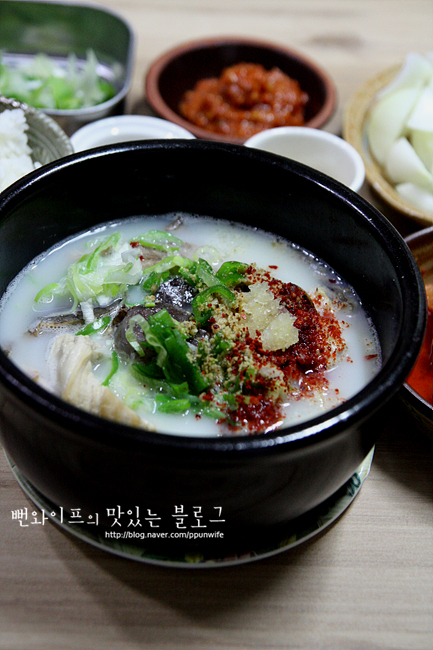
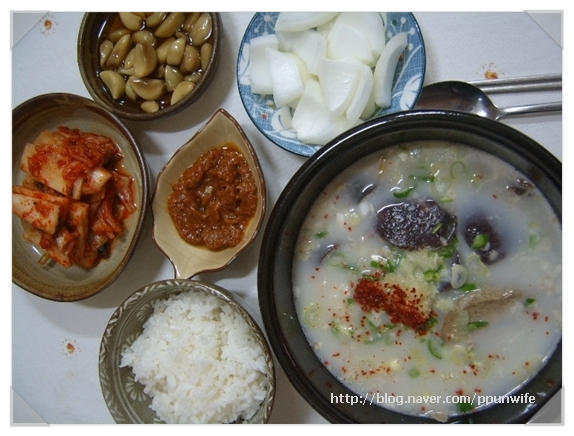
In the morning, simply ladling the soup into a bowl with some chopped scallions makes a hearty, wonderful meal.
It also takes away the worry of what soup to make.
 Ppunwife's tips
- Parboiling the soaked bones for about 5 minutes, discarding all the water, and washing away residue is essential to remove off-flavors and excess grease, keeping the broth clean.
- Simmering the bones continuously with the meat attached ruins the flavor of the meat and keeps the broth from turning out clean, so remove the bones and pull the meat off once it is cooked through.
FAQ
Do I have to discard the water after parboiling?
Yes. After pouring in enough water to cover the bones and boiling vigorously for about 5 minutes, discarding all the water and washing away any residue stuck to the pot is necessary to reduce gamey odors and excess grease.
What happens if I keep boiling without separating the meat?
If you continue simmering with the meat attached, the meat becomes dry and loses flavor, and the broth will not brew clean, so it is best to take the bones out and separate the meat once it is tender.
How should I store the finished gomtang broth?
Let the broth cool completely, portion it into 1-serving amounts in ziplock bags, and store them in the freezer so you can conveniently use them whenever needed.
What goes well with the finished gomtang when serving?
Adding chopped large green onion to the soup makes it deeply satisfying, and it pairs wonderfully with tangy, well-fermented kkakdugi (radish kimchi).