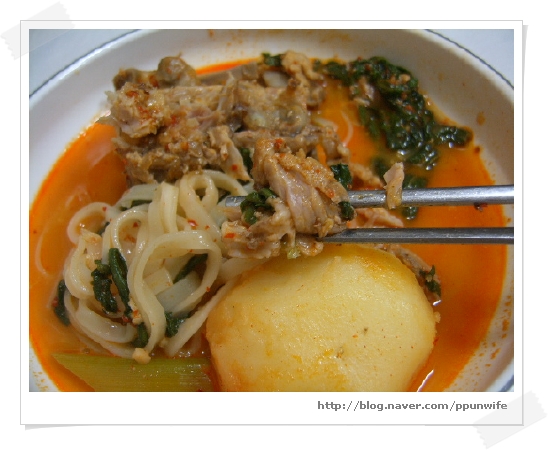
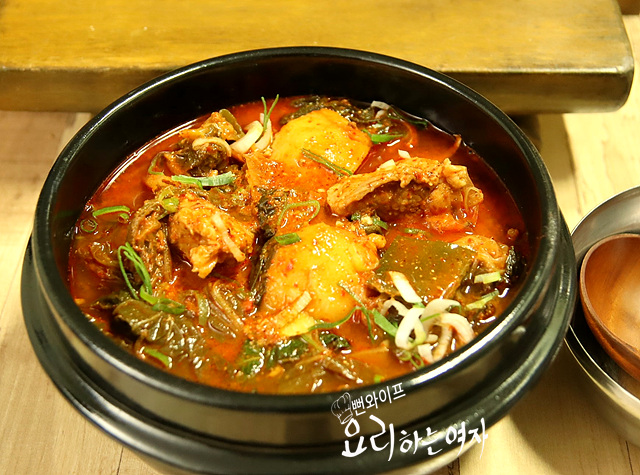
Dwaeji Deungppyeo Gomtang (Pork Backbone Soup)
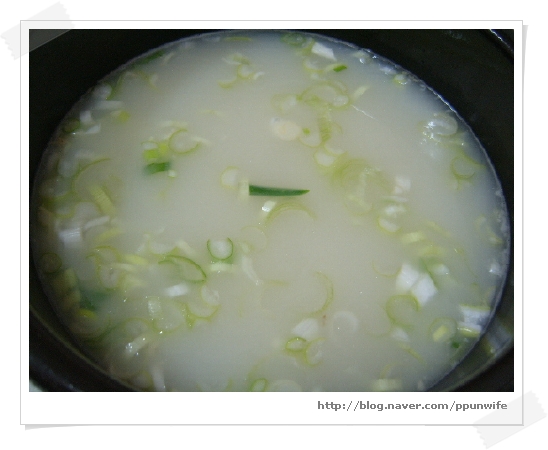
A milky, savory soup made by soaking pork backbone to draw out blood and simmering it thoroughly multiple times.
Translated from Korean by AI and not yet checked by a native speaker. Amounts and numbers are taken directly from the original recipe. Read the Korean original →
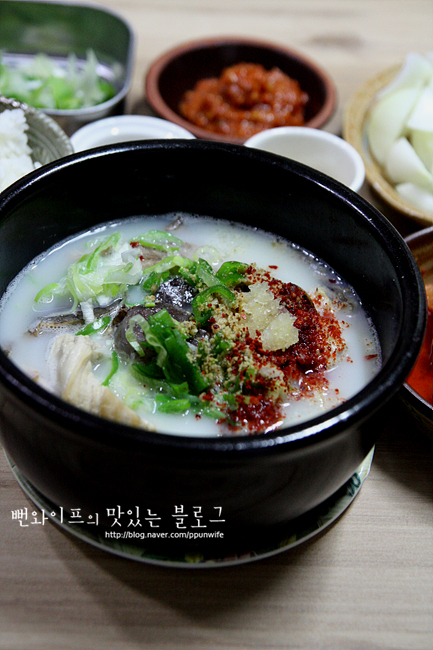
This milky, savory broth is made by soaking pork backbone to remove blood and parboiling it to eliminate unwanted odors completely. Separating the meat from the bones after a thorough simmer keeps the meat juicy instead of dry and stringy. The rich, finished broth can be enjoyed in many ways according to your taste, whether as gomtang or sundae gukbap.
- Servings
- 1 serving
- Difficulty
- Hard
- Spiciness
- Mildly spicy
Ingredients
Ingredients
- Pork bone broth2 cups
Seasoning
- Minced green onion1 tbsp
- Minced chili pepper1/2 tbsp
- Gochugaru (Korean chili flakes)1 tbsp
- Minced garlic1 tsp
- Perilla seed powder1–2 tbsp
- Salta little
- Ground black peppera little
Making backbone broth
- Pork backbone2 kg
- Large green onion (daepa) roots2
- Onion1/2 (large)
- Garlic10 cloves
- Bay leaves2–3 leaves
- Whole black peppercorns20
- Soak in water to draw out the blood; when the water turns red, pour it out and refill with fresh water, soaking for about 2 hours.
- Buy pork backbone with large bones and a decent amount of meat attached so you can eat the meat and draw out plenty of rich broth.
- Instead of salt, saeujeot (salted fermented shrimp) would be even better since it pairs so well with pork.
Steps
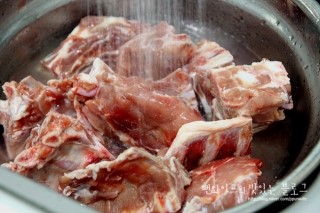
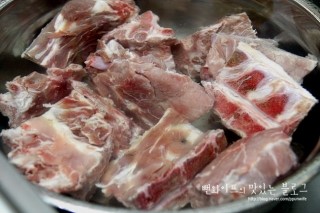
1. Buy pork backbone with large bones and a decent amount of meat attached so you can eat the meat and draw out plenty of rich broth.
2. Soak in water to draw out the blood; when the water turns red, pour it out and refill with fresh water, soaking for about 2 hours.
This is the first step in removing any pork odor, so be sure to draw out the blood thoroughly.
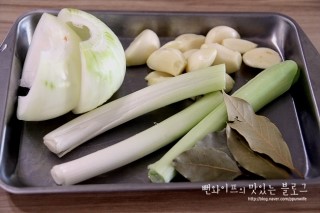
3. Aromatic ingredients to remove odors when making broth with 2 kg of backbone:
2 large green onion (daepa) roots, 1/2 onion (large), 10 cloves of garlic, 2 to 3 bay leaves, and 20 whole black peppercorns.
I prepared them like this. I forgot to take a picture of the whole black peppercorns, but I added them during the boiling process.
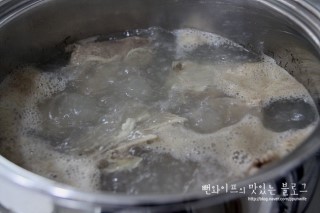
4. Add the backbone and bring to a rolling boil. A lot of fat and scum will rise to the surface, as shown in the photo.
Boil vigorously for about 5 minutes, then discard all the cooking liquid.
This is the second step to remove odors and create a clean broth.
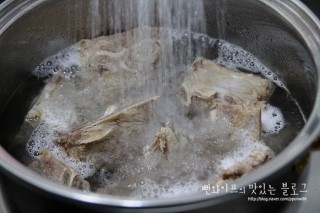
5. Wash away all the greasy residue stuck to the pot, and rinse off any impurities clinging to the bones.
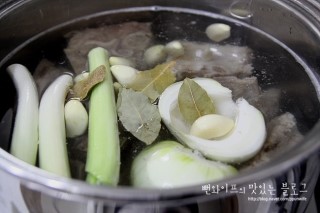
6. Pour in enough water to fully submerge the meat, add all the aromatic broth ingredients...
This is the third step for creating a clean-tasting broth.
If you simmer pork backbone broth this way, you will get a rich, savory, and clean broth.
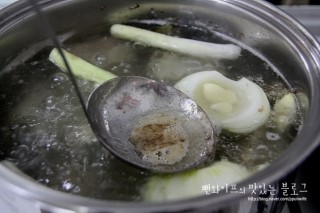
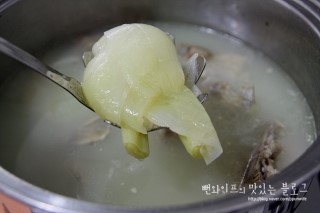
7. Bring to a rolling boil. Fat and dark scum will still rise to the surface, so skim them all off.
8. Simmer gently over medium-low heat for 30 minutes to 1 hour, and the broth will gradually turn milky while the aromatics cook down soft.
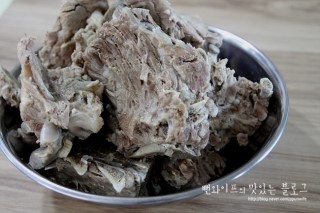
Fish out all the aromatics, then simmer for about 1 hour more until the meat is thoroughly cooked and tender enough to pull off easily.
10
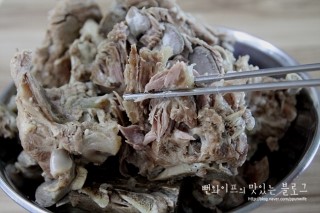
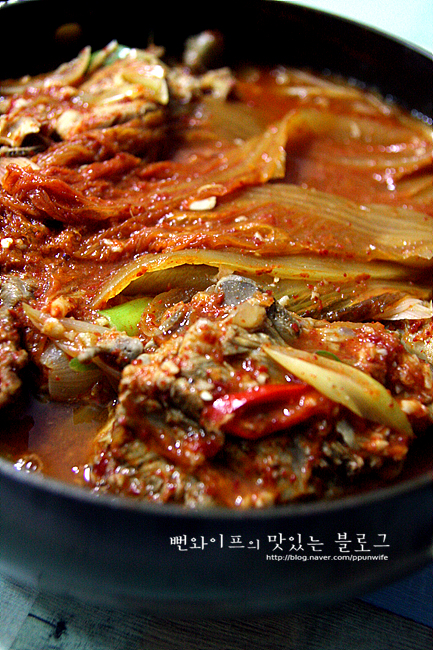
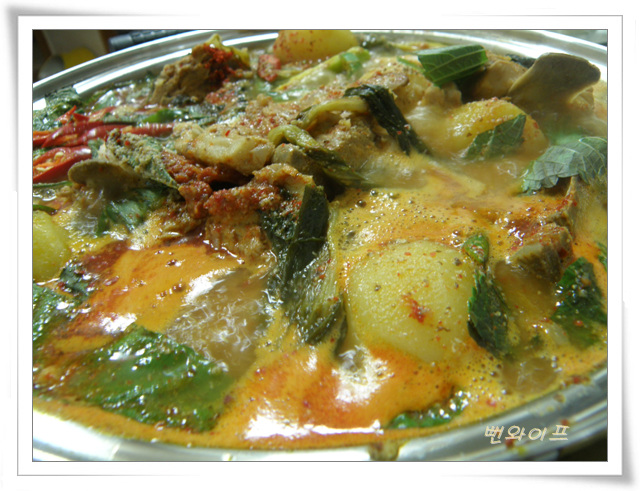
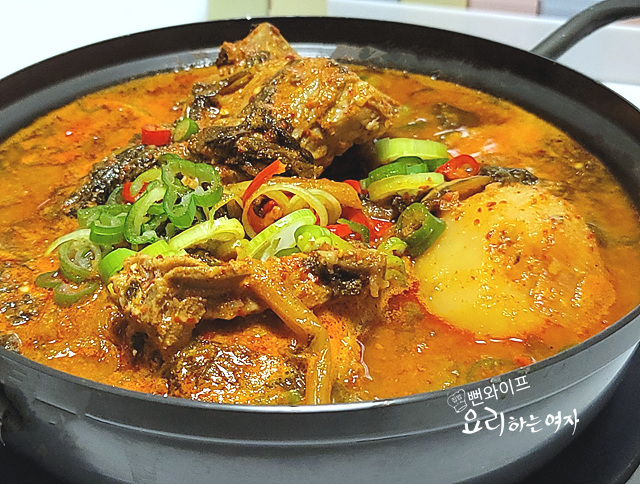
9. Set aside about half of the cooked backbones with the meat still attached to make gamjatang or kimchi backbone stew later...
10. For the remaining backbones, pull the meat off the bones to extract even more milky broth.
If you leave the meat attached while simmering the broth, the meat juices will leach completely into the soup, leaving the meat dry, flavorless, and without any chew.
11
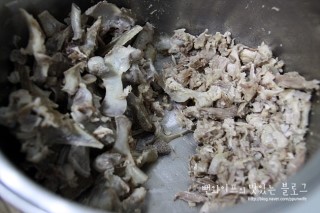
12
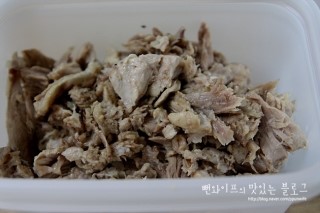
11. I separated all the meat from the backbones.
12. Store the stripped meat well in the freezer or refrigerator,
then add small portions to the broth to easily enjoy it as gomtang.
13
14
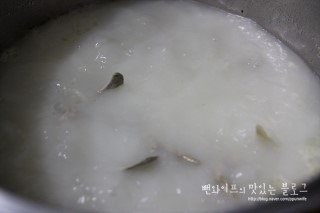
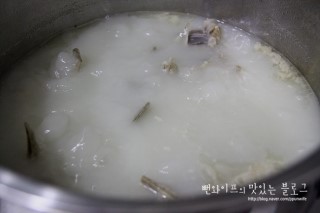
13. Return the stripped bones to the broth from step 8 and, to simmer it into a truly rich broth,
cover with a lid and simmer over medium-low heat for over 1 hour.
Once the broth turns milky, transfer it to another container...
14. Pour fresh water over the bones again and boil for over 2 hours, just like above, until it turns milky.
Boiling a second time is called a second extraction, and boiling up to three times is called a third extraction; I usually do up to a third extraction.
Today I only did up to the second extraction.
Compared to the first batch, the second broth has less fat, is much cleaner, milkier, extracts better, and has a richer, nuttier flavor.
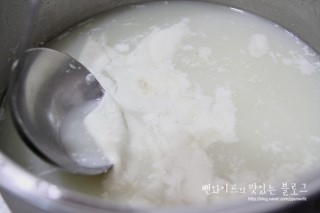
Combine the first broth and the second broth together.
15
16
15. Cool the broth completely and place it in the refrigerator; any white fat that was not skimmed off during boiling will float to the top.
Skim it off cleanly and package the broth in single-serving portions to make it very convenient to use here and there.
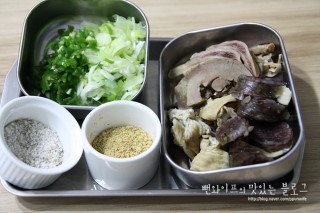
16. Since I had made backbone broth, I bought some sundae (blood sausage) and made gukbap.
The ingredients are sundae and offal, along with minced green onion, chili pepper, garlic, perilla seed powder, gochugaru (Korean chili flakes), ground black pepper, salt, and so on to eat with it.
Instead of salt, saeujeot (salted fermented shrimp) would be even better since it pairs so well with pork.
17
18
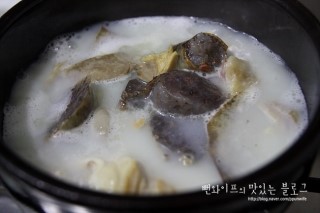
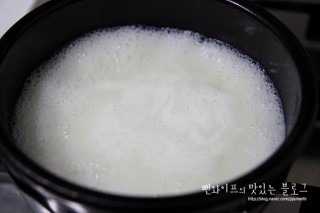
17. Pour the broth into an earthenware pot and bring to a rolling boil; add the sundae and offal at the very end, simmer just briefly, and turn off the heat.
18. If you add the ingredients from the beginning, they will all break apart and turn to mush.
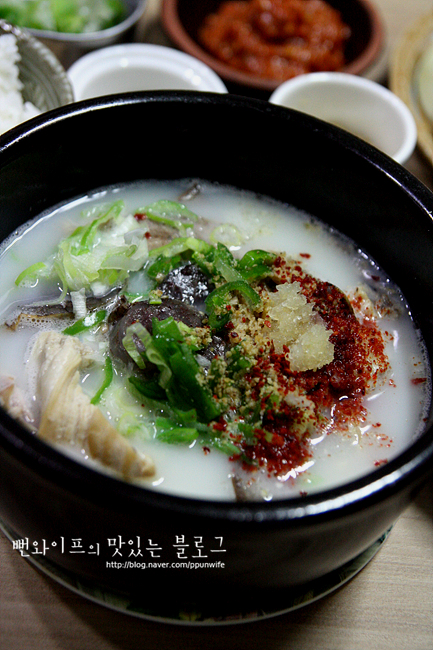
Instead of making a separate seasoning paste, I simply placed a little of each topping on top.
Sundae soup made this way is just as rich and delicious as the restaurant versions.
Above all, because you put your own care and time into making it, it feels safer and healthier.
 Ppunwife's tips
- If you leave the meat attached while simmering the broth, the meat juices will leach completely into the soup, leaving the meat dry, flavorless, and without any chew.
- Compared to the first batch, the second broth has less fat, is much cleaner, milkier, extracts better, and has a richer, nuttier flavor.
- If you add the ingredients from the beginning, they will all break apart and turn to mush.
FAQ
How do you reduce the distinct gamey odor of pork backbone?
The key is to soak the bones in cold water for about 2 hours while changing the water thoroughly to draw out the blood, then parboil in boiling water for 5 minutes, discard the initial water, and wash both the bones and pot cleanly.
Why do you separate the meat midway instead of continuing to boil it together?
If you keep boiling the bones and meat together, all the juices leach out of the meat, leaving it dry and stripping away its chewy texture.
Is there a trick to neatly skimming the fat from the simmered broth?
After letting the boiled broth cool completely, place it in the refrigerator. A layer of solid white fat will form on top, which can then be neatly skimmed off with a spoon.
When using this for sundae gukbap, when should the sundae be added?
Add the sundae and offal at the very end after the broth has come to a rolling boil and simmer only briefly, so the sundae does not burst and turn the broth into mush.