Sweet, Sour, Chewy Saesongi Beoseot Jangajji
A sweet and tangy pickled king oyster mushroom side dish finished in just one day by pouring hot boiled pickling soy liquid over the mushrooms.
Translated from Korean by AI and not yet checked by a native speaker. Amounts and numbers are taken directly from the original recipe. Read the Korean original →
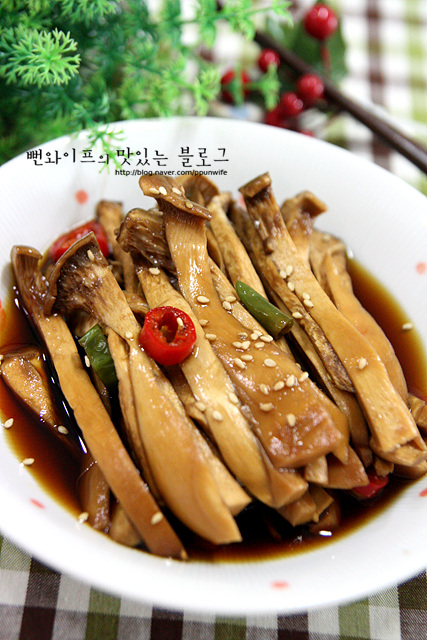
King oyster mushrooms have a tender texture, so pouring boiling soy pickling liquid directly over them allows the flavor to soak in within half a day. It adds a refreshing bite when served alongside meat dishes, and to preserve their pleasant chew, it is best not to slice the mushrooms too thinly.
- Servings
- about 4–5 servings
- Difficulty
- Easy
- Spiciness
- Mildly spicy
Ingredients
Ingredients
- King oyster mushrooms1 pack, 350 g (4)
- Cheongyang chili pepper (hot green chili)1
- Red chili pepper1
Soy pickling liquid
- Water (or kelp broth)2 cups
- Regular soy sauce (jin-ganjang)1 cup
- Sugar1/2 cup
- Vinegar1/2 cup
- Carefully remove any debris stuck in the folds of the king oyster mushroom caps, rinse them under running water, and drain the excess moisture.
- If you have anchovy broth, feel free to use it, or soak dried kelp (dasima) in water for about 30 minutes; if you have neither, plain water works just fine.
Steps
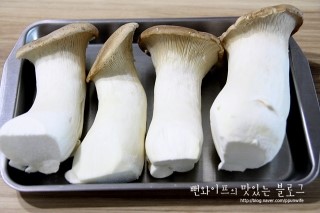
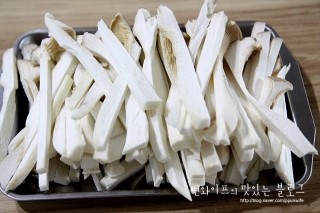
1. King oyster mushrooms are mostly clean, but make sure to carefully remove any debris stuck in the folds under the caps.
Rinse them under running water and drain the excess moisture.
2. Slice them into bite-sized thicknesses.
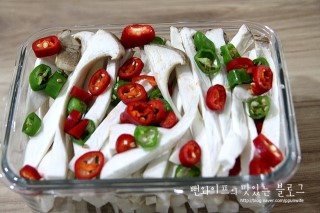
3. Place the mushrooms in a glass container along with the thinly sliced red chili pepper and Cheongyang chili pepper (hot green chili).
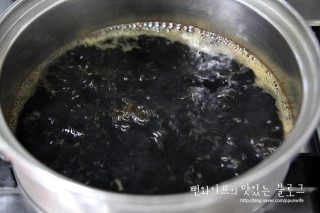
4. Add all the soy pickling liquid ingredients and, once it comes to a boil, let it boil for just about 1 to 2 minutes more.
If you have anchovy broth, feel free to use it, or you can soak dried kelp (dasima) in water for about 30 minutes.
If you have neither, just use plain water.
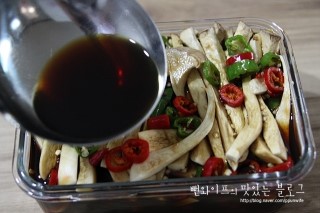
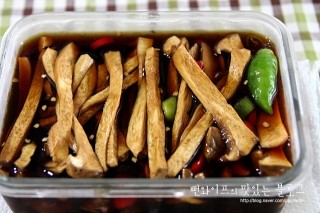
5. Once the soy pickling liquid comes to a rolling boil, immediately pour it directly over the mushrooms in the container.
Let it cool, cover with a lid, and keep it in the refrigerator to eat.
Mushrooms are neither hard nor tough and have a tender texture,
so if you make it in the evening, the flavors will soak in nicely by the next morning.
Or if you make it in the morning, the seasoning will penetrate well enough to eat by dinner.
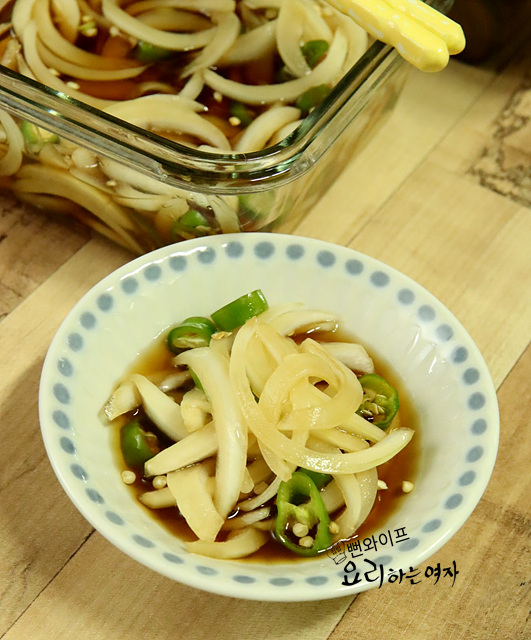
For other pickles made with harder vegetables like onions, chili peppers, garlic, or similar,
please let them sit at room temperature after pouring the pickling liquid until the flavors absorb a bit before moving them to the refrigerator.
Aging takes far too long in the cold chill of the fridge.
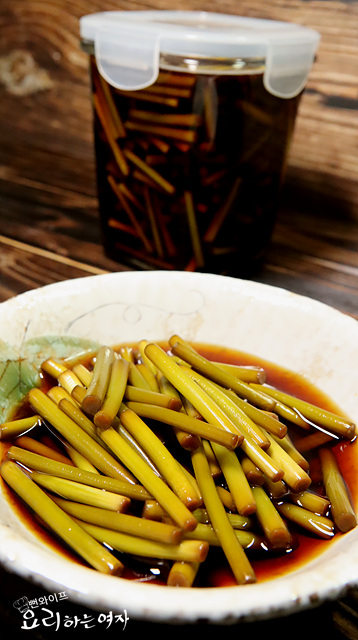
Also, when fermenting chili peppers or perilla leaves in brine until yellowish, you must unconditionally ferment them at room temperature.
6. After making it yesterday evening and checking the next morning, the soy liquid had soaked into the mushrooms wonderfully.
 Ppunwife's tips
- To give the mushrooms a great chewy texture, it is best not to slice them too thinly.
- Once you have finished eating them, strain out any debris through a sieve, bring the soy liquid to a rolling boil again, and reuse it by adding other mushrooms (oyster mushrooms, enoki mushrooms) or making pickles with onions, chili peppers, or perilla leaves.
FAQ
Can I use plain water instead of broth when making the soy liquid?
If you do not have anchovy broth or water steeped with dried kelp, it is perfectly fine to boil the soy liquid using plain water.
How soon after making can I eat it?
Because mushrooms have a tender texture, you can pickle them in the evening and eat them the next morning, or make them in the morning and enjoy them right away for dinner.
How can I reuse the leftover soy liquid after finishing the mushrooms?
Strain it through a sieve to remove any debris, boil it again, and reuse it as pickling liquid for enoki mushrooms, oyster mushrooms, onions, chili peppers, and more.
How should I slice the mushrooms to preserve their chewy texture?
To fully enjoy the chewy bite of the mushrooms, it is best to slice them reasonably thick rather than too thin.