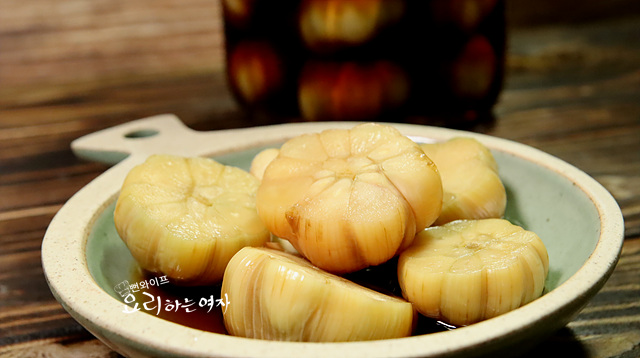
Hearty Gochujang Maneul Jangajji (Garlic Pickled in Chili Paste)
A preserved side dish of fresh garlic aged in vinegar to remove its pungent sharpness, then coated in a sweet and spicy gochujang seasoning.
Translated from Korean by AI and not yet checked by a native speaker. Amounts and numbers are taken directly from the original recipe. Read the Korean original →
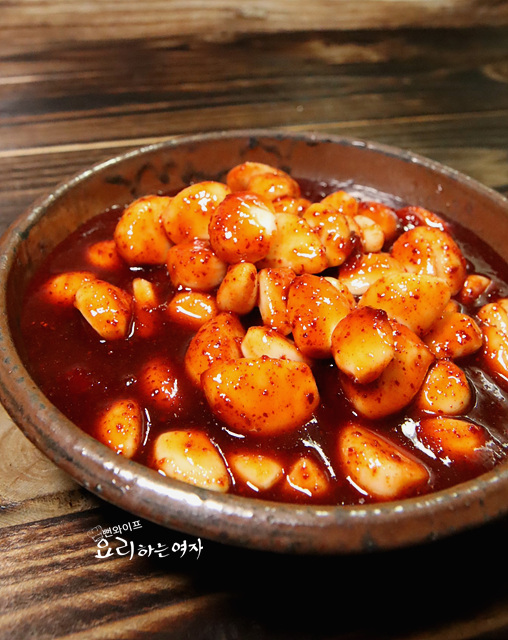
This pickled garlic is made by soaking fresh garlic in vinegar to draw out its pungent bite, then tossing it in a sweet and spicy seasoning. Aging it in the refrigerator for about a month allows the flavors to meld together beautifully. It makes a dependable side dish to pair with grilled meats or rich, oily foods.
- Servings
- about 10–12 servings
- Difficulty
- Medium
- Spiciness
- Mildly spicy
- Keeps
- 365 days
Ingredients
Ingredients
- Whole garlic cloves25 heads
Pickling in vinegar
- Brewed vinegar3 cups
Seasoning
- Regular soy sauce (jin-ganjang) (or brewed soy sauce (yangjo-ganjang))1/3 cup
- Gochugaru (Korean chili flakes)2/3 cup
- Gochujang (Korean red chili paste)1 1/2 cups
- Rice syrup (jocheong) (or corn syrup (mulyeot), oligosaccharide syrup (oligodang))1 cup
- Sugar1/2 cup
- If using large garlic cloves, add 1 cup more vinegar.
- Use brewed vinegar with 6–7% acidity.
Steps
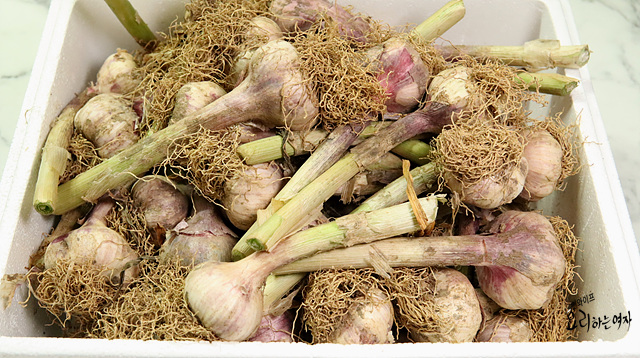
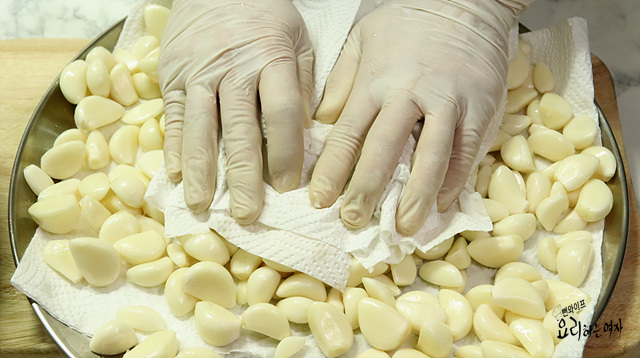
The garlic I bought had small cloves.
Peel 25 heads of fresh garlic.
Rinse them in running water, then press with paper towels to remove all moisture.
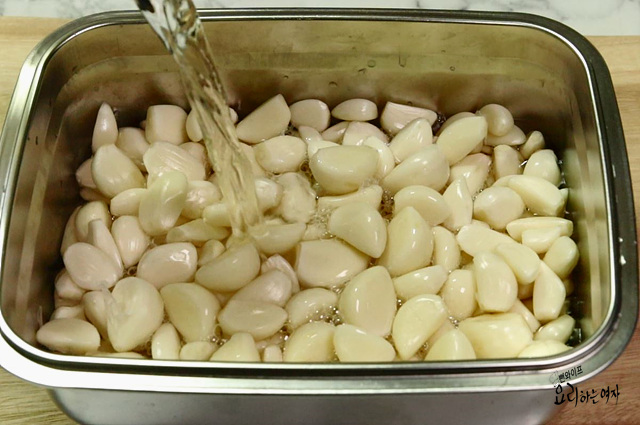
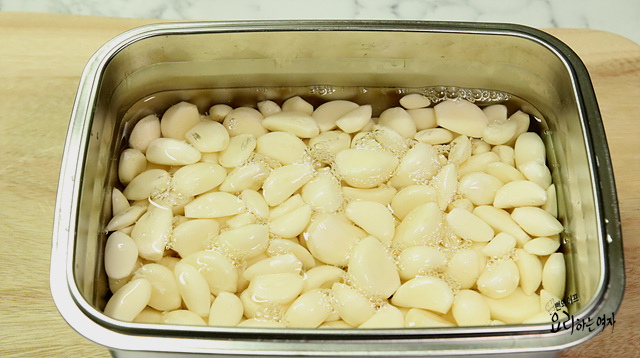
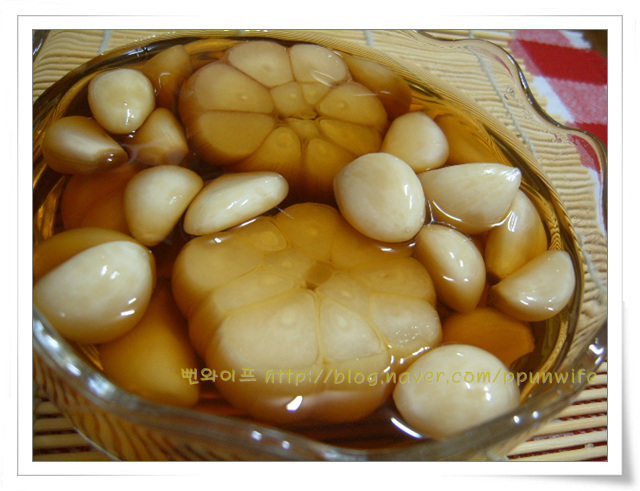
We will age the garlic in vinegar to remove its harsh, pungent bite.
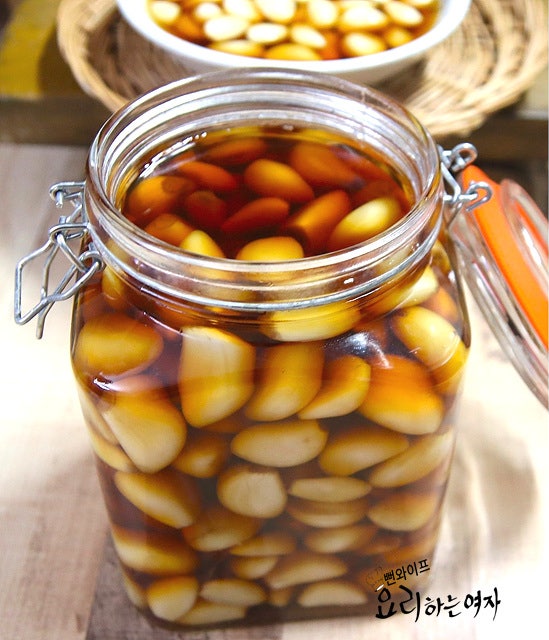
Place the dried garlic in a container and pour in the vinegar,
adding enough so that the garlic is fully submerged.
If your garlic cloves are large, add 1 cup more.
You can use brewed vinegar with 6–7% acidity.
The aging time varies depending on the size of the garlic. For smaller cloves like mine, about 3 days is enough;
for larger cloves, aging for a week should do.
Keep it in a cool, shaded spot while it ages.
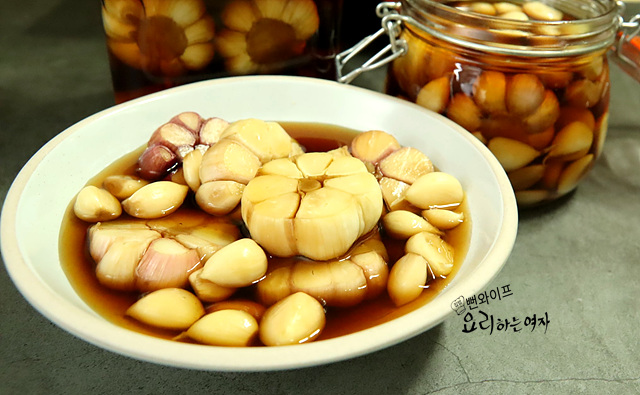
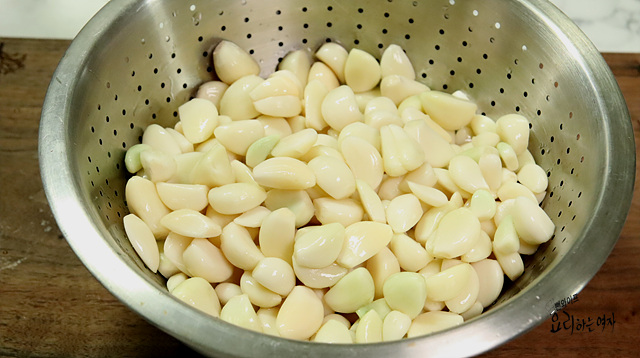
During this process, the garlic may turn green, as mine did, which is called greening.
While the exact reason isn't certain, the garlic itself hasn't gone bad, so you can eat it without worrying at all.
Drain the aged garlic in a strainer to pour off the vinegar.
When pickling cucumber pickles or any jangajji, it must always be kept at room temperature.
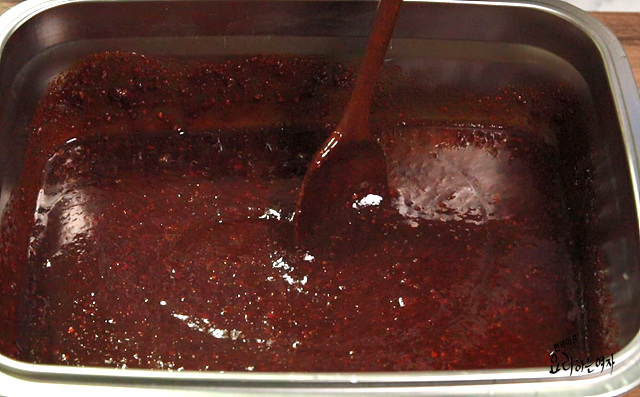
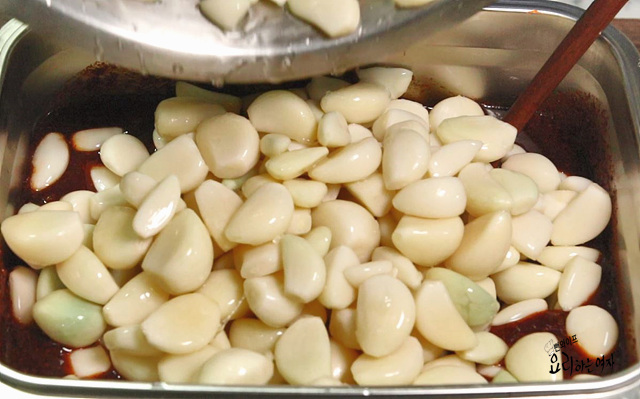
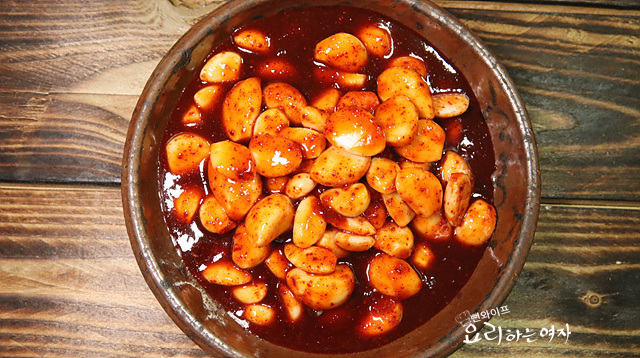
Combine all the seasoning ingredients and mix well, then add the garlic and...
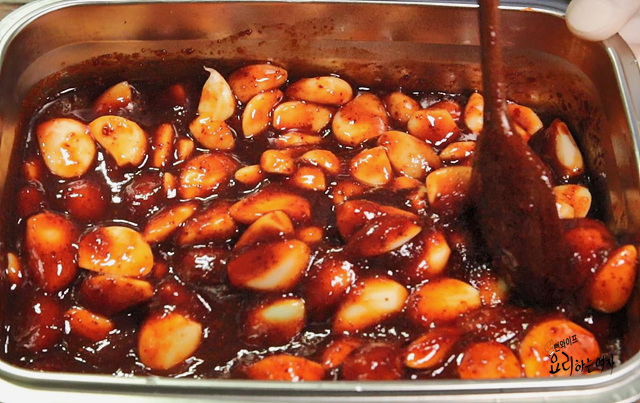
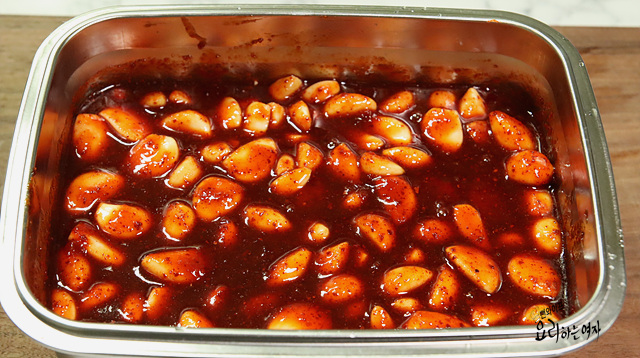
Toss everything together again.
Once seasoned like this, put it in the refrigerator, and after about a month, the sauce and the vinegar-cured garlic will blend together beautifully.
If you like a sourer flavor,
you can keep aging it in the vinegar liquid even after the harsh bite is gone, then toss it in the seasoning whenever you like.
 Ppunwife's tips
- Garlic turning green during the vinegar-aging process is a natural greening reaction and does not mean the garlic has spoiled, so you can safely eat it without worry.
- When pickling cucumber pickles or any jangajji, always keep them at room temperature.
- If you prefer a tangier taste, leave the garlic in the vinegar bath even after the harsh bite has mellowed, and mix it with the seasoning whenever it reaches your desired flavor.
- The leftover seasoning paste is also delicious when used as a sauce for spicy cold noodles like bibim guksu or bibim naengmyeon.
FAQ
Is it safe to eat the garlic if it turns green while soaking in vinegar?
Yes, it is completely safe to eat because the garlic itself has not spoiled.
How long does garlic take to age in vinegar?
Small cloves take about 3 days, while large cloves take about a week in a cool, shaded spot at room temperature.
When can you start eating it after tossing with the seasoning?
After coating it in the seasoning, let it sit in the refrigerator for about a month so the flavors can meld well into the garlic.
How can I use the leftover gochujang sauce after finishing the pickled garlic?
You can use every bit of it as a seasoning sauce for spicy mixed noodles like bibim guksu or bibim naengmyeon.