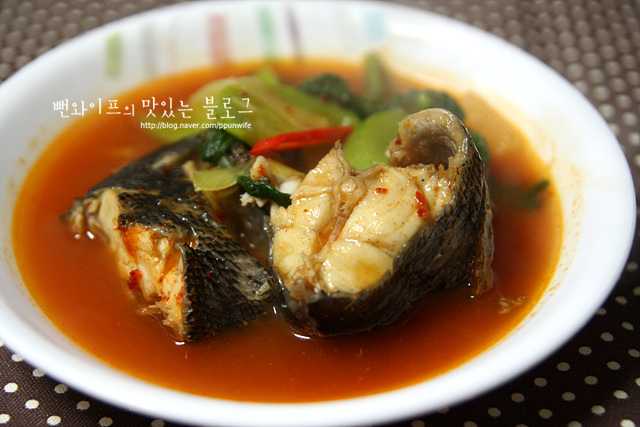
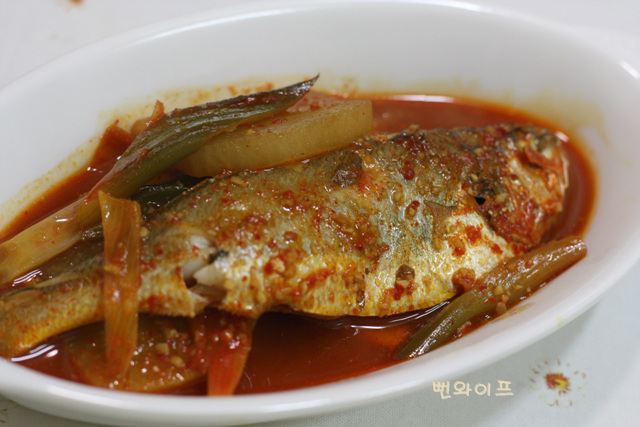
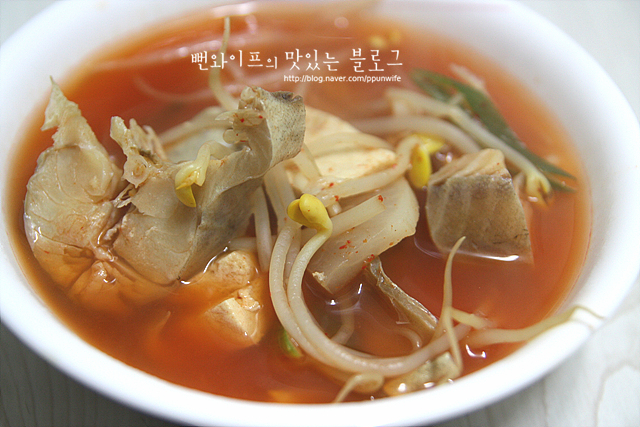
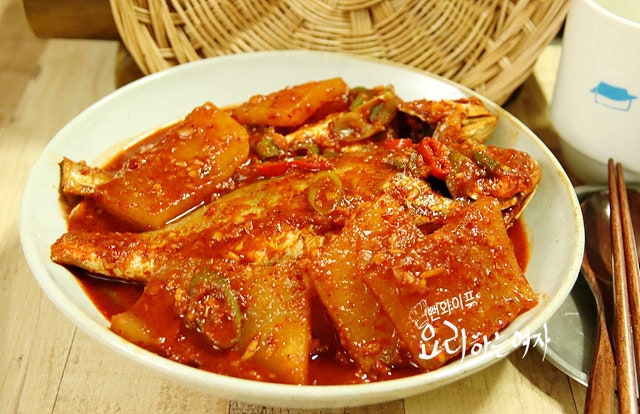
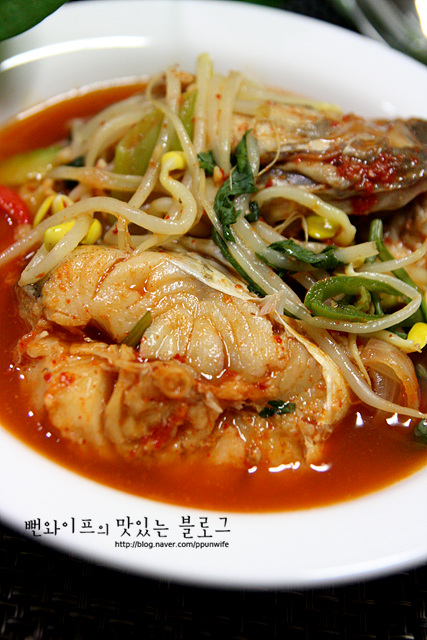
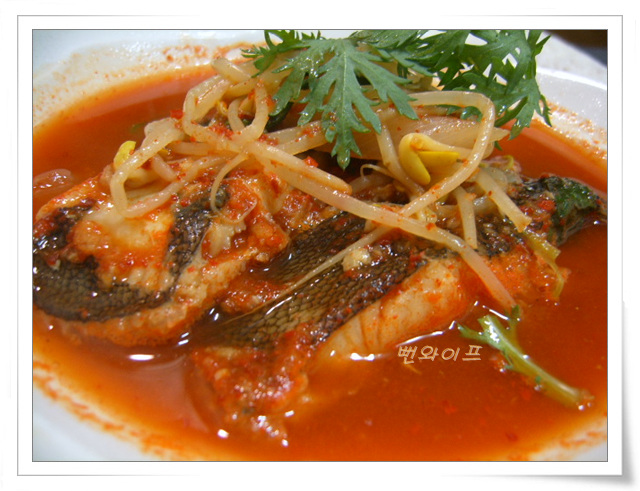
Spicy, Refreshing Jogi Maeuntang (Spicy Yellow Croaker Soup)
A spicy and refreshing fish soup made by simmering yellow croaker in rice water and savory broth.
Translated from Korean by AI and not yet checked by a native speaker. Amounts and numbers are taken directly from the original recipe. Read the Korean original →
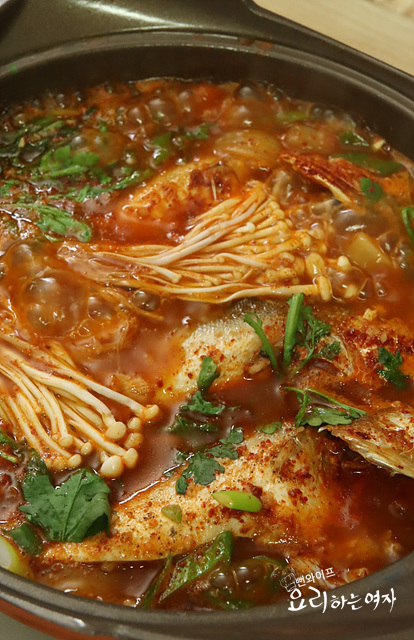
This soup uses both water from washing rice and anchovy broth to tame fishiness while building deep savory flavor. After thoroughly cleaning the yellow croaker of its innards and scales, Korean radish and vegetables are added to create a spicy, rich broth. It works wonderfully as a dinner centerpiece or as a warm companion for drinks.
- Servings
- 2–3 servings
- Difficulty
- Medium
- Spiciness
- Spicy
Ingredients
Ingredients
- Yellow croaker3 whole, 600 g
- Korean radish (mu)200 g
- Onion1/2
- Large green onion (daepa)1/2 stalks
- Cheongyang chili pepper (hot green chili)2
- Ssukgat (crown daisy)7 stalks
- Enoki mushrooms1 pack
- Water from washing rice3 cups
- Anchovy broth2 cups
Seasoning
- Gochujang (Korean red chili paste)1 tbsp
- Minced ginger1/2 tsp
- Gochugaru (Korean chili flakes)2 tbsp
- Soup soy sauce (guk-ganjang)2 tbsp
- Minced garlic2 tbsp
- Mirin (cooking rice wine)2 tbsp
- Ground black peppera little
- You can substitute other mushrooms for the enoki mushrooms, and adding zucchini is also great.
- Instead of crown daisy, water dropwort (minari) or perilla leaves will also make the soup broth fragrant, so feel free to prepare those.
Steps
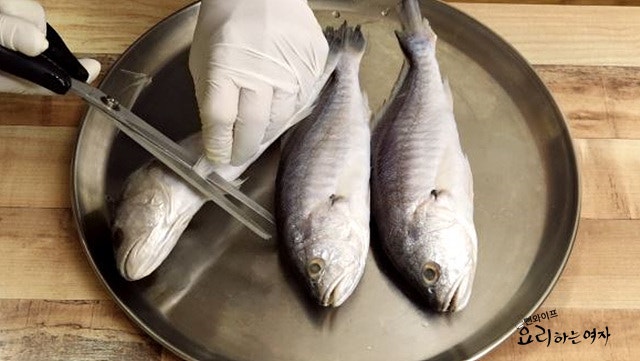
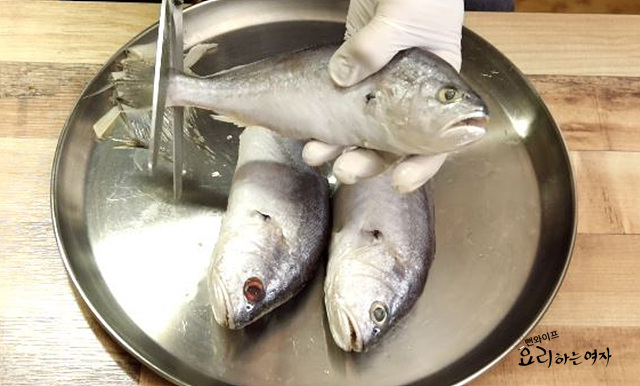
Cut off all the fins from the yellow croaker.
Trim the fins on the back, belly, and tail neatly with kitchen shears so you can eat comfortably without anything getting in the way.
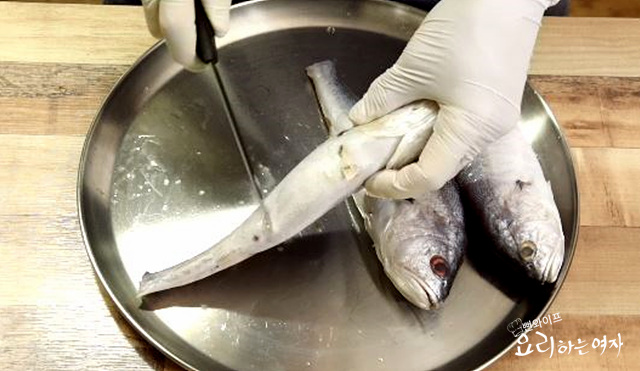
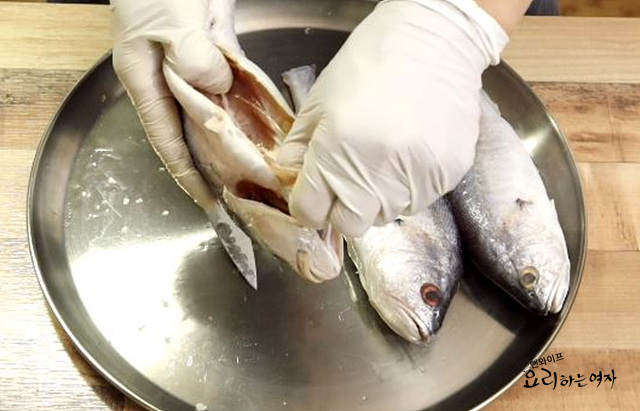
Thoroughly scrape off the scales with a knife, taking care around the belly area as well.
Slit the belly open and cleanly scrape out and remove the innards. If you do not remove the innards thoroughly, it will smell very fishy, so this cleaning step is important.
Rinse thoroughly under running water, and the prep is done.
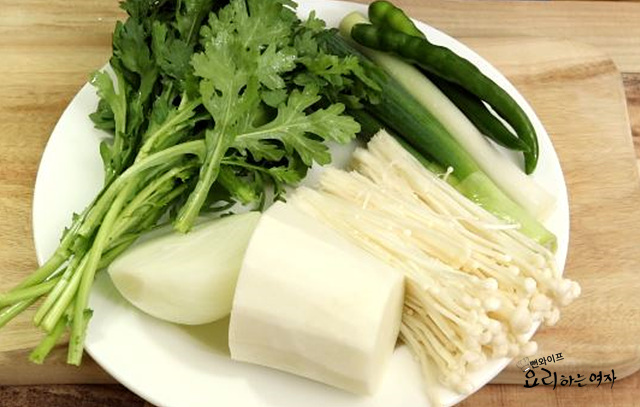
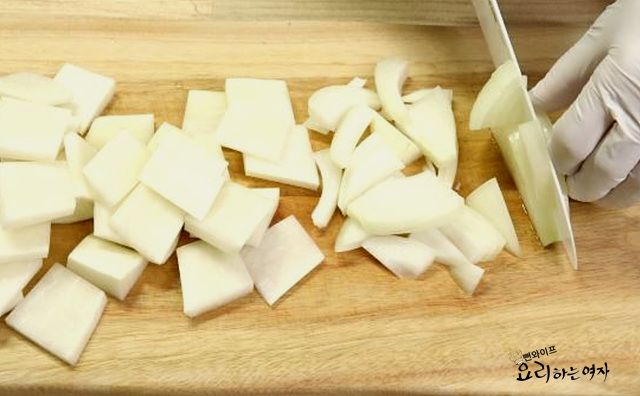
To give the soup a refreshing flavor, prepare the Korean radish and slice it into thin squares, and slice the onion.
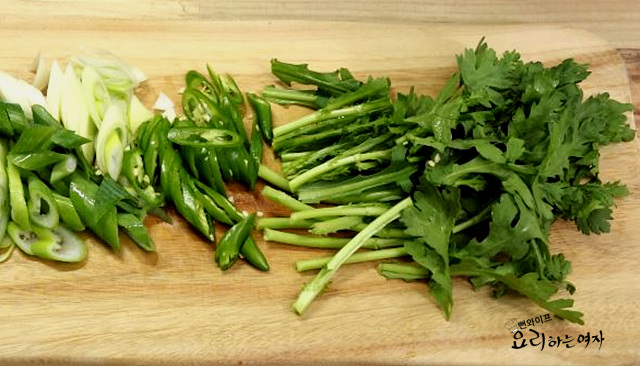
Cut the crown daisy, Cheongyang chili peppers, and large green onion—which eliminate fishiness and add fresh aroma—into bite-sized pieces. I also prepared a package of enoki mushrooms; you can substitute other mushrooms or add zucchini as well.
Instead of crown daisy, water dropwort or perilla leaves will also make the soup broth fragrant, so feel free to prepare those.
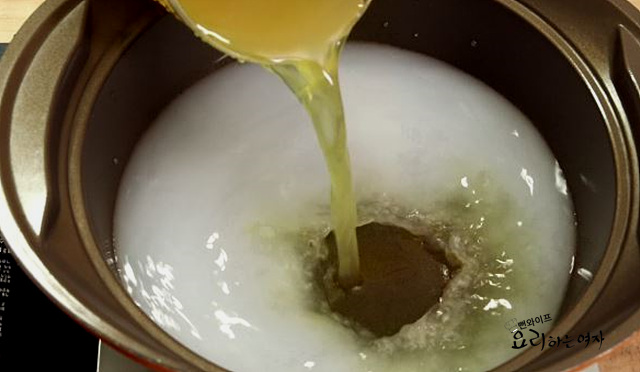
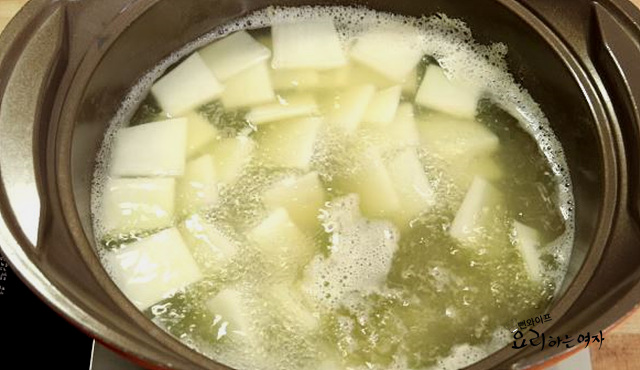
For the soup broth, I prepared both water from washing rice and anchovy broth together.
The anchovy broth provides a deep flavor, and the rice water helps eliminate the fishy odor.
Add them both to the pot, add the radish, and bring to a rolling boil.
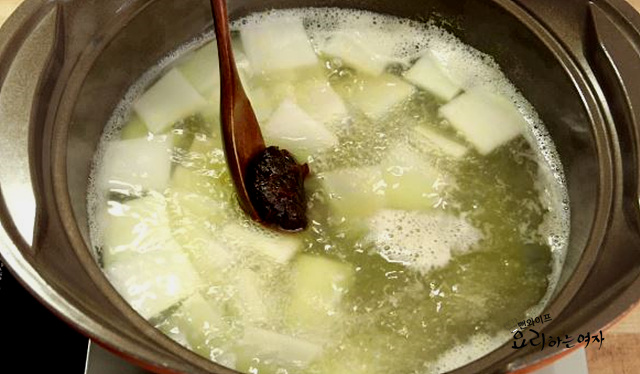
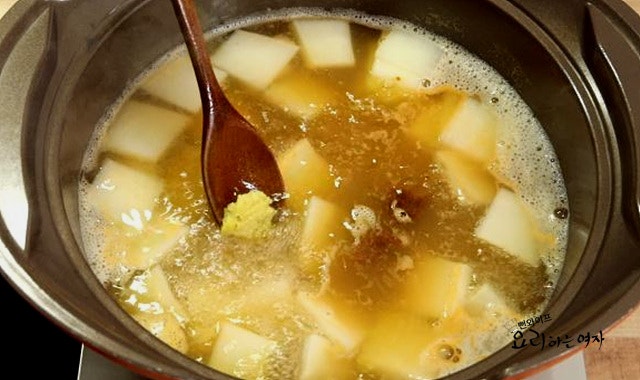
Once the radish is cooked, add the gochujang and ginger, and simmer until dissolved into the broth...
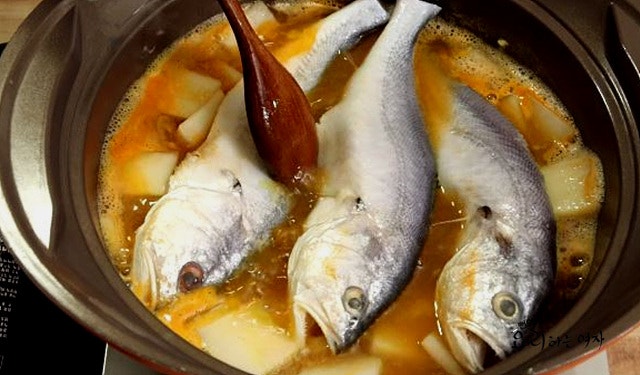
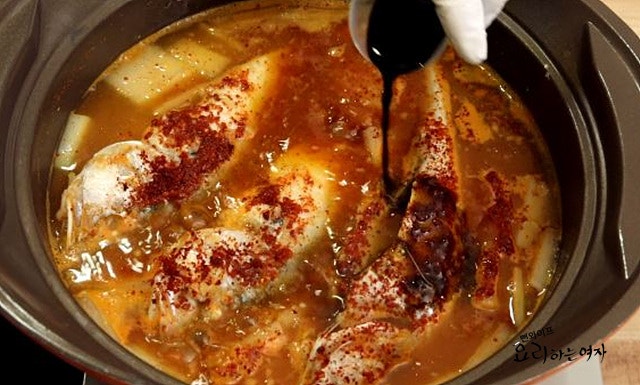
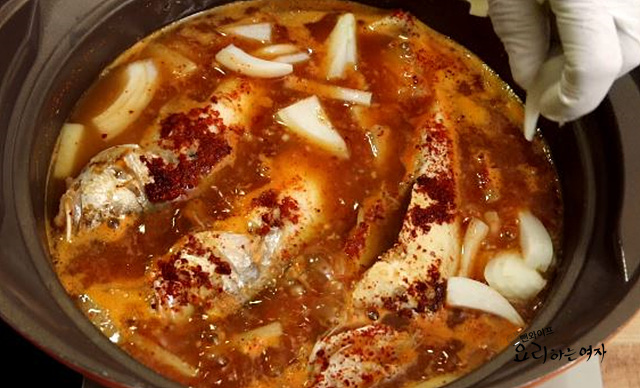
Add the prepared yellow croaker along with gochugaru, soup soy sauce, and minced garlic, then simmer until the seasonings blend well and the fish is cooked through.
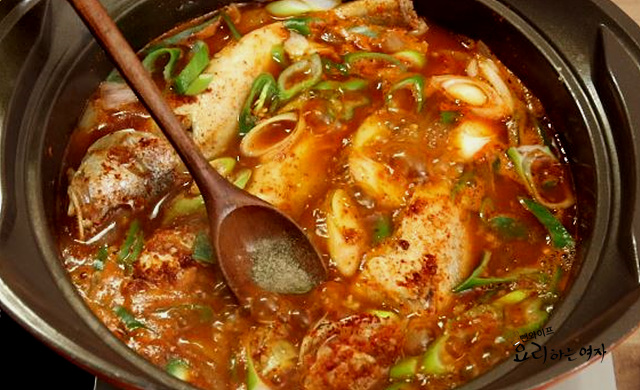
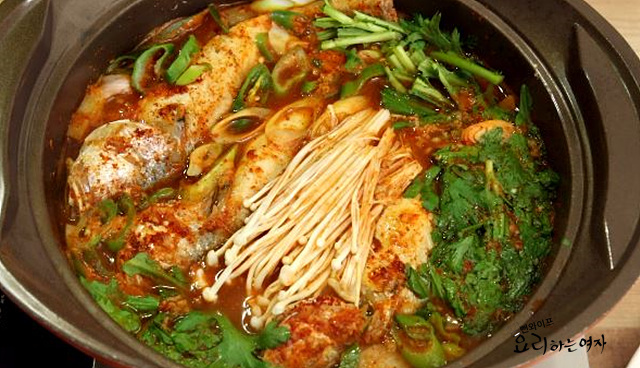
When the yellow croaker is mostly cooked, add the onion, ground black pepper, Cheongyang chili peppers, and large green onion. Simmer briefly, taste, and adjust with salt if it is bland.
Finally, add the enoki mushrooms and crown daisy, bring to a quick boil, and it is done.
 Ppunwife's tips
- If you do not remove the innards thoroughly, it will smell very fishy, so this cleaning step is important.
- The anchovy broth provides a deep flavor, and the rice water helps eliminate the fishy odor.
- Jogi maeuntang is much more delicious when eaten while gently simmering over low heat so it does not cool down. By nature, yellow croaker can smell fishy if it gets cold.
FAQ
How should I clean the fish to reduce its fishy odor?
Neatly snip off the fins with kitchen shears, scrape away the scales on the skin, and slit open the belly to scrape out all the innards thoroughly before rinsing under running water to prevent odors.
Can I use other vegetables instead of crown daisy or enoki mushrooms?
You can use water dropwort (minari) or perilla leaves instead of crown daisy to add fragrance, and you can substitute other mushrooms or add zucchini in place of enoki mushrooms.
Are there any tips to enjoy it even more deliciously?
Yellow croaker can develop a fishy smell as it cools, so it is best enjoyed kept warm over a gentle low flame. It is also delicious to add sujobi (hand-pulled dough flakes) or kalguksu noodles to the remaining broth.