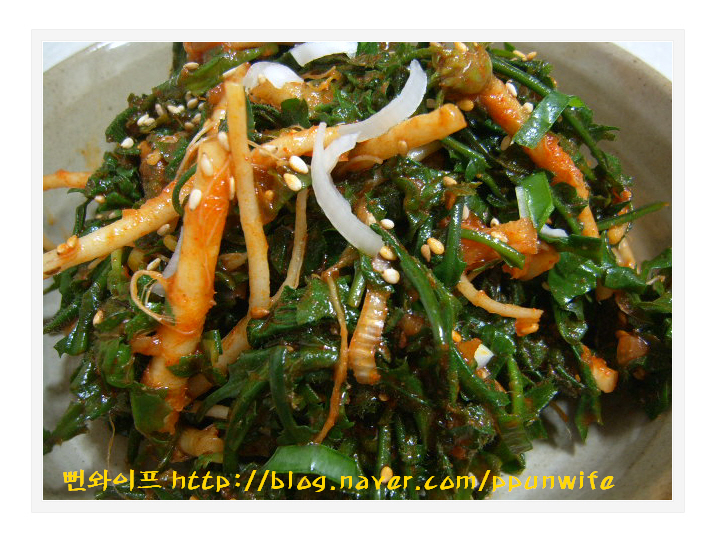
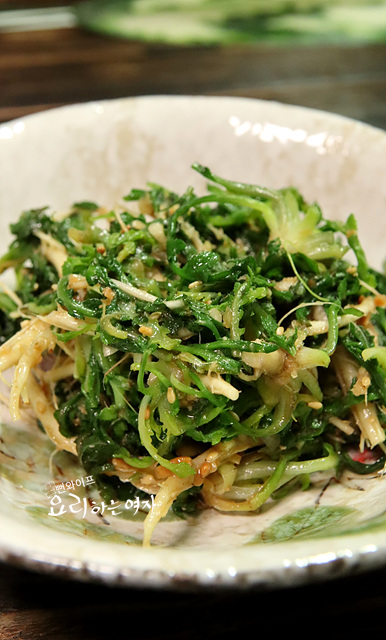
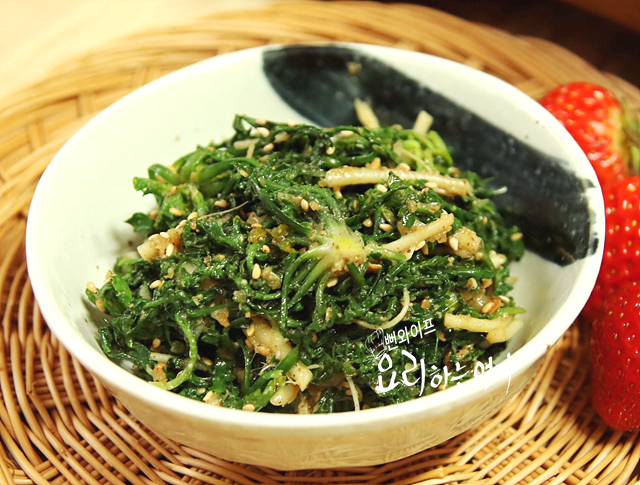
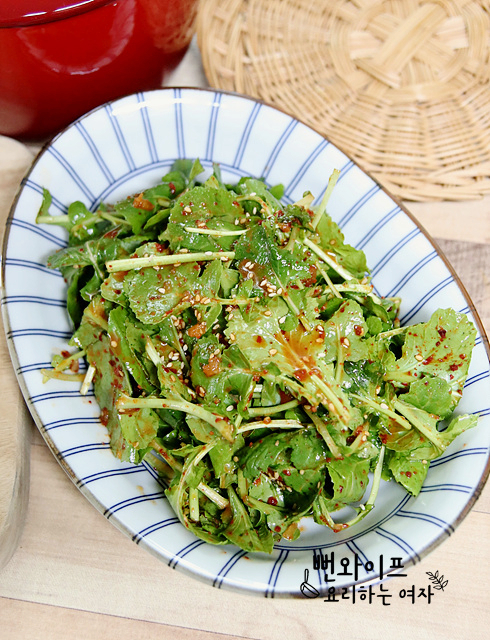
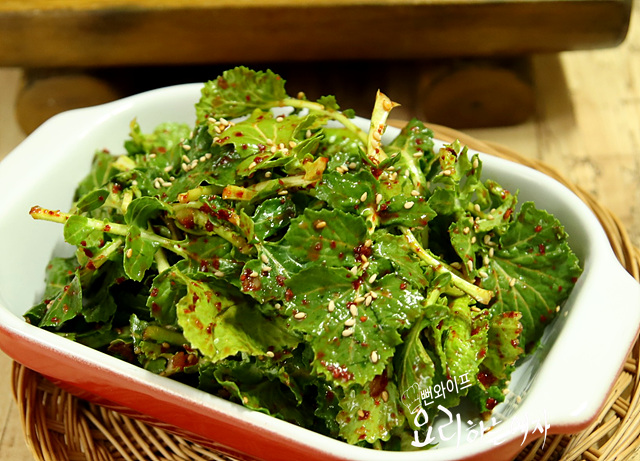
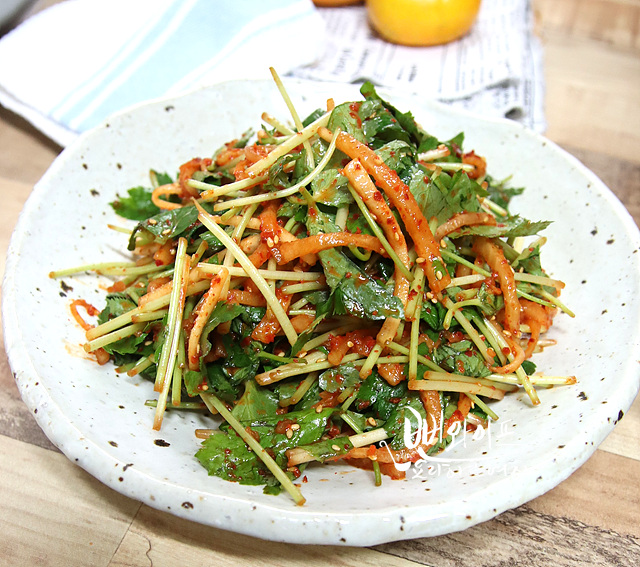
Sweet, Sour, and Spicy Naengi Muchim (Seasoned Shepherd's Purse)
A fragrant seasoned herb side dish made by blanching shepherd's purse and tossing it gently in a spicy, sweet, and sour gochujang-vinegar seasoning.
Translated from Korean by AI and not yet checked by a native speaker. Amounts and numbers are taken directly from the original recipe. Read the Korean original →
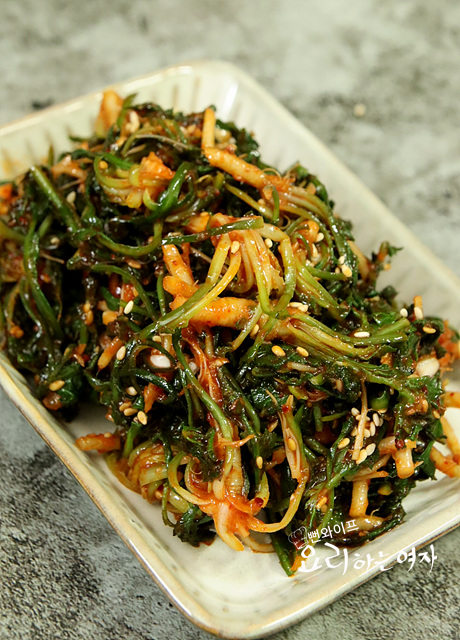
This fragrant herb side dish brings out the characteristic pleasant bitterness and aroma of seasonal shepherd's purse by lightly blanching it in boiling water. Tossed with gochujang, gochugaru, vinegar, and corn syrup, its sweet, sour, and spicy flavor is great for waking up your appetite. Choosing small, tender leaves ensures a soft, tender texture that is never tough.
- Servings
- 3–4 servings
- Cook time
- 1 minprep not included
- Difficulty
- Easy
- Spiciness
- Mildly spicy
Ingredients
Ingredients
- Shepherd's purse (naengi)150 g
- Salt1 tbsp
Seasoning
- Gochujang (Korean red chili paste)1 1/2 tbsp
- Gochugaru (Korean chili flakes)1 tbsp
- Vinegar1 tbsp
- Corn syrup (mulyeot)2 tbsp
- Minced garlic1/2 tbsp
- Minced green onion2 tbsp
- Toasted sesame oil1/2 tbsp
- Toasted sesame seeds1/2 tbsp
- Remove any yellowed leaves from the shepherd's purse and choose roots and leaves that are small and tender. If they are too large, they can be tough, so it is better to use those in soups instead of seasoned dishes.
- Use a knife to scrape away any dirt or debris clinging to the junction where the root meets the stem.
- Because shepherd's purse carries a lot of soil and debris, soak it in water so the grit settles, then shake and rinse it several times under running water until the water runs clear.
Steps
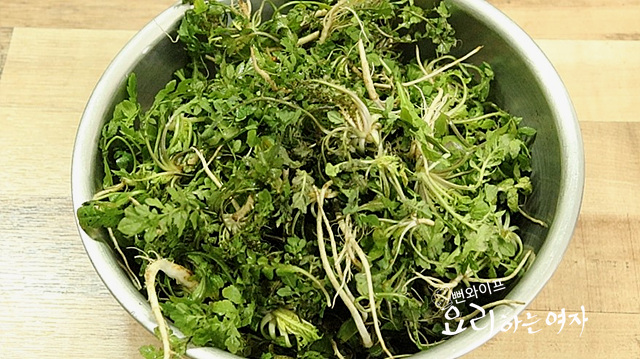
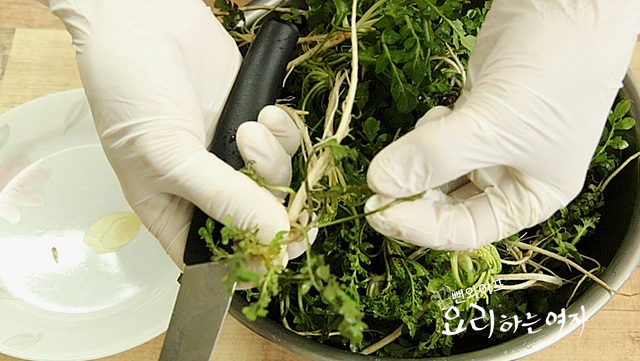
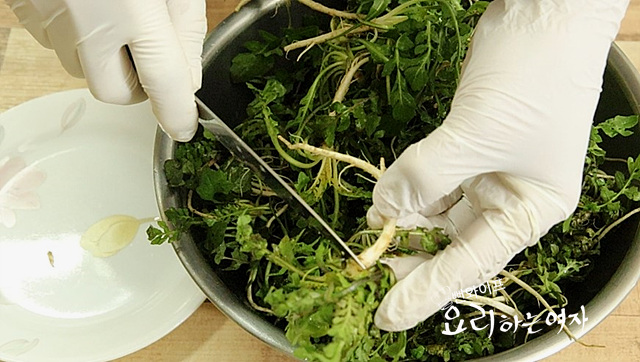
Remove any yellowed leaves from the shepherd's purse and choose roots and leaves that are small and tender. If they are too large, they can be tough, so it is better to use those in soups instead of seasoned dishes.
Use a knife to scrape away any dirt or debris clinging to the junction where the root meets the stem.
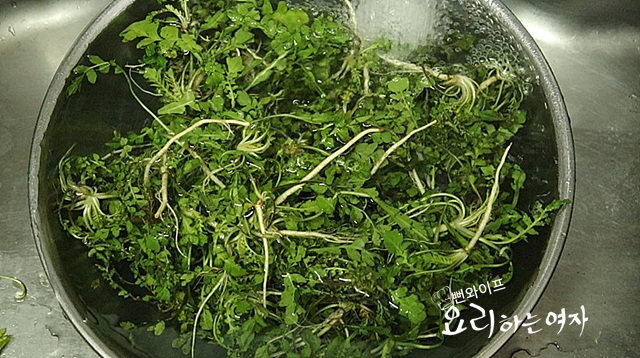
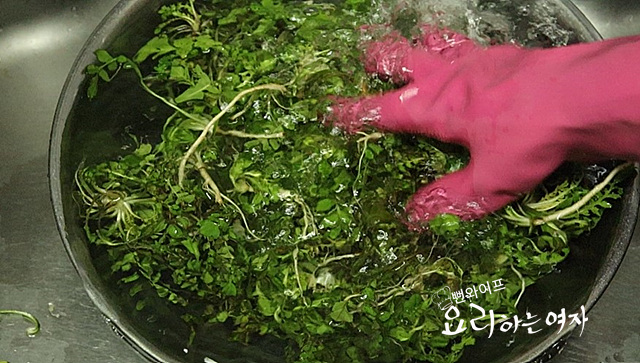
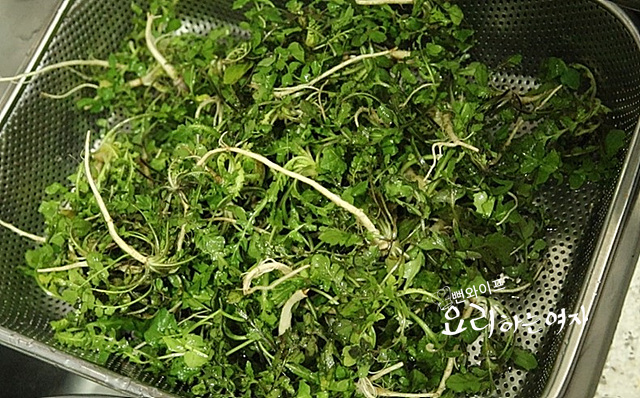
Because shepherd's purse carries a lot of soil and debris, soak it in water so the grit settles, then shake and rinse it several times under running water until the water runs clear.
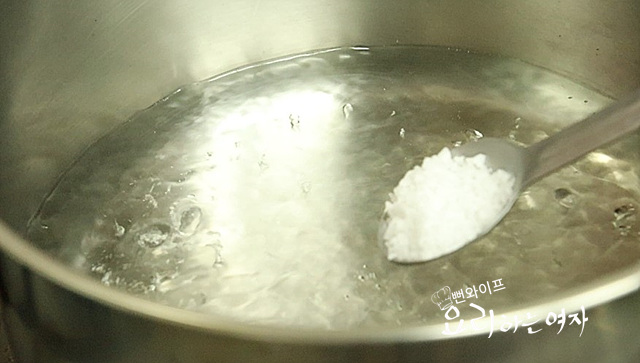
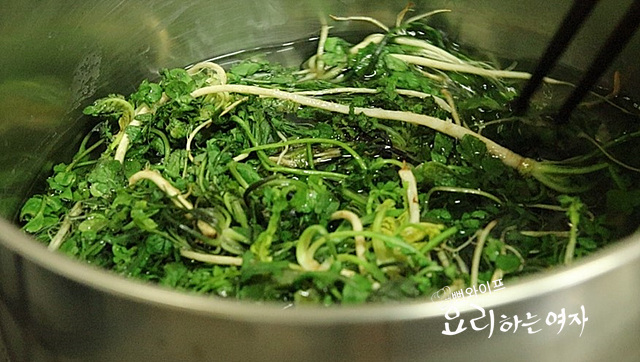
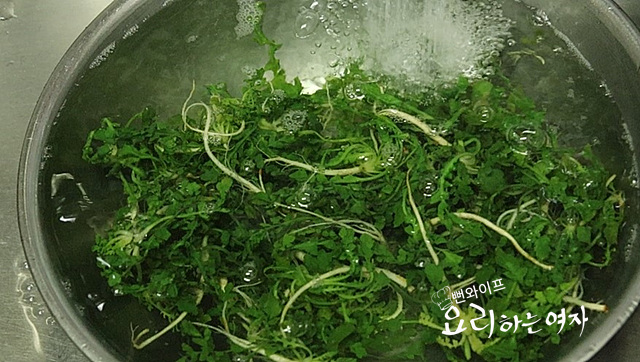
Add salt to rolling boiling water, blanch the shepherd's purse for about 1 minute, and then submerge it in cold water to cool completely.
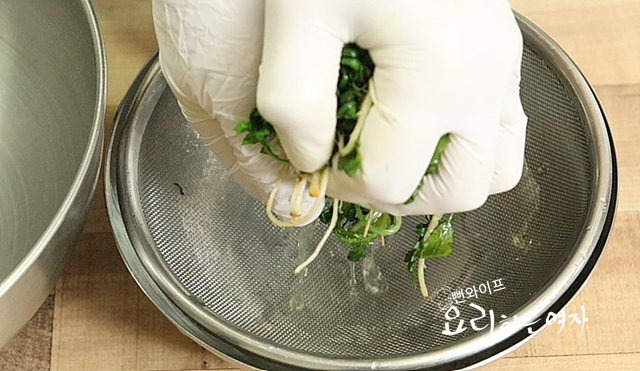
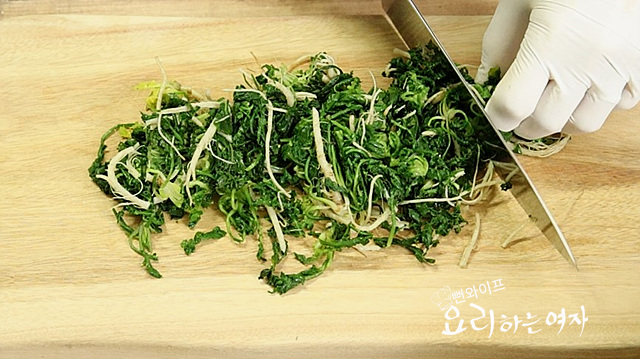
Squeeze out the excess water and cut into bite-sized lengths.
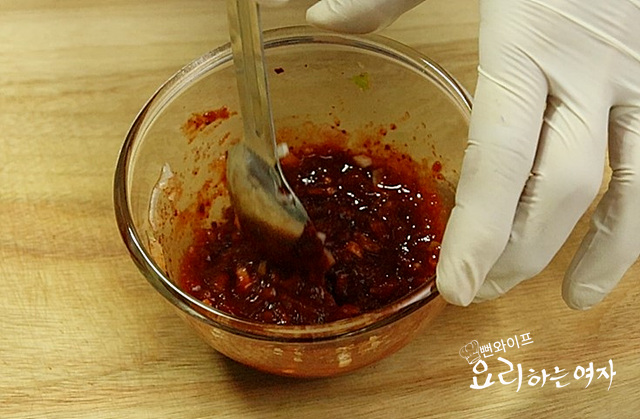
Add all seasoning ingredients except the toasted sesame oil and mix well. You can adjust the amount of corn syrup or vinegar to your taste.
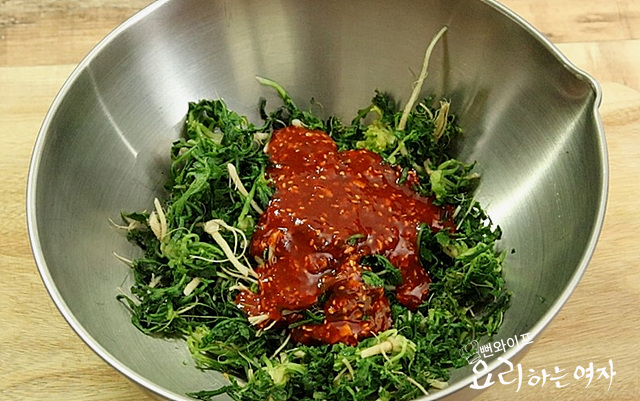
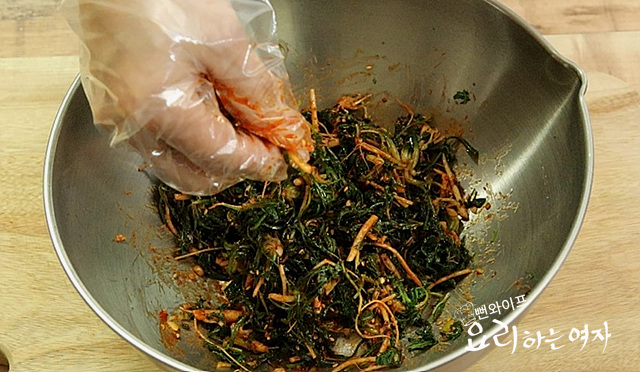
Add the seasoning and toasted sesame oil to the shepherd's purse, toss gently by hand so the flavors absorb evenly, and it is ready.
 Ppunwife's tips
- You can adjust the amount of corn syrup or vinegar to your taste.
FAQ
Is it okay to use large shepherd's purse for seasoning?
Shepherd's purse that is too large can have a tough texture, so it is better to use it in soups rather than seasoned dishes.
How long should shepherd's purse be blanched in boiling water?
Blanch it lightly for about 1 minute in rolling boiling water with added salt, then immediately plunge it into cold water to cool.
How do I adjust the sweet and sour flavor?
When mixing the seasoning, simply adjust the amounts of vinegar and corn syrup to suit your personal taste.