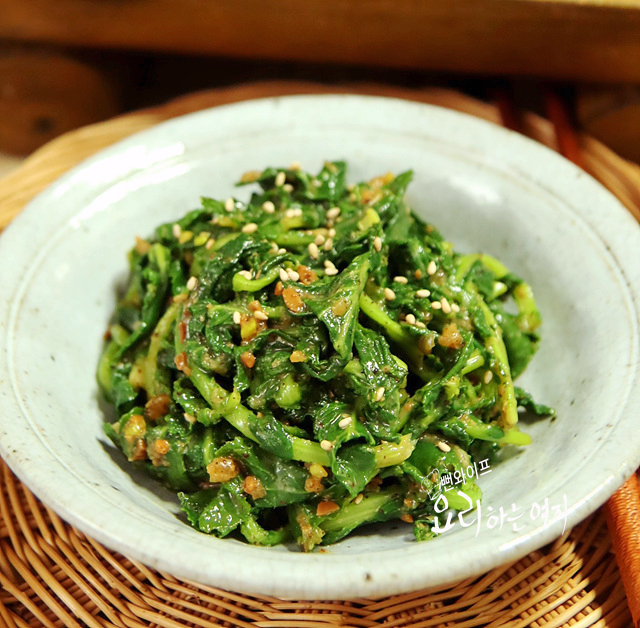
Naengi Muchim (Seasoned Shepherd's Purse) with Doenjang
A fragrant spring side dish of blanched shepherd's purse gently tossed in savory doenjang and nutty perilla seed powder.
Translated from Korean by AI and not yet checked by a native speaker. Amounts and numbers are taken directly from the original recipe. Read the Korean original →
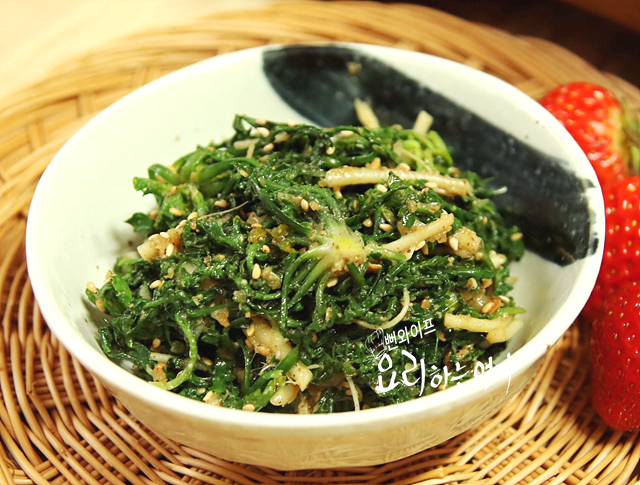
This spring side dish features in-season shepherd's purse, briefly blanched and gently tossed in a seasoning of doenjang and perilla seed powder. The subtle aroma of perilla seed softens the bold flavor of the soybean paste, bringing out the unique fragrance of the shepherd's purse. With a mild seasoning, it comes together easily to brighten your meal table.
- Servings
- 3–4 servings
- Difficulty
- Easy
- Spiciness
- Not spicy
Ingredients
Ingredients
- Shepherd's purse (naengi)150 g
- Salt1 tbsp
Seasoning
- Commercial doenjang (Korean soybean paste)1 tbsp
- Corn syrup (mulyeot)1/2 tbsp
- Minced garlic1/2 tbsp
- Minced green onion2 tbsp
- Perilla seed powder1 tbsp
- Water2 tbsp
- Toasted sesame oil1 tbsp
- Toasted sesame seeds1 tbsp
- Hold each shepherd's purse plant, remove yellowed or softened leaves, and scrape the boundary between the leaves and roots with a knife since dirt clings there.
- Fill a bowl with water and soak the shepherd's purse so dirt and grit loosen easily, then swish and wash several times.
- If using homemade doenjang, reduce the amount so it does not turn out too salty.
Steps
Prepare the ingredients
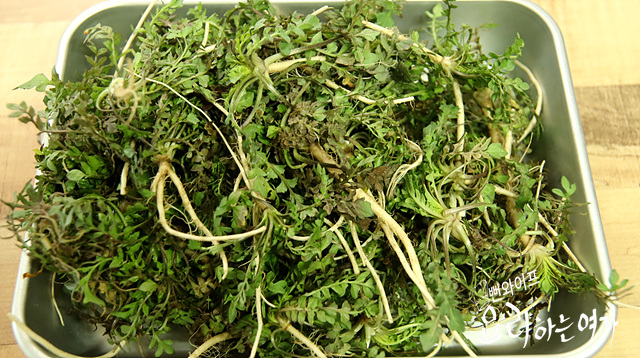
Here is 150g of shepherd's purse. I bought it at the market, and it is still tender and cleaner than expected.
Clean the shepherd's purse
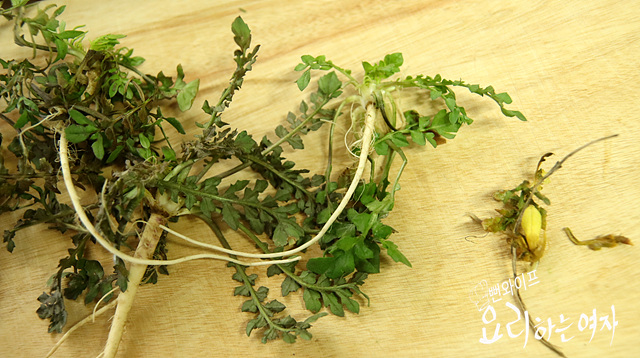
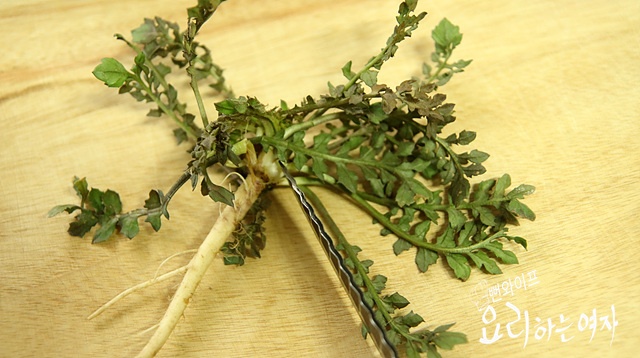
Hold each shepherd's purse plant, remove yellowed or softened leaves, and scrape the boundary between the leaves and roots with a knife since dirt clings there.
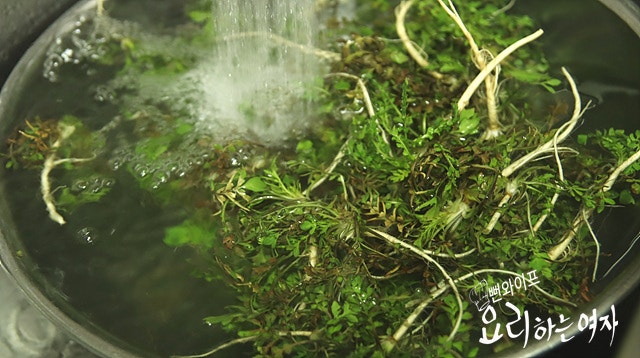
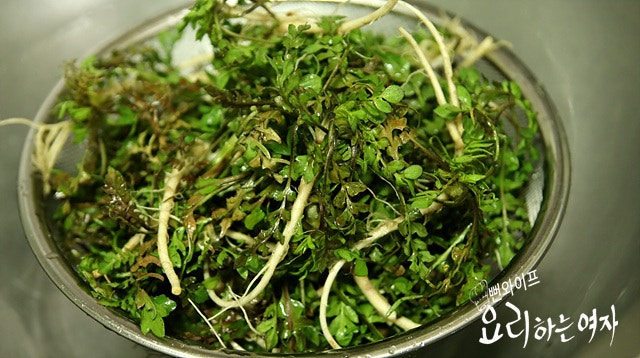
Fill a bowl with water and soak the shepherd's purse so dirt and grit loosen easily, then swish and wash several times.
Even if it looks clean on the surface, a lot of debris will settle to the bottom.
Blanch the shepherd's purse
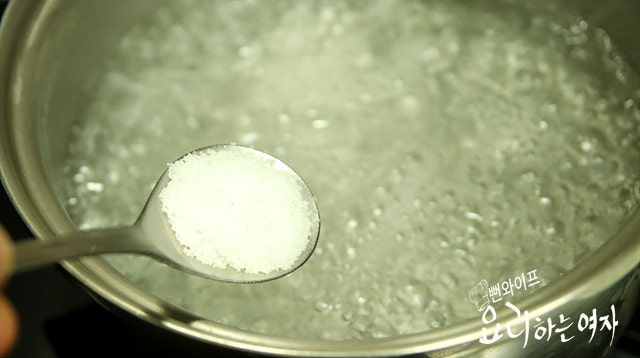
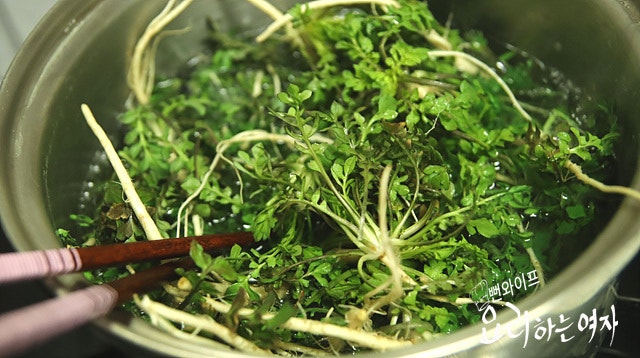
Pour in enough water to submerge the shepherd's purse. Once it comes to a rolling boil, add 1 tbsp salt and add the shepherd's purse, stirring to blanch evenly.
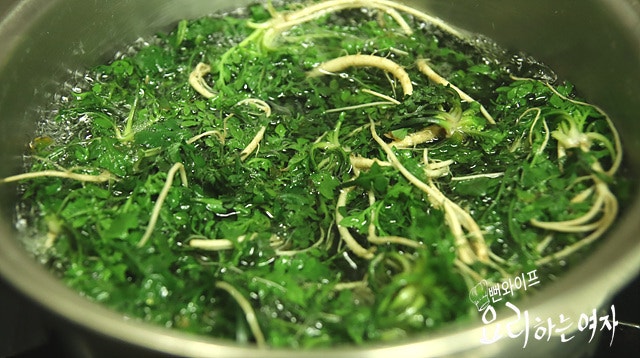
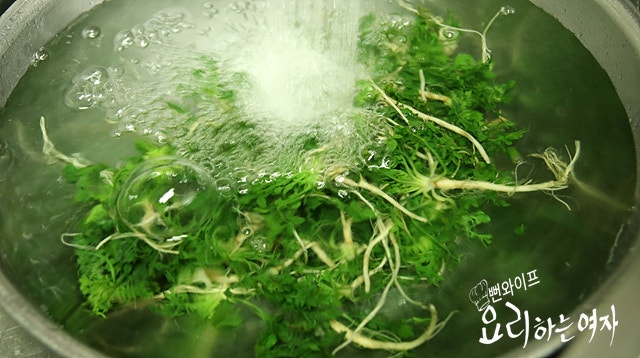
The roots are thin, so I blanched them for about 30 seconds, took them out, and cooled them down in cold water.
If the roots are thick, blanch for at least 1 minute to make them tender.
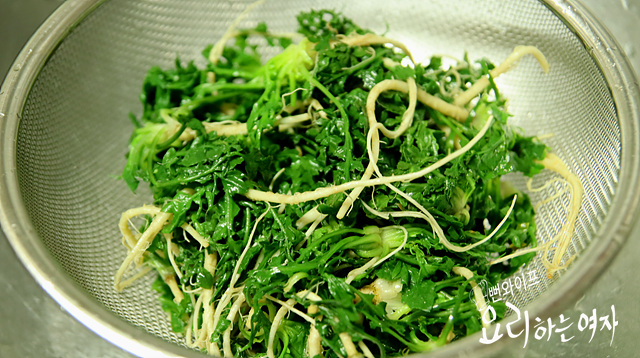
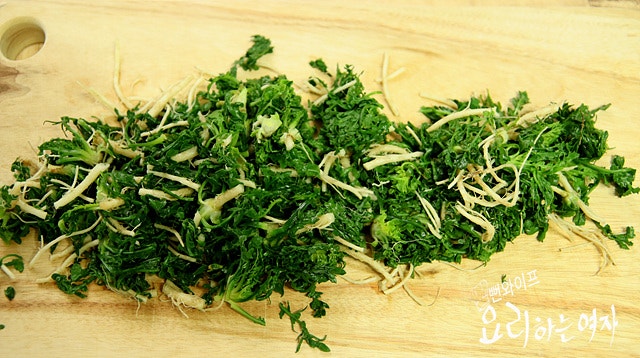
Drain in a colander, squeeze out the moisture with your hands, and cut into bite-size pieces so it is easy to eat.
Make the seasoning
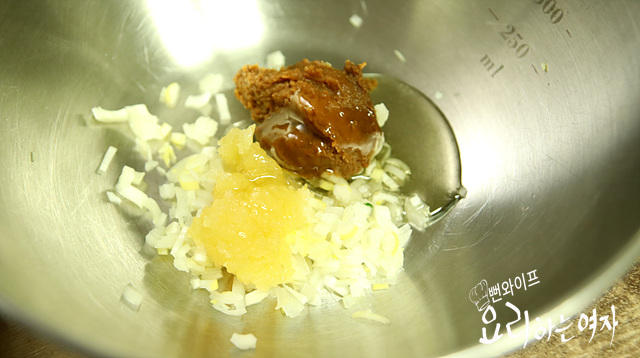
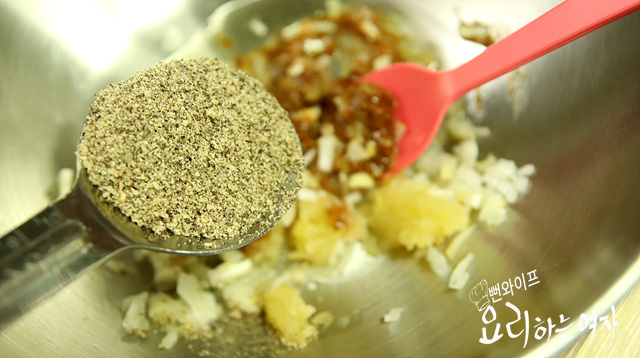
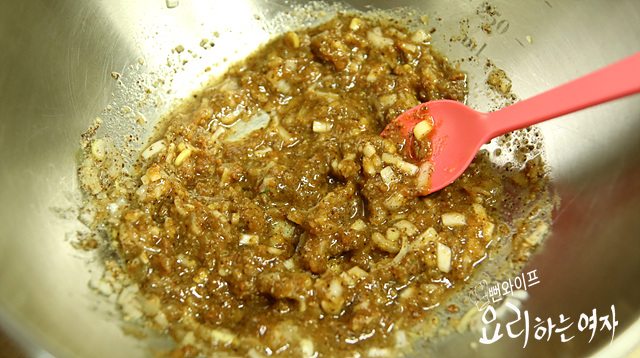
Mix the seasoning first right in the bowl where you will toss the shepherd's purse.
Add 1 tbsp commercial doenjang, 1/2 tbsp corn syrup, 1/2 tbsp minced garlic, 2 tbsp minced green onion, 1 tbsp perilla seed powder, and 2 tbsp water, then mix well.
I used commercial doenjang for today's naengi muchim. If using homemade doenjang, reduce the amount so it does not turn out too salty.
Lately, whenever I season spring greens with doenjang, I add a bit of perilla seed powder; it enhances the deep, savory flavor and makes it even tastier.
Toss the greens
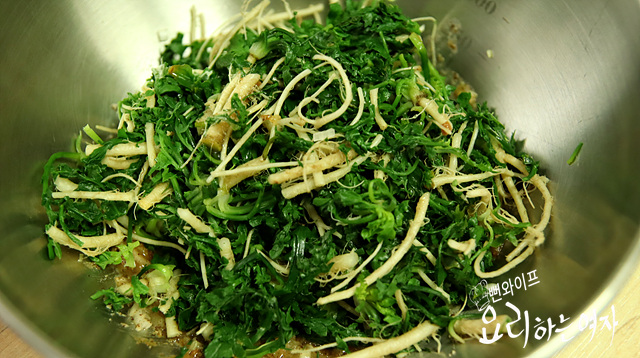
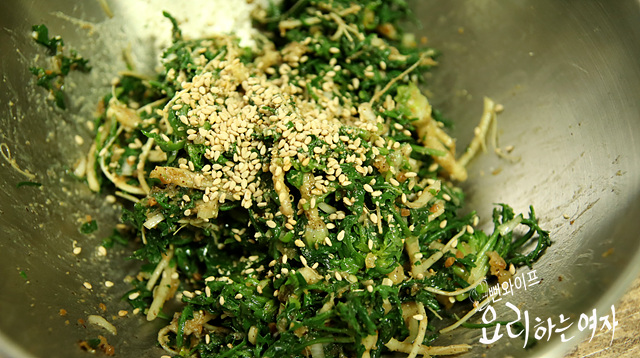
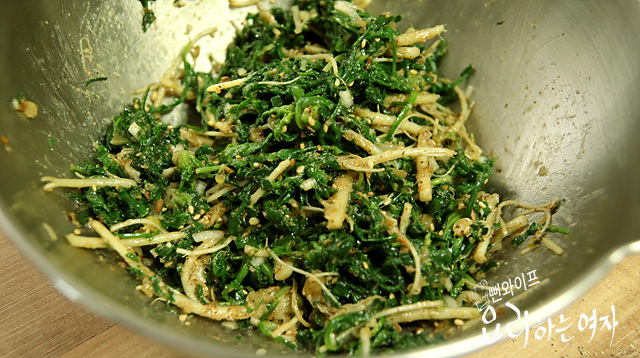
Add the sliced shepherd's purse along with toasted sesame oil and toasted sesame seeds, and gently toss together with your hands.
Taste it, and if it is bland, adjust with soup soy sauce or salt; if it feels too dry, add a little water at a time as you mix.
Finish
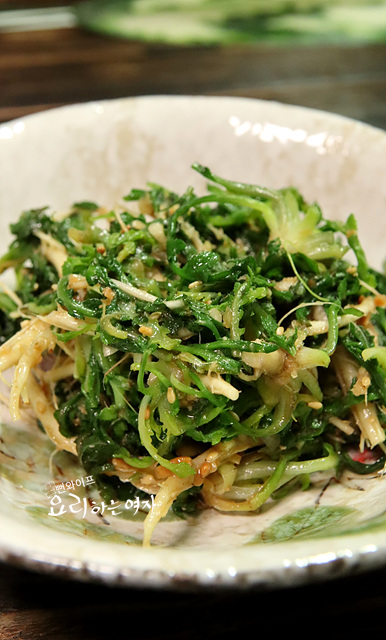
Fragrant spring naengi muchim is finished.
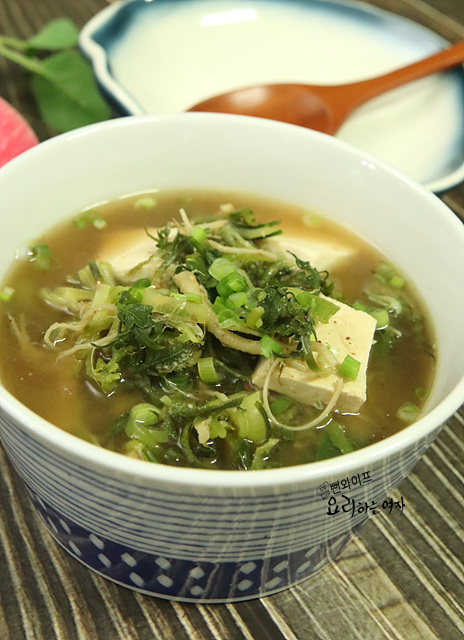
Rather than eating it raw, blanching and tossing it or cooking it in soup really brings out the incredible fragrance of shepherd's purse.
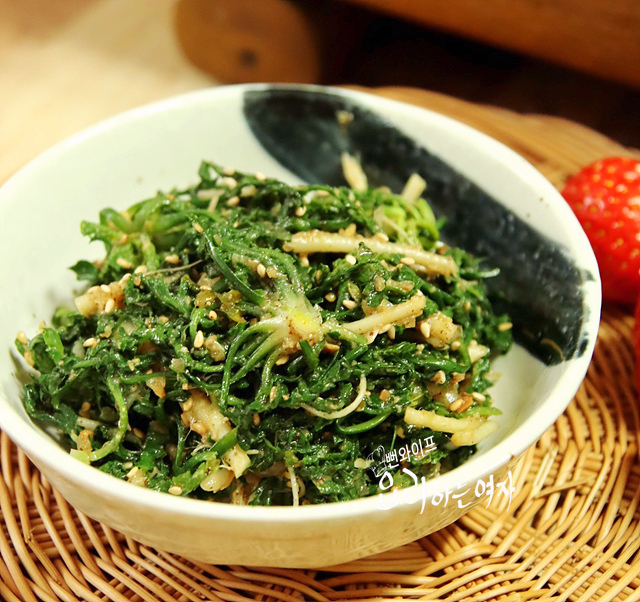
The shepherd's purse is tender, giving it a pleasantly soft bite.
The subtle, nutty perilla seeds soften the bold doenjang aroma, turning this into an elegant spring side dish.
They say in-season greens are good for our bodies during change-of-season periods when we feel tired and sluggish.
Enjoy fragrant spring greens and boost your energy.
 Ppunwife's tips
- If the shepherd's purse roots are thick, blanch for at least 1 minute to make them tender.
- Taste it, and if it is bland, adjust with soup soy sauce or salt; if it feels too dry, add a little water at a time as you mix.
FAQ
How do I adjust the amount if using homemade doenjang instead of commercial doenjang?
Homemade doenjang has a saltier flavor than commercial doenjang, so you should use less than the amount listed to achieve the right seasoning.
How long should I blanch the shepherd's purse?
If the roots are thin, blanch in boiling water for about 30 seconds; if the roots are on the thicker side, blanch well for at least 1 minute for a tender texture.
How do I adjust if it tastes bland or seems too dry after tossing?
Taste it and add soup soy sauce or salt if it is bland, and if it is too stiff or dry, adjust the consistency by pouring in a little water at a time.
Can I use something else instead of perilla seed powder? AI-generated
You can simply omit the perilla seed powder, or substitute ground toasted sesame seeds for a nutty, clean-tasting dish.