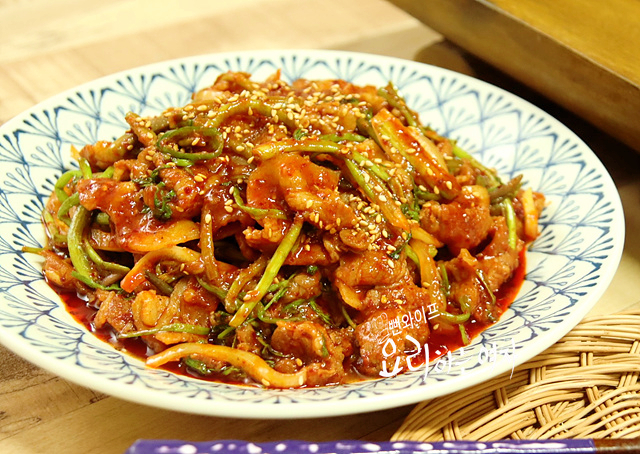
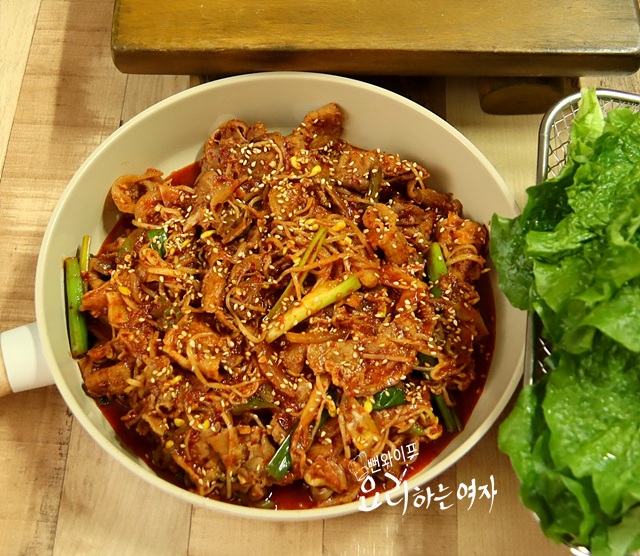
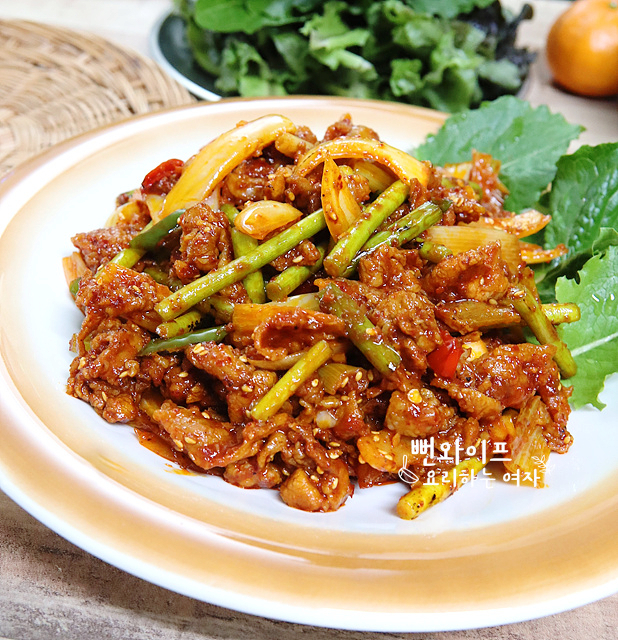
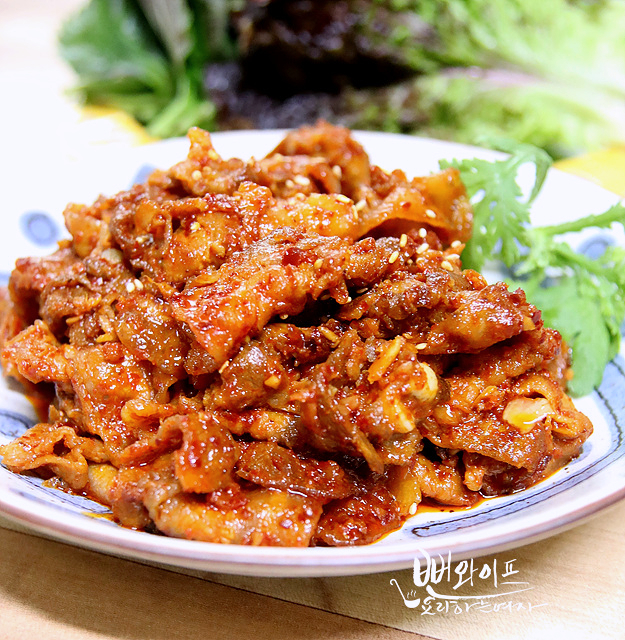
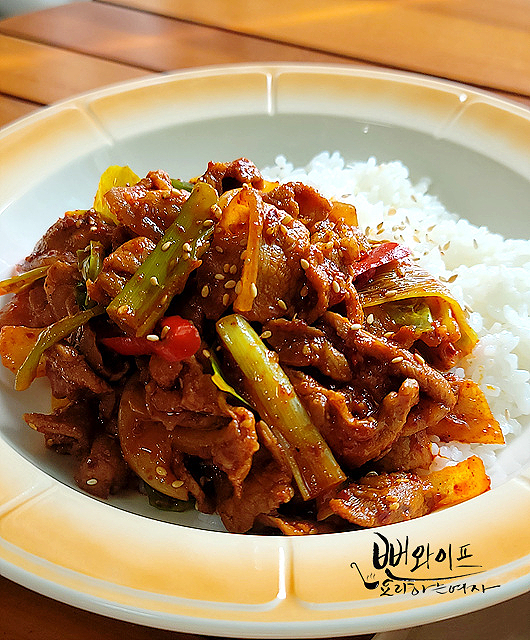
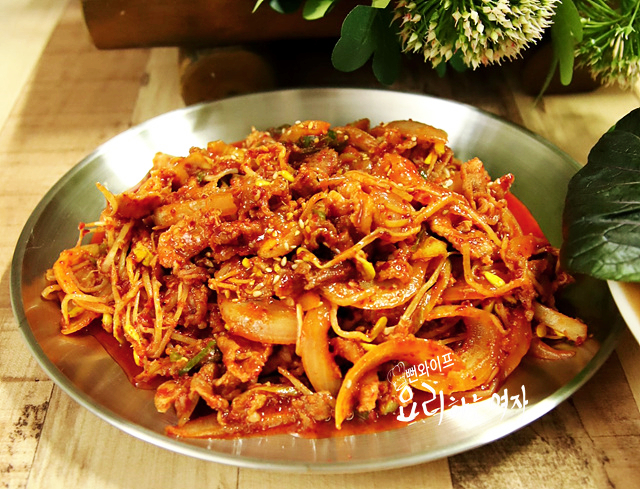
Spicy Minari Jeyuk Bokkeum (Spicy Pork with Water Dropwort)
A one-plate dish made by quickly stir-frying thinly sliced pork belly with a generous amount of fragrant water dropwort.
Translated from Korean by AI and not yet checked by a native speaker. Amounts and numbers are taken directly from the original recipe. Read the Korean original →
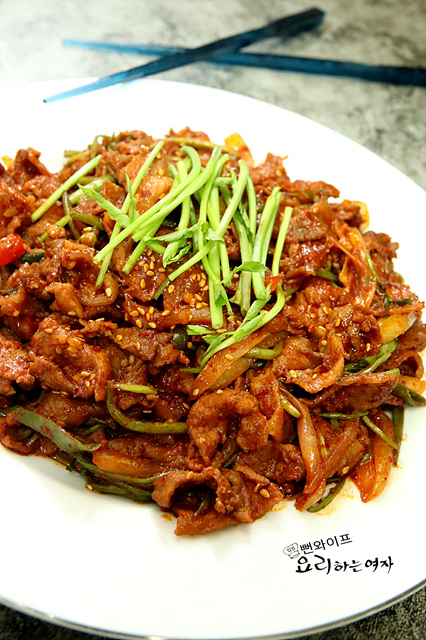
This one-plate dish uses thinly sliced pork belly, quickly stir-fried together with vegetables and seasoning sauce. The key is to add the water dropwort at the very end after the meat is fully cooked, stir-frying it briefly to preserve its fragrance and texture. It is also great to toss rice and seaweed flakes into the leftover sauce for fried rice.
- Servings
- 2–3 servings
- Difficulty
- Medium
- Spiciness
- Spicy
Ingredients
Ingredients
- Thinly sliced pork belly200 g
- Water dropwort (minari)150 g
- Onion1/2
- Large green onion (daepa)1/2 stalks
- Cheongyang chili pepper (hot green chili)2
- Red chili pepper1
Seasoning
- Gochugaru (Korean chili flakes)2 tbsp
- Gochujang (Korean red chili paste)2 tbsp
- Regular soy sauce (jin-ganjang) (or brewed soy sauce (yangjo-ganjang))2 tbsp
- Mirin (cooking rice wine)2 tbsp
- Minced garlic1 tbsp
- Sugar1 tbsp
- Toasted sesame oil1/2 tbsp
- Minced ginger1/2 tsp
- Ground black peppera little
- You can also use bulgogi-cut pork hind leg or front shoulder meat.
- Try using scallions, soybean sprouts, or mushrooms instead of water dropwort.
Steps
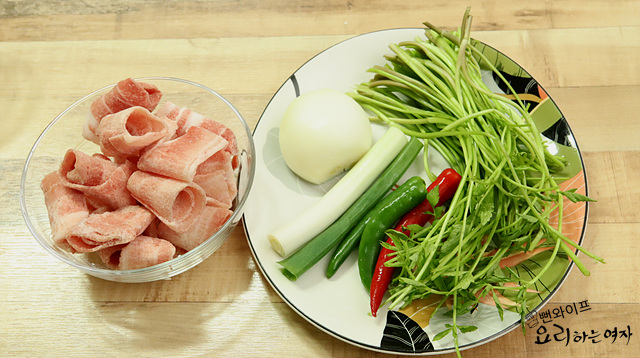
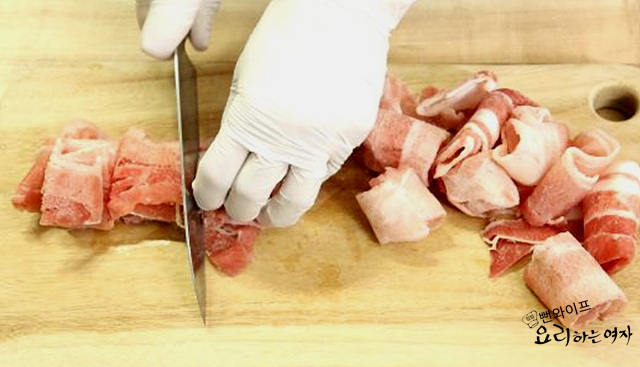
I prepared thinly sliced pork belly so the seasonings absorb quickly and it can be stir-fried in a flash.
You can also use bulgogi-cut pork hind leg or front shoulder meat. I prepared plenty of fragrant water dropwort (minari) to cut through the richness of the pork.
I also included sub-ingredients: onion, large green onion (daepa), Cheongyang chili pepper (hot green chili), and red chili pepper.
Try using scallions, soybean sprouts, or mushrooms instead of water dropwort.
I cut the thinly sliced pork belly into bite-sized pieces.
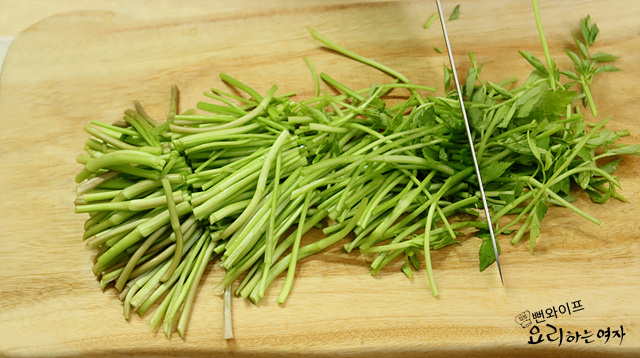
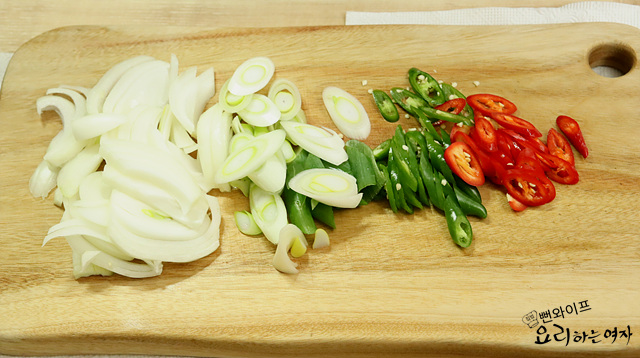
Cut the water dropwort into bite-sized lengths of about 3 to 4 cm, slice the onion not too thinly, and diagonally slice the large green onion and chili peppers.
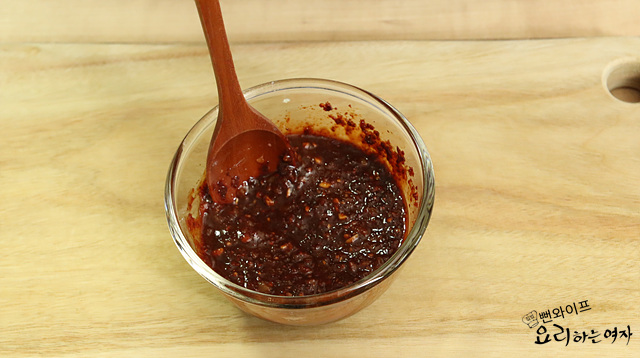
Add all the seasoning ingredients in advance, mix well, and let them meld together.
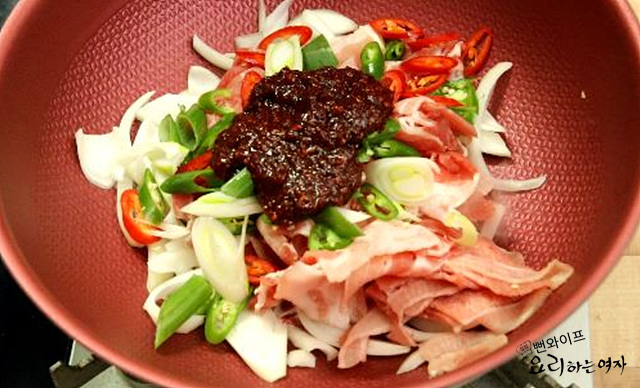
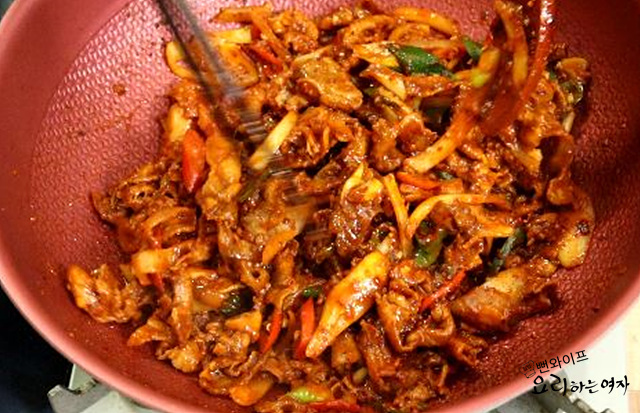
Because the meat is thin, there is no need to stir-fry it separately, so I added the vegetables and seasoning sauce all at once and stir-fried them.
Mix well so the meat and vegetables blend nicely with the sauce, and stir-fry briskly until cooked through.
Since it was thinly sliced pork belly, I did not add cooking oil, but for lean front shoulder or hind leg meat with almost no fat, you need to drizzle a little cooking oil so it stir-fries tenderly.
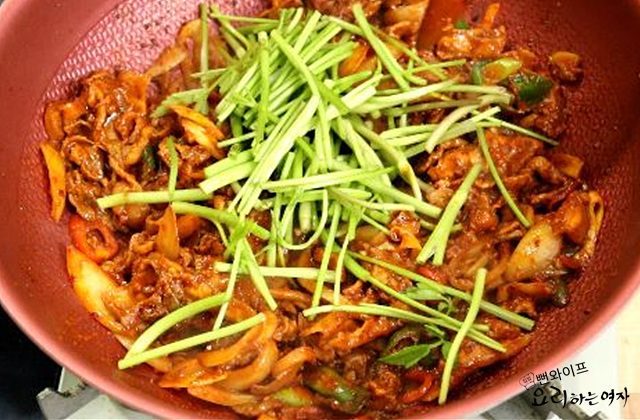
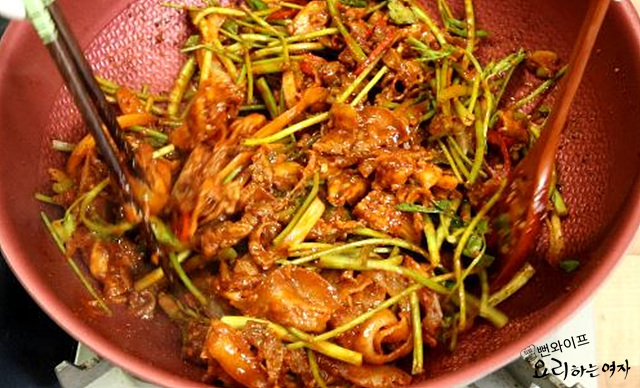
When the meat and vegetables are fully cooked, taste it, add salt or soy sauce if it tastes bland, and finally add the water dropwort and stir-fry just briefly; then the jeyuk bokkeum is finished.
 Ppunwife's tips
- Since it was thinly sliced pork belly, I did not add cooking oil, but for lean front shoulder or hind leg meat with almost no fat, you need to drizzle a little cooking oil so it stir-fries tenderly.
- Finely chop the leftover jeyuk bokkeum, add rice, and stir-fry until fluffy. Mix in chopped water dropwort, seaweed flakes, and toasted sesame oil to finish off your meal with a second round of spicy-sweet fried rice.
FAQ
Can I use other cuts of pork instead of thinly sliced pork belly?
You can use bulgogi-cut front shoulder or hind leg meat, which are lower in fat. However, because these cuts have less fat, you should drizzle a little cooking oil when stir-frying so they cook up tenderly.
When should I add the water dropwort during cooking?
Add it at the very last step after the meat and other vegetables are fully cooked with the sauce, and stir-fry lightly and briefly.
Are there any vegetables I can substitute if I don't have water dropwort?
You can adapt the recipe by adding vegetables such as scallions, soybean sprouts, or mushrooms instead of water dropwort.
Do I need to add cooking oil when stir-frying the meat?
You do not need to add oil separately because fat renders from the thinly sliced pork belly itself.