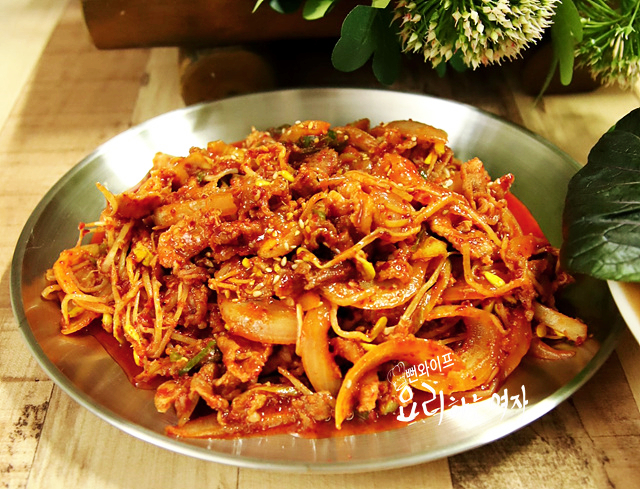
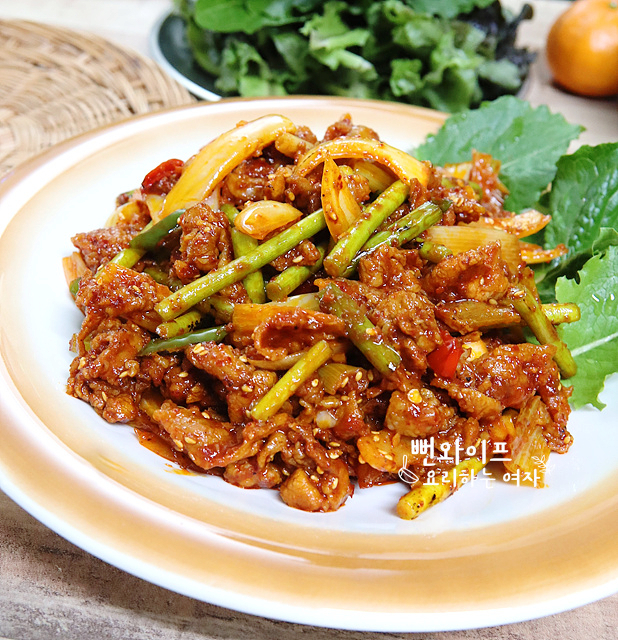
Jeyuk Bokkeum (Stir-Fried Pork) with Fragrant Minari
A one-plate dish made by stir-frying thinly sliced pork belly in a spicy gochujang seasoning along with fragrant water dropwort.
Translated from Korean by AI and not yet checked by a native speaker. Amounts and numbers are taken directly from the original recipe. Read the Korean original →
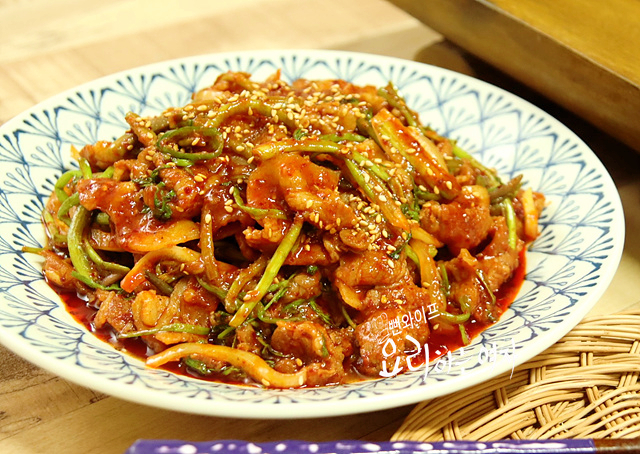
This dish comes together simply by stir-frying thinly sliced pork belly straight with a gochujang sauce. Crisp, fragrant water dropwort neatly cuts through the richness of the meat. Its sweet and spicy savoriness makes it wonderful as a side dish for rice or as bar food.
- Servings
- 3–4 servings
- Difficulty
- Easy
- Spiciness
- Spicy
Ingredients
Ingredients
- Thinly sliced pork belly400 g
- Water dropwort (minari)300 g
- Onion1/2
- Cheongyang chili pepper (hot green chili)2
Seasoning
- Gochugaru (Korean chili flakes)3 tbsp
- Gochujang (Korean red chili paste)2 tbsp
- Regular soy sauce (jin-ganjang) (or brewed soy sauce (yangjo-ganjang))3 tbsp
- Mirin (cooking rice wine)2 tbsp
- Minced garlic2 tbsp
- Minced ginger1 tsp
- Corn syrup (mulyeot)1 tbsp
- Sugar1/2 tbsp
- Ground black peppera little
- If you do not like fatty meat, you can use bulgogi-cut pork instead.
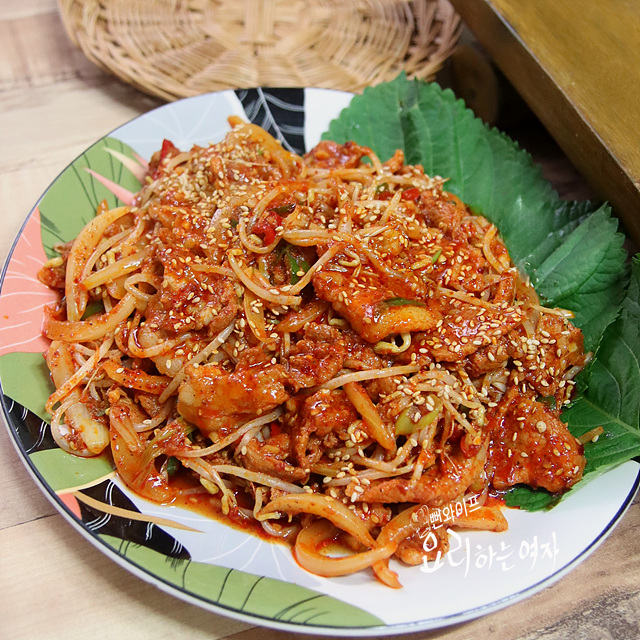
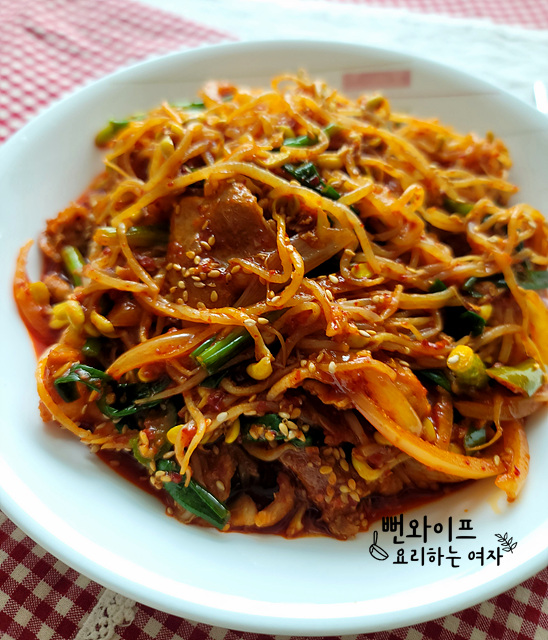
- Instead of water dropwort, you can substitute a generous amount of mung bean sprouts or mushrooms.
Steps
Prepare the ingredients
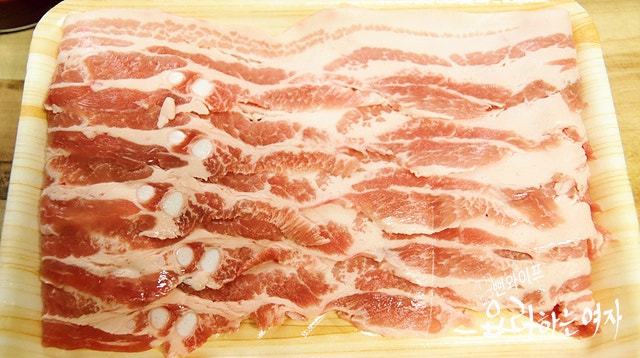
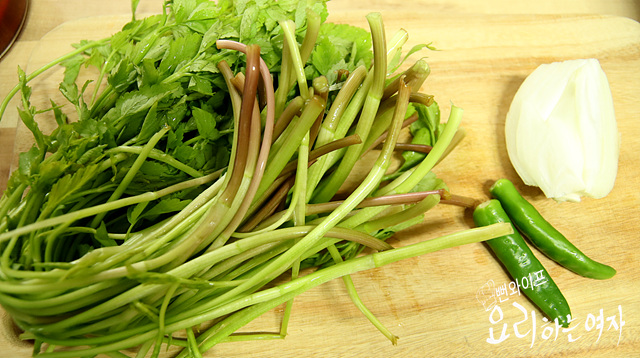
Here is 400 g of thinly sliced pork belly. If you do not like fatty meat, you can use bulgogi-cut pork instead.
I prepared 300 g of water dropwort, onion, and Cheongyang chili peppers.
Instead of water dropwort, you can substitute a generous amount of mung bean sprouts or mushrooms.
Cut the ingredients
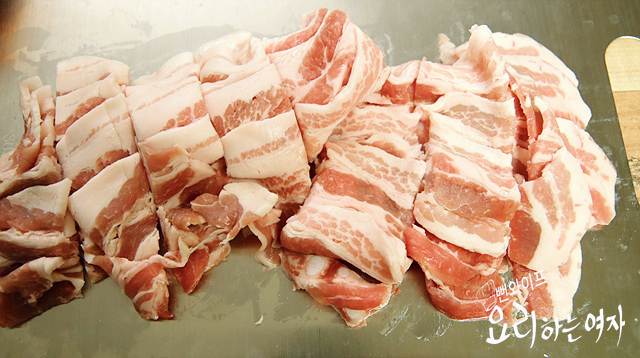
Cut the pork into bite-sized lengths.
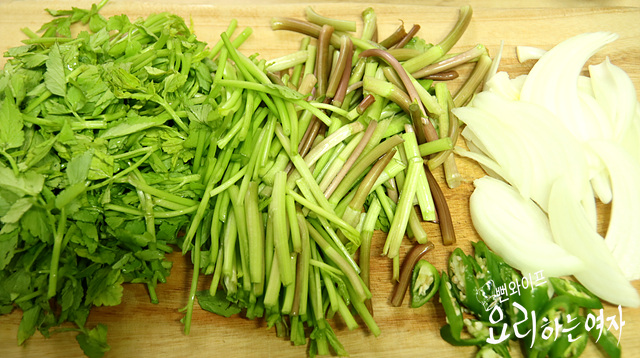
Cut the water dropwort into bite-sized lengths, slice the onion slightly thick, and slice the Cheongyang chili peppers diagonally.
Season the pork
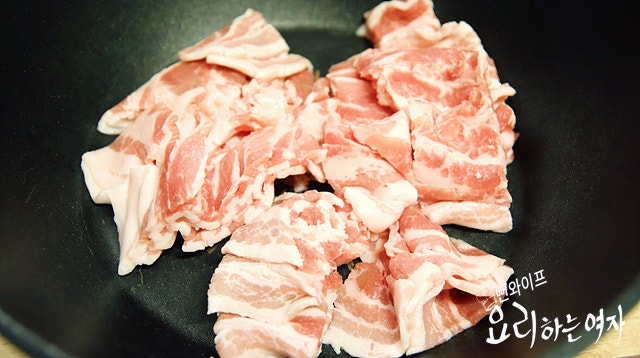
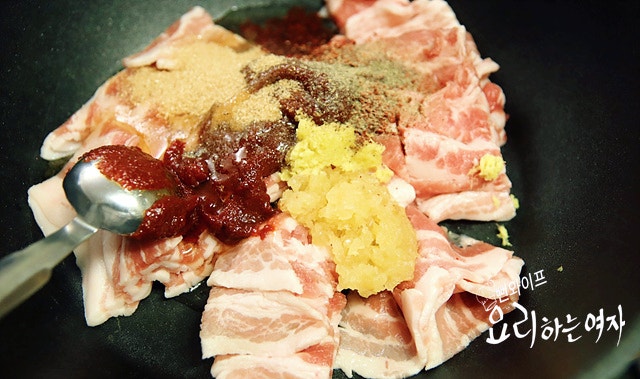
Add the pork and all seasoning ingredients into the stir-fry pan and mix them together. Now you can stir-fry right away.
Stir-fry
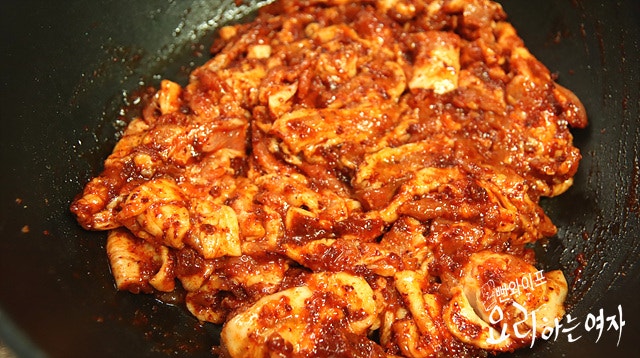
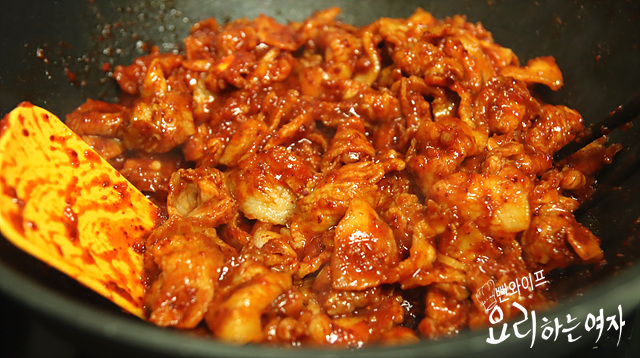
Since pork belly has fat, we will stir-fry without adding cooking oil.
First, once the pan heats up, lower the heat to medium so the sauce does not stick to the bottom. As you stir-fry, it becomes moist from the juices released as the pork cooks.
Until then, you must stir diligently so it does not burn. You can also add one or two tablespoons of water as you go while stir-frying.
If using leaner bulgogi meat, add cooking oil and stir-fry.
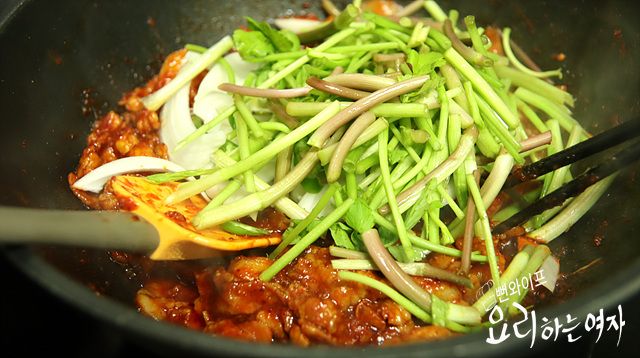
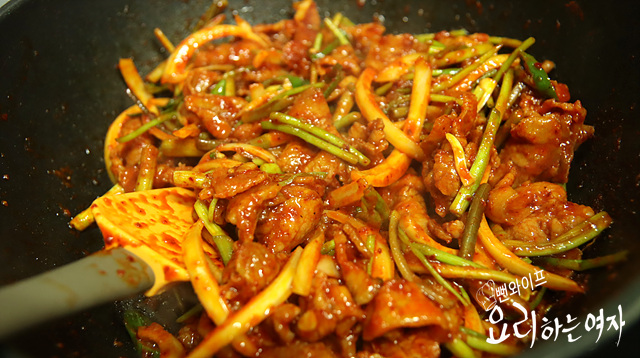
Once the meat is completely cooked, add the onion, Cheongyang chili peppers, and the stems of the water dropwort first, then stir-fry lightly.
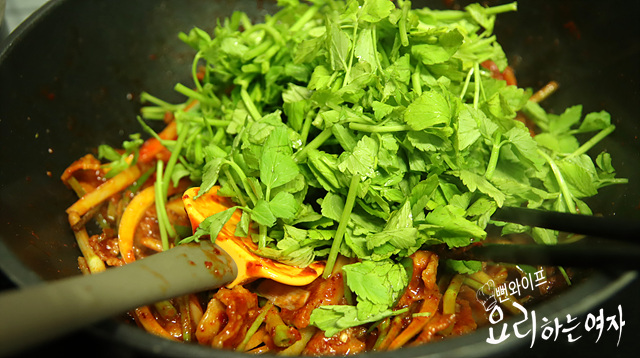
Add the leaves of the water dropwort, toss a few times, then turn off the heat and finish.
Finish
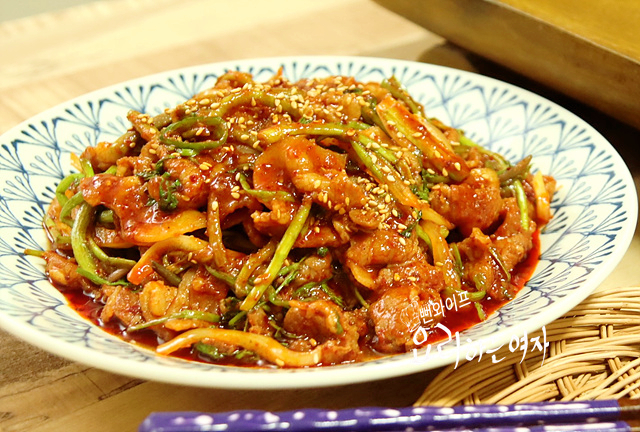
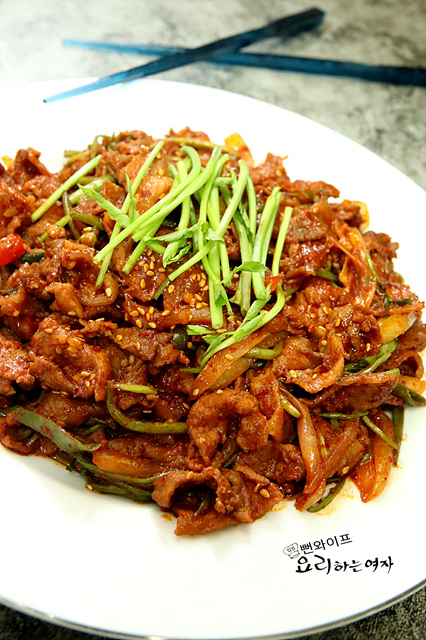
Even though I deliberately added a lot of water dropwort, it gets buried in the meat.
Even if it seems slightly undercooked, take it out right away so it will have the aroma and texture that satisfy at the table.
The fragrant water dropwort cuts through the richness of the meat, and stir-frying it briefly keeps the crunch in the stems.
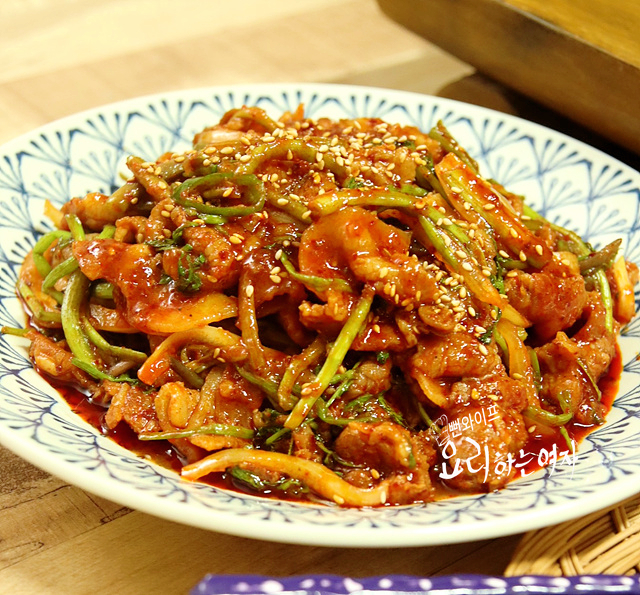
Water dropwort goes well with grilled meat, but it is also truly delicious in gochujang jeyuk bokkeum.
When spring greens are in full season, wild chives or shepherd's purse are great, and perilla leaves are also good to add into the stir-fry instead of using them for wraps.
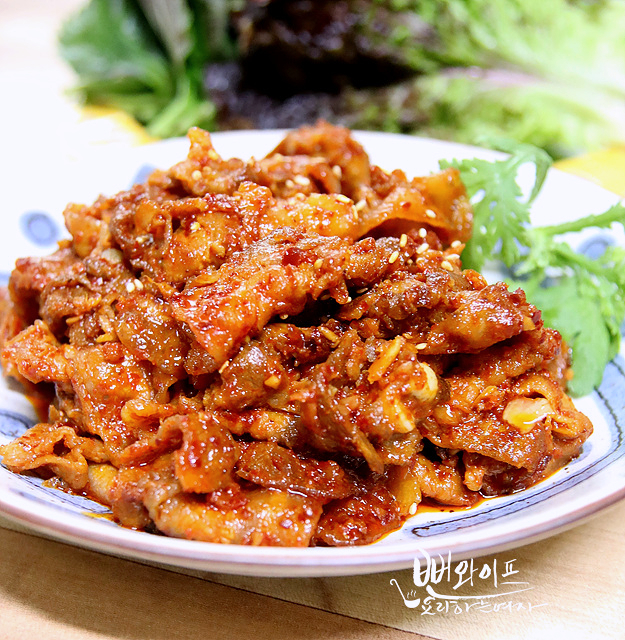
With the spicy seasoning and the savory richness of the meat, it is wonderful as a side dish for rice and as bar food.
If you stir-fry rice with the leftover meat and sauce, finishing with seaweed flakes and finely chopped water dropwort, round two begins at the table.
 Ppunwife's tips
- First, once the pan heats up, lower the heat to medium so the sauce does not stick to the bottom. As you stir-fry, it becomes moist from the juices released as the pork cooks.
- Until then, you must stir diligently so it does not burn. You can also add one or two tablespoons of water as you go while stir-frying.
- Once the meat is completely cooked, add the onion, Cheongyang chili peppers, and the stems of the water dropwort first, then stir-fry lightly.
- Even if it seems slightly undercooked, take it out right away so it will have the aroma and texture that satisfy at the table.
FAQ
Can I use a different cut of meat instead of thinly sliced pork belly?
You can substitute leaner bulgogi-cut pork, in which case you can drizzle cooking oil in the pan and stir-fry.
Is there a vegetable I can use instead if I do not have water dropwort?
You can add a generous amount of mung bean sprouts or mushrooms, or depending on the season, use wild chives, shepherd's purse, perilla leaves, and the like.
How do I keep the seasoning from burning when stir-frying the meat?
After adding the meat to a heated pan, reduce the heat to medium, stir diligently, and if needed, add one or two tablespoons of water as you stir-fry to cook it moistly.
Is there a cooking tip to preserve the crisp texture and aroma of water dropwort?
After the meat is fully cooked, add the water dropwort stems first and stir-fry lightly, then toss in the leaves right before turning off the heat with just a brief stir to finish.