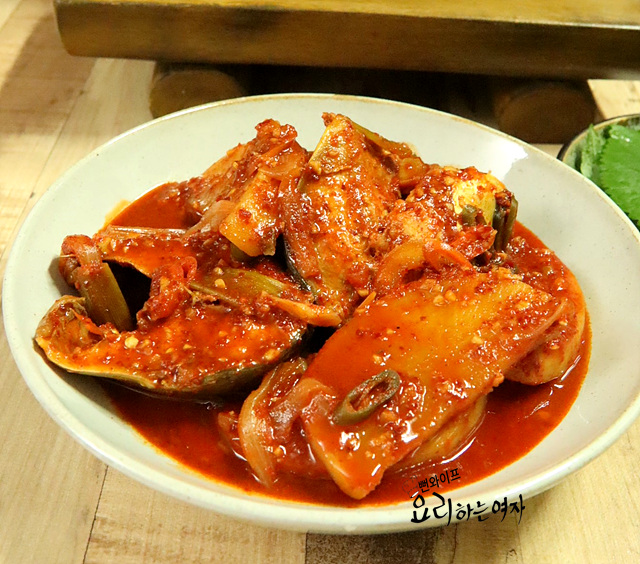
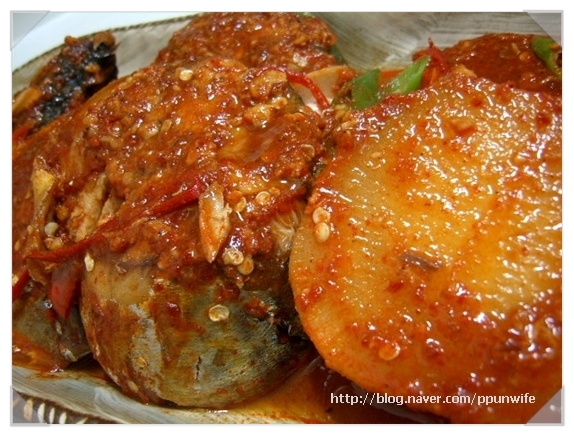
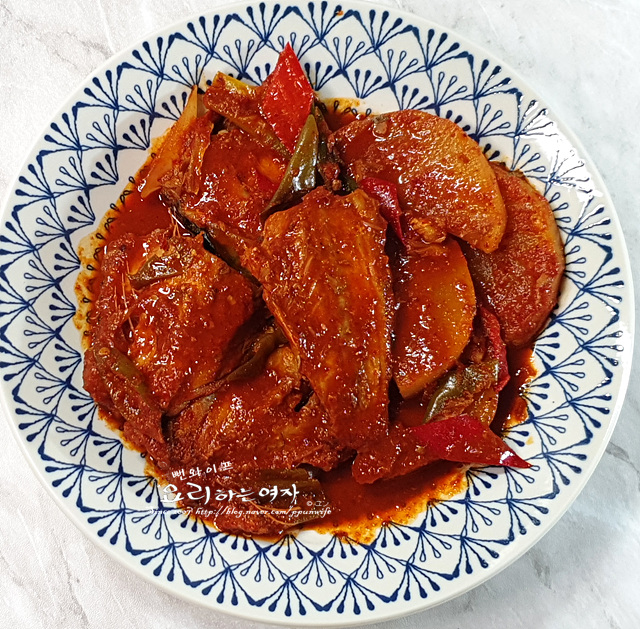
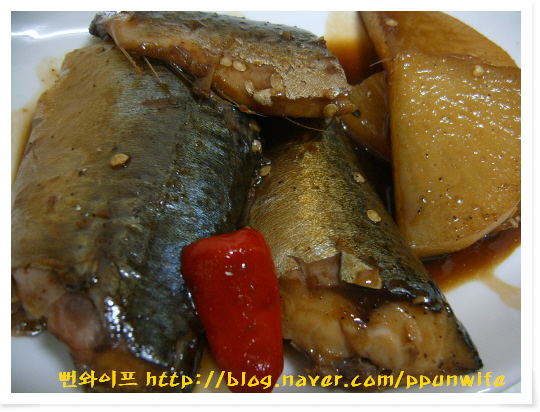
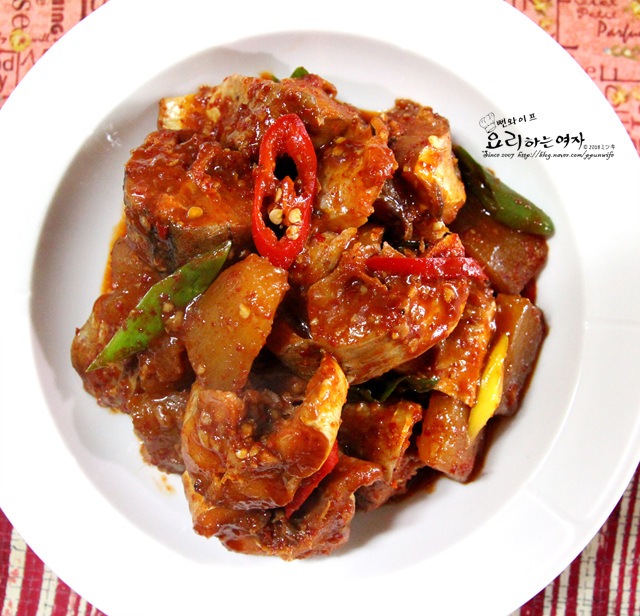
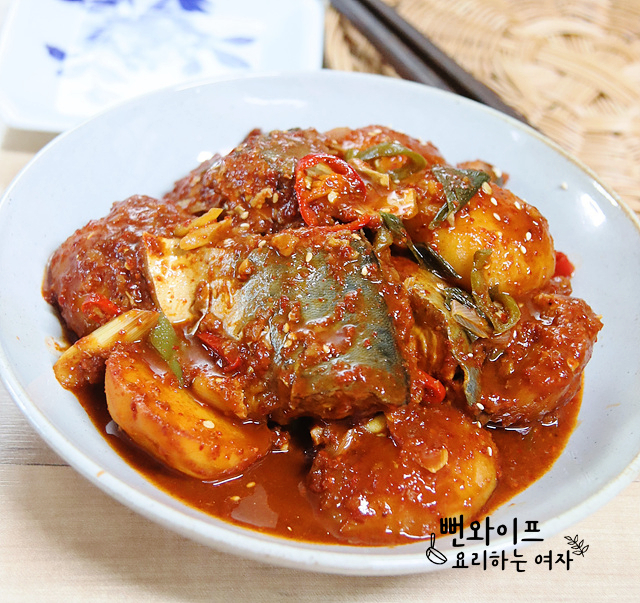
Spicy Godeungeo Jorim (Braised Mackerel) with Radish
A braised fish side dish where Korean radish and fresh mackerel are simmered at different stages in a spicy seasoned sauce.
Translated from Korean by AI and not yet checked by a native speaker. Amounts and numbers are taken directly from the original recipe. Read the Korean original →
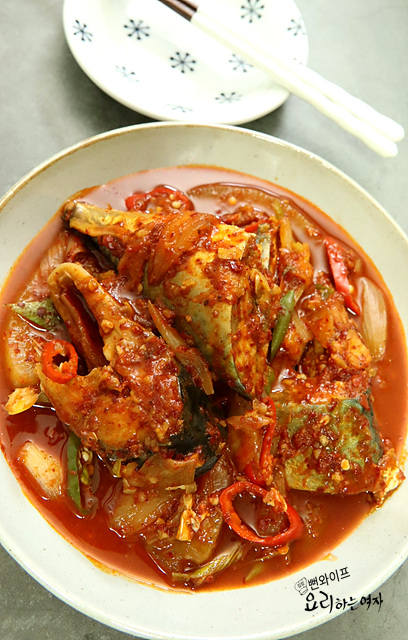
The key is to braise in stages so the seasoning thoroughly penetrates both the thick radish slices and the mackerel without washing off. Minced ginger and black pepper eliminate the fishy odor, creating a spicy, savory dish that is wonderful as an evening side dish for rice.
- Servings
- 3–4 servings
- Difficulty
- Medium
- Spiciness
- Spicy
Ingredients
Ingredients
- Mackerel2 whole (600 g)
- Korean radish (mu)400 g
- Onion1
- Large green onion (daepa)1 stalk
- Cheongyang chili pepper (hot green chili)2
- Red chili pepper1
- Water from washing rice5 cups
Seasoning
- Gin (or brewed soy sauce (yangjo-ganjang))5 tbsp (soy sauce)
- Gochujang (Korean red chili paste)1 tbsp
- Gochugaru (Korean chili flakes)4 tbsp
- Mirin (cooking rice wine)3 tbsp
- Minced garlic3 tbsp
- Minced ginger1/2 tbsp
- Sugar2 tbsp
- Ground black pepper1/3 tsp
- Salta little
- Since it is winter, I prepared Korean radish for a refreshing flavor, but you can also substitute potatoes or squash.
- Because it is fresh, simply remove any blood clots or foreign matter stuck between the bones thoroughly and rinse under running water.
- If using salted mackerel, soak it in water from washing rice to remove excess saltiness and get rid of the fishy odor.
Steps
Prepare the ingredients
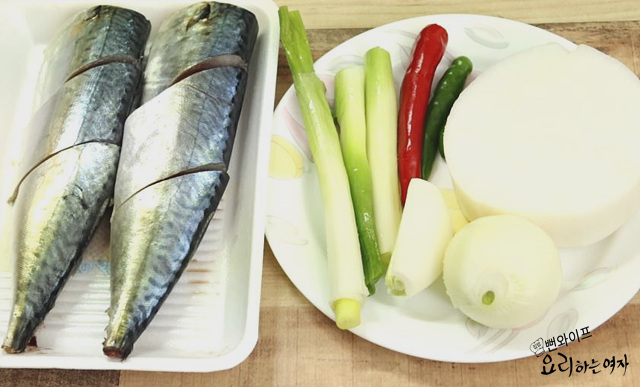
Today I prepared two large fresh mackerels. I bought them pre-cut for braising, and they were truly fresh.
Here are 1/3 medium Korean radish, one medium onion, one large green onion, 2 Cheongyang chili peppers, and red chili pepper.
Since it is winter, I prepared Korean radish to give it a refreshing taste, but you can also substitute potatoes or squash.
Clean the mackerel and make the sauce
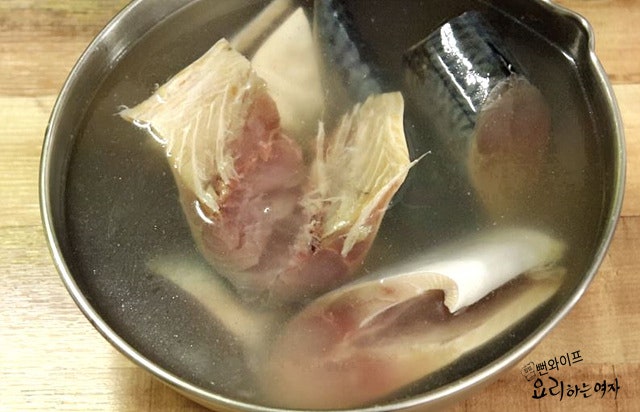
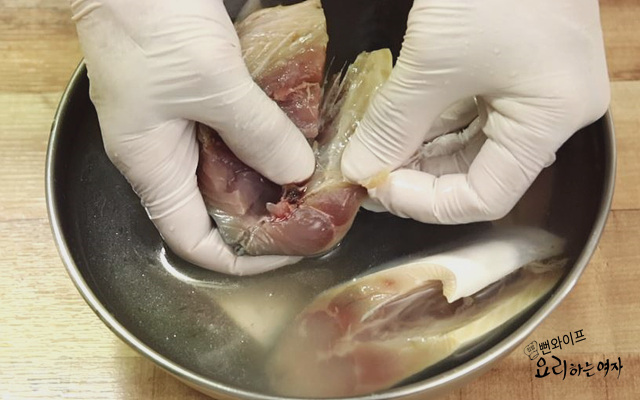
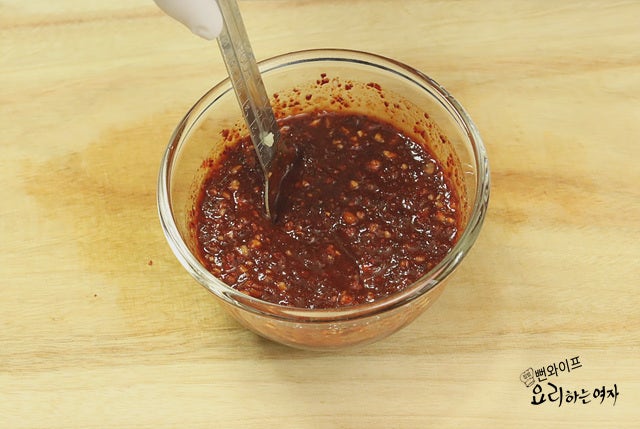
There is no special preparation method for fresh mackerel.
Because it is fresh, simply remove any blood clots or foreign matter stuck between the bones thoroughly and rinse under running water.
If using salted mackerel, soak it in water from washing rice to remove excess saltiness and get rid of the fishy odor.
Add all the seasoning ingredients together and mix in advance so the flavors blend well.
The salt will be added while simmering the mackerel in the sauce.
Ginger and black pepper play a big part in eliminating the fishy smell, so be sure to include them.
It is an ordinary mackerel seasoning sauce, but it truly makes both the mackerel and radish shine.
Slice the vegetables
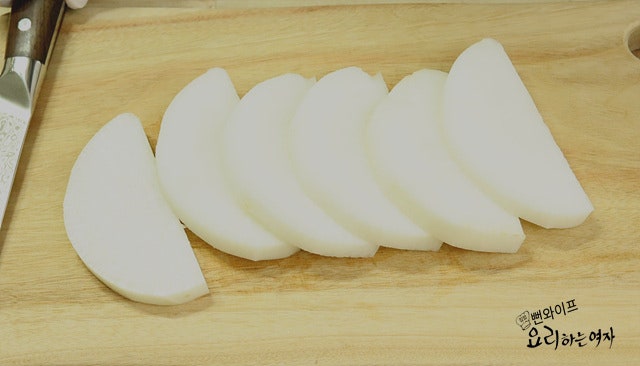
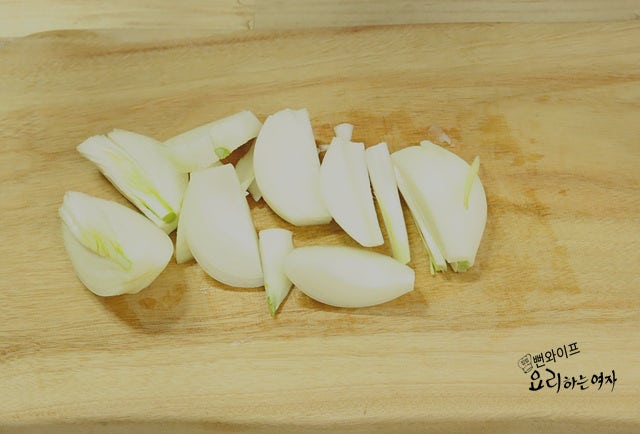
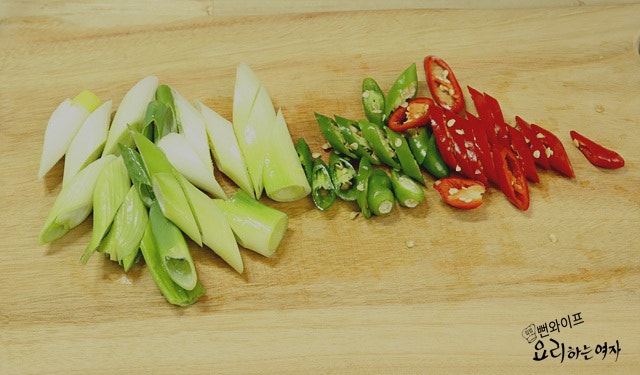
Cut the radish into thick, large half-moons so they are over 1 cm thick. You may cut them smaller to your liking.
Thickly julienne the onion as well, and cut both the green onion and chili peppers into thick slices.
Pre-cook the radish in sauce
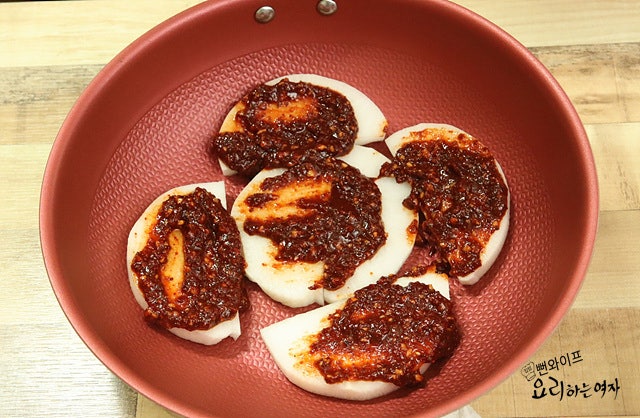
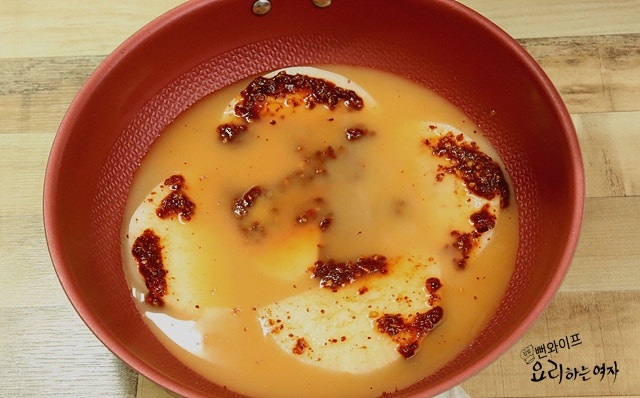
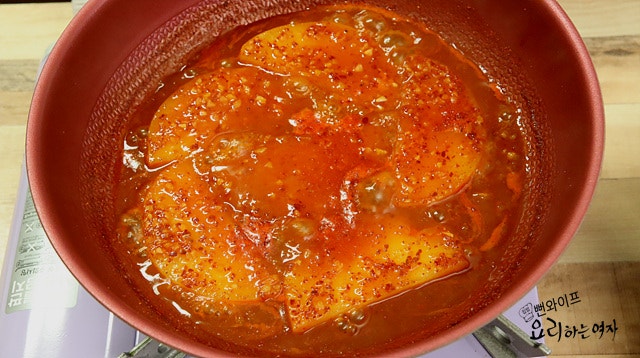
Place all the radish at the bottom of the pan and spread half of the sauce evenly over it.
Pour in 3 cups of water from washing rice, bring it to a rolling boil, and then simmer over medium heat until the radish is about half-cooked.
Do not cook it all the way through because it will be simmered again with the mackerel.
If you cook it completely at this stage, it will turn mushy later and the texture will suffer.
Braise the mackerel in sauce
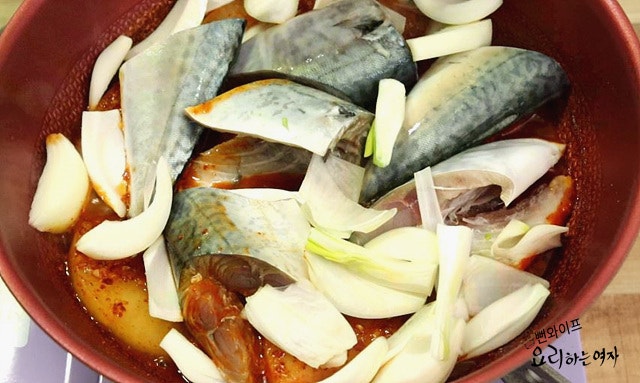
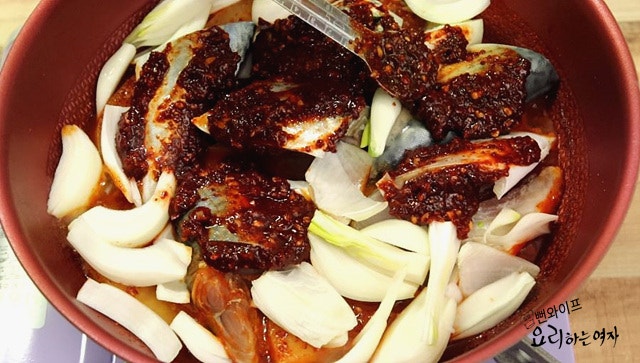
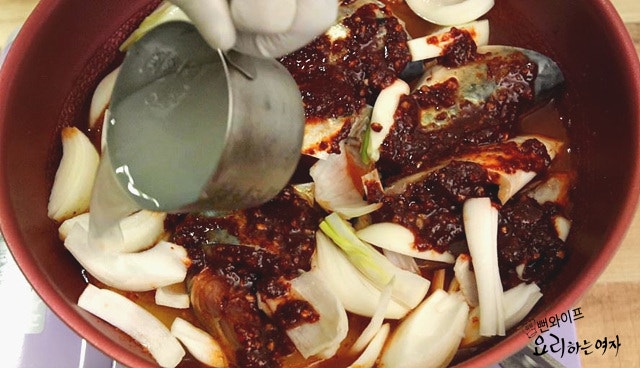
Spread the mackerel evenly over the radish, then arrange the onion evenly on top.
Spread all the remaining sauce over the mackerel, and pour in the remaining 2 cups of water from washing rice.
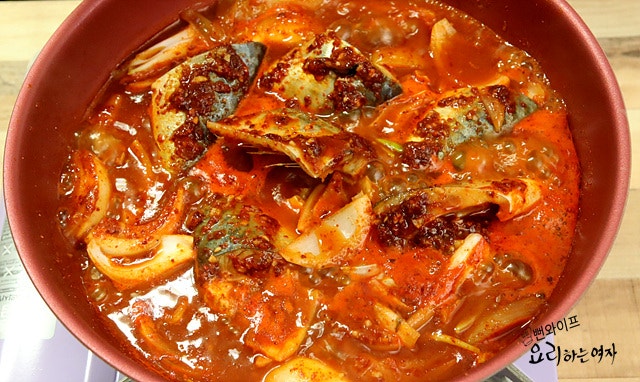
Once it begins to boil, simmer over medium-low heat so the mackerel cooks.
Since the tops of the mackerel pieces are not submerged in the broth, ladle the broth over them, or gently turn them over without breaking the flesh.
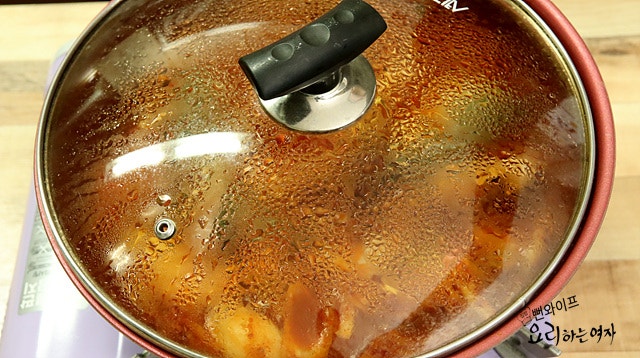
Once the mackerel cooks and the fishy smell disappears, replaced by a rich, savory aroma, cover with a lid and simmer for about 5 minutes so the flavors soak in thoroughly.
Taste the broth and add salt if it tastes bland.
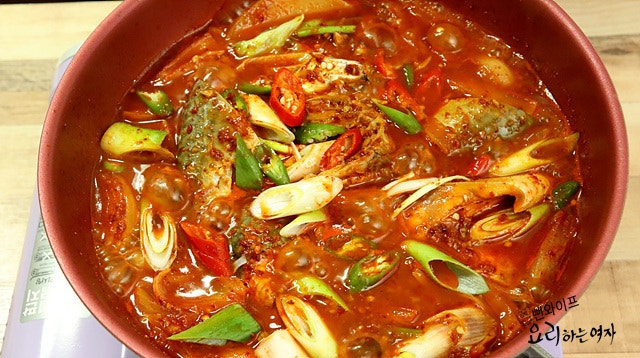
Remove the lid, add the large green onion and red chili pepper, and simmer over high heat until the liquid reduces appropriately so the aromas infuse evenly, and it is finished.
 Ppunwife's tips
- To ensure the seasoning penetrates deeply into both the mackerel and radish without sliding off, cook the radish and mackerel in separate stages.
- Ginger and black pepper play a big part in eliminating the fishy smell, so be sure to include them.
- Do not cook the radish all the way through initially because it will be simmered again with the mackerel. If you cook it completely at that stage, it will turn mushy later and the texture will suffer.
- Fresh mackerel can be eaten right after simmering, but it tastes much more delicious if you let it cool once and then simmer it briefly 1 to 2 hours later.
FAQ
Why are the radish and mackerel added and braised at different times?
Cooking them in stages ensures that the seasoning absorbs evenly into both the radish and the fish, while preventing the radish from becoming overly mushy and ruining the texture.
Can I use other vegetables instead of Korean radish?
You can substitute vegetables such as potatoes or squash instead of radish.
How do you prep salted mackerel if using it?
Soak it in water from washing rice to draw out excess salt and reduce its characteristic fishy smell before cooking.
Is there a difference between eating it right away and letting it cool first?
If you let it cool after cooking and then simmer it briefly 1 to 2 hours later, the flavors will penetrate deeper into the radish and the savory richness will be enhanced even more.