Chewy and Clean Naeng Jeyuk (Chilled Boiled Pork Slices)
Chilled boiled pork slices cooked quickly in boiling water, left to finish in the residual heat, chilled, and sliced thin.
Translated from Korean by AI and not yet checked by a native speaker. Amounts and numbers are taken directly from the original recipe. Read the Korean original →
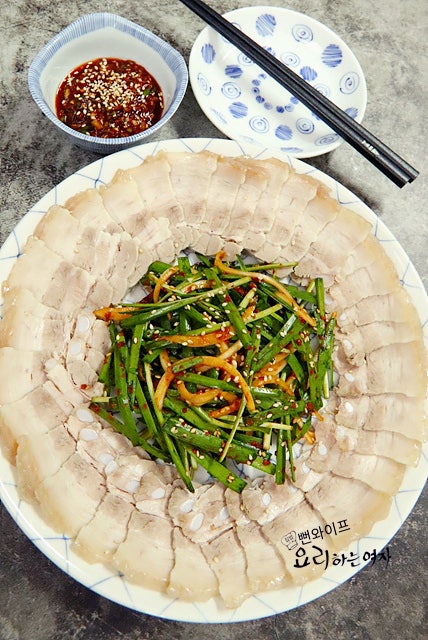
This naeng jeyuk is made by boiling pork front shoulder in salted water for a short time and letting it finish cooking gently in the residual heat. Wrapped tightly in plastic wrap and firmed in the refrigerator, it turns into tender meat with a delightfully chewy bite when sliced thin. Served with a spicy-tangy dipping sauce and fresh garlic chive geotjeori, it is perfect for entertaining guests or enjoying with drinks.
- Servings
- 4 servings
- Cook time
- 10 minprep not included
- Difficulty
- Hard
- Spiciness
- Mildly spicy
Ingredients
Ingredients
- Pork front shoulder (or pork rear leg (dwitdari-sal), pork shoulder, pork belly)1 kg
- Coarse sea salt1 tbsp
- Water8 cups
Sauce
- White part of large green onion (daepa)
- Cheongyang chili pepper (hot green chili)1
- Red chili pepper1
- Soup soy sauce (guk-ganjang)3 tbsp
- Minced garlic1 tbsp
- Gochugaru (Korean chili flakes)1 tbsp
- Sugar1 tbsp
- Vinegar1 tbsp
- Toasted sesame oil1 tbsp
- Toasted sesame seeds1/2 tbsp
Garlic chive geotjeori
- Garlic chives (buchu)100 g
- Onion1/4
- Regular soy sauce (jin-ganjang)1 1/2 tbsp
- Gochugaru (Korean chili flakes)1 tbsp
- Minced garlic1 tsp
- Vinegar1 tbsp
- Sugar1 tbsp
- Toasted sesame oil1/2 tbsp
- Toasted sesame seeds1/2 tbsp
Seasoned saeujeot
- Salted fermented shrimp (saeujeot)2 tbsp
- Minced green onion1 tbsp
- Cheongyang chili pepper (hot green chili)1 (minced)
- Minced garlic1 tsp
- Toasted sesame seedsa little
- You can use front shoulder or hind leg, but be sure to choose a cut with the skin on so that it turns out chewy and rich when served chilled.
Steps
Prepare the ingredients
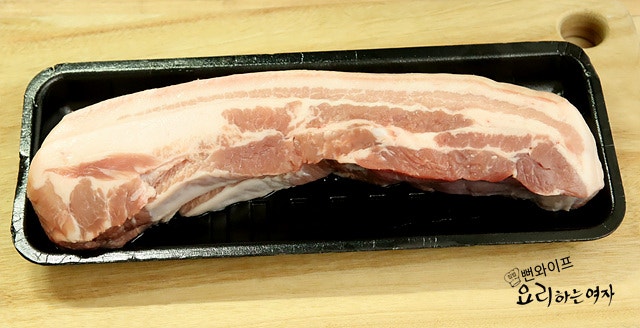
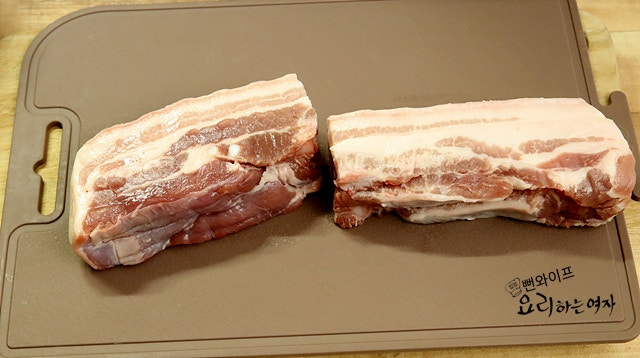
I prepared 1 kg of whole pork belly.
You can also use front shoulder or hind leg, but choosing a piece with the skin on ensures it turns out chewy and rich as naeng jeyuk.
I cut it in half so it fits in the pot.
Boil the pork
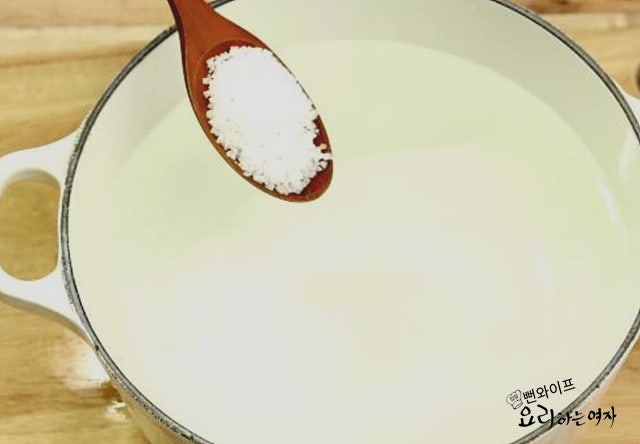
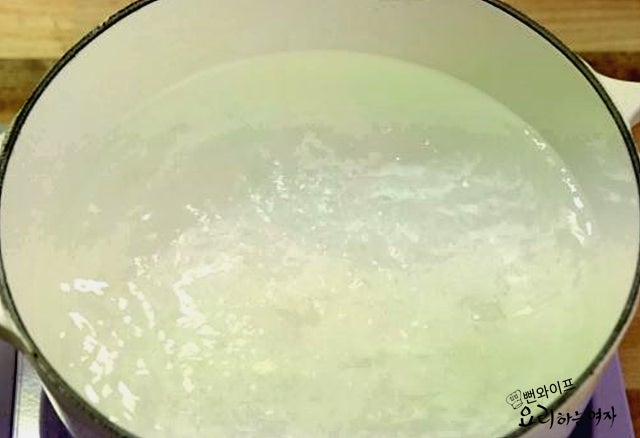
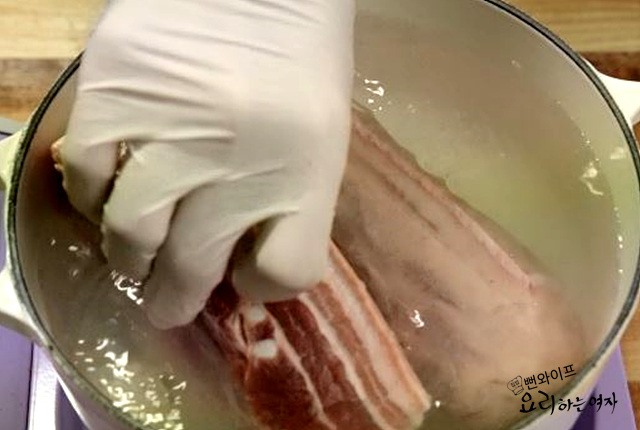
Pour in enough water to submerge the meat (8 cups), add 1 tbsp of coarse sea salt, bring it to a rolling boil, and then add the meat.
Have a large pot ready because the water needs to boil vigorously.
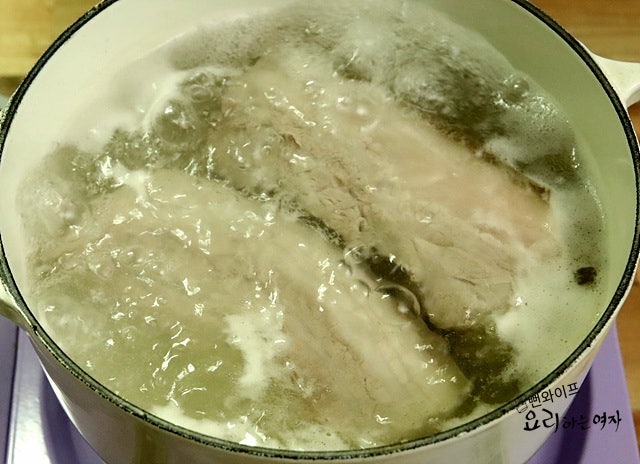
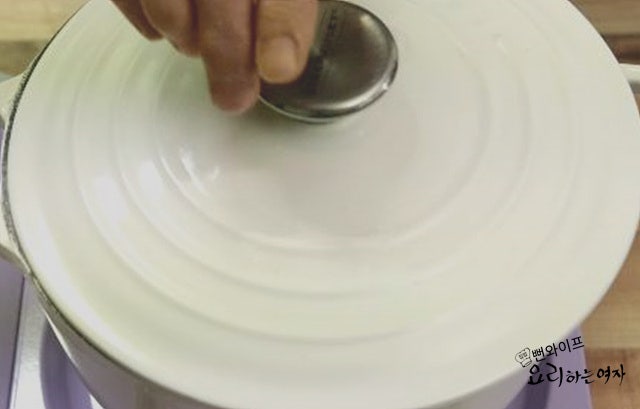
From the moment it starts boiling, keep it at a rolling boil over high heat for about 10 minutes, skimming off any impurities.
After 10 minutes, turn off the heat, cover with the lid, and leave it alone for about 1 hour—that is all there is to boiling the pork. It is truly simple!
You might wonder if 10 minutes of boiling cooks it through, but it is a method where the meat finishes cooking slowly in the residual heat over 1 hour. It is similar to sous vide, a low-temperature cooking method.
Chill and slice the pork
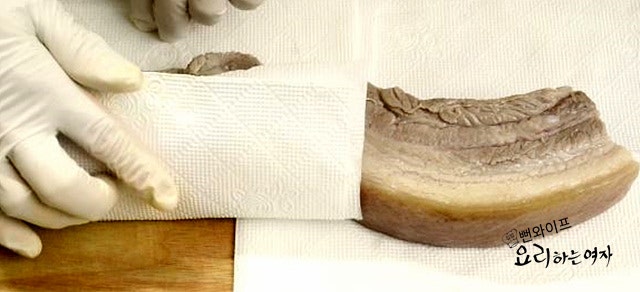
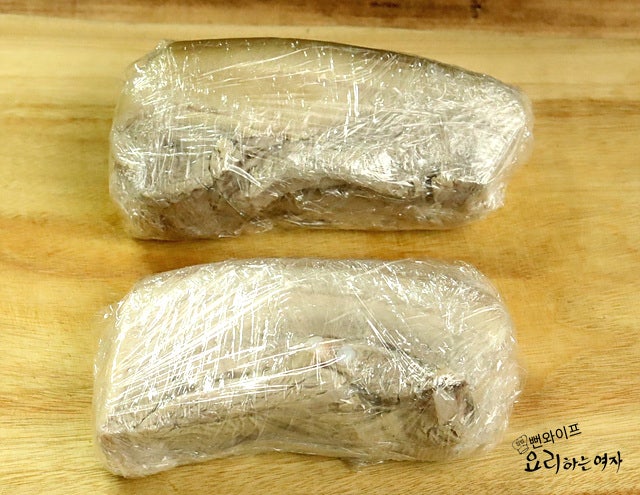
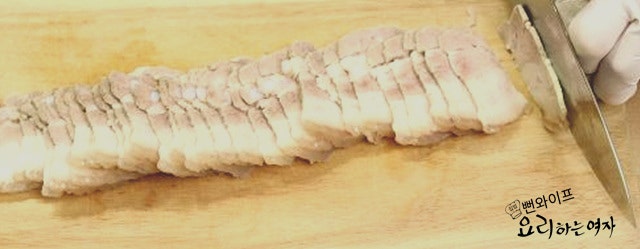
After 1 hour, take it out, wipe off any surface moisture, and wrap it tightly in plastic wrap to shape it.
Doing this firms up the meat, making it easy to slice paper-thin.
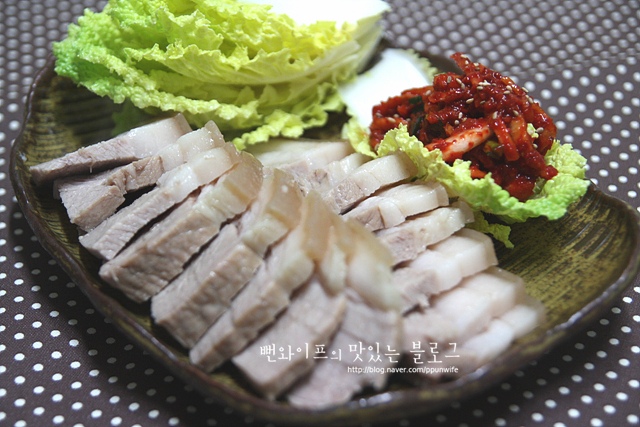
Let it chill in the refrigerator for 4 hours, then slice it as thinly as possible.
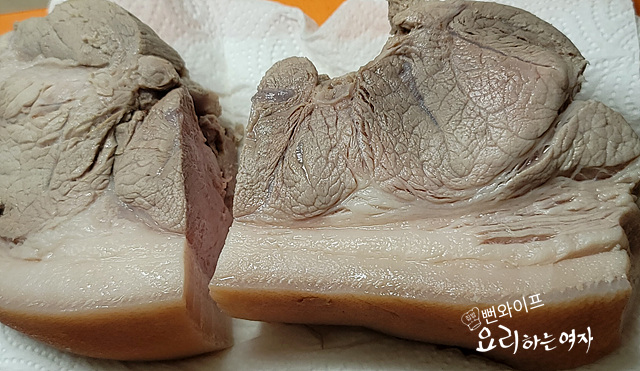
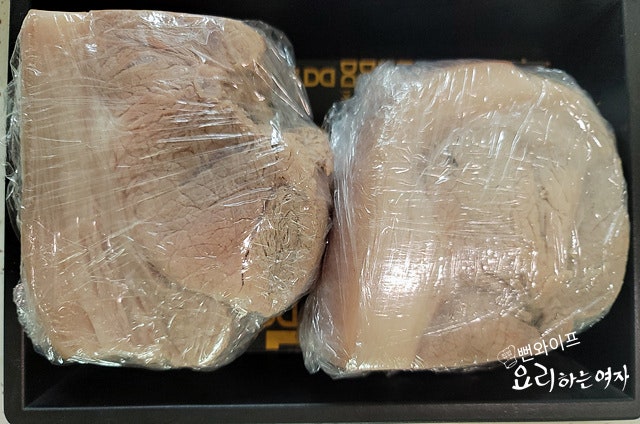
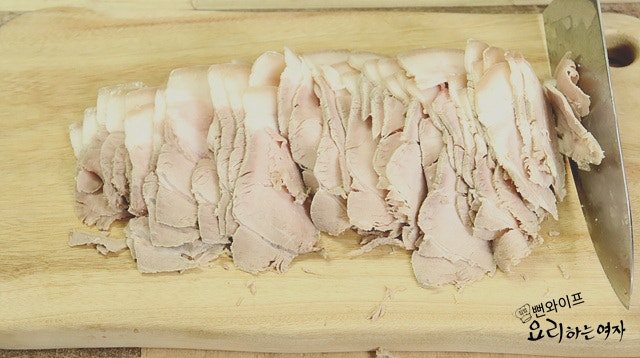
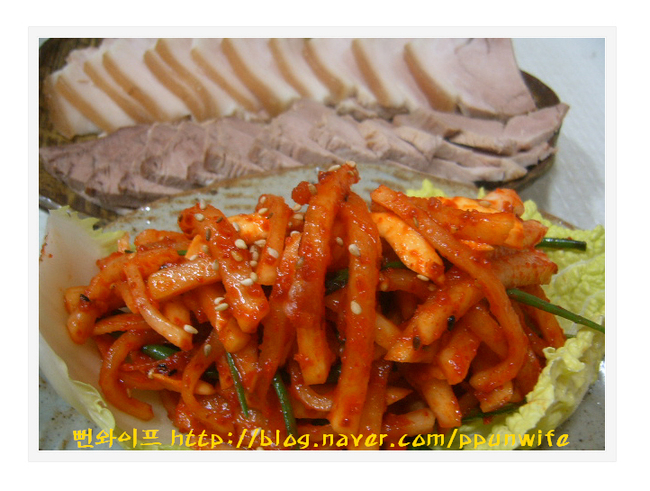
When I first tried making naeng jeyuk, I used pork front shoulder and cooked it the exact same way as pork belly, only extending the boiling time.
Front shoulder has a firmer, denser texture than pork belly, so I boiled it for 20 minutes.
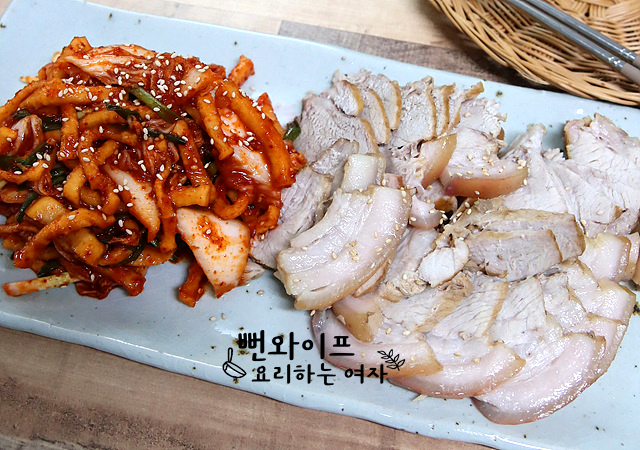
I cooled this down, wiped off the moisture, wrapped it tightly, chilled it in the refrigerator for 4 hours, and sliced it as thinly as possible.
The grain of the meat is gorgeous. The pale pink color looks lovely too.
If I had boiled it for 10 minutes, the inside would have been a deeper pink.
Make the naeng jeyuk sauce
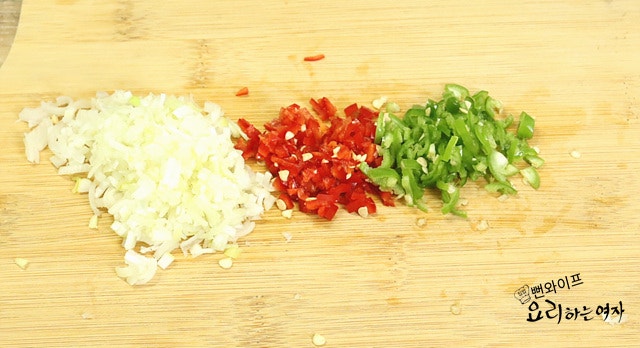
Finely mince the white part of the large green onion, 1 red chili pepper, and 1 Cheongyang chili pepper.
Red chili pepper was not in the original recipe, but I decided to add it.
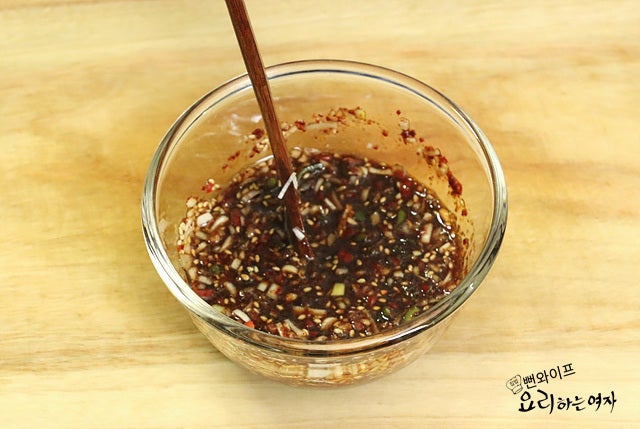
Add all the chopped vegetables, then mix with 3 tbsp soup soy sauce, 1 tbsp minced garlic, 1 tbsp gochugaru, 1 tbsp sugar, 1 tbsp vinegar, 1 tbsp toasted sesame oil, and 1/2 tbsp toasted sesame seeds to finish the sauce. This makes a generous amount of sauce; if you have leftovers, use it for fresh geotjeori or as a seasoning sauce for janchi guksu (warm banquet noodles).
Make seasoned saeujeot
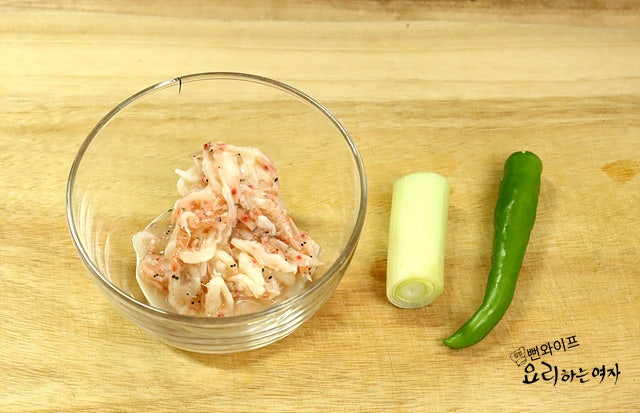
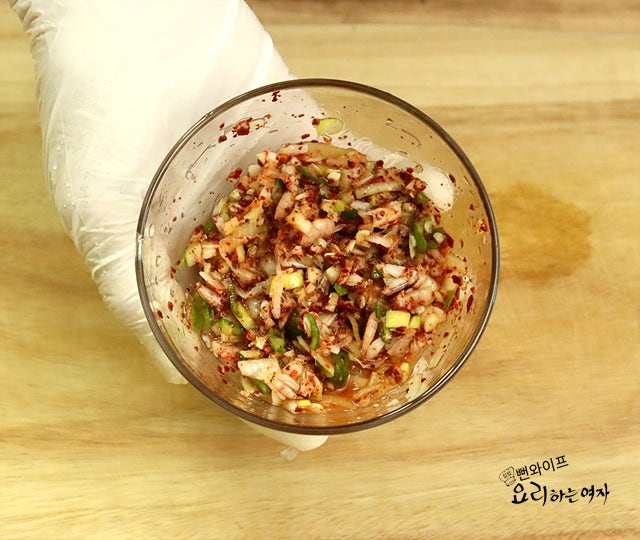
Salted fermented shrimp goes wonderfully with boiled pork, so I prepared some.
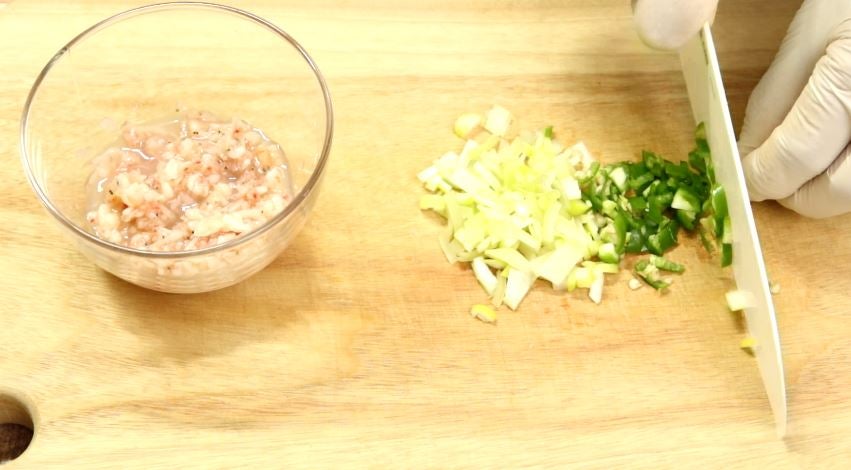
The shrimp were large, so I cut them with kitchen scissors. Since we do not add water, eating a whole shrimp would be too salty.
Finely mince the Cheongyang chili pepper and green onion.
Just combine 2 tbsp salted fermented shrimp, minced green onion, minced Cheongyang chili pepper, 1 tsp minced garlic, a pinch of toasted sesame seeds, and 1/2 tbsp gochugaru, then stir well.
Make garlic chive geotjeori
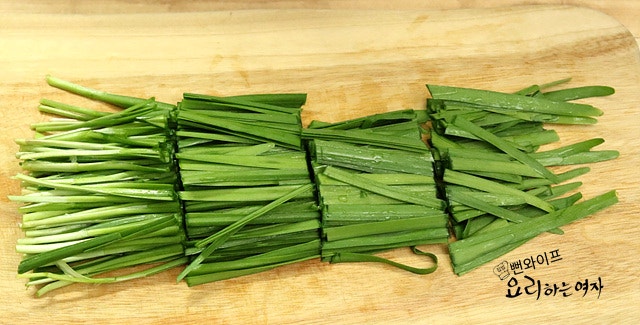
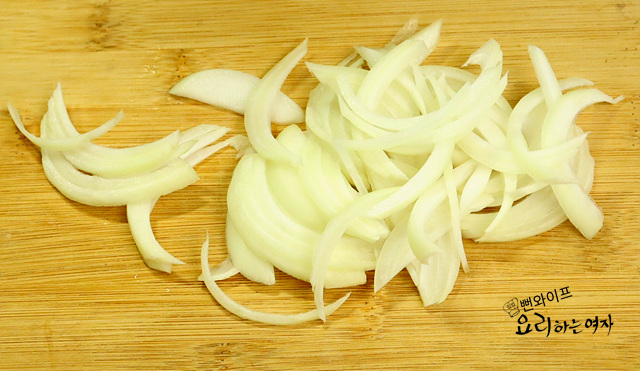
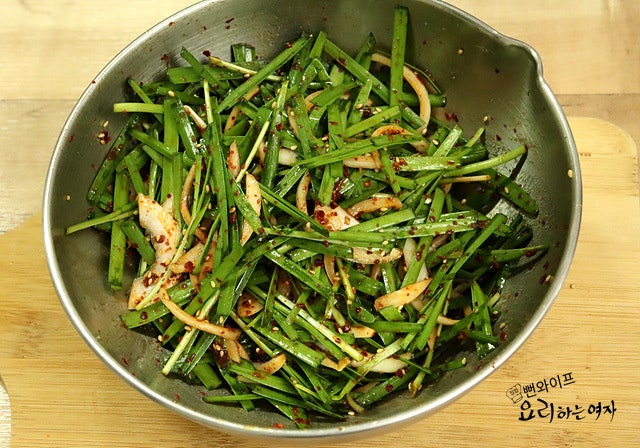
Cut 100 g of garlic chives into bite-sized lengths and thinly slice 1/4 onion.
Add 1 1/2 tbsp regular soy sauce, 1 tbsp gochugaru, 1 tsp minced garlic, 1 tbsp vinegar, 1/2 tbsp sugar, 1/2 tbsp toasted sesame oil, and 1/2 tbsp toasted sesame seeds, then toss gently.
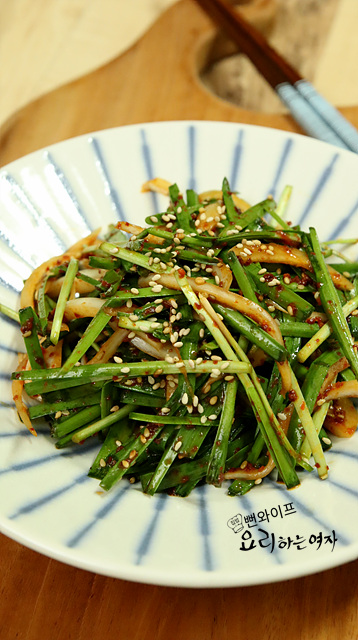
Freshly tossed garlic chive geotjeori is tender and truly delicious.
Garlic chives wilt quickly, so prepare your other sauces first and toss them right at the end.
 Ppunwife's tips
- Take the meat out, wipe off the surface moisture, wrap it tightly in plastic wrap to shape it, and let it rest in the refrigerator; it will firm up nicely and make thin slicing easy.
- Garlic chives wilt quickly, so make the other sauces first and toss the chives right at the end.
- To keep the pork completely free of off-flavors even after a simple boil and chilling, make sure to use fresh pork.
FAQ
Is there a difference in boiling time between front shoulder and pork belly?
Pork belly is boiled over high heat for about 10 minutes, but pork front shoulder is firmer and denser, so boiling it for around 20 minutes works best.
Why do you wrap the boiled meat in plastic wrap?
Wiping off surface moisture and wrapping it tightly in plastic wrap before refrigerating helps it hold its shape and firm up, making it much easier to slice thinly.
Any tips for choosing the meat for naeng jeyuk?
When choosing front shoulder or hind leg cuts, pick a piece with the skin attached so it has a much chewier and richer bite once chilled.
How can I use leftover naeng jeyuk sauce?
It works great as a dressing for tossing fresh vegetable geotjeori or as a seasoning sauce for janchi guksu (warm banquet noodles).