Pork Suyuk Bossam (Boiled Pork Belly Wrap)
A bossam dish of pork boiled with doenjang and aromatics, served alongside crisp seasoned radish.
Translated from Korean by AI and not yet checked by a native speaker. Amounts and numbers are taken directly from the original recipe. Read the Korean original →
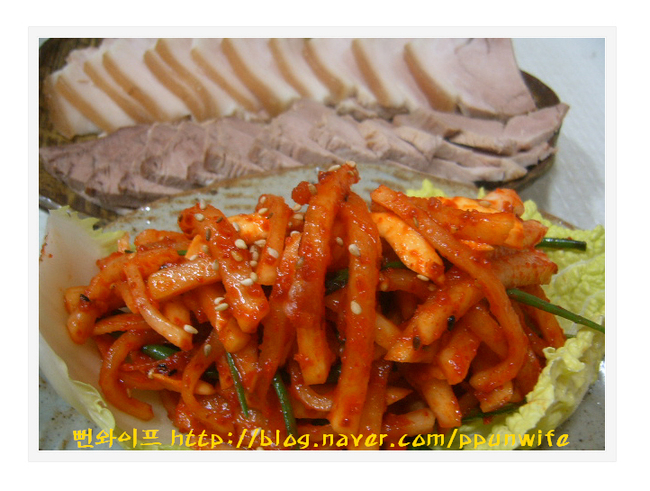
This generous spread pairs tender boiled pork, stripped of excess fat, with crisp tossed radish salad. Adding cold water halfway through boiling gives the meat a firmer, chewier bite, and cooling it completely before slicing keeps every piece neat and clean.
- Servings
- 5–6 servings
- Cook time
- 50 minprep not included
- Difficulty
- Medium
- Spiciness
- Mildly spicy
Ingredients
Ingredients
- Pork1.2 kg
- Garlic10
- Large green onion (daepa)1 stalk
- Doenjang (Korean soybean paste)2 tbsp
- Whole black peppercorns10 peppercorns
- Soju1/2 cup (paper cup)
Spicy radish salad
- Korean radish (mu)500 g
- Korean pear1/2
- Raw chestnuts5
- Scallions (jjokpa)10 stalks
For pickling radish
- Fine salt2 tsp
Radish seasoning
- Gochugaru (Korean chili flakes)4 tbsp
- Minced garlic1 tbsp
- Sand lance fish sauce (or dried anchovies, shrimp)1 tbsp
- Sugar0.5 tbsp
- Salta little
- Toasted sesame seeds
- For the pork, front leg (pork shoulder) works great, as does pork collar or pork belly that still has some fat and skin attached.
- You can omit the chestnuts and pear if you do not have them, and large green onion can replace the scallions.
- Salt the julienned radish with fine salt for about 30 minutes.
Steps
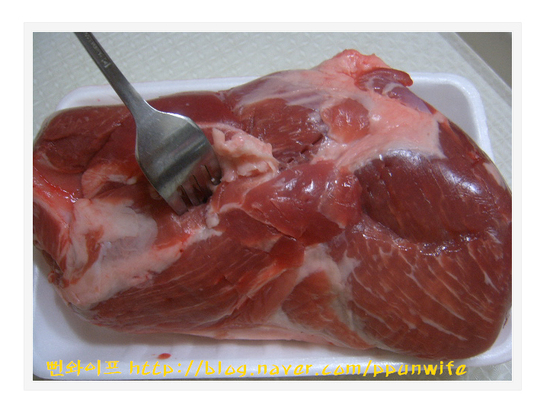
This is pork front leg. It is affordable and has just the right amount of fat, making it great for suyuk.
More expensive cuts like pork collar or belly are even better.
Choose pork for suyuk that still has the fat and rind intact.
Lately butcher shops sell fresh meat cut like this; this single block is 1.2 kg.
Pierce it deeply in several spots with a fork or the tip of a knife.
Soak it in cold water to draw out the blood, changing to clear water as needed.
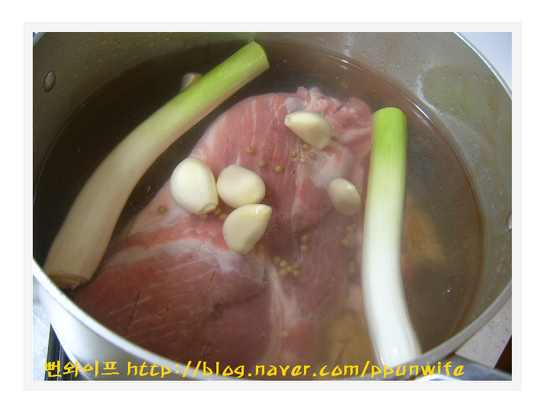
Pour enough water into a large pot to cover the meat, just so it reaches just over the top.
Add 2 tbsp doenjang (Korean soybean paste), 10 whole black peppercorns, 10 garlic cloves, 1 large green onion (daepa), and half a cup of soju. Once the water boils, add the meat and boil it.
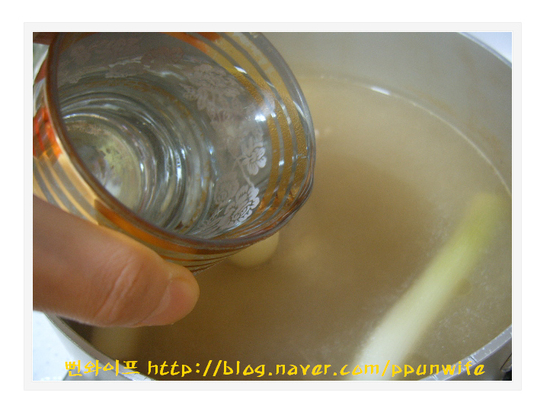
After about 20 minutes, pour in a cup of cold water and boil again; this gives the meat a much chewier texture.
Once the water boils, simmer over low heat for at least 30 minutes.
Partway through boiling, pierce it with a toothpick to check if any blood comes out.
If no blood comes out, it is thoroughly cooked through to the center.
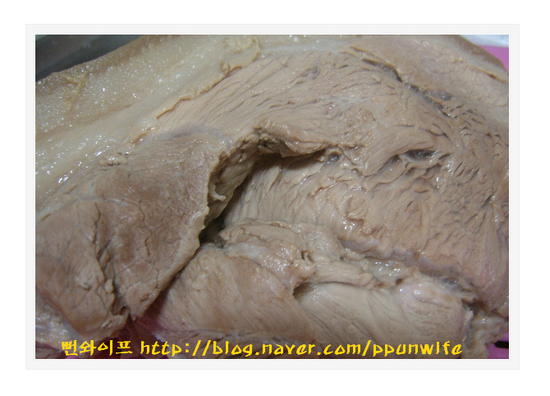
As soon as the meat is done, give it a quick shower in cold water.
Once the outside cools down, place it in a strainer to cool completely in a cool place.
Letting the meat cool completely allows you to slice it thin and neat.
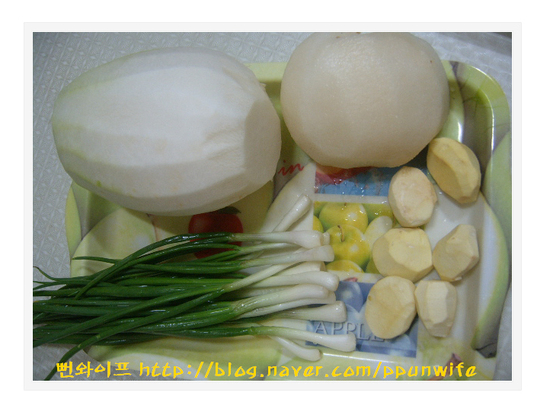
Now let's make the radish salad.
That is dongchimi radish; I bought it to make dongchimi, but it tasted so good that I am making fresh radish salad with it.
I made dongchimi today and will open it in half a month, so please look forward to it.
Prepare 10 scallions (jjokpa), chestnuts, and pear like this.
If you do not have chestnuts or pear, skip them, and if you do not have scallions, substitute large green onion.
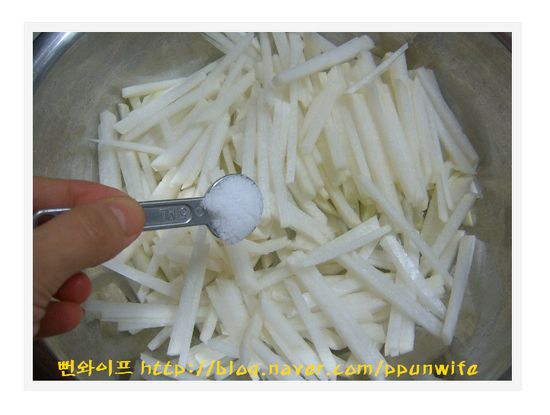
Julienne the radish on the thicker side and toss with 2 tsp fine salt to pickle.
Let it pickle for about 30 minutes.
Making the salad with salted radish is great because it prevents too much liquid from pooling.
Do not rinse the pickled radish; simply drain off the released liquid.
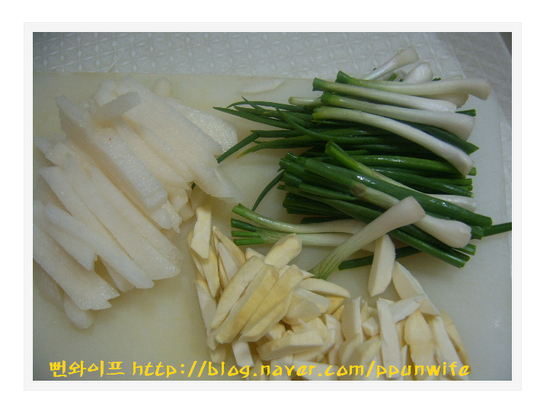
Julienne the pear, chestnuts, and scallions to the same length as the radish.
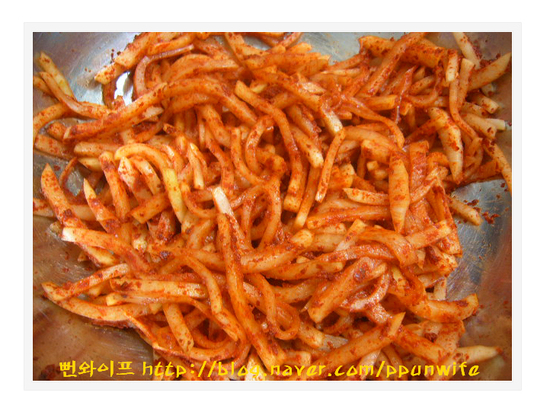
Add 4 tbsp gochugaru (Korean chili flakes) to the drained radish to color it red.
Here, using 3 tbsp coarse flakes and 1 tbsp fine flakes out of the 4 tbsp
gives it a much prettier color. If you do not have fine chili flakes, just use coarse.
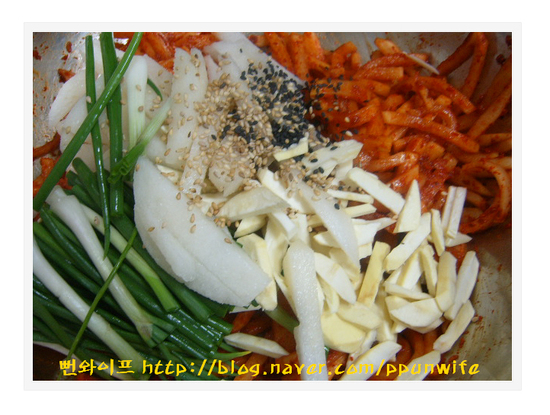
To the chili-colored radish, add the sliced scallions, pear, and chestnuts, along with all the listed seasonings, then toss together.
I seasoned mine on the mild side, so if it tastes bland to you, adjust with salt.
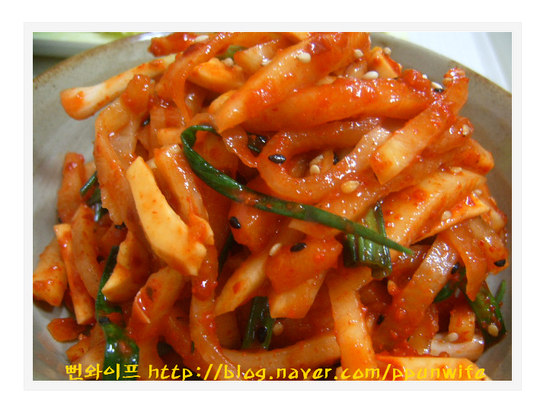
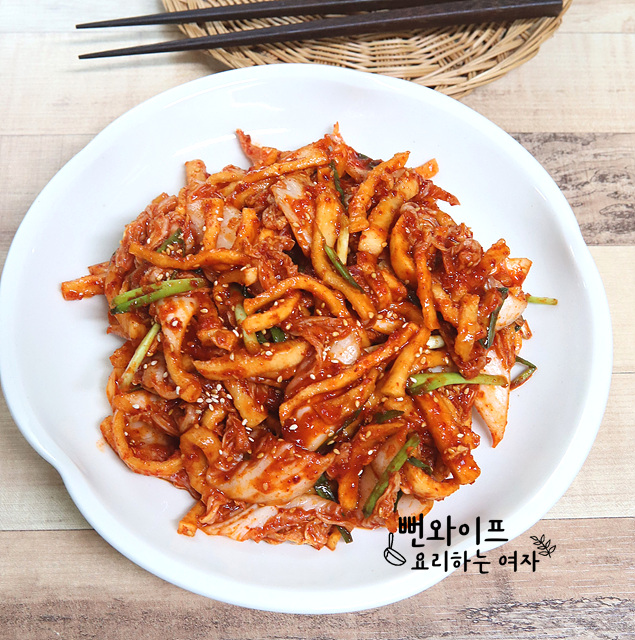
Here is the finished spicy radish salad.
Adding the julienned chestnuts and pear makes it much more refreshing and delicious.
It is wonderful just mixed into warm rice like this.
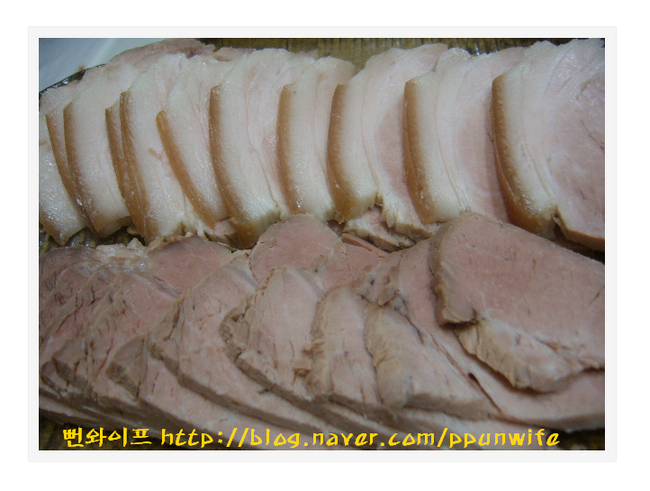
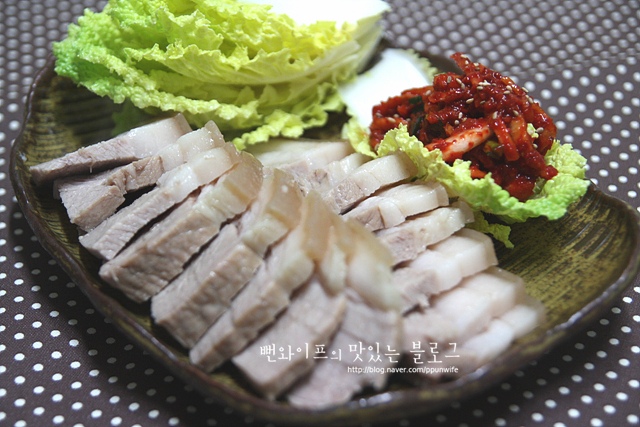
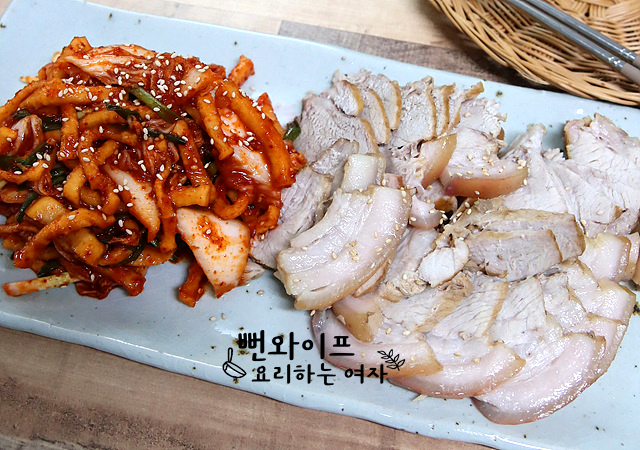
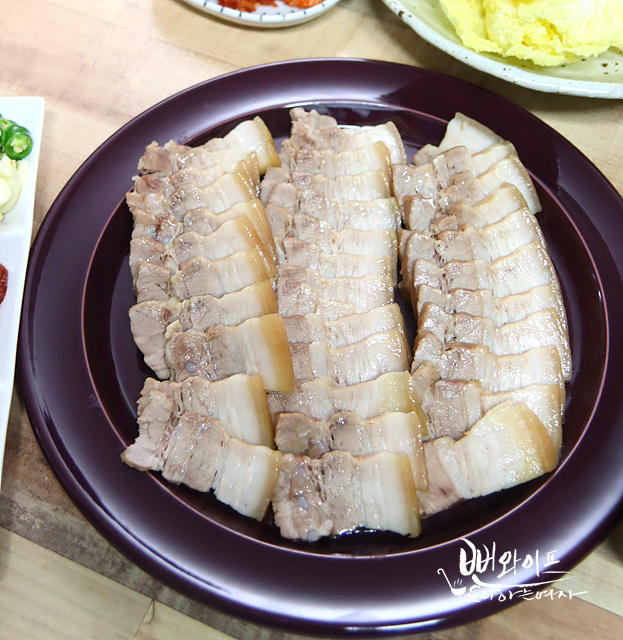
Slice the cooled pork thinly.
The skin layer loses its excess fat and turns tender and chewy, tasting so savory.
On this day my husband only ate the lean parts because of his belly, while I ate all the skin pieces.
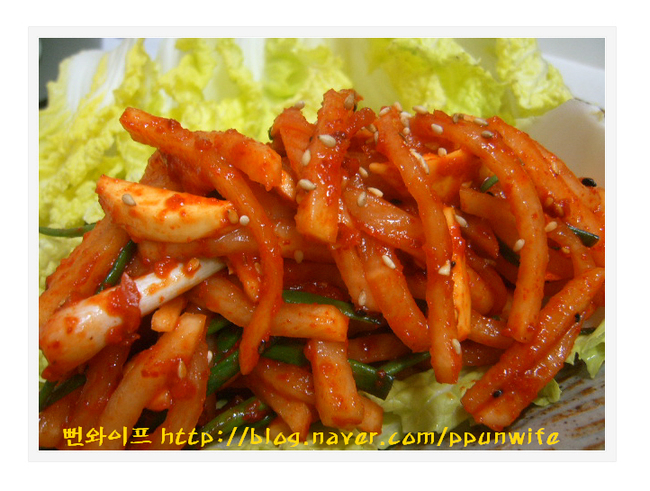
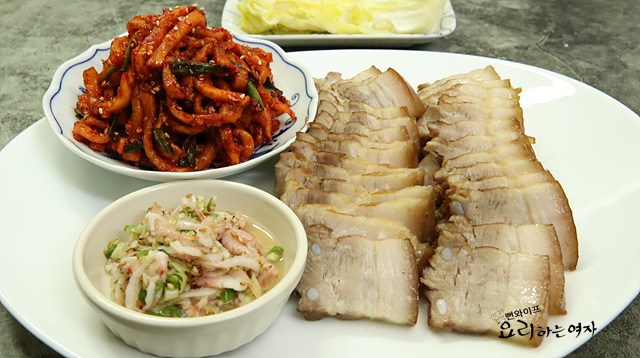
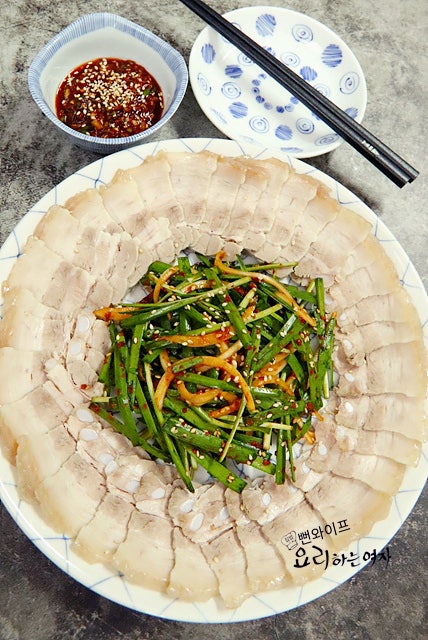
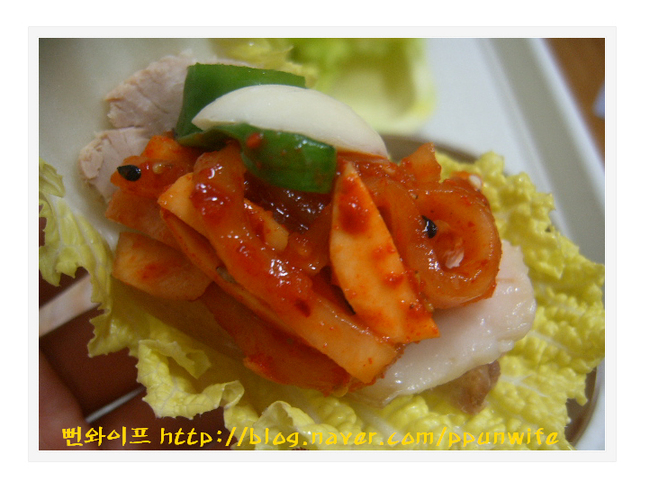
Here are tasty inner napa cabbage leaves and the spicy radish salad.
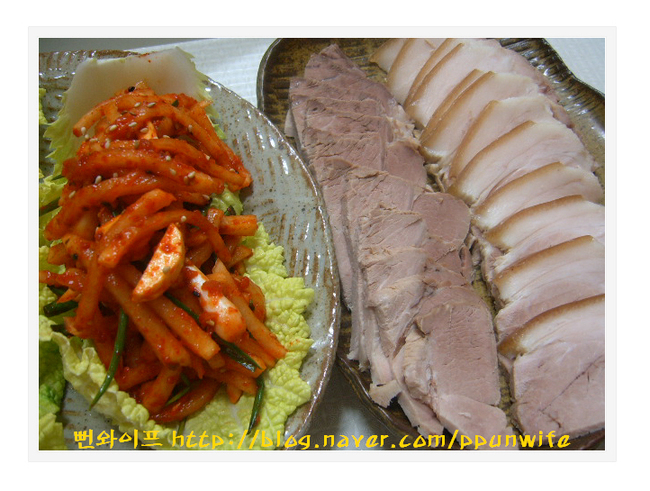
It looks just as hearty and appetizing as any restaurant platter, doesn't it?
I enjoyed it together with the kimchi I made a short while ago.
 Ppunwife's tips
- After about 20 minutes, pour in a cup of cold water and boil again to get a chewier meat texture.
- Letting the meat cool completely allows you to slice it thin and neat.
- Salting the radish first prevents too much liquid from pooling in the salad.
- Using 3 tbsp coarse flakes and 1 tbsp fine flakes out of the 4 tbsp gochugaru gives the salad a brighter, prettier color.
FAQ
Which cut of pork is best to use?
Pork front leg (shoulder) is recommended for its balanced fat and affordability, though pork collar or pork belly works wonderfully if you prefer.
How can I tell if the meat is fully cooked through?
Pierce the thickest part deeply with a toothpick; if the juices run clear with no blood, the meat is thoroughly cooked.
How do I prevent the radish salad from turning watery?
Julienne the radish thickly and pickle it in salt for about 30 minutes, then drain off the released water without rinsing before tossing with the seasonings.
Is there a trick to slicing suyuk thinly without it crumbling?
Rinse the boiled pork briefly in cold water and let it cool completely in a chilly spot before slicing; this gives you clean, even pieces.