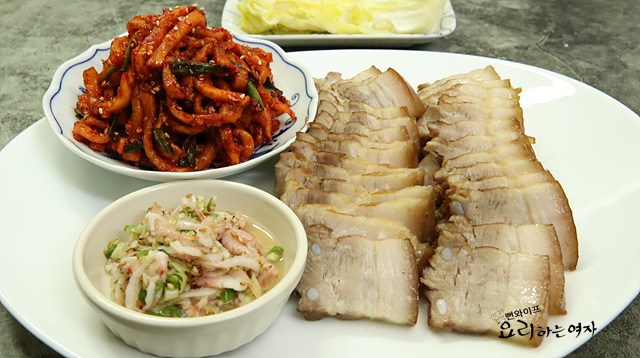
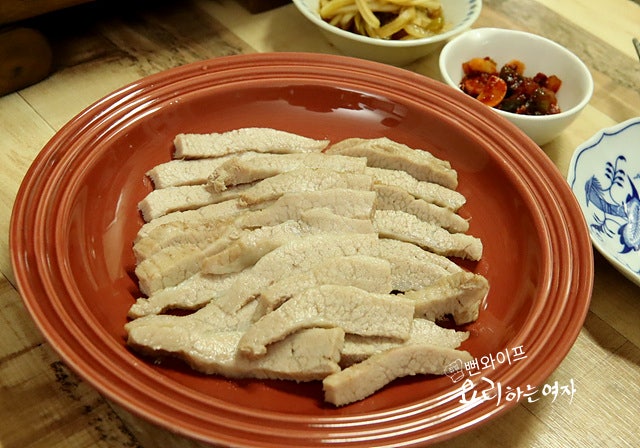
Dwaejigogi Suyuk (Boiled Pork Slices)
A pork dish cooked without added water, using the natural moisture of vegetables to eliminate gaminess.
Translated from Korean by AI and not yet checked by a native speaker. Amounts and numbers are taken directly from the original recipe. Read the Korean original →
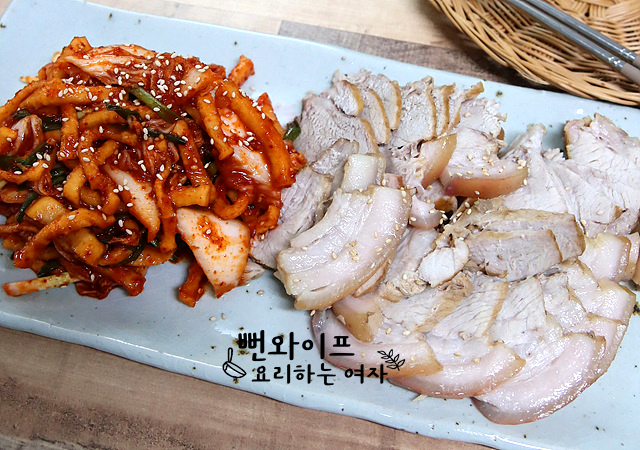
Cooked without adding water, using only the moisture released from vegetables lined at the bottom of the pot, making it clean-tasting and free of any gamey odor. Simmering it gently in a heavy-bottomed pot and letting it rest locks in juicy tenderness and rich flavor. It is wonderful served generously for seasonal restorative meals or family gatherings.
- Servings
- 3–4 servings
- Cook time
- 40 minprep not included
- Difficulty
- Medium
- Spiciness
- Not spicy
Ingredients
- Pork front shoulder (or whole pork belly)1 kg
- Onion1/2 (large)
- Large green onion (daepa)1 stalk
- Ginger2 cloves
- Whole black peppercorns1 tbsp
- Regular soy sauce (jin-ganjang) (or brewed soy sauce (yangjo-ganjang))3 tbsp
- Soju1/2 cup
- You can use whole pork belly or pork shoulder (moksal) instead of pork front shoulder.
- Doenjang, bay leaves, and peeled garlic are also great, and herbal tonic drinks like Ssanghwa-tang work wonderfully for boiling suyuk too.
- Instead of soy sauce, you can spread about 2 to 3 tbsp of doenjang over the meat.
Steps
Prepare the ingredients
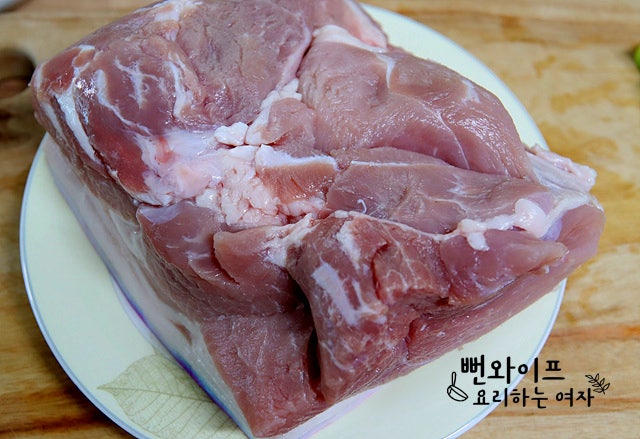
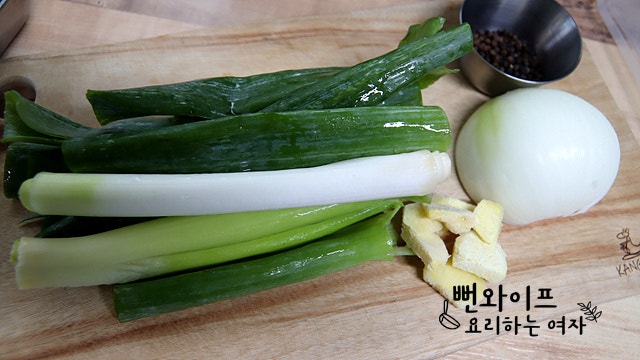
Here is 1 kg of pork front shoulder. You can also use whole pork belly or pork shoulder.
For boiling the suyuk, I prepared onion, large green onion, ginger, and whole black peppercorns.
Doenjang, bay leaves, and peeled garlic are also great, and herbal tonic drinks like Ssanghwa-tang work wonderfully for boiling suyuk too.
Cut the ingredients
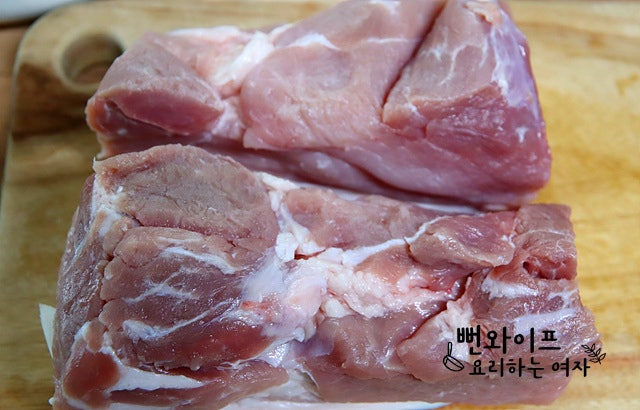
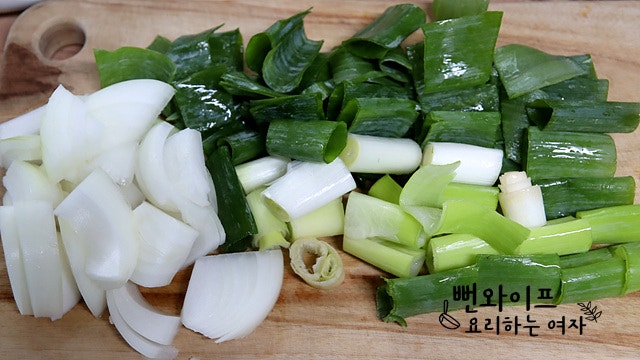
Cut the pork into sizes that will fit into your pot.
Cut the onion and large green onion into large chunks.
Add ingredients to the pot
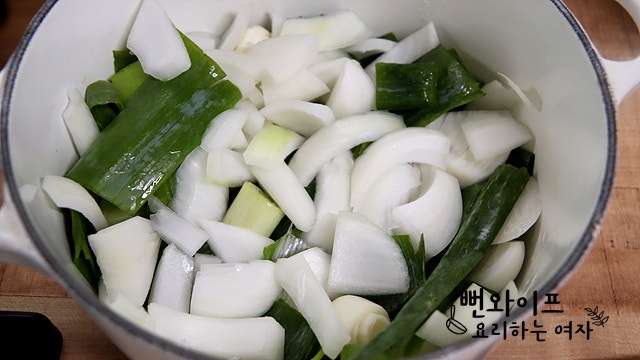
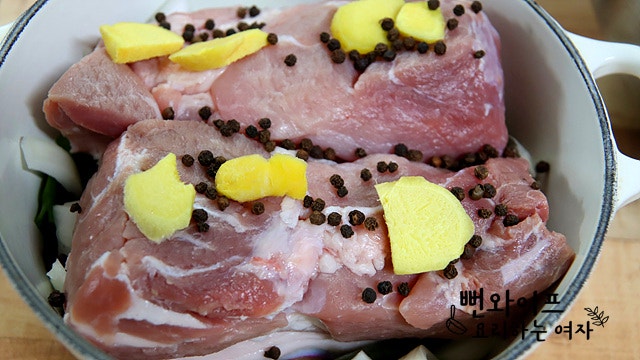
Since this is not boiled in water, the aromatic vegetables need to cook and release moisture so the meat can cook through slowly without burning.
It is best to use a heavy-bottomed pot.
First, spread the onion and large green onion evenly over the bottom of the pot, then place the pork on top.
Scatter the ginger and whole black peppercorns evenly over the meat.
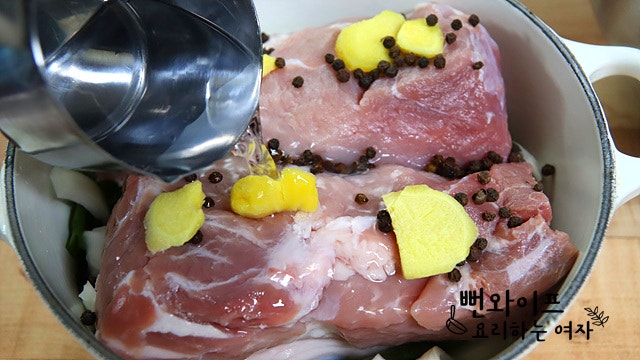
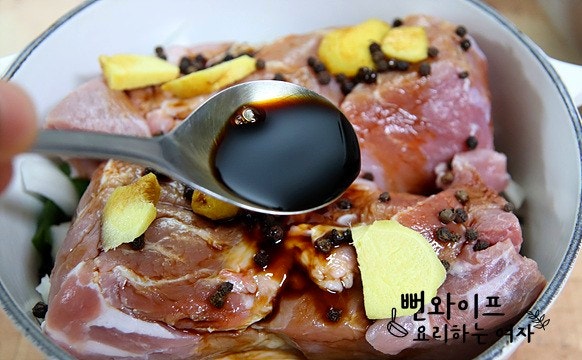
Pour in 1/2 cup of soju, which plays a big role in removing pork odor, and drizzle 3 tbsp of regular soy sauce evenly over the meat.
This seasons the meat and gives it color; instead of soy sauce, you can spread about 2 to 3 tbsp of doenjang over the meat.
How to simmer the suyuk
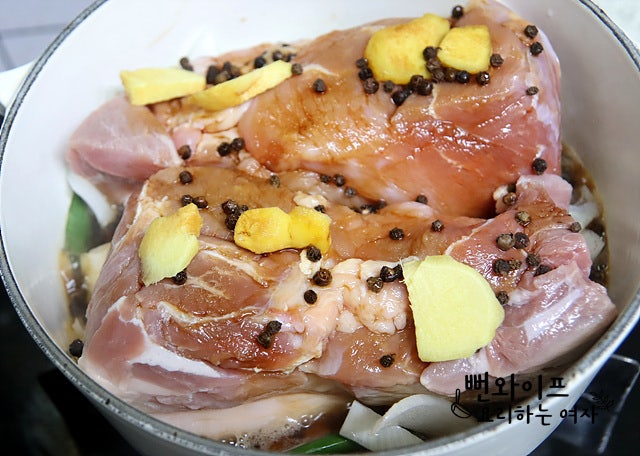
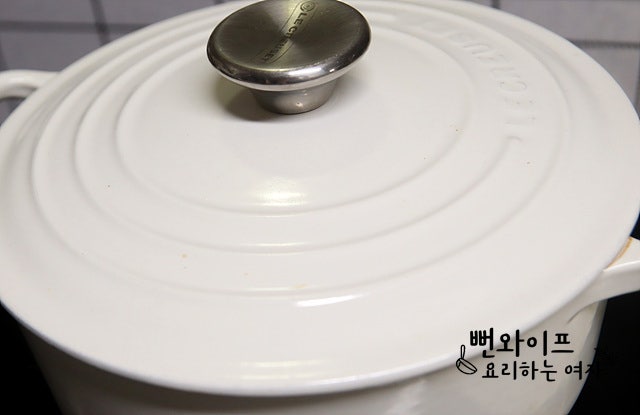
Turn the heat to medium-low, and once the vegetables slowly release their juices and the edges begin to bubble, cover with the lid and cook for about 20 minutes.
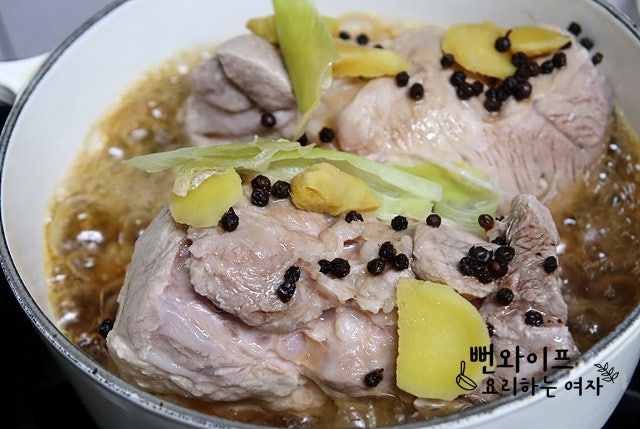
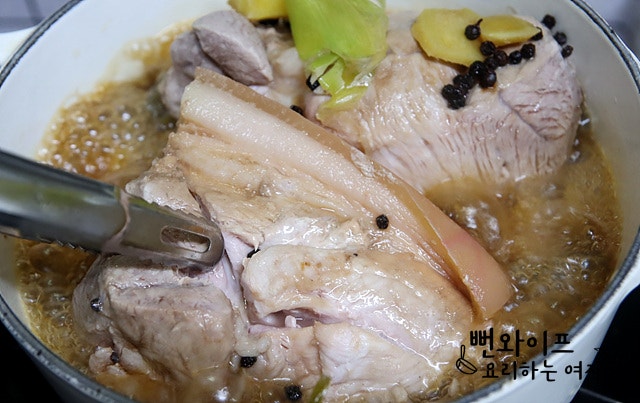
Open the lid, flip the meat over, and cook for another 15 minutes or so. Then turn off the heat and let it rest for 5 minutes.
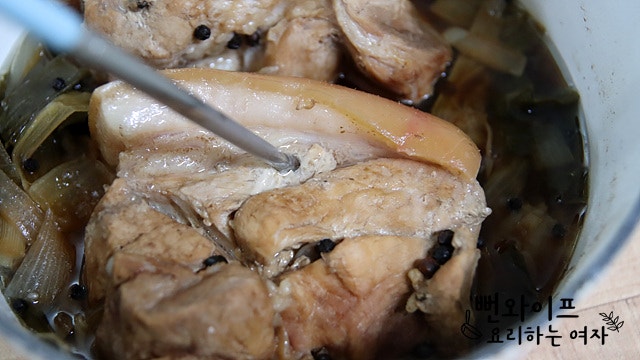
A lot of liquid will have gathered from the rendered pork fat and vegetable juices. As you can see, you can boil the meat deliciously using just vegetables without any water.
To check if it is cooked through, pierce it with a chopstick; if clear juices run out, it is done.
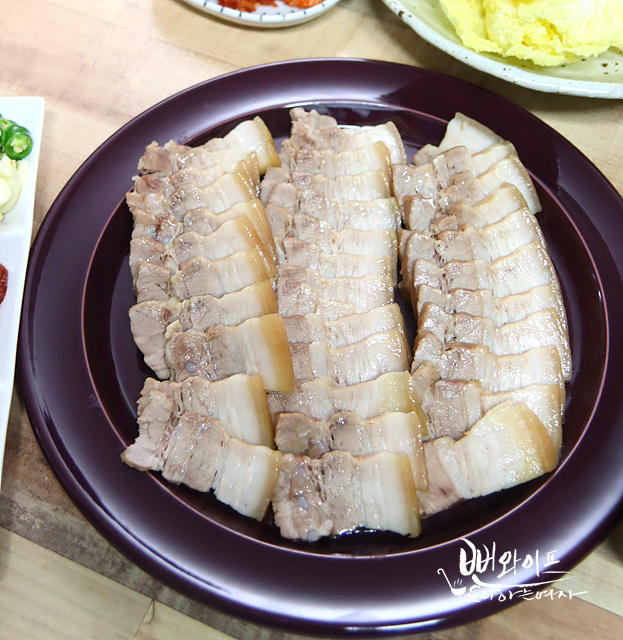
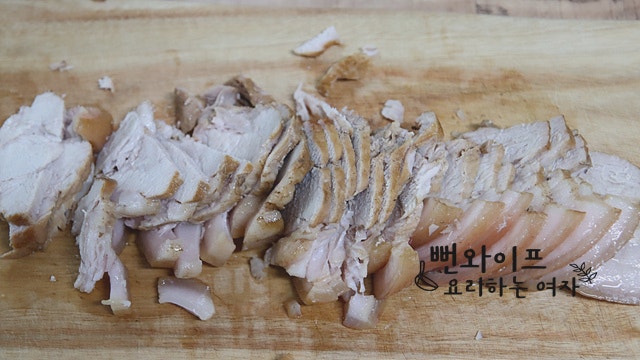
Once the searing heat subsides, slice it into bite-sized pieces.
Serve
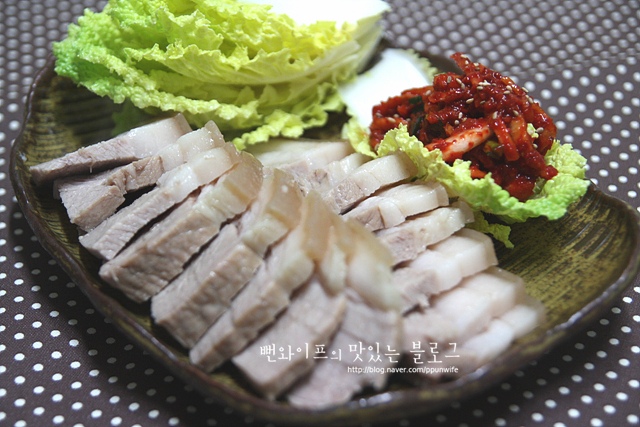
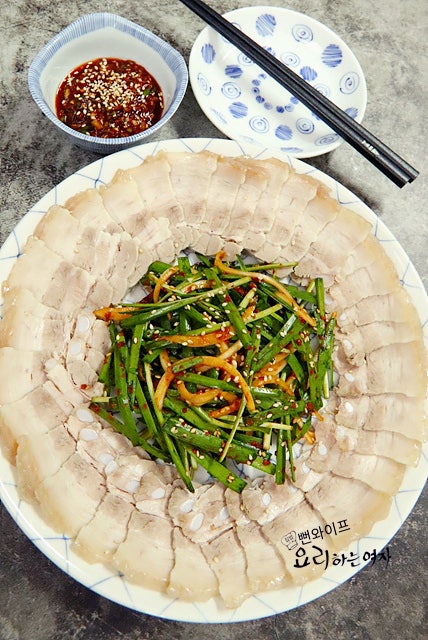
Dwaejigogi suyuk is so tender, nutty, and much more delicious when eaten warm.
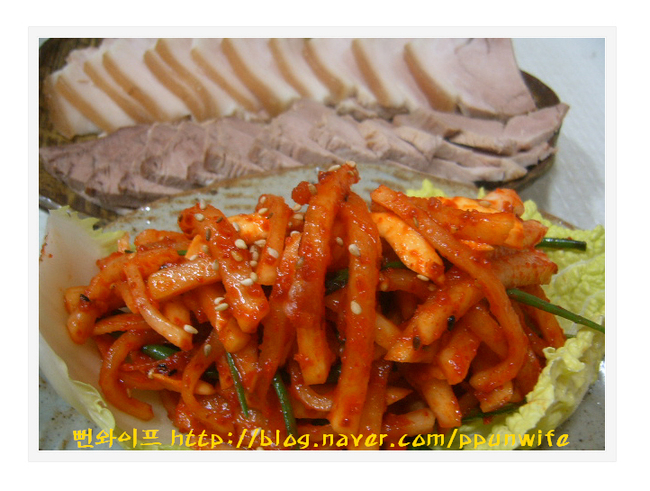
I served it simply alongside the bossam radish kimchi I made while boiling the pork.
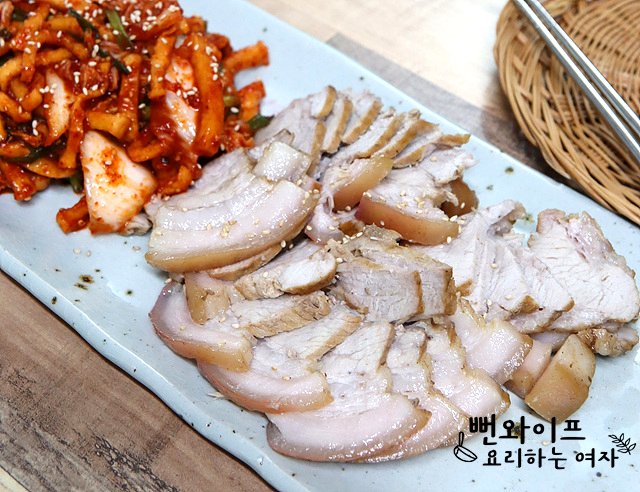
The parts with skin and fat are as tender and rich as pork belly.
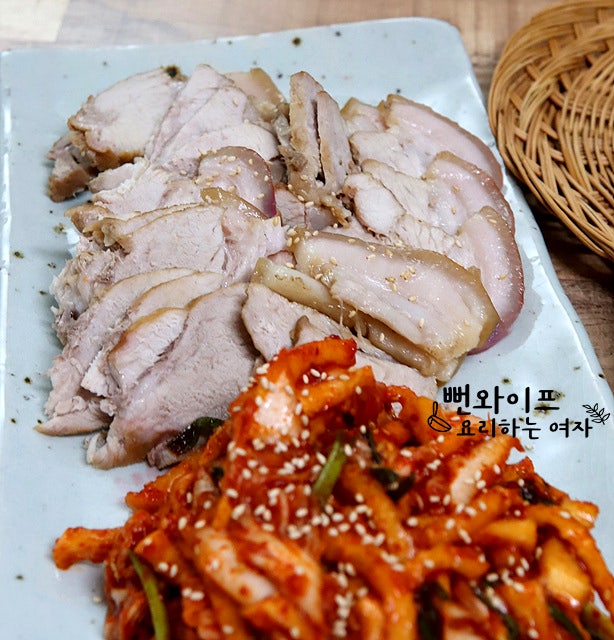
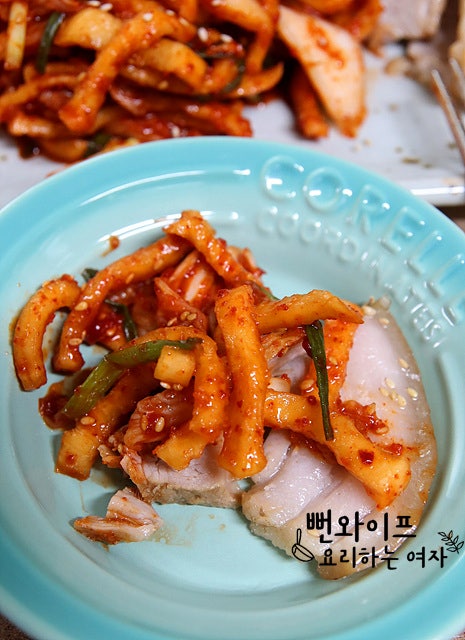
It is completely clean-tasting without any pork gaminess and truly delicious.
Bossam radish kimchi is a must-have with pork suyuk, so be sure to make them together and enjoy a hearty meal at home with the whole family.
 Ppunwife's tips
- Since this is not boiled in water, the aromatic vegetables need to cook and release moisture so the meat can cook through slowly without burning. It is best to use a heavy-bottomed pot.
- To check if it is cooked through, pierce it with a chopstick; if clear juices run out, it is done.
FAQ
How do I keep the pot from scorching when cooking without water?
Choose a heavy-bottomed pot and generously line the bottom with large-cut green onions and onions first so their juices can release.
Can I use other seasonings instead of soy sauce?
Instead of regular soy sauce, you can spread about 2 to 3 tbsp of doenjang evenly over the surface of the meat to add seasoning and color.
How can I tell if the meat is fully cooked through to the center?
Pierce the thickest part with a chopstick; if clear, transparent liquid comes out instead of bloody juices, it is cooked all the way through.
Can I make this with different cuts of pork instead of front shoulder?
Yes, you can follow the same method using whole pork belly or pork shoulder (moksal) instead of front shoulder.