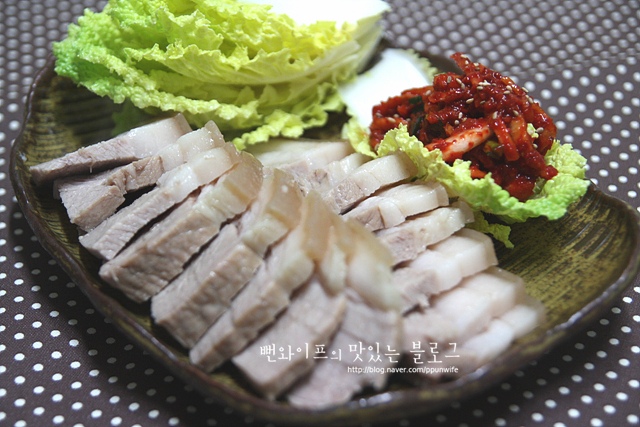
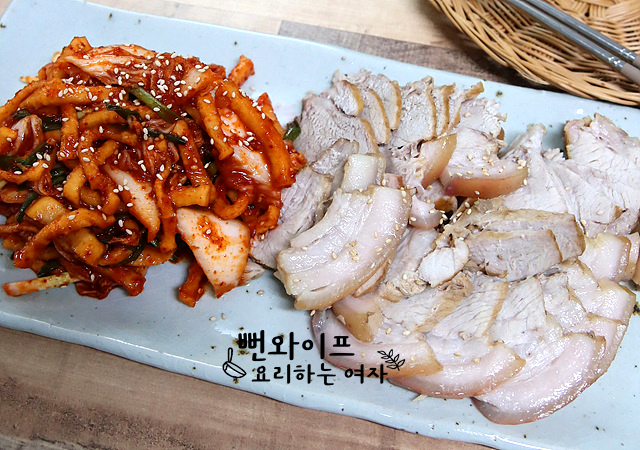
Tender Hangjeongsal Suyuk (Boiled Pork Jowl Slices)
A special dish of tender, nutty hangjeongsal suyuk steamed for 15 minutes using only the moisture from vegetables without adding water.
Translated from Korean by AI and not yet checked by a native speaker. Amounts and numbers are taken directly from the original recipe. Read the Korean original →
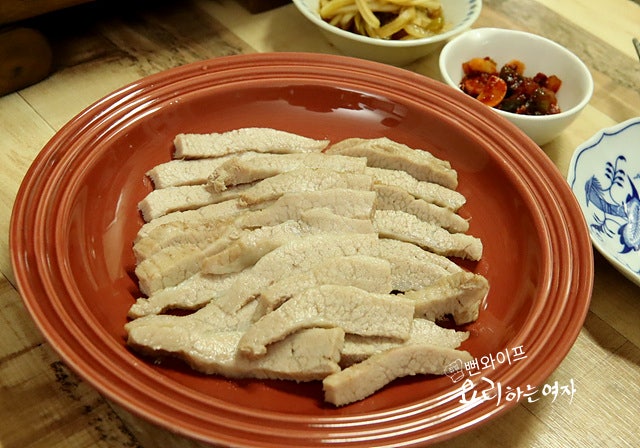
Pork jowl is cooked without water using only the moisture released from vegetables, removing any gamey smell while preserving a tender texture. After cooking over low heat for 15 to 20 minutes, pair it with meljeot (salted anchovy sauce) made flavorful with dried soup anchovies to add rich umami.
- Servings
- 2–3 servings
- Cook time
- 20 minprep not included
- Difficulty
- Easy
- Spiciness
- Mildly spicy
Ingredients
Ingredients
- Pork jowl600 g
- Large green onion (daepa)1 stalk
- Onion1
- Whole black peppercorns1 tbsp
- Soju1/4 cup
- Salta little
Meljeot sauce ingredients
- Dried soup anchovies5 anchovies
- Fish sauce3 tbsp
- Mirin (cooking rice wine)3 tbsp
- Water1/4 cup
- Gochugaru (Korean chili flakes)1/2 tbsp
- Roughly trim off the thick white fat on the surface of the pork jowl.
- When making the meljeot sauce, if you have galchi-sokjeot (salted hairtail entrails), you can simply simmer it with added water instead of the dried soup anchovies.
Steps
Prepare the pork jowl and ingredients
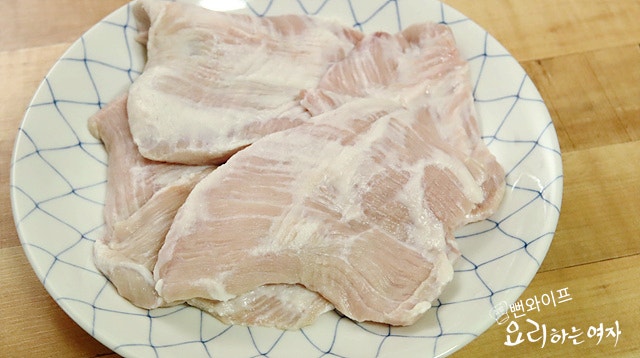
Roughly trim off the thick white fat on the surface of the pork jowl.
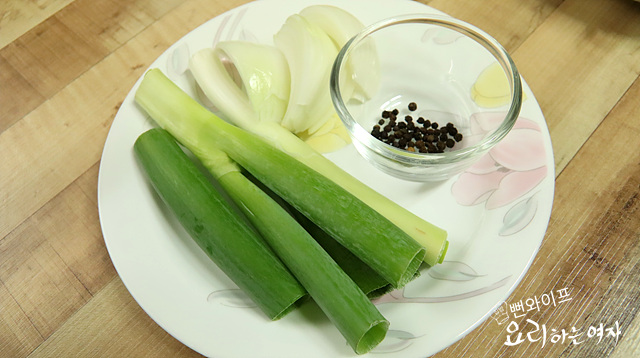
To remove any pork odor, simply prepare large green onion, onion, and whole black peppercorns.
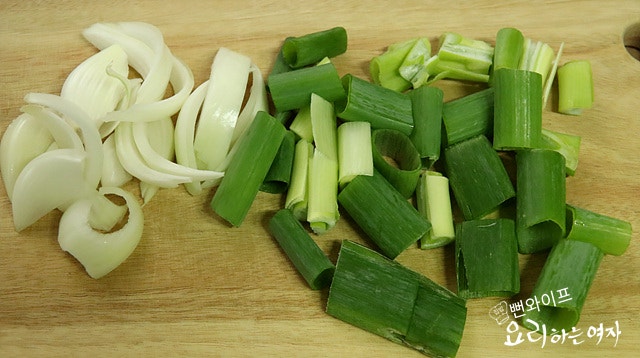
Since they will be cooked together with the pork jowl, cut the onion and large green onion into large chunks.
Cook the pork jowl
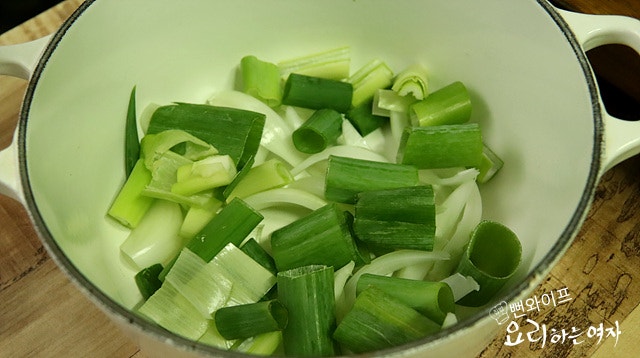
Prepare a heavy-bottomed pot, as you will cook without adding water, using only the moisture from the vegetables.
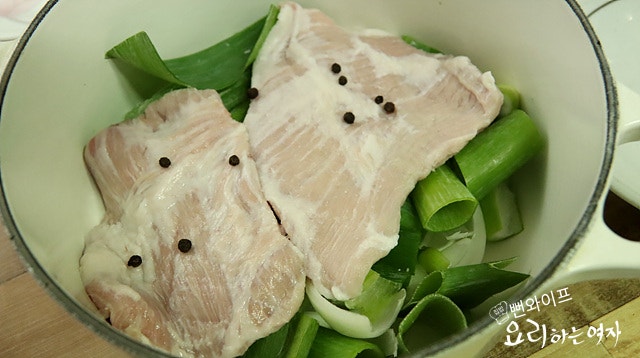
Spread the onion across the bottom first, add the large green onion, place the meat on top, sprinkle two pinches of salt over it, and add the whole black peppercorns.
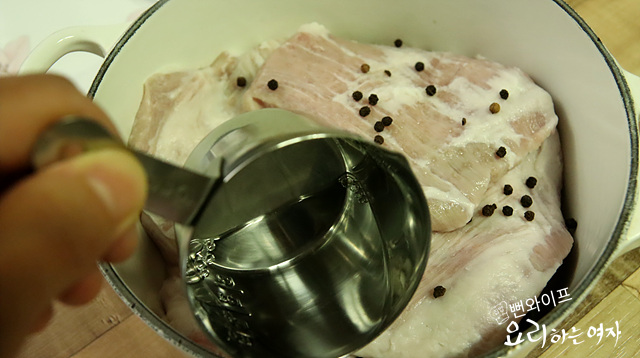
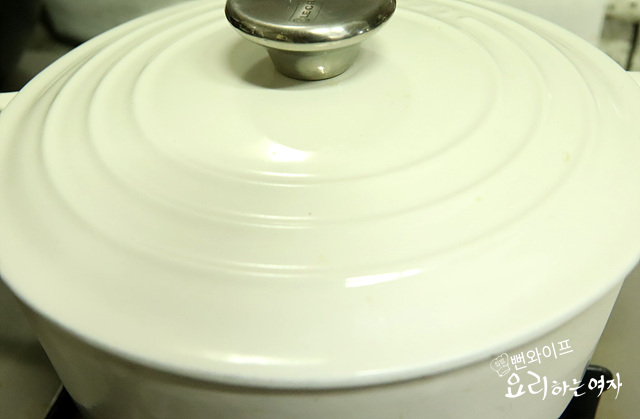
Finally, swirl the soju around the edges, cover with the lid, and cook over low heat for 15 to 20 minutes.
Since pork jowl is thinner than regular pork cuts, check along the way to see if it is done and adjust the time accordingly.
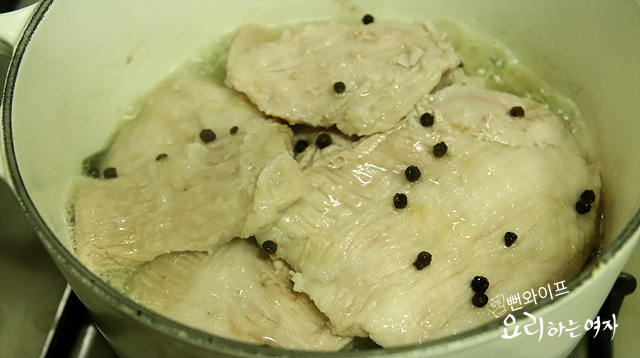
The meat shrinks considerably as it cooks.
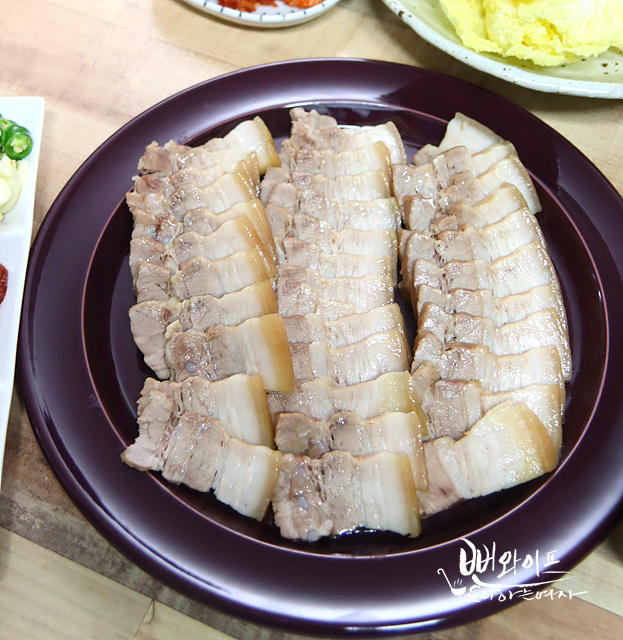
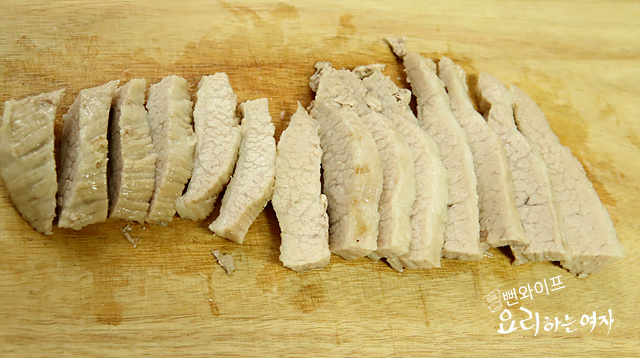
Pierce it, and if no blood runs out, it is fully cooked, so remove it and slice it not too thickly.
Make the meljeot sauce
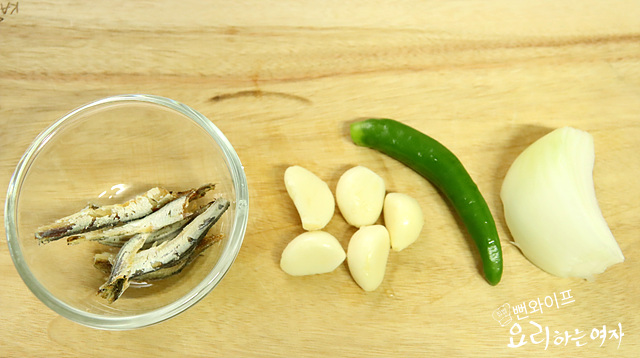
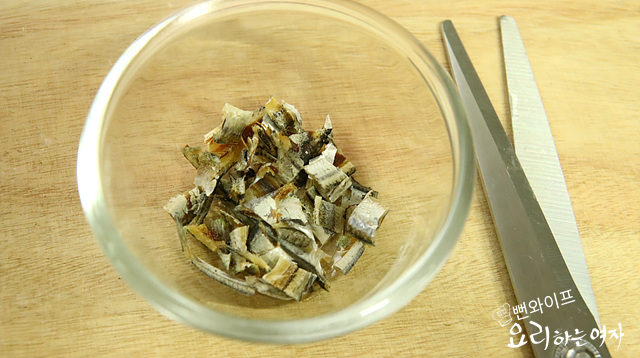
Meljeot sauce is originally made with fresh anchovies, but I recreated a similar flavor using dried soup anchovies.
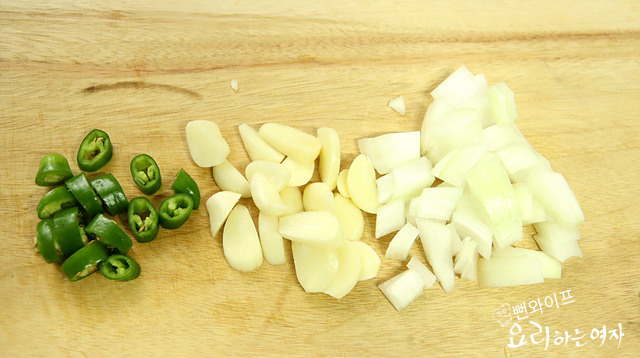
Here are the garlic, Cheongyang chili pepper, and onion to go with the 5 dried soup anchovies.
Roughly chop them into chunks.
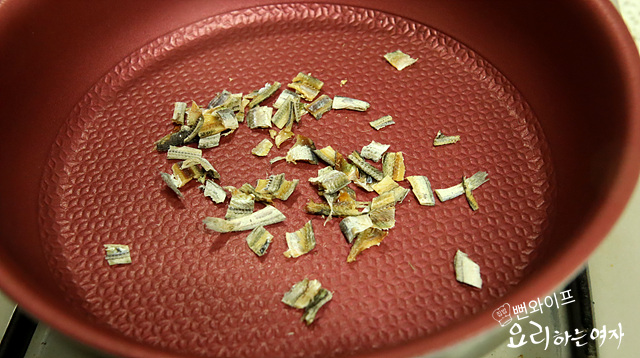
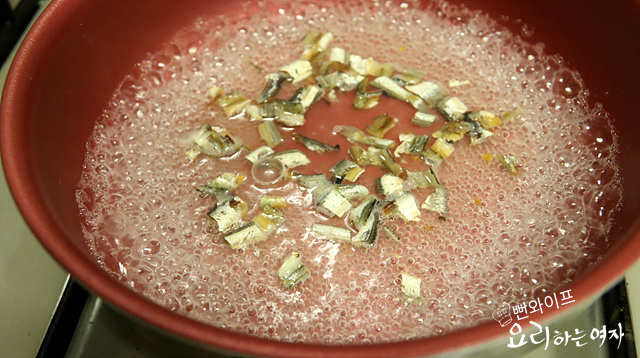
Toast the anchovies briskly in a dry pan to remove any fishy smell.
Pour in 1/4 cup water and bring to a boil so the anchovy flavor infuses.
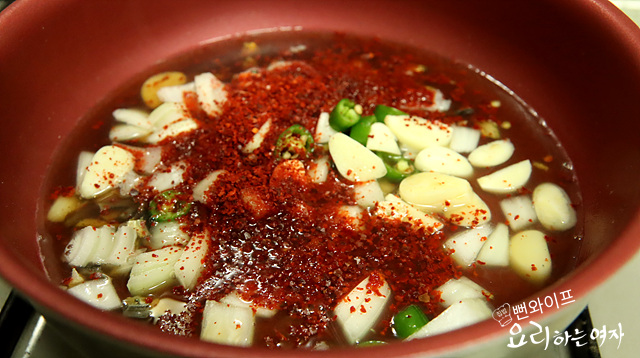
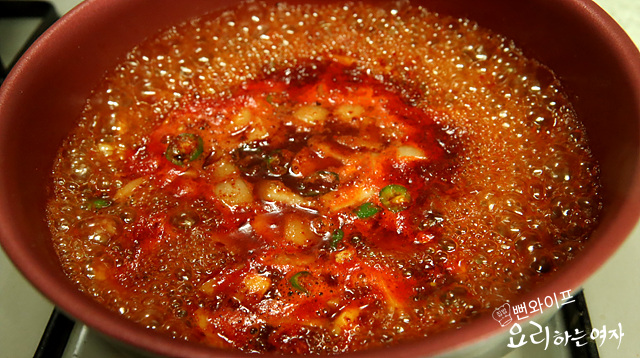
Add 3 tbsp fish sauce, 3 tbsp mirin (cooking rice wine), and 1/2 tbsp gochugaru (Korean chili flakes), then simmer until all the vegetables are tender.
If you have galchi-sokjeot (salted hairtail entrails), you can just add water at this stage and simmer.
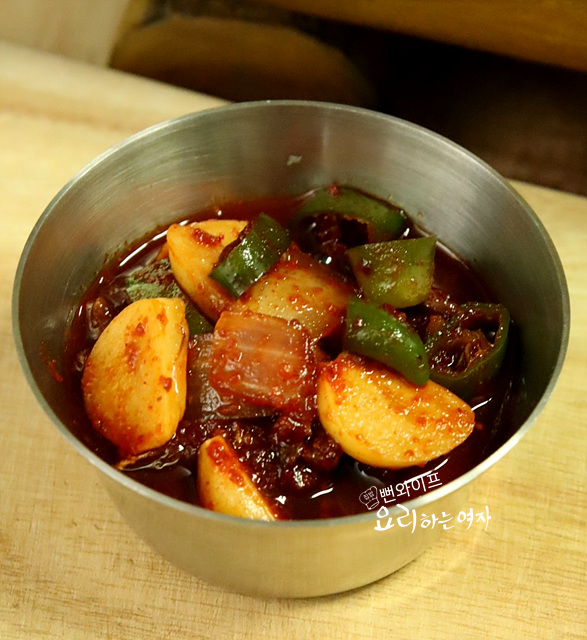
Meljeot is a sauce that is simmered right on the grill to dip meat into when grilling, and I made a simple version.
It is amazing how similar it tastes.
Finish
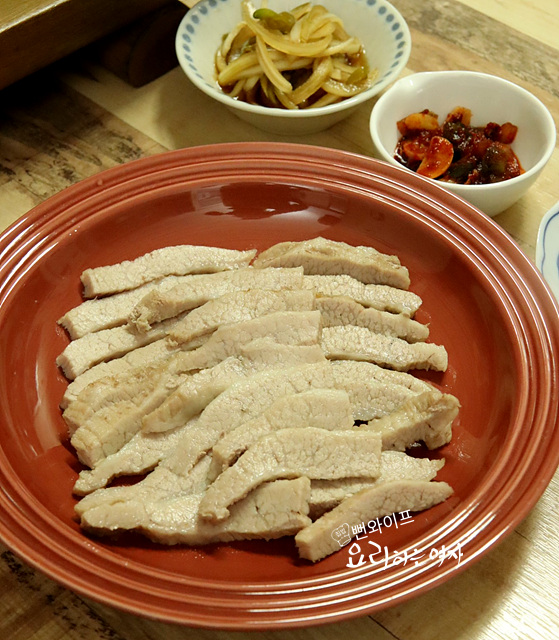
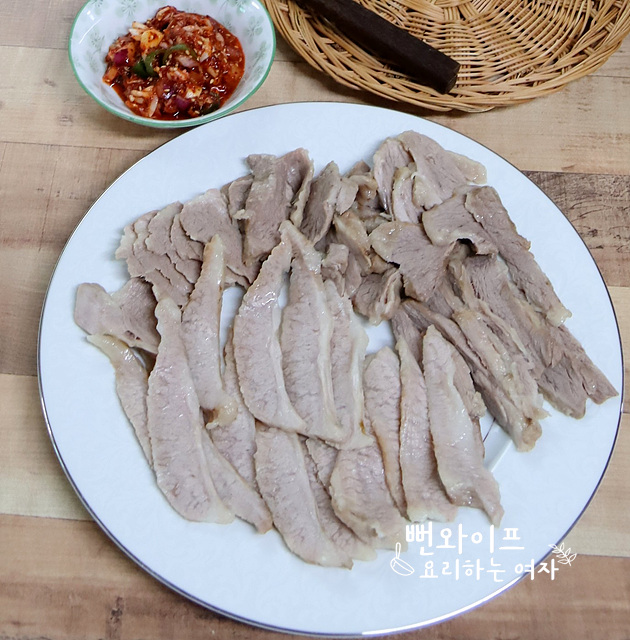
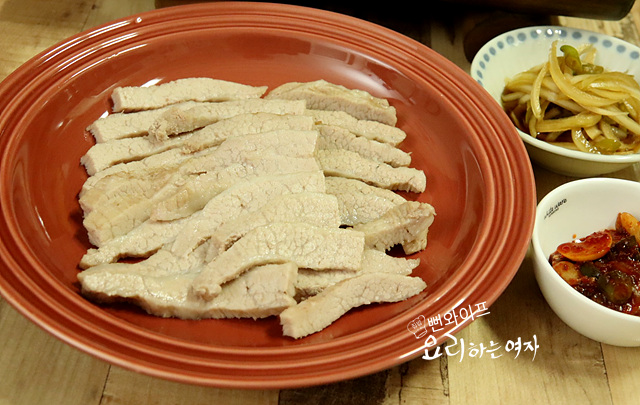
Since pork jowl is not very thick on its own, I sliced it somewhat long.
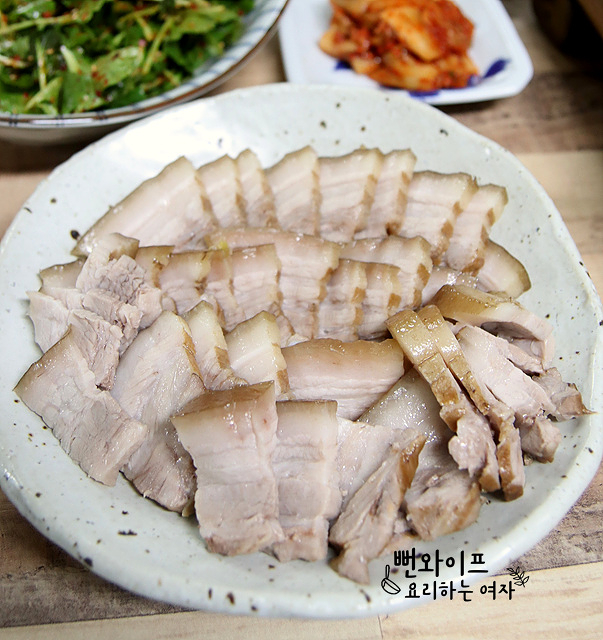
It is tender, nutty, and wonderfully soft.
The meat is so tender that both seniors and children will love it.
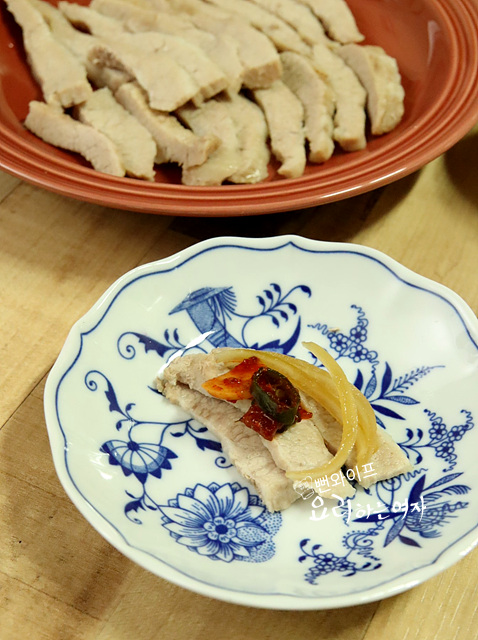
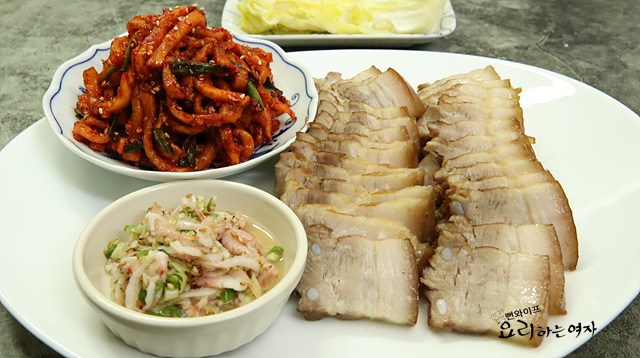
Topped with a bit of meljeot sauce and served alongside pickled sliced onions, the umami is incredible.
You can wrap it in leafy wraps like this, or simply dip it lightly in salt for a rich, nutty flavor.
While it is not an inexpensive cut, it makes a wonderful menu for the whole family to enjoy on special occasions.
 Ppunwife's tips
- Prepare a heavy-bottomed pot, as you will cook without adding water, using only the moisture from the vegetables.
- Pierce it, and if no blood runs out, it is fully cooked, so remove it and slice it not too thickly.
- Toast the anchovies briskly in a dry pan to remove any fishy smell.
FAQ
How can I check if the pork jowl is fully cooked?
When you pierce the meat, if no blood seeps out, it is completely cooked through to the center.
Can I make the meljeot sauce with an alternative to dried soup anchovies?
If you have galchi-sokjeot (salted hairtail entrails), you can simply simmer it with added water instead of the dried anchovies at that step.
Will the pot burn if I cook without adding water?
If you line the bottom of a heavy-bottomed pot with moisture-rich onion and large green onion, cover with the lid, and cook over low heat, moisture will release from the vegetables and prevent burning.
What is the best way to reheat leftover suyuk? AI-generated
Generally, placing it in a steamer to steam lightly again, or putting it in a microwave-safe container covered with plastic wrap to reheat gently, is best for preserving its tender texture.