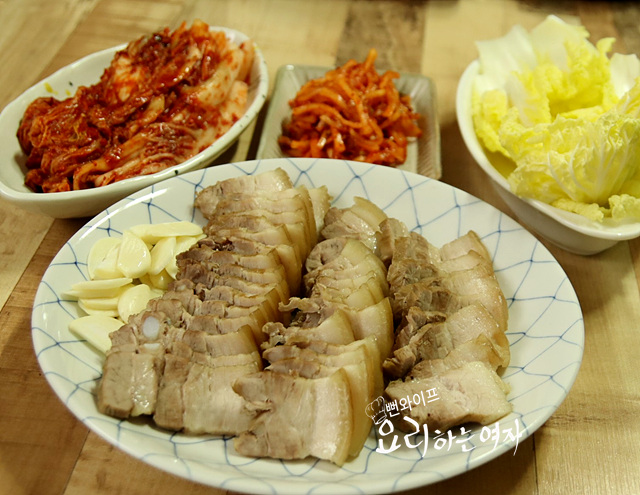
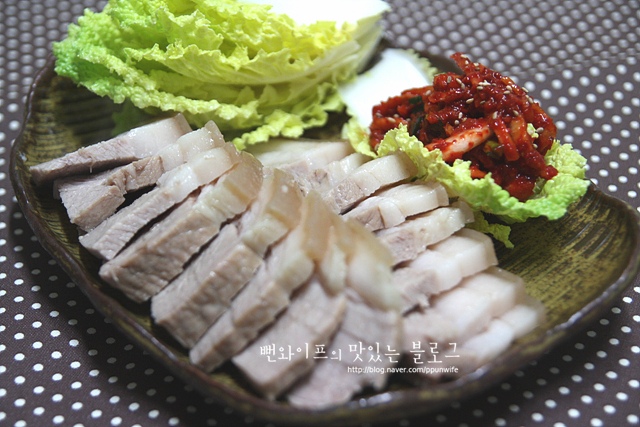
Samgyeopsal Suyuk (Boiled Pork Belly Slices)
A low-moisture samgyeopsal suyuk steamed with the natural moisture of vegetables and ssanghwa-tang, yielding juicy and chewy pork belly.
Translated from Korean by AI and not yet checked by a native speaker. Amounts and numbers are taken directly from the original recipe. Read the Korean original →
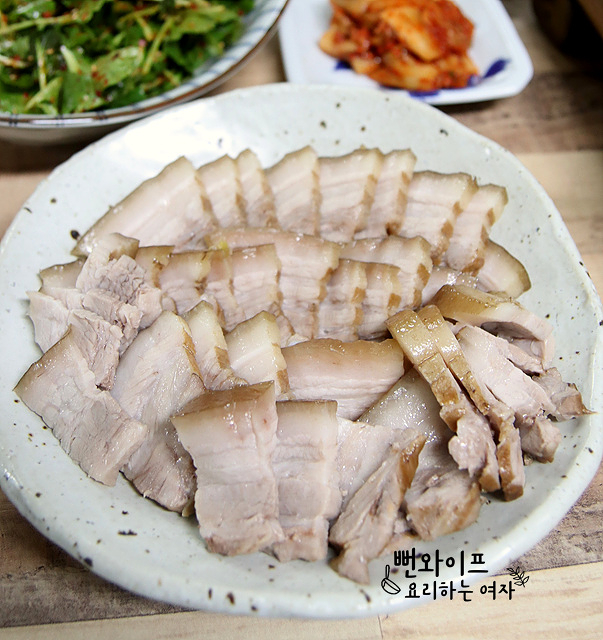
This is a low-moisture suyuk cooked without adding water, using only the natural juices released from onion, large green onion, soju, and ssanghwa-tang. The subtle aroma of the aromatics seeps into the meat to eliminate any off-odors, leaving a clean taste, a pleasantly chewy texture, and all of its natural juices intact. Steamed in a pot for about 35 minutes, it makes a generous accompaniment for drinks or a satisfying dinner centerpiece.
- Servings
- 3–4 servings
- Cook time
- 35 minprep not included
- Difficulty
- Medium
- Spiciness
- Not spicy
Ingredients
- Whole pork belly1 kg
- Onion1 (small)
- Large green onion (daepa)1 stalk
- Ginger2 cloves
- Soju1/2 cup
- Regular soy sauce (jin-ganjang)3 tbsp
- Ssanghwa-tang (traditional herbal drink)1 bottle
- Instead of 1 small onion, you can use 1/2 medium onion.
- You may omit ssanghwa-tang.
Steps
Prepare the ingredients
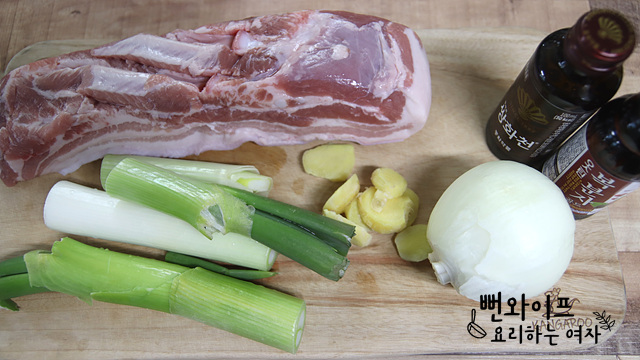
Prepare 1 kg whole pork belly, 1 small onion (or 1/2 medium onion), 1 large green onion (daepa), 2 slices of ginger, and ssanghwa-tang (traditional herbal drink) if you have it on hand, though it can be omitted.
I also had a bokbunja (black raspberry) drink, so I will add that too.
Slice the vegetables
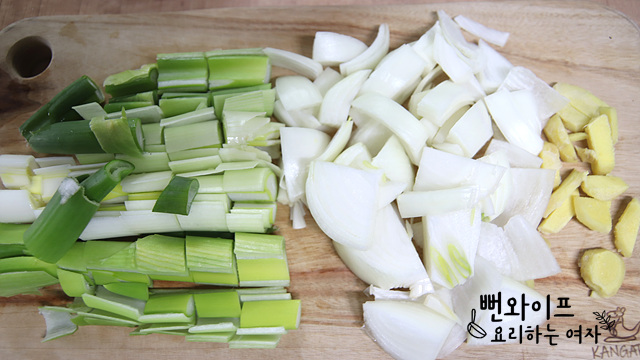
Cut the large green onion and onion into large chunks, not too small.
Finely slice the ginger so its aroma disperses evenly.
Layer the ingredients in the pot
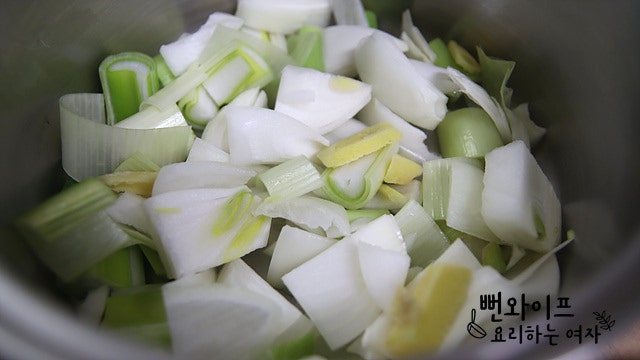
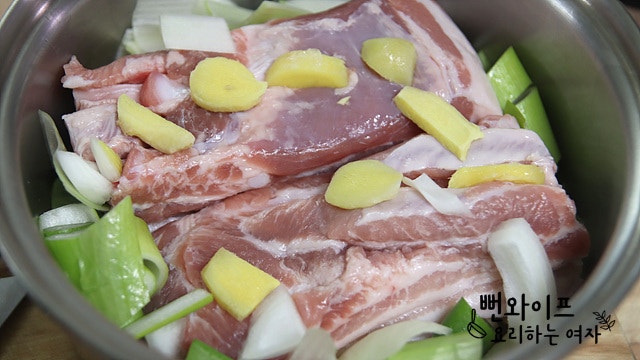
Since this suyuk is not boiled in water, it is best to use a heavy-bottomed pot.
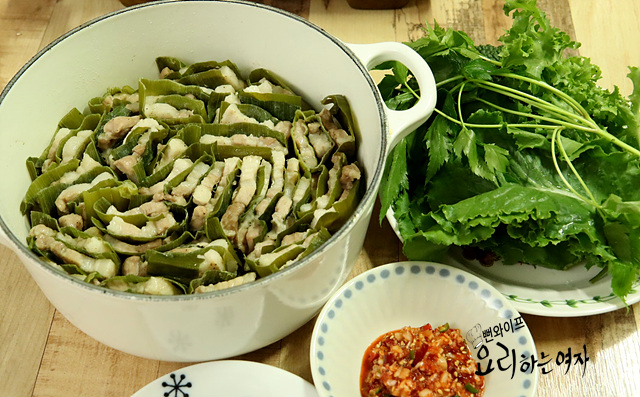
Place the onion and large green onion at the bottom of the pot, cut the pork belly to fit the pot, and place it on top.
Scatter the remaining pork belly and ginger loosely over the meat.
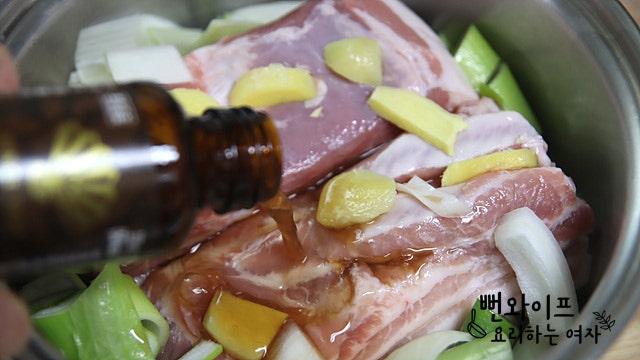
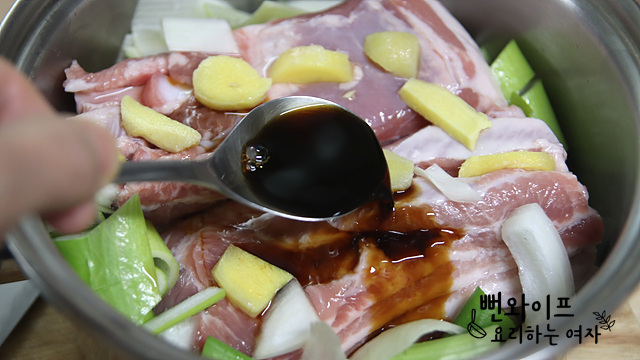
Pour the ssanghwa-tang and 3 tbsp regular soy sauce (jin-ganjang) over the meat.
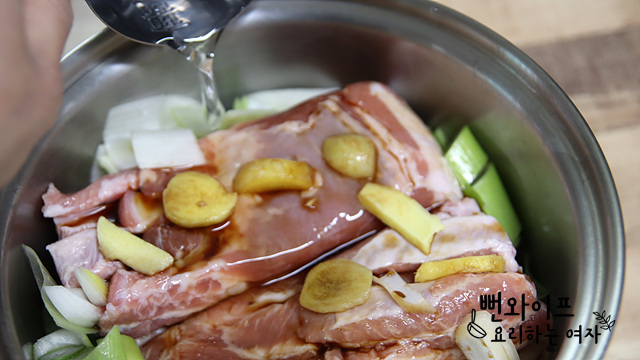
Lastly, pour 1/2 cup soju around the edges of the pot.
Simmer the pork belly
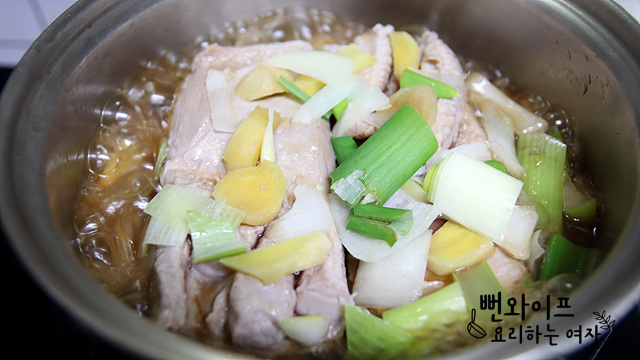
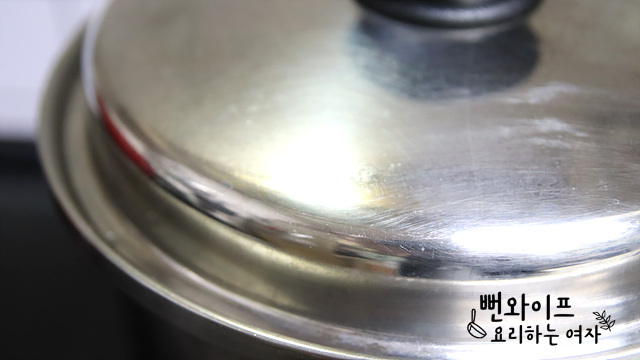
Cover with the lid and turn on the heat; steam will begin to rise as the vegetables slowly release their moisture.
Because no extra water is added, starting over high heat can scorch the bottom.
Once the bottom begins to simmer, reduce the heat to low, cover with the lid, and cook for at least 15 minutes.
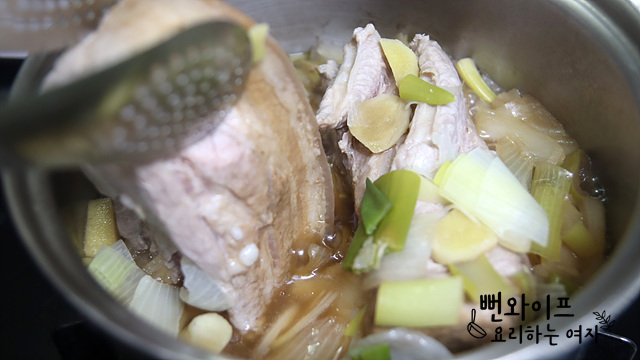
Open the lid, turn the meat over once, and cook for around 15 minutes more.
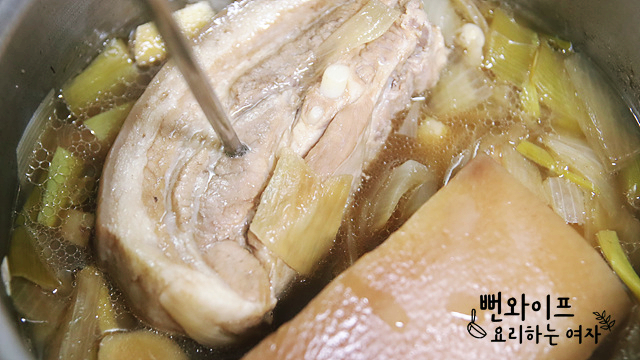
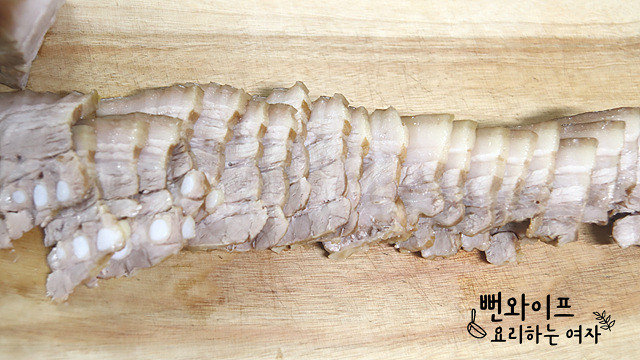
When you open the lid, a fragrant aroma greets you instead of any gaminess.
Plenty of moisture from the vegetables has released along with the rendered fat from the meat.
Pierce the meat with a chopstick; if clear juices rise without any blood, it is fully cooked. Turn off the heat, cover with the lid, and let it rest for 5 minutes.
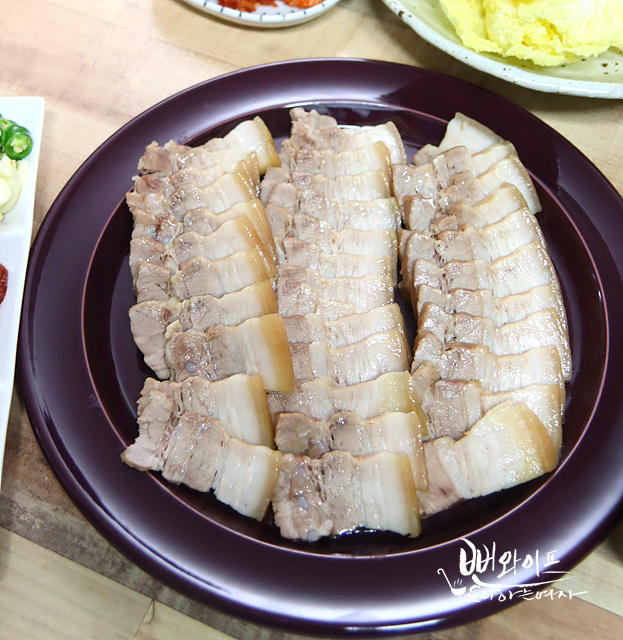
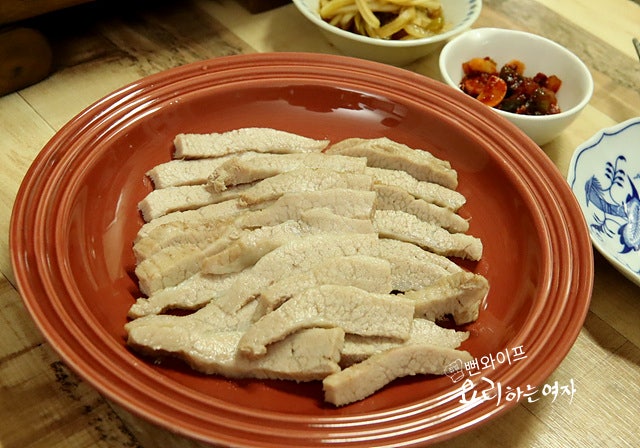
Let it cool slightly, then slice thinly.
Finish
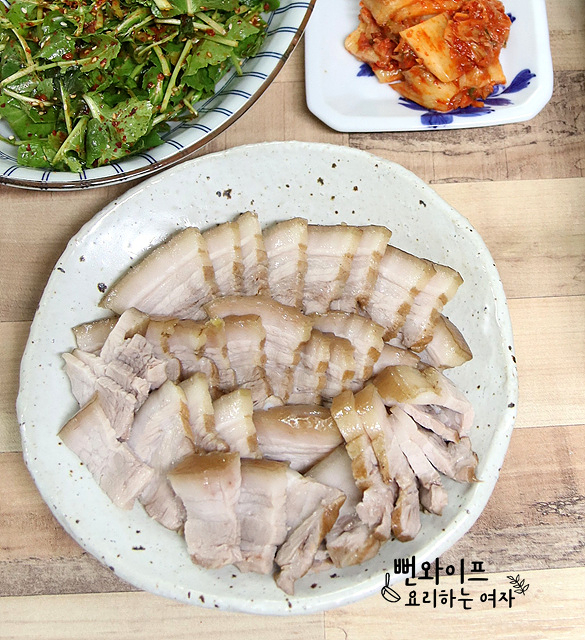
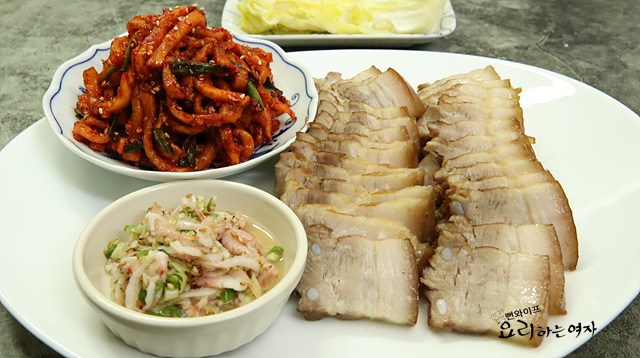
This is a suyuk cooked without adding any water.
Making suyuk is truly simple and easy.
The moisture from the ssanghwa-tang, soju, and vegetables, along with the pork's own fat, is more than enough to cook it thoroughly.
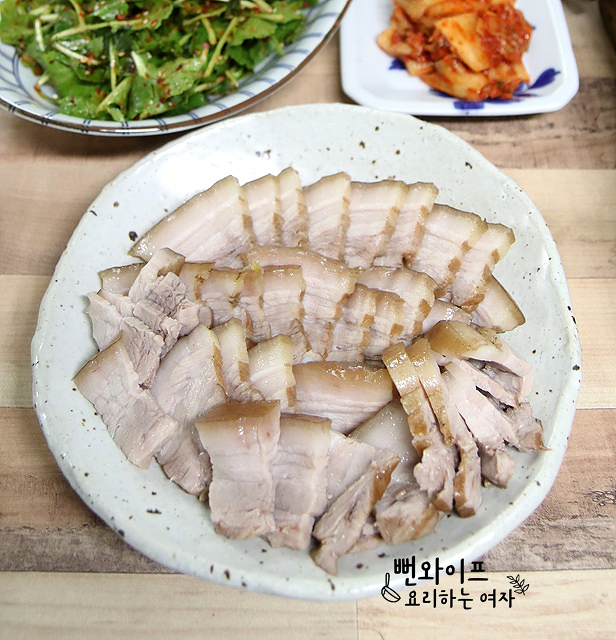
The meat stays firm rather than mushy, and with the skin intact, it even has a bouncy bite.
This is truly the ultimate accompaniment for drinks.
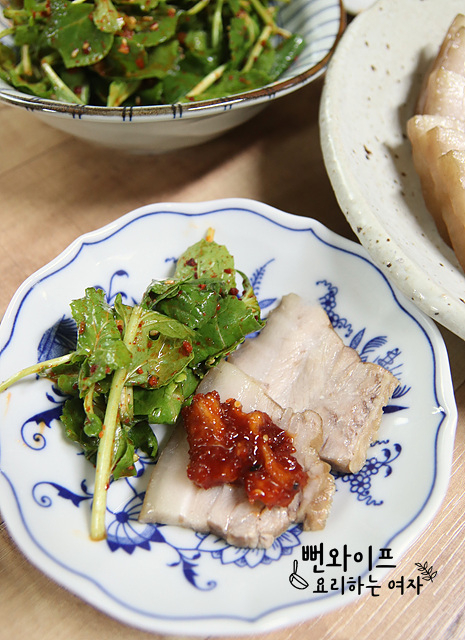
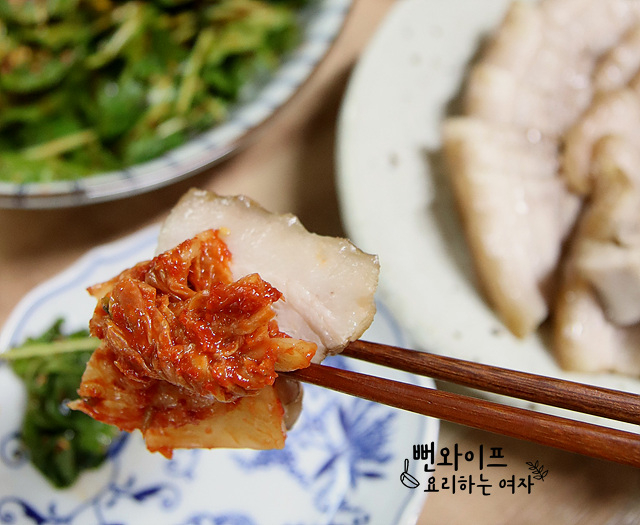
It tastes wonderful wrapped with well-fermented winter kimchi.
Dried radish strips and rapeseed greens are fantastic pairings as well.
 Ppunwife's tips
- Since this suyuk is not boiled in water, using a heavy-bottomed pot works best.
- Because no water is added, starting over high heat can scorch the bottom; reduce to low heat as soon as the liquid at the bottom begins to simmer.
- When pierced with a chopstick, the pork is fully cooked if clear juices rise without any blood.
FAQ
Is ssanghwa-tang an essential ingredient?
Ssanghwa-tang is added to eliminate pork odors, but if it is hard to find, you can leave it out.
How do I prevent the bottom of the pot from burning without water?
Choose a heavy-bottomed pot, avoid using high heat from the beginning, and lower the heat to low as soon as juices release from the vegetables and begin to simmer.
How can I tell if the pork is properly cooked?
Pierce the thickest part with a chopstick; if clear juices bubble up with no pink blood, the meat is thoroughly cooked all the way through.