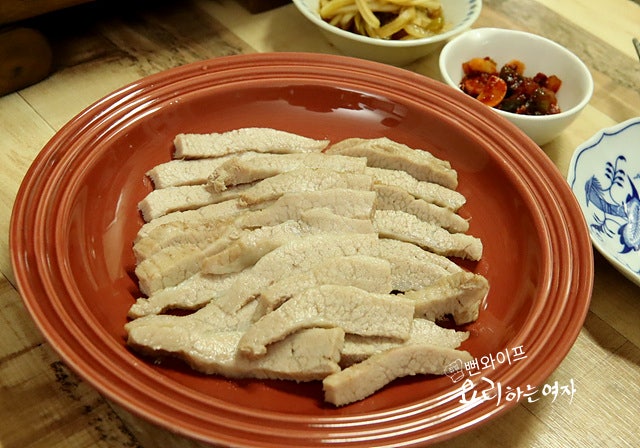
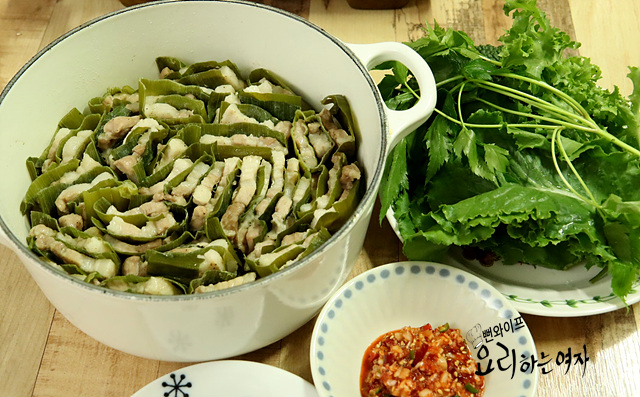
Moist Waterless Dwaeji Suyuk (Boiled Pork Belly Slices)
Pork belly steamed in a pot using only moisture from vegetables and soju to lock in the flavorful juices.
Translated from Korean by AI and not yet checked by a native speaker. Amounts and numbers are taken directly from the original recipe. Read the Korean original →
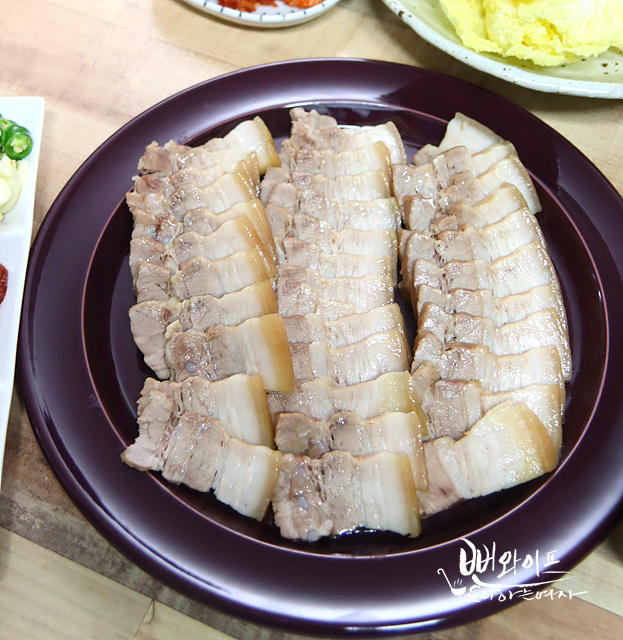
Cooked without adding water, using only the moisture drawn from onion and large green onion along with soju, keeping the meat juicy and tender. Layering the ingredients in a heavy-bottomed pot and steaming over low heat yields tender pork without any gamey odor. It pairs wonderfully with freshly made kimchi during kimjang season or as an accompaniment to drinks.
- Servings
- 3–4 servings
- Cook time
- 40 minprep not included
- Difficulty
- Medium
- Spiciness
- Not spicy
Ingredients
- Whole pork belly1 kg
- Onion1
- Large green onion (daepa)1 stalk
- Ginger2 cloves
- Regular soy sauce (jin-ganjang)3 tbsp
- Soju1/2 cup
- Pork shank, picnic shoulder, ham, or Boston butt all work well.
- Rinse the pork once in water.
- Doenjang, bay leaves, or whole black peppercorns also help remove gamey pork odors, so feel free to use them.
Steps
Prepare the ingredients
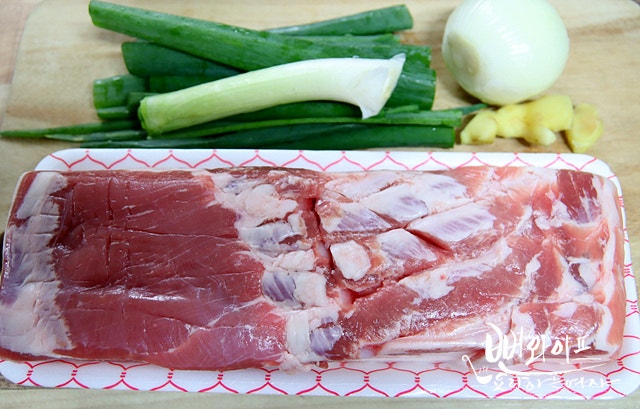
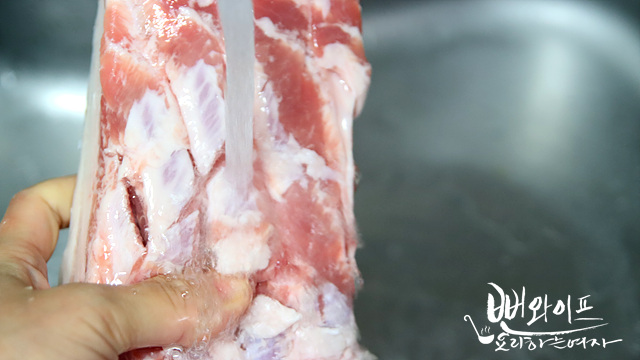
Here are whole pork belly, large green onion, onion, and ginger. You will also need soju and regular soy sauce (jin-ganjang).
These alone are plenty, but doenjang (Korean soybean paste), bay leaves, or whole black peppercorns also help remove gamey odors, so feel free to use them.
Pork shank, picnic shoulder, ham, or Boston butt all work well. Rinse the pork once in water.
Slice the ingredients
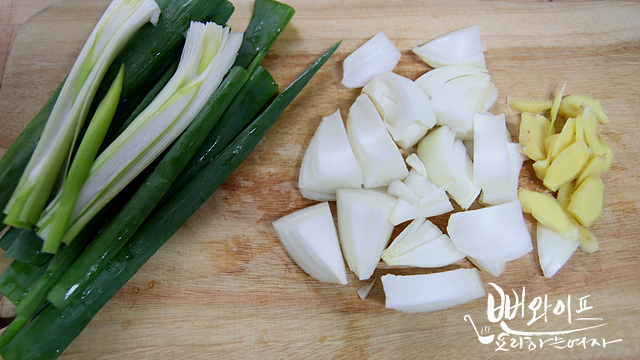
Split only the white part of the large green onion lengthwise in half, and cut the onion into large pieces. Thinly slice the ginger.
Add the ingredients to the pot
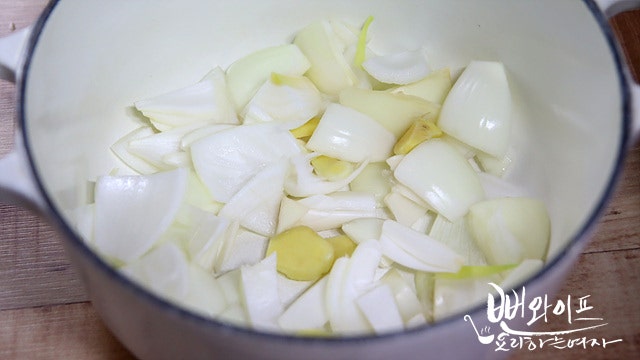
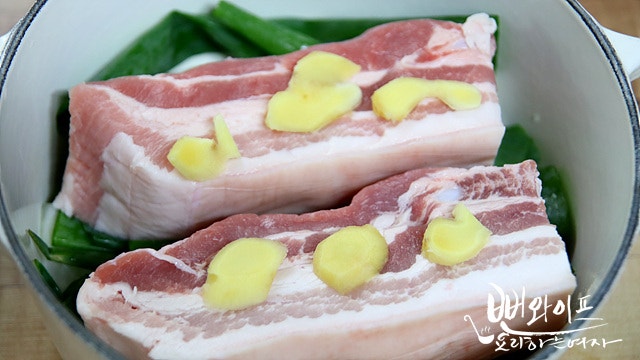
Since this is not suyuk boiled in water, it is best to use a heavy, thick pot.
Place the onion on the bottom of the pot and add half of the ginger.
Add all of the large green onion on top, and cut the meat in half so it fits comfortably in the pot. Place the remaining ginger over the meat.
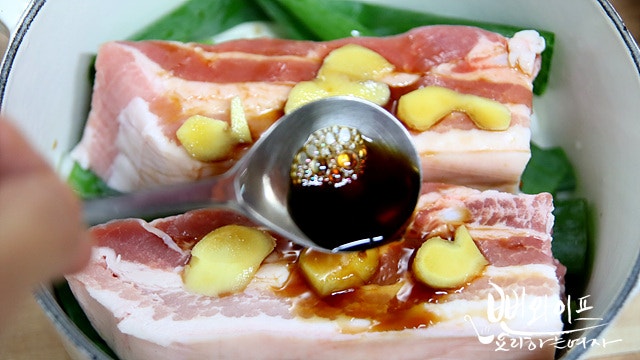
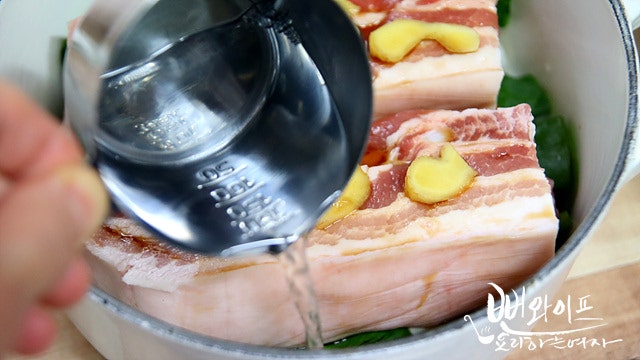
Drizzle 3 tbsp of regular soy sauce (jin-ganjang) over the meat, then pour 1/2 cup of soju around the edge of the pot.
Simmer the pork
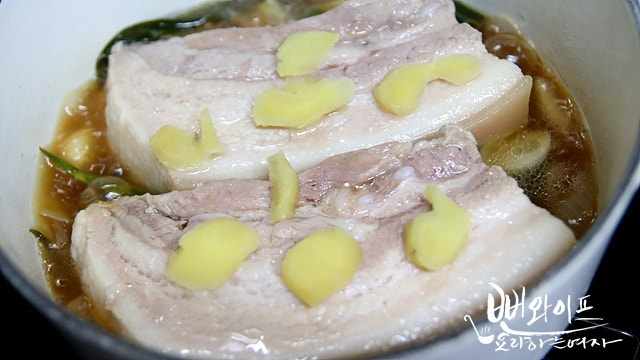
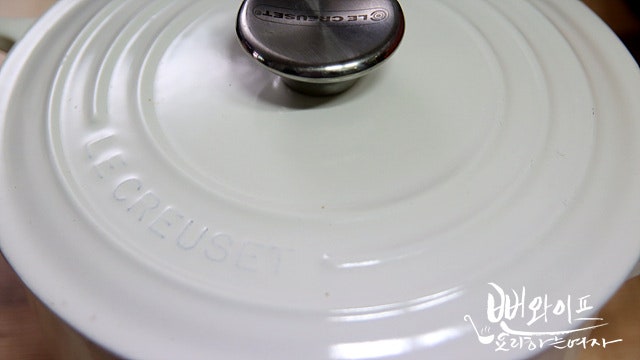
Turn the heat to high. As steam begins to rise, moisture will release from the onion and large green onion and start bubbling vigorously.
Turn the heat down to low, cover with the lid, and cook for 15 to 20 minutes.
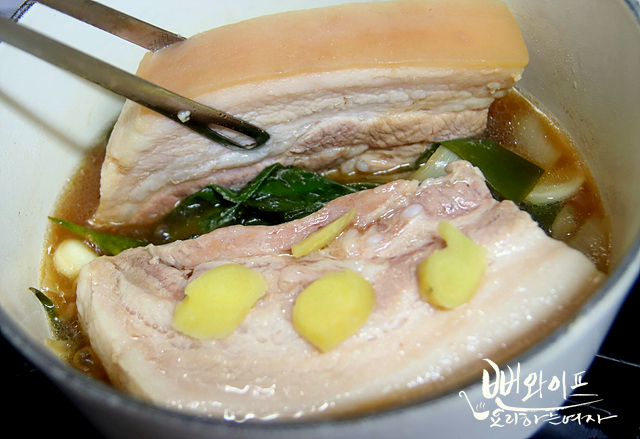
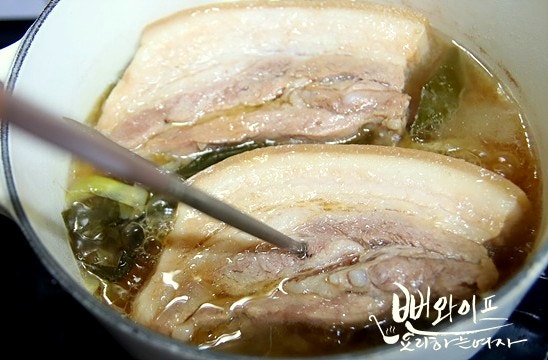
Flip the meat over and cook for another 15 to 20 minutes, and it will be completely cooked through.
To check if the inside is cooked through, poke it deep with a chopstick; clear liquid should run out instead of bloody juice.
Slice the pork
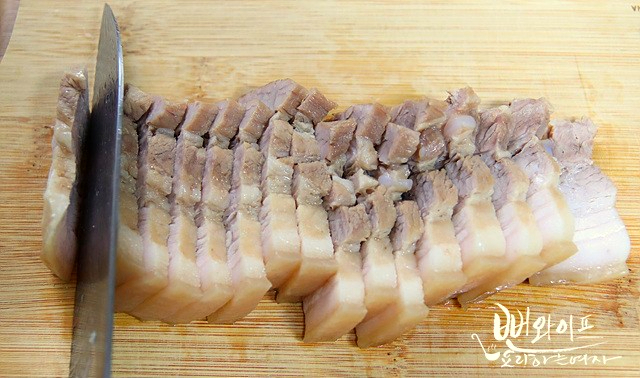
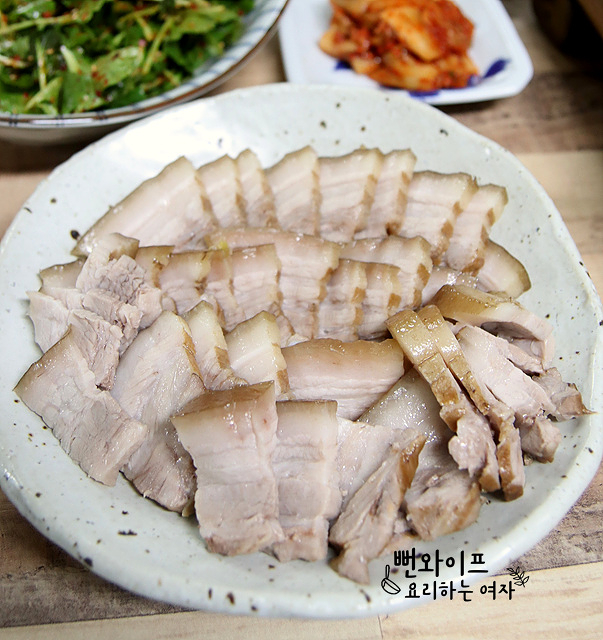
Let the hot steam cool slightly, then slice the meat to your desired thickness.
Serve
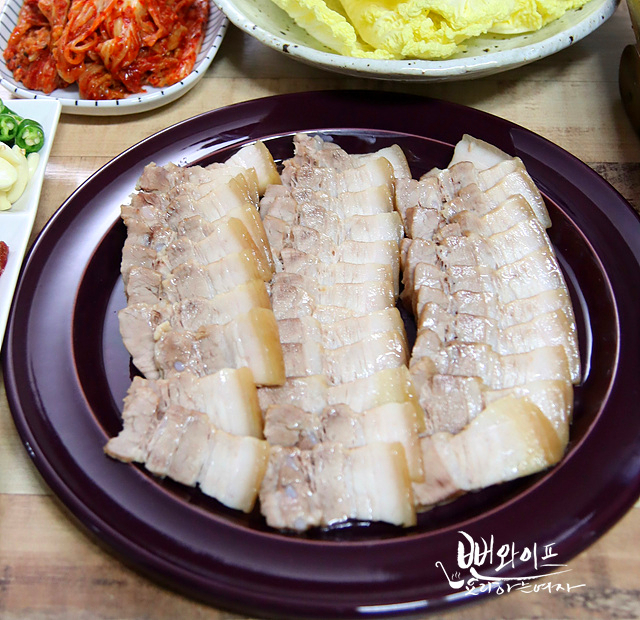
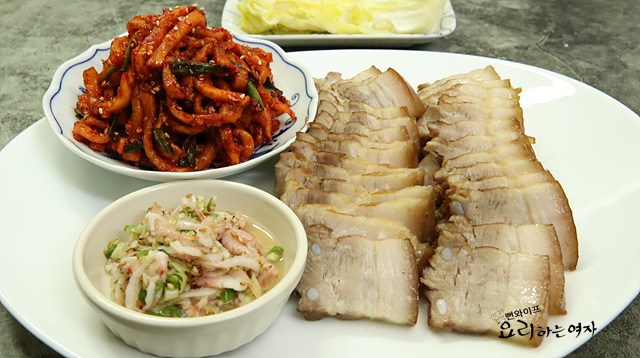
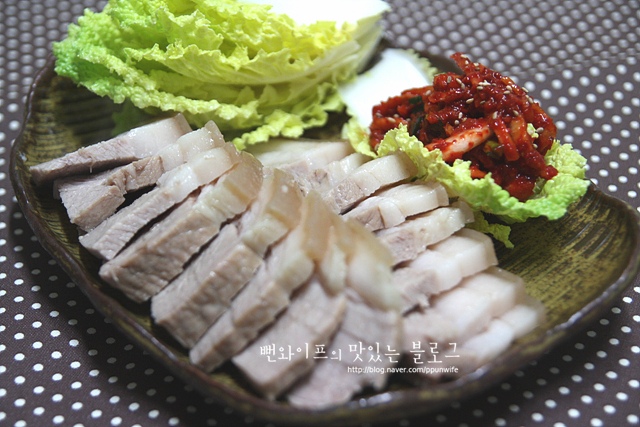
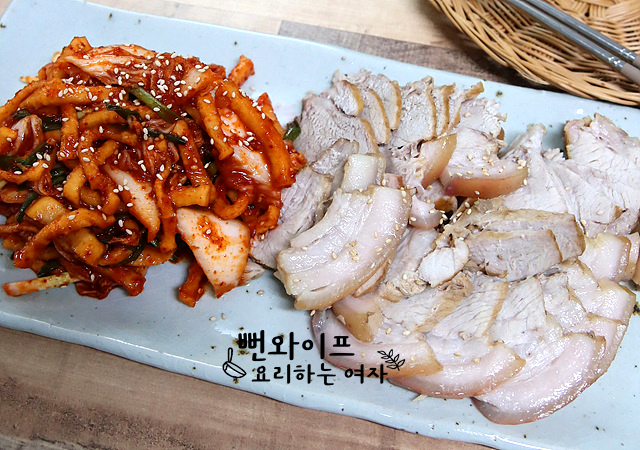
I neatly arranged the sliced meat on a plate and served it with yellow inner leaves of fall napa cabbage and the very first batch of kimchi made with this fall's salted napa cabbage.
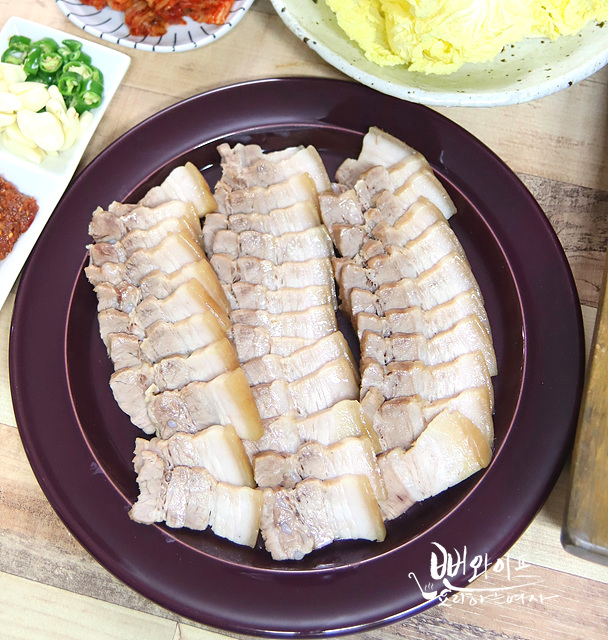
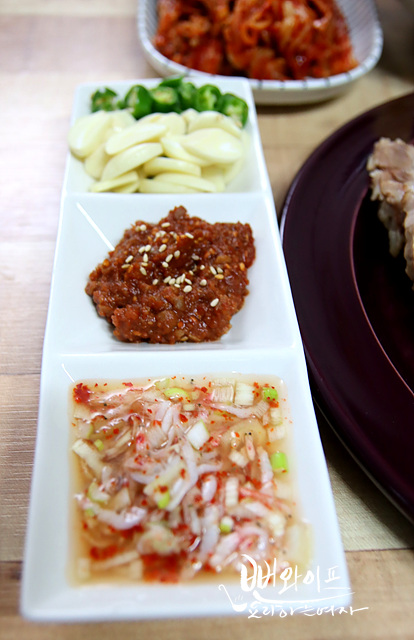
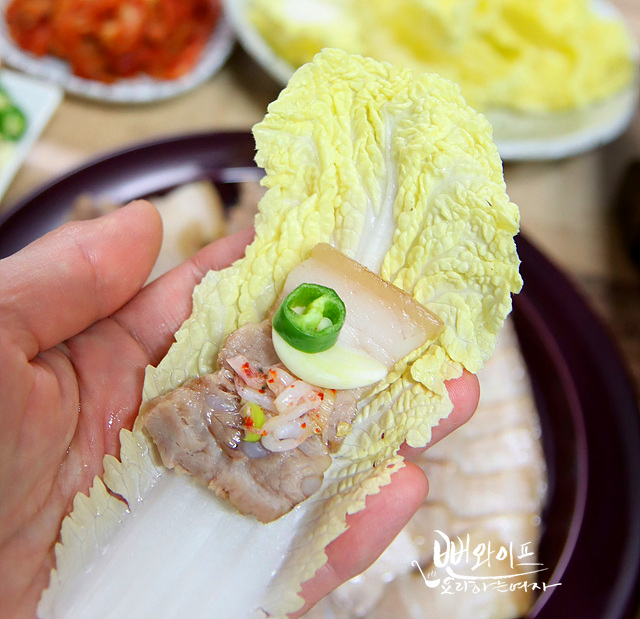
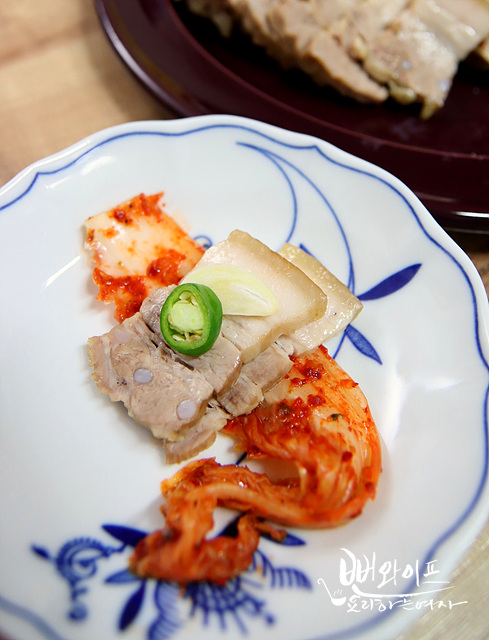
It is great topped with saeujeot (salted fermented shrimp) or ssamjang (seasoned soybean paste).
It is also delicious wrapped in kimchi.
Even without adding water, the moisture from the large green onion, onion, and soju is completely enough to make the pork tender and free of gamey odor.
Plus, the savory, delicious juices stay locked right in the meat.
 Ppunwife's tips
- Since this is not suyuk boiled in water, it is best to use a heavy, thick pot.
- To check if the inside is cooked through, poke it deep with a chopstick; clear liquid should run out instead of bloody juice.
FAQ
Can I use different cuts of pork instead of whole pork belly?
Pork Boston butt, picnic shoulder, ham, or shank all work very well.
What kind of pot is best for cooking this suyuk?
Because it cooks without water using only the moisture from vegetables, it is best to use a heavy pot with a thick bottom.
How can I tell if the meat is fully cooked inside?
It is well cooked when you poke a thick part deeply with a chopstick and clear meat juices emerge without any trace of blood.
Are there extra ingredients I can add to eliminate gamey odors?
Depending on your preference, you can add doenjang, bay leaves, or whole black peppercorns to help reduce gamey odors.