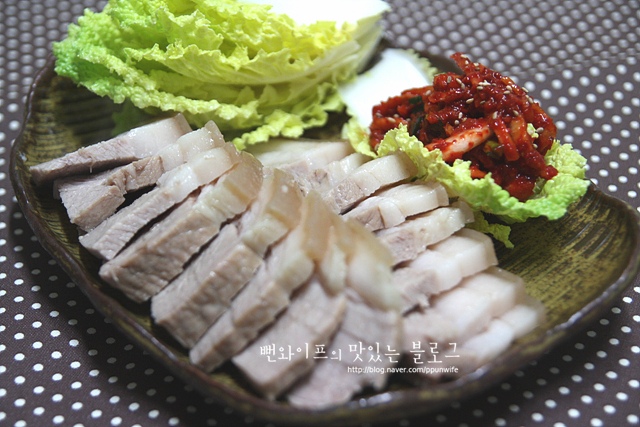
Moist Samgyeopsal Suyuk (Boiled Pork Belly Slices)
A waterless boiled pork belly dish gently steamed with vegetable moisture and doenjang to remove gamey odors and keep the meat tender.
Translated from Korean by AI and not yet checked by a native speaker. Amounts and numbers are taken directly from the original recipe. Read the Korean original →
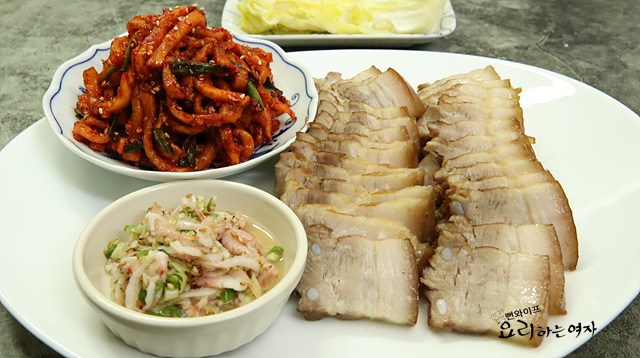
Steamed without water using only the moisture released from vegetables like onion and large green onion, the meat turns out tender with no off-odors. Doenjang spread over the surface adds subtle seasoning and savory flavor. Paired with crunchy salted radish salad and seasoned saeujeot, it makes a wonderful centerpiece for housewarmings and dinner guests.
- Servings
- 2–3 servings
- Cook time
- 45 minprep not included
- Difficulty
- Hard
- Spiciness
- Mildly spicy
Ingredients
Suyuk
- Pork belly600 g
- Large green onion (daepa)2 stalks
- Onion2
- Whole black peppercorns1 tbsp
- Doenjang (Korean soybean paste)1 tbsp
- Ginger1 knob
- Bay leaves3–4 leaves
- Soju1/2 cup
- Inner leaves of napa cabbage1/4 head
- Salt2 tbsp
- Water1/2 cup
Radish salad for bossam
- Korean radish (mu)1 kg
- Scallions (jjokpa)7 stalks
- Coarse sea salt3 tbsp
- Corn syrup (mulyeot)1 cup
- Gochugaru (Korean chili flakes)5 tbsp
- Minced garlic2 tbsp
- Sand lance fish sauce (or dried anchovies)2 tbsp
- Corn syrup (mulyeot)1 tbsp
- Sugar1 tbsp
- Minced ginger1 tsp
- Toasted sesame seeds1 tbsp
Seasoned saeujeot
- Salted fermented shrimp (saeujeot)2 tbsp
- Minced green onion1 tbsp
- Cheongyang chili pepper (hot green chili)1 tbsp
- Minced garlic1 tsp
- Toasted sesame seedsa little
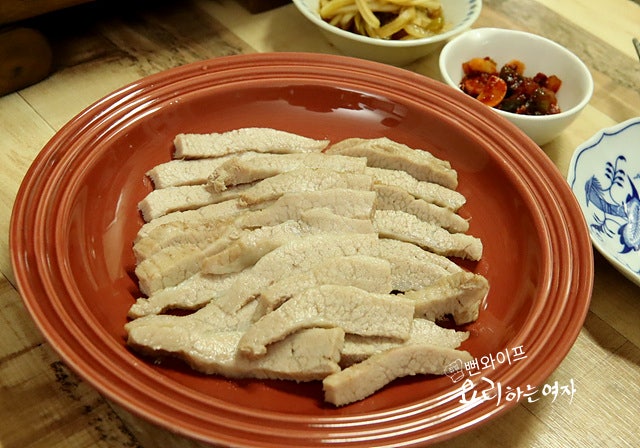
- For suyuk meat, you can use whole cuts of any pork cut you like, such as pork shoulder, pork collar, shank, pork belly, or skin-on pork belly.
- If you do not have scallions, you can julienne large green onion instead.
- Toss the radish with salt and corn syrup, then let it salt for about 2 hours.
- Pour salt and water over the napa cabbage hearts and let them salt for about 1 hour.
Steps
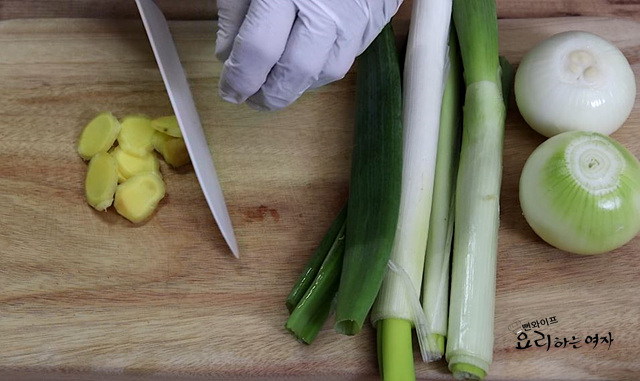
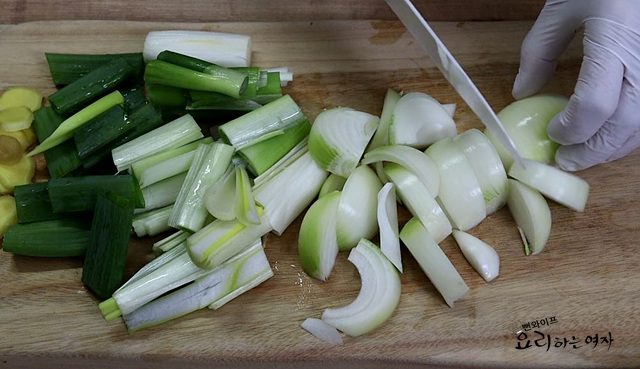
Slice the ginger thinly to add to the pork, and cut the large green onion and onion into thick pieces.
You can also slice garlic and add it as well.
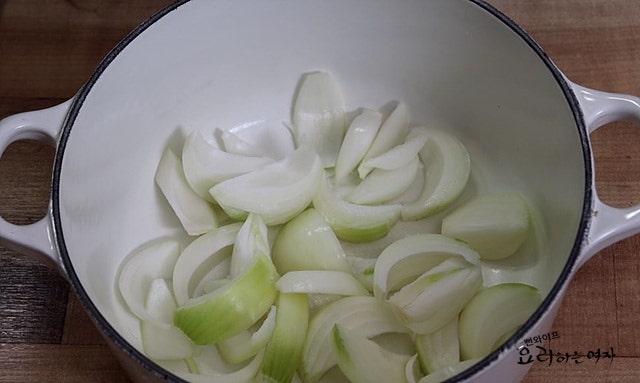
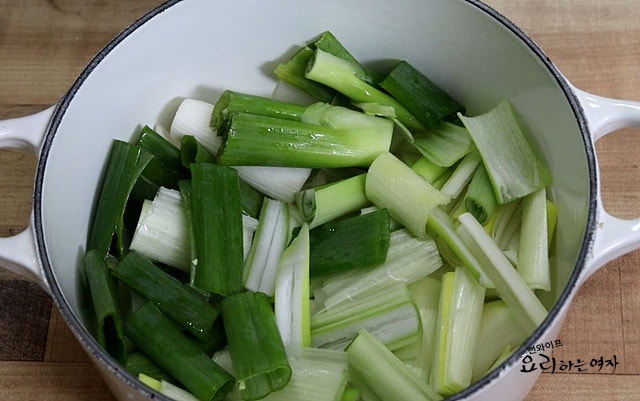
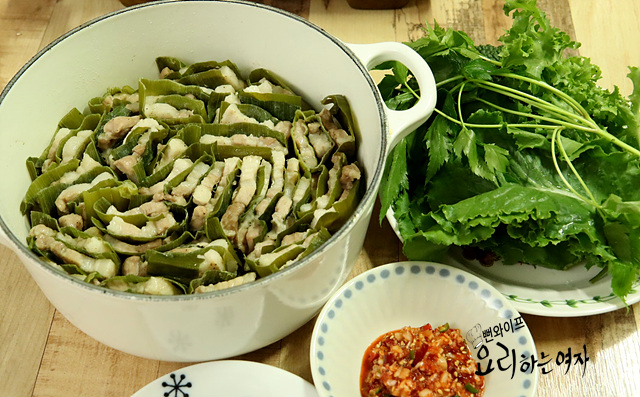
Because the meat cooks using the moisture from vegetables with almost no added water, thin-bottomed pots can burn, so be sure to use a heavy-bottomed pot. Spread the onion and large green onion evenly over the bottom.
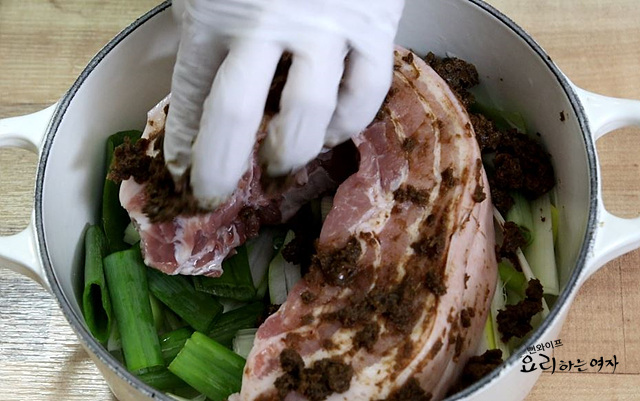
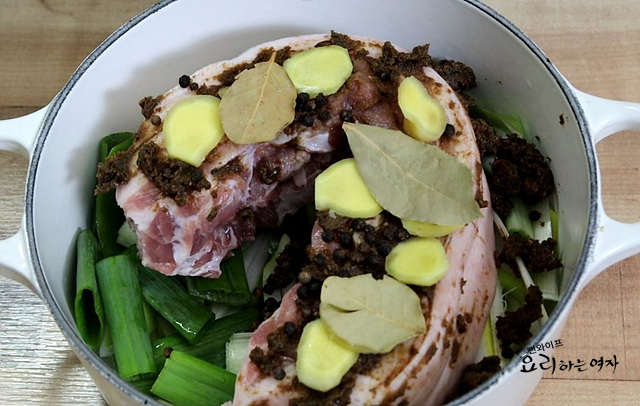
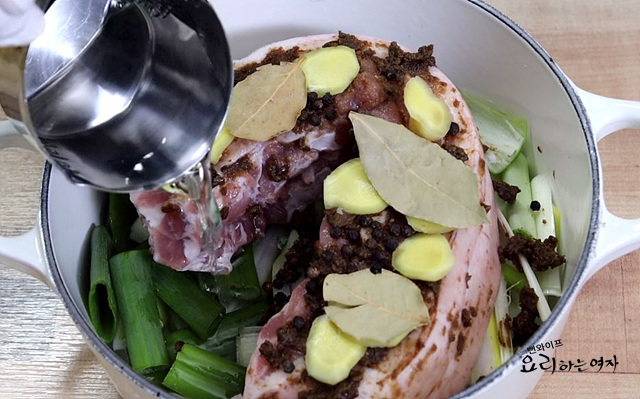
Place the meat on top, spread the doenjang evenly over it, then arrange the ginger and bay leaves on top. Finally, pour in the soju and turn on the heat. Cover with the lid, and soon steam will rise and the subtle aroma of vegetables will begin to come through.
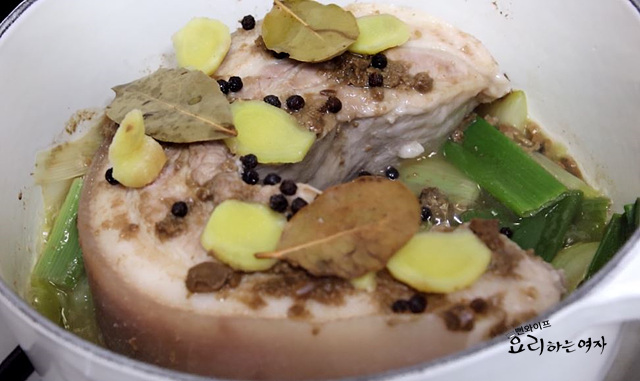
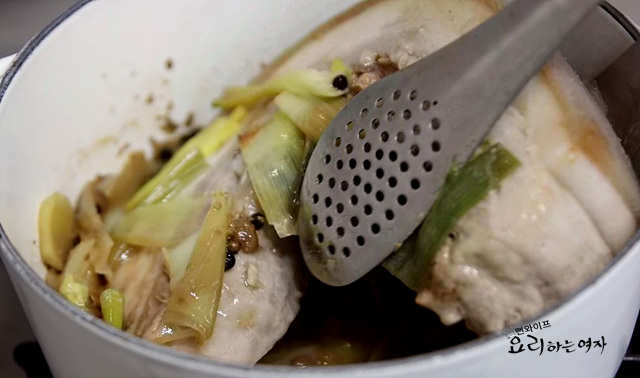
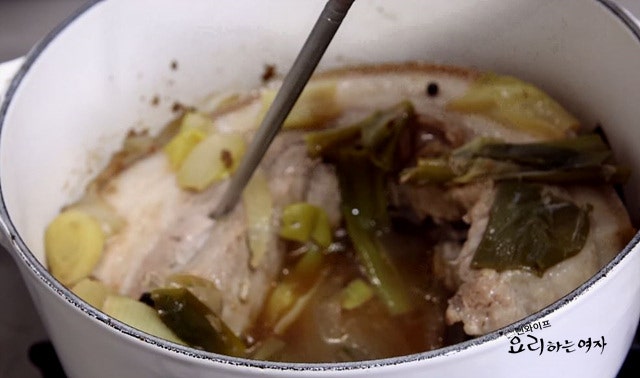
Reduce the heat to low and simmer for 20 minutes, then turn the meat over once halfway through. Simmer for at least another 20 minutes and check by piercing with a chopstick. If no bloody liquid oozes out, the meat is fully cooked. Turn off the heat, let it rest with the lid on for about 5 minutes, then remove it from the pot and let the steam dissipate.
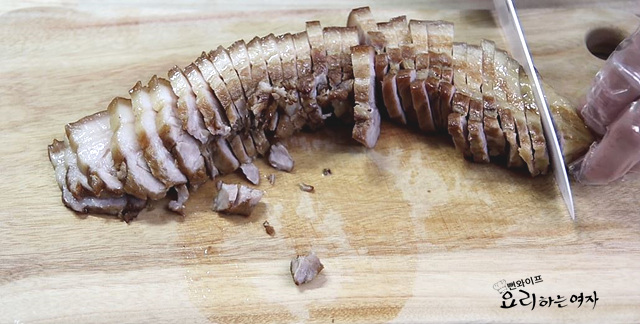
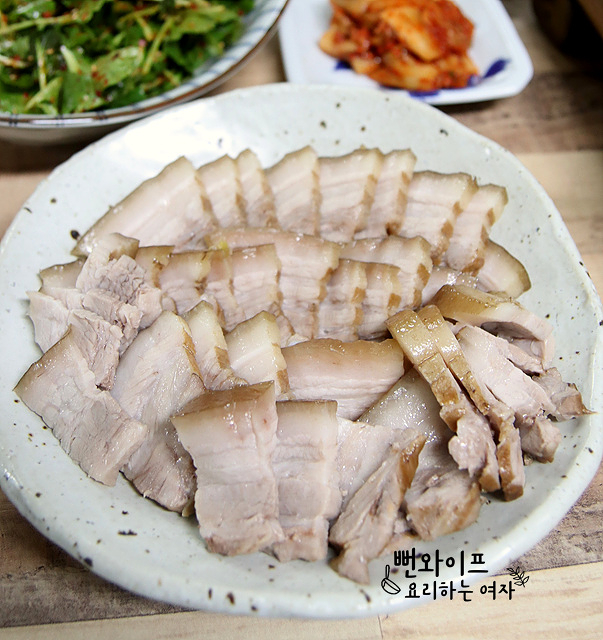
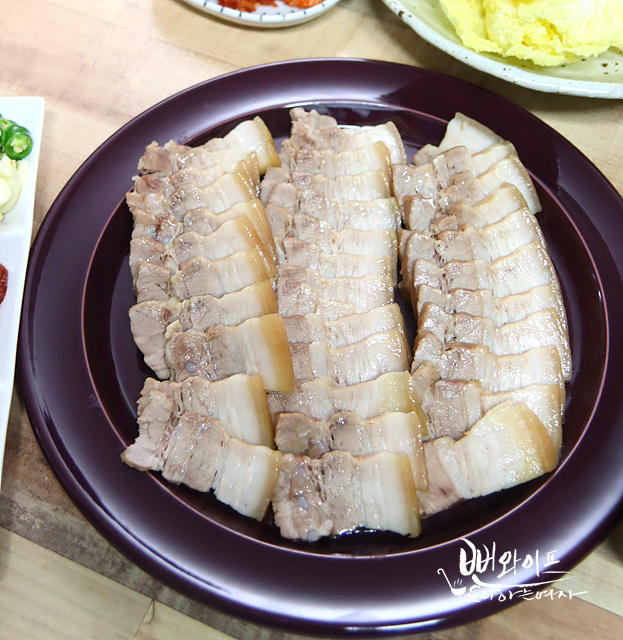
Slice it into bite-sized thicknesses, and your springy, tender pork belly suyuk is complete.
The springy texture of the pork belly suyuk is truly wonderfully delicious.
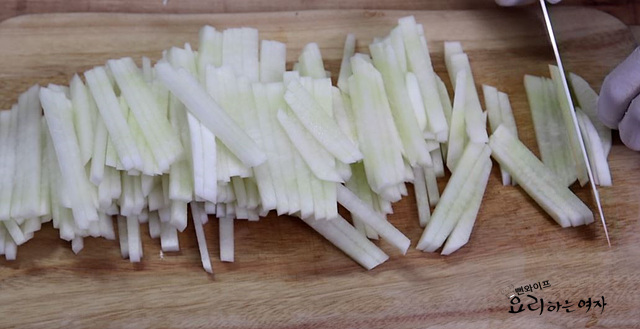
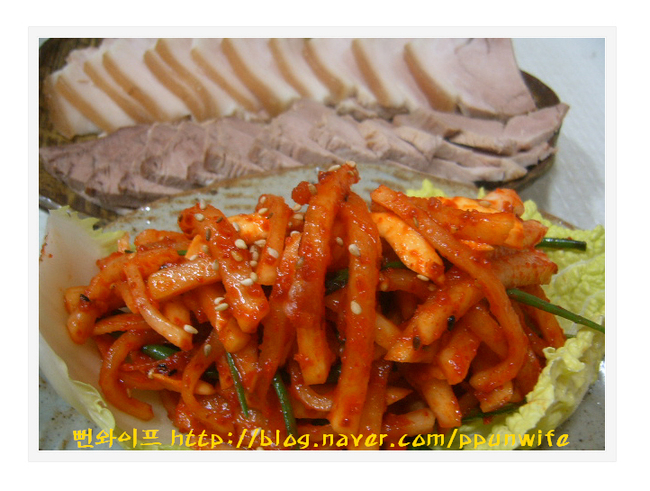
Let us make the radish salad for bossam. Slice the radish to about 0.7 cm thick—not too thin—to give it a good texture. I used peeled radish, but leaving the skin on gives an even crunchier texture.
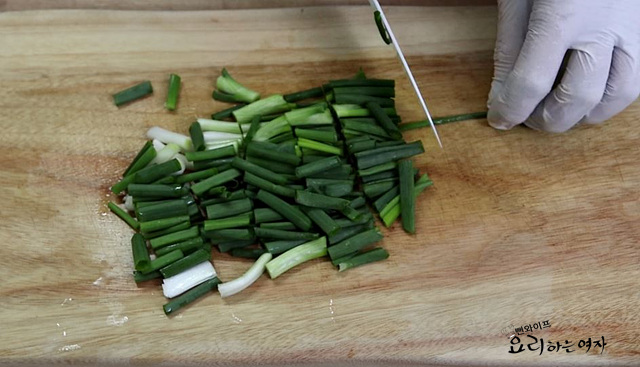
Adding a bit of scallion makes the radish salad more aromatic; cut it into lengths of around 3 cm. If you do not have scallions, you can julienne large green onion instead.
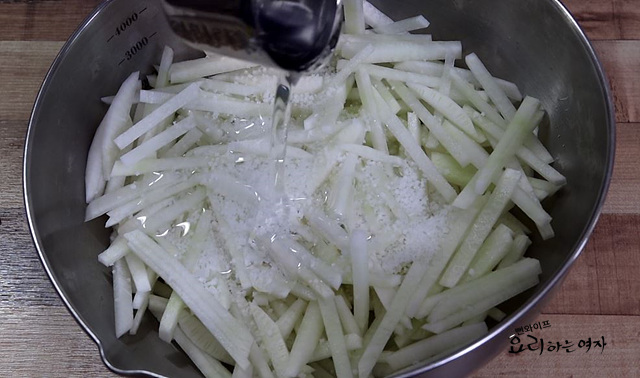
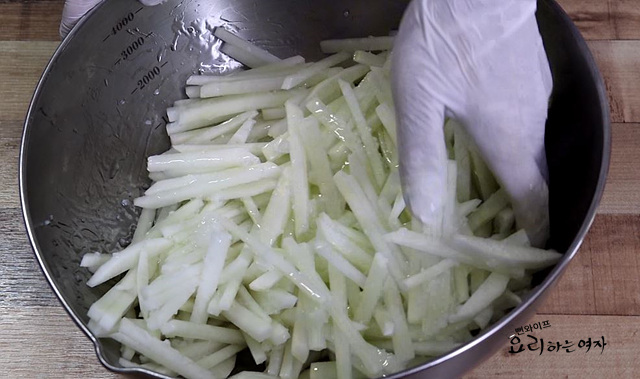
Add 3 tbsp of salt and 1 cup of corn syrup to the radish, toss well, and let it salt for about 2 hours.
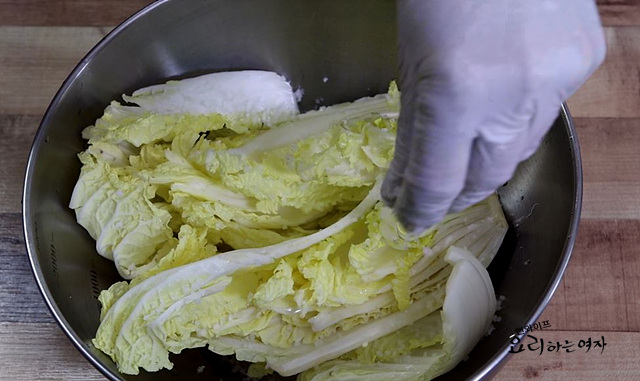
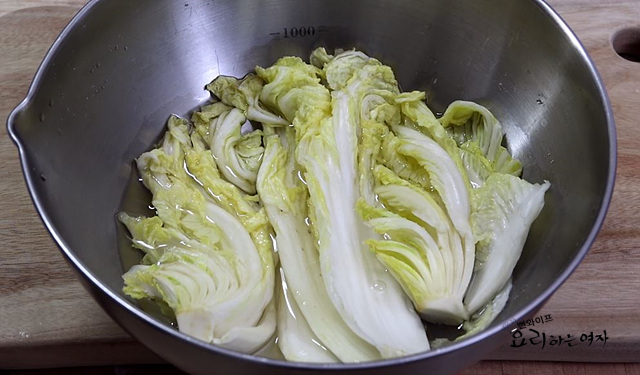
Evenly sprinkle 2 tbsp of salt over the napa cabbage hearts, focusing mainly on the thick stem portions, pour in about 1/2 cup of water, and let them salt until limp for about 1 hour.
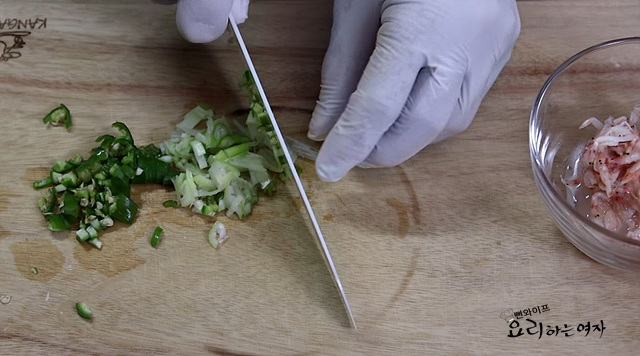
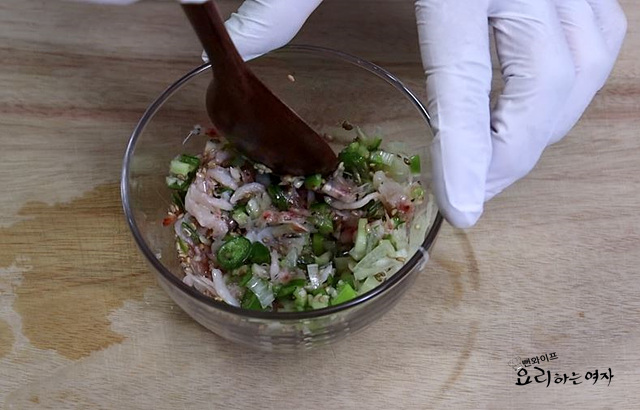
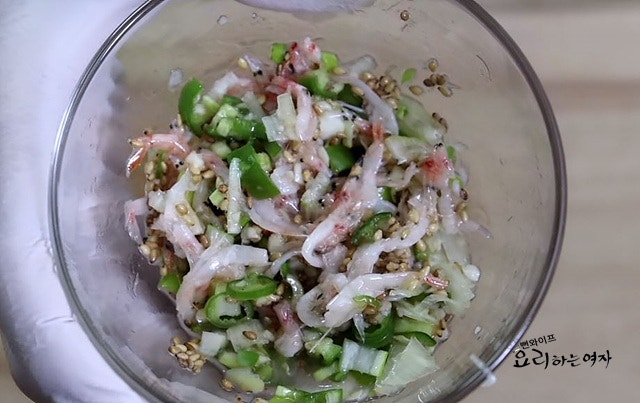
Add the minced green onion, minced Cheongyang chili pepper, minced garlic, and toasted sesame seeds to the saeujeot, and mix well.
If you want it spicier, you can add a little gochugaru.
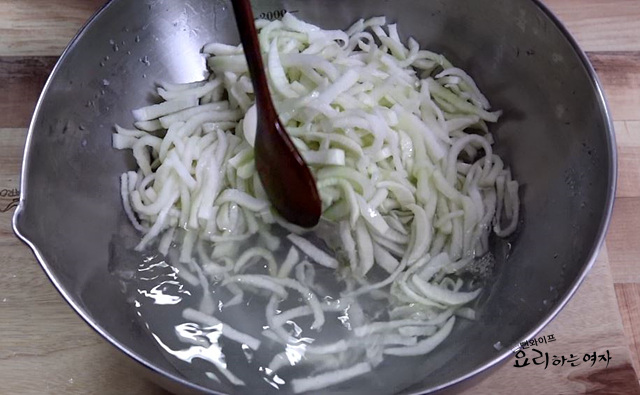
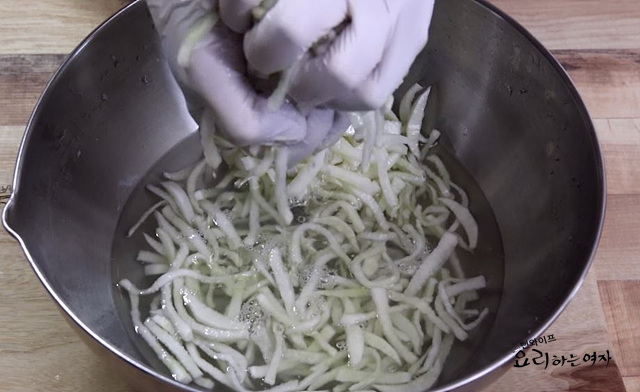
A lot of liquid has drawn out as the radish salted.
The corn syrup is there to draw out moisture from the radish, so you do not need to worry about it becoming too sweet.
Gently drain the liquid. (Do not discard about 3 to 4 tbsp of the remaining liquid; you can use it to replenish moisture if the seasoning feels too dry when tossing.)
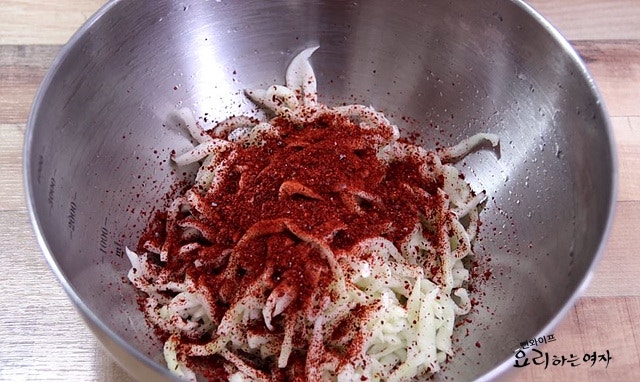
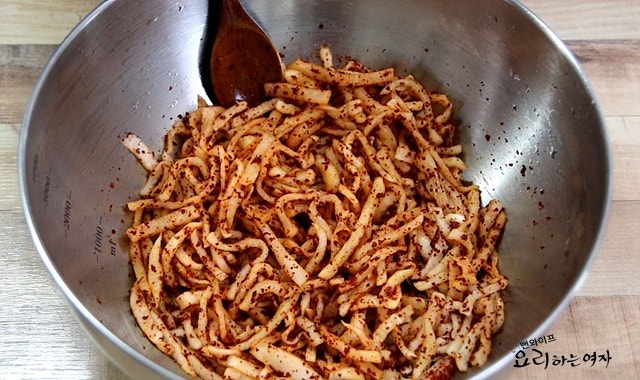
Add the gochugaru to the drained radish and toss to let the red chili color soak in for about 30 minutes.
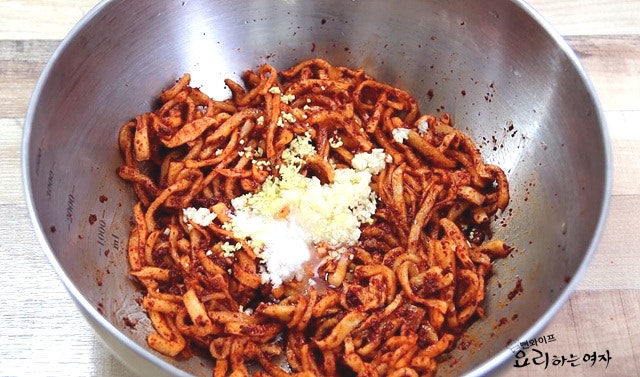
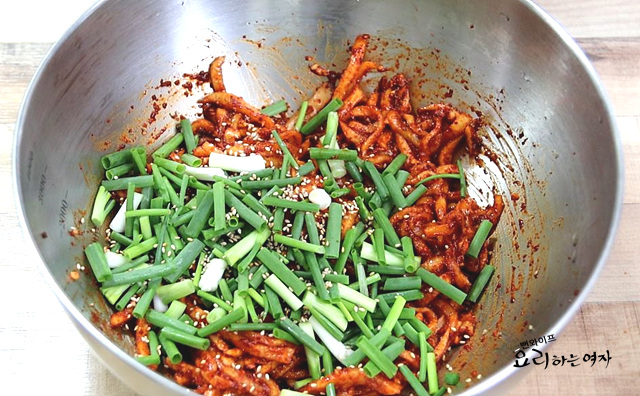
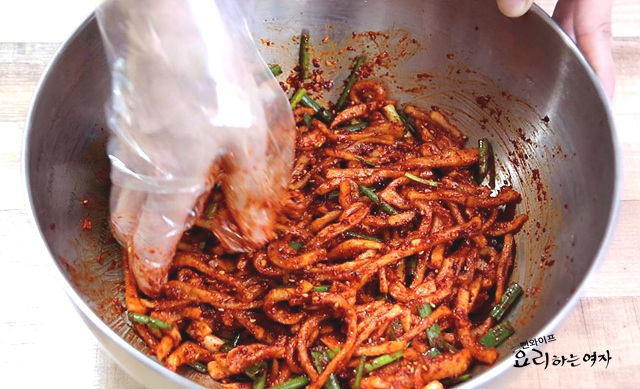
Add the minced garlic, corn syrup, fish sauce, sugar, and ginger, toss evenly, then taste and adjust with sugar or salt if needed.
Add the scallions and toasted sesame seeds, toss evenly, and it is complete. If it seems dry, add a little of the liquid saved from salting as you toss.
 Ppunwife's tips
- Adding doenjang when cooking the meat gives it an attractive color, and above all, seasons it subtly to double the savory flavor.
- Because the meat cooks using the moisture from vegetables with almost no added water, thin-bottomed pots can burn, so be sure to use a heavy-bottomed pot.
- Tossing the radish without peeling gives it a much better texture.
- Do not discard about 3 to 4 tbsp of the liquid from salting the radish; use it to add moisture when tossing if the seasoning feels too dry.
FAQ
How can I prevent the pot from burning when cooking without water?
Thin bottoms carry a risk of scorching, so use a heavy-bottomed pot and spread the onion and large green onion evenly across the bottom so their moisture releases.
How do I check if the meat is cooked through to the center?
After simmering on low heat for at least 40 minutes while flipping it over, pierce it with a chopstick; if no bloody juices seep out, it is fully cooked.
Can I make this with cuts other than pork belly?
You can prepare and cook any cut of pork you prefer as a whole block, such as pork collar, pork shoulder, shank, or skin-on pork belly.
Why is corn syrup added when salting radish for bossam?
Corn syrup is added to draw moisture out of the radish to bring out a crunchy texture; it does not make the finished seasoned radish overly sweet.