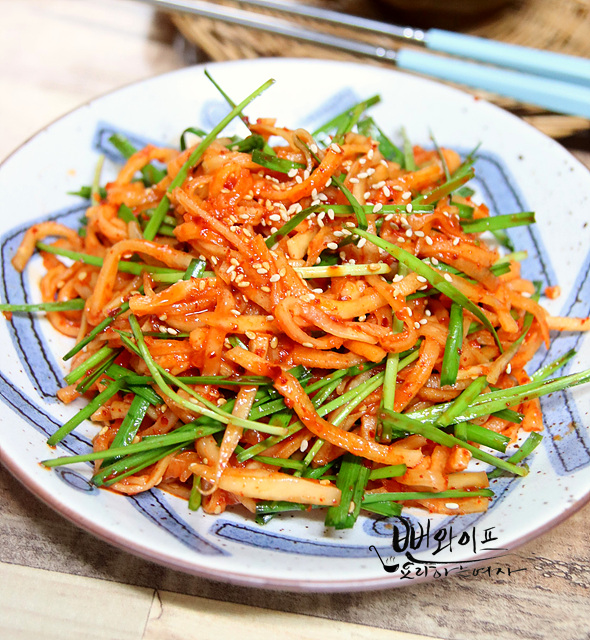
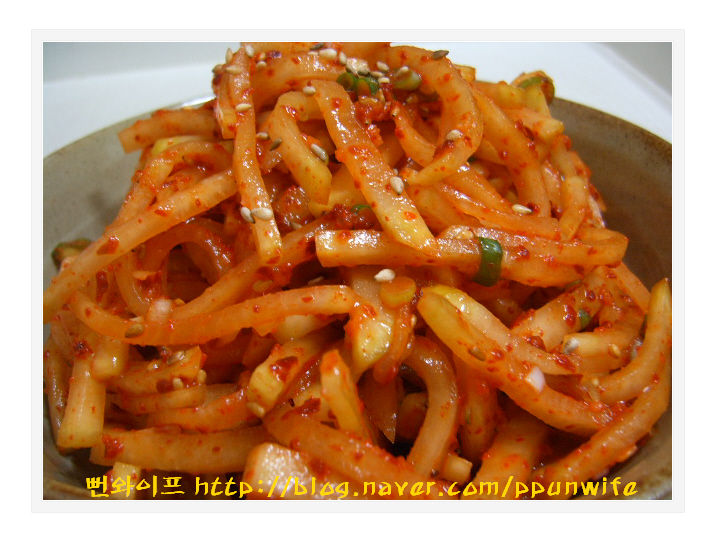
Crunchy Musaengchae (Spicy Radish Salad)
Bossam-style spicy radish salad made by salting Korean radish and baby napa cabbage with corn syrup to draw out moisture, then tossing with seasonings.
Translated from Korean by AI and not yet checked by a native speaker. Amounts and numbers are taken directly from the original recipe. Read the Korean original →
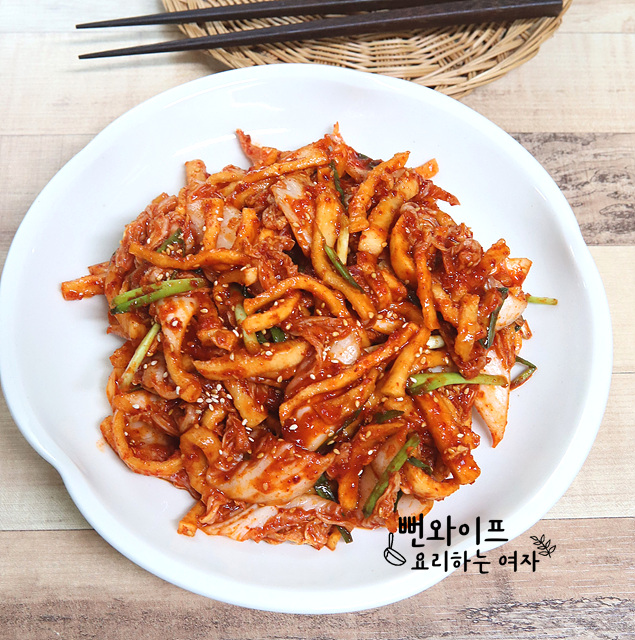
Korean radish is salted with corn syrup to draw out moisture, giving it a chewy, crunchy texture. Baby napa cabbage and sweet seasoning are added to summer radish, which is less sweet and slightly bitter, making it a great accompaniment for boiled pork belly (bossam or suyuk). It does not turn watery easily, so you can enjoy it fresh and clean.
- Servings
- about 6–8 servings
- Difficulty
- Medium
- Spiciness
- Mildly spicy
Ingredients
Ingredients
- Korean radish (mu)1 kg
- Baby napa cabbage500 g
- Scallions (jjokpa)about 10 stalks
- Coarse sea salt2 tbsp (for salting radish)
- Corn syrup (mulyeot)1/2 cup (for salting radish)
- Coarse sea salt2 tbsp (for salting cabbage)
- Water1/3 cup (for salting cabbage)
Seasoning
- Gochugaru (Korean chili flakes)5 tbsp (2 fine + 3 coarse)
- Minced garlic2 tbsp
- Minced ginger1/2 tbsp
- Sand lance fish sauce (or dried anchovies)3 tbsp
- Sugar1 tbsp
- Corn syrup (mulyeot) (or green plum syrup (maesil-cheong), rice syrup (jocheong), corn syrup (mulyeot), etc.)1 tbsp
- Salta little
- Toasted sesame seeds2 tbsp
- If you do not like fish sauce, you can substitute salted fermented shrimp (saeujeot).
Steps
Prepare the ingredients
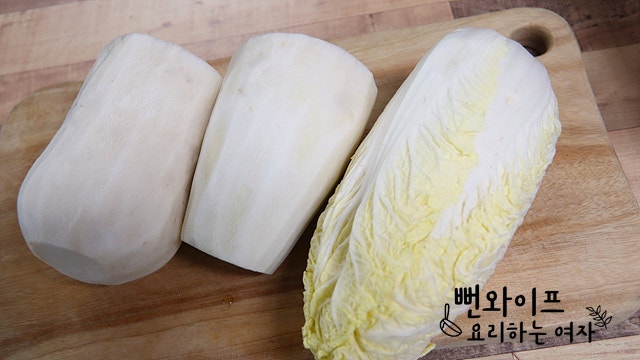
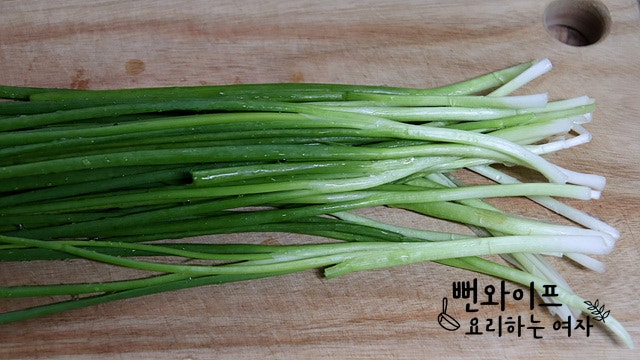
Here is 1 small Korean radish (mu) at 1 kg and baby napa cabbage.
Slice the ingredients
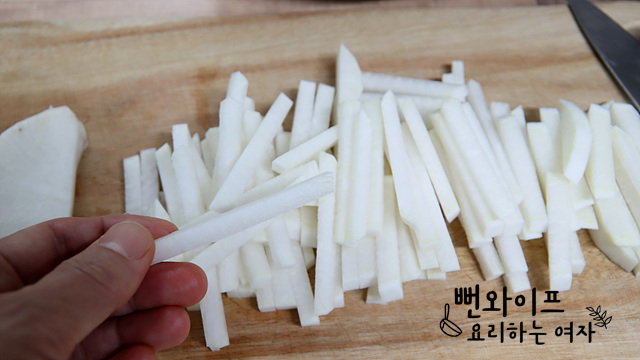
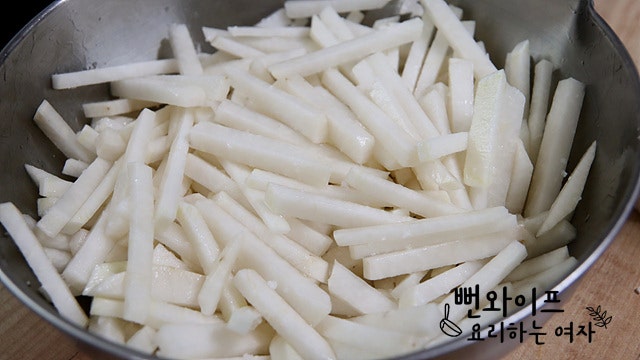
Because drawing out all the moisture significantly shrinks the volume of the Korean radish, you need to cut it much thicker than for regular musaengchae.
Slicing it to 0.7 cm to 1 cm is just right.
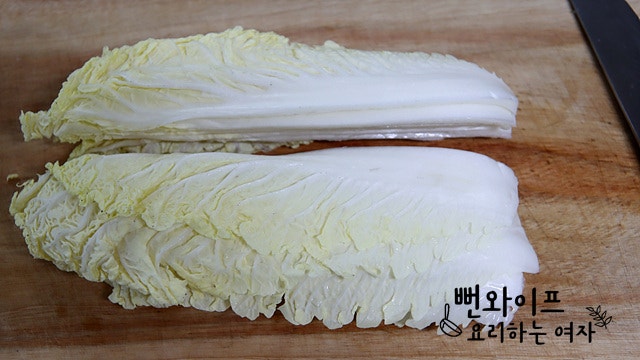
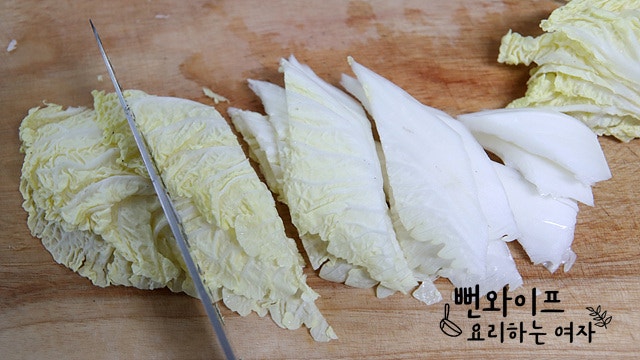
Separate the baby napa cabbage leaves one by one, cut them in half lengthwise, and slice them diagonally.
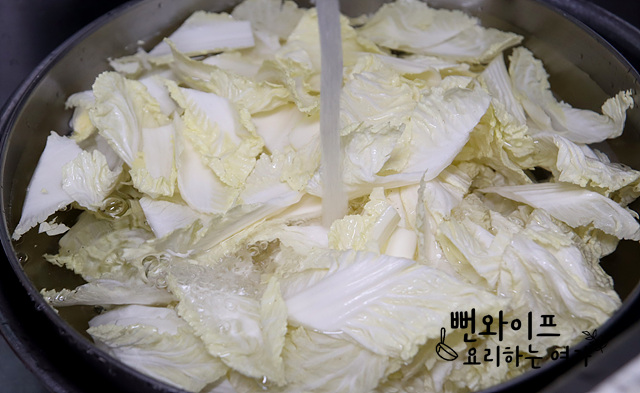
Rinse the sliced cabbage thoroughly in water once or twice.
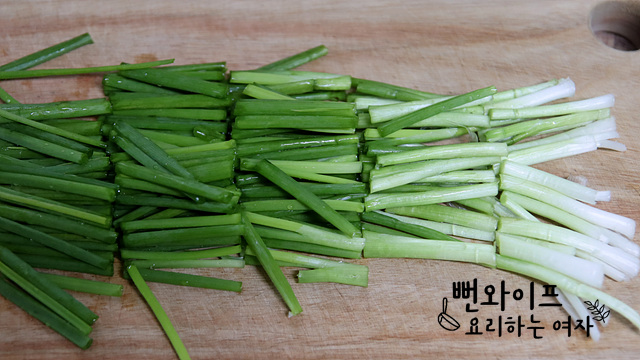
Cut the scallions to a length similar to the radish and cabbage.
Salt the radish
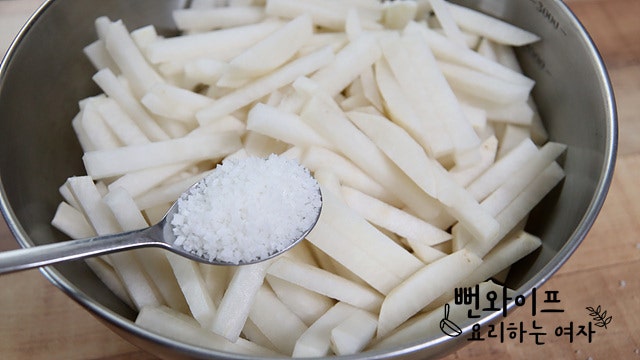
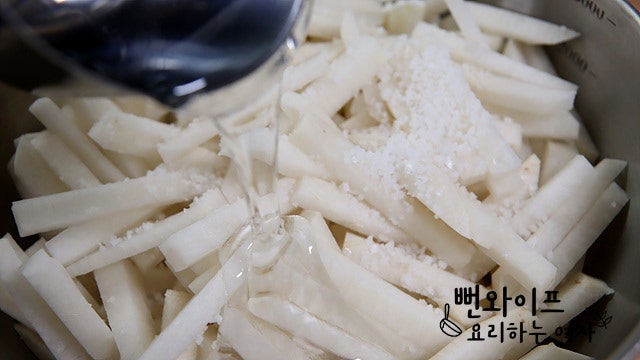
Pour 2 tbsp coarse sea salt and 1/2 cup corn syrup (mulyeot) over the Korean radish...
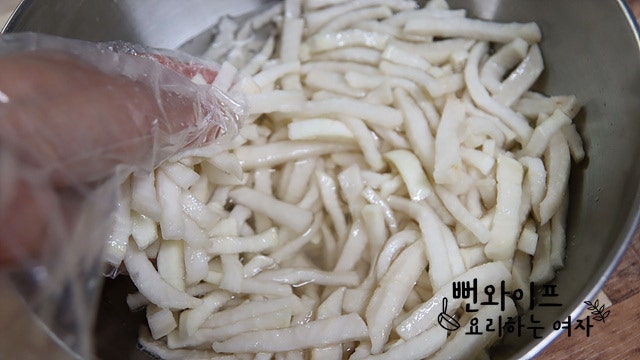
Mix well and let it salt for at least 2 hours, tossing it occasionally.
It will soften and a lot of moisture will begin to draw out thanks to the corn syrup.
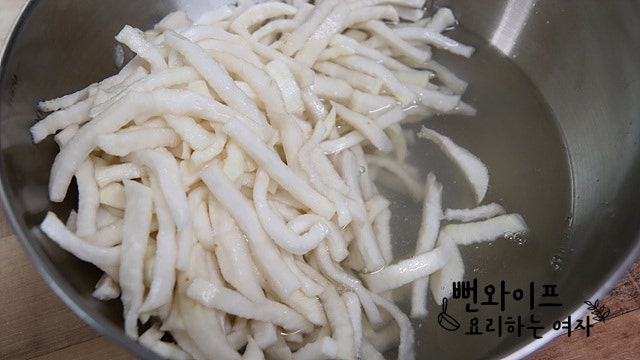
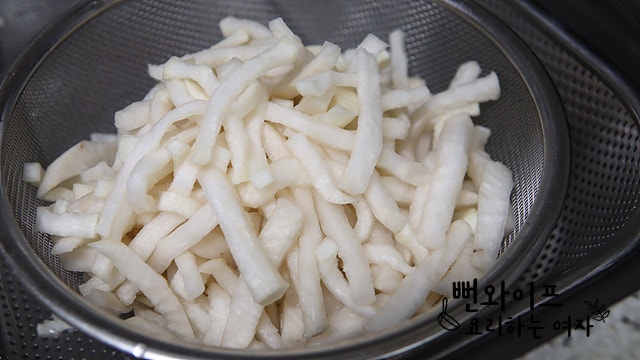
Drain the liquid released from the Korean radish through a strainer.
As the moisture drains, the radish becomes chewy and crunchy, and the pungent taste of the radish seems to have largely disappeared.
Although it was salted with corn syrup to draw out moisture, it does not taste sweet.
Salt the cabbage
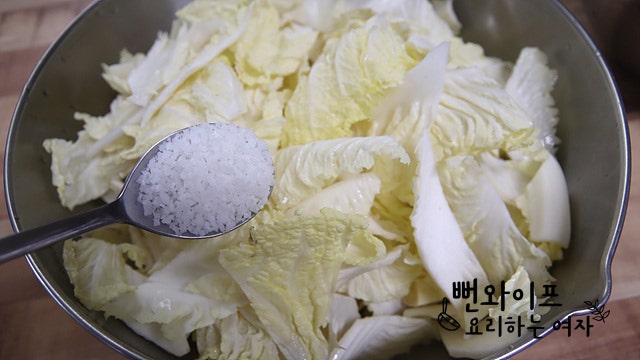
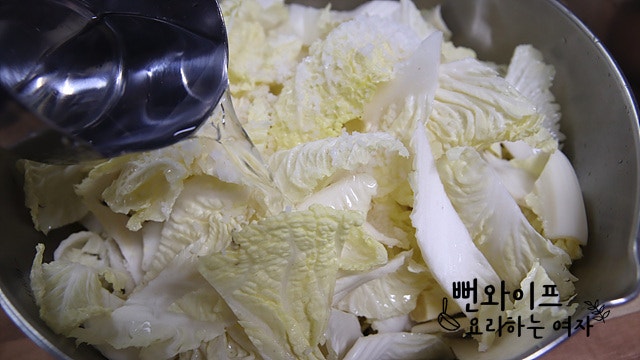
Pour 2 tbsp coarse sea salt and about 1/3 cup water over the baby napa cabbage, and mix well.
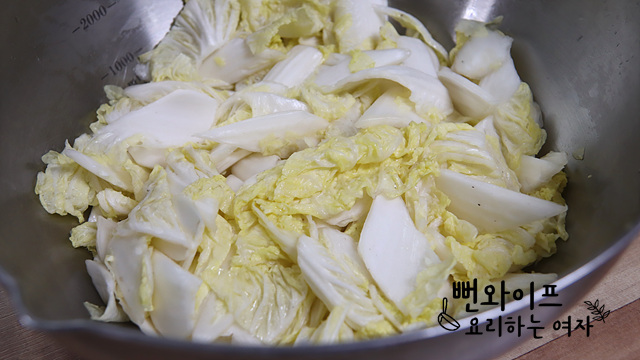
Toss it occasionally within 30 minutes to 1 hour so it salts evenly. Without washing the salted cabbage, drain the water directly through a strainer.
If the cabbage turned out too salty, you can rinse it once or twice in running water and drain it.
Color the radish with chili flakes
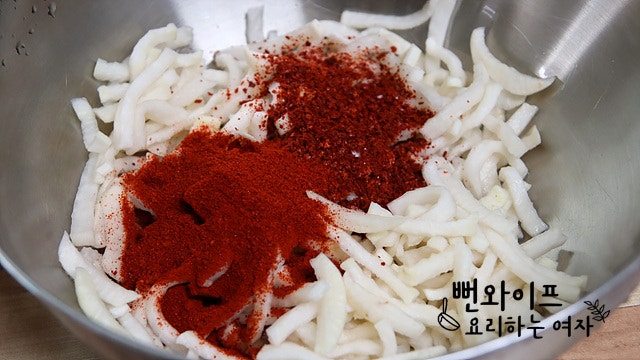
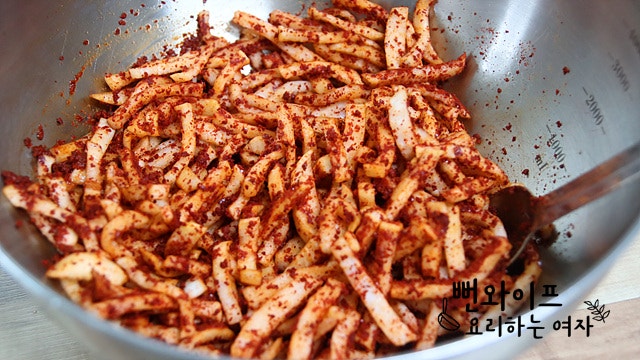
Add 5 tbsp gochugaru (Korean chili flakes) to the Korean radish and mix well, letting the chili flakes hydrate and infuse color into the radish for about 30 minutes.
If you use half fine and half coarse gochugaru, the seasoning clings nicely to the ingredients and gives the fresh kimchi a much prettier color.
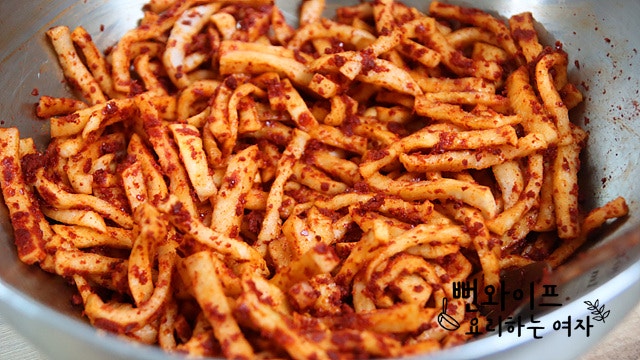
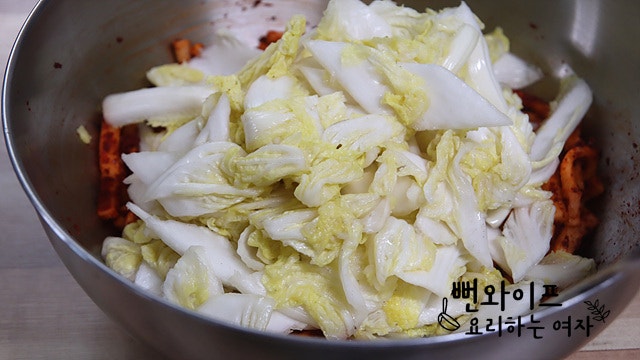
Once the gochugaru has hydrated somewhat, add the salted baby napa cabbage...
Toss with seasonings
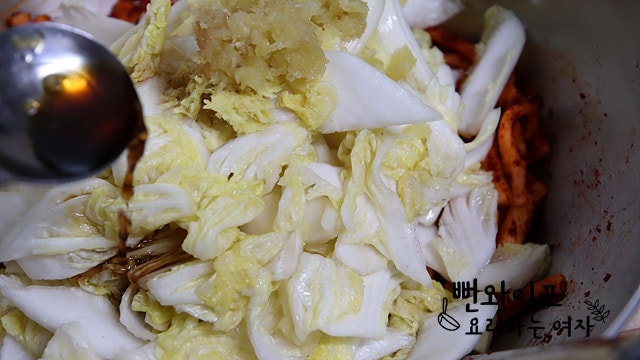
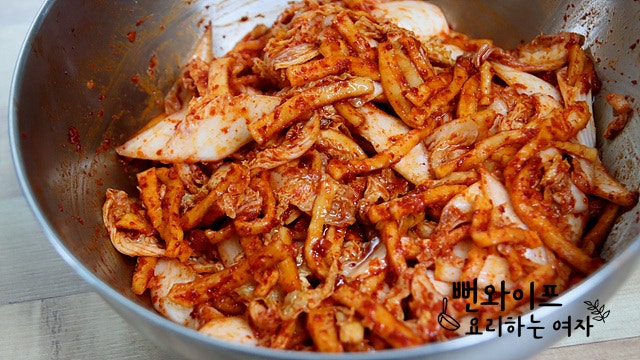
Add 2 tbsp minced garlic, 1/2 tbsp minced ginger, 3 tbsp sand lance fish sauce, 1 tbsp sugar, and 1 tbsp corn syrup (mulyeot), then mix thoroughly.
If you do not like fish sauce, you can substitute salted fermented shrimp (saeujeot).
If it tastes bland, adjust the seasoning with salt, and since summer radish and cabbage lack sweetness, feel free to add more sweetness to your taste.
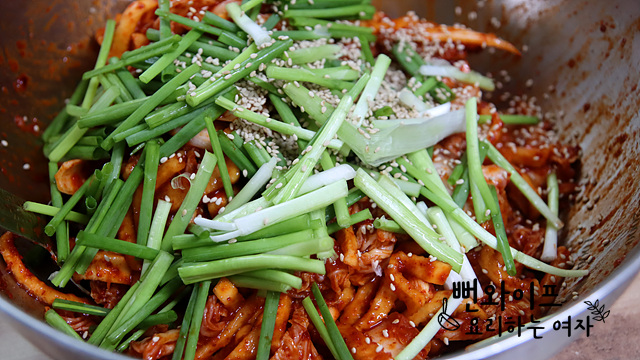
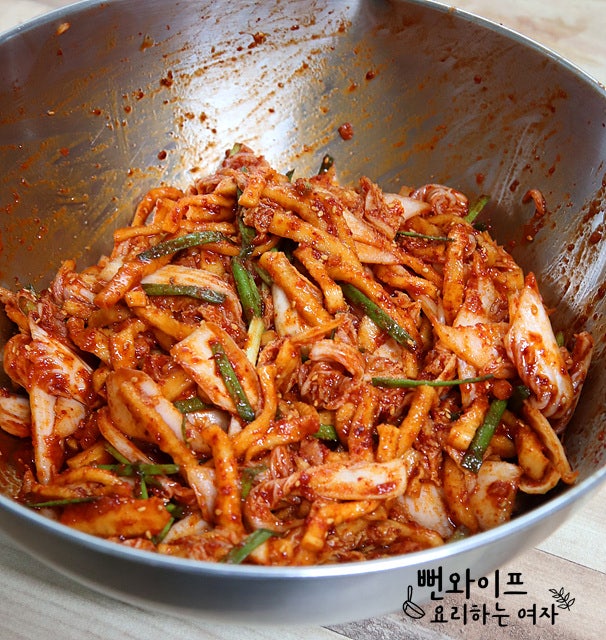
Finally, add the scallions and about 2 tbsp toasted sesame seeds, and toss gently to finish.
Complete
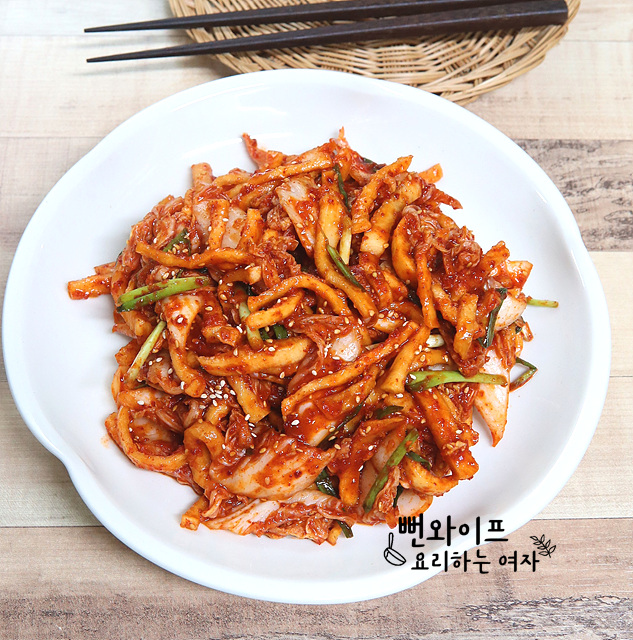
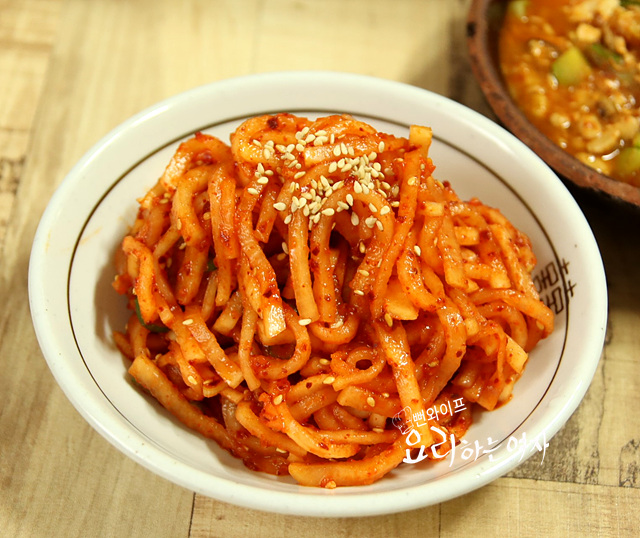
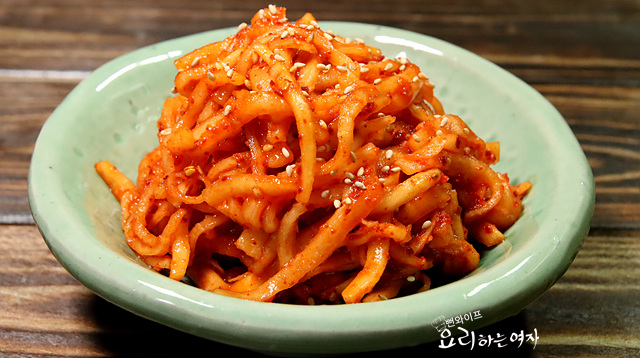
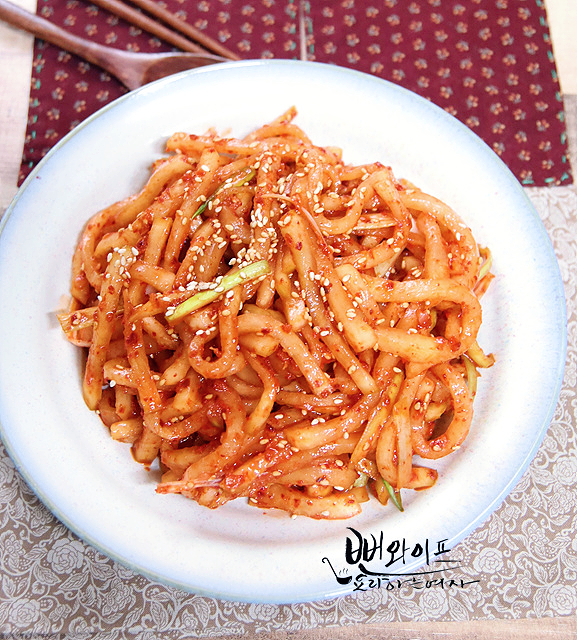
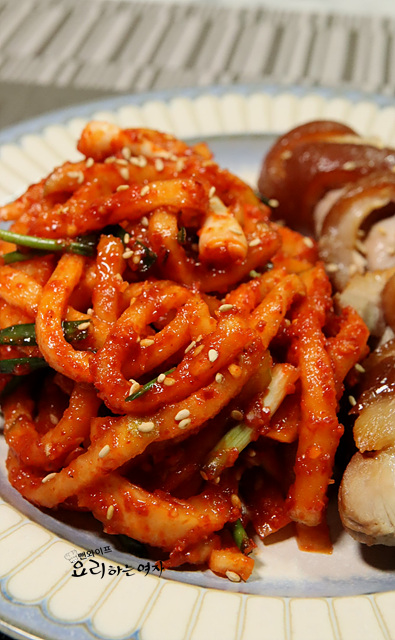
Here is the finished musaengchae.
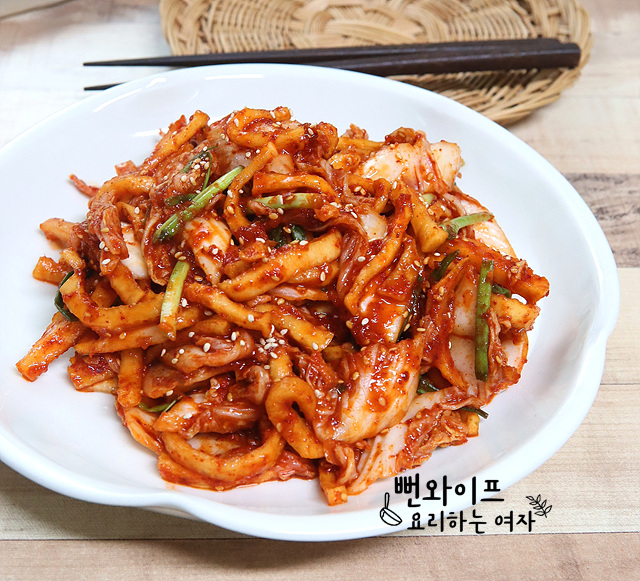
It tastes delicious, and because it was salted to a chewy texture before tossing, the crunchy bite is truly wonderful.
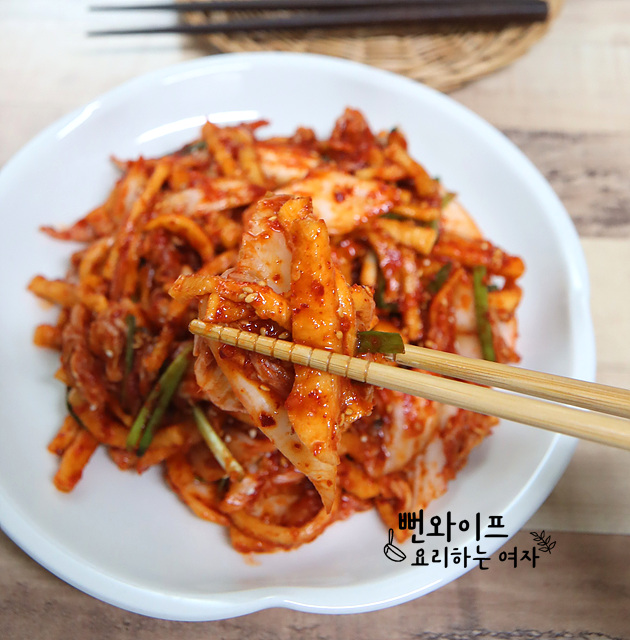
It goes great as a side dish for rice, but paired with boiled pork, it makes a match made in heaven as bossam radish kimchi.
If you are wondering what summer kimchi to make, toss Korean radish and baby napa cabbage together for a delicious batch.
 Ppunwife's tips
- Because drawing out all the moisture significantly shrinks the volume of the Korean radish, you need to cut it much thicker than for regular musaengchae.
- If you use half fine and half coarse gochugaru, the seasoning clings nicely to the ingredients and gives the fresh kimchi a much prettier color.
FAQ
Why should the radish be cut thicker than usual?
As moisture is drawn out during the salting process, the volume shrinks considerably, so cutting it thick to about 0.7 cm to 1 cm is ideal.
Should the salted radish and cabbage be rinsed in water?
Drain both the radish and cabbage in a strainer without rinsing. However, if the cabbage turned out too salty, lightly rinse it under running water and squeeze out the moisture.
Can I use a different seasoning instead of sand lance fish sauce?
You can adjust the seasoning using anchovy fish sauce or salted fermented shrimp (saeujeot) instead.
Doesn't salting the radish with corn syrup make it too sweet?
The corn syrup is used to thoroughly draw out moisture from the radish to create a chewy, crunchy texture; since the liquid is drained away, excessive sweetness does not remain.