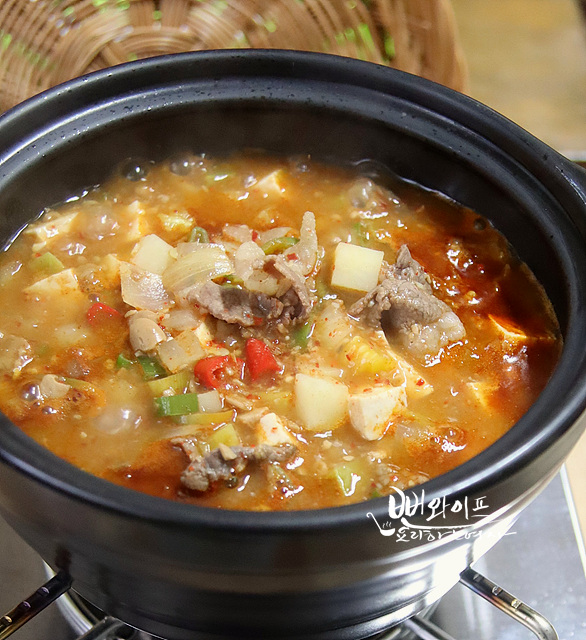
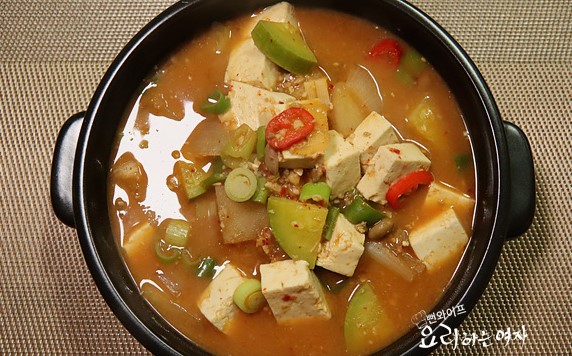
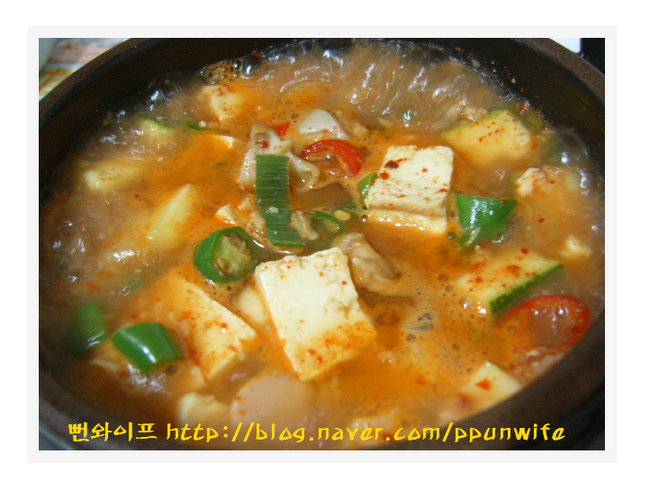
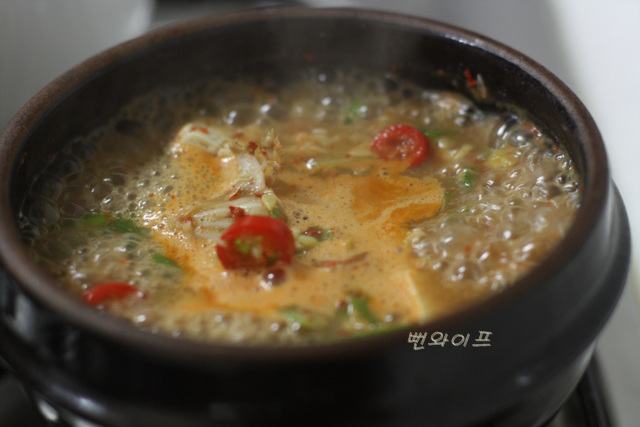
Rich Beef Brisket Doenjang Jjigae (Soybean Paste Stew with Brisket)
A hearty doenjang jjigae made by simmering savory beef brisket and vegetables in anchovy broth prepared with water from washing rice.
Translated from Korean by AI and not yet checked by a native speaker. Amounts and numbers are taken directly from the original recipe. Read the Korean original →
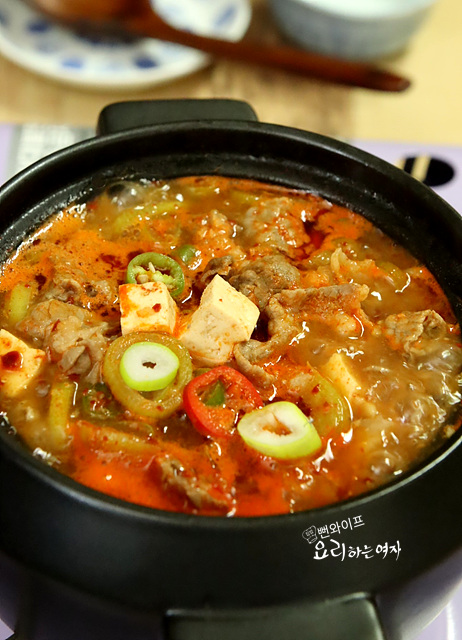
This beef brisket doenjang jjigae brews dried anchovies and dried kelp in water from washing rice for a deep, savory broth. The rich flavor of beef brisket pairs with the spicy kick of Cheongyang chili peppers, making it wonderful to enjoy poured over rice as doenjang sulbap or as a satisfying hangover meal.
- Servings
- 2–3 servings
- Difficulty
- Easy
- Spiciness
- Mildly spicy
Ingredients
Ingredients
- Beef brisket100 g
- Potato1, 100 g
- Tofu1/4 block, 100 g
- Large green onion (daepa)1/4 stalk
- Cheongyang chili pepper (hot green chili)1
- Red chili pepper1
- Homemade doenjang (Korean soybean paste)3 tbsp
- Water from washing rice3 1/2 cups
- Dried anchovies10
- Dried kelp (dasima)2 sheets (5 cm square)
Seasoning
- Gochugaru (Korean chili flakes)1 tbsp
- Minced garlic1/2 tbsp
- Thinly sliced pork belly (daepae samgyeopsal) is also great instead of beef brisket.
- If using less salty store-bought doenjang, add 1/2 to 1 tbsp more to adjust the seasoning.
- Depending on what is in your fridge, you can use Korean radish or zucchini instead of potato, and enoki mushrooms or oyster mushrooms also make great additions.
Steps
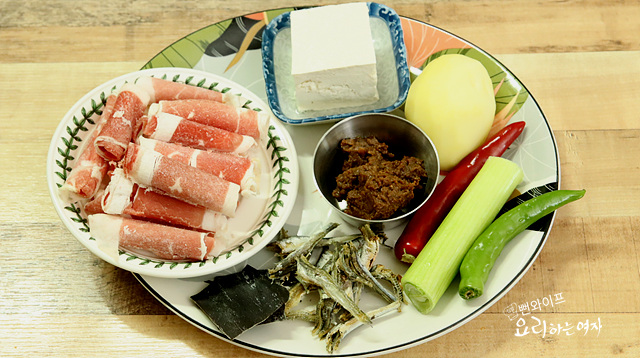
Today, I prepared beef brisket to make a Korean barbecue restaurant-style doenjang jjigae.
Thinly sliced pork belly is also great.
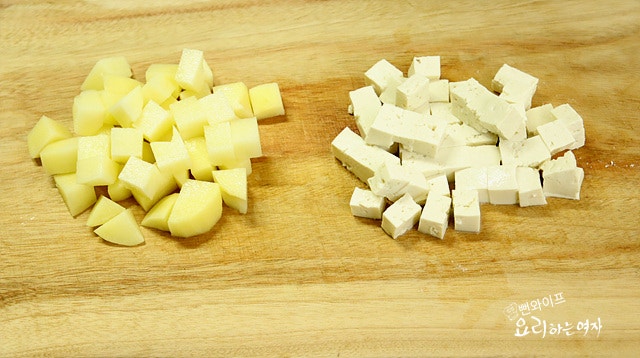
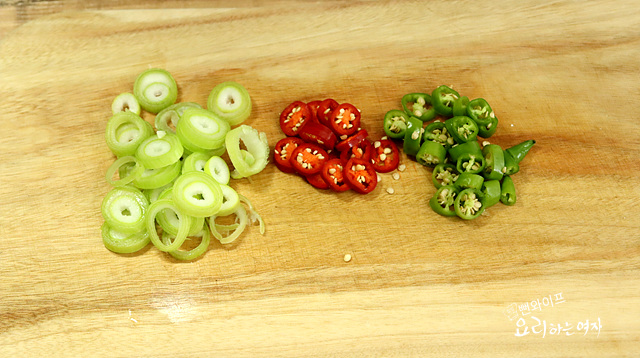
I prepared tofu, potato, large green onion, Cheongyang chili pepper, and red chili pepper.
Here is 3 tbsp of homemade doenjang. If you are using less salty store-bought doenjang, adding 1/2 to 1 tbsp more should season it just right.
Using water from washing rice to make broth for doenjang jjigae or doenjang soup really seems to bring out a much deeper, more savory flavor.
Slice the ingredients
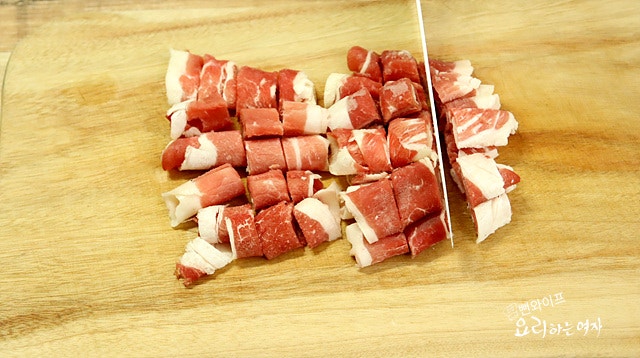
Cut the beef brisket into spoon-sized bite pieces.
Dice the potato and tofu into bite-sized cubes or slice them into thick bite-sized squares.
Thinly slice the large green onion, Cheongyang chili pepper, and red chili pepper.
Depending on what is in your fridge, you can use Korean radish or zucchini instead of potato, and enoki mushrooms or small oyster mushrooms also make great additions to doenjang jjigae.
Make the broth
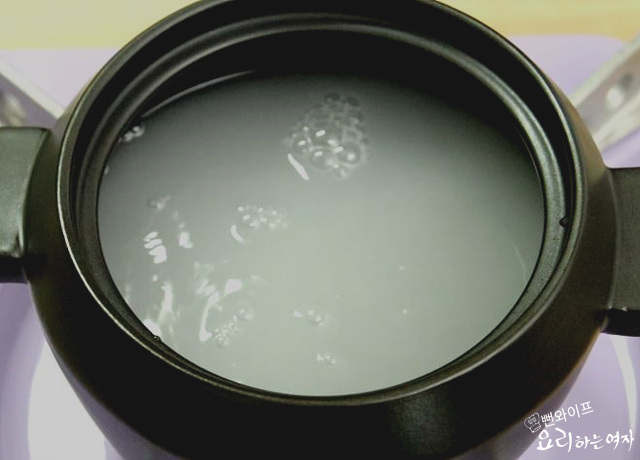
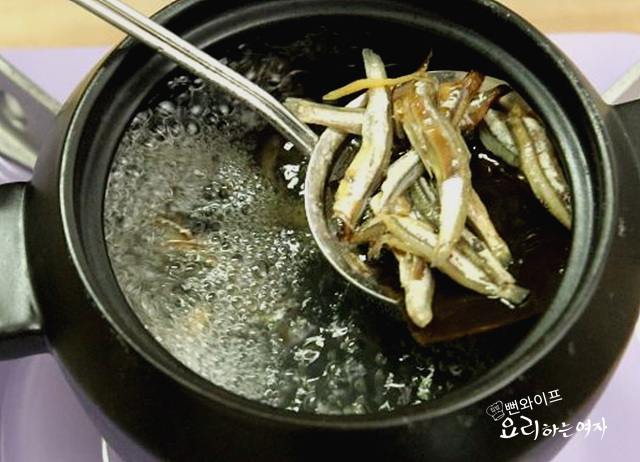
Pour in 3 1/2 cups of water from washing rice, add the dried anchovies and dried kelp (dasima), and boil for about 10 minutes to make the broth.
Making anchovy broth with water from washing rice makes the doenjang jjigae taste much deeper and more savory.
Scoop out and remove the dried anchovies and dried kelp.
Simmer the doenjang jjigae
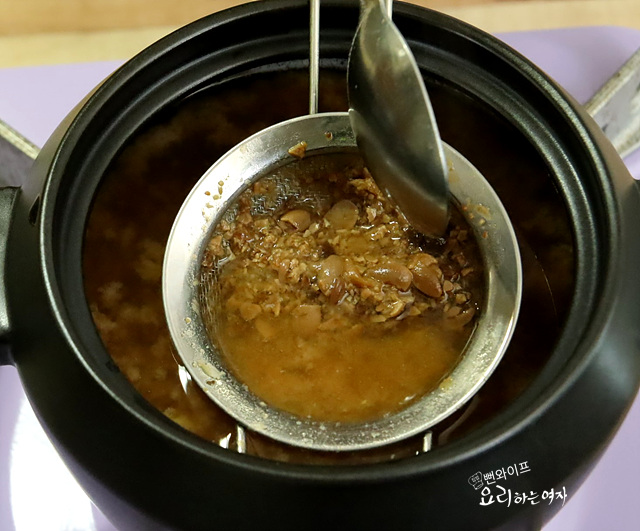
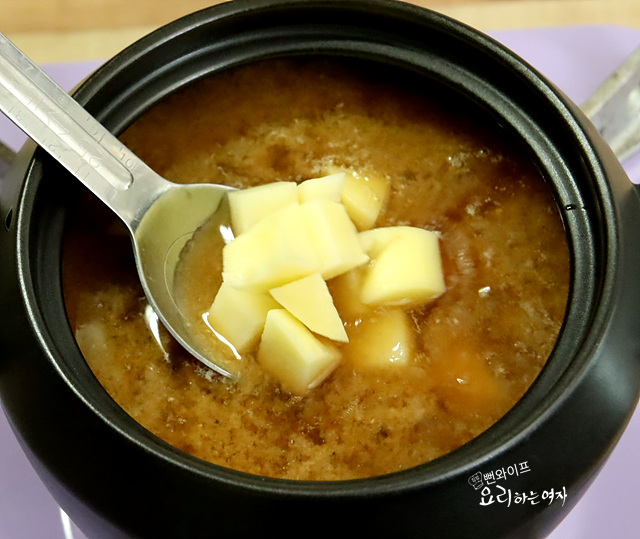
Strain 3 tbsp of doenjang into the broth through a sieve, add the potato, and bring to a rolling boil until cooked through.
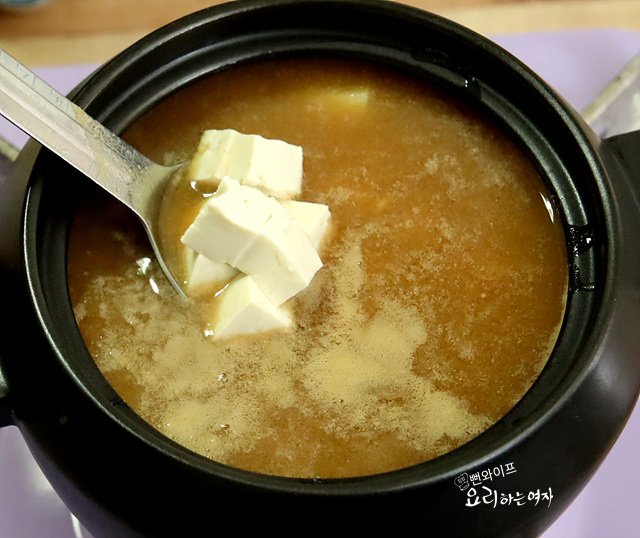
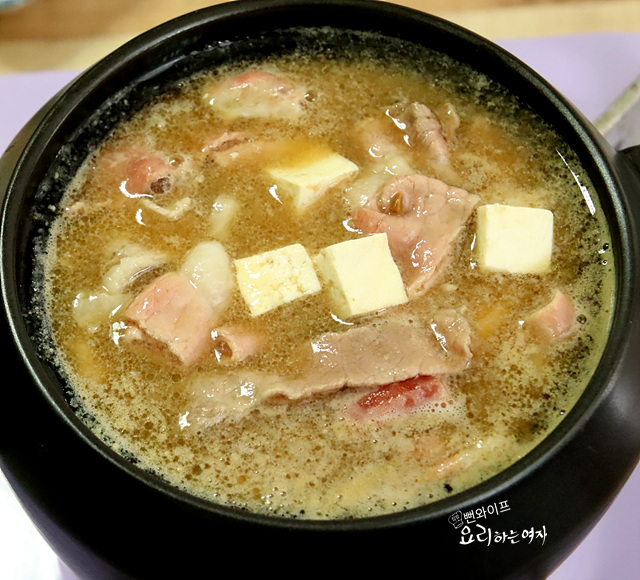
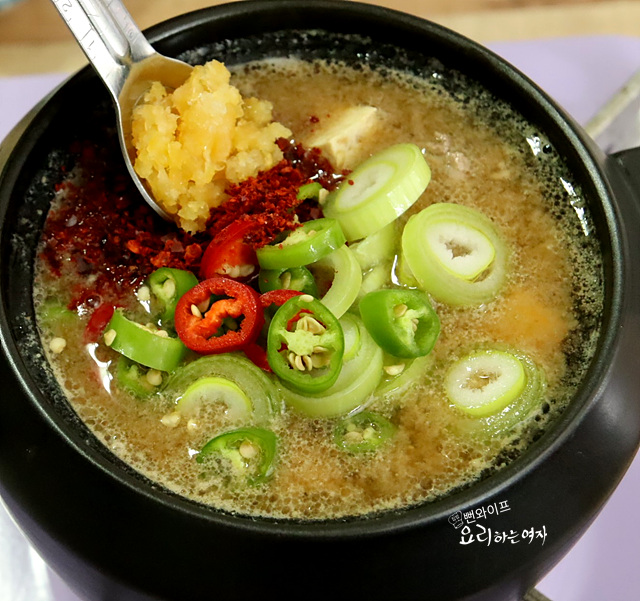
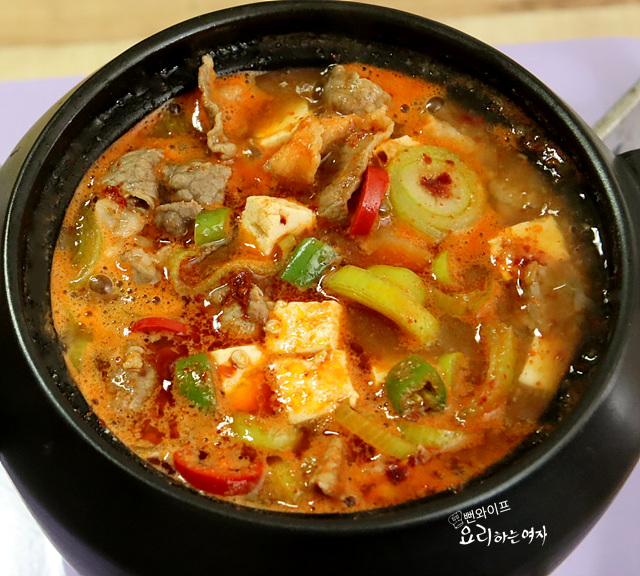
Once the potato is cooked through, add the tofu, beef brisket, large green onion, chili peppers, minced garlic, and gochugaru all at once, bring to a quick boil, and it is done.
 Ppunwife's tips
- Using water from washing rice to make broth for doenjang jjigae or doenjang soup really seems to bring out a much deeper, more savory flavor.
- Making anchovy broth with water from washing rice makes the doenjang jjigae taste much deeper and more savory.
FAQ
Can I use a different meat instead of beef brisket?
Thinly sliced pork belly works very well as a substitute for beef brisket.
How do I adjust the amount when using store-bought doenjang?
When using less salty store-bought doenjang, adding about half a tablespoon to one tablespoon more than the homemade doenjang amount makes it easy to balance the seasoning.
What vegetables can I use instead of potato?
Depending on what you have in the fridge, you can use Korean radish or zucchini instead of potato, or add enoki mushrooms or oyster mushrooms.
What is the secret to making doenjang jjigae broth deeper and more savory?
Instead of plain water, simmering dried anchovies and dried kelp in water from washing rice for about 10 minutes gives the broth a noticeably deeper, richer flavor.