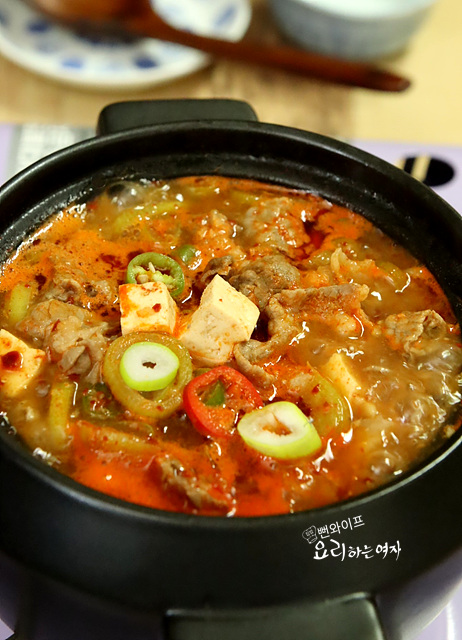
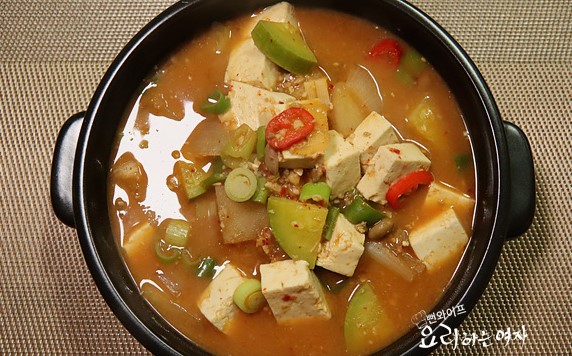
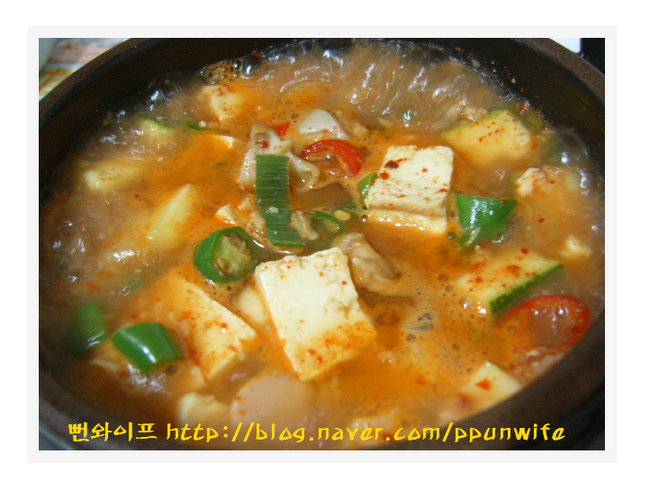
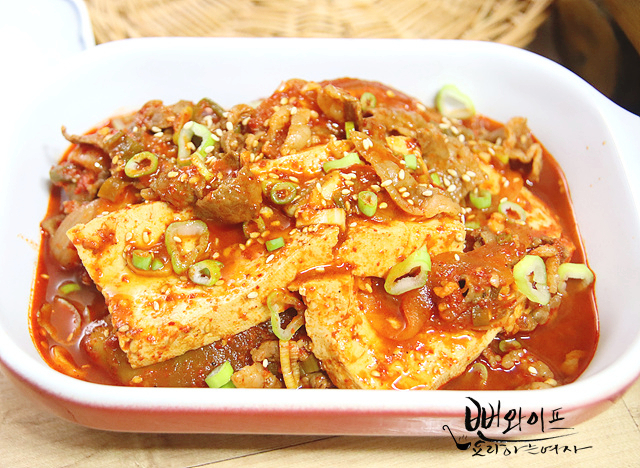
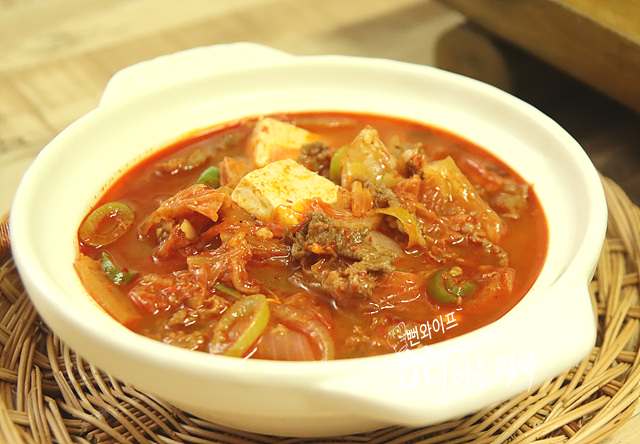
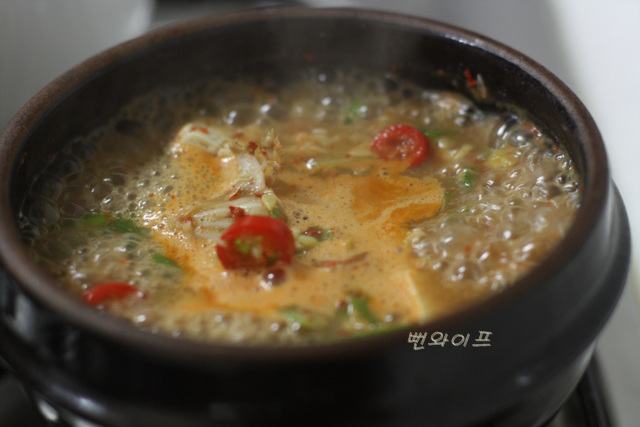
Rich Beef Brisket Doenjang Jjigae (Beef Brisket Soybean Paste Stew)
Beef brisket doenjang jjigae with soybean paste stir-fried in brisket fat to maximize its deep, savory flavor.
Translated from Korean by AI and not yet checked by a native speaker. Amounts and numbers are taken directly from the original recipe. Read the Korean original →
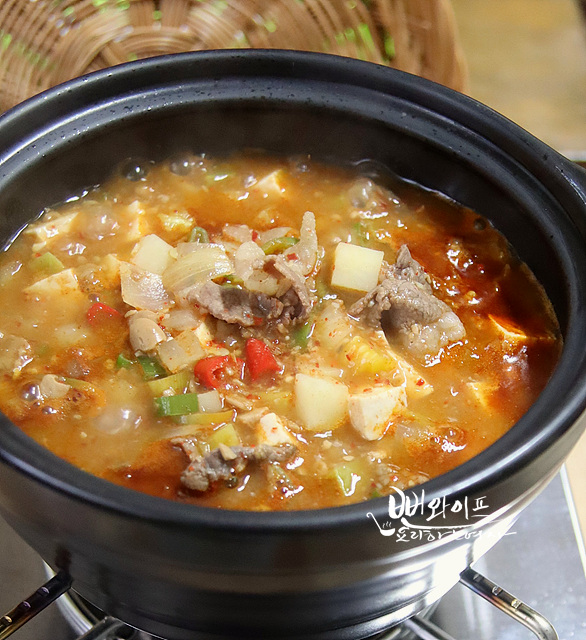
This soup dish is made by stir-frying soybean paste in rich beef brisket fat to remove any stale smell and boost deep, savory flavor. Simmered thick with potato, tofu, and vegetables in anchovy broth, it can also be cooked with rice into hearty doenjang sulbap.
- Servings
- 3–4 servings
- Difficulty
- Easy
- Spiciness
- Mildly spicy
Ingredients
Ingredients
- Beef brisket150 g
- Tofu1/4 block, 100 g
- Potato1 (small)
- Korean zucchini (aehobak)1/5
- Onion1/2 (small)
- Large green onion (daepa)1/4 stalk
- Cheongyang chili pepper (hot green chili)1
- Red chili pepper1
- Anchovy broth3 cups
Seasoning
- Homemade doenjang (Korean soybean paste)3 tbsp
- Gochugaru (Korean chili flakes)1 tbsp
- Minced garlic1/2 tbsp
- Ground black peppera little
- I usually add Korean radish to doenjang jjigae, but summer radish isn't very flavorful, so I use potato instead.
- I prepared beef brisket for a rich, savory flavor. Thin beef belly (usamgyeop) also works well.
Steps
Prepare the ingredients
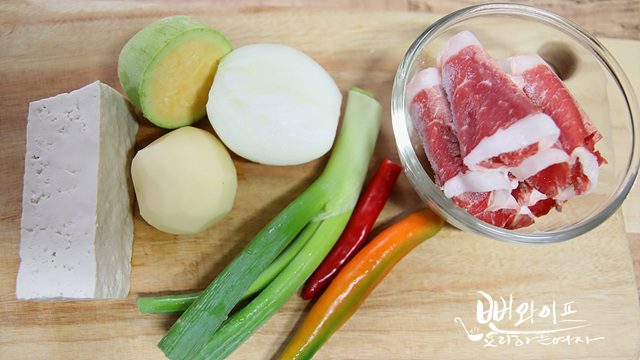
I took out whatever leftover vegetables were in the fridge.
I usually add Korean radish to doenjang jjigae, but summer radish isn't very flavorful, so I use potato instead.
I prepared beef brisket for a rich, savory flavor. Thin beef belly (usamgyeop) also works well.
Cut the ingredients
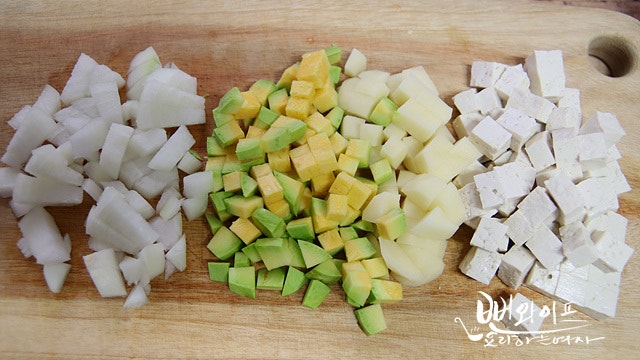
Cut the tofu, potato, Korean zucchini, and onion into roughly 1 cm dice.
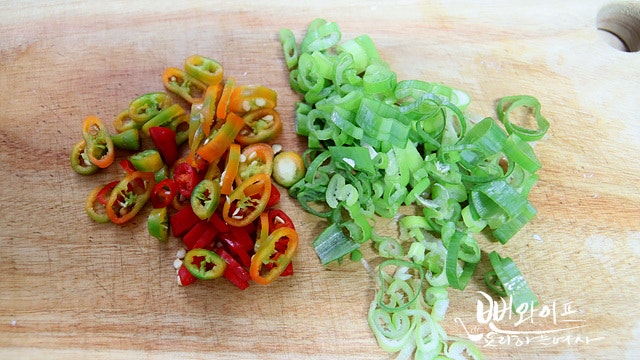
Thinly slice the large green onion and chili peppers into rounds.
Stir-fry the beef brisket and doenjang
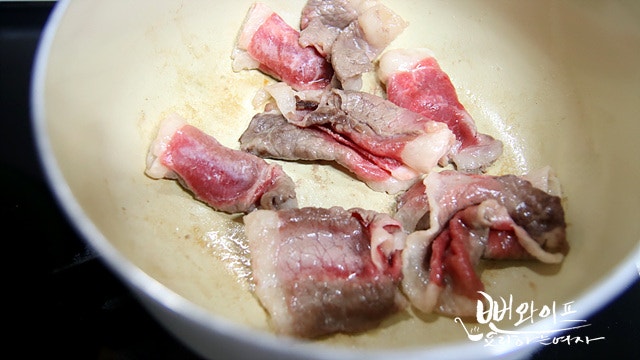
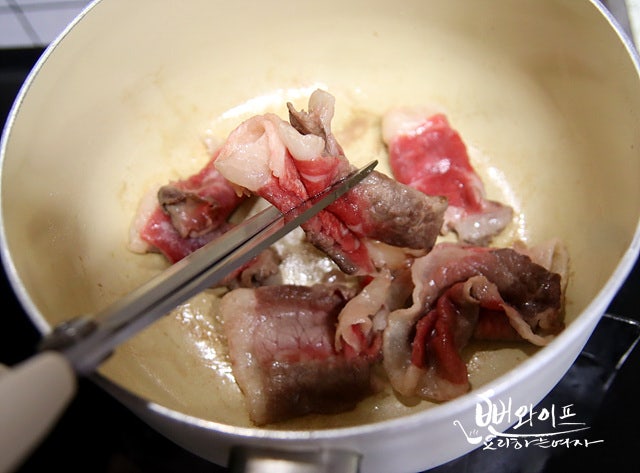
Cut the beef brisket into bite-sized pieces and stir-fry it to render the fat.
The meat has plenty of its own fat, so you can stir-fry it without cooking oil.
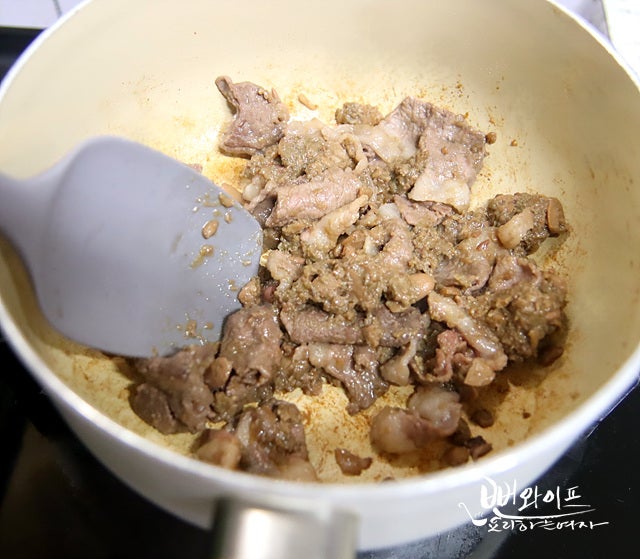
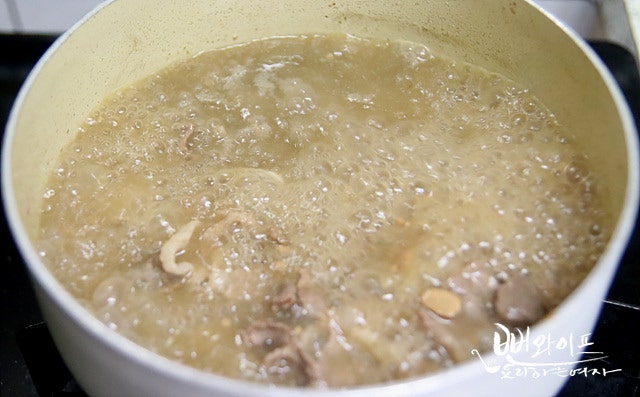
Add 3 tbsp of homemade doenjang and stir-fry it thoroughly in the brisket fat.
Stir-frying doenjang in oil like this is said to remove any stale or off-odors and bring out its deep, savory flavor. (Personally, I even like the funky smell of doenjang.)
Pour in 3 cups of anchovy broth, and once it boils...
Simmer
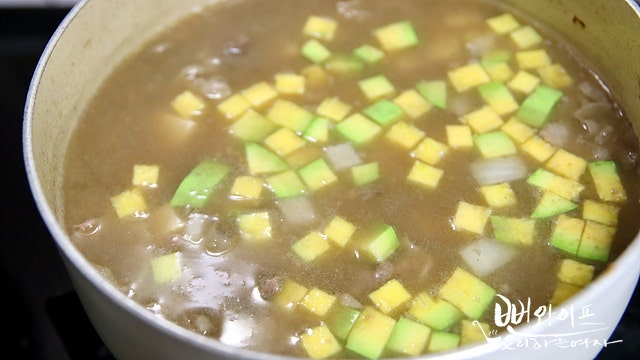
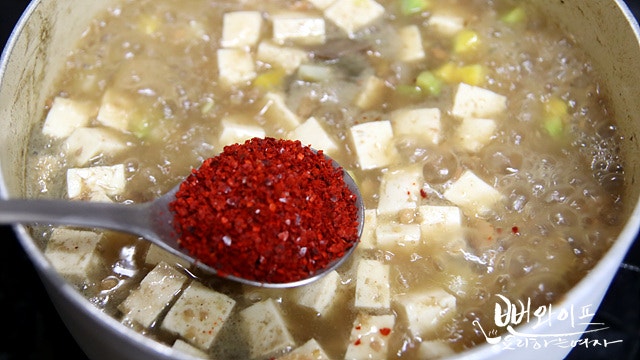
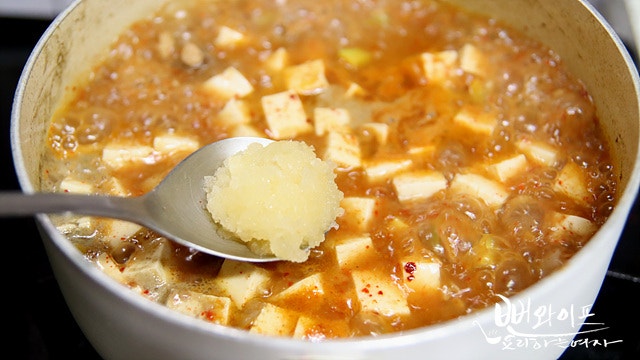
Add the Korean zucchini, potato, and tofu, and simmer until cooked through.
Add 1 tbsp of gochugaru and 1/2 tbsp of minced garlic, then simmer so the red color infuses the broth and the garlic flavor blends in.
If you add too much garlic to doenjang jjigae, the deep, savory flavor of the doenjang gets masked by the garlic aroma, so it tastes best with just a little.
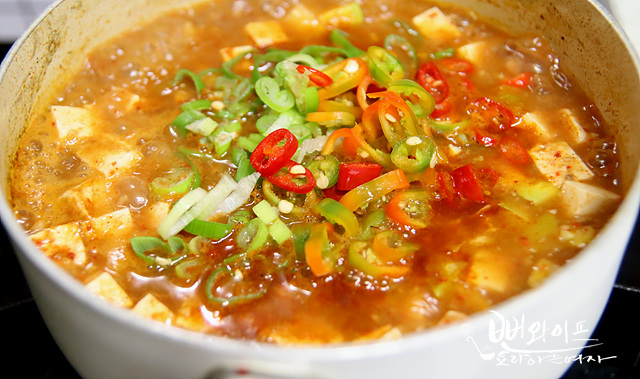
Finally, add the onion, large green onion, and chili peppers, and since there is meat, add a little ground black pepper, then give it a quick boil to finish.
Finish
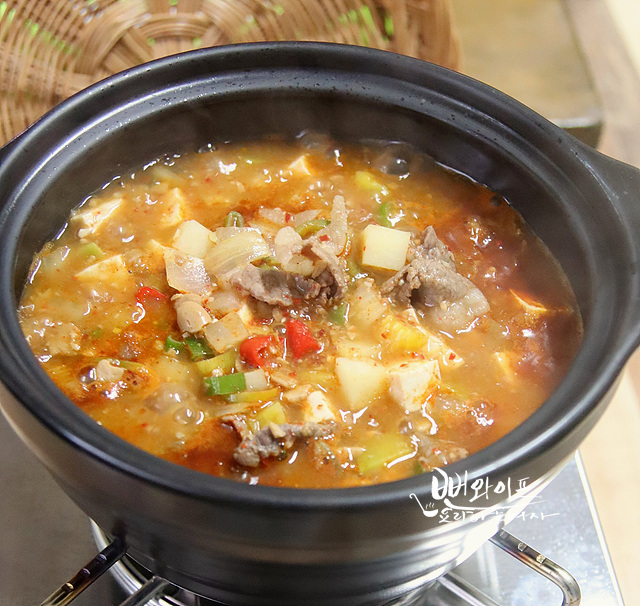
I finished it by simmering it in an earthenware pot (ttukbaegi) so it stays warm for a long time.
Doenjang tastes best when cooked in an earthenware pot.
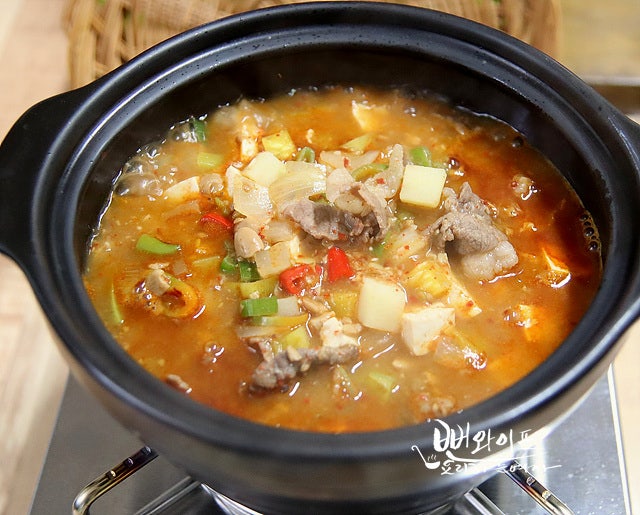
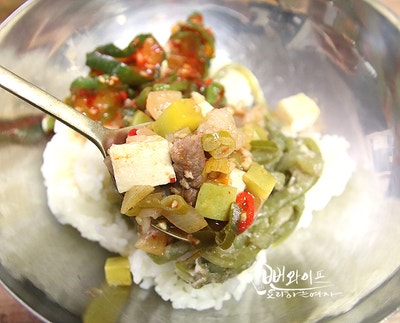
Stir a bowl of rice into doenjang jjigae and simmer until thick to make the doenjang sulbap served at Korean BBQ restaurants.
I had a bowl mixed with stir-fried sweet potato stems, crunchy cucumber salad, and generous spoonfuls of doenjang jjigae.
Doenjang jjigae is a true rice thief that keeps your spoon moving until the bottom of the earthenware pot shows.
After enjoying a hearty bowl of doenjang jjigae, it feels so satisfying and easy on the stomach that I find myself making it even more often.
 Ppunwife's tips
- The meat has plenty of its own fat, so you can stir-fry it without cooking oil.
- Stir-frying doenjang in oil like this is said to remove any stale or off-odors and bring out its deep, savory flavor.
- If you add too much garlic to doenjang jjigae, the deep, savory flavor of the doenjang gets masked by the garlic aroma, so it tastes best with just a little.
FAQ
Can I use a different cut of meat instead of beef brisket?
Using thin beef belly (usamgyeop) is also great for achieving a rich, savory flavor.
Do I need to add cooking oil when stir-frying the meat?
Beef brisket renders plenty of fat on its own, so you can stir-fry it without adding cooking oil.
Why do you only add a small amount of minced garlic?
If you add too much garlic, the strong garlic aroma can overpower the deep, savory flavor unique to doenjang, so it is best to use just a small amount.
How do you make doenjang sulbap?
Simply stir a bowl of rice into the finished doenjang jjigae and let it boil briefly until thick.