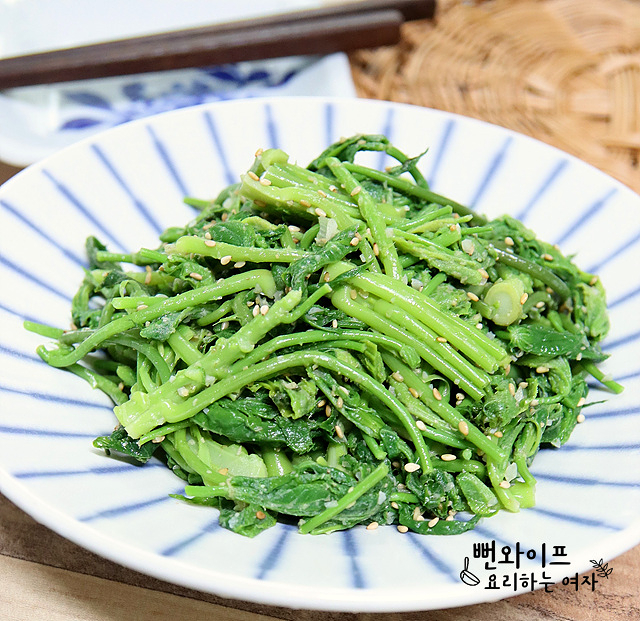
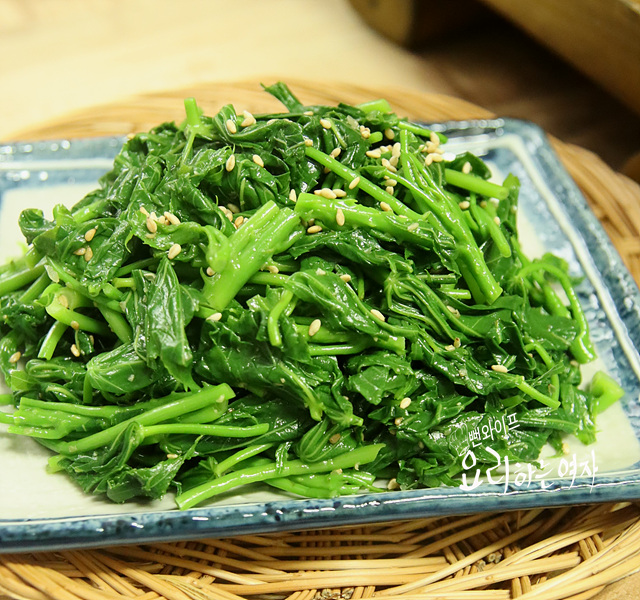
Aromatic Jangajji (Pickled Vegetables) with Boiled Brine
A spring greens jangajji (pickled vegetables) side dish made by pouring hot boiled pickling liquid to bring out the distinctive aroma.
Translated from Korean by AI and not yet checked by a native speaker. Amounts and numbers are taken directly from the original recipe. Read the Korean original →
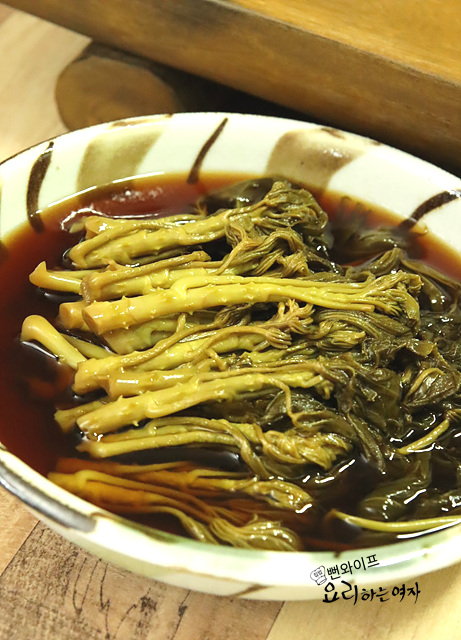
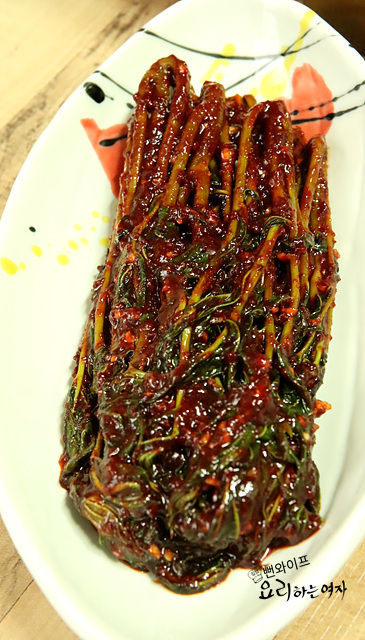
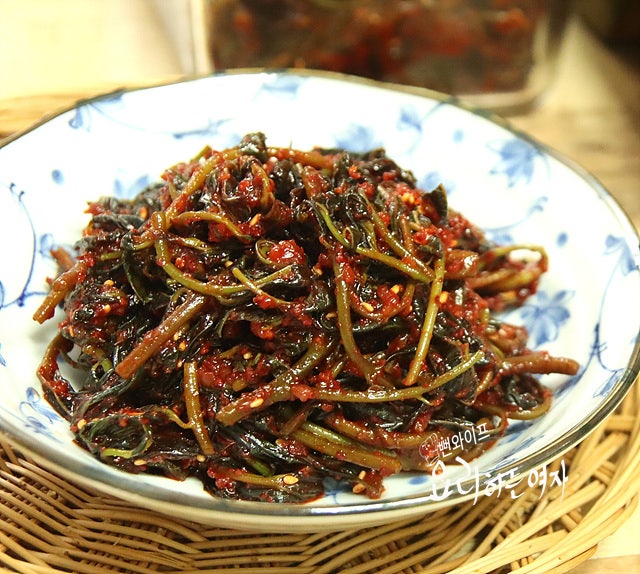
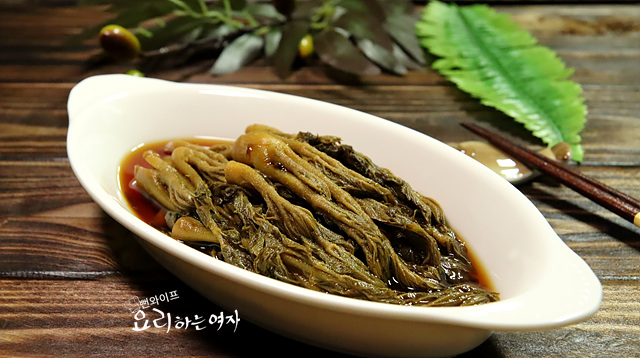
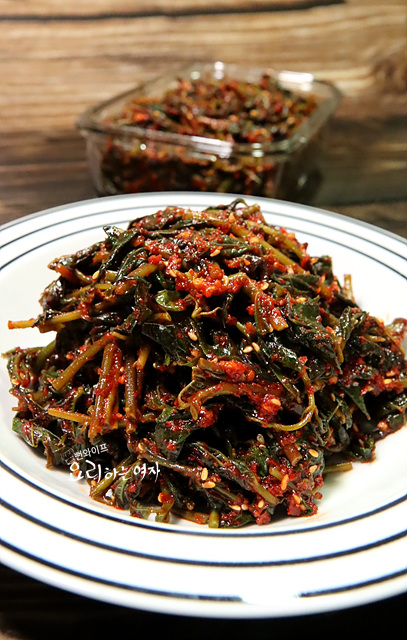
This dish preserves the distinctive bitter notes and fragrance of in-season gajuk-namul (Chinese toon shoots) and prickly castor oil tree shoots (eomnamu-sun) in a clean soy sauce brine. Wilting the greens with hot pickling liquid and adding soju later keeps them fresh for a long time without needing to re-boil the brine halfway through. It makes an excellent side dish for rice and pairs wonderfully with grilled meat.
- Servings
- about 10–12 servings
- Difficulty
- Easy
- Spiciness
- Not spicy
- Keeps
- 365 days
Ingredients
Gajuk-namul Soy Sauce Jangajji Ingredients
- Gajuk-namul (Chinese toon shoots)600 g
Gajuk-namul Soy Sauce Jangajji Pickling Liquid
- Water2 cups
- Regular soy sauce (jin-ganjang) (or brewed soy sauce (yangjo-ganjang))2 cups
- Sugar1 cup
- Vinegar1 cup
- Soju2/3 cup
Prickly Castor Oil Tree Shoot Soy Sauce Jangajji Ingredients
- Prickly castor oil tree shoots (eomnamu-sun)600 g
Prickly Castor Oil Tree Shoot Soy Sauce Jangajji Pickling Liquid
- Water2 cups
- Regular soy sauce (jin-ganjang) (or brewed soy sauce (yangjo-ganjang))2 cups
- Sugar1 cup
- Vinegar1 cup
- Soju2/3 cup
- Gajuk-namul (Chinese toon shoots) are tender if they snap cleanly and briskly when broken.
- Trim off the bottom ends and cut away any tough or hard stems, as they will be unpleasant to chew when pickled.
- Freshly picked prickly castor oil tree shoots (eomnamu-sun) are tender and do not need much trimming; just cut off the hard stem ends and chew a thick stem piece to check that it is tender before trimming.
Steps
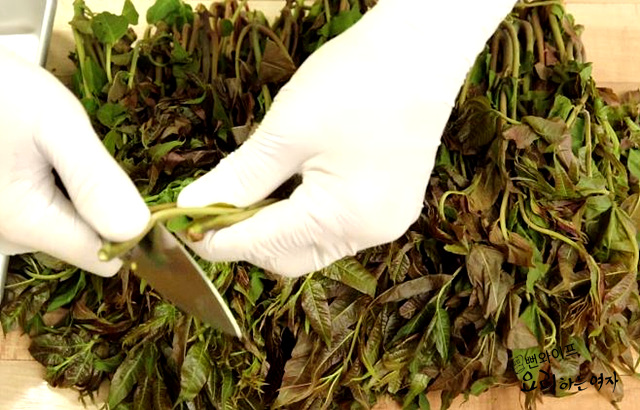
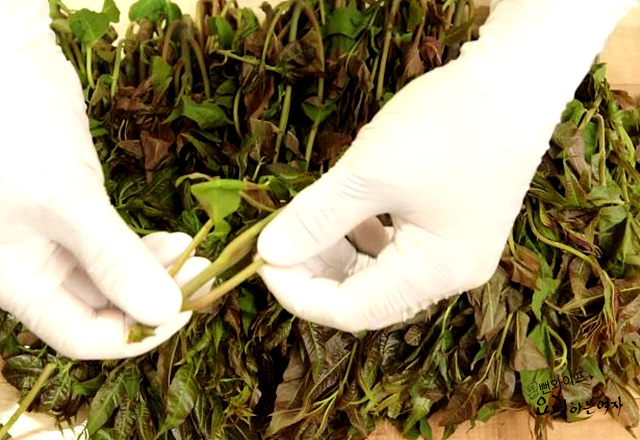
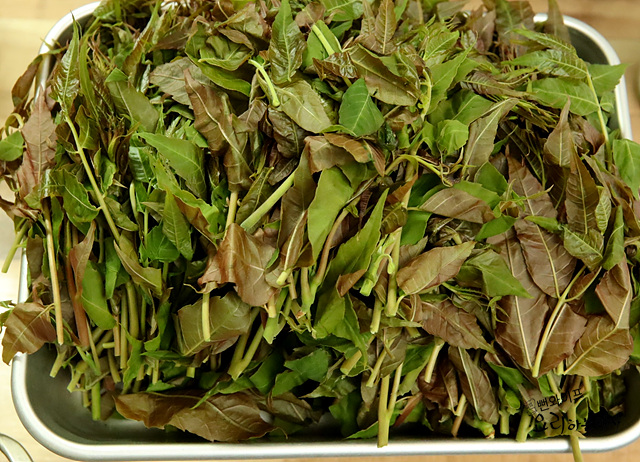
Trim off the bottom ends and cut away any tough or hard stems, as they will be unpleasant to eat when pickled.
If the stems snap crisply and cleanly when broken, they are tender.
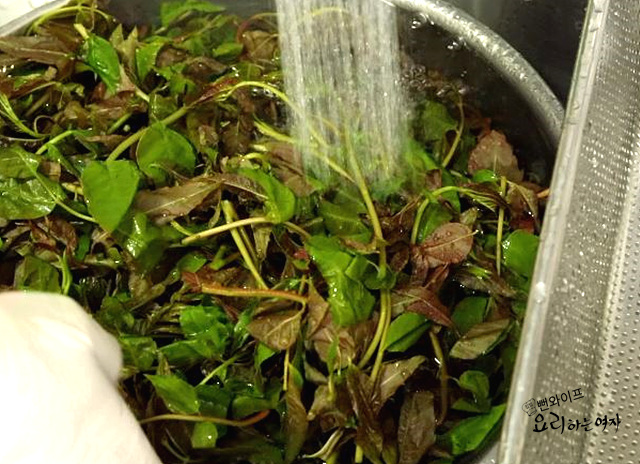
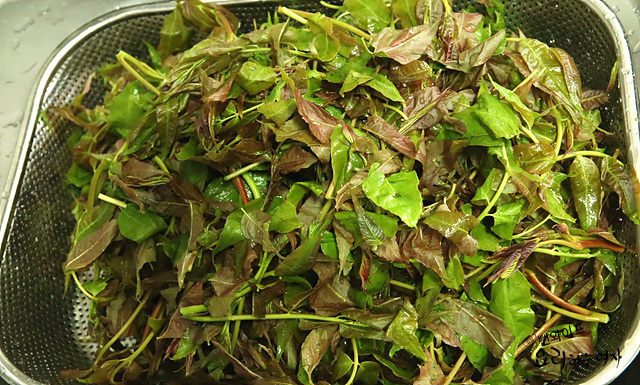
Rinse multiple times under running water and drain in a colander.
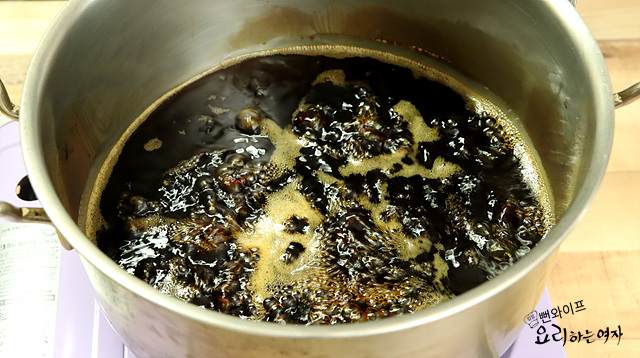
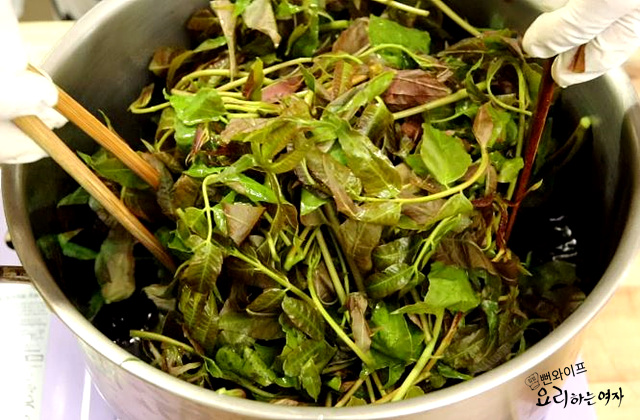
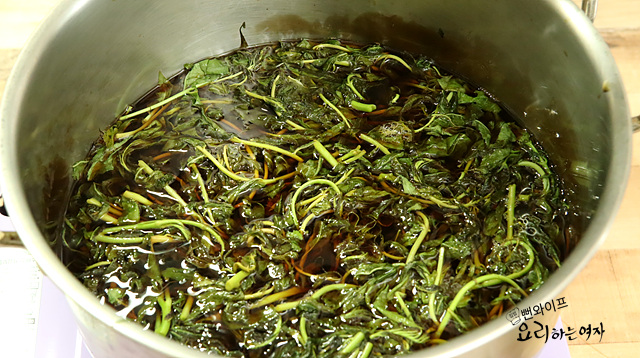
Pour in all the pickling liquid ingredients except the soju—2 cups water, 2 cups regular soy sauce (jin-ganjang), 1 cup sugar, and 1 cup vinegar. Bring to a rolling boil, then boil over low heat for at least 30 seconds.
Add the listed ingredients a little at a time and adjust the amount of sugar or vinegar to suit your taste.
Turn off the heat, add the gajuk-namul immediately, and toss to let them wilt evenly all over.
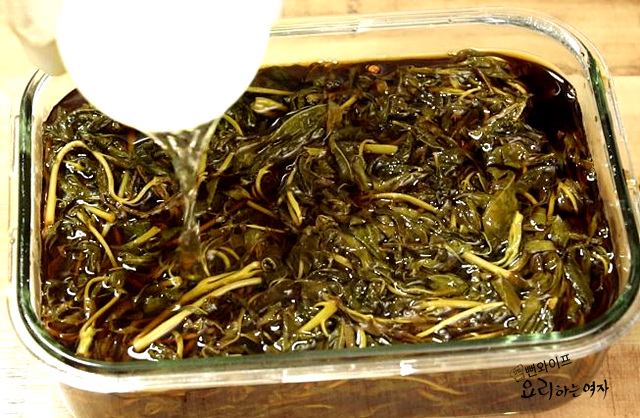
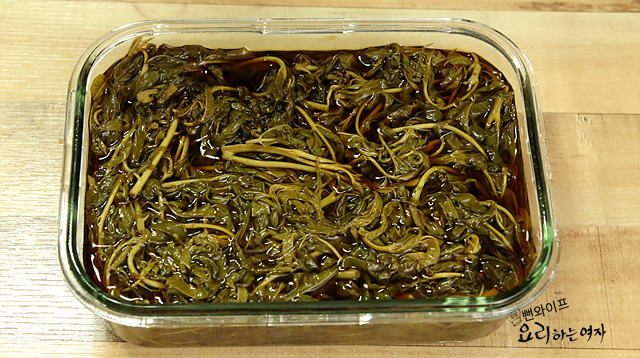
Once completely cooled, pour in the soju and mix well. Leave at room temperature overnight, then store in the refrigerator.
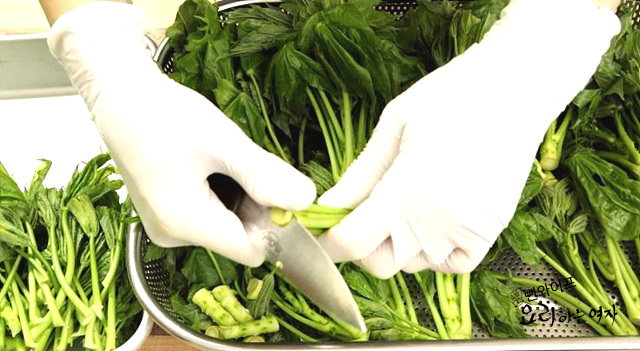
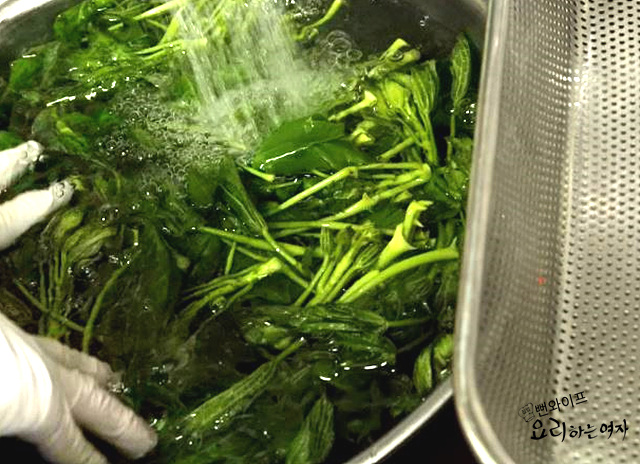
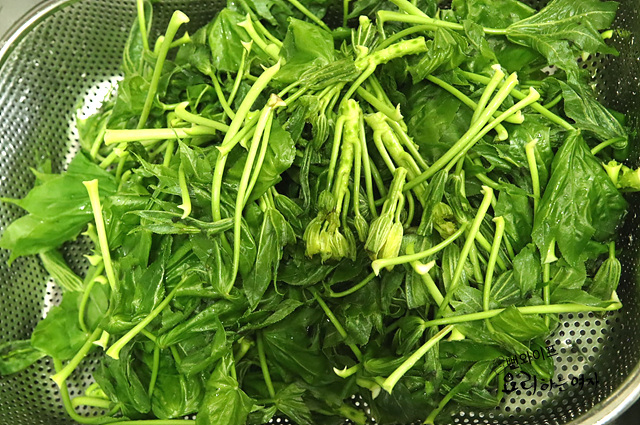
Freshly picked prickly castor oil tree shoots (eomnamu-sun) are tender, so they do not require much trimming.
Cut away the hard stem ends and chew a piece of the thick stem to make sure it chews tenderly before trimming.
Just because the stems are thick does not mean they are tough. I remember snapping off and throwing away the stems in the past without knowing, so I hope you enjoy these stems with their great texture.
Rinse several times under running water.
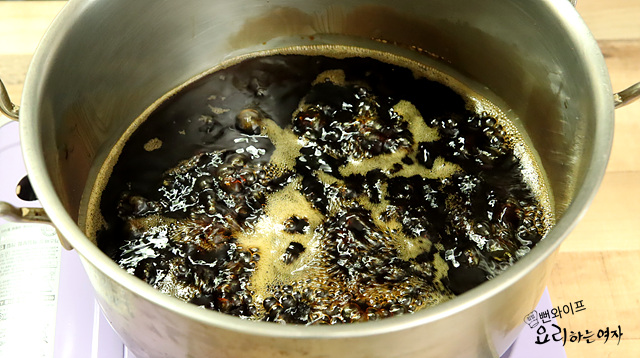
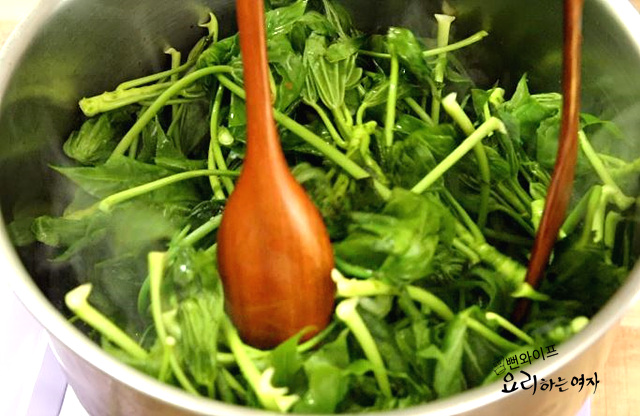
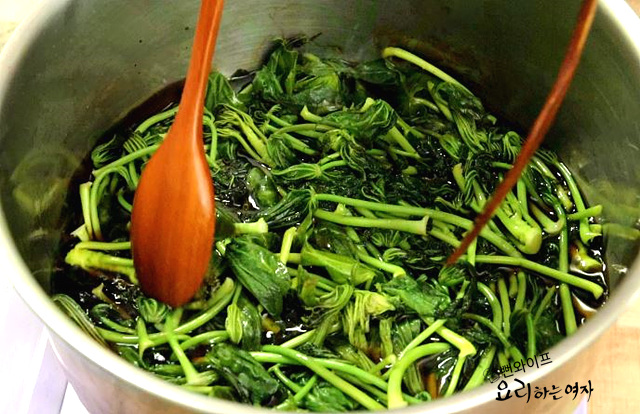
Just like the gajuk-namul jangajji above, add all the pickling liquid ingredients except the soju and bring to a rolling boil.
Turn off the heat, add the prickly castor oil tree shoots, and toss until wilted.
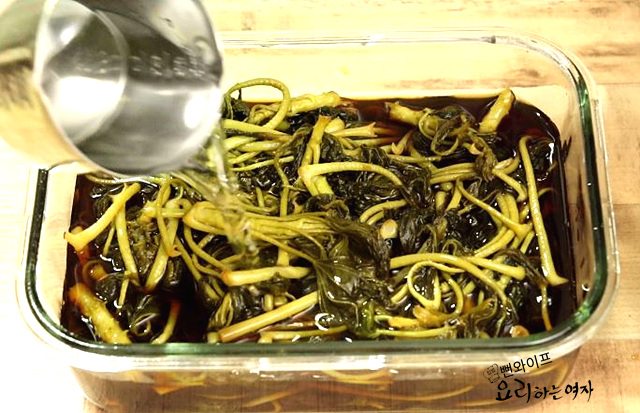
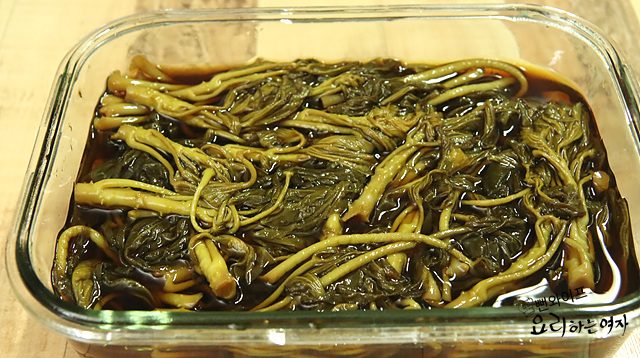
Once completely cooled, pour in the soju, mix well, let it mature at room temperature overnight, and then store in the refrigerator.
 Ppunwife's tips
- Add the listed ingredients little by little, adjusting the amount of sugar or vinegar to your preference.
- If you plan to store and eat soy sauce jangajji for a long time, it is worth buying tender shoots, even if they cost more, so you can enjoy a tender texture down to the last bite.
- When making soy sauce jangajji, adding soju allows you to store and enjoy it for 1 year without the hassle of re-boiling the liquid midway through.
FAQ
Can it be stored for a long time without re-boiling and pouring the pickling liquid again?
If you stir soju into the pickling liquid once it is completely cool, let it mature at room temperature overnight, and keep it refrigerated, you can store it for over 1 year without the hassle of re-boiling.
Do you add the soju from the start when boiling the pickling liquid?
Do not boil the soju with the other ingredients; pour it in and stir well only after the boiled liquid has completely cooled.
How can I tell if the gajuk-namul stems are tender?
If the stem snaps crisply and cleanly when broken, it is tender and not tough.
How can I adjust the sweetness and acidity of the jangajji?
When boiling the soy sauce liquid, adjust the amount of sugar or vinegar little by little to suit your taste.