Eomnamusun Muchim (Prickly Castor Oil Shoots)
A spring side dish of blanched prickly castor oil tree shoots tossed simply with perilla oil and soup soy sauce.
Translated from Korean by AI and not yet checked by a native speaker. Amounts and numbers are taken directly from the original recipe. Read the Korean original →
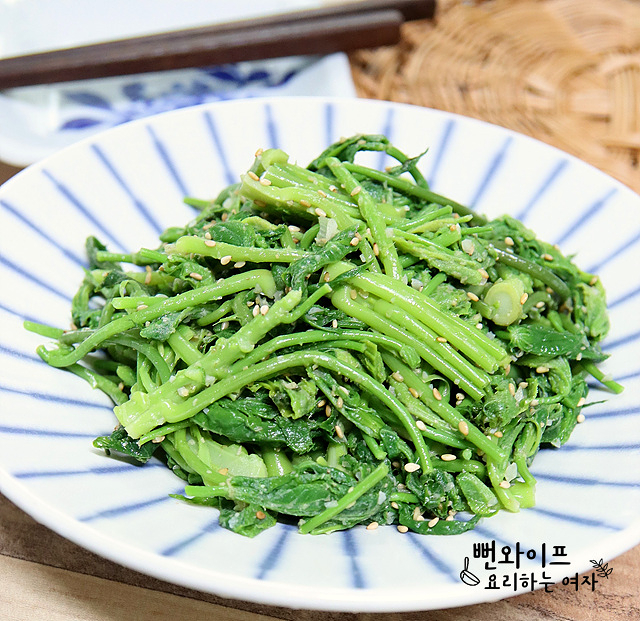
This spring side dish features prickly castor oil tree shoots, known for their pleasantly bitter taste and unique aroma, briefly blanched and tossed with simple seasonings. Blanching the thick stems first before the leaves gives them an even, tender-crisp texture. A splash of rich perilla oil softens the strong herb scent, making it easy and approachable to enjoy.
- Servings
- 3–4 servings
- Difficulty
- Easy
- Spiciness
- Not spicy
Ingredients
Ingredients
- Prickly castor oil tree shoots (eomnamu-sun)200 g
- Coarse sea salt1 tbsp
Seasoning
- Soup soy sauce (guk-ganjang) (or tuna extract sauce (chamchi-aek))1 tbsp
- Salt1/3 tsp
- Minced garlic1/2 tbsp
- Perilla oil (or toasted sesame oil)1 tbsp
- Toasted sesame seeds1 tbsp
- Prickly castor oil tree shoots have soft thorns that do not need to be scraped off; trimming the base slightly will loosen the outer husks naturally.
- If you want to keep them whole, make a shallow cut along the thicker bottom stem so they blanch evenly.
Steps
Prepare the ingredients
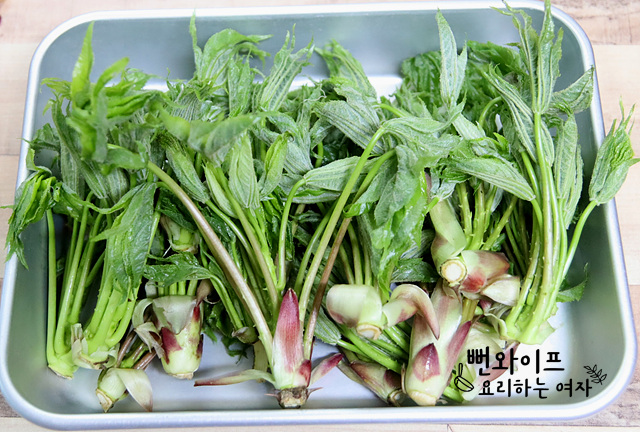
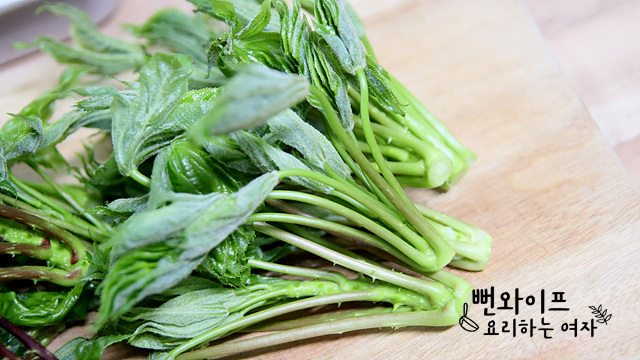
Here is 200 g of prickly castor oil tree shoots (gaedureup).
Clean the prickly castor oil tree shoots
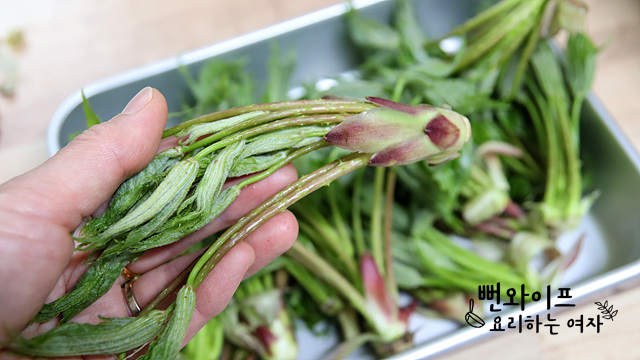
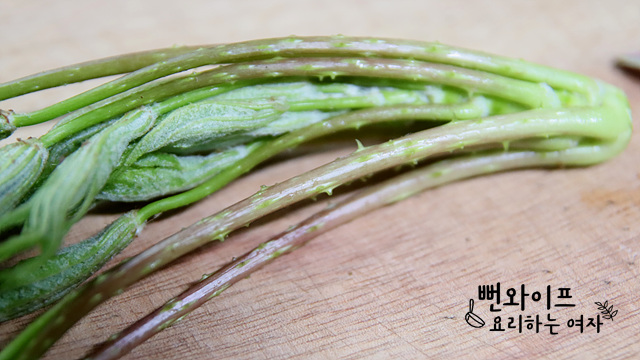
Because these shoots are just starting to emerge, the stems are thin and tender.
Unlike angelica tree shoots (dureup), prickly castor oil tree shoots have thorns as soft as rubber, so there is no need to scrape them off.
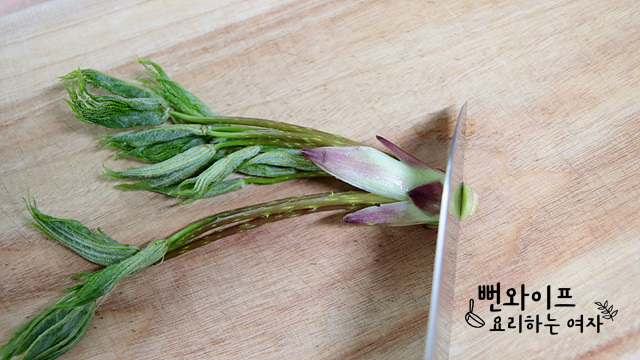
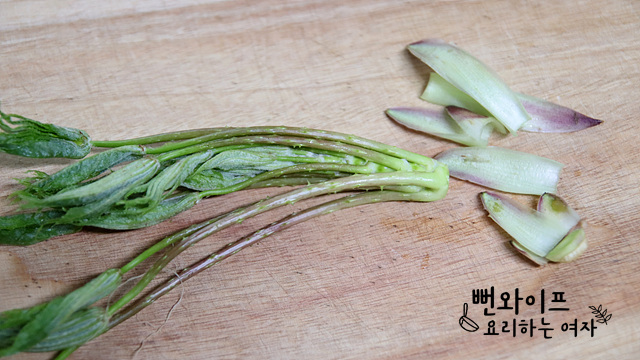
If you trim the base slightly, the attached outer husks will fall away.
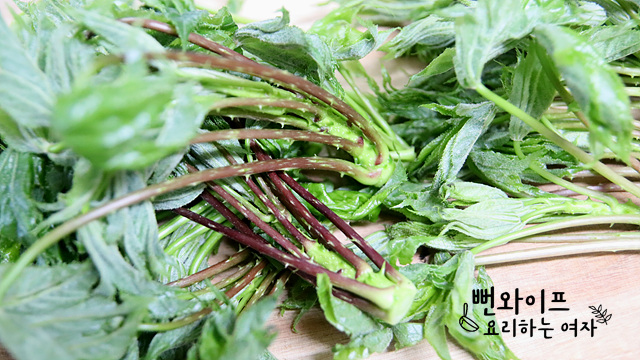
They start out green, and as they grow, the stems become thicker and the color darkens.
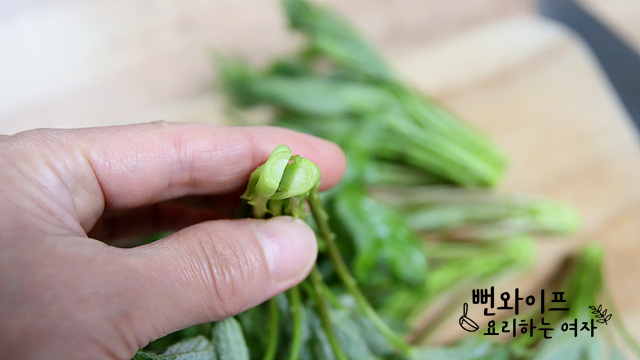
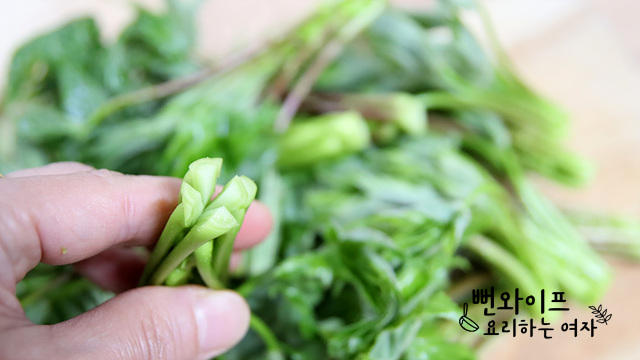
If you want to enjoy them whole, just make a small slit in the thicker base so they cook evenly when blanched.
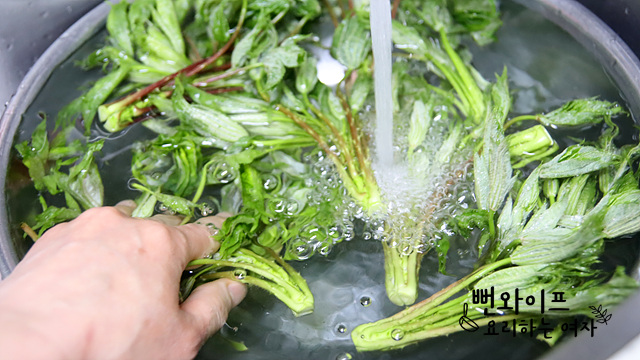
Rinse them two or three times in water.
Blanch the prickly castor oil tree shoots
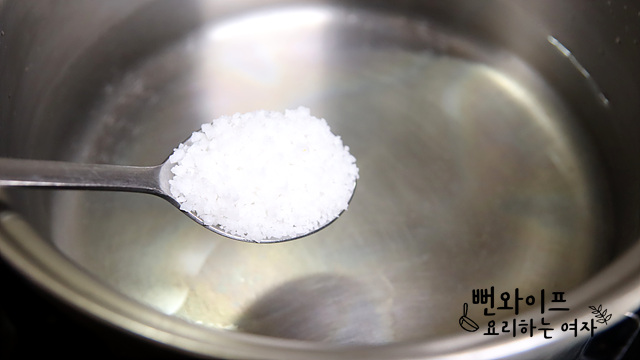
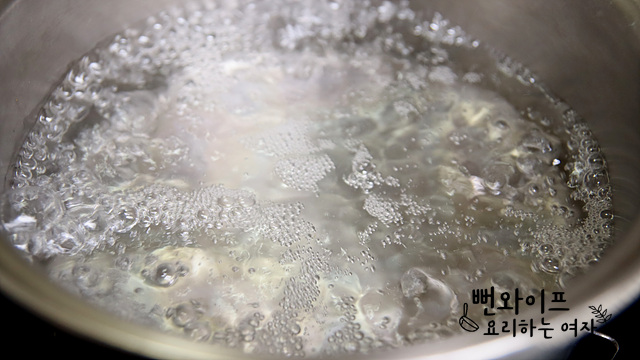
Pour water into a pot, add 1 tbsp coarse sea salt, and bring it to a rolling boil...
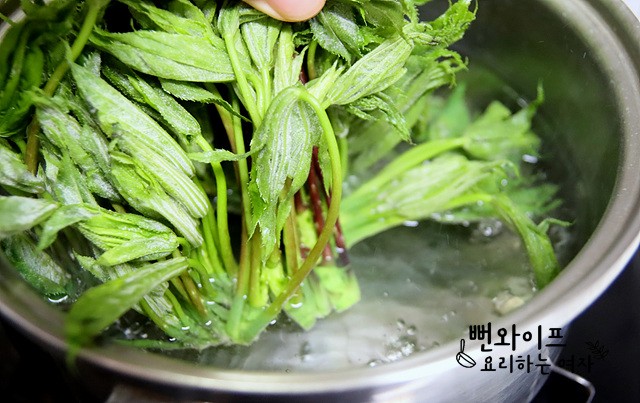
Dip only the bottom stems in first and cook for about 10–20 seconds.
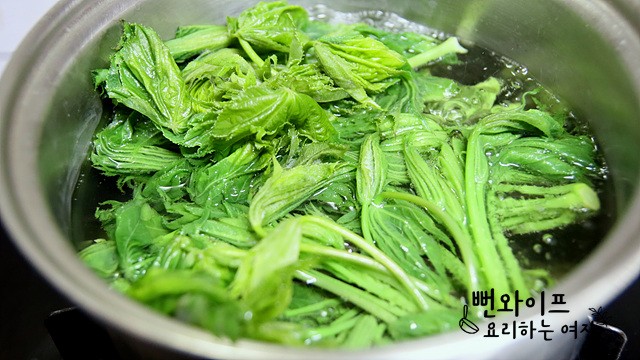
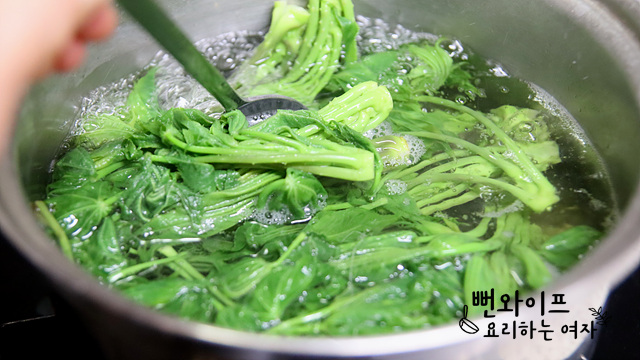
Add the rest of the shoots and blanch for 30 seconds–1 minute until gently wilted.
Staggering the blanching time like this gives both the stems and leaves a great texture.
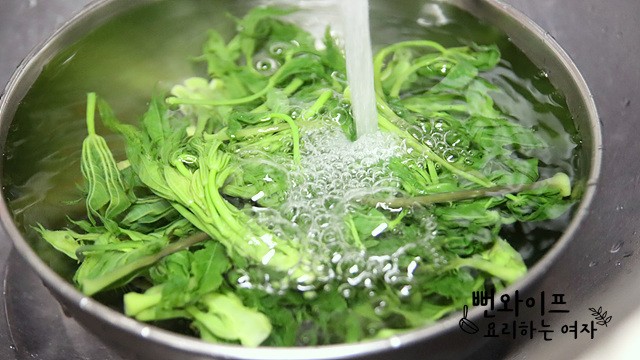
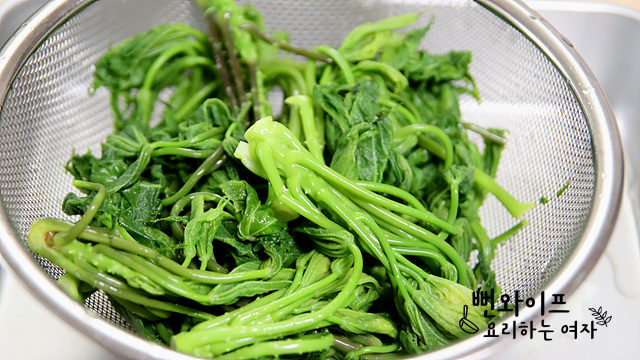
Rinse immediately in cold water and drain.
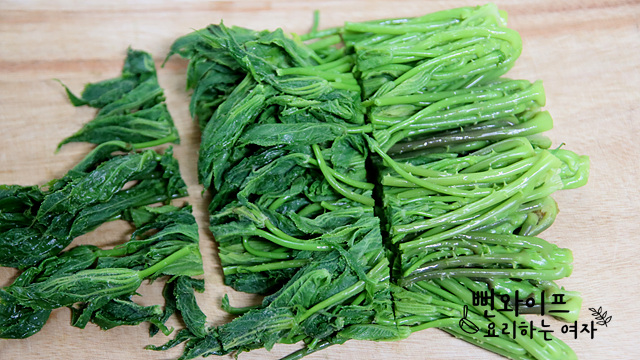
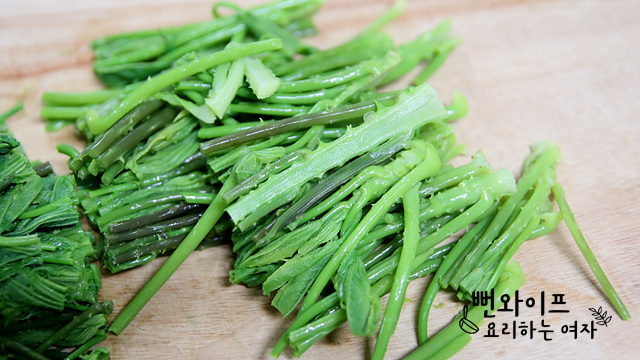
Gently squeeze out the remaining water without crushing them, then cut into bite-sized lengths.
You can separate the clustered stems or leave them whole.
Toss with seasonings
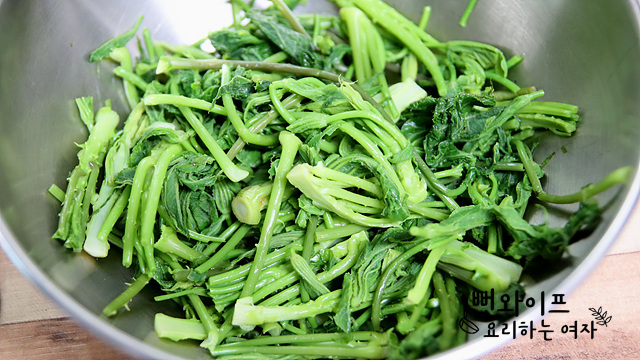
Shake out the clumps lightly with your hands...
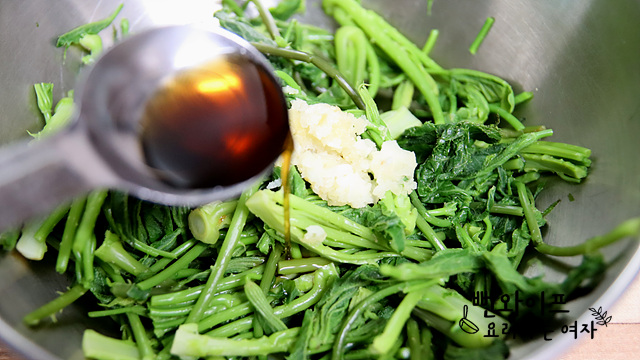
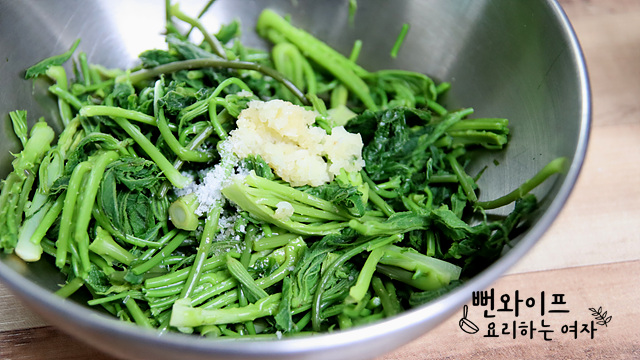
Add 1 tbsp soup soy sauce (guk-ganjang), 1/2 tbsp minced garlic, and 1/3 tsp salt first, and toss gently.
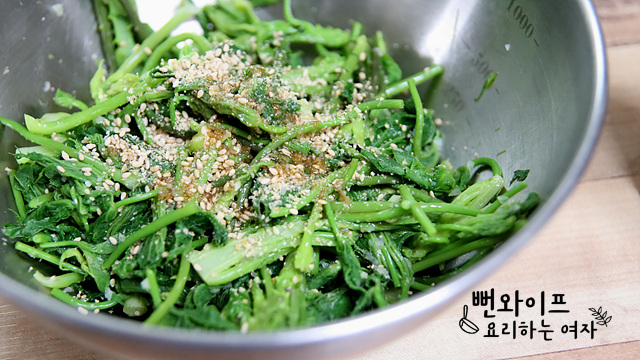
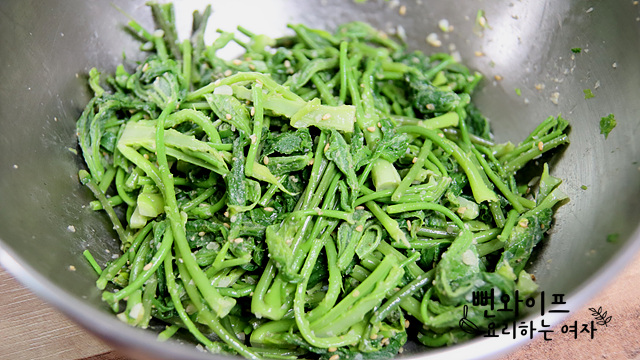
Once the seasoning is right, finish by adding 1 tbsp perilla oil and 1 tbsp toasted sesame seeds, with half of the seeds ground before adding.
You can also use toasted sesame oil instead of perilla oil in the same amount.
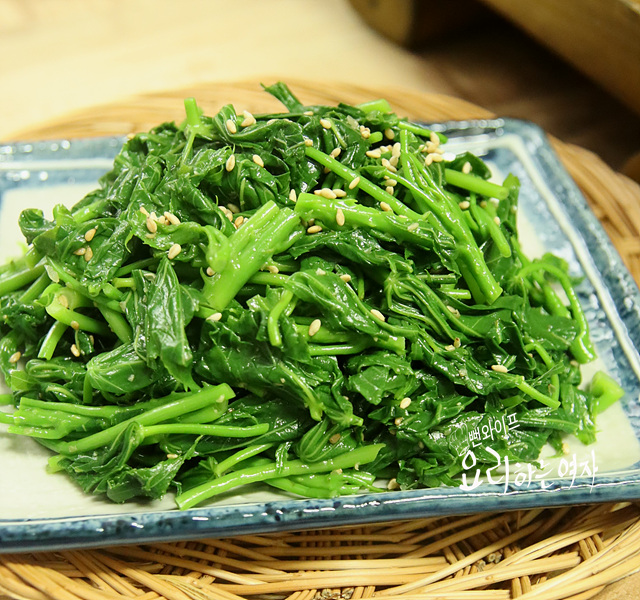
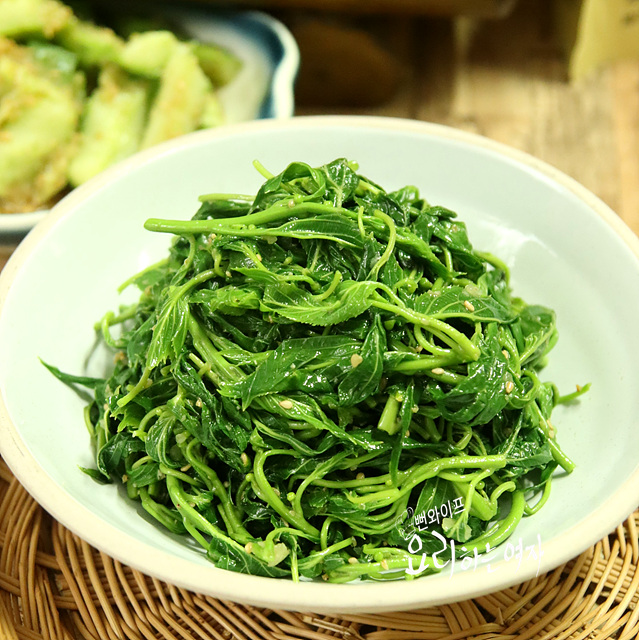
Complete
I tossed them with a simple seasoning for a clean, light flavor.
The nutty aroma of perilla oil gently mellows the strong scent of the prickly castor oil tree shoots, making them delicious and very easy to enjoy.
The texture is just right, and the herbal fragrance is lovely.
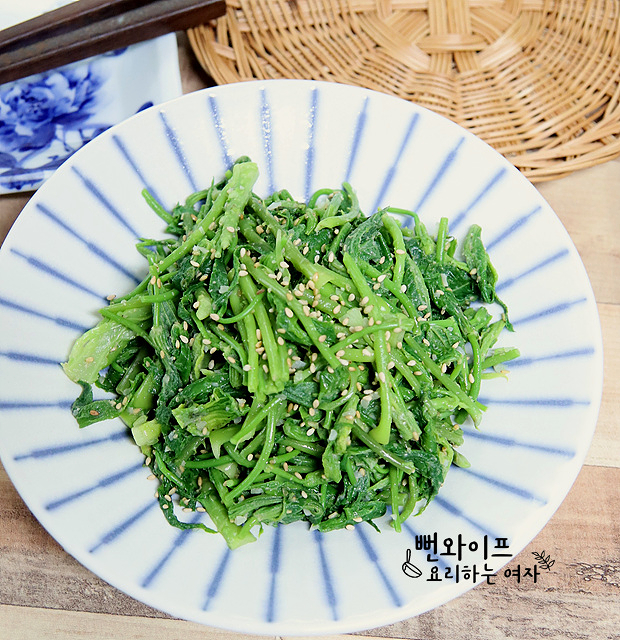
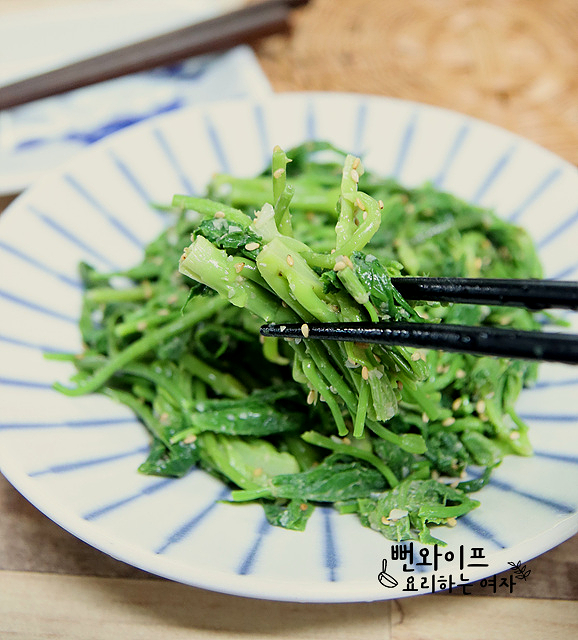
Spring greens are coming into season so quickly these days that it is hard to keep up with tasting them all.
Enjoy these healthy spring greens often and deliciously.
 Ppunwife's tips
- Dip the stem ends first to cook for 10–20 seconds before submerging the rest, so both the stems and leaves turn out with a great texture.
- Grind half of the 1 tbsp toasted sesame seeds before tossing for extra nutty flavor.
FAQ
Do I need to scrape off the thorns on the stems?
Young prickly castor oil tree shoots have soft thorns, so there is no need to scrape them off. Just trim the stem base slightly and remove any loose outer husks.
Is there a trick to blanching the stems and leaves evenly?
Submerge the thicker stem ends in boiling water first for 10–20 seconds, then drop in the remaining leafy parts and blanch for 30 seconds to 1 minute.
Can I use other seasonings instead of soup soy sauce or perilla oil?
You can use tuna extract sauce instead of soup soy sauce, and you can substitute toasted sesame oil for the perilla oil in equal measure.