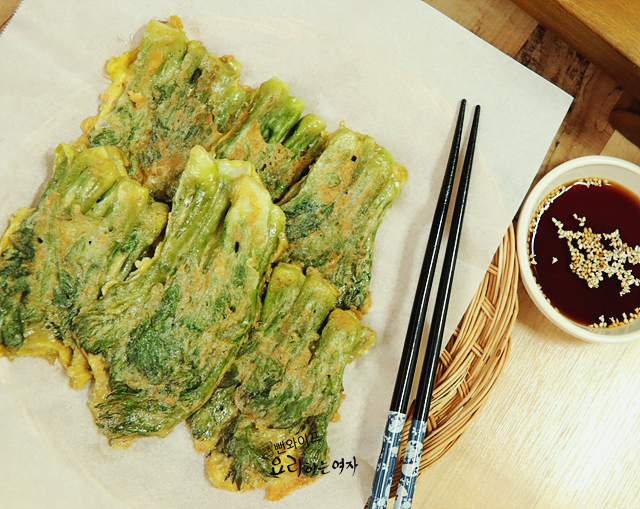
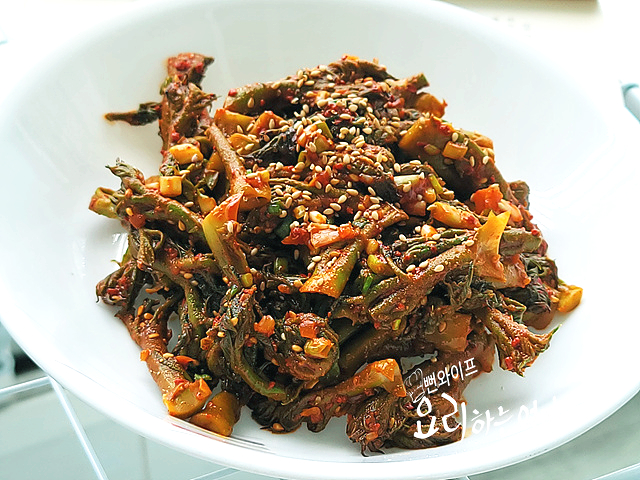
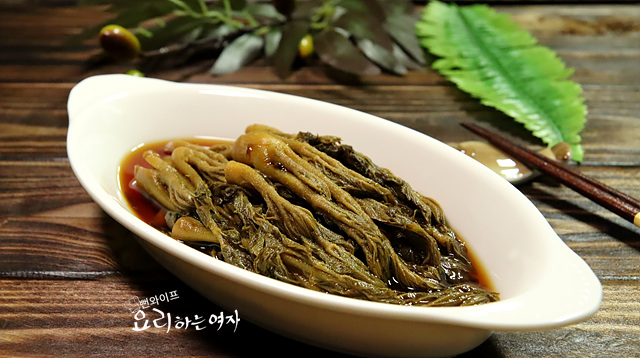
Crispy Dureup Twigim (Deep Fried Angelica Tree Shoots)
A spring greens dish fried crispy in ice-water batter, mellowing out its unique bitterness.
Translated from Korean by AI and not yet checked by a native speaker. Amounts and numbers are taken directly from the original recipe. Read the Korean original →
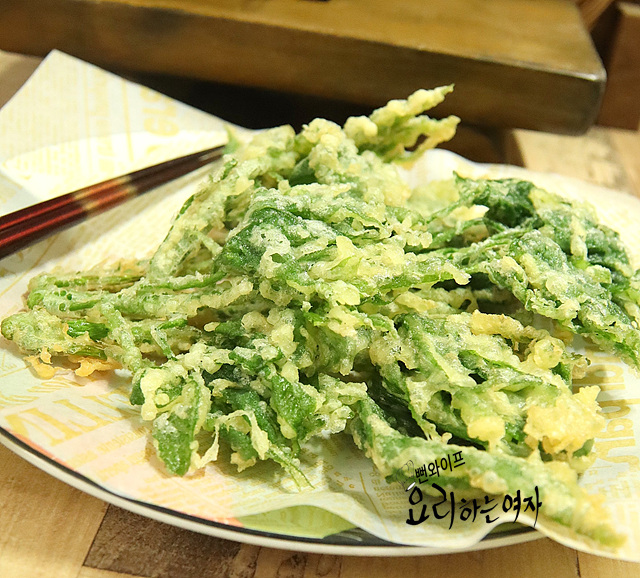
This deep-fried dish softens the characteristic bitter aroma of prickly castor oil tree shoots, making them easy for anyone to enjoy. The key secret is using ice water and avoiding overmixing the batter so it stays wonderfully crispy. Pair it with a tangy vinegar soy dipping sauce for a clean, refreshing finish.
- Servings
- about 2–3 servings
- Difficulty
- Medium
- Spiciness
- Not spicy
Ingredients
Ingredients
- Prickly castor oil tree shoots (eomnamu-sun) (or prickly castor oil tree shoots (gaedureup), angelica tree shoots (chamdureup))10 shoots
Batter
- Frying mix (twigim-garu)1 cup
- Ice water (or cold water)1 cup
- Egg yolk1
- Tuna extract sauce (chamchi-aek) (or soup soy sauce (guk-ganjang))1/2 tbsp
Vinegar soy dipping sauce
- Regular soy sauce (jin-ganjang) (or brewed soy sauce (yangjo-ganjang))1 tbsp
- Vinegar1 tbsp
- Mirin (cooking rice wine)1 tbsp
- Tender shoots are great seasoned as namul, while those with slightly firmer stems are perfect for frying or making savory pancakes.
- Unlike true angelica tree shoots, prickly castor oil tree shoots (gaedureup) do not have sharp thorns, so there is no need to scrape them off. Just trim away the dirty base.
- Swish them through water several times to rinse well, then drain thoroughly. Because you are deep-frying, removing as much moisture as possible prevents oil from splattering so you can cook safely.
Steps
Prepare the prickly castor oil tree shoots
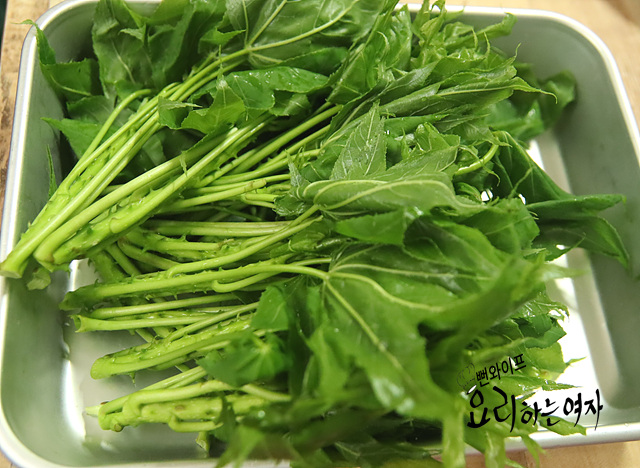
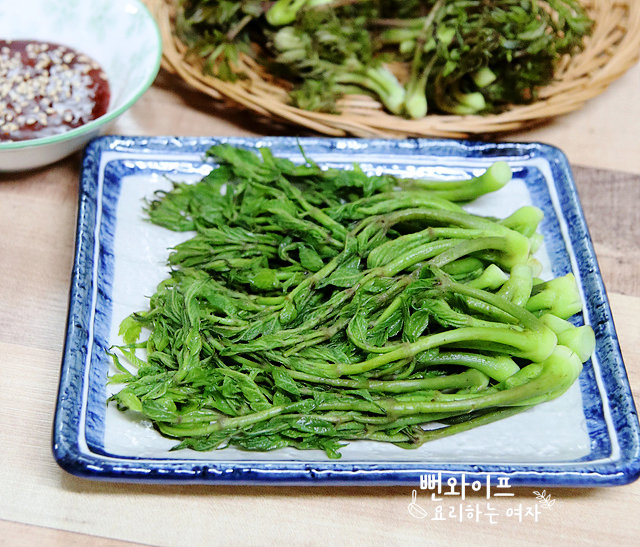
These are prickly castor oil tree shoots (eomnamu-sun), also known as gaedureup.
This is the second batch I bought this year. They are not freshly sprouted tips; they have grown a bit, so the stems are thin yet long and the leaves are broad.
Tender shoots are great seasoned as namul, while those with slightly firmer stems are perfect for frying or making savory pancakes.
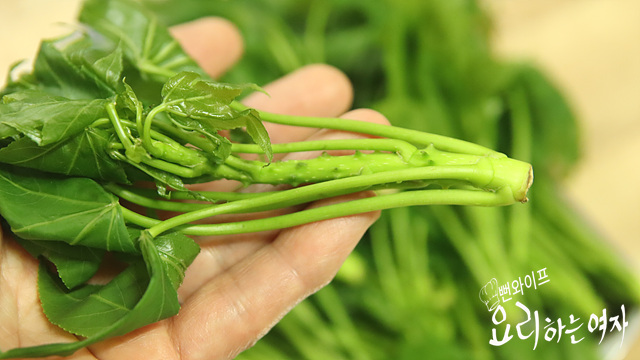
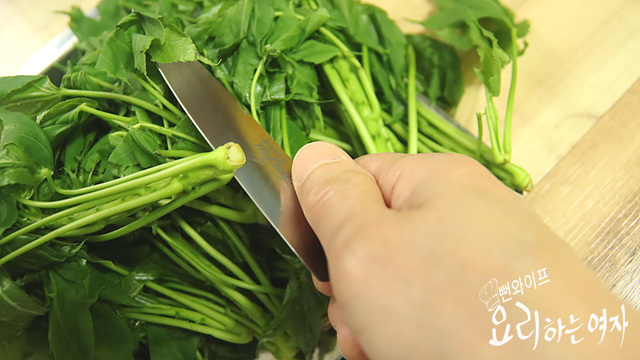
Unlike true angelica tree shoots, prickly castor oil tree shoots (gaedureup) do not have sharp thorns, so there is no need to scrape them off.
Just trim away the dirty base.
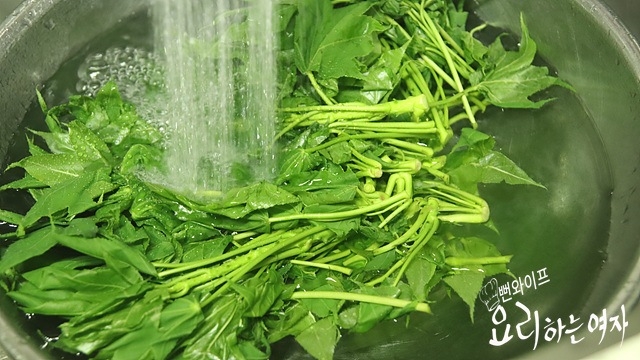
Swish them through water several times to rinse well, then drain thoroughly.
Because you are deep-frying, removing as much moisture as possible prevents oil from splattering so you can cook safely.
Make the batter
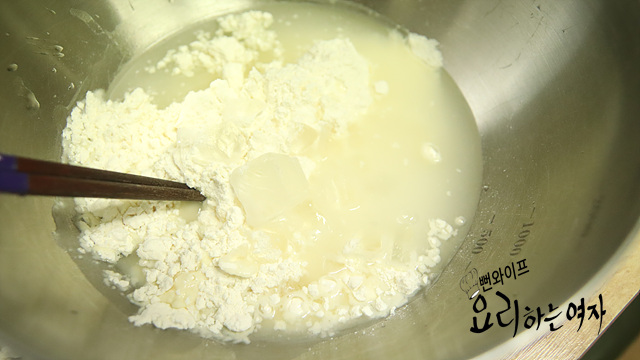
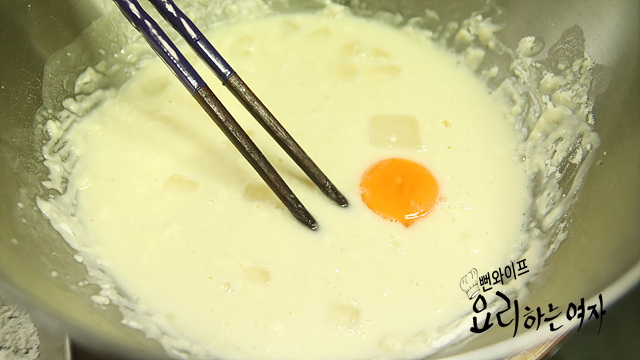
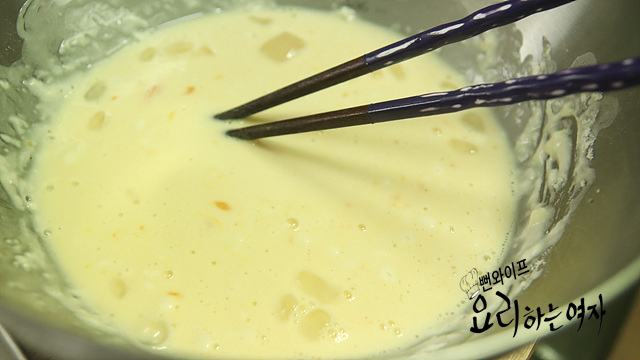
Combine 1 cup frying mix (twigim-garu) and 1 cup ice water, then add 1 egg yolk for color and mix.
If you overwork the batter, gluten develops and it turns chewy rather than crispy.
It is fine if small pockets of flour remain; just mix roughly so that no large lumps remain.
I also added 1/2 tbsp tuna extract sauce (chamchi-aek) (or soup soy sauce) to season the batter.
Check the oil temperature
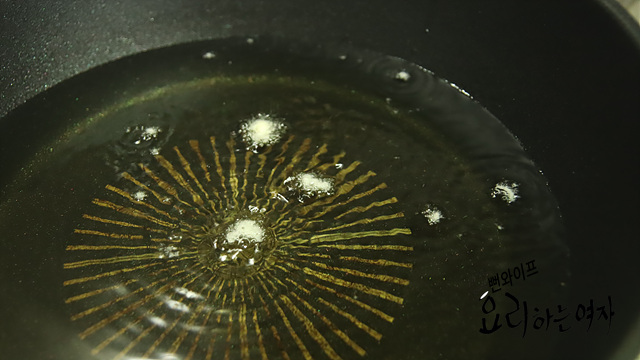
Here is how to check the oil temperature.
Drop in a bit of batter: if it sinks to the bottom and slowly floats up, it is 150°C to 160°C.
If it drops halfway and floats right back up, it is 170°C to 180°C.
If the batter scatters across the oil surface, it is 180°C or higher.
Deep-frying is best done at 170°C to 180°C, so add your ingredients once the batter drops halfway and floats right back up.
Fry
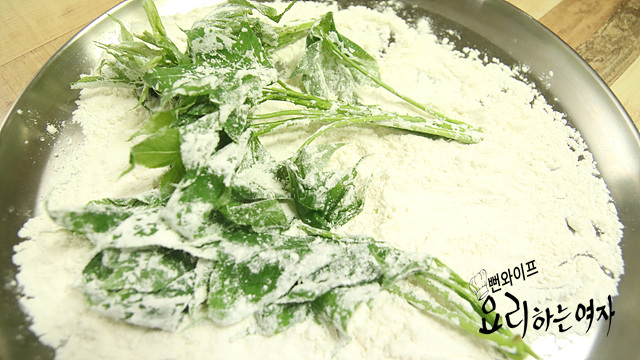
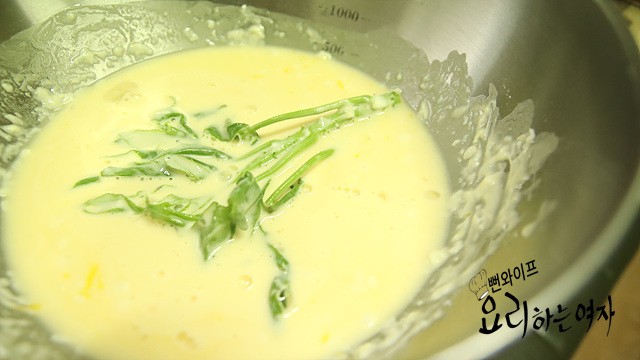
Coat the shoots evenly in flour, dip them into the batter, shake off any excess, and...
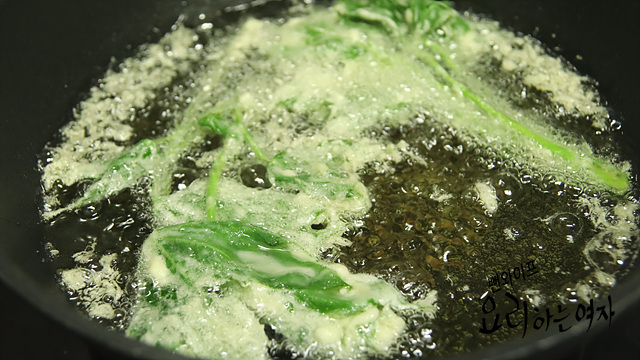
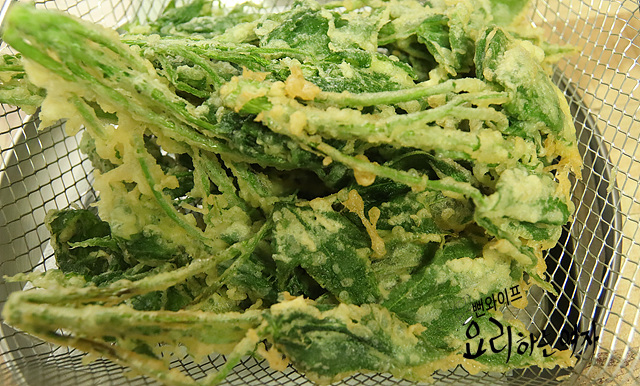
Drop them gently into the oil, frying both sides until crispy and golden brown.
Drain well so the excess oil drips off as they cool.
Finish
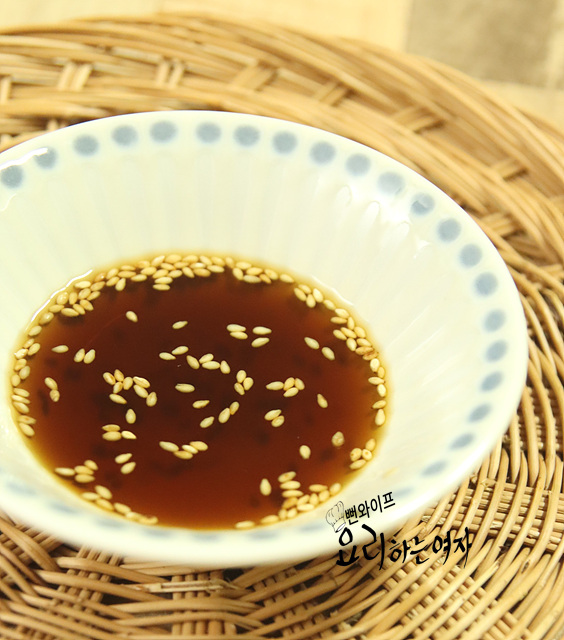
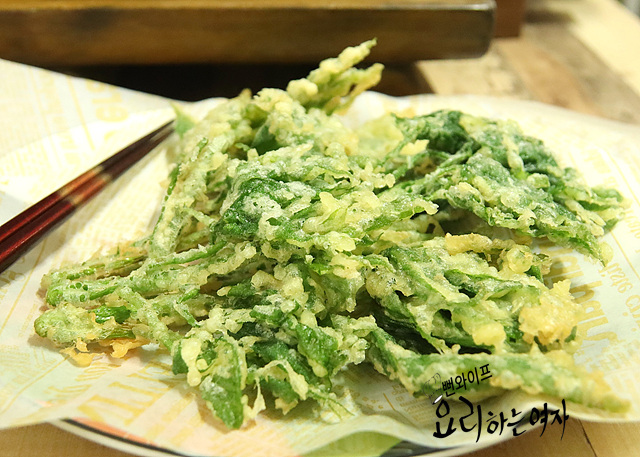
It has far less bitterness than seasoned namul, so even kids will enjoy it.
A quick dip in sweet-and-sour vinegar soy sauce cuts through the richness nicely.
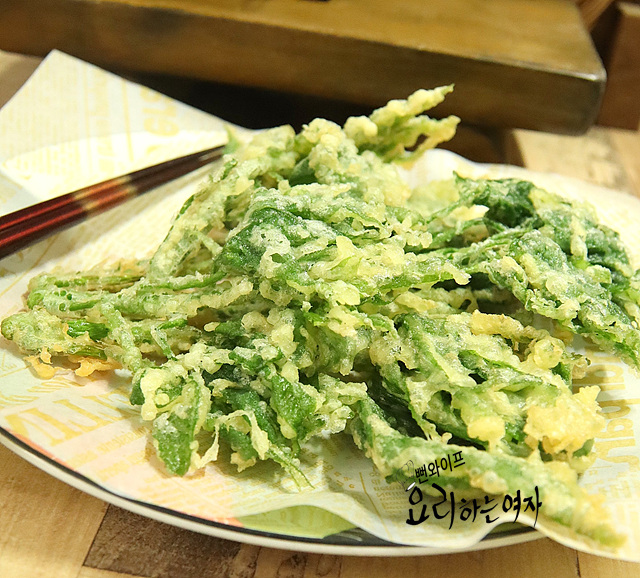
Frying them like this is every bit as good as Japanese restaurant tempura.
If you are new to spring wild greens, try them delicious and deep-fried.
 Ppunwife's tips
- If you overwork the batter, gluten develops and it turns chewy rather than crispy.
- It is fine if small pockets of flour remain; just mix roughly so that no large lumps remain.
- Deep-frying is best done at 170°C to 180°C, so add your ingredients once the batter drops halfway and floats right back up.
FAQ
Do I need to scrape the thorns off when prepping gaedureup?
Prickly castor oil tree shoots do not have sharp thorns compared to true angelica tree shoots, so simply trimming the dirty base is sufficient.
Is there a trick to making the batter crispy?
Overmixing the batter develops gluten, resulting in a chewy texture, so use ice water and mix gently just until large lumps disappear.
How can I check the oil temperature without a thermometer?
Drop a little batter into the oil; if it sinks halfway down the pot and floats right back to the surface, it has reached the ideal temperature of 170°C to 180°C.
Can I substitute another seasoning for the tuna extract sauce?
If you do not have tuna extract sauce, you can season the batter with half a tablespoon of soup soy sauce (guk-ganjang) instead.