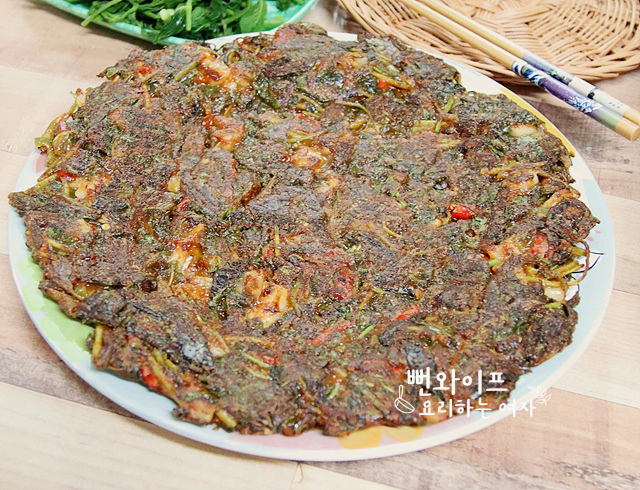
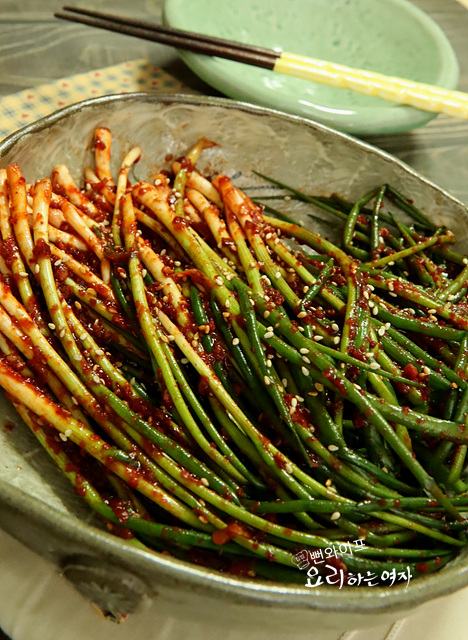
Spring Gajuk Namul Kimchi (Chinese Toon Shoot Kimchi)
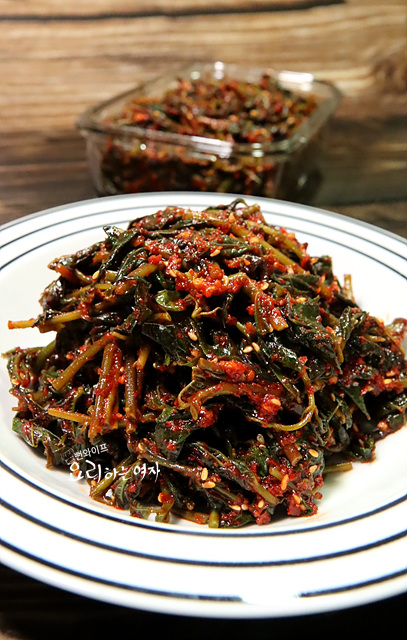
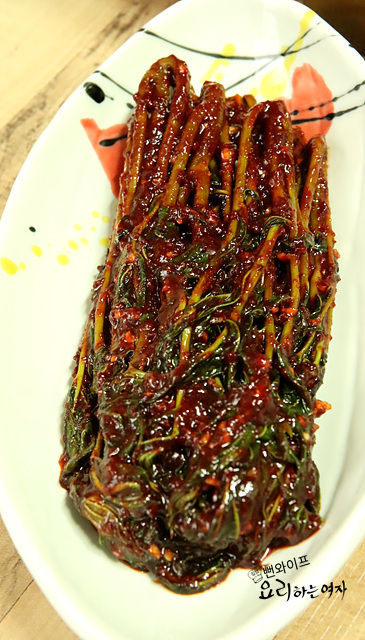
A spring gajuk namul kimchi salted in brine and tossed without blanching or drying.
Translated from Korean by AI and not yet checked by a native speaker. Amounts and numbers are taken directly from the original recipe. Read the Korean original →
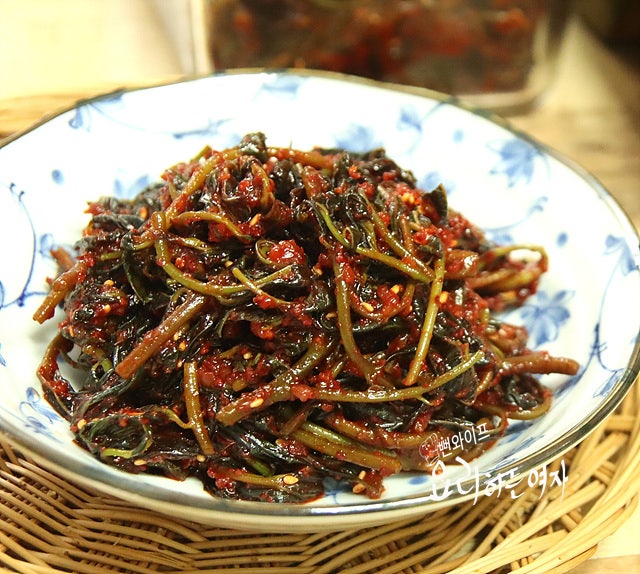
Instead of the complicated process of blanching and drying, this specialty kimchi is easily tossed together after salting the gajuk namul in brine. The key secret is using savory anchovy broth instead of glutinous rice paste to adjust the consistency and moisture of the seasoning. You can neatly enjoy the fragrant yet pleasantly bitter charm of gajuk namul as a side dish.
- Servings
- about 8–10 servings
- Difficulty
- Medium
- Spiciness
- Spicy
Ingredients
Ingredients
- Gajuk-namul (Chinese toon shoots)1 kg (after cleaning)
- Coarse sea salt1 cup
- Water10 cups
- Anchovy broth3 cups
Seasoning
- Gochugaru (Korean chili flakes)2 1/2 cups
- Sand lance fish sauce (or dried anchovies)2/3 cup
- Minced garlic1/2 cup
- Minced ginger2 tbsp
- Rice syrup (jocheong) (or corn syrup (mulyeot))1 cup
- Toasted sesame seeds
- A bundle of gajuk-namul (Chinese toon shoots) usually weighs about 500~600 g. Using two bundles should be about right.
- For toon shoots small and tender enough to fit in your palm, just trim off the base of the stems. When you snap the stem near the base by hand, if it snaps cleanly with a crisp sound, it is tender; if it bends without snapping, it is tough, so trim it off.
- Salt them for about 2 hours in total; as the shoots wilt and release moisture, they will become completely submerged. Turn them over once halfway through salting.
Steps
Clean the toon shoots
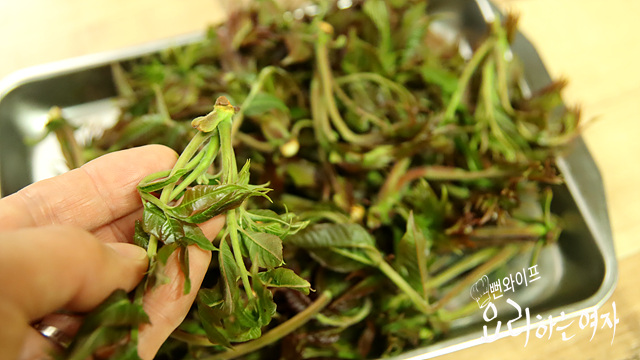
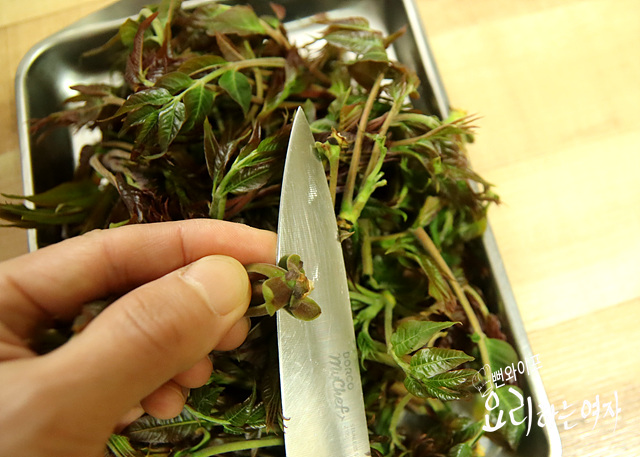
For toon shoots small and tender enough to fit in your palm, just trim off the base of the stems.
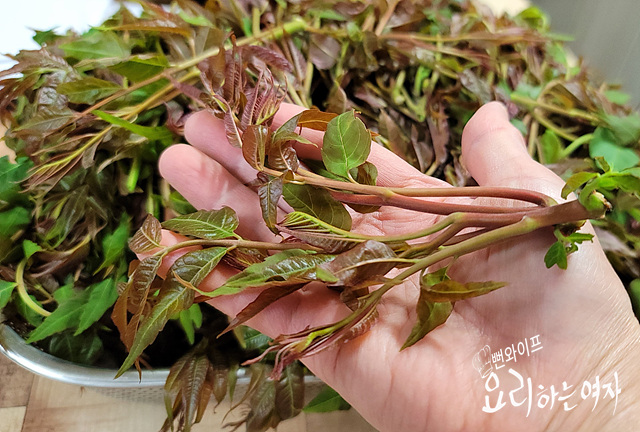
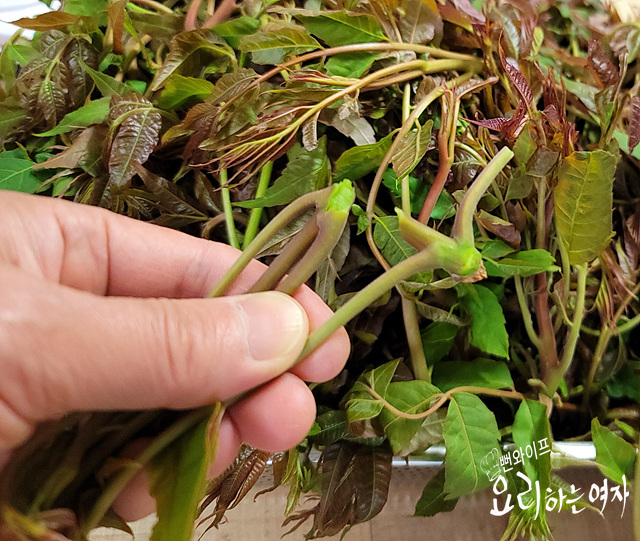
They are mostly tender, but stems that look somewhat thick and long can be hard and tough.
When you snap the stem near the base by hand, if it snaps cleanly with a crisp sound, it is tender.
If it bends without snapping, it is tough, so cut it away.
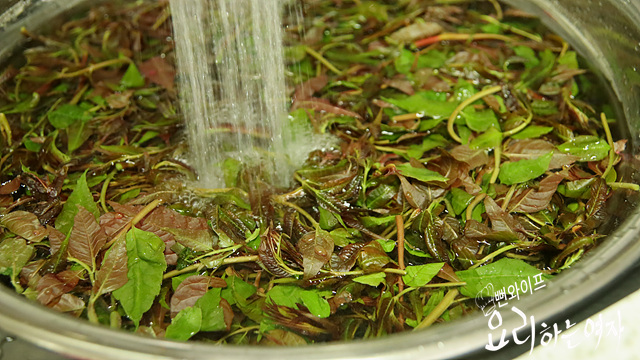
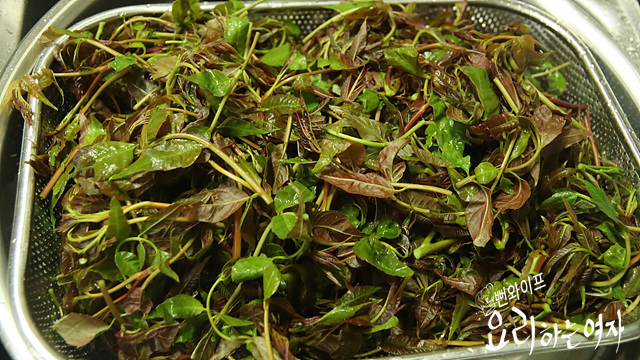
Swish them in water to wash them several times, then place them in a colander to drain the water.
Salt the shoots
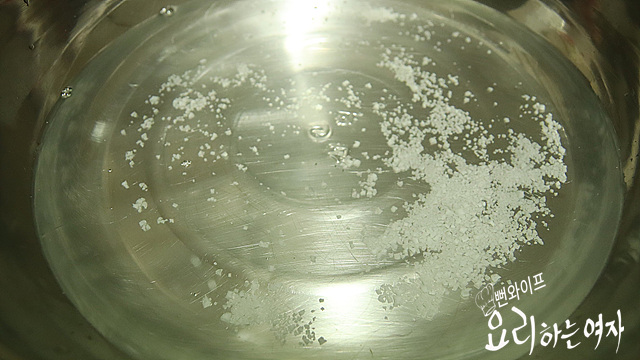
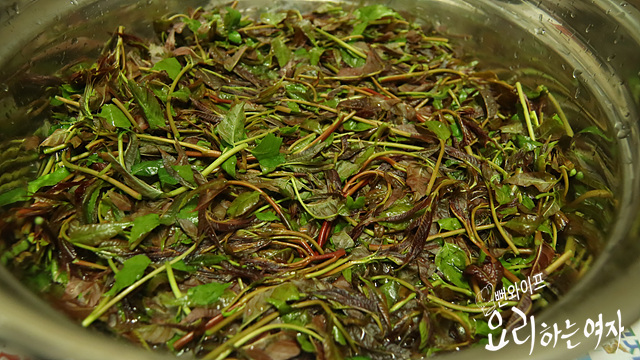
Pour 10 cups of water and 1 cup of coarse sea salt into a large bowl and stir to dissolve.
Add the toon shoots and press them down so they are submerged in the salt water.
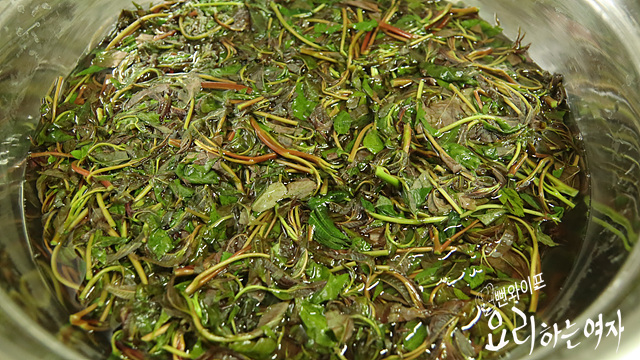
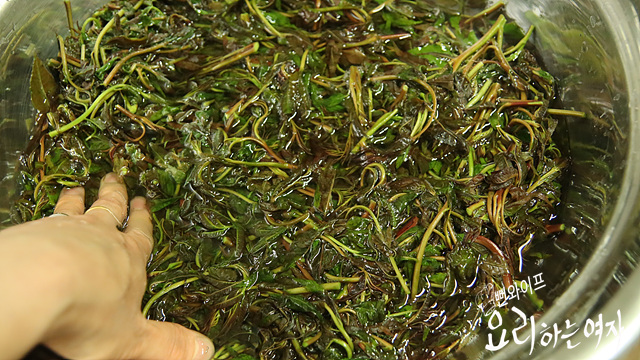
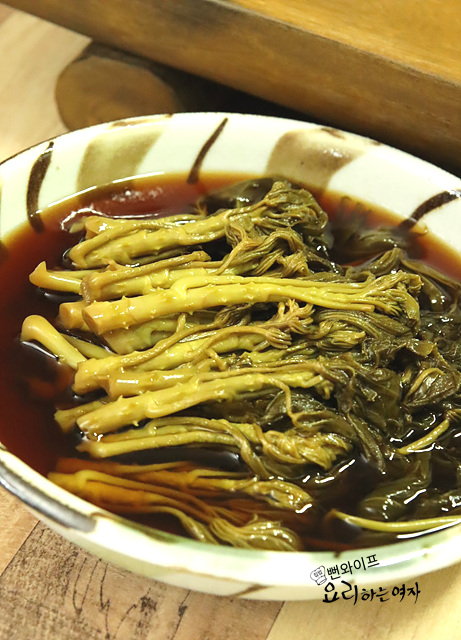
Salt them for about 2 hours in total; as the shoots wilt and release moisture, they will become completely submerged.
Turn them over once halfway through salting.
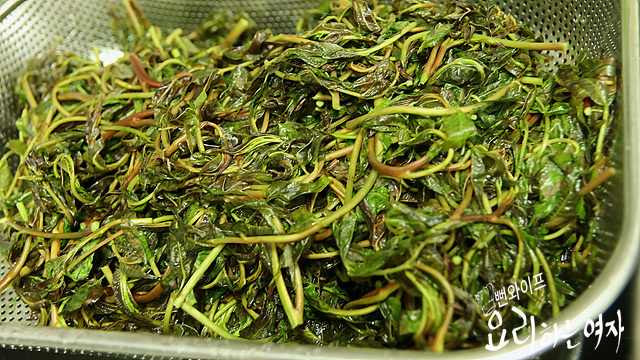
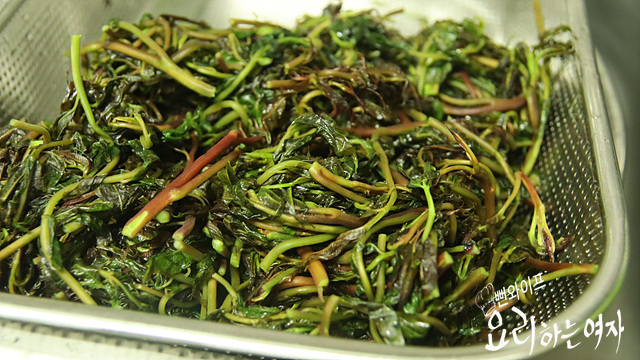
Mine were salted just right, so I simply squeezed out the water without rinsing to avoid making them bland.
Chew a piece of the stem, and if it tastes salty, rinse it in water so that it does not become too salty once seasoned.
Drain in a colander and squeeze out the remaining moisture firmly with your hands.
Make the seasoning
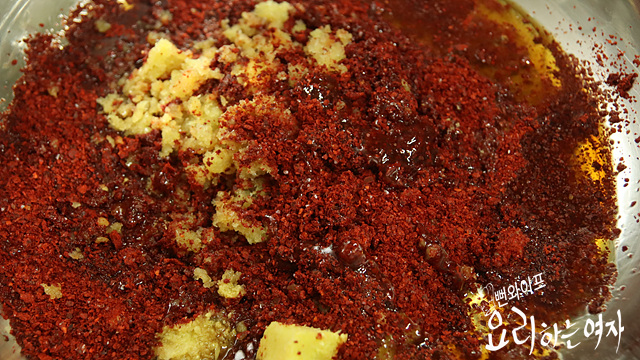
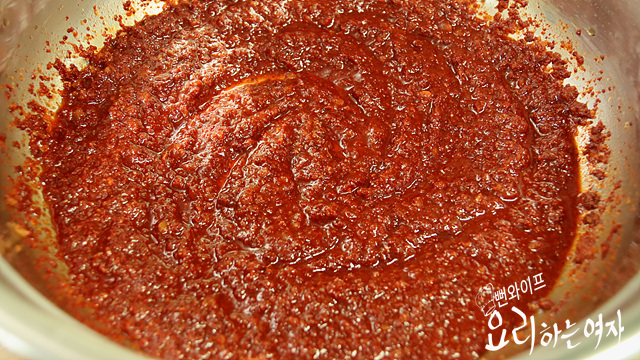
Add all seasoning ingredients except the toasted sesame seeds, along with 3 cups of anchovy broth, and mix well so the gochugaru hydrates and the flavors blend.
Because the anchovy broth used in place of rice paste is meant to adjust the thickness of the seasoning, do not pour it in all at once; adjust while checking the consistency of the seasoning.
It is good to make the seasoning ahead of time while the toon shoots are salting.
Toss together
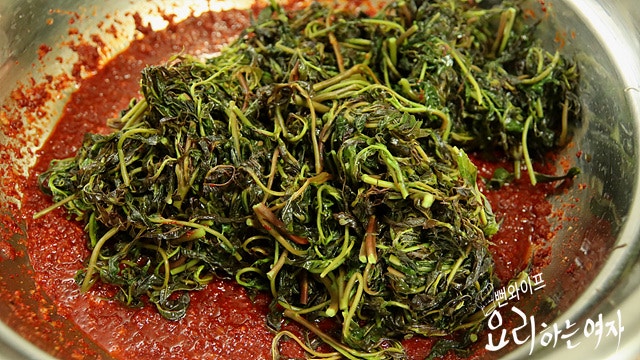
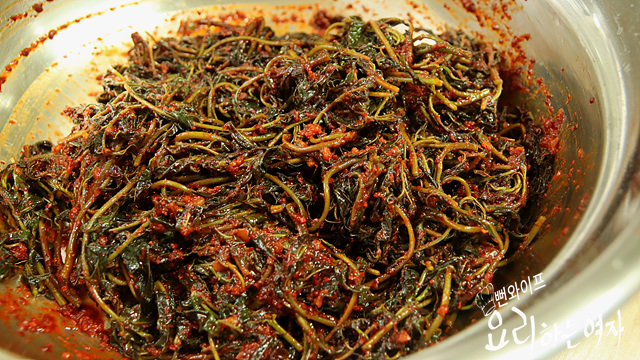
Now, add the toon shoots to the seasoning and toss them together.
After tossing thoroughly, taste it; if it is bland, adjust with fish sauce or salt, and add more sweetness to your liking.
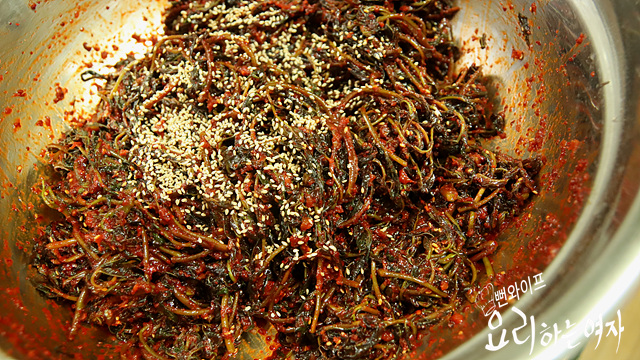
Once the seasoning is right, finish by adding toasted sesame seeds.
Serve and store
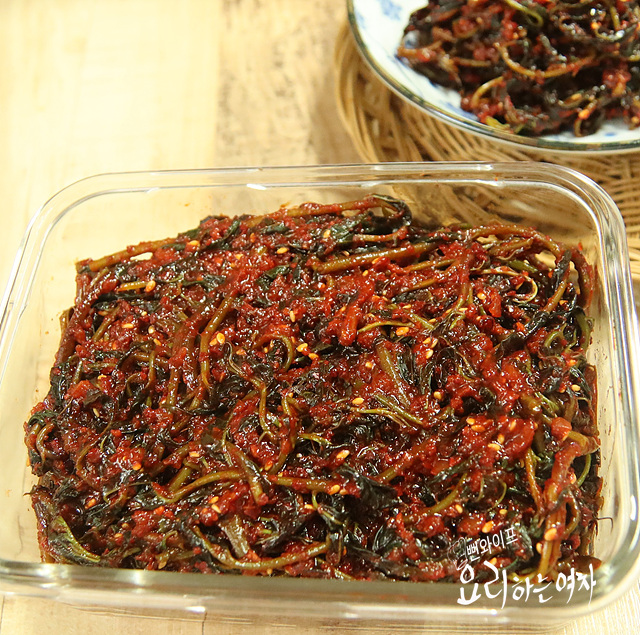
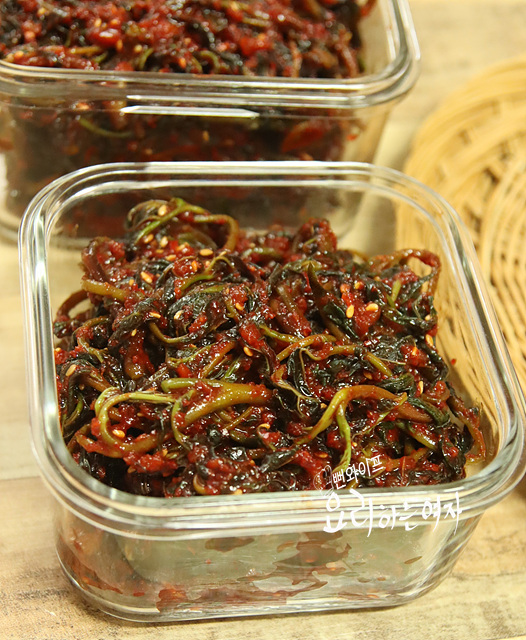
Place it in a large container and cover with plastic wrap or a plastic bag to keep air out so you can enjoy it for a long time without spoiling.
You can put about a week's worth into a small container and serve it on the table the very next day.
 Ppunwife's tips
- Chew a piece of the stem, and if it tastes salty, rinse it in water so that it does not turn out overly salty once seasoned.
- Because the anchovy broth used instead of rice paste adjusts the thickness of the seasoning, do not add it all at once; adjust while checking the consistency.
- Pack it into a large container and seal it tightly with plastic wrap or a bag to block air, which lets you enjoy it for a long time without spoiling.
FAQ
Why do you use anchovy broth instead of glutinous rice paste?
If gajuk namul ferments too much, it loses its unique flavor, so rice paste is omitted; instead, anchovy broth adds savory umami while balancing the moisture and thickness of the seasoning.
Should I rinse the toon shoots after salting them in brine?
Taste a stem; if the seasoning is just right, do not rinse, but simply squeeze out the water firmly. If the stem tastes quite salty, rinse lightly in water before seasoning so the finished kimchi is seasoned properly.
How can I tell tough toon shoot stems apart to trim them?
When you snap the stem near the base by hand, if it snaps crisply, it is tender; cut away and discard tough stems that bend instead of breaking.
Can I use a different fish sauce instead of sand lance fish sauce for the seasoning?
You can substitute anchovy fish sauce.