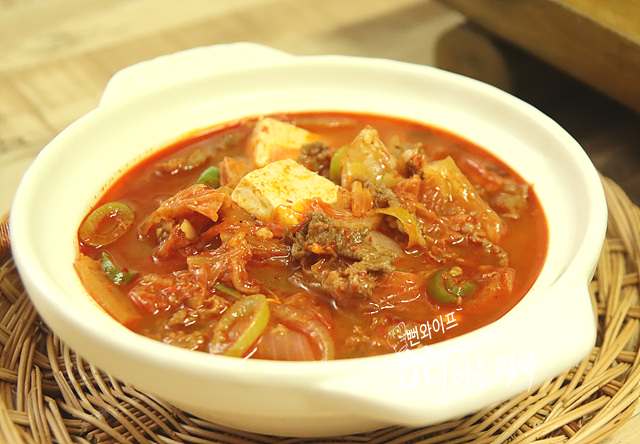
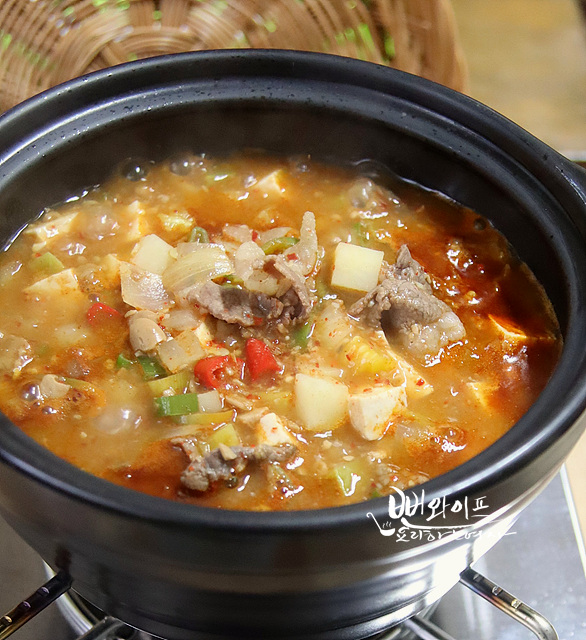
Chadolbagi Jjamppong (Spicy Noodle Soup with Brisket)
A spicy Chinese-style noodle dish made by stir-frying thinly sliced beef brisket and simmering it in a blend of beef bone broth and anchovy broth.
Translated from Korean by AI and not yet checked by a native speaker. Amounts and numbers are taken directly from the original recipe. Read the Korean original →
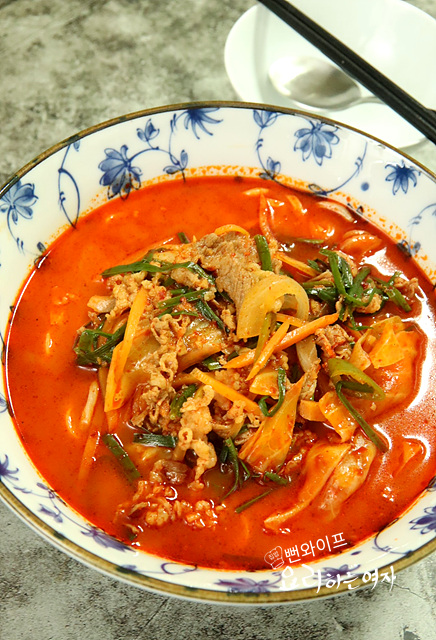
This noodle soup for 2 to 3 servings combines beef bone broth and anchovy broth for a deep, rich flavor. Thinly sliced beef brisket is stir-fried in its own rendered fat with gochugaru and vegetables for a spicy kick. Spicy and piping hot, it is wonderful for soothing the stomach after drinking.
- Servings
- 2–3 servings
- Difficulty
- Medium
- Spiciness
- Spicy
Ingredients
Ingredients
- Beef brisket100 g
- Garlic chives (buchu)50 g
- Onion1/2 (small)
- Carrot1/5
- Cabbage50 g
- Cheongyang chili pepper (hot green chili)2
- Beef bone broth500 ml
- Anchovy broth500 ml
- Jjamppong noodles2 servings
Seasoning
- Gochugaru (Korean chili flakes)2 tbsp
- Minced ginger1/2 tsp
- Oyster sauce1 tbsp
- Minced garlic1 tbsp
- Mirin (cooking rice wine)1 tbsp
- Tuna extract sauce (chamchi-aek)2 tbsp
- Salt1/2 tsp
- Ground black peppera little
- Besides beef brisket, any thinly sliced meat like beef belly or thinly shaved pork belly works well.
- You can use large green onion instead of garlic chives.
Steps
Prepare the ingredients
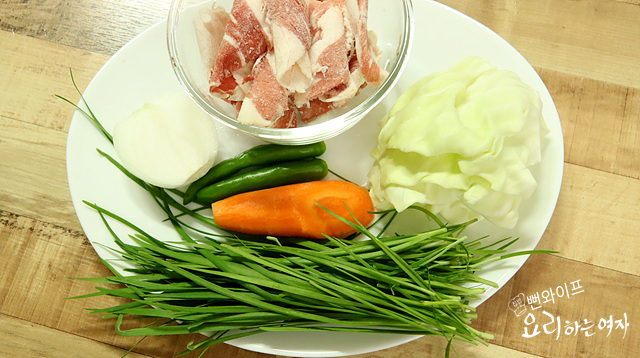
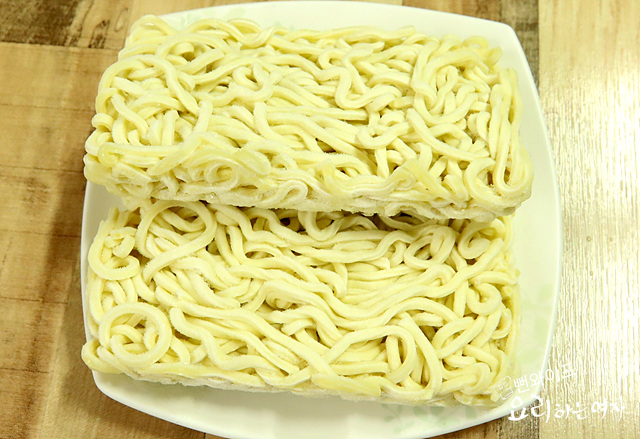
For the meat, I prepared beef brisket, but beef belly or thinly shaved pork belly is fine too.
Any thinly sliced meat that pairs well with jjamppong will work.
For vegetables, check what you have in the fridge; I used cabbage, onion, carrot, and some leftover garlic chives from making garlic chive kimchi.
You can use large green onion instead of garlic chives. Have 2 Cheongyang chili peppers ready.
For noodles, I used 2 servings of frozen Chinese-style noodles.
Cut the ingredients
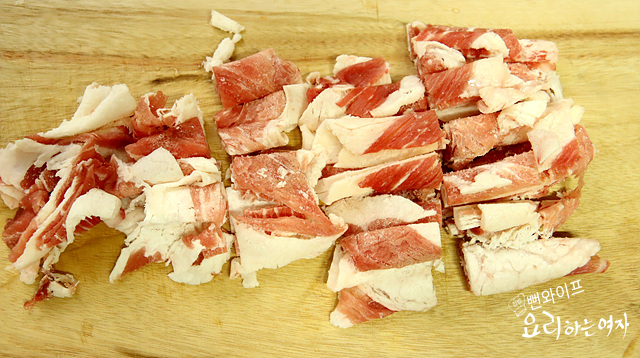
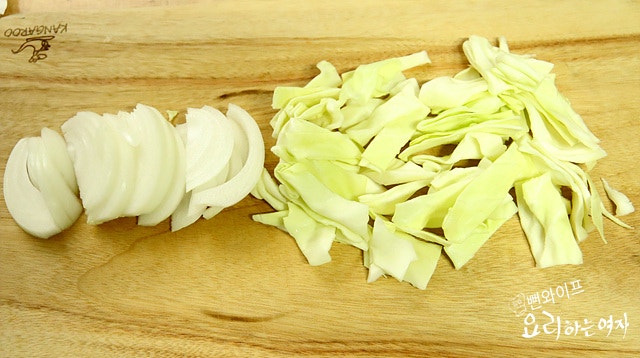
If the beef brisket is too long it will be awkward to eat, so cut it into bite-sized pieces.
Slice the onion and cabbage into thick strips.
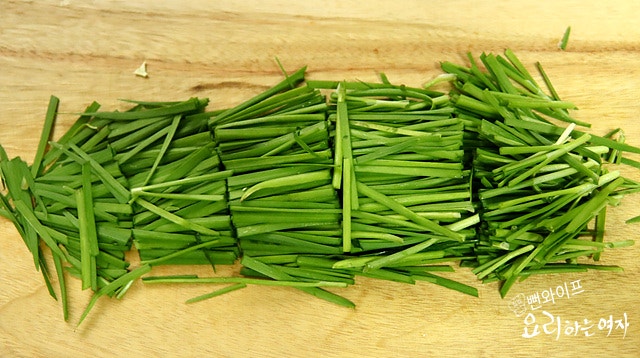
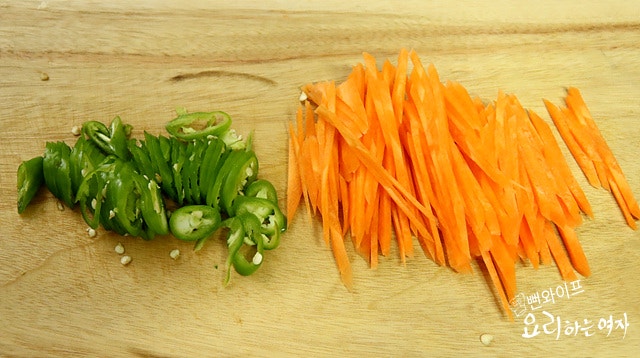
Cut the garlic chives into 3 cm lengths, thinly julienne the carrot, and slice the Cheongyang chili peppers.
Stir-fry
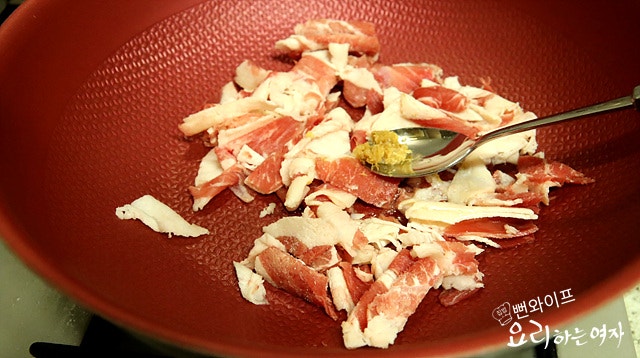
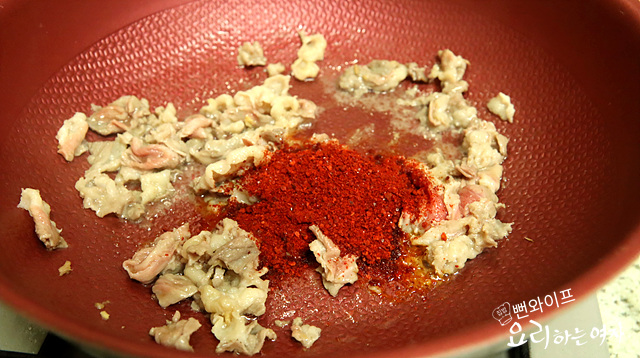
Add the beef brisket, minced ginger, and mirin to a pan and let the meat stir-fry in its own rendered fat.
Once some fat has rendered out, add 2 tbsp gochugaru.
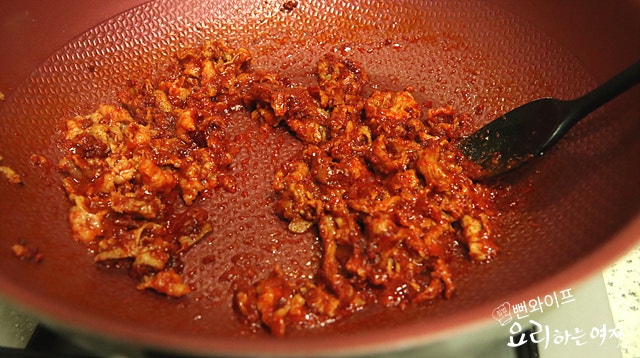
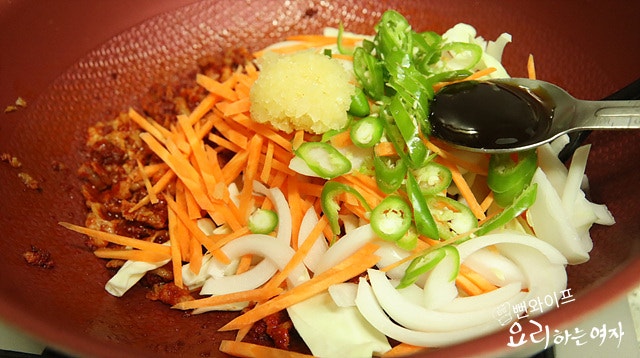
Once the chili flakes are stir-fried until moist without burning, add the cabbage, onion, carrot, Cheongyang chili peppers, 1 tbsp minced garlic, and 1 tbsp oyster sauce...
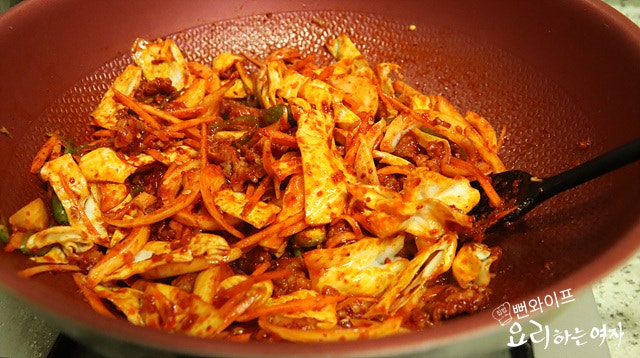
Stir-fry lightly so everything is coated with the chili oil.
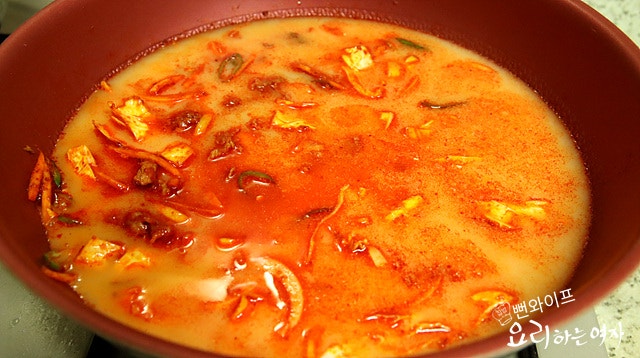
Pour in 500 ml anchovy broth and 500 ml beef bone broth, then bring to a rolling boil.
Simmer
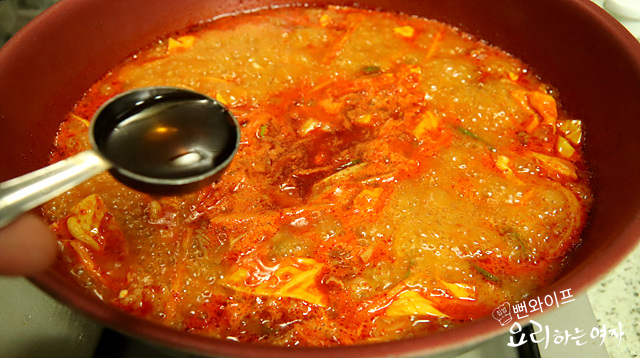
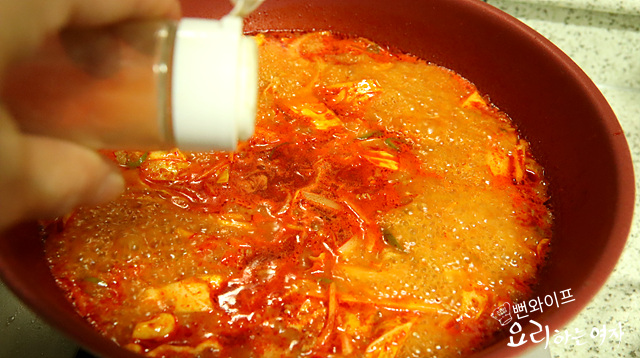
Add 2 tbsp tuna extract sauce, and once the vegetables are mostly cooked, taste and season with salt.
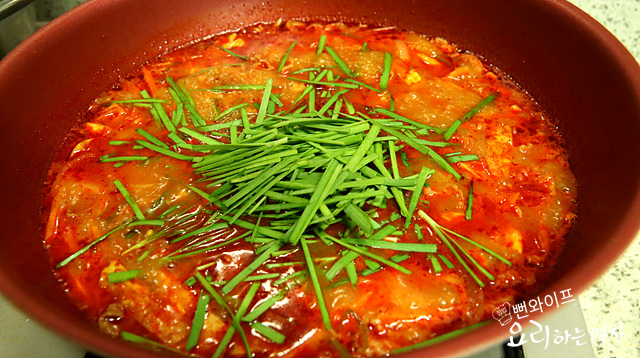
Finally, add a little ground black pepper and the garlic chives so they cook in the residual heat, and the jjamppong broth is done.
Blanch the noodles
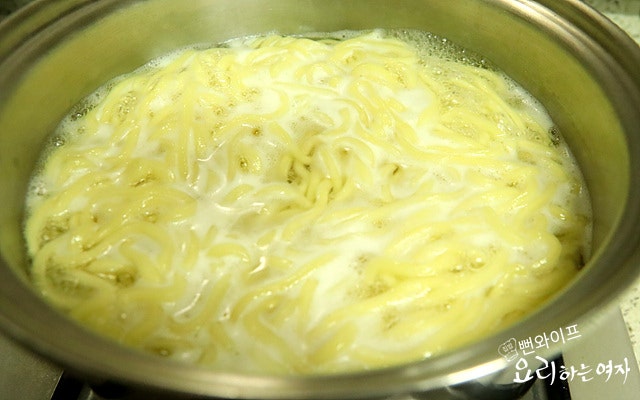
Add the noodles to boiling water and blanch just until they loosen up. Since they are pre-cooked and frozen, you do not need to cook them long.
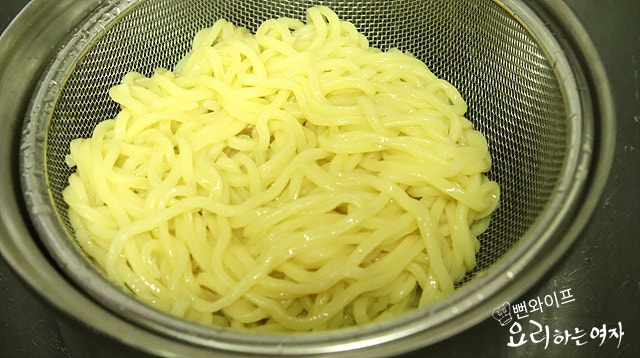
Rinse in cold running water and drain in a colander.
Finish
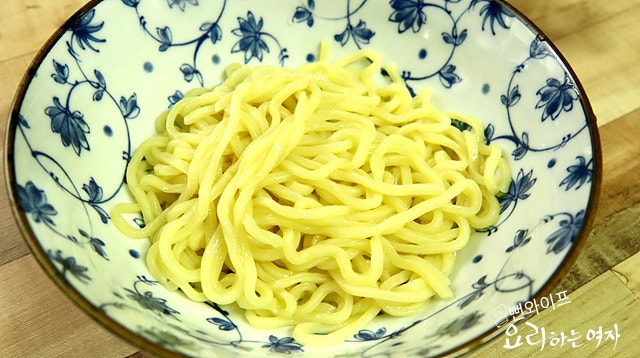
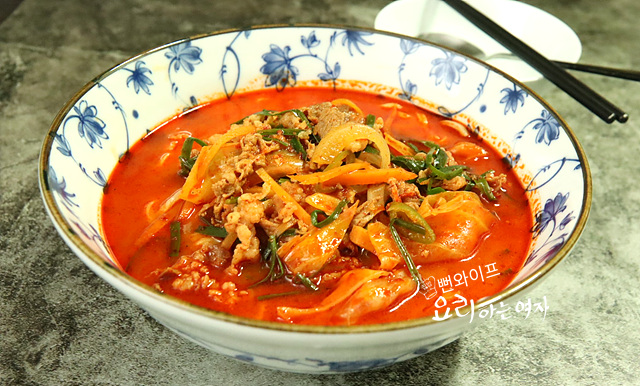
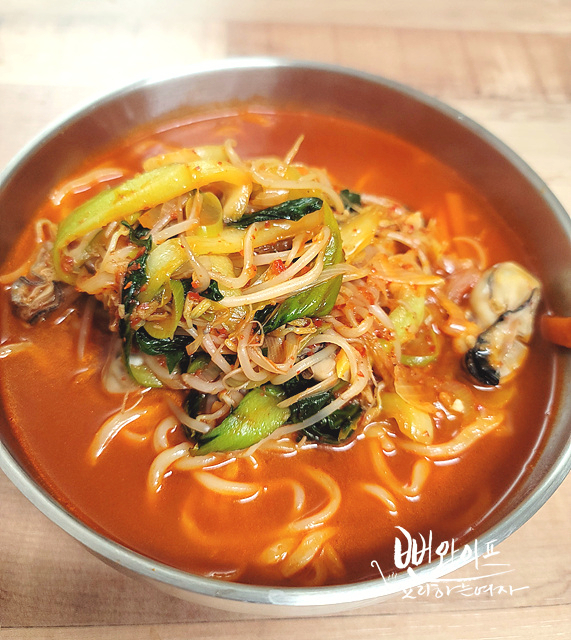
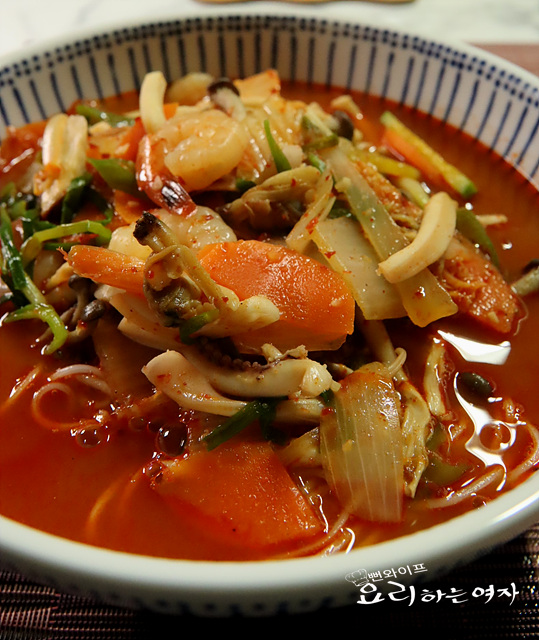
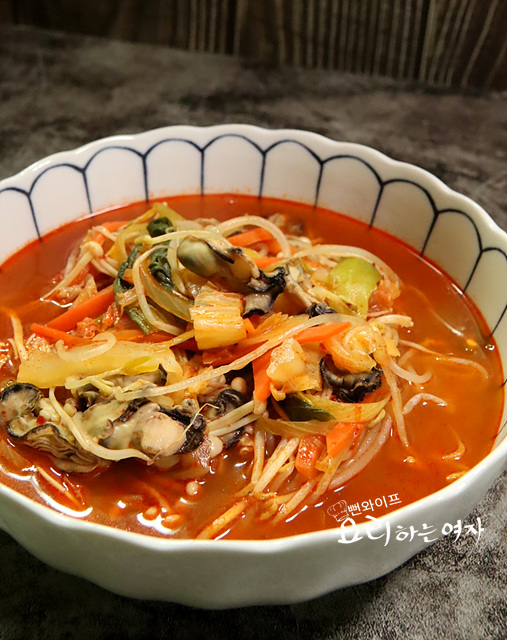
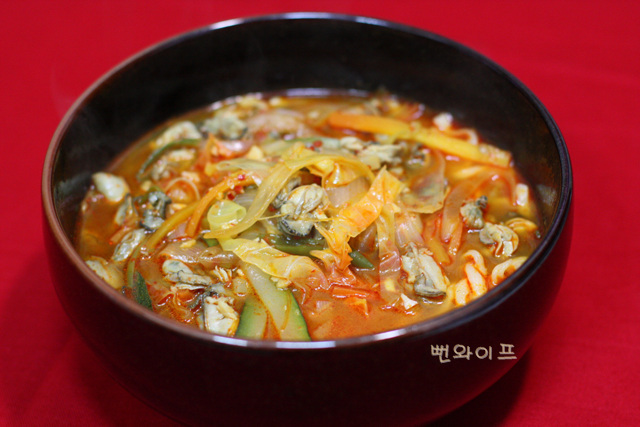
Right before eating, briefly rinse the noodles with hot water, drain well, and ladle the jjamppong broth over them to complete your Chadolbagi jjamppong.
 Ppunwife's tips
- Right before eating, briefly rinse the noodles with hot water, drain well, and ladle the jjamppong broth over them to complete your Chadolbagi jjamppong.
FAQ
Can I use a different meat instead of beef brisket?
Any thinly sliced cut of meat, such as beef belly or thinly shaved pork belly, can be used as a substitute.
What vegetable can I substitute if I do not have garlic chives?
You can prepare and add large green onion instead of garlic chives.
How do I blanch frozen Chinese-style noodles?
Since they are pre-cooked before freezing, simply blanch them briefly in boiling water just until they loosen, then rinse in cold water and drain.
Do I need to add cooking oil when stir-frying the meat?
No cooking oil is needed; stir-fry the ginger and mirin in the fat naturally rendered from the beef brisket itself.