Kongguksu (Cold Soybean Noodle Soup) for Summer
A rich and refreshing summer cold soybean noodle soup made by boiling soaked soybeans for meju and blending them with toasted sesame seeds.
Translated from Korean by AI and not yet checked by a native speaker. Amounts and numbers are taken directly from the original recipe. Read the Korean original →
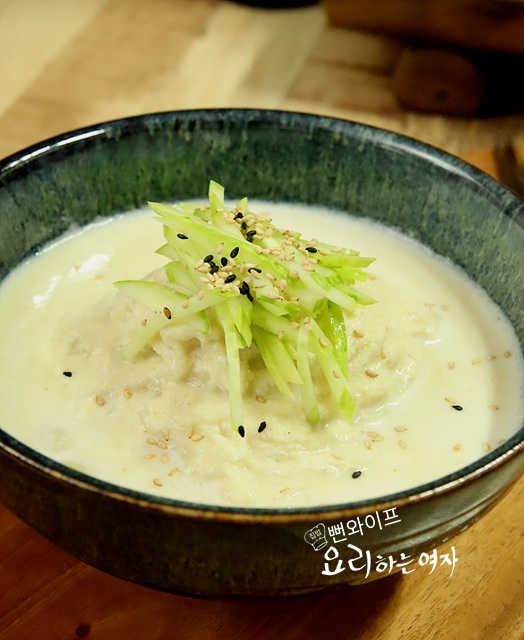
This nutty kongguksu is made by thoroughly soaking and boiling soybeans for meju, then blending them together with the cooking liquid and toasted sesame seeds. Chewy thin wheat noodles served in the thick, deep soybean soup make for a satisfying, hearty summer treat.
- Servings
- 5 servings
- Cook time
- 11 minprep not included
- Difficulty
- Medium
- Spiciness
- Not spicy
Ingredients
- Soybeans for meju2 cups
- Toasted sesame seeds4 tbsp
- Roasted peanuts1/3 cup
- Salt
- Cucumberas needed
- Water10 cups (for boiling)
- Water4 cups (for blending, additional)
- I poured 10 cups of water over 2 cups of soybeans for meju and soaked them for about 10 hours.
- If you want to make 2 to 3 servings, 1 cup is plenty.
- Instead of thin wheat noodles, using shredded agar jelly (umuk) makes a great diet dish.
Steps
Prepare the ingredients
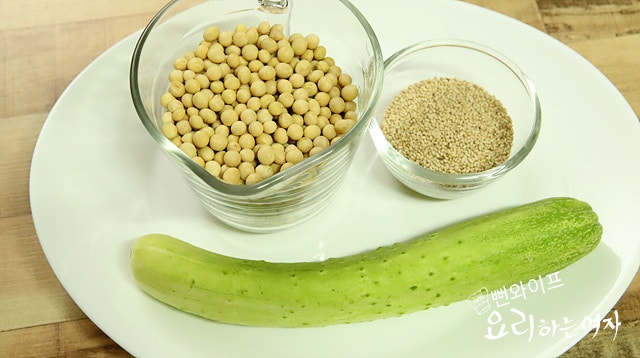
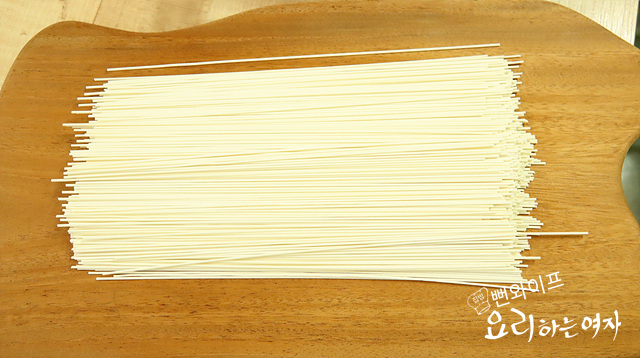
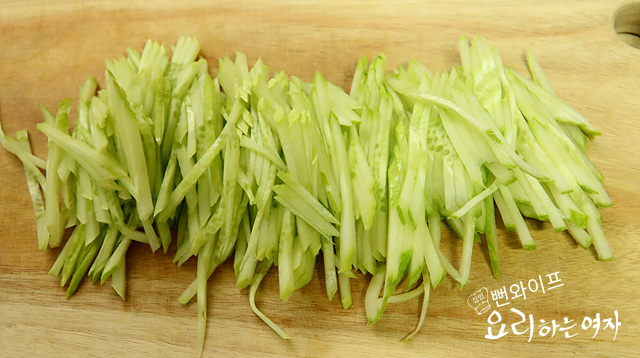
I prepared 2 cups of soybeans for meju for the kongguksu. Once soaked and boiled, this yields 5 servings.
If you want to make 2 to 3 servings, 1 cup is plenty.
Here are 4 tbsp of toasted sesame seeds to add nuttiness, along with cucumber and thin wheat noodles.
Thinly julienne the cucumber and set it in the refrigerator for a bit.
Wash and soak the beans
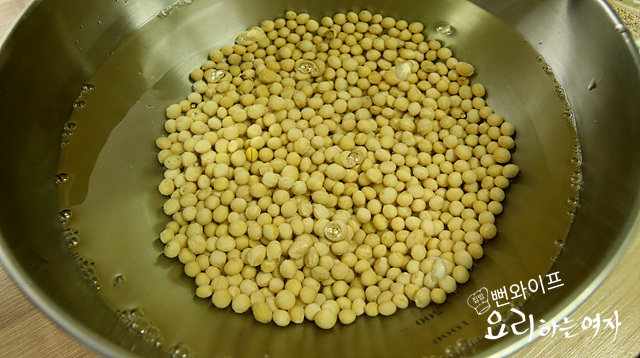
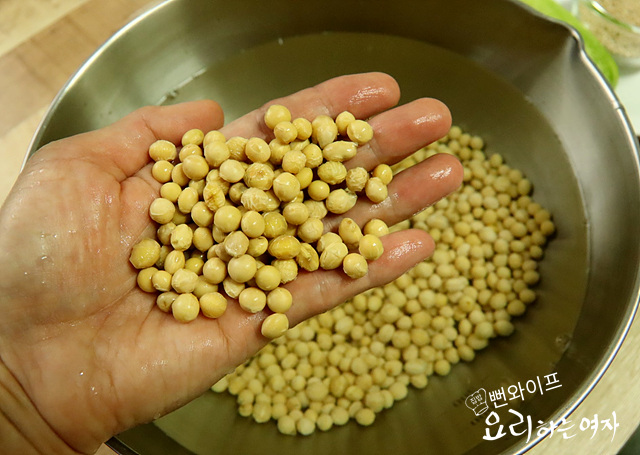
Wash the beans several times, picking out any debris or bad beans.
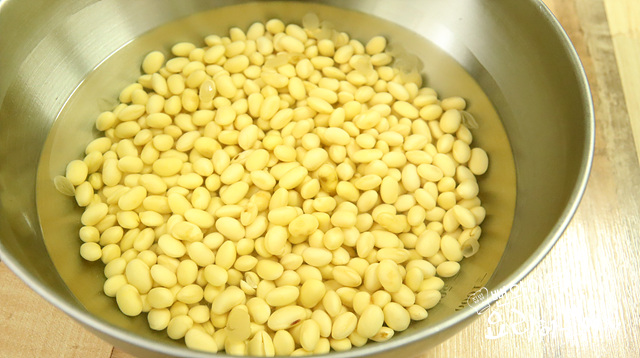
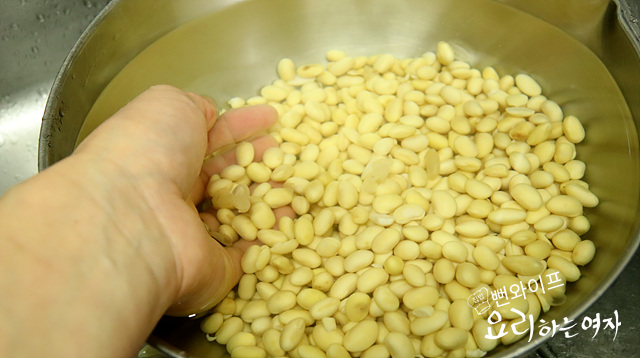
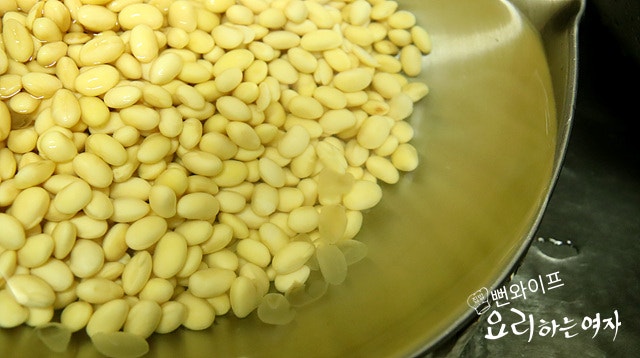
I poured 10 cups of water over 2 cups of soybeans for meju and soaked them for about 10 hours.
To boil them the next morning, I washed them before going to bed, poured in the water, and kept them in the refrigerator.
You need to pour in about 5 times as much water as the dry beans so they absorb enough and plump up well.
The 2 cups of dry soybeans for meju swelled into 5 cups.
Skins will slip off after soaking, so discard them as you pour off the water. You can also skim off any skins that float to the top while boiling, so you do not need to remove every single skin.
Boil the soybeans for meju
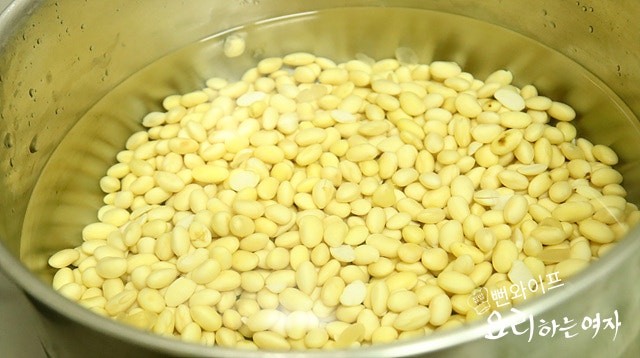
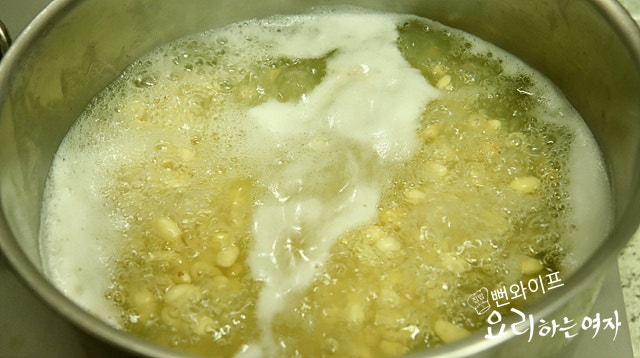
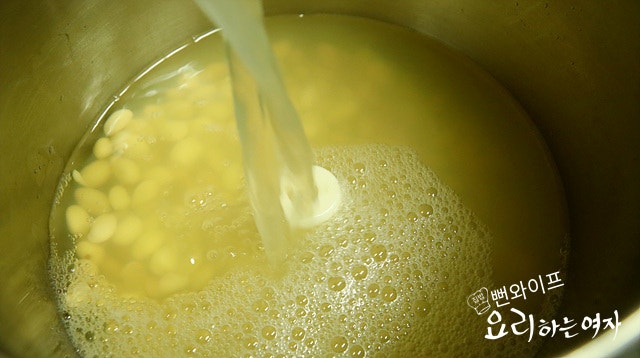
Pour 10 cups of water over 5 cups of soaked beans.
Pour in a generous amount of water, about 2 times the volume of the soaked beans, to boil them.
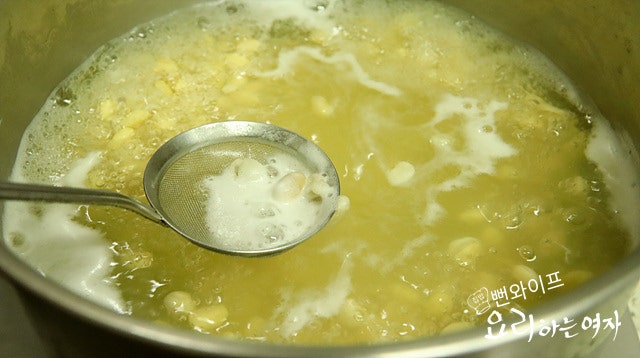
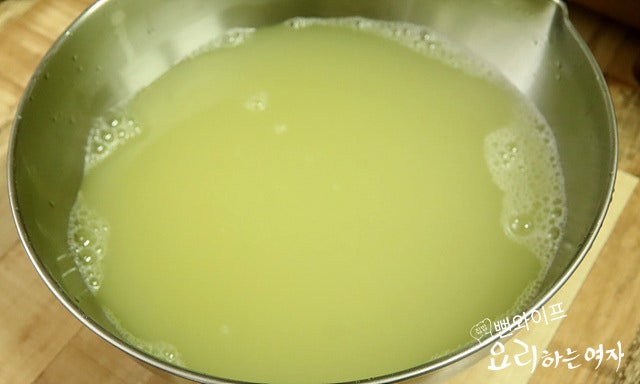
Once it reached a rolling boil, I boiled them for about 7 minutes. When the beans turn tender and taste nutty, they are fully cooked.
Stir down to the bottom occasionally while boiling, and the bean skins will float up to the surface. Diligently skim them off and discard them.
Strain the beans through a sieve and catch the cooking liquid. Once it cools, we will blend it with the beans in a blender. Do not throw it away. (The 10 cups of water added at the start reduced to 9 cups during boiling.)
Because the beans were boiled after soaking thoroughly, their volume does not change. 5 cups of soaked beans = 5 cups of boiled beans.
Blend the boiled beans
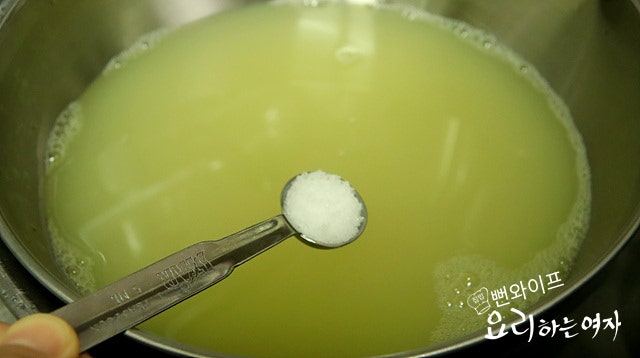
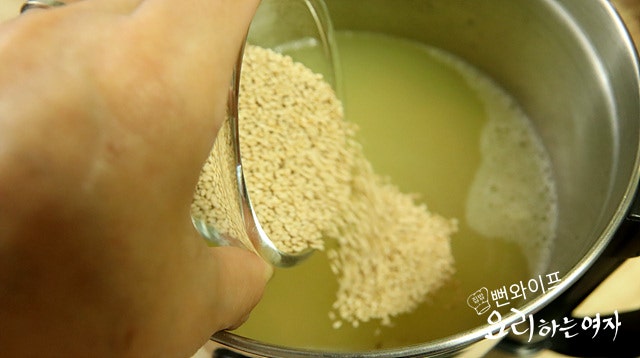
For 1 serving, adding 2 1/2 cups total of the cooking liquid combined with extra fresh water to 1 cup of boiled beans gives just the right consistency when blended.
Add 1 tbsp of toasted sesame seeds as well and blend smoothly. If you have roasted peanuts, adding a little will double the nuttiness.
Add 1/2 tsp of salt at this point too.
I made 5 servings, so I blended 5 cups of boiled beans, 9 cups of cooking liquid, 4 cups of fresh water, and 4 tbsp of toasted sesame seeds.
I added about 1 tbsp of salt in total.
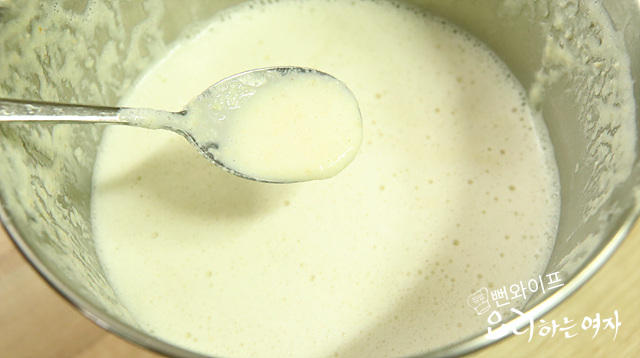
When you taste it, a rich, nutty flavor comes through with just the right level of seasoning.
It might taste slightly less salty once you add the noodles and mix them in, so you can adjust with more salt right before eating.
Chill it in the refrigerator or freezer.
Boil the thin wheat noodles
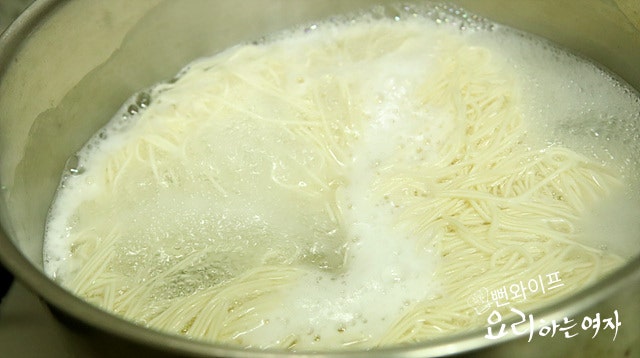
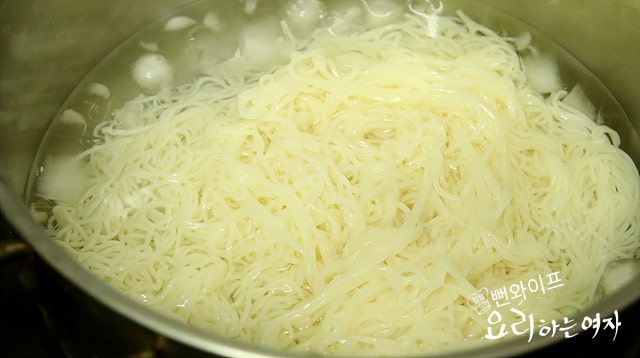
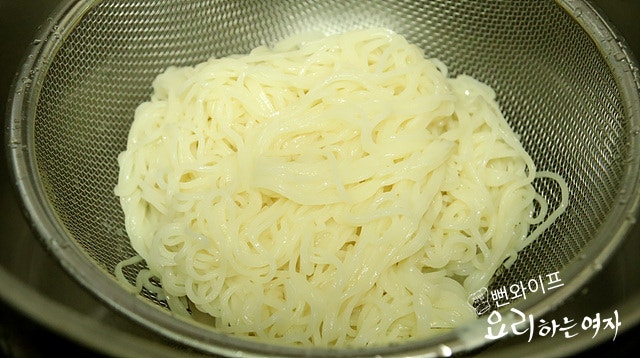
Add the thin wheat noodles to rolling boiling water, boil for about 3 minutes and 30 seconds, rinse finally in ice water, and drain well.
Finish
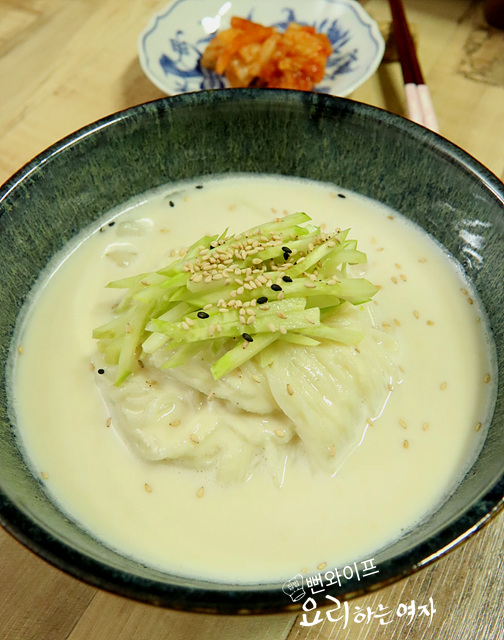
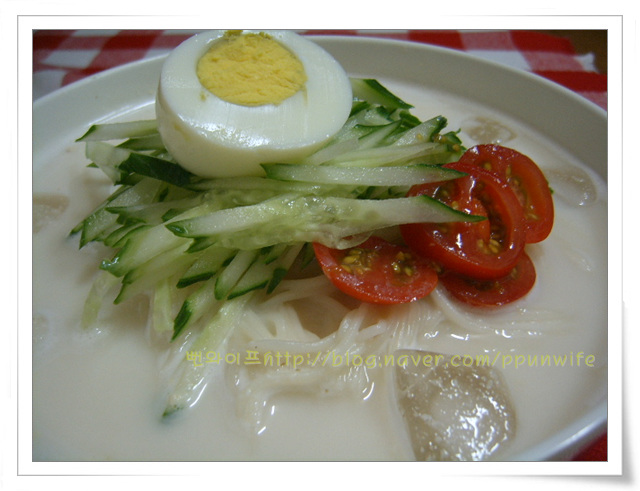
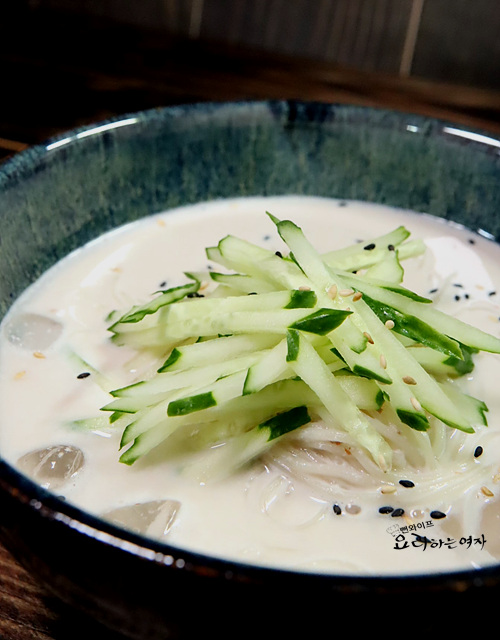
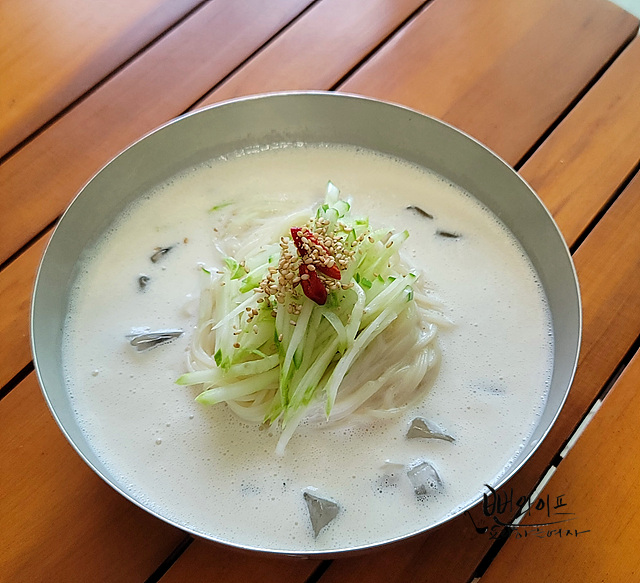
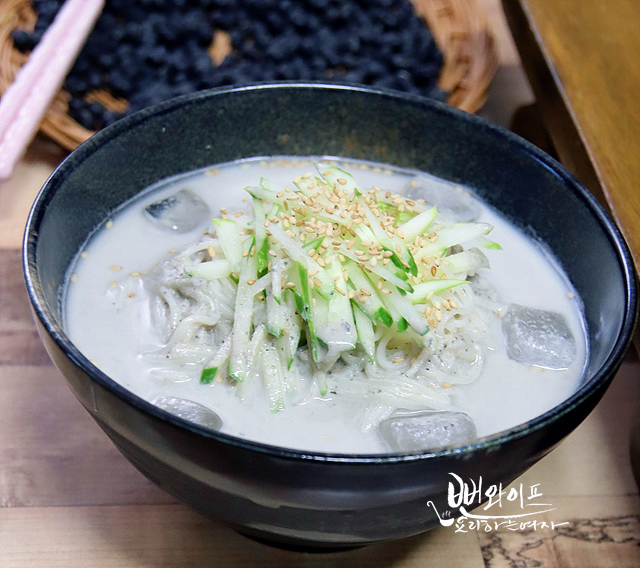
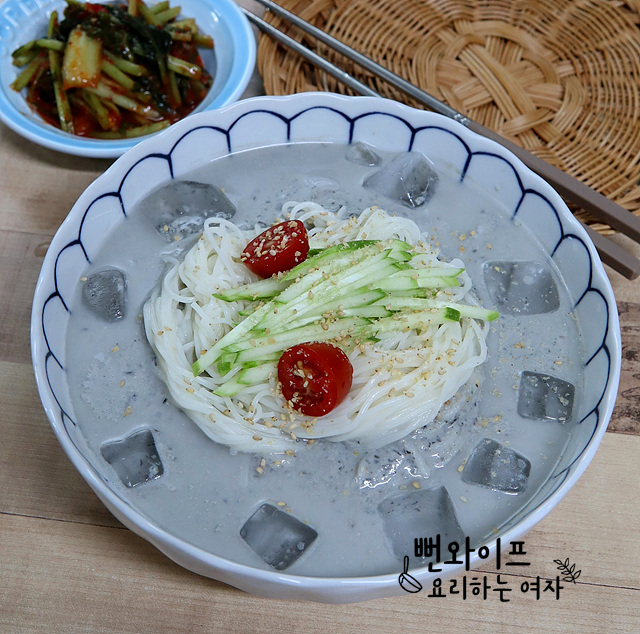
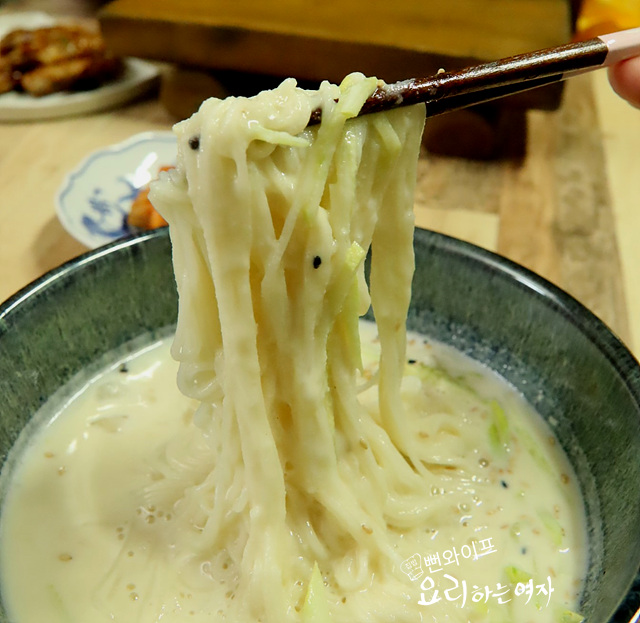
I topped it with julienned cucumber and enjoyed it delicious with napa cabbage kimchi.
This is my first kongguksu of the year. It made about 5 servings, so we ate it twice in a row.
It feels like our home has turned into a kongguksu specialty restaurant.
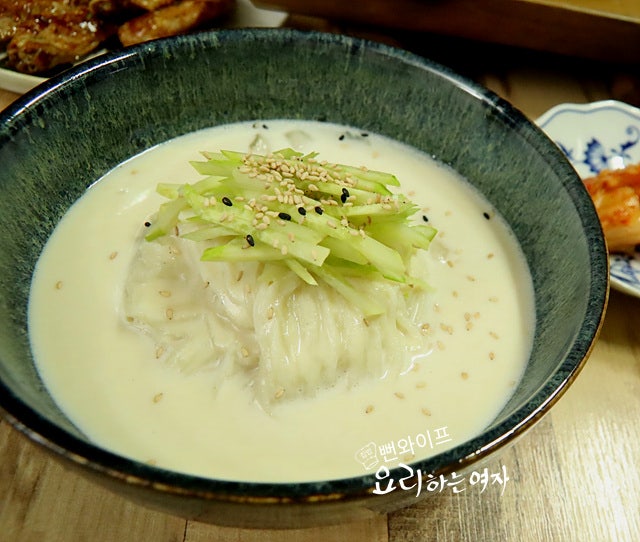
 Ppunwife's tips
- Pour in about 5 times as much water as the dry beans so they absorb enough and plump up well.
- Skins will slip off after soaking, so discard them as you pour off the water. You can also skim off any skins that float to the top while boiling, so you do not need to remove every single skin.
- Save the cooking liquid from the boiled beans. Once cooled, blend it together with the beans in a blender. Do not discard it.
- The broth may taste less salty once you add and mix in the noodles, so you can add more salt right before eating.
FAQ
Should I throw away the water used to boil the beans?
Do not discard it; let it cool and add it to the blender with the beans to adjust the consistency of the soup.
Do I need to peel off all the bean skins one by one?
You do not need to remove them completely. It is enough to rinse away what comes off when pouring out the soaking water, or skim off the skins that float up while boiling.
How much water should I pour when soaking soybeans for meju?
Pour a generous amount of water, about 5 times the volume of the dry beans, and soak for about 10 hours so the beans can fully absorb the moisture and plump up.
Can I use other ingredients instead of thin wheat noodles?
Serving it with shredded agar jelly (umuk) instead of thin wheat noodles makes for a great light meal, or you can stir in some sugar and drink it like soy milk.